
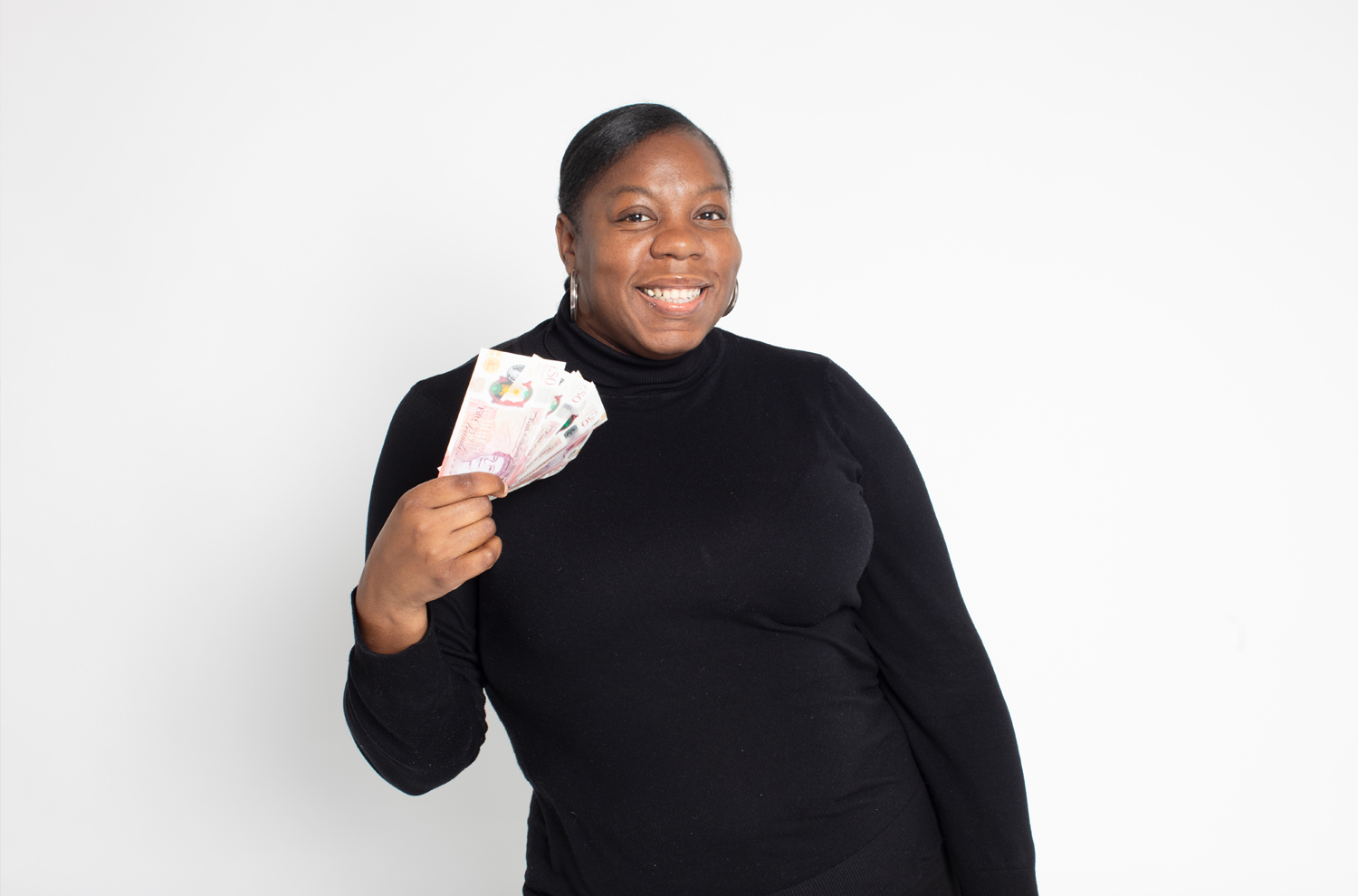
Yinka Ewuola is a multi-award winning business strategist, mindset coach, TEDx speaker and founder of Calla Success Systems. A mother of three who exited the corporate world at the start of her motherhood journey, she helps ambitious women create wealth both within and through their businesses by concentrating on what matters most: cashflow and strategy for the business, and mindset and habits for the business owner.
Yinka’s mission is rooted in a powerful conviction: that women are uniquely equipped to master money, and that the stories, beliefs and conditioning holding them back have been carefully constructed over centuries. Having built a seven figure business without a website, she is living proof that success follows clarity of purpose rather than the performance of legitimacy.
In this episode, we explore Yinka’s remarkable journey from a turbulent entry into motherhood to the founding of a business built on first principles. We talk about the true nature of money, the layers of patriarchal and societal conditioning that keep women financially small and why making an audacious amount of money is not just a personal ambition but a powerful act of service. It is a conversation about identity, pricing, permission and the decision that changes everything.
Conversation Highlights:
- Yinka’s annus horribilis; the year that brought grief, redundancy, her mother’s cancer diagnosis and the birth of her first child, and how that season of challenge forged the foundations of everything she has built since
- Why money is only 5% financial and 95% story, belief, energy, emotion, identity and relationship, and what that means for women who have been told they are not good with numbers
- The layers of patriarchal, religious and societal conditioning that have deliberately shrouded the true nature of money from women and why dismantling those layers is an act of personal and collective power
- Why women are whole-brained and collaborative by nature and how that positions them to be extraordinary with money once they understand what money actually is
- The problem with charging your worth and why detaching your prices from your fluctuating sense of self and anchoring them to the transformation your offer creates is the shift that changes everything
- How Yinka built a seven figure business without a website and what that reveals about the difference between creating genuine cashflow and performing legitimacy
- Why underpricing is not humility but a decision to ask your children to pay instead of your clients, and the moment that reframing changed everything for Yinka
- The three pillars of sustainable change in business and in life: mindset, skillset and habits, and why you cannot out-mindset a lack of skillset
- What her eight year old self taught her about stubbornness, perfectionism and the superpowers hidden inside the traits we were told off for as children
Listen If You’re:
- Carrying stories about not being good with money and ready to question where those stories actually came from
- Underpricing your offers and feeling the creeping sense that something needs to change
- Building a business that looks busy but isn’t yet generating consistent cashflow
- Curious about what a seven figure business built on strategy and clarity rather than social media performance actually looks like
- A mother who wants to model financial confidence and ambition to her children
- Ready to make the decision that starts a new money chapter, even if everything else still feels uncertain
Favourite Quote for Mums in Business:
“My business is successful because I am a mum, not in spite of motherhood.” – Yinka Ewuola
About the Guest:
Yinka Ewuola is a multi-award winning business strategist, mindset coach and TEDx speaker and the founder of Calla Success Systems. With a background in investment banking and economics, she spent years unlearning what finance had taught her and rebuilding her relationship with money from the ground up. She now works with ambitious women to help them create wealth through a combination of cashflow strategy, identity work and habit design. A mother of three, Yinka is on a mission to put more money into the hands of more women, because she knows that when women have more money, the world gets better for everyone.
Connect with Yinka Ewuola via LinkedIn or Instagram and be sure to watch her TedX talk: Power, Lies, & The Truth About Love.
About The Host:
I’m Victoria Phipps – a Mum of two, analogue family photographer, charity co-founder, marketing person and now podcaster! My career has wandered all over the place and is becoming a bit of a complex tapestry as I head into this middle phase of life, but I can honestly say I’ve loved every minute of it so far.
I was raised by a nurturing Mother and an entrepreneurial Father and have inherited traits from both, so the tension between ambition and motherhood is one I grapple with on a daily basis! I’m fascinated to hear the stories of other women on a similar path, who are striving to build thriving businesses whilst being present for their children. It’s a tough juggle, but I hope the conversations shared on this podcast help Mums in business feel less alone and inspired to keep going in pursuit of their dreams!
If You Enjoyed This Episode:
Please subscribe, rate and review the podcast – it helps other mums find us!
Share in your Instagram stories, tag @mummeansbusinesspodcast and let us know your biggest takeaway.
Share this episode with a fellow Mum in business who you feel would resonate with Yinka’s story.
Episode Transcript:
Hello and welcome to the Mum Means Business podcast, where we shine a light on inspiring women who have one thing in common. When they’re not managing tantrums, homework, P.E. kits and play dates, they are busting their gut to create something from nothing, to turn their passion into a thriving business and build a better life for themselves and their families. We dig into what motivates devoted mothers to pursue entrepreneurship and how they integrate their work and family life.
I’m Victoria Phipps, your host, and if you’re an ambitious mum in need of some solidarity whilst navigating the messy middle of making your big dream a reality, then stick around. This is for you.
NOTE: This is the transcript from the original recording, rather than the edited episode so timings may vary.
Victoria (00:01)
My guest today is a multi award-winning business strategist, mindset coach, thought leader, content creator, TEDx speaker, and mum of three. Founder of Cala Success Systems, she helps ambitious women create wealth both within and through their businesses. Having exited the corporate world at the start of her motherhood journey, Jinka Eweola sees the challenges we face as mothers building businesses.
She knows all the pain points because she has navigated them herself. Jinka is now determined to help busy women empower themselves, to honor their worthiness, embrace their failures as growth, uphold their boundaries, master their resources, celebrate their greatness and appreciate greatness in others. In a landscape where so many moms are pouring all their spare time and energy into their business so they can cling on to the flexibility it affords them in their family life.
Yinka believes achieving financial success is even more important when you are a mother. By concentrating on what matters most, cash flow and strategy for the business, mindset and habits for the business owner, she guides her clients on a journey that leaves them feeling both rich and rested. And doesn’t that sound appealing? Yinka, I have been so looking forward to this conversation.
and I am more than ready to absorb all your wisdom. So welcome to the MomMeans Business podcast.
Yinka Ewuola (01:31)
Hi, Victoria. Thank you so much for having me. I’m really excited and looking forward to this competition.
Victoria (01:37)
⁓ me too. I want to hear about your transition from corporate into the world of business and entrepreneurship. So can you tell me what made you do that? What made you take that decision?
Yinka Ewuola (01:52)
Yes.
Okay, so I ⁓ had not dissimilar to the late Queen Elizabeth, I had ⁓ what I fondly call an annus horribilis. I had a year when lots of really challenging things happened. we announced that we were getting married.
Victoria (02:07)
Okay, I was wondering where you were going with that. Gotcha.
Yinka Ewuola (02:19)
Unfortunately, my mother-in-law passed away seven days later. My husband is the eldest of her three sons. so we, in a period of time that was supposed to be, you know, special and beautiful and nurturing, we were plunged into grief and uncertainty and challenge. And so…
Victoria (02:24)
my gosh.
Yinka Ewuola (02:47)
We had made, you know, plans and decisions and both my husband and I, we are Nigerian. I grew up in the UK, he grew up in Nigeria. So there were some similarities but a number of differences and nuances in that period. Our announcement to get married was…
in the February and our wedding was in the July so it wasn’t that far away. She was really insistent, my late mother-in-law was really insistent that the day should hold and so we did, we got married on the day that we expected to and it was a great day, it was a beautiful day and such a powerful…
even as I’m speaking to you now, the mental photographs of that particular experience were ⁓ phenomenal. And yet, the rest of that year then was characterised with us moving in together for the first time, trying to set up home, me adapting to my job in corporate as a new wife, and then my mother was diagnosed with breast cancer, ⁓ really virulent breast cancer. ⁓ We were…
two and a half months into our marriage and it was a very difficult time with my mum being an incredible entrepreneur running a school food and children’s nutrition business.
I then discovered that I was pregnant and I spoke to my managers in corporate about this and I’ll never forget they were very, very unhappy at that news. They felt very frustrated that I ⁓ should dare to get pregnant and they began a very interesting campaign ⁓ within the organisation that saw me exit just a few months before my son was born.
Victoria (04:35)
Wow. Okay.
Yinka Ewuola (04:47)
So that particular transition, kind of my welcome into motherhood was with a newly departed mother-in-law, a mum who was experiencing breast cancer, significant challenges in my job, significant ⁓ upheaval in our personal scenario, and a lot of tears.
Like a lot of tears, like I, one point I remember crying because I thought about how much I was crying and I was wondering if I was going to make my baby a miserable baby. As the thoughts that you have when you’re pregnant. Yeah, it was a really stressful time and yet.
Victoria (05:18)
my gosh, Yinka. Yeah, of course, yeah, yeah.
Yinka Ewuola (05:26)
Even as I look back on it now, even as I still feel some of the kind of charge and emotion and pain of that season in my body, it was still such a powerful and important transition for a number of reasons. One was because, as I said, I exited my corporate role just before I got pregnant and sorry, just before I gave birth to my eldest and I was very… ⁓
devastated. I’d built this incredible corporate career. I’d always been a top performer and I’d had a really clear understanding of what I thought the beginnings of my motherhood journey would be like in that corporate space. But as soon as I realized that my child really wasn’t welcome, then I realized that I also wasn’t welcome because I realized that there was no job on the planet that I was going to choose over my child. And I wasn’t going to wait for it to be
any more of a problem than it was perceived to be.
It coincided those kind of the area of my mum beginning her fight for her health and me exiting corporate having my son then saw me stepping into her business initially to support her so that she could go through her cancer treatment, surgery, all of those pieces of the puzzle. Thankfully, my mum is healthy and well. She is alive and I was going to say alive and well doesn’t even cover it.
Victoria (06:52)
Goods.
Yinka Ewuola (06:57)
My mum looks younger now than she ever has. And yeah, like it was… ⁓
Victoria (07:00)
Ha ha ha.
Yinka Ewuola (07:04)
I really, it was a time really characterized by blood, sweat and tears, but I really wouldn’t trade them for everything that it afforded because when you go into a business that’s struggling with a business owner that’s struggling, you have the tyranny of the clock. You have a sense of urgency that is often masked when businesses are started by so many other things. My mom’s business was established, she had staff, had offices, she had, you know,
Victoria (07:22)
Mm.
Yinka Ewuola (07:34)
awards and all of these, she had a reputation in the marketplace. I didn’t have time to faff around. I really had to figure out very quickly what would work, what would keep the lights on, what would keep the business going and enable her to have the space that she needed to focus on coming back to health. So that transition time.
said it’s it’s interesting describing it now it sounds a little bit like a cat a comedy of errors ⁓ or a catalog of misery it was a difficult time like I said I was really worried that my I was giving misery to my child for how ⁓ worried and anxious I was but I really through that period it honed a strength a focus and a
a sense of purpose in me that I would never have had if not for that season of challenge.
Victoria (08:32)
I mean, it’s a lot, And you have a lot of the kind of pain that we feel is often when things are sort of counter to our expectations, isn’t it? So when you imagine having your first baby and going through that first pregnancy, as you’re growing up, you imagine this and what might that be like? And in your head, it’s a dream and it’s positive.
Yinka Ewuola (08:52)
Yeah,
I mean, it’s interesting. was one of those women who I really wasn’t about, I wasn’t about getting married first of all, so shout out to my fabulous husband. But yeah, I really wasn’t, and some days I’m still like.
I do look around sometimes and like, we’re still here. We’re still doing the thing. Like nearly 20 years now, but I just, I really wasn’t, I wasn’t ⁓ really focused on being married. wasn’t focused on having children. I’m Nigerian. So I also acknowledge that I guess in the mind of my parents and my community, there was no other option, but there certainly was for me. Like I really wasn’t on a fast track to, you know, I wasn’t actively dating.
Victoria (09:16)
⁓ amazing.
Yinka Ewuola (09:40)
or anything like I had no time for anyone else except me and my career and what I wanted to create in my life. And so in some ways, like my career was the relationship I was nurturing. So when it came apart so catastrophically, was devastating. It was like another death ⁓ and it was a compounded sense of grief.
But the beautiful thing about that is having experienced so much loss, the coming into, you know, being married and then having a child. When I looked over that, you know, 12, 18 month, I was like, who is this woman? Like, it was night and day different to what I had expected and taught me a lot about expectations.
Victoria (10:25)
Yeah.
Yeah, and what’s interesting in the way you reflect that there is a big identity piece here, because if you are career driven and you work hard in your job and you climb this ladder and you get to a point where you are respected and settled and you feel like you have momentum and you’re in this corporate role, and then you find yourself getting married and getting pregnant and you have
A challenging year in terms of your mother-in-law and your mother, that all this stuff is going on in your personal life. And actually you have this moment where you realize, probably it’s quite a shock. Like you said, that your baby is not welcome in your career. Your baby is not appreciated. Your baby, they’re not opening their arms and saying, congratulations.
And actually in that moment, there’s something about your identity shifting because Yinka, as you know her, is all for the career. Like, had it been like, please don’t get a pet. You’ve been like, okay, I won’t get a pet, my career. You know, but this is different. You’re having a child. This is an extension of you. And suddenly you move into your, you haven’t even had your baby yet, but you move into role of protective mother. Why are you reacting this way to my baby? And…
Yinka Ewuola (11:34)
100%.
Bye.
And that’s the thing, I I learned some hard lessons super fast because up to that point, I was double down loyal. Like I sacrificed so much in that time and season. I sacrificed sleep, you know, and I sacrificed relationships, I sacrificed specific types of events. There were so many things that I gave in exchange for
Victoria (12:15)
Yeah.
Yinka Ewuola (12:28)
being part of that space, you know, ⁓ and following that journey. And so, but I knew very early on, as I said, I wasn’t about, part of why I really wasn’t about the motherhood journey for a while was because I had such clear ideas about the kind of mother I wanted to be. And I thought that I needed to be…
just a better grown up before I tried to become a mother. And I just, I was like, can barely take care of myself right now. I can bet, you know, I’m adjusting to being a new wife. And so I was like, I’ve got my business trying to bring a child and you know, we like family planning and we did the, and I was like, what is this? And so I was.
Victoria (12:57)
Yeah.
haha
Yinka Ewuola (13:20)
The timing shocked me, the response shocked me, as I said, am somewhat, loyalty is a huge one of my values, and I was incredibly loyal. And I, you know, I would do, go above and beyond. And I didn’t expect them to go above and beyond for me necessarily. I wasn’t, I don’t think I was that naive, but I also didn’t expect to be cast out because they, because they weren’t gonna be number one.
But therein lies the opportunity that it gave me. It gave me the opportunity to decide what should be number one. And before I got married, my career was very, very high in my priorities, higher than certain things, higher than it should have been. And yeah, that instantaneous cure was like a bandage being ripped off or a bandaid being ripped off, but it ultimately served so much for the good.
Yeah, I look back now and I laugh at how dramatic lessons need to be in order for me to learn them. I’ve tried to be a
better life student in that regard. But I definitely, I even with all the pain, even with all the misery, even with the uncertainty and the anxiety, there are all the things that came with it. I still, even in the pain, I can’t feel anything other than grateful for the season because it was a lesson I learned so clearly, so unmistakably. And that lesson has forged, you know, incredible things as a result of me actually getting that memo so
Victoria (14:29)
Hahaha
Yinka Ewuola (14:57)
loudly and clearly.
Victoria (14:59)
Yeah, I think I’m similar to you in that I can be told things subtly a lot. And it just doesn’t land until someone has to take a frying pan and like hit me in the face with it. And then I’m like, okay, gotcha. Yeah, definitely relate to that. And there’s something about this Anis Horribilis, of course being, it sounds so painful and so challenging and a lot for you to process at a time when your body is also trying to build a human.
Yinka Ewuola (15:06)
a lot a lot and I’m just like yeah yeah
Thank
Victoria (15:29)
and you’re also then going into your mum’s business and trying to help her out and support her while she’s having an awful time of it as well. But there is something about the mother in this in that, you you’ve lost your mother-in-law, which is a massive blow to the family, especially at a time when everyone is feeling celebratory because you’re about to get married.
You feel like, you know, it should just be sunshine and roses and then this happens. And then your mum is ill and you’re also becoming a mum and experiencing something for yourself that a lot of mothers or mothers-to-be experience in the corporate world, having given so much energy and devoted time that actually that is not necessarily reciprocated, that loyalty.
Yinka Ewuola (16:27)
Yeah.
Victoria (16:27)
And did
that galvanize you in the way you moved forward in business?
Yinka Ewuola (16:32)
One, yeah,
100%. So ⁓ many of the foundational principles that. ⁓
I’ve built my business on the work that I do and any iteration that will come from it came from that time. So it came from a recognition of a few things that are very different about the role that women play in this world, about the fact that women are the world’s backstop. We are the safety net for every society, we’re the safety net for families, we’re often the safety net in times of crisis and challenge.
it became very clear and obvious to me that that’s the role often that we are given or is foist upon us whether we like it or not. And so the question I began to ask myself particularly around what happened with my mum was well when women need support what is their backstop? Who is their safety net? Where do they get support from when they are the support for everyone else? And that for me was where
I began to ask some kind of deeper and more philosophical questions and one of the answers that I came up with is for women who run businesses and are minded to, you know, really create success, they get to create a financial backstop.
they get to create enough and an abundance of cash that gets to support them and gets to buy them capacity, buy them time, them advances and accelerations in healthcare. It gives them the opportunity to…
You know, there are, you know, I disclaimer what I’m saying to be very aware that there are many things that money can’t buy. Money can only solve money problems, but 90 % of the problems we experience are improved by the solving of money problems. And so I became very unapologetic about the role that money does and doesn’t play in supporting.
women in times of challenge and trouble. My mother-in-law was based in Nigeria and in an environment like that where there isn’t ⁓ free national healthcare, it was. If you don’t have the money, you don’t get the treatment. If you don’t get the treatment in time, that could cost you your life. It beggars belief.
that we live in a world where money can stand, you know, can be a matter of life and death. And yet it is a matter of life and death in so many spaces every single day. And so I became really resolved to really understand what money was about. And I laugh when I say that because obviously I just come out of a multi-year highly successful investment banking career. So you would think I would already know what money was all about.
What I discovered is that investment banking is finance. Finance isn’t money. Finance and money are very different concepts and as a result I had to be, you know, it was one of the biggest decisions I ever made was to decide that actually even in spite of, you know, my first class economics degree, my multi-year highly successful investment banking career, I had to decide that I knew nothing about money and I was willing to begin the learning again like as though I’d never heard of it before.
And again, that was definitely the making of some incredible foundations to what I’m working on today.
Victoria (20:06)
think a lot of people would find what you’ve just said quite surprising because many women in my world have this story that they tell themselves they’re not good at money or they’re not good with numbers or they’re not good with whatever. And they would assume that somebody with a first-class economics degree and a long career in investment banking would be good with money and would be good with numbers. And yet you exit that role.
you go and inject yourself into your mum’s business and you look around what’s going on there and you have a word with yourself and say, no, actually I need to start from scratch and assume I know nothing about money and relearn a different story. So what do you feel were the stories that you had about money that you needed to start again with? What was it that you would have been telling yourself?
even with this career in investment banking, that actually you thought that’s not it, I need to start afresh.
Yinka Ewuola (21:12)
Okay, so great question and it is, as you rightfully highlighted, something that we all are taught to believe. So we are taught to believe that money and finance are synonymous.
So they mean essentially the same thing and that is not the case at all. One of the kind of big defining concepts in the work that I do is I share the fact that money is probably about 5 % financial and so it’s 95 % so many other things and I’ll share a bit more about those other things in a moment but…
As a result of that, you know, I am, I’m someone who’s incredible at maths. Like you can see, I clearly have no modesty issues. I’m incredible at maths.
Victoria (21:58)
I’m here for that. That’s good.
Yinka Ewuola (22:00)
My mental mass is awesome. My clients always, when I’m coaching and training my clients and they are giving me examples and I’m working out the numbers in my mind and I’m like, so it’s this and it’s, and they’re always like, wow. And that mental mass is a, it’s a muscle. We had an incredibly academic parents. My dad used to like quiz us and drill us on like times tables at the dinner table. So math
Victoria (22:03)
Okay.
Yinka Ewuola (22:30)
is a muscle and it’s a muscle that I have always been very effective in. So yeah, I studied economics, I worked in finance for many, many years. So even if I perfected that and let’s say I got to 100 % in those spaces, that’s only 5 % of what money actually is. And it’s not even the 5 % of what money is that actually controls the conversation. So that was the first thing. My first kind of relearning was understanding that money being financial was the tip
of the iceberg and it wasn’t the controlling tip and so I needed to understand all of the other pieces of the puzzle. again sidebar before I share the next piece we know that being good at money and numbers isn’t what creates, sorry we know that being good at finance and numbers isn’t what creates money because if it was then the people who would be the wealthiest would be maths professors at universities or
Yeah, or even the richest people in the world would be finance experts. The richest person in the world from a financial and from a cash perspective is not a finance expert. And, you know, as you look at the what the people who have acquired and accrued the most money, there are definitely things that correlate, but their ability in mathematics and their ability in finance is not one of them. And so that is it sounds like it’s a secret, but it’s actually hiding in plain sight.
We know that there has never been a mathematics professor that has been the richest person in the world. And therefore we know that being good at maths has nothing to do or at least is not correlated with being good at money. So if money is only 5 % financial, then what the hell is going on with all the other 95 % is often what people ask me. And so what we then realise that money is much more about. So first, we think accounting, we think numbers, we think spreadsheets.
Victoria (24:10)
Yeah.
Yinka Ewuola (24:23)
5%. The 95 % is about story. It’s about belief. It’s about energy. It’s about emotion. It’s about identity. And it’s about relationship. And that is the 90. And this is the reason why, you know, I bang this drum so hard because these are the areas of the world that women are in general. And again, it’s a generalisation. There will always be exceptions to the rule. But these are the things that women are best at.
Victoria (24:49)
Mm.
Yinka Ewuola (24:49)
And
then therefore to my mind, these qualify women to be incredible with money at a much easier and faster rate if all things were being equal than men because of the money’s emotional nature, money’s energetic nature, money’s relational nature. But money is about, is…
It aligns with the story we tell ourselves about ourselves, the story we tell ourselves about the world, what we value most. And so again, in the story I mentioned to you that I decided that my outcomes were more important than my image to me. I decided that I needed to make money work, so I wasn’t going to pretend that I knew how it worked.
and I was going to actually just throw everything out the door. I was willing to look a fool. I was willing to be a beginner, even though I had this, know, know, banking career behind me and say, actually, I’m going to go from the beginning. And as I said, it was a tough, it was one of the most pivotal decisions I made because that was when I discovered, OK, cool. Well, then what is this money thing all about? OK. Well, let’s let us first of all look at how you feel about money, what you
think money is, what you are telling yourself about you and money and the world.
and how easy you think it is to come by, the things you think it can do. Whether you believe that it will taint you or it will sully the art or all of the stories that we have, that’s what money really is about. And then through the various things that we do, it then expresses itself at the end of a number of different processes in the financial money that appears in your bank account.
Victoria (26:46)
This is so interesting. It’s so interesting because actually it leads me to sort of ask, is there a darker nature to this? Because we’re talking about the power of stories to inform our relationship with money. And there are so many stories, okay? And I’m thinking as you’re talking, know, add ages, money’s the root of all evil.
you know, never talk about money, religion or politics. Money’s always in there. And women are told and tell themselves as a result of being told often that they’re no good with money. And there’s all this horrible, horrible little rhetorics around like, ⁓ she just spends all her money on lattes. You know, she’s no good with money. another Amazon delivery, you know, all of this stuff. And we can’t help.
Yinka Ewuola (27:22)
you
Victoria (27:41)
but internalize some of this when we hear it on repeat about ourselves or about other women and there’s something, is there something wider as a society, maybe even historically or from a religious point of view that, yeah, yeah, it’s so layered.
Yinka Ewuola (27:58)
All three. then more.
And not only that, it’s a social contract of acceptance. ⁓
how often and again, choose your out retailer of choice. But how many times do you compliment a woman on something she’s wearing? She looks beautiful, she looks amazing. And the first thing she will do is deflect the compliment and then tell you that it’s either cheap or old or she bought it from Primark or everything, other retailers are available.
Victoria (28:31)
I’ve had this for years, this old thing. Yeah, yeah, yeah,
yeah.
Yinka Ewuola (28:34)
And so there is a contract, there is a social contract around how we are to behave around money. We are not supposed to act as if we want money. We are not supposed to be seen to be, ⁓ you know, desiring money or we are supposed to be content. We are supposed to be ⁓ manageable and palatable and small. And we are supposed to be controllable. And so, yes, religion, layer. Yes, patriarchy, layer. Yes, supremacist narrative.
There are many, many layers, all conspiring to do a number of things. ⁓ Number one, which is shroud the true nature of money so that it seems either too big, too powerful, too concerning for ⁓ you to get into your pretty little head. so, yeah.
Victoria (29:25)
Too dirty, too dirty,
Yinka Ewuola (29:28)
And so,
Victoria (29:28)
you know.
Yinka Ewuola (29:28)
you know, best let the men handle it. Marry a good old man who will come and rescue you from yourself and, you know, support ⁓ the lifestyle to which you become accustomed.
Victoria (29:31)
Yeah.
Yinka Ewuola (29:42)
When the truth is that you know the money is as I said, it’s energetic money is one of the most Incredible tools that we have ever been given in our world It is such it’s you know, the nature of it like water is ubiquity So it takes the shape of whatever you send it to money is our best Tool to fight poverty to fight ignorance to fight violence to fight lack
And so for me, when I discovered these insights, I was like, A, I need to make as much money as is humanly possible. I need to make an obnoxious amount of money because I need to gather as much of it as I can and send it out on assignment because it’s going to fix these problems. We don’t have a world hunger problem. We have a distribution problem. There is no reason for us to have hunger in this world. And so what I, you know, and I can be really annoyed at who has the money now, or I can get really
at creating money and redistributing it and being a person of influence and using my influence to make changes for the better. And so for me, I was like, now I’ve learned what money really is and how much effort there has been to shroud its true nature from me. I was like, yep, point number one, I’m gonna make as much as I possibly can. And number two, I’m gonna make sure as many women.
have as much money as they possibly can. Why? Because when more women have more money, things are better for everybody, not just women. Women spend more in their communities, women spend more on health and wellbeing, women invest in ways that create higher rates of return, ⁓ organisations that have women in leadership create better rates of return on investment. It is, and this is what makes me laugh when, you know, when I’m thinking about the rhetoric that we’re sold.
and when I’m thinking about the actual statistical and numerical facts about how awesome women are about money, the word conspiracy comes to mind. We can leave the tin hats out. You don’t need any tin hats. It’s very obvious that the more women are unaware of this, the more they will abdicate responsibility to others, and then the status quo continues exactly as it is right now. And I’m like, well, not on my watch.
Victoria (32:06)
I love that. Yeah, it’s so obvious when you explain it. And actually then we can quite quickly start to piece all of the evidence together. The fact that women were not permitted to own property separate from their husband. The fact that women were owned by their husband. The fact that they were the legal property of their husband. The fact that women couldn’t get credit cards until the 70, I can’t remember the exact year.
Yinka Ewuola (32:14)
Yeah.
Mmm.
74.
Victoria (32:35)
And
there you go, I you’d know. And so actually there is practical evidence to support this conspiracy that positions men at the head of the table. And I have certainly heard lots of different stories recently around this idea of which you speak that women circulate money. Men do daft things, they wanna send.
you know, something to the moon. They want to build the biggest tower in the city. They want to, you know, they want to have status projects.
Yinka Ewuola (33:09)
Yes, but that’s the thing that’s that’s because of them.
Yeah, their meaning and again, we again are speaking in generalization. again, there will be exceptions to the rule, but
Victoria (33:20)
Yeah, of course. Yeah.
Yinka Ewuola (33:24)
the male psyche as I have kind of researched and learnt about is hierarchical in nature. Whereas women’s or the female psyche, least the human psyche is much more collaborative in nature. And so men, say, they used to say that men were right-brained and women were left ⁓ or vice versa. I can never remember which brain is which, but what they’ve discovered is men are one side of the brain. So let’s say left or whatever, but women are whole-brained.
Victoria (33:44)
We had a side each.
Yinka Ewuola (33:51)
So we’re not, we don’t operate in the way that they do. So when a man gathers money, what that money means to him is very different to what happens when a woman gathers the same amount of money because she’s whole-brained and she’s collaborative by nature. Because men are hierarchical by nature, they use their money to understand where they sit in the hierarchy. When women gather money, they use their money to understand how to collaborate, how to improve for all, how to make that right.
Victoria (34:12)
Mm.
Yinka Ewuola (34:21)
rising tide that lifts all the ships. Now, please do not hear what I’m not saying. There are incredible men out there who work out where they are in the hierarchy and understand that with great power comes great responsibility and do amazing things. I am not suggesting that a hierarchical nature is problematic versus a collaborative one. But what I am suggesting is that it’s actually really important to understand because of the different ways that we think that results in different ways of spending, that results in different ways of being a
money and I am a believer that nothing has meaning except the meaning you give it and therefore the use of it or the way but understanding or the meaning you give to something impacts on how you treat it because you don’t treat things how they are you treat them how you believe them to be and so if we have as women as you said and I really am grateful that you shared those two stats about the journey of women and money women used to be a for
Victoria (34:57)
Mm.
Yinka Ewuola (35:21)
of money back in the day, you know, and then we were separated out from that but we weren’t really given a clear, you know, position apart from it. So much of the work that we did was in the home sphere and the home sphere was never, and rightfully, but the home sphere was never where the value of women’s work was, had appropriate and accurate monetary assignment and therefore we are so early. Men have had millennia.
Victoria (35:22)
Hmm, yeah.
Yinka Ewuola (35:51)
to learn how to deal with money and assets and those kinds of things. Women are maybe 150 years at most.
in the Western world. again, I say in the Western world because I am a Yoruba daughter and how money in our culture and that, mean, feminism in our culture in general, it’s a very different journey. And, you know, it’s something I say quite often. I think Western feminism has a lot to learn from feminism across the global majority. If it will be humble enough to actually take a look over there, because we didn’t have ⁓ many of the challenges that were brought along until
colonisation and church thinking and subjugation of women thinking came along. But before that, there were many, many things about those cultures that were incredibly egalitarian and again, created that rising tide that lifted all the ships. And so I’m minded how powerful it is when more women have more money. And yeah, it means that the business is also a mission. And yeah, it’s definitely something I am passionate about.
Victoria (36:33)
Hmm.
Yeah.
Yeah, and that’s interesting as well. think we certainly have exported a lot of shit in terms of beliefs around gender, hierarchy. There’s a lot to answer for there. And actually we have spoiled a lot of cultures that were actually doing things that were way ahead of their time. But now actually we’re trying to find ourselves. It’s kind of…
Yinka Ewuola (37:07)
Yes!
Nonsense. Yes.
Absolutely.
Absolutely.
Victoria (37:28)
ridiculous.
And I’m sure you’re right. I’m sure had, you know, there are a lot of lessons to be learned from societies that we have literally not in the Western world, we have not played close enough attention to, and we are trying to get back there. And we lost that long ago. And so from our perspective in the Western world, there is so much unpacking to do, because we have positioned
Yinka Ewuola (37:52)
and
Victoria (37:54)
women for generations upon generations, ab subservient. And so we are kind of starting, I mean, you say 150 years, you know, that’s 150 years for certain sections of society, you know, and obviously, you know, within ye olde class system, we’ve all accelerated along that path with money at a different rate. But you know, I consider myself to be very fortunate and privileged. And I have so many stories around money that
Yinka Ewuola (38:06)
Absolutely.
Victoria (38:23)
I tell myself that I’m not good at it. And there is something, I mean, the word dirty isn’t appropriate, but I definitely don’t see it as neutral. It’s very emotionally charged. And I feel like I have an awful lot to learn to really truly, it’s like that frying pan in the face thing that we spoke about earlier, to really truly feel what you are saying. I understand it, but it’s this thing about it being our responsibility.
Yinka Ewuola (38:35)
Mm-hmm.
you
Victoria (38:52)
as women to get good at this stuff and to learn and to do that as well because we are mothers to do that for our children.
Yinka Ewuola (39:02)
Absolutely. As examples, know, one of the things that I, as I was thinking about and preparing to come and talk to you today, ⁓ you know, being a mother that runs a business is so many things. It is hard. Like, I just want to put that out there first of all. First of all, it is hard. It’s isolating. It’s a very unique experience. And ⁓
Victoria (39:20)
Firstly, hard, yeah.
Yinka Ewuola (39:31)
it’s not going to be every other mother having a, you know, in a very different, either work or non-work situation that will really understand your experience as a business owner. But it is such an unimagined privilege.
And I really, as soon as I, you know, had my first of the three sons that I have, I made some really clear decisions about what my business was and wasn’t going to be. I was not going to run an unsuccessful business. I was not going to be a mum who derived pleasure only from supporting and managing her children and her husband. they, needed them to see what it means for a woman to run.
a successful business to talk in terms of six and seven figures to walk the path of navigating, yes, I really want to come to your beautiful assembly, darling, and I also have a meeting. And so we need to have a conversation about what daddy can do because mommy got no to a mean. But I really, you know, I don’t have daughters.
Victoria (40:36)
Yeah, yeah. ⁓
Yinka Ewuola (40:43)
And so, you know, I’m not a direct example to, you know, female children in my household, but I’m really minded that I wanted to be an example to my sons of women taking their self-identity seriously. One of the biggest challenges that women have in my experience of working with them in this space comes from an identity place. So many women who run businesses don’t see themselves as business owners.
And because they don’t see themselves as business owners, they don’t treat their business like a business and they don’t assume the responsibility of business ownership and that’s why their businesses fail.
And it isn’t, it’s not a magic one scenario. It’s not, ⁓ today I wake up and I feel like a business owner, so my business is going to succeed. Not at all. But it is exactly, though, if you decide that you want to run a business, you need to know what the game of business ownership is. The game of business ownership is keeping your business alive. Then you need to work out what keeps a business alive and what keeps a business alive is cashflow. And then you need to figure out how to get good at cashflow.
And so many people haven’t even walked that journey. And so instead of walking that journey and actually getting serious about what it means to be successful in business, they do other stuff. You know, they make really pretty graphics on Canva. Shout out Canva. This is no shade to Canva, but…
Victoria (42:11)
Yeah, we love Canva.
Yinka Ewuola (42:13)
I’m obsessed with Canva and Canva is not going to help
Victoria (42:13)
Yeah.
Yinka Ewuola (42:17)
you if you are not using it in a way that is helping you to keep your business alive. Equally, you know, they make pretty ⁓ graphics on Canva or they go networking or they produce content with no intent to sell or, you know, there’s a thousand and one things that can do to build your business. were very, there were the list of things that build your cash flow are like two items long.
And therefore, the 10,000 things that you could be doing in your business.
may or may not touch those two things. If it doesn’t touch those two things, you’re not building your cash flow and you are not assuming the mantle of a business owner. And so it really does, that identity piece was really important to me. I wanted my sons to see what it is for a woman to take business seriously, to take growing a business seriously and to take motherhood seriously and knowing that there wasn’t this tension. I, you know, I’m like, ⁓
I really didn’t want them to feel like, you know, they were missing out or the business was missing out. They go hand in hand. My business is successful because I am a mum, not in spite of motherhood.
Victoria (43:23)
Yeah, this is so interesting because I’m gonna be honest and I, when you say, because I feel like as women and this is all down to the conditioning that we’ve all received, we feel much more comfortable talking about what our business does than we do saying what it makes in terms of money. And we can talk about the passion behind it, the drive, but you can talk about your passion for a hobby.
and the difference between a hobby and a business. And there are women, and I have definitely been one of them, that have treated their businesses like hobbies. And I feel like, and this is where you start playing with your website and changing your bio and like, you know, posting something on social media. And I have definitely done all these things. But to sort of be so clear about it as a business, the whole point is to make money and everything else.
Yinka Ewuola (44:08)
Hahaha
Victoria (44:23)
is fluff. And actually that we spend so much of our precious resources, our time and our energy, which is our time and our energy with our children on the fluff. And there’s a lot of stuff around like the personal branding and blah, blah, that we feel like we need to build some sort of presence before we can ask for any money to like justify.
Yinka Ewuola (44:35)
fluff.
Victoria (44:47)
that transaction to create value around ourselves before we feel comfortable. And it’s about the comfort of like saying, right, I’ve now got something that is a value and it can take us a long time to get there. What’s your experience around that?
Yinka Ewuola (45:01)
It’s really powerful and I’m really glad you asked this because ⁓ on your awesome intake form, you asked me for my website and I wrote to you, don’t have a website. I don’t have a website. First of all, I have many clients who are web developers, web designers. Websites are incredibly important and valuable resources to support your business and…
Victoria (45:09)
yeah. Yes, I have been meaning to ask you about that. Yeah.
Yinka Ewuola (45:29)
As somebody who runs a seven figure business, they are not essential in every type of business model.
And that is something that people find very, a, never even occurred to them. You know, when you register your company at Companies House, you get the paperwork from Companies House, yay. And then the smart people who are trawling the list every day, your name comes up, send you promotions and marketing as someone who’s established a new business. And the business stationary people message you and they’re like, come and get your letter headed paper and your compliments slips.
I don’t know about you, I’ve never used a compliment slip in the history of my business. Come and get your business cards. I mean, yes, fine. But again, come and get your website. And the thing, part of the reason why I didn’t start my business with a website was because I sat down on a first principles basis to work out what is it that I need to create and to begin to make my business work. I need to learn how to make money.
Victoria (46:08)
No.
Yinka Ewuola (46:35)
How do I make money? I need to understand a problem, be able to solve it, be willing to go out there and ask people who need that help and to be willing to charge for it. Okay, great. So then I was like, well…
can I do that without a website? I was like, yeah, I can, of course I can. I could write that on a sheet of paper and I can put it on a document and send it in a link. so I began the business because I just needed to begin the business. I wanted to get started. I wanted to get things moving. I very quickly got to Six Figures. And even at that point, was, the people were like, where’s your website? Where’s your website? And I was like, yeah, I don’t have a website. And then they were like, well, you need a website. And I was like, for what?
Like less than 10 % of female-run businesses in both the UK and the US ever make six figures in a year. And I’d managed to do that without a website. So was like, what do I need a website for? And don’t hear what I’m not saying because I absolutely do have a website in my future. I am not anti-website. I am not telling you not to get a website. What I’m asking you to do is think about outcomes.
Victoria (47:18)
My bank account says I don’t.
It’s on your fishing board. ⁓
Yinka Ewuola (47:47)
What a website does most often for women, and this is part of the reason why I’m glad I don’t have it because I possibly would be the same, is it gives them a sense of legitimacy. And I’m like, you shouldn’t, in my opinion, you shouldn’t be getting a sense of legitimacy from a website. You should know that you are legitimate as standard, whether the website exists or not.
And that’s the thing, you know, I am in a position now, you know, coming to work with me, you know, I have packages that go into six figures. I do not have a website. And therefore, the opportunity that we have is to, again, understand the nature of money. What does money move for? Money moves for value. Money is one part of a value exchange.
And therefore, the opportunity that you have, and this comes back to your personal brand insight, having a personal brand absolutely makes business easier, of course. Of course. And yet, there are many, many millionaires, multi-millionaires that you would walk past in the street and you wouldn’t know who they were.
And that means that it is not essential. It definitely makes things easier. I would absolutely recommend it, but I would recommend it strategically.
And this is the difference between what I see and what happens so often. If people start with great intentions, but then they lose sight of the actual purpose of what they are seeking to create. I don’t use social media personally. I’ve never, you know, I don’t share the names, the ages, photographs, nothing. don’t share when my children’s birthdays are. I don’t give out any information that
A, could identify them to scammers and hackers. I’ve chosen to go online to build my business. My children, even my husband, has not made that decision and therefore we do not associate in online because we associate offline. And so I understand that the importance of a personal brand, I think it’s really important that we make powerful decisions about what goes into that brand. But I’m also really minded that
Victoria (49:51)
Hmm.
Yinka Ewuola (50:05)
Money follows rules. It really does. And rules that we have been sold that are not actually true is thou shalt have a website to make money. It’s not true. It’s just not true.
Victoria (50:14)
It’s not in the Bible, I think it was.
Yeah, and the social media point is really interesting because when you messaged me, I was awkward because I was like, don’t think, I don’t know if she has children. So it’s a podcast for Mums in Business and I had to ask this question because actually you do a remarkable job of making it quite sort of.
It’s not the important thing about your personal brand.
Yinka Ewuola (50:44)
And for me,
yeah, it’s been a differentiator. So I have had people message me and they’re like, ⁓ I remember ⁓ having a conversation or doing a post about a conversation with my eldest.
And someone slid into my DMs and was like, that was really great. know, like, how old is your son? ⁓ And I was like, ⁓ well, yeah, I mean, he is a late teen now. And she was like, yeah, no, but how old specifically? And I was like, well, what do you need to know the specific age of my child for? And she got quite ⁓ annoyed and was like, well, you know, if you can’t trust me with that information, I don’t want to work with you. And I said, I really appreciate you sharing that with me, because if that is a requirement,
requirement to work with me, I don’t want to work with you. And I, you know, she’s a lovely person, we just view the world differently. And I, you know, I’m not about using that information or those insights as part of my business persona. For me, it isn’t relevant. don’t…
need to know what I don’t need to know. I care about, you know, when I’m achieving people to work with or to help me with my business, I care how they can help me. Yes, there is some relevance to, you know, whether they have children, whether they are married, but because that’s the context in which I am in and I, ⁓ you know, I’m careful about making sure I take the right advice from the right kinds of people. But I don’t, it isn’t, you know, I wouldn’t not work with somebody because they refuse to die for the age of their child.
And I respect and I’m grateful that she shared that with me because that shows that we were ⁓ values misaligned and we have no business trying to be in each other’s spaces. So happy days to that.
Victoria (52:30)
Yeah,
yeah, and I think this comes back to your focus on the outcome. Does sharing photographs of your children have an impact on the amount of money you’re going to make? Probably not. Like that’s not, that’s like the same as a website. Like these are unnecessary additions that actually could serve to complicate.
And you can come on a podcast like this and you can share your experiences to a certain degree of being a mum in business and it’s really valuable. You don’t have to tell me the age of your son. It’s not necessary.
Yinka Ewuola (53:03)
Yeah,
or his name, and it doesn’t stop me sharing incredible conversations we have, or the fact that it is my three sons, they are the reason why I don’t give discounts in my business, and I sure as hell don’t underprice in my business. They are the express and explicit reason. But you don’t need to know their names, you just need to know what they’re causing and the reasons, absolutely. And so…
Victoria (53:25)
No, the story, the story
is the important thing.
Yinka Ewuola (53:30)
Yeah, we get really, we can as humans, it’s a human trait, which is the reason why seven habits of highly affected people is so important. We can really get major-y on the minors and we don’t need to make, we need to keep first things first and begin with the end in mind. We should focus on those things rather than things that really don’t matter.
Victoria (53:51)
Yeah, okay, going back like two questions, I think. You talked about…
permission and the validation and legitimacy that we derive from this website. Do you think, and again, coming forward, you’re talking about underpricing and I read a post that you put out on LinkedIn the other day and you had this sentence, which I thought was good. The suffocating poison of underpricing. It’s very dramatic and I really liked it. ⁓ I definitely have taken that poison ⁓ at various times.
Yinka Ewuola (54:08)
Mm-hmm.
Victoria (54:30)
⁓ in my business and I feel like the two can be linked together. Do you feel like as women we have an issue with waiting for permission, waiting to be given permission and not deriving our legitimacy internally but waiting for some sort of external validation before we feel able to charge our worth?
Yinka Ewuola (54:55)
Absolutely. I’m to pause just on that particular sentence charging our worth because I think that specific phrase itself is part of the problem. I will explain in just a moment. But yes, so when I said earlier in our conversation that money begins with ⁓ stories, beliefs and identity, before we think about the stories and beliefs and identity we have about money,
Victoria (55:05)
Okay, go on. Yeah.
Yinka Ewuola (55:22)
One of the most powerful insights I got to really understand is that money is a mirror. And what it mirrors is our stories about ⁓ beliefs.
stories and identity of ourselves. And so one of those is exactly that it is permission. So many women are waiting for permission in so many spaces. We are and we are socialized to wait for permission. We are told to sit in rows in school. We’re told to put up our hand if we want to go to the toilet. We want to go to the toilet, but we have to sit and wait for someone to give us permission to do so. And that is one of the earliest examples of ways that we are constantly seeking
someone else’s bestowing, someone else’s permission, someone else’s ⁓ supposed empowerment. I can’t believe I’m about to say this sentence, but I am. In my TED talk, I spoke about the fact, I know, just, you know, like. So the title of the talk was Power, Lies, and the Truth About Love.
Victoria (56:18)
Excellent TED Talk, excellent. Everyone go and watch it. I watched it last night. It’s so good, so good.
Yinka Ewuola (56:28)
And I talked about the lie that we have been told that power is externally bestowed. So I spend a lot of time telling women that you do not need empowerment. What you need is remembering of your power. Empowerment is you don’t have power, someone comes and empowers you and therefore now you have power. What is actually more accurate is you have power.
already but because of your stories, because of your beliefs, because of how you see yourself, you think you don’t so you act out that you don’t and once you are given you the opportunity and again this is one of those things it’s like hiding in plain sight but once you are given a little bit of a flicker of understanding that actually you have power.
you already have it, you just need to decide you’re going to make use of it, then it’s like, it’s that flicker becomes a flame and they’re like, wow, I can actually do these things. So when it comes to, for example, pricing, most people, when they start a business, they make the decisions about the price of their offer by doing one of a number of things, one of which is looking around at what everyone else is charging that.
And that could not be outside of, again, my expertise is not in the retail space, we’ll come back to that separately. That could not be the worst, there couldn’t be a worst strategy for working out what you want to charge by looking at what everybody else charges. And not least because it commoditizes your offer.
in a way that it actually isn’t commoditized, especially if you run a service-based business. If you run a service-based business, your solution to whatever problem you’re solving has a hint and element of your individual expertise, experience, story. So why would you be trying to price something that is unique in line with something else that isn’t, as though they aren’t comparable when they really are not? And so,
But as I said, one of the things that we often lose sight of is the fact that nothing is free. As long as we live in a world where we have to pay for food and we pay for where we live and we even pay for the water that is coming out of our tap, nothing is free. And therefore, if you decide to give things away for free, as free to the customer, someone else is paying that someone is you.
And so when I, at first I was like, okay, cool. Well, yeah, you know, I’m happy to pay. Then I realised that, well, if I’m paying, that means I’m not paying for something for my children. So essentially they’re paying. And that’s when I was like, okay. So am I happy for my children to pay instead of this customer? This, an often entitled customer who is like, what’s your best price? The best price is the price I gave you because why would I not give you the best price to start with?
Victoria (59:20)
Yeah.
Yinka Ewuola (59:28)
And so I often, as I was transitioning and really reflecting on the mirror that money is, I realised that I was either gonna ask the customer to pay for the service that they wanted, or I was gonna ask my children to pay. And I refused to countenance that my children should pay for what they have nothing to do with. So if you want the service, you need to pay for it in full, the price is the price.
And then in terms of separating and really having a clear understanding about why I feel charge or worth is a problematic notion is because you are not selling yourself. You are selling a solution. You’re selling a service. And you should charge in line with the transformation that that service brings to that customer.
Victoria (1:00:18)
Yeah.
Yinka Ewuola (1:00:18)
The minute we begin to try
to charge our worth, what will happen is when we feel all sorts of sassy and feeling great today, then we might add an extra zero on that price. But when we don’t feel that way, then we won’t charge that way. And as I often say to many, you can’t build a business on vibes. Like you can’t build a sustainable, successful business on vibes. And therefore we get to remember that we are priceless.
Victoria (1:00:28)
Hahaha.
Yinka Ewuola (1:00:48)
every human life is incredibly priceless. We get one wild and precious life that is worth everything. And therefore our worth gets to sit over there. And then the value of our offers and services gets to be well understood, well communicated, well crafted. And we choose a market segment that can countenance what we wish to charge for it. And therein lies the point.
Because the value of an offer is not only in what the offer is and does, it’s actually who it is for. This is the reason why, you know, Svalbardi Nordic Glacier Water is over £100 per litre when you can actually get yourself a bottle if Matt Damon doesn’t buy the annual consignment. They can charge over £100 a litre for water that looks similar to the water that comes out of your tap.
because of how they have understood their positioning, their marketplace, and who they point their offer at. Most people hear that and think, that’s ridiculous, great, you are not their customer. But that doesn’t stop them from charging what they want to charge. And so it’s about thinking about who you want to serve, what they want to pay, and how you position that offer and your expertise to make sure that your offer and your business creates wins for all.
Victoria (1:02:11)
Yeah, I really appreciate that point about deta- it’s a really healthy detachment between, because as women, our vibes are very inconsistent throughout the month anyway, like you could literally ask me on a Monday. Yeah.
Yinka Ewuola (1:02:23)
Yes they are, we’re cyclical and ⁓ we are hormonal and cyclical and you know that’s
before we hit the fabulous, we you know whenever you get to perimenopause if you’re not there yet it’s in your future but even then we’re cyclical so the idea we are not built for you know constant you know constant sameness that’s not the nature of the life or the expression or experience of a woman.
But that also doesn’t mean that you can’t create a business that does create, you know, consistent cashflow, which is again, one of my areas of expertise. But you do it in a way that honours who and how you are. But again, as you said, that healthy detachment, no to charging your worth. Please don’t charge your worth. I don’t know how you would work that out.
But more importantly, it doesn’t matter what your worth is. It matters what your offer creates and transforms for your client. And so if you’re like, well, what I want to charge is five and what they want to pay is two, great, go get better clients. There is always going to be a client that will pay five, go find that client.
Victoria (1:03:32)
Yeah, yeah, I will never say that again, ever.
Yinka Ewuola (1:03:36)
Awesome.
Victoria (1:03:38)
Your job is done. Yeah,
I will never say that again. And I think it’s so it’s just so interesting. Understanding your perspective on this whole relationship thing with money. And this power element that we all seem to be really struggling with to and it’s down to it is down to self worth at the end of the day, you know, as women, we are all powerful. We are the gender.
that can produce life. And yet we come out, yeah, yes. Yeah, but that we still, no, exactly. And it’s incredible that we, the things that we can do. And like you say, the whole brain concept that we can think so laterally and flick between the sort of pragmatic.
Yinka Ewuola (1:04:10)
Really printing other humans. It doesn’t get more powerful.
Victoria (1:04:35)
and the empathy and the compassion and just have such an intuitive, intuitive, intuitive understanding of human behavior around us. And yet we struggle so much because of these layers upon layers upon layers of stories to own that power and feel comfortable in it. And actually that that is the work because where we started, you know, the 5%.
where we weren’t great at times tables. So we don’t think we’re to be good at that. It’s such a small part of this whole money psychology that actually as women, we are really well placed to be excellent at the 95%. We just need to step into that space and own it.
Yinka Ewuola (1:05:25)
Absolutely and we get to it does start with a decision, you know, I always try and think ⁓ okay, you said a lot of stuff You know some of it was good. But actually now How did you get started? Honestly, what starts this is a decision and When I look at the kind of through my journey, there were a couple of key inflection points The change always starts with a decision
Victoria (1:05:35)
It was all good.
Yinka Ewuola (1:05:52)
Like when I came out of my banking career and I was like, wow, okay, I’ve done all this stuff I have. I’m like, but why am I still not getting this thing? I could have said to myself, well, you you were registered, I’m registered as sophisticated investor. Like clearly you understand this, clearly, you know, the systems are getting, like I could have told myself any story. And the only story I told myself was,
The outcome is out there. I’m seeing people with the outcome that I want, so it is possible.
I therefore know that it’s possible for me because I have seen things in my own life, I’ve had stories, I have gotten through every single one of the bad days I’ve ever had and so has everybody else. So I know that this is possible and available to me and therefore I’m not gonna stop until I figure it out. I’m not gonna stop until I get what I want even if I have to go back to the beginning, even if I have to invest beyond what I think I’m capable of even creating. I know that I can create.
this because I 3D printed some humans so if I can do that I can do this and so it’s about making the decision and once you’ve decided to make that decision honestly the the decision to create a new money future for yourself
Victoria (1:07:01)
Mm-hmm.
Yinka Ewuola (1:07:14)
then aligned at all the other things. You know, the roadmap in terms of all sorts of change comes under three banners of mindset, skillset and habits. You need to up level your mindset. That’s where your beliefs and your identity sit. That’s where your stories lie. You have to do that work. Nothing changes until you change that part. But then you need new skills because if you take new actions, but you don’t have the skills to actually create the outcomes that the actions require, then you’re going to lead to frustration.
You can’t out mindset a lack of skill set. And that’s where a lot of those programs who are brilliant on the mindset stuff fall down because people are like, I’m now got this new money feature. I don’t have the skills to make it happen. You need those skills.
Victoria (1:07:52)
Mm.
Yinka Ewuola (1:07:59)
And then the last piece is habits, because ultimately, occasional action is not what creates sustainable change. We are what we do habitually, not what we do occasionally. And so it’s about building those habits, those ⁓ routines and those systems that are able to create and support any structure you seek to build. that three pronged approach is the fundamentals of the work that I do with my clients, but it’s the fundamentals of how I’ve changed anything, how I
you know, lost a hundred pounds after my final child, how I, you know, created new ways of being in my home or, you know, dealt with certain things. You need a new mindset, new skillset, new habits. And, you know, I, in this money space, that’s the foundations that I created because I had to go to so many different places to piecemeal this together. It me six figures to get it all together. And so I was like, well, you know, I was willing and a bit of a nerd like that.
and you know but a lot of effort and a lot of time. How do I make this easier so that the results that took me three years, four years, I’m getting clients coming through and they’re creating those results in two years, 18 months, one year. I want you to go faster than I am. I want you to get better results than I did.
because ultimately you now have that blueprint. But honestly, a rising tide lifts all of the ships. The faster and farther we get to go, we get to go together. So I’m really, you know, in practical terms, as I said, lots of fun stuff to talk about. But practically speaking, it really does start with a decision. And it’s a decision that you have to make for yourself.
And it’s, but it’s a decision that you have to own and you have to make decisions around why it’s important to you. It is because I’m a mum that it was important to me. It is because of me being a mum of boys that that decision was really important to me. So on the days when I was like, can I just stay in bed, please? And yes, I get those days like everybody else. I have a reason to be like, yeah, you can, but not today.
Victoria (1:10:01)
You
Yinka Ewuola (1:10:05)
Let’s have a stay in bed day tomorrow. Today, let’s get up, let’s do the things.
Victoria (1:10:13)
Yinka, I’m so buzzing. When you speak, you are such a gifted speaker. And I knew when I listened to your Ted talk and I said to you before we started recording, the way you deliver your messaging is so natural and fluid and infectious. Your energy levels are right up there. And I honestly feel like I wanna go out and like just kill my website and.
Yinka Ewuola (1:10:14)
Yeah.
Yeah
Victoria (1:10:43)
Just go and ask someone for money. That’s that’s the energy that I’m leaving this call with
Yinka Ewuola (1:10:45)
In fact, please do, please do.
And it’s as simple as that. Money is coming from people.
The skill of getting out there and making offers for cash, which is one of those castro critical activities I spoke about. That’s what it takes doing it again and again and again and again and again and creating the transformation we want to see in the world. So you don’t have to kill your website, but definitely please, if you’re still listening to the sound of my voice, go out there and ask someone, not just ask someone for some money, but actually, because when they’re investing that money, ask them to step forward to the
Victoria (1:10:52)
Yeah.
It’s really pretty, I’m not actually gonna.
Yinka Ewuola (1:11:22)
next level of what they said they wanted because that’s really what’s happening when you’re making that offer and you’re and I say this and again it might sound facetious but I’m in all seriousness you only you get the money in exchange they’re the ones who get the better end of the deal they get what they wanted they get the transformation that they’ve been seeking you get cash so I’m like everybody wins
Victoria (1:11:46)
Yeah. Yeah. And that is the way to look at it at its core. It’s a simple transaction of energy, really. Your knowledge and expertise. Yeah.
Yinka Ewuola (1:11:54)
and laugh and focus and yeah, it’s a vibe.
It’s definitely a vibe.
Victoria (1:12:00)
I have one last question for you, Jinka.
Yinka Ewuola (1:12:02)
Awesome.
Victoria (1:12:04)
What would you now say if you could go back and have a conversation with your eight year old self?
as a child.
Yinka Ewuola (1:12:14)
I this question. Okay, if I had the opportunity to meet my eight year old self, I will give her the biggest hug in the world. I will thank her for her ridiculous levels of stubborn. And I will tell her all of the things that her ridiculous level of stubborn has managed to create in her adult life.
Victoria (1:12:29)
Hahaha
Yinka Ewuola (1:12:39)
Like one of my biggest superpowers is my actual real world eight year old stubbornness. And I will tell her that her obsession with being perfect and trying to be a good girl and perfectionism isn’t needed. And it isn’t because she is perfect.
but it is because she doesn’t need to be, to be effective and amazing. And so I would tell her that even though she’s fraught and wondering if she’s good enough and constantly clashing because she’s stubborn, I would tell her that she’s incredible exactly how she is and that she… ⁓
is so seen and so honoured and so loved.
Victoria (1:13:34)
That’s really beautiful. No, it’s so beautiful.
When we’re little, things like stubbornness, particularly I suppose in girls are not appreciated, is the vibe that we get, but actually those traits really come into their own if you harness them properly in adult life.
Yinka Ewuola (1:13:57)
⁓ I’m so minded that the things that you were told off for as a child ultimately end up being your adult superpowers because they were the things that you showed excess in really early on. You were like, and I was, I was a stubborn little girl. I was also, you know, it’s interesting. So I was incredibly compliant.
Victoria (1:14:16)
You
Yinka Ewuola (1:14:22)
I wanted to be a good girl and I wanted to get a gold star and I wanted to do all the things and but I was just there was a head strength that was unparalleled but that I mean it’s completely shaped changed fashioned my life and I’m yeah I’m super grateful to that eight-year-old me so
Victoria (1:14:46)
Gorgeous. Okay, tell me where everybody can go and find you because everyone needs to. Your LinkedIn is amazing, but where would you like them to go?
Yinka Ewuola (1:14:52)
Thanks,
Lee. Yeah, so LinkedIn is where I show up most. I also ⁓ produce content on Facebook, Instagram, and I am actually launching a newsletter in the coming days. when the show notes, probably by the time the show notes are ready, I’ll give the link for that. Yep. But yeah, they are the places to come find me. And yeah, I’m excited to.
Victoria (1:15:14)
Yes, send me the link.
No website.
Yinka Ewuola (1:15:22)
Welcome you all into the space.
Victoria (1:15:25)
Brilliant. Jinka, this has been such a pleasure. I’m so grateful to you for taking the time to talk with me. I think there is just endless value in this conversation. I probably will listen to it five times over and I was in it. So I really appreciate your time. Thank you so much.
Yinka Ewuola (1:15:45)
Thank you so much for having me, Victoria. I appreciate you.