
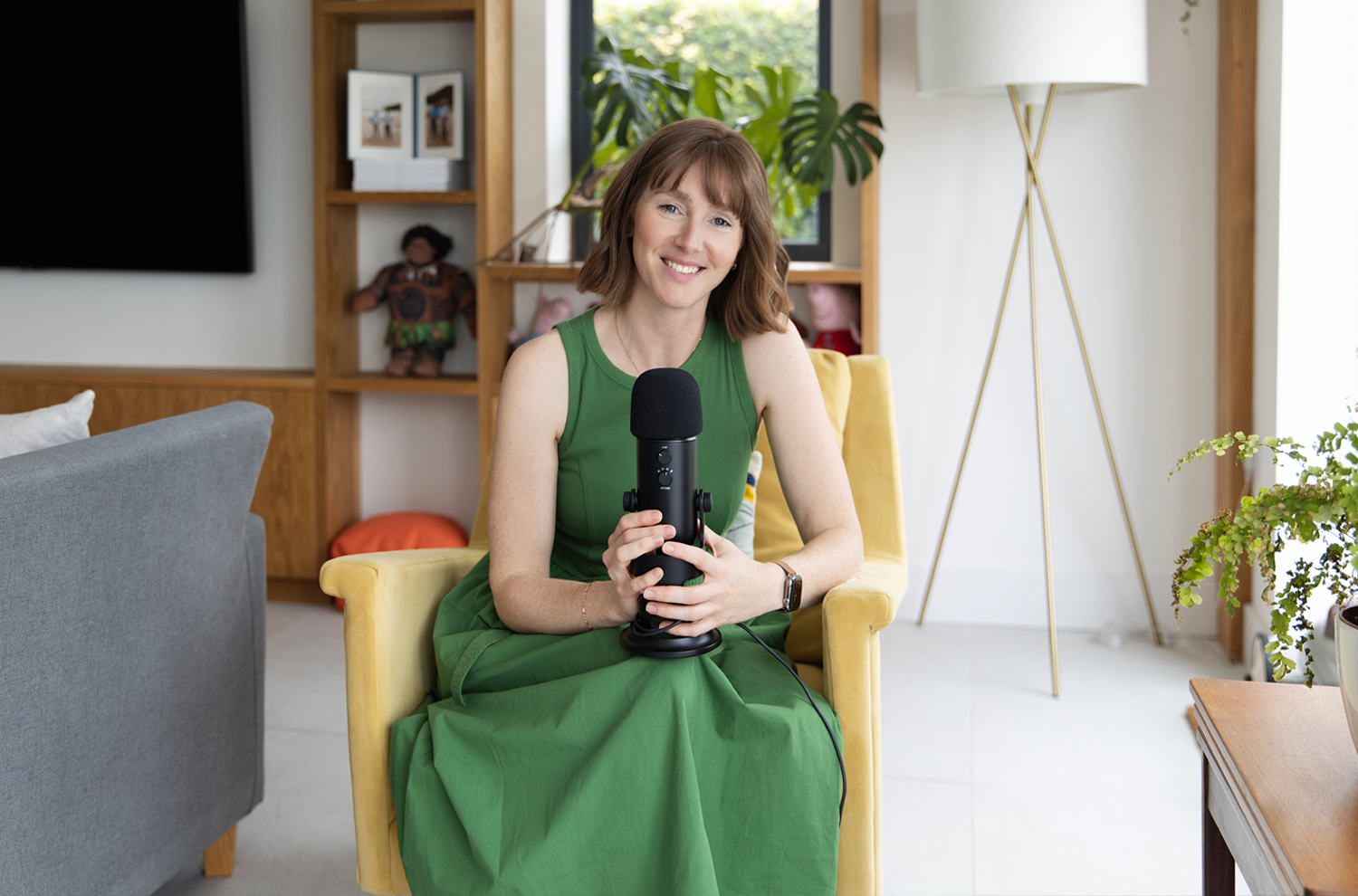
For 49 episodes, I have been the one asking the questions. For episode 50, the tables are turned!
Putting me in the hot seat is Sarah Garrod, one of my oldest and most trusted friends, a qualified journalist, founder of copywriting practice ‘Put In A Good Word’ and communications lead at Car-y-Mor, Wales’ first regenerative seaweed and shellfish farm. We met on our first day of secondary school at the age of eleven and have navigated teenage years, university, adventures in business and the complexities of modern motherhood side by side ever since.
For this milestone episode, Sarah puts her journalism skills to work and interviews me about her own story. From co-founding the D-Day Revisited charity to building a photography business across the analogue and digital ages, dipping my toes into the online business space and the messy, honest reality of navigating entrepreneurship alongside early motherhood… this is a conversation I admit felt self-indulgent and uncomfortable in equal measure. Which is, of course, exactly why it needed to happen.
In this episode, I share my story in my own words. It is a conversation about transferable skills, creative identity, the courage to take up space and what it really looks like to be in the messy middle of building a business and a life you love.
Conversation Highlights:
- The story of co-founding D-Day Revisited, a charity that became one of the most significant commemorations of its generation, and what that experience taught me about leadership, community and showing up for something bigger than yourself
- The transferable skills that charity work planted in her, and how those skills quietly shaped the way she approaches motherhood and business
- The transition into photography and the journey of building a business through the seismic shift of the digital age
- Why film photography holds a particular and irreplaceable magic and what the analogue process teaches us about patience, trust and the art of letting go
- How I think about creating lasting memories through photography and why the stories we preserve matter as much as the images themselves
- The messy middle of navigating motherhood and entrepreneurship honestly and what it has taken to keep showing up through the uncertainty and self-doubt
- Why I started this podcast, what I hoped it would become and what 50 episodes have taught me about community, connection and the power of shared experience
- The importance of finding my tribe as a mother in business and why building community is not a nice-to-have but a genuine lifeline
- My vision for the next chapter, including a new weekly solo episode sharing the honest highs and lows of building a business alongside family life
Listen If You’re:
- Curious about the story behind the podcast and the woman who has been asking all the questions for 49 episodes
- In the messy middle yourself and needing a reminder that the host of this podcast is right there alongside you
- Interested in film photography, analogue processes and the art of preserving family stories
- A mother who has built something meaningful from a combination of passion, transferable skills and sheer persistence
- Looking for permission to take up more space and share your own story more honestly
- Ready to feel less alone in the particular challenges of building a business in this season of life
Favourite Quote for Mums in Business:
“Business-building mothers need to get more comfortable taking up space. And I have a responsibility to practise what I preach.” – Victoria Phipps
About the Guest and Host:
I’m Victoria Phipps – a Mum of two, analogue family photographer, charity co-founder, photography business educator, marketer and now podcaster! My career has wandered all over the place and is becoming a bit of a complex tapestry as I head into this middle phase of life, but I can honestly say I’ve loved every minute of it so far.
I was raised by a nurturing Mother and an entrepreneurial Father and have inherited traits from both, so the tension between ambition and motherhood is one I grapple with on a daily basis! I’m fascinated to hear the stories of other women on a similar path, who are striving to build thriving businesses whilst being present for their children. It’s a tough juggle, but I hope the conversations shared on this podcast help Mums in business feel less alone and inspired to keep going in pursuit of their dreams!
Interviewing me in this milestone episode is Sarah Garrod – qualified journalist, founder of Put In A Good Word and one of Victoria’s oldest and most trusted friends. You can find Sarah at putinagoodword.co.uk or on Instagram at @put_in_a_good_word.
If You Enjoyed This Episode:
Please subscribe, rate and review the podcast – it helps other mums find us!
Share in your Instagram stories, tag @mummeansbusinesspodcast and let us know your biggest takeaway.
Share this episode with a fellow Mum in business who you feel would resonate with my story.
Episode Transcript:
Hello and welcome to the Mum Means Business podcast, where we shine a light on inspiring women who have one thing in common. When they’re not managing tantrums, homework, P.E. kits and play dates, they are busting their gut to build a thriving business that supports their family life. I’m your host Victoria Phipps and I’m figuring out how to play this game right alongside you. I’m a motherhood, family and personal brand photographer, I teach portrait photographers how to lead with print in the digital age, I’m marketing lead in the family business my Dad founded over 20 years ago and I’m “Mum” to two little girls.
If you’re a multi-passionate mum too, in need of some solidarity whilst navigating the messy middle of making your big dream a reality, then stick around. This is for you.
NOTE: This is the transcript from the original recording, rather than the edited episode so timings may vary.
Victoria (00:01)
My guest today is one of my oldest and most marvelous friends. She is a mum of two, a qualified journalist, founder of Put In A Good Word for All Your Copywriting Needs, and now communications lead at Wales’s first regenerative seaweed and shellfish farm, Carimor. Sarah Garrett and I met when we were 11 years old on our first day of big school. And we have been the best of friends through all that teenage angst, the boy drama, the big exams, the gap yards.
the hazy alcohol-fuelled weekends at each other’s university and adventures in business from wedding photography excursions all the way up to brainstorming this podcast. And because this is the 50th episode, we are doing something a bit different and turning the tables. So Sarah will be tapping into her journalism skills and interviewing me. God help her. I have no idea what she’s gonna ask, but I trust her with my life. So here we go. Hi.
Sarah (00:52)
you
Hi, long time no see. This is crazy. No one’s going to ask us for a snack. This is amazing.
Victoria (01:01)
I know, literally
uninterrupted conversation. I swear it’s why I started the podcast just to schedule that in for myself.
Sarah (01:15)
I know, but you and me, I mean, it takes a lot for you and me to get an hour together. No one asking for snacks. The phone not ringing from school saying, and pick up a kid. You know, yeah, amazing. I’m excited.
Victoria (01:28)
No work, mean, this is, we can call this work, but yeah, no like dashing off to meet a deadline or like go on a call or anything. No husbands, no nothing. It’s just, yeah, it’s bliss. I’m so excited to just have this time with you.
Sarah (01:30)
No work? Yeah.
Bye.
I’m a little bit worried that we’re going to forget we’re recording and just, go. Yeah. Cool. Okay. So let’s go with the first question then. So what made you start your business? And I think what I’d really like to know first is not your photography business, but the first, charity that you work for. So for many years, and that’s where I really want to start. Cause I feel like
Victoria (01:47)
I think that’s fine. I think that’s fine. Let’s get with it.
Mm-hmm.
Sarah (02:11)
That is such a special thing and I really want to give it some airtime. So why did you and your dad start D-Day Revisited?
Victoria (02:22)
I always reflect back and I think he’s a baby boomer. So like he grew up with all the like the John Mills, World War II films. And obviously his parents were involved and everyone, all his teachers, you know, that was the generation. And it was this big adventure to him that they had all had. And he’d always been interested in the social history. So for him, it was a no brainer when he read this article, which was in
a newspaper around 2008, early 2009. And it was all about, it was a tabloid paper. And it was all about Normandy veterans who’d applied to the government for funding for the 65th anniversary. They wanted to go back to France to commemorate it. And they applied to the treasury. And the tabloid newspaper had printed this letter that they had in reply. And it was one of those things. It was probably some junior clerk that just didn’t really grasp what was happening.
and it had just been passed on to them. And they’d replied saying they don’t recognize the 65th anniversary as significant or worthy of big celebration, but they would provide funding for the 75th or the 100th. And obviously the veterans are outraged thinking, okay, right, so we can have the money to go when we’re 118, brilliant. And so it made the tabloids and it was this hoo-ha at the time. And my dad just thought, okay, well, can we do something to help? They’re not getting any government support.
Sarah (03:36)
Yeah.
Mm.
Victoria (03:47)
And I think because my brother was having a really hard time around that time, he was ill, he’d been diagnosed with a really weird and not so wonderful autoimmune condition. And it was quite serious and he was, he’d had treatment, but he had lost his way in terms of what he was doing, his direction. And I think my dad thought that it might inspire him. I think it thought, he thought it might, you know, give him something to focus on. And actually what happened is it inspired me and gave me something to focus on.
Sarah (04:10)
That’s Yeah.
Victoria (04:16)
which I don’t think was the original plan, but I loved it. The idea, I thought it was really interesting. You you and I both loved history in school. We both did history A level, just the stories. I just loved all of it. And the idea that we could go and like have conversations with these people in real life about what they did. And so we just started going to the local Normandy Veterans Association meetings. And I’m not gonna lie, they were a bit dry, but the people there.
Sarah (04:18)
You
Yeah.
Hmm.
Victoria (04:46)
were so brilliant. The idea that you could just sort of sit down and chat with them afterwards over a cup of tea and hear their stories. And it just sort of evolved that we ended up asking them, you can we give you some support? Can we help you fundraise? Can we help with arrangements? How can we support you to get these guys over to France for the anniversary? And so that first one we did in conjunction with them and then it grew arms and legs and there were other people, other veterans who wanted to join in.
but who weren’t members of this club. So the Normandy Veterans Association, you pay your dues, you’re a member, you go to these meetings. Whereas there were veterans who were just didn’t want to be in a club, but they did want to go to France. And so we decided that we would set up a charity and it would be open to all veterans as long as they were there in France in 1944, they could come along.
Sarah (05:26)
Yeah.
Victoria (05:40)
And so the next trip, think we took 2010, we took about 150 people. It was mental. We had no idea what we were doing. literally, neither of us had ever done anything. We did, but it was, and this is the thing. And I think what I’ve been thinking about a lot recently is this sort of trust the process. Because I think when you’re a beginner in anything, you’re so green. We had no experience in events. We had no experience in caring for the elderly.
Sarah (05:40)
incredible.
Wow.
But you pulled it off!
Hmm.
Victoria (06:10)
And sometimes I think back to those early days, I’m like, we just learn on the job, which you do. And this applies to motherhood. It applies to any new business that you’re going into that you, you make lots of mistakes. And people used to say to us at the end, God, this is amazing. You know, the sun comes out and someone’s putting sun cream on my forehead. It starts raining and someone puts a poncho over me. You know, they used to joke that they could literally absent themselves of personal responsibility for the whole week.
Sarah (06:20)
Yeah.
Yeah
Victoria (06:38)
because we had it all covered. But the only
reason that that was the case is because in those first couple of years, we didn’t. It was sunny and every single veteran had a purple berry burn. We used to call them berry burns because they’d be wearing their berries like diagonally across their forehead because we didn’t have any sun cream. And so it was a really, really fast learning curve and dealing with kind of these authorities, know, the military authorities over there.
Sarah (06:45)
Hmm.
Yeah.
Hmm.
Victoria (07:06)
The gendarme, you know, we’ve got so many stories of, you know, especially on the bigger anniversaries where you’d have heads of state there on the 6th of June. And people would, you know, my dad, think at one point he was in a sort of a standoff with the gendarme who wouldn’t let us past with these two coach loads full of veterans. And the gendarme pulled a gun on him. And dad was just like, this is gonna play out really well.
Sarah (07:29)
No!
Victoria (07:31)
This is going to play out really well in Le Monde tomorrow. know, charity founder is shot on the streets of Aramange trying to get veterans down to the commemorations. And, it was mad because you would just have all these sensitivities around the heads of state and the security and the policies. And, and we found quite quickly that actually, because we were acting on behalf of the veterans, we were in a position of great authority.
Sarah (07:56)
Mm.
you
Victoria (08:01)
And
because we were so green, we would do crazy things and we would challenge all of these procedures and say, that’s not in the best interest of these veterans. And we’re here for them. We’re not here for you. We’re not here for this association or this or the military. And we’re just here for these guys in the coach that want to go to the beach and lay a wreath. So can you just move? And I think it was a really good education.
Sarah (08:14)
Hmm.
Yeah.
Victoria (08:29)
in that sense of kind of challenging authority and finding your purpose and feeling kind of powerful in it. But that’s a very long answer to a very short question about why we started.
Sarah (08:31)
Hmm.
Hmm.
No, no, no, no. It actually
just hit me as you were talking about it. I’d never really thought about it before. How many transferable skills you got from that experience to now going in motherhood. No, but for motherhood, mean, putting sun cream on people that don’t want it on, remembering the raincoats. I mean, if you can deal with the French military, you can definitely deal with a toddler tantrum. I mean, just brilliant. Who knew?
Victoria (08:49)
so many. Yeah. Yeah. Yeah.
You
Yeah, and they do say, don’t they, like people at the very end of their life kind of regress and become childlike and that they just need to be looked after and they kind of want to be looked after. And so there is something about, you know, kind of just taking care of people as well. And anticipating their needs, whether that’s a dram of whiskey at the end of the night, which sometimes it was a real need, or whether it’s like, where are the next, where’s the next toilet stop? Like basic things like that, that definitely apply in motherhood.
Sarah (09:11)
Hmm.
Hmm.
Yeah.
Mm. Yep.
Yeah, absolutely.
Yeah.
Victoria (09:36)
So yeah, so many transferable skills and it was just such a life enriching experience. I wouldn’t change like a moment of it, even though it’s sad now that all those veterans have gone, but you know, one or two, it was amazing and really shaping, I think it was brilliant. Loved it. So we lost our favourite, my favourite.
Sarah (09:57)
Have your girls met the ones that are still going?
Victoria (10:05)
John Dennett just earlier this year, John Dennett B-E-M, I should say. And they did meet him, yeah, so they went to his 100th birthday party. So I’ve got photos of them with him. And we used to go and visit another chap, Bob Lavarty, up in just a bit north of Liverpool. And Alice would still talk about Bob, and my daughter would still talk about Bob.
Sarah (10:07)
Hmm.
how special.
Victoria (10:34)
And she actually still asks about him and I have to explain that he’s gone to heaven now. But yeah, it’s amazing to make that generational connection because obviously these men and women were born in the 20s and it’s a century later that my kids were born. So it’s mad to show them, if they live for 90 years, they’ll have a photograph with somebody who was born in 1920 something. It’s crazy.
Sarah (10:43)
Mmm.
Yeah, yeah
And you talk about, yeah, photographs, that leaves us nicely. you’re supporting with a charity a lot. You’re also working for your dad’s business. Where did the photography come into this? Did just, were you not busy enough? Did you think, I’ve got a lot of spare time. I know I’ll start a business from scratch now.
Victoria (11:21)
Do
you know what? It’s weird. I don’t think at the time I was doing that much for the family business. I think what had happened is, because I studied architecture, as you know, and I’d worked in practice for a year in Liverpool and that had confirmed that I absolutely did not want to be an architect. So it coincided with the crash in 2008, 2009, the bottom fell out of everything. And I think I’d been on the cusp.
Sarah (11:29)
Mm-hmm.
Victoria (11:51)
I’d had my doubts about it anyway, and that just confirmed that it wasn’t the path that I wanted to keep going down. So I went to work for the family business for six months in my head, and I still work there two days a week. So that is nearly 18 years ago, 17, 18 years ago. But photography was an antidote to architecture, because architecture takes ages. You have an idea for a building, and…
you sort of draw it out on your napkin. You’re to be romantic about it. But actually by the time that building’s built, you’re years down the line, you know, you’ve got so many compromises on your original design idea. It’s how I saw it. You know, you’ve got your client, you’ve got all the kind of planning, the conservation, whoever, whichever department needs to get involved, building regs, structural engineers, what’s possible, what isn’t. And I think…
Sarah (12:33)
I like the way it sounds.
Mm.
Mm-hmm.
Victoria (12:50)
For me, because I’m so impatient, I recognize that architectures are calling and you have to be really committed to it. You’re probably going to get two or three big projects in a lifetime, in a career that you’re really proud of. And actually, I think I realized I wanted to be the client more than I wanted to be the architect. So I wanted something when I left architecture, I wanted something that was really rewarding really quickly.
Sarah (12:59)
Mm-hmm.
huh. huh.
Mm. Mm.
Victoria (13:18)
and photography just fit the bill. So I just started taking
pictures and I got obsessed with it and it was a really nice creative outlet whilst I was trying to figure out what to do because I’d wanted to be an architect since I was 11. I was so sure of it until I did it. And so, yeah, I was working doing sort of admin stuff for my father’s business, which was in its infancy at the time.
Sarah (13:28)
Mmm.
Hmm.
Victoria (13:44)
although he’d been in the industry a long time, the new company was still quite young. And photography just became like a hobby that I was obsessed with. And then I photographed my friend Chloe Anne’s wedding. And we put the photos on Facebook and someone else asked me to photograph their wedding. And then someone else asked me to photograph their wedding. And Facebook was like the place. It was like 2009.
And that’s it, it was really organic. And I don’t think I ever made a decision that I would start a photography business. It wasn’t like that. And I didn’t put any pressure on myself. You know, I was in my, where were we? Like 24, 25, 26, something like that. Just, it was different. You feel like you’ve got loads of time and you just do this for a bit and see where it goes. And that was it. Yeah, it wasn’t very strategical.
Sarah (14:13)
Mm.
Hmm.
Hmm.
Yeah.
Mmm.
It’s interesting because I think
there’s been such a changing playing field for our generation in that and you kind of just touched on it, but you were major redundant from your first job, I was major redundant from my first job, a lot of our peers were, we were kind of navigating our kind of postgraduate experience amongst like competing for a job where 500 other people were going for it and it was so difficult.
And I think a lot of kind of what we’ve had to do over the last 20 years also is kind of retrain because a lot of what we learn isn’t relevant anymore. And then there’s these younger people coming up with a lot of skills that we don’t have or we’ve had to kind of learn on the job. Yeah, yeah, exactly.
Victoria (15:09)
Hmm.
Yeah, yeah, yeah, completely, yeah.
Or they have them intuitively because they’ve grown up in a more digital world. Like when I was doing
architecture, we literally had a drawing board and we would draw with a pencil. and that was, you know, in the early noughties and you you thinking about journalism, you’re going into print and there is this solid world. This is journalism, newspapers. Yeah. And everything changed.
Sarah (15:28)
Mm. Mm, yeah, yeah.
Absolutely. Yeah, you learn shorthand and yeah, it’s just all dying skills.
It did change, but that’s where I find it really interesting that you’ve kind of gone full circle with that and you’ve gone, right, I’m going to film. I’m not going to, which is really lovely. It’s so lovely. It’s saying, no, film is not dead. I’m going to give it 21st century update and I’m going to go back to it because it’s special.
Victoria (15:53)
Yeah, I know. Yeah, I know.
Yeah.
Yeah.
Sarah (16:05)
So yeah, why is it so special to you? What makes film superior?
Victoria (16:12)
I think, like you say, the photography game changed very, very quickly. It had been film for generations and there would be a photographer in a studio and you would go and visit them and they might shoot your wedding or they might do your portrait and then you’d go back and you would have a consultation. You’d see your photographs and you’d decide what you wanted to order and that’s how it was. And photography was not inaccessible but…
Sarah (16:19)
Mm.
Victoria (16:42)
the craft of it was quite expensive because you had to pay for film. And this was a profession. And I think at the moment when I came into it, there was this massive influx because of the digital revolution that suddenly everyone could be a photographer. And it was amazing in that there was such creativity and particularly in wedding photography, which is what I did for 11 years, it was revolutionary.
Sarah (17:07)
Mm.
Victoria (17:07)
wedding
photographs have been static, like all stand here next to each other and look at the camera and smile and all do this and it had been very posed, very formulaic. And suddenly there was this new wave of photographers just doing things very differently. And it was exciting. I remember it feeling exciting. But after 11 years, I was a bit tired of shooting weddings. And I think I had lost some of that creativity that I went into it with.
And I felt like I was on autopilot and then the pandemic hit and then I had two children and I’m floundering around wondering what to do with this business because, you know, weddings, it was a natural pause. Weddings were illegal for a couple of years. So it was a good time to sort of step back, have my babies from a business point of view was a good time and then just take stock. But coming out of a double maternity, I wasn’t sure that weddings was going to work. I was quite sure weddings wasn’t going to work.
I didn’t want to do all that traveling and leave the kids. And I was thinking of them at school age, would I want to be going away every weekend? And so I thought, right, well, I’ll do family work because that’s my network now. All my friends, small kids. That’s the world I’m in. I’m constantly at baby cafes. You know, it all makes sense. And I thought this is my opportunity to shoot film, to go exclusively on film. I had shot film during weddings and I’d been sort of hybrid.
Sarah (18:15)
Mm-hmm. Yep. Yep.
Mm.
Mm-hmm.
Victoria (18:33)
And depending on the wedding, I would choose if the light was good, I would shoot more film because I loved it. And because I think it, like you say, it’s special and weddings, family portraits, like these are the moments that need to be beautifully immortalized. They need to be cinematic, special, film-like grainy and timeless. And you know, the word timeless is kind of ridiculous because nothing is timeless, but.
Sarah (18:51)
Mm-hmm.
Mm-hmm.
Victoria (19:03)
you know, to have a quality about it that is elevated above your, you know, your iPhone snapshot. And the fact that you get negatives. So like now I will, my lab will keep all my negatives for a year and once a year they’ll post them out to me. These are all your negatives from the previous year. And I like when I get around to it, I like package them all up. I’ll go and find, excuse me. So I’ll go and find all the negatives from each family session.
Sarah (19:03)
Mm.
Mm-hmm. Mm.
Mm.
Mm.
Victoria (19:31)
and I’ll put them in an envelope and I’ll post them to them. I’ll say literally with a note saying like, put these in your loft for your kids to find when you’re dead. Because our children are not going to have that. Like we will have it. Our childhoods are held on film and in print as well. And print’s like a massive factor. I really worry about the 25,000 JPEGs that I have on my iPhone.
Sarah (19:43)
No.
Mmm.
Mmm.
Mm. Mm. Mm.
Victoria (20:02)
for my kid, of my kid’s childhood. really like it, it bothers me. And
I think moms are the curators of this stuff. We’re the curators of the family photo archives. Dad’s not sitting there on a rare evening when he gets some time and thinking, do you know what? I’ll go through and I’ll organize some photos. Like he’s not carrying that burden. Is he? I mean, is Chris doing that? No. So maybe some dads are, but it’s normally mom. And I think,
Sarah (20:09)
Yeah.
No.
Yeah.
Victoria (20:29)
Having a family photo session captured on film and then being given the opportunity to have just a beautiful album or a beautiful framed print to go on your wall that you can live with day in, day out, where you look great, your kids look great, everyone’s happy. It’s the photographs that we live with that become famous to us. It’s the photographs that we live with that…
bring comfort and bring joy. You know, on those days where like everyone is tired. Yeah, exactly. When everyone’s tired, everyone’s exhausted, you’re all pissing each other off. You need to go to bed. And or you have an argument. No, well, no, just me. You all just need to go to bed or you’ve had an argument with your partner or whatever it might be. And you just can like pass it and just think, you know what, it’s okay because we’re all right really. Like it’s…
Sarah (20:58)
Spark memories.
would never have any days like that, ever. No, it’s like every day. Yeah.
Victoria (21:24)
it’s really important to live with these photographs. It’s really important for kids to have that kind of sense of belonging in their home as well and that they are cherished and loved in this space. And I’m really passionate about that. And I think that lends itself to film. So the way that this kind of reiteration of the photography business has evolved is that I go all in on film. It’s an experience like the kids that I’m photographing have never seen a film camera, some of them.
They don’t, never seen a roll of films. This is like 120 film, really beautiful film. And I’ll like get them to load it in the back of the camera. They’re asking me if they can see the picture on the back and I’m explaining why they can’t and explaining that this film is gonna go on a big adventure to California and the lab fairies are going to make it into your photographs and it’s magic the way they do it. And I talk about the chemistry of it. And then they’ll send them back.
And then like I invite people to have a proper reveal like the film photographers of old would have done. So it’s like carving out a piece of time for this family to just separate themselves from their to-do list, be together on my sofa or on their sofa or wherever it might be and just immerse themselves in these photographs that they’ve invested in. And it’s gorgeous. Like I love it more than taking photos I think sometimes because
Sarah (22:33)
Mm-hmm.
Mm-hmm.
Mm.
Victoria (22:44)
How often do we get the time? Like you said, we can’t even have a conversation. We have to like schedule one in three months in advance or like a dinner date or something or a coffee and then record it. Like, yeah, exactly. It happened. Yeah, yeah, exactly, exactly. So it’s it’s that. It’s like carving out time to just be. And I think what I find really moving is like the connection.
Sarah (22:49)
No. And then record it. Just to prove that it’s actually happened.
Victoria (23:10)
Sometimes people bring their kids, so obviously the connection with their kids and kids get really excited to see their photo and they can feel that these photos are special. This isn’t something on the back of mommy’s phone. This isn’t, you know, a throwaway thing that they might see once and then never again. This is an experience. This is something special. This is shot on the magic stuff. And now they get to watch it in a curated environment and like the kids are coming out like do popcorn and stuff. And it’s just really sweet.
but also connection between mum and dad or mum and mum or dad and dad or whatever it might be. That actually they have a moment to look at these pictures of their kids who are so happy and the connection that they all have and just look at each other and be like, know what, we’re doing all right. Because especially in the early season of parenthood, it can be hard to reach each other and you don’t have time. You know, we don’t have time to talk to each other. Sometimes you don’t have time to talk to your partner or you don’t have energy.
Sarah (24:01)
Mmm.
No. No.
Victoria (24:08)
And
you can go through like weeks and weeks with no connection really, other than like, so who’s picking them up from here and who’s doing this? Yeah, so boring. And you forget that actually you like that person because you haven’t really seen them. They’ve just been in your presence. You haven’t connected with them. And I think it’s a real moment of connection. And the feedback that I get about it is so lovely. And then, yeah, I’ll guide them through like printed stuff. Like how do you want to enjoy these photographs in your home?
Sarah (24:12)
So functional, yeah.
Victoria (24:37)
and I’ll take them through loads of options. And it’s so nice because they just have something tangible to take away. And it’s something that mum can think, okay, well, you know, yes, I’ve got 25,000 photos on my iPhone, but at least I’ve got this. I’ve got this and this is amazing. And I’m in it, exactly, exactly. How often do we like take pictures of the rest of our family and stand behind the camera taking it? It happens all the time. And now I look back at…
Sarah (24:51)
Yeah, and I’m in it.
Mm. Yeah.
Victoria (25:06)
pictures where my girls were babies. And I’m not in any of them really, because I was just taking them all, like beautiful memories they’re gonna have with their dad, who just like popped in for fun and then popped out again. Like, and I regret that, I regret not taking more, you know, but in the moment we’re so fried and busy, like overwhelmed, overstimulated, it’s not the priority, but actually if you can outsource that to a professional who is gonna just like tick that box for you.
Sarah (25:14)
Yeah.
mate. Yeah.
Mm-hmm.
Victoria (25:35)
and have a really lovely experience in the process. But that’s what I do.
Sarah (25:39)
Mm-hmm. That is what you do.
It’s great. I mean, I’m so lucky, obviously, being your best mate. My children have been photographed a lot, which I feel really, really lucky about. And it’s just such a lovely, slow process. And I think that’s why I feel like we get to just turn off. It’s so nice. Neither of have our phones on us. We’re not checking our phones. We’re literally just being. And you’re in the background being Auntie Vicky, making the kids giggle. And they love it.
Victoria (25:54)
Yeah.
Sarah (26:07)
They absolutely love it. And I love it because I don’t feel that pressure to be, you know, don’t know, curating the photographs. I can just let you do your thing. And yeah, it’s wonderful. It’s a really wonderful thing. And the kids really enjoy it. The photograph.
Victoria (26:22)
Well, think as well not being able to see, yeah, not being
able to see the back of the camera because you can’t get anxious about how you look. There’s no option. You just have to trust the process. And the fact that the shutter isn’t firing, firing, firing, firing because it’s film, you know, it costs me money every time I press the shutter. So it’s totally changed the way I take pictures. I’m way more frugal. I wait for the right moment.
Sarah (26:32)
No.
No. Mmm. Yeah.
Mm.
Victoria (26:48)
I’m not sort of spraying and praying. So actually you don’t feel you’re being photographed as much as you do probably on a digital shoot. And when I do personal branding shoots for, I mean now for kind of women in business, that is digital. And I am still slow and I do take fewer photographs because I’m so trained to shoot film. And I think even doing that.
Sarah (26:56)
Mm.
Victoria (27:16)
people say it’s nice to just feel like you’re not being papped because that can be quite overwhelming as well. And paparazzi style photography is where I started. Yeah, yeah.
Sarah (27:24)
And the children are picking up on that. But the children are picking
up on that. And I think, you know, mine are a little bit older than yours and they’re already saying things to me like, put your phone down. Or for enjoying a moment, put the phone They don’t want me there, stood there like this. you know, it really hit me when we were, you and I both, weren’t we at the same time at Disney at Easter, which was so, so wonderful. But we were watching fireworks and it’s incredible. It’s such a cool thing.
Victoria (27:35)
Yeah.
Sarah (27:52)
And my kids couldn’t see because there’s lines of adults like this holding their phone up. And I just thought, why? Why take one photograph or take a short clip and then put your phone down. You’re never going to watch that whole video back, but that one beautiful photograph that you could take could go on your wall or in an album. Fine. You know, I took a photo and it’s gone in an album. I didn’t need 50 of the same fireworks display.
Victoria (27:57)
Yeah. Yeah.
Yeah. Yeah, Yeah, yeah.
Exactly, what are people doing with it? Yeah.
Yeah.
Yeah. Yeah.
Sarah (28:22)
And it just ruined
the experience for us all. And I always think that, and I remember seeing this through your wedding photography journey, like the difference in the photographs when you first started to when you kind of started wrapping it up of how many people in the photographs holding a camera phone up. And it just spoils it. It just spoils. You’re there to take the photographs. And actually it meant that when I got married a couple of years ago,
Victoria (28:40)
Hmm. Yeah. Yeah, yeah, yeah.
Sarah (28:49)
Having seen your experience of that, said absolutely no cameras at the wedding, no, no, no, you know, at the actual ceremony. We’re paying a photographer to be there. They will take the photographs. I don’t want dozens and dozens of photographs that will sit on your phone forevermore, you know, in the cloud.
Victoria (28:58)
Yeah. Yeah.
Yeah, exactly, exactly.
And you’re right. It becomes, I think with the iPhone stuff or whatever phone you’ve got, it becomes like a sort of hoarding of memories. And actually it’s digital overwhelm because you feel like, one, you kind of do separate yourself from being present in the moment. And I always think as a photographer, I can take a really good photograph very quickly on my phone. I know how to use it. And most of my kids…
Sarah (29:13)
Yeah. Yeah.
Mm.
Mmm.
Mm-hmm.
Victoria (29:31)
like day-to-day memories are on my phone. It’s quick, it’s convenient, totally get that. But I will have this moral dilemma as well because my girls, like they’re younger than yours, but I can see it affects them, especially the little one. She doesn’t like it. If she’s enjoying herself and then I bring my phone out to capture it, there’s a little sort of hesitation there. And I think we’re all just in this mode of like collecting images, just collecting them for collection’s sake.
Sarah (29:33)
Mm-hmm.
Mm.
Mm.
Mm.
Mm-hmm.
Victoria (30:01)
so many of them will just go neglected. They’ll just languish on a cloud. And because we don’t actually have the time to process them and look at them and organize them. And I think that’s a big burden for mum. And I know that it’s not just mums that are taking photos like everyone is, but I think it’s kind of, you know, don’t even have to get into like the environmental repercussions of having all this stuff on a cloud that we have to like energize. You know, it’s…
Sarah (30:05)
Mm-hmm.
Mm-hmm.
Mm-hmm. Mm-hmm.
Mm.
Yeah? Yep.
Victoria (30:31)
And it’s fodder, a lot of it. And I know that because I’m a professional photographer and a lot of mine are. And really, we don’t need that many photographs. We just don’t. And it’s about curation. And I think this is what I’m realizing is something I’m really hot on is that curation. And I was having a, it’s funny, I was having like a vision mapping.
Sarah (30:42)
No.
Victoria (30:55)
session that I won actually in a competition with an amazing coach who has been featured on the podcast, Rebecca Cracknell. And she was sort of chatting through things with me about, you know, how do we bring these various factor, faction, what’s the word, elements of your business together under one umbrella. And she said, one of the key things that keeps coming out is this idea of curation.
Sarah (30:58)
Okay.
Victoria (31:18)
So like with this podcast, I like to keep the conversations really tight. And I think that comes from wedding photography because it’s about that story arc. And so I edit and I’m not so chill that I can be like, well it will be what it will be and it’ll just go out. Like I’m not that woman. I’m not a perfectionist, but I just think there’s something about curating the story. And it’s the same in a portrait session. know, when I do that reveal,
Sarah (31:42)
Mm-hmm.
Victoria (31:47)
and I want to take that family on a bit of a journey of that experience. And I want to have a really nice mix of portraits of all of them together, portraits individually, the curated, like the in-between moments where they’re just falling apart laughing. And I don’t want, it’s like a good film. I don’t want there to be a sort of clangor in there that brings people out of it. And this is one of the things that I teach in my print over pixels course.
Sarah (31:53)
Mm-hmm.
Mm-hmm.
Mm-hmm.
Victoria (32:18)
To photographers is like, how do we curate an experience for our clients that has value in itself? And I think that storytelling arc is something that I didn’t really clock that I was interested in, but I think maybe it’s one of my like main themes is just, and you know, as a journalist, when you write an article, you know, you could just dash something off and be like, done is better than perfect. And of course it is.
Sarah (32:28)
Mm-hmm.
Mm-hmm.
Victoria (32:46)
but we’re not looking for perfect, we are looking for a story. Like where’s the hook? How are we, you where’s the beginning, the middle and the end? How are we conveying this message? What do we want people to do at the end of it? And all those things I think are important to think about. Random tangent, but I enjoyed it. Thanks for facilitating it.
Sarah (32:46)
Mm.
Mm-hmm.
Mm-hmm.
Mm-hmm.
Victoria (33:10)
Go on.
Mm-hmm. Yeah.
had the idea in the January and I think you were the first person I voice noted about it. And I remember I was standing in our village, like outside my old house. I don’t even know why I was there. And it was really cold. And I think I was waiting for someone to pick me up. And yeah, I just was like, I’d been tumbling it for a day or two. But I remember just like going into WhatsApp and hitting the voice thing and just rambling at you. Like, I’ve got this idea, blah, blah, blah, blah, blah, blah, blah.
And as I was rambling, it was sort of coming together and you responded really quickly and really enthusiastically, so sweet with like, oh my God, just do it. And actually I took that really, that meant a lot because I feel like you are a very considered person and you will, no, I mean that as a compliment, I’m like rash. I will like have an idea and want to do it yesterday.
whether it’s a good idea or not good idea, but you will sit and you are thoughtful and you’ll like weigh it all up and be quite just sort of, know, realistic about it. You know, well, yes, this is a good bit, but what have you thought about this and balanced? And the fact that you came back so enthusiastically, I was like, my God, okay, it’s a good idea. Sarah thinks it’s a good idea. Must be a good idea. And yeah, it was just all about like the messy middle.
of this like mumpreneur situation. And I’ve learned lots about the sort of various connotations of all these words for mothers who are also trying to build a business. And mumpreneur is, it has all sorts of just meanings and it offends people and some people like it and own it and it’s complicated. But these were the people I wanted to talk to because I feel like I was one of them. You’ve been one of them. And it’s…
this, like you say, this kind of generational moment where actually there has been so much change between our mother’s experience and ours. And we’re now in a situation where most families, both parents have to go to work to pay the mortgage and the bills. And yet the systems that we work within don’t really support that. And we still haven’t evolved culturally.
in the corporate world enough to accommodate the needs of a mum in that early season of life when her kids are either in nursery or they’re going on maternity or they’re in the first years of school and they’re dependent on you entirely. And I think a lot of mums find that when they have children, their job doesn’t fit.
just doesn’t work and it could be for a whole plethora of different reasons. It might be that the logistics don’t work and it’s practical. It might be that it’s too much, like they can’t do that much work and hold all the mental load of motherhood, parenthood. It might be that actually they don’t enjoy it and their priorities have shifted. There’s so many different reasons, but yeah, or all of the above, yeah, exactly.
Yeah, so. Yeah. Yeah, and then there’s the kind of the hormonal emotional identity shift that comes with matressence. Like we are who we are within reason for a long time. We are an independent woman with things she wants to do, hobbies.
likes, dreams, goals, whatever. And we just are selfish and we just think about ourselves and where we’re going. And, you know, one day we might have a family, but then you have that family and it hits you like a ton of bricks. You can no longer be that independent person. And there are so many shifts that we have to make, which I don’t think I’ve talked about enough in terms of just identity and figuring out what we can take with us and what we can leave behind.
or what we just have to park for now. Because, you know, obviously when you’ve got babies, you know, you’re not taking very much with you at all. And you can feel like a shell of your former self at times. But then as they become more independent, you can start to bring a bit more of that back in. So it’s a whole journey that we’re all navigating. And if at that point you also find that your previous job, your career doesn’t fit, you might also find yourself going freelance.
or starting a business. And then it’s like, so many women don’t have a role model in that space. You you didn’t have somebody in your immediate family who was really like spirited entrepreneurial, like your dad’s probably the closest. And it can be really scary. And you kind of have to figure out your own way through it and find your people.
And it can feel really isolating. You’re working from home a lot. You’re because your job is then flexible in a vertical as you’re the one that’s doing like the school runs or drop off at nursery or whatever it might be. And you’re still, you know, getting your washing on in the day and juggling all those domestic tasks just to keep on top of your life. So you’re not completely drowning. And so I just wanted to talk about that. I think about this sort of.
mad roller coaster ride that women go on when they’re trying to raise their kids and build a business at the same time. Because I think both of those things force such personal growth and you really have to get to know yourself all over again and be honest with yourself about your strengths, your weaknesses when you’re building a business and also when you’re a parent.
and kind of reparent yourself as well because the world we’re growing up, we’re raising our children in now is so different to the world that we were raised in. And we know so much more about like how to, know, emotionally regulate our children and ourselves, which, know, yeah, yeah, well how to mess them up a bit less. Not that our parents messes up more, you know what I mean? Yeah, in a really gentle way.
Yeah, all of that, but it’s hard. Like this is a hard thing to do. And I think also what I’ve come to realize more and more through all the conversations I’ve been having is that motherhood is not valued as it should be in society. And I don’t think I really clocked this. I don’t think I really clocked it fully until I started the podcast because I’m so fortunate. I have always been really
beautifully, generously protected by my parents, by my dad, I suppose, because he’s always been an entrepreneur. He’s always, he’s given me all these opportunities. Like if he hadn’t had that idea about the charity, that wouldn’t have happened for me. And that became this really important life-changing chapter. And he has also been there the whole time I was running the photography business and he’s sort of given me bit of advice along the way there.
And then in my maternity, because the charity was embedded inside his company, I had two years of maternity paid. And so I was protected and it was COVID, it was a weird time anyway. But then when I started hearing these stories of what was actually happening to women when they became pregnant, when they came back, tried to come back from maternity, and then just…
the connotations of all these words, I thought in my naivety that being a mother and an entrepreneur is like incredible. And what a powerhouse human being that person is to do that. I still believe that. And to be able to just navigate everything, all the demands that that entails and transition from one role into another, it’s fucking hard.
and yet women are doing it. And I was just so inspired by all these women I was talking to, but then I started to sort of get an impression through a lot of these words, I suppose as well, the word mumpreneur. If you attach the word mother to the word entrepreneur, that it is diminished in value somehow. That the assumption is that this is a woman who’s like knitting in her spare time and she goes to like, and there’s nothing wrong with that. Love the knitters.
that she’s making a tenner at the weekend or she’s, you know, she made a hundred quid last week. Yes, exactly. Yeah. Yeah. Yeah. And I also get that that is a thing too. Sometimes it’s creative outlet.
Mm-hmm, yeah.
Yeah, yeah. Yeah, it’s a dance all the time. Like every season of your kid’s childhood has a different level of demand upon you. So it can be that, who was it? It was Amy Grilly that said, you know, this season of my life is not for skyrocketing in my career. And at the time when I had that conversation with her, and she’s brilliant, go and listen to her episode. I’ll put it in the show notes. I thought, I think I’m trying to skyrocket.
And actually probably what I should be doing is accepting that actually this is a time for better integration, better balance, whatever word you want to use, because my children need me more now than they will in 10 years. And maybe in 10 years I can skyrocket. And I felt kind of called out. And this is the beauty of a podcast is like, you know, I’m 40 years old, but I’m here to learn.
And I’m having conversations with women and mothers a lot younger than me who are teaching me stuff. And it’s important for me, I think, to kind of have that in this season of life because I found it quite frantic trying to figure out my next step. And I have struggled with that identity piece because I was ambitious and I was doing things. And 2019 was such a, like, an amazing year for me.
in terms of achievement, know, in inverted commas on paper. And also just having a real sense of fulfillment. You know, you’ve got the culmination of everything we’ve done with the charity. I felt really confident in my photography business. Everything was great. And like, I met my person, we bought a house, like it just all felt really good. And then COVID and a sudden shift into motherhood.
changed everything. And actually I think the part of the podcast, the reason I started the podcast, actually I think the reason I started the podcast was for that kind of therapy for myself. It was quite self-indulgent. I wanted to learn from other mothers who were making this work in their own way. And I wanted to hear their stories and I wanted other people to hear them in case they felt in some way like I did, like they were a bit isolated.
like they were doing it on their own, like everyone else was winning and they were struggling or they were finding this difficult. And it’s a bit of solidarity and a bit of community, I think, whether it’s just sort of on the school run in the car, just listening to another mum who has not won. She’s not finished. She’s not like business motherhood tick. You know, she’s not Emma Greed. She’s…
She’s doing it. She’s in that messy middle trying to figure it out like we all are.
Yeah, which is heartbreaking for you.
Bad timing, yeah, yeah, yeah.
Mm-hmm.
Mm.
yeah.
Yeah, definitely. And I think I’ve been surprised. I mean, it’s hard growing anything. And again, being a beginner, like I said about the charity, you start out, you know nothing. And launching the podcast, I had so much anxiety. Like I said to you, I spoke about it in January, sent you that voice note. And then in April, I was on my first podcast, because I thought I wanted to just see if I actually like it.
And then when I heard that, when that episode came out as a photography podcast, I bought Riverside. So this is a software that I use to record. And then for two months, I still did nothing. And then it was my 40th birthday and I was like, do you know what? I just need to, just what am I waiting for? I’m like halfway through life. Like, it’s hard to work for myself. And committed to launching it, but so many questions, like who would want to talk to me about this? Who would want to be on this podcast?
would anyone listen, you know, all the stories that we tell ourselves, the questions we ask ourselves. And I think just doing it anyway was really good for me because you force yourself through that, that, I don’t know, that challenge of all of those, all of the imposter syndrome that we feel and you just do the damn thing. And actually I’ve never been stuck for people wanting to come on.
even from day one. Yeah.
Yeah,
Yeah, literally, they’re the questions. yeah, yeah, what did that look like? And I think when I have interviewed people, excuse me, when I have interviewed people who are further along and perhaps their kids are older now, they’re teenagers or they’re about to leave home, I wanna ask those questions about those early days. I’m like, but what did it look like when you, this is why the first question is what made you do it? Like, what were your circumstances? Because all of that support,
can and should really fall into place. Once your business has momentum and you have a good income from it, by all means just give yourself that support, spend money on the support you need so that you can enjoy your life whilst doing it because I do think there is a season of hustle that a new business demands. And if you’re a mom as well, it’s really, really tough because you have a lot of other demands on you already and you’re carrying so much, your brain is already full.
And then it starts buzzing around with content ideas when you’re trying to get your kids dressed in the morning. And it’s a lot, it’s a lot, but I wanna ask those questions. What was the reality? Tell me about when it was hard and tell me about, by all means, tell me about what it feels like now. Because I think it’s, again, that story arc and we want to get to the honest truth of what it takes.
What were the sacrifices? What did you feel really wasn’t working at that time? Tell me about when you fell on your ass in your business and tell me about when you got yourself up and what you did next because those are the relatable stories. You have to fall on your ass in business, I think. There are very few businesses where they’re like, I had an idea and I did it and it worked and now I’m filthy rich.
when I fell on my arse.
I think this is the whole, mean, apart from sort of the minor moments where everyone’s got a Berryburn in the bar at the end of the night in Normandy, I think it was post-motherhood, a cluster of falling on my ass, just trying to figure out what to do next and vomiting ideas all over social media, literally.
Like, this week I’m gonna be a gardening influencer, because I like gardening. Or this week, I’m gonna try and teach photographers how to do this. Or this week. And it was just, God. I think now I look back on it, it is an indication of actually how distressed I was. I was really distressed and I was desperate to find some of myself, that old self that I’d had in 2019.
whilst also being completely in love with my babies and wanting to be with them all the time. And I was with them all the time, but I also missed myself and there was like a grief element and there was also an anxiety over like, what does the future hold? And I think what I did with the charity was so fulfilling. I was so in my purpose with that. And actually when photography felt really good in those early days and I was capturing people’s weddings and I was excited about it.
I was just trying to unpick those feelings because of course we need to make money in our businesses and we need to live. But also like I wanted those feelings again. I didn’t want to think like, oh, that was that. And now I’m just going to have to do something that allows me to do a school run and I don’t need to love it. It’s just, I’m not like that. I was like desperate to find something that filled my cup as well and that lit me up.
and I couldn’t find it, I couldn’t find it and I just was frantic in my energy and I think that was part of it and I think actually now looking back I needed to just…
let go a little bit and trust that this would all sort of come together like a path would reveal itself. And I’m not saying I’m there, like a path is revealing itself, but it’s still not clear. I just feel like I understand it a bit better. And just being able to like let go of the control element, not try and force things when things aren’t ready to be forced. And…
I think that’s a big lesson that I take away from it. And if there’s a new mum out there who is feeling like this, like they have no idea how they’re gonna make their life work anymore and they don’t know quite what the future holds, I would really like them to hear that because I think I spent a lot of time when I joke about it and I was never gonna be the mum that sort of like just sat on the sofa all day and cuddled the baby, because that’s just like.
Not me, like my being nap-trapped was like my worst fear. Because I’m a busy person, but I could have sunk into it more and I didn’t allow myself to. And now the girls are older. I see that I didn’t miss it. I was always there, but my brain, my mind was often elsewhere in this sort of urgent need to rediscover myself.
And I think actually that would have happened, but in the moment I couldn’t, it was felt so urgent and I wish it hadn’t. And so it would be like the picking myself up bit is like trust the process. Like what is meant for you will reveal itself. And if you try and force it, you’re gonna find yourself in a bit of a pickle perhaps and feeling quite distressed.
And sometimes the best thing we can do is pause and take a breath and just be rather than do. Yeah.
Mmm.
Yeah.
Yeah. Yeah.
Yeah, 100%. Yeah. Yeah, my eldest was five months before we really could leave the house and do that stuff. And I missed it. Like I needed it. And we had a really great NCT group and we needed each other desperately by that point. And we hung out every opportunity that we could from that moment on until we all had to kind of go back into the world of work. But absolutely, it would have been…
a different scene for all of us in terms of our mental health had we been able to get to each other sooner, because all our calls have been on Zoom, so we hadn’t even met. And I think that is something that I definitely learned is the finding your tribe thing is so important in motherhood and it’s so important in business. And so if you are a mother in business, finding people who just get you, get what you’re trying to do.
believe in you because they have the same motivation as you do. And you don’t have to explain yourself. And like you say, you have these amazing little conversation dances where you’re like, my God, she’s just thrown up everywhere. How am I gonna, I’ve got to cancel these calls. Does anyone know what to do about this? And how many days does she have to take off school? Who knows? And you have that. And then a minute later, you’re like, well, actually she’s fallen asleep. So I am gonna do that call. And you pitch something and you’re like, my God.
It went so well and I can’t believe it because literally two hours ago I was cleaning up vomit off the floor. Like it’s that, it’s the messiness of trying to do both those things in the same day, in the same hour sometimes. And if you can find people that are like just there ready to support you or just laugh with you when it’s one of those you either laugh or you cry moments and celebrate your wins and you know, hit like on your posts when no one else does.
you know, that’s what, that’s what we need. We need to find those people and
Mmm.
Yeah, yeah. Yeah.
Hmm.
Yeah, yeah, exactly. Yeah.
Yeah. Yeah. Yeah. Yeah.
Yeah. Yeah. Yeah.
Yeah. And getting stuff done, like you appreciate, you appreciate the healing quality of those conversations and not feeling like you have to pretend to be anything other than what you are in that moment, that you can have that conversation about how you slept last night and talk about, you know, my Apple watch told me off because I had four and four hours, two minutes and whatever. My body battery is this.
And then you can literally schedule, you just go straight, like you say, into work mode. And you’re going to leave that conversation having got everything done that you needed to get done, but also having connected with each other and those relationships, like you say, you’re investing every time. And sometimes it’s, you know, I’ve had situations where I have these conversations, you know, like you say at a baby cafe or whatever, and then they become clients.
but it’s not necessarily like the first conversation. It’s not like I’m going in and saying, oh, hello, you’ve got a baby. Have you had your baby photographed? Like that doesn’t work, don’t do that. But it’s just bumping into people over time and just it comes out in conversation. And then it might be like a year later or something that they’ll get in touch. And I think this is the dance between like just actually building relationships in real life. Like online communities are amazing. And definitely through COVID, like we needed them, didn’t we?
also getting out into the real world and connecting with other mothers because we’re all in the same boat and we all want to support each other. Like if I can outsource something that I need doing in my business or for this podcast to another mum, I will because I want her to win, basically. I want her to win.
Oh gosh, there’s so much. feel like I didn’t, when I started, I didn’t know that I’d get to 10 episodes, let alone 50. And it did start as a passion project and maybe a therapy intervention for me. But it is, you know, the conversations that I have in the DMs, it does land and it is growing, which is amazing. And it is a lot of work.
Like, you know, to get this episode out every week and to produce content and to invest time and energy into it is a lot of work, but I love it. And it’s, feel like this is kind of the point at which I decide like, okay, am I taking this seriously? Like, is this going to become something or is this a hobby? Like, what is it? And how does it connect to my other business? And so this episode’s coinciding with a bit of a kind of brand relaunch where everything
comes together a bit better, I think. And I actually start talking about my business in the podcast rather than, telling people what I do, because a lot of people have messaged me like, oh, you’re a podcast, but like, what else, what’s your business? And I’m like, okay. And I’m not, I think that’s the piece as well, because it’s a thing about going into something to tell other people’s and shying away from any sort of self-promotion.
and feeling like, you know, then this is about everybody else. And at what point do you kind of step into the space a little bit and take those kind of, because it can feel scary to do that. And so there are plans for a thing in 2027. won’t say any more about it quite yet, but there’ll be stuff coming out in the next couple of weeks. And again, sparked by a mum in the DMs because…
This is the thing, this is, you I love that I can open Instagram and I’ll just have a voice note, a really long one from a random mother I’ve never met. I just think that is the coolest thing. And she feels like she knows me well enough and she feels comfortable with me because I’ve been in her headphones when she was like walking the dog or whatever, that she can just voice note me. And I love that. And I think that makes me feel quite proud that.
people feel comfortable to reach out and suggest something or just send me a message and say that they really enjoyed an episode or tell me a bit of their story that they saw themselves in in another woman’s explanation of what she’d gone through. So yeah, there are ideas. I’ll leave it there. There are ideas, but it’s exciting. It’s exciting. And I do feel like, yeah.
It’s a bit of a turning point because it’s 41st birthday 50th episode. Let’s get serious about it a bit.
No.
You know what, I think I should have thought about this. Obviously knew, I’ve literally WhatsApp voice noted you and been like, the only thing that you need to know are like, there’s a beginning question, then question, just otherwise do what you want. And you’d think that I would have had time to actually think about this. And in all the other conversations I’ve had with other women, where I’ve asked them, you’d think I’d have reflected a bit more mindfully. I think it comes back to trusting the process.
I think as an eight year old, I was always very project driven. I always had a project. You know those like topics that you would do in primary school, like, oh my God, the topics, they were extracurricular. Like you do as much or as little as you like, know, the Victorians or the ancient Greeks or something. My topics were insane. My topics were like 200, pages long.
There was a lot of plagiarism, a lot of plagiarism, but I took that plagiarism really seriously. No, I just would copy things out of books. Well, no, no, there were books. You can plagiarise books. Yeah. I used to… No, no, no, we weren’t. No, it was literally the encyclopedias. Yeah.
I remember like tracing around some of the illustrations in like ancient Greece books and just being loving life. I used to stay up in bed with my topic and at age eight, I swear, I just loved it. And I think I’ve always been, yeah, maybe. We’ve never talked about topics, Sarah. How have we been friends? I know, but still something fun to reflect on. We’ll do that. We’ll schedule that in a topic chat.
Yeah, I think I was very, and you you could say conscientious, but I don’t think it was that necessarily. It was just curiosity and really interested in stories and kind of playful with it. And I think actually that playfulness does get conditioned out of you a little bit. And there’s so many conversations about the conditioning, the patriarchal conditioning of the millennial mum.
It’s a thing and it’s a thing that I’m learning so much about. And you know, it’s all that anecdotal stuff that you sort of thought about, but you were never able to name. And at some point I think got detached as so many women do from my own intuition, my own playfulness and everything just got a bit serious. it became about doing and about ticking these boxes and
you know, the promise of, you know, do ABC and your life will be X, Y, Z and X, Y, Z is amazing. You know, knight in shining armor will ride over the hill at sunset and come and sweep you up in his arms and take you off. That will happen. And, you know, you’ll have this glistening career and you’ll also have immaculate children and everything will just be wonderful. And I think actually,
my 30s became quite frantic with this stuff where those, I was doing A, B and C and X, Y, Z seemed a really long way off. And then I questioned myself, I must be doing something wrong. I must not be good enough. And that works in your personal life, in your professional life. Why is X, Y, Z happening for everyone else and not me? And actually I got myself into a bit of difficulty.
where I just started like beating myself up with routines and obsessive yoga and whatever else. It’s like, it’s not really difficult, is it? I was doing too much yoga. It was a really hard time.
Yeah, yeah, yeah. I gluten free for a bit. That was a dark time. I remember my first croissant after that. That was amazing. Yeah, I know, but how unfun of me. yeah, but literally, and I could feel that it was off. I could feel that, you know, energy, whatever you want to call it. Like, I just was quite socially isolated and just quite frantic and very controlling. And I think women do, you know,
lean into control when they’re in distress. And distress is relative, you know, of course, I’ve had a relatively lovely life. I’m so privileged. I’m so fortunate, but XYZ wasn’t happening and I was doubting myself. And actually what I needed to do was trust the process that things were happening as they should, you know, it’s another yoga expression, everything, you know, you’re exactly where you’re supposed to be.
And I think that is true. And I think I needed to go on this journey, everything’s in inverted commas today, but the path will reveal itself and just have faith.
tune inwards, shut off the noise, because actually I think part of this life experience is actually being our eight year old selves, getting distracted and then trying to get back to her. And I think I’m starting to get back to her and she’s really cool. Maybe I should do a topic.
So that’s it. I didn’t think about that at all, but yeah, long winded, but I think, yeah, trust the process and don’t be too detached from your own intuition, because it’s a powerful thing.
Don’t.
love that’s so nice thank you it’s to the next 50 I know it’s been amazing it’s so nice I love yeah just uninterrupted conversation is such a treat and thank you for for taking the time out of your busy schedule to indulge me it’s been lovely yeah well don’t tempt me don’t tempt me yeah well that’s the beauty of it that’s the beauty of podcasting
Thank you so much, Sarah. It’s been gorgeous. Love you lots.