
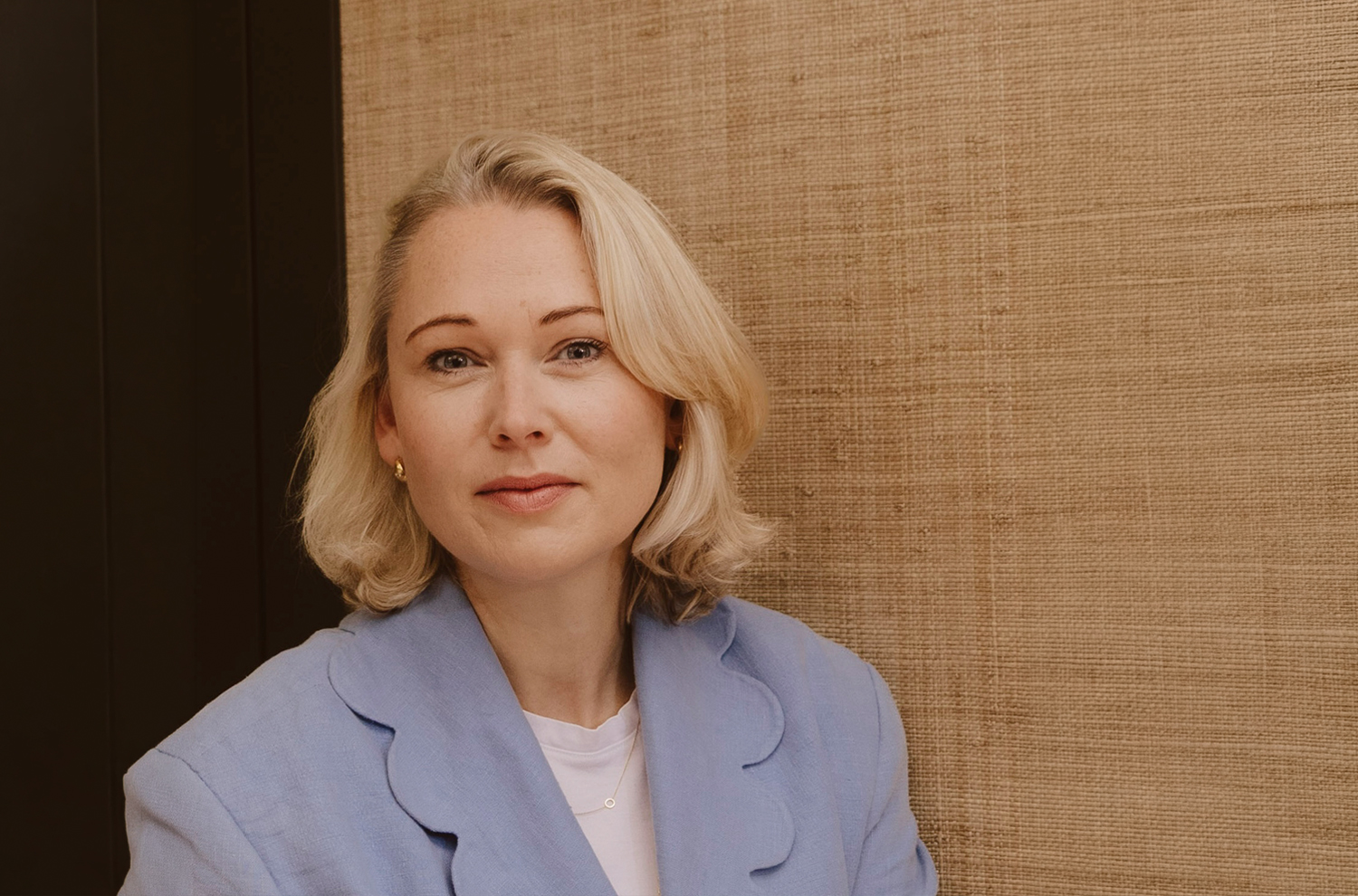
Sophie Catto spent years at Condé Nast Britain, rising from Branded Content Director at Tatler to Associate Publisher of The World of Interiors and House & Garden. By the end of that chapter she was navigating life as a working mother in senior corporate leadership.
In March 2020 she also took the leap into entrepreneurship, co-founding Catto & Co alongside her husband and combining his construction experience with her commercial expertise and aesthetic vision from years in luxury home publishing. Launching a business in early parenthood is a challenge in itself, and doing it at the outbreak of a global pandemic brought a whole new wave of surprises.
Having lived through corporate motherhood and the trials of entrepreneurship with babies in the mix, Sophie felt called to a role that would let her support other working women directly. She is now a Non-Executive Director of the family business and Joint Managing Director of AllBright everywoman, where she oversees community, events, digital platform and brand partnerships. One of the roles she values most is simply listening to what women are really navigating professionally and helping to shape campaigns and experiences that respond to those realities.
In this episode, Sophie shares what it was like to return from maternity leave just as lockdown began, grieving her father-in-law while launching a business, and why having children created an ambition she had never felt before. We talk about the workplaces that still need to change, the questions investors ask female founders and the Motherless Mothers charity she supports as a trustee. Throughout, Sophie keeps coming back to the same message: motherhood adds far more to your CV than it takes away.
Conversation Highlights:
- Sophie’s return from her first maternity leave just before lockdown, and the wobble of leaving her son for full days while needing her work to be purposeful enough to justify it
- Founding Catto & Co with her husband the week before lockdown, and the unusual experience of building a family business while holding down a senior corporate role
- Moving in with her mother-in-law the day her father-in-law passed in March 2020, and the strange comfort of a multigenerational household passing a one-year-old around between meetings
- How having children changed what Sophie wanted from her work, and why spending her days pushing consumerism in publishing no longer felt purposeful once her own priorities had shifted
- The decision to leave Condé Nast for AllBright, and what it has meant to help lead a business acquired and combined with everywoman, which champions women in male-dominated industries
- The honest admission that she did not love maternity leave, and why it is perfectly okay to say so out loud
- What came out of the research behind Motherhood Works, from the nervousness women feel about returning to work through to the very different challenges of mothering teenagers and young adults
- Why so many women need to feel they have permission to set their own rules, from leaving the office on time for nursery pick-up to asking line managers for the support they need
- The questions investors ask female founders about whether they plan to have children, and what that reveals about the challenges entrepreneurs face outside the protection of corporate HR policy
- Why everyone is winging it all the time, and what it has taught Sophie about saying no and prioritising
- Her involvement with the Motherless Mothers charity, the community it has built and why she believes so strongly in supporting women who are mothering without their own mum
Listen If You’re:
- A mother returning to work or building a career who is tired of hearing only about the motherhood penalty and wants a reminder of the skills motherhood builds
- A founder navigating investor questions, funding and the pressure of building a business around your family
- Someone who did not love maternity leave and has felt guilty about admitting it
- A manager or business leader wondering how to better support the mothers on your team
- Mothering without your own mum and looking for a community that understands
- Curious about what it is like to move from senior corporate leadership into a mix of family business and community-led work
Favourite Quote for Mums in Business:
“There’s so much negativity in the press around the motherhood penalty and everything you lose. What we wanted to do with Motherhood Works is champion all of the incredible skills that you pick up as a mother: the resilience, the negotiation skills, being able to manage your time incredibly effectively.” – Sophie Catto
About the Guest:
Sophie Catto is Joint Managing Director of AllBright everywoman and a Non-Executive Director of Catto & Co – the design, architecture and construction business she co-founded with her husband in 2020. After more than a decade in luxury publishing at Condé Nast Britain, she joined AllBright in 2022, where she now oversees community, events, digital platform and brand partnerships for a network supporting women at every stage of career and life. She is also a trustee of the Motherless Mothers charity and a mum of two sons.
You can connect with Sophie Catto on LinkedIn and find out more about AllBright everywoman, its events and its publishing site on Linkedin or via the AllBright everywomen website.
About the Host:
I’m Victoria Phipps – a Mum of two, analogue family photographer, charity co-founder, photography business educator, marketer and now podcaster! My career has wandered all over the place and is becoming a bit of a complex tapestry as I head into this middle phase of life, but I can honestly say I’ve loved every minute of it so far.
I was raised by a nurturing Mother and an entrepreneurial Father and have inherited traits from both, so the tension between ambition and motherhood is one I grapple with on a daily basis! I’m fascinated to hear the stories of other women on a similar path, who are striving to build thriving businesses whilst being present for their children. It’s a tough juggle, but I hope the conversations shared on this podcast help Mums in business feel less alone and inspired to keep going in pursuit of their dreams!
If You Enjoyed This Episode:
Please subscribe, rate and review the podcast – it helps other mums find us!
Share in your Instagram stories, tag @mummeansbusinesspodcast and let us know your biggest takeaway.
Share this episode with a fellow Mum in business who you feel would resonate with Sophie’s story.
Episode Transcript:
Hello and welcome to the Mum Means Business podcast, where we shine a light on inspiring women who have one thing in common. When they’re not managing tantrums, homework, P.E. kits and play dates, they are busting their gut to build a thriving business that supports their family life. I’m your host Victoria Phipps and I’m figuring out how to play this game right alongside you. I’m a motherhood, family and personal brand photographer, I teach portrait photographers how to lead with print in the digital age, I’m marketing lead in the family business my Dad founded over 20 years ago and I’m “Mum” to two little girls.
If you’re a multi-passionate mum too, in need of some solidarity whilst navigating the messy middle of making your big dream a reality, then stick around. This is for you.
NOTE: This is the transcript from the original recording, rather than the edited episode so timings may vary.
Victoria (00:01)
My guest today spent several years at Condé Nast Britain, rising from branded content director at Tatler to the associate publisher of the World of Interiors and House and Garden. At the latter end of which she was navigating life as a working mother in senior corporate leadership. In March 2020, she also took the leap into entrepreneurship and co-founded Cato & Co alongside her husband, combining his construction experience with her commercial expertise.
and aesthetic vision from years in luxury home publishing. Launching a new business in early parenthood is something in itself, but doing so at the outbreak of a global pandemic brought a whole new wave of challenges that no one could have predicted. Having lived through the realities of corporate motherhood and experienced the trials of entrepreneurship with babies in the mix, Sophie Cato felt called to a role that would enable her to directly support other working women.
She became a non-executive director of the family business and joint managing director of Albright Every Woman. At Albright, Sophie oversees community events, digital platform and brand partnerships, supporting women across every stage of career and life. One of the roles she feels most passionately about is simply listening to what women are really navigating professionally and helping them shape campaigns and helping to shape campaigns and experiences that respond to those realities.
I was kindly invited to attend Albright’s first Motherhood Works Summit back in June, and it was a beautiful opportunity for conversation between ambitious mothers at every possible stage in their career. It reminded me how important it is to hold space for women to connect and support one another through the inevitable identity shifts and challenges that come with modern motherhood. Sophie, I’ve been so looking forward to talking with you. Welcome to the Mummeets Business podcast.
Sophie (01:53)
Thank you so much, Victoria. Thank you very much for having me.
Victoria (01:57)
It’s a pleasure. think there’s so much we could cover in this conversation. And normally the first question that I ask my guests is what made you start a business? But I feel like with you, we need to go back a little bit further and talk about your corporate career and particularly, suppose, how that shifted in motherhood. So where were you in your role at Condé Nast when you found out that you were going to have a family and become a mum?
Sophie (02:26)
So I was, as you said, associate publisher of House and Garden and World of Interiors. I absolutely loved the role. I’d been at Connolly Nast by that point about eight, nine years. It had been a fantastic business to be part of and prior to that various different other publishing houses. But I felt, you know, it really was home for me and it was wonderful. I had my first son in 2019.
And just as I came back, we were about to go into lockdown. And I think it was really at that point that things started to change. And…
I’ve always had a huge love for design, art, decoration, interiors, and that grew so much more in that role that I was leading at Housen Garden and World of Interiors. Meanwhile, at home, my husband had been running a design, a build business, a design and build business to an extent, primarily construction. And he was beginning to feel that he really wanted to create something that we could own from start to
finish,
I could take my sales and commercial experience I’d had over the years to help support him. He had studied architecture, he’d worked with lots of designers and construction teams and felt it was a really brilliant time set up. Little did we know, of course, lockdown was about to
Victoria (04:02)
Hehehehehe
Sophie (04:05)
descend upon us. So, yes, I…
My, I’d had my first son, I’d just returned back to Coninesse and if I’m truthful, I felt a bit wobbly about, I went back about nine months, which fairly standard. I was so looking forward to going back, but at the same time, the natural tear between.
giving your child to someone else to look after for full day, five days a week, 8.30 till six. And knowing that the role that I was in and the work that I was doing needed to really be purposeful, impactful, and make me feel really fulfilled to then counterbalance the fact that I wouldn’t be at home with my children. And lockdown obviously came.
We set up a business the week before lockdown. We were extremely
Victoria (05:05)
my gosh.
Sophie (05:07)
fortunate that there were two wonderful projects that my husband…
He knew the clients particularly well and they said, look, we really want to go with you. We want to be part of a business where from start to finish, you’ll be able to service all of our needs. within Kato & Co, we have everything from interior designers, architects, project managers, and can take a client all the way through from start to finish, which is quite unique in the market and certainly where we are based.
lucky to have those clients and of course during lockdown construction wasn’t stopped in England so we’re very lucky that we were able to continue. I was of course back at work as well at Condé Nast so like the rest of the world on endless
Victoria (06:02)
you
Sophie (06:03)
Zoom and Teams calls really trying to keep that side of the business going, keeping our client relationships strong and in the background
them being able to support Cato & Co where I could and bring that sort of commercial expertise and insights to support the design-led and construction side of the business.
Victoria (06:30)
I mean, it’s a lot, isn’t it? It’s a lot. It’s all right.
It’s all right. It’s all right. It’s a lot, isn’t it? That sounds like such a hectic time. When I reflect back to, you must have had a child under one. So you’ve got, and what was your childcare situation like at that point? You’re establishing this family business. You’re also pulled to various Zoom calls here, there and everywhere and navigating to what extent you can meet and be together in the office.
because that was the first lockdown, March 2020 into the
Sophie (07:09)
Yeah.
Victoria (07:09)
summer. What were you doing with your baby at that point? What was your baby up to?
Sophie (07:14)
Well, to add to the chaos,
very sadly, my father-in-law, who we were hugely fond of and absolutely adored, he passed away on the 20th of March, 2020.
Victoria (07:28)
my gosh, I’m so sorry.
Sophie (07:29)
And so on that day, I moved down to Sussex with our then one-year-old, Bertie, and we lived with our mother-in-law. My sister-in-law and brother-in-laws were also there as well. We were all cooped up.
all of the children, I say children, me, and our generation, we were all working. So between us, we were this sort of wonderful, old fashioned…
family, sort of going through a mourning process and grieving together. We had a one-year-old that between all of us, we would pass him around from person to person between meetings. And that lasted probably two months. And then…
When that ended, we were able to actually send him back to nursery because the nursery was closed for a little while. But we had a hugely supportive nursery that really were an extended family to us. We don’t have, I’m based in London, we don’t have family here in London. So that nursery care for us was so important. An incredible woman called Mrs. B ran that and she really made it feel like a home for all the children there. So I felt so happy and confident there.
the boys over the years they were there really got the support and love and nurture that they that I really wanted them to have.
Victoria (08:59)
Yeah, I mean, it sounds like such a difficult time losing your father-in-law, but then having this kind of extended family bubble where, mean, it was so chaotic when you think back to it, just the uncertainty of that time, but actually all being together and having lost
Sophie (09:16)
Yeah.
Victoria (09:17)
your father-in-law, but also having your little boy, there’s something lovely about him being in the picture in that moment whilst you’re all obviously grieving and…
But there’s this next generation that you’re all kind of rallying
Sophie (09:29)
Yes.
Victoria (09:30)
around as well, which is which is actually really nice and I’m sure your mother-in-law was really comforted by that as well. And then you go on.
Sophie (09:35)
Yeah, she really was.
I know, just, and I think it’s the community element of that, knowing that
Victoria (09:41)
Yes. Yeah.
Sophie (09:44)
all of us then had support for one another and be able to, know, everyone through that period obviously was juggling so much, but knowing there were six of us in the house all the time, that we’d be able to…
seven of us including Matt, be able to look after each other as much as we could.
Victoria (10:05)
Yeah,
yeah, definitely. And it takes away from the isolation that so many people did feel during that time being stuck on their own. So it’s kind of at the other end of the spectrum. And it speaks to this support piece, which speaking more broadly is so important in motherhood. Whether you are an entrepreneur, whether you are in a corporate role.
or whether you’re kind of in some sort of messy middle navigating massive identities and trying to figure out what your next step is. And what was it about all of these experiences, being in senior leadership in corporate and also having this fresh understanding of what it means to launch a business of your own and it’s a family entity, you’re doing it with your husband, which is a particular thing to do.
And
I’m sure there’s lots of conversations then around the dinner table about it. Yeah,
Sophie (10:57)
It comes with its own challenges.
Victoria (11:00)
exactly. Yeah, exactly. Which I’m sure lots of people relate to. But what was it about having all of these experiences in early motherhood and you went on to have a second son that made you consider a change and take up the opportunity to move to Albright?
Sophie (11:20)
For me, think having children created a new ambition that I didn’t feel before and really made me realise I’ve got such a purpose that whatever I’m doing needs to ultimately support our family and…
where I’m spending my time and energy needs to be something that I love, I truly believe in, I feel passionate about, and also I’m learning something from. Learning for me is so important. I think, but after I’d had my second son, I was still at Coninesse and I’d come back and we’d gone through the lockdowns by that point. And I think…
The publishing world that I’d been in for 18 years had significantly changed because of lockdown. We have really transitioned much more into a digital space. Community and events at that time were really lacking because they had, we’d obviously had to stop all of those sorts of things.
For me, it was a sort of moment of, I had an incredibly supportive boss for the years that I worked there. she was, she’d had three children herself. She was quite a bit older than me, but really very supportive and gave so much advice. She also had been in that role for 25 years. She wasn’t going anywhere at that time. So it was then that decision of,
Do I stay in this role where I feel that I can’t really blossom into anything further at this stage? Or do I take a leap and do something different that really calls to the needs that I then had? And I think also, if I’m honest, I think I got to the point where…
what I spent my money on pre-having children significantly changed post-having children. And that
Victoria (13:27)
Hmm.
Sophie (13:28)
for me was a fundamental shift in how I thought about my role because I worked on the commercial side, the advertising side within publishing. We were…
pushing consumerism, if I’m honest, through all of those titles. And that to me then was a sort of wake up call. And whilst I was in a subject matter that meant a huge amount to me, and I’m wildly passionate about interiors, it was just then the purpose and the impact. Was there a place that I could create something more impactful and also then bring in the community element?
All Bright at the time was a stone’s throw from my desk at Vogue House. It was in the building behind. It opened while I was there. There was a huge buzz. It was founded by…
two fantastic women, one in particular, Anna Jones, had also come from the publishing world. So I felt very connected to her journey. And an old colleague of mine who I used to work at Tatler with, a message to say, Sophie, there’s a brilliant job. You could come and create a brand partnerships team here over at Albright. We’ve got this wonderful community. There’s so many different ways that we can work with businesses who want to drive impact and create
to support these professional women.
hugely appealed to me and I left and decided to then join them in early September 2022 and set up then the the BRAM partnerships team and over that time there’s then there’s been a lot of really exciting changes we’ve really been able to do exactly what we set out to do of how can we drive impact and purpose on scale
It’s really been our mission, especially over the last 18 months, we acquired a new business called Every Woman, again set up by two incredible female founders over 27 years ago. And their focus really has been how to champion and support women in male-dominated industries, tech, finance, insurance, transport and logistics, and giving them the tools and the resources to get more women into leadership within those sectors and really recognize and spotlight
incredible talent. So there was such a natural affinity between the learning and development side that Albright had already put in place and obviously then this fantastic business with Every Woman. So Albright Every Woman came together 18 months ago and I run the business now with a fantastic colleague called Nicole who’d come from Every Woman and had been there for over 10 years and leading very much on that
B2B side and with my experience from B2C and consumer, we kind of make a natural pair to help really shape the future of the combined businesses.
Victoria (16:34)
It
sounds like it was a pretty clear next step for you. Like all the stars were kind of aligning and pushing you in that direction. And it’s interesting what you say about the consumerism that you kind of do you feel like you there’s so much that changes when you have children isn’t there? mean,
Sophie (16:51)
Yeah.
Victoria (16:51)
just the personal identity shifts and grappling with, you know, where to put your ambition now and
what sort of mother you’re going to be. And that might not be the sort of mother that you always expected you would be. It might be different to other people’s expectation of you who know you. There’s just so much to get your head around. But actually what you’re also citing is the values piece because I’m sure so many women will feel the same. You babies are expensive and you end up spending an awful lot of time at home and you’re not going out for meals.
And so, mean, lockdown especially because I had
Sophie (17:30)
Yeah.
Victoria (17:30)
my first in December 19, no, December 20. So I was pregnant all through 19 and we were building this house. So I was in the thick of, you know, just building sites and maternity wear and
Sophie (17:45)
Yes.
Victoria (17:45)
looking not my best, I will say, but there was no need to invest in a beautiful maternity wardrobe because no one was
Sophie (17:49)
No. No.
Victoria (17:51)
going to see it. And I was just covered in dust most of the time. But the values piece.
what you spend your money on once you become a mum is completely different. And you kind of look at all the things that I suppose the industry that you’ve been working within for such a long time represents and its core motivations. And you question them probably for the first time because you just think about the world entirely differently. And you’re, it sounds like you were really craving a deeper purpose.
Sophie (18:24)
Yeah, absolutely. Yeah. And I also think we all know how expensive childcare is.
It’s
Victoria (18:31)
Hmm.
Sophie (18:31)
a huge proportion of many people’s And if you’re paying, you know, I was in roles both at Con Innes and at All Bright Every Woman. They’re full time. You’re doing evening activities. You’ve got events on as well. You really need an army of people around you to help with care. And it costs an enormous amount of money. And so you really, for me, I just really wanted to know the money that I was spending was so worth it because
the time that I was away from them and like you were saying, you think you were gonna be a sight different mother. If I’m honest, I thought I’d be a bit more of like an earth mom and be sort of crying
Victoria (19:11)
I think we all did.
Sophie (19:13)
at the thought of heading back to work. And actually I kind of skipped back to work because…
I think I sort of lost myself in that, that maternity time and like you also going through build projects and living on mattresses with small children
Victoria (19:30)
Yeah, yeah.
Sophie (19:31)
and in attics and all sorts of hilarious things. Yeah, I completely lost who I was. I…
I didn’t love the endless walking around parks. And I thought maternity leave would be very different. I think everyone kind of paints it in this rosy picture of, you know, it’s almost a sort of holiday time and it’s all perfect. But actually, for me, I didn’t love it, which probably is a bad thing to say out loud.
Victoria (20:02)
No, nothing is
a bad thing to say out loud. And I totally understand. I see the same image or I saw the same image of this sort of, you know, the breastfeeding mother with the shaft of light across her face coming by the window. And it’s all peaceful and serene. But the reality is not always like, you know, you might have the odd
Sophie (20:20)
No.
Victoria (20:21)
moment like that, you know, in a year, you might have the odd moment like that. But the reality is a lot of monotonous, relentless.
chores that aren’t challenging you mentally but are very physically demanding and
Sophie (20:35)
and you feel
at the end of the day.
I don’t know quite what I’ve achieved today, but I feel like I’ve been busy all day. And that over time I found so frustrating. I
Victoria (20:44)
and you’re knackered.
Sophie (20:48)
even naively bought myself not one, but four books on pickling and making jams. At the start of my maternity leave thinking, great, I will, you
Victoria (20:58)
Yeah.
Sophie (20:59)
know, I’ll be making things in the kitchen all the time. I mean, no. So I was very ready to go back to work.
when I did. See you.
Victoria (21:12)
Yeah, I completely relate. And I think there’s something about challenging a part of your brain that is almost on its way into severe decline to the point at which you’re wondering whether it can ever come back. And I think when you’ve been a high achiever in your career,
and you’ve been so stimulated and entertained by your career and you’ve loved it and enjoyed it. And also that community piece because motherhood can be incredibly isolating in those early days, particularly, I suppose, when we look back to the pandemic and you miss adult conversation. then
Sophie (21:50)
lately.
Victoria (21:52)
at the same time, you’re grappling with these shifts in values, these shifts in your circumstance entirely and that you now are not.
making decisions purely for yourself, you’re making decisions for yourself and your child or children. And you’ve said in an article that I read that one of the most important parts of your work to you is simply a bit of old fashioned listening and engaging with women at every stage of their career, whether they’re mothers, I suppose, or not, but
for
the point of this podcast to focus on motherhood. That was obviously the central piece around the Motherhood Work Summit. And we had women in a room who were at the end of their journey. And they had perhaps empty nests and they’re reflecting back on what it was like in those early days when they were building their careers or building their businesses.
and also raising young children and how that feels now to look back upon and what lessons they can impart. And you’ve also got women in the room who are pregnant and have no idea what’s coming for them and are trying to find
Sophie (23:04)
Yeah.
Victoria (23:05)
out desperately. And you have women with small children or babies who are in the thick of it, perhaps they’re on two and a half hours sleep. And what do you find are the key themes that come out when you speak to women who are navigating motherhood?
and trying to figure out their next steps in their career.
Sophie (23:28)
Yeah, so we run two big impact campaigns a year at Albright Every Woman and they’re really to help women at certain life stages have the resources, the tools, the skills and the opportunity to hear from others and be part of a community that they feel is a safe space. We spent a lot of time researching before we launched Motherhood Works to understand exactly what…
what are women’s pain points in it? And if I’m honest, it’s so varied. Everyone’s challenge is unique and different to their own journeys.
If we think about those, it was also then the debate about where does motherhood works and the conversation start? Because there women in our community, of course, who are planning to have children and hope to have children or struggling to have children, which is a very different conversation to be having then with a senior leader who’s got teenage children and the challenges that come with that. So we purposely decided to leave anything sort of around the
fertility conversations, especially around fertility in the workplace, which we know is hugely challenging and very sensitive conversations to more of our wellness campaigns and events that we have. So our research really started from women who at the very start of their pregnancy journey to hear about…
What were they worried about? What did they feel excited about? There was a lot of discussion and nervousness around returning to work and how businesses would be supporting them.
What support do line managers need? How will they manage to juggle the nursery pick up and leaving meetings on time? All of those, that’s that piece. And then all the way through to women who have got older children and it does really feel that the problems and the challenges that come with teenagers and…
children even in their early 20s, they…
they’re dealing with very different day-to-day concerns. And then thrown into the mix of everything is the financial worries for a lot of these, for a lot of women in our community, not only the cost of childcare, but also making sure that whilst they’re out of work, how are they still able to contribute to their financial futures? How can they make sure that they’ve got enough? There’s a lot of women who, of course, have less
for caring duties and then struggling to get back into the workplace. So our work, especially with our learning development team, is making sure that we have got the products and resources to be able to support those mothers all the way through the journey. And then of course, the benefit of an event like that is bringing fantastic women of all different ages to come and talk about their lived experiences, spark new ideas, inspire
women to feel that there’s so much negativity in the press around motherhood penalty and everything you lose. And really what we wanted to do with motherhood works and continue to champion is all of the incredible skills that you pick up as a mother, the resilience, the negotiation skills, the being able to manage your time incredibly effectively and being able to give the confidence to those mothers, but also to convey that
to the business leaders themselves as well. We started the day actually with a roundtable with 20 senior leaders from our corporate side of the business to understand how they are supporting women in the workplace and specifically mothers and what resources and tools that they’ve got and the challenges that they face to make sure that we’re learning from that and actually leaders are learning from one another in that room. We’re then collating that together as
a
research report and white paper that we can then start sharing out. But we’re going to have continue having a series of those because I think the support that workplaces need to be able to offer mothers is actually much greater than it currently is at the moment.
Victoria (28:14)
That sounds so necessary and so needed because obviously I speak to a lot of women who have founded businesses, some of them who in early motherhood, some of them who have always quite fancied doing it, others who have felt that they really had no other option, who went back into their workplace or tried to go back into the workplace and found that it was made almost impossible for them to
make their own life work, there was very little flexibility or give, and they in the end felt that they had to make a call. And for some it felt as simple as, know, which is more important, my child or my career. And it can be very traumatic to be in a situation like that. And you’re right, it is due to…
a lack of information that a lot of businesses have. And there are small businesses, SMEs all over the country, and to a certain extent, larger ones, who still have a culture of feeling like a woman of childbearing age is a risk, and actually that maternity is an inconvenience. And obviously that will change over time with all the work you’re doing, all the work that’s happening.
But that has been the case for generations since women
Sophie (29:42)
Absolutely.
Victoria (29:43)
have been in the workplace. So it’s a big story to ask businesses to unlearn. And that’s why this work I think is so important. And a lot of women are entering into entrepreneurship under those circumstances with very little support or lack of role model in that space to show them what to do. And they feel almost, firstly, incredibly isolated.
but
like you’re kind of making it up as you go along. And what do you think, do you have conversations with women who are kind of at that point and maybe thinking, well, my career is not going to work and maybe I need to look in a different direction. And what do those conversations look like?
Sophie (30:23)
Yeah, absolutely. Yeah, absolutely.
do hear that. And I mean, there were women actually at the event at Motherhood Works who said to us afterwards, how can I bottle this up and take it to my line manager and say, these are the things I really need help and support with? I think one of the major blockers is
women feeling they’ve got the permission to set their own rules. And I really didn’t learn this on my…
first maternity, once I returned after my first maternity leave. I wish, and bearing in mind, I worked in a business, 95 % women, having babies at Connay Nass was a very normal thing. They were very supportive of it. And yet still, I felt very anxious being the one who would shut my laptop at half five and run out the door like the wind to get to the tube to make sure I got to nursery so I didn’t get fined.
my pound a minute, whatever it was.
Victoria (31:31)
Hehehehe
Sophie (31:32)
And that’s coming from someone in an environment that is ultimately very, very supportive, at the time very traditional, but supportive. Hearing how women…
are impacted, especially in male-dominated industries. And not only are they juggling their concerns about what others think of them in the office, they’re not getting the promotions they deserve. They’re not getting the opportunities they want. If they’re out, a role may come up whilst they’re on maternity leave. They’re completely overlooked for. They come back to the workplace, and they’ve actually been demoted. Or the role’s
Victoria (32:09)
Mm.
Sophie (32:10)
been.
changed and they’ve gone to a different department, it’s terrifyingly common and for women to be able to, we really just want more women to be able to ask for the support, the guidance, the help that they need and to also recognise that asking, no one else is necessarily going to give you the
permissions to leave at a certain time or you need to you’re going to be in work a little bit late because you have to do drop-off but actually setting those boundaries and saying them out loud and asking for the support of your line managers and understanding what the company policies are hearing more about what other businesses are doing I learnt a lot actually through other friends who working in other other sectors and companies to to see how they were supporting one another
And then of course a lot of our community are entrepreneurs and there’s a whole new juggle that comes with that where you’re not necessarily, it’s not necessarily about the permission of the people that you’re reporting into but you’ve got different challenges. You may not get the investment that you rightfully should get from VC funding for example if they know that you’re pregnant. The amount of entrepreneurs in our
community who investors have asked them, are you planning to have children? When are you having children? Because that’s obviously clearly a deciding factor on if and when they would invest.
Victoria (33:49)
Mm.
Sophie (33:51)
So there are a lot of challenges that women are facing on both the corporate and the entrepreneur side.
Victoria (34:00)
It’s
so interesting, isn’t it? That question, because you’re not allowed to ask that question in a corporate environment because you
Sophie (34:05)
No.
Victoria (34:06)
are, you know, the whole thing is protected. You know, there are human resources, policies and procedures. And this is the whole, this speaks to the whole kind of essence of it. Really. You kind of step out of that protection when you go into entrepreneurship and a VC investor can ask you whatever the hell they want. And you feel you ought to answer
Sophie (34:24)
Yeah, absolutely.
Victoria (34:26)
because you need their support. You need their help. And.
Again, you can, I think if you’ve navigated from corporate into entrepreneurship, one of the things that you might take with you is the culture and it can take some time to unlearn that. And you can actually be quite a hard boss to yourself and you can hold yourself to unrealistic expectations of the amount of work that you’re able to do given your changed capacity.
as a mother. And I think that’s something a lot of women struggle with, the realization that actually you just don’t have the capacity that you had before. And whilst you might have been soaring through your twenties and thirties, what you have to bring to whether it’s, you know, a meeting in a corporate environment or whether it’s, you know, pitching for investment as an entrepreneur, your energy levels are different.
and you might be navigating all of that on less sleep. And it can be quite hard to kind of put that into that identity shift as well and to accept that in this early season, you have to almost, it’s not lower your expectations of yourself, but it’s just adjust them to give yourself a little bit more grace. And did you grapple
Sophie (35:50)
MC.
Victoria (35:52)
with that in those early days?
Sophie (35:55)
yeah, think, still do I think, I think
Victoria (35:59)
Hahaha
Sophie (36:00)
it’s grappling with the juggle of everything and the amount, I think the thing I found so overwhelming was the amount of things I need to think about from,
Victoria (36:12)
Mmm.
Sophie (36:15)
becoming a mum. It felt like the to-do list was absolutely wild. And I feel, but at the same time, I’m so enormously impressed when I speak to my friends and colleagues who are mums and understanding they haven’t just turned up to their desk at 9 a.m. or open their laptop. They’ve been working for about three hours before that.
Victoria (36:37)
Mm,
Sophie (36:38)
packing
Victoria (36:38)
yep.
Sophie (36:38)
lunch boxes, shoe warning children into clothes, juggling them into the car. There’s so many other things going on. And by the time they even start the day, they have achieved so much. And I think it’s, how can we help find the opportunity to celebrate the incredible amounts of things that mothers are doing rather than trying to make it.
feel very negative.
Victoria (37:10)
Mm.
Sophie (37:10)
To me, it feels there’s so much negativity about trying to balance a career and trying to be a mother. And I think ultimately, everyone is completely winging it all the time. And the quicker that we learn that, more I think I’ve become more confident in being able to say, I just can’t do that.
because this is this something else is a priority. And whether that’s saying no to my children over something or actually saying no to our investors, it’s making the decision of how to very quickly prioritize. And I, course, often get my priorities totally mixed up and in the wrong order and
Victoria (37:57)
You
Sophie (37:58)
regret the way that I’ve got about them. But I think it is a real
It’s a real juggle. There’s no doubt about that. And I think certainly for me, when I went back to work, I was trying to support a family business, which as any entrepreneur will know has enormous highs and lows. The stability that comes with running a business is sort of pulled from under your feet. The pressure of
knowing that we’ve, as certainly as the team was growing as well, there’s 15 people on the team. We’re really responsible for paying them every month, for looking after them. They have their own families for supporting them and growing a business. And our family name is also on above the door of the business that adds an additional
Victoria (38:52)
Yeah.
Sophie (38:54)
layer of pressure to it as well. Something I slightly regret.
Victoria (38:58)
Hahaha
Sophie (38:59)
And then on a corporate side,
I really wanted the opportunity to continue to grow in my career. didn’t want to stay in the role that I was in, even when I joined Albright. I love that role, but I was there to learn from the others around me with the hope of them being able to take on more responsibility and take on more aspects of the business. And with that comes greater challenges and greater pressures.
But something I sort of thrive on, I think, from both an entrepreneurial and a corporate world, having that responsibility sit on my shoulders is something I’m happy to do if I’ve got the ability to then make the decisions to be able to move the ship, I suppose, in the way that I feel is best. And I think from an entrepreneurial side, that is…
the greatest gift of creating your own business is that you really do have the opportunity to shape something exactly how you want it. And I think from the All By Every Woman side, they were two businesses that were hugely successful, very well respected in the industry, set up by four incredible female founders. And we are the caretakers of the work that they set up.
many years ago and we have to evolve the support, the community opportunities, the experiences, the resources and tools to how women’s lives, working lives are changing and they have significantly changed since
Victoria (40:49)
Mm.
Sophie (40:51)
the start of both Albright and Every Woman and we’ve got to keep on our feet all the time which…
is where that entrepreneurial sort of spirit comes into it that I really enjoy.
Victoria (41:05)
Yeah, it’s an ever-changing scene. often reflect and I think the amount of change that has happened for women just in the last, and you could say 50 years, but 20 years and the different experience that our daughters will have in comparison to what we’re navigating. And you you could go from gender.
gender roles at home all the way through to, like you say, making space for women to lead in previously male-dominated environments, creating workplaces that feel safe for women of a childbearing age who want to start families, but also for their partners, because there’s a whole conversation around paternity and…
how comfortable a man feels going into his office and asking his line manager for time off. And so there’s a massive cultural challenge and evolution still to come. And I imagine you’re going to be very busy, but what an exciting position to be in to be able to do that and also have the blend of this family business kind of entertaining you.
in the background that like you say, you have an opportunity with your husband to really craft and form. And actually I know I can totally understand that it feels like a big responsibility, especially with your name on the door, but Cato and Co is a very cool name. And it’s a privilege, I think, having grown up in an entrepreneurial environment that I completely understand to be able to grow a team and feel that responsibility for their children, their family holidays.
And you feel that, I think even more so when you’re a mum yourself. And so it sounds like exciting times for you. But I wanted to touch on one more thing that I know is close to your heart, which is your support of the Motherless Mothers charity.
How
Sophie (43:04)
Yes.
Victoria (43:05)
did that come about? Can you tell me a bit about it?
Sophie (43:08)
Yes, well I lost my mum when I was 16 and I had all sorts of wonderful support during the years but it wasn’t actually till I went on maternity leave with, interestingly my second child, that it kind of really hit home. Wow, I really need…
the support of my mum. And having that person, I think during my first maternity leave, I was very lucky. My closest friends all lived five minute walk away from me. They were like a family. They would support us in every way if I needed.
to have a sleep, a friend would appear if I needed to go and have a walk with someone, if I needed a glass of wine, there was always someone there to help. unfortunately, because of lockdown, a lot of our friends, like many people in big cities, decided to make the move and go out to the countryside. And I lost a lot of my closest friends from that. And I think then when I had my youngest son, the…
The things I found joyful, I suppose, in my first maternity leave were then very monotonous. And I sort of felt such anger of seeing other mums with their mums walking around the park and kind of really sort of hit me. And at the time I thought, gosh, I wonder if there is a community or a support network or something, but I never found anything. And about…
I’d say a year ago, I noticed on my socials a fantastic event that had been created at the Houses of Parliament by the Motherless Mothers, and it was their first anniversary on Motherless Awareness Day. They hosted an event and had created a huge research report, actually in partnership with Peanut, to understand the mental wellbeing impacts of Motherless Mothers. A third of new mothers are motherless,
in the UK and in the US. They’re five times more likely to suffer with post-natal depression. The negativity and the loneliness that many motherless mothers are suffering was…
It was quite shocking to read the report because there were many things that I felt at the time, but I felt like I was very much in isolation. And to realize that two women had incredibly created a community out of their own journeys of being motherless mothers. Adina and Lou set it up.
couple of years ago and they both, one person had outreach to say are there any other motherless mothers around and the other wrote back saying yes and I really want to build something wonderful with you so I joined them.
to help create more opportunities around community. We launched London Supper Clubs. now all across the country. They’ve got so many different sub-communities of supporting women who not only have their mothers passed away, but their mothers may have dementia. They may have left them as a child. Their mothers may have passed away from suicide or from illness. There’s so many different ways that women
when motherless mothers need support and guidance. They’re working really closely with the NHS. Wandsworth Borough, for example, and NHS Trust, it’s now a prerequisite to be asked, have you got maternal care in your midwife appointments? And if you don’t, you’ll pass straight now to the motherless mothers. And that’s being rolled out across the UK. So there’s some fantastic initiatives. So for me, the appeal was the community element and the support from other mums who
And sitting in a room with other mums going for a motherless mother’s dinner actually was so
Victoria (47:18)
You
Sophie (47:18)
special because there was a lot of laughter. There was an immediate bond between everyone because we all had something so in common with one another, not only obviously that we’ve got children, but the experience, but everyone’s experience is ultimately so different. And hearing those stories and learning from one another in exactly the same way, I suppose, the work that we
do around mothers in the workplace, everyone’s experience and journey of being a mother, working, whether you’re an entrepreneur or in the corporate landscape is so different and unique and has challenges and incredible rewards that perhaps someone else is experiencing in a different way. So, yeah, I feel really passionate about the charity and so blessed to have been asked to be one of the trustees.
board of women who have all come from very different experiences and corporate backgrounds as well that can then bring those skills and expertise to help support the charity in a bigger way.
Victoria (48:27)
sounds amazing. My my mum was a motherless mother and she had lost her mum at 18 and I don’t think I appreciated how difficult that would have been for her in general but also I suppose specifically becoming a mum until I became a mum and
particularly I suppose during lockdown because I was able to bubble with my parents. I was so fortunate that they live really locally and we’ve had amazing support from them throughout. But just having her there, even if we’re not saying anything to each other, and actually it’s the thing that I think has brought us closer together. She was very ready to be a grandmother. Like she had been patiently waiting for long enough and long enough.
Sophie (49:13)
I love that.
Victoria (49:15)
And so she’s a natural nurturer and she came into her own and she is such a brilliant granny.
But it has given us this whole new chapter. And I think I felt incredibly sad that she wasn’t able to experience that with her mum. And so I actually feel quite emotional about this. So yeah, I think it was
an amazing thing to be able to create. Again, it’s just holding space for women who, know, and the thing is they are all managing because women do. It’s not, you know, I’m not going to parent my children because there’s nothing like that. It’s the…
Sophie (49:49)
No.
Victoria (49:50)
It’s the acknowledgement that there’s something missing and that there is an additional challenge. And it’s that emotional support that only a mum can really give. And like you say, so many amazing women can come in and fill those voids in their own
Sophie (50:06)
Yeah.
Victoria (50:06)
ways. But there is something about having your mum there just for that. And, you know, it comes with other things, you know, they have roasted into spectacles about parenthood, like, like anyone does who’s
Sophie (50:16)
That’s
Victoria (50:17)
come out the other end of it, but.
It sounds like an amazing thing that you’ve been involved in, in creating and pushing. yeah, you have so many strings to your bow, Sophie, and all just so needed. And yeah, just thank you for all this work you are doing. It’s incredible.
Sophie (50:37)
Thank you.
Thank you so much for having me and wonderful talking to you.
Victoria (50:42)
It’s
been such a pleasure. just have one last question before I let you go that I asked to
Sophie (50:45)
Yeah.
Victoria (50:46)
everybody. So what would you say now if you could go back and have a conversation with eight year old Sophie?
Sophie (50:58)
I would say…
Don’t be afraid to try lots of different things. And I think I was always encouraged as a child to, I didn’t have to be brilliant at everything, but to try different things gives you the opportunity that for me I feel, because I was encouraged so much to.
do lots of activities and meet lots of people and have brilliant experience. My parents lived abroad for quite a bit, so I got huge joy out of the adventures that kind of came with that. That it’s really set me up for where I am now because we’ve got to learn to juggle so many things and we also can’t be brilliant at everything. But being able to try…
try your best in different areas and the opportunities that come with that I think are so exciting and even now I meet
I meet someone, I met someone yesterday actually where we work for All Bright Every Woman and it just completely out of the blue and the connection that’s been created from that and the other people that she thinks she could bring into our world and the listening to her stories and her expertise, just having the opportunities to meet people, learn from one another and give it your best shot whatever that opportunity is I think.
take it and I think that’s what my parents encouraged me to do and I think I’d say to my eight-year-old self just do more of that and feel as confident as you can in knowing that you’re not gonna be brilliant at everything but you will by trying you really will achieve great things.
Victoria (53:01)
Incredible. Thank you so much, Sophie. Where can everybody find you? If they want to track you down online or also find out about the work that Albright Every Woman is doing, where should they go?
Sophie (53:10)
Yes.
So we have got our, we’re on LinkedIn, Albright Every Woman. We’ve also got a new publishing site that we’ve just launched called thealbright.com and that is content for women in business, whether you’re on the corporate career ladder or you’re an entrepreneur, everything you need for your whole world. And also we can be found in person at lots of events. We’ve got a huge wellness event coming up in September, big International Women’s Day.
event next March called Step Forward. So lots of opportunities as well as we now host monthly Albright Live events all across London and our aim for 27 is to take some of those regionally up to Manchester and beyond so please come and join us at some events and then if you’re interested in any interior design redecoration project work Catawin Co is here all across London and the home counties.
Victoria (54:11)
Perfect. Thank you so much, Sophie. I’ve loved this conversation. Take care.
Sophie (54:13)
Thank you so much.
Thank you.