
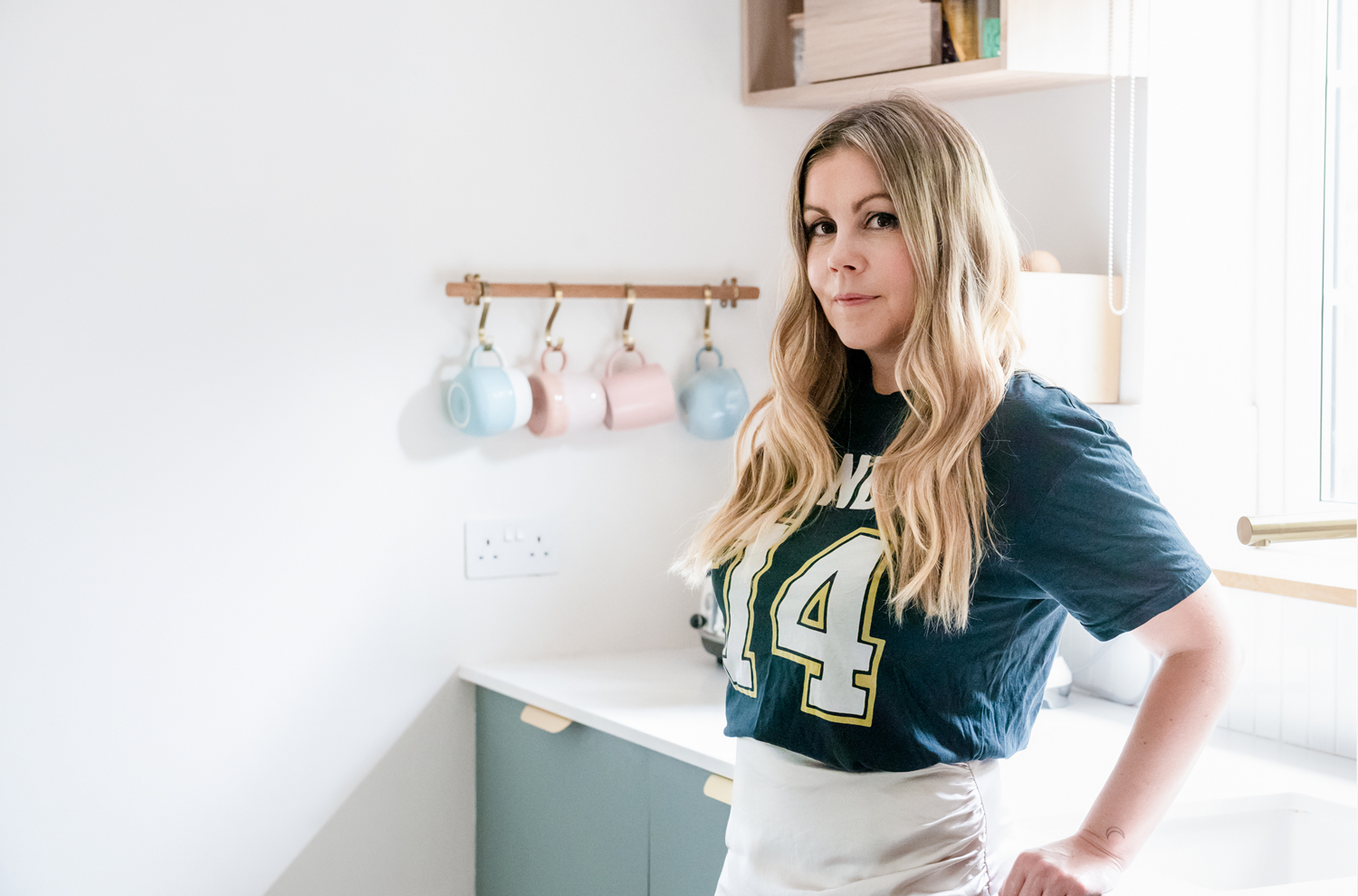
Sallie King trained as a lawyer, realised corporate life was not for her and started a furniture business from a tiny Greenwich flat. She sketched the stylish small-space pieces she could not find on the high street, and her first product was a floating bedside table sold on Etsy at a rate of one a month. Ten years later she was selling hundreds a month, with a warehouse, a wider team and a loyal following on Instagram.
In January 2025 she made the decision to close the company. As a single mum of two, Sallie then had to administrate the closure, manage the emotions that came with it and find a new path quickly, all while carrying the daily mental load of motherhood. Eighteen months on, she is a London property stager, transforming small spaces into beautiful homes that feel bigger, lighter and designed to support how people really live.
In this conversation Sallie shares the whole story with remarkable honesty: the slow brick-by-brick growth, the pandemic boom and the series of changes that quietly eroded the business afterwards. She talks about burying her head in the sand, how hard it was to tell the people who relied on her and the therapist who told her to make a plan. She also explains how a networking event showed her what to do next. It is a conversation about failure, grace and making peace with slower growth when your children come first.
Conversation Highlights:
- Why Sallie left a legal career and how a tiny Greenwich flat and a floating bedside table became the start of a furniture business
- The slow reality of growth, from one sale a month to hundreds, and why there was never a single viral moment
- What it was like to grow a heavy product business while pregnant and then with a newborn, including the call to her website designers from the hospital that took three months to follow up
- The turning points that helped the business scale: honest feedback from Not On The High Street, Instagram and paid ads, and a warehouse that freed up her time for strategy
- How the pandemic boom and the changes that followed, from Brexit to shifts in online advertising and spending, wore the business down by a thousand cuts
- Why Sallie believes she did not adapt quickly enough, and what she would do differently, from pop-ups to never relying on one way of doing things
- The emotional reality of closing a business: telling the factory and the team, administrating the closure and putting on a cheerful persona for her children
- How a property staging event at the end of January showed her that her styling and photoshoot experience could become a new career
- Starting again in your forties, the comparison trap at the school gates and why being a beginner can be a second wind
Listen If You’re:
- A mum in business whose company is struggling and who is wondering whether to keep going or let go
- Carrying the weight of a business closure while still doing the school runs and bedtimes
- Starting again in your forties or fifties and feeling like you should be further along
- Accepting that business growth is slower when you put your children first and wanting to make peace with it
- Holding back from sharing your work online because it feels embarrassing
- Curious about property staging and how skills from one business can transfer to another
Favourite Quote for Mums in Business:
“Businesses at the beginning are messy, they’re a little bit embarrassing, they’re not that good. But the only way they’ll get better is if you just keep doing it.” – Sallie King
About the Guest:
Sallie King is a London property stager who transforms small spaces into homes that feel bigger, lighter and suited to how people live today. A former lawyer, she founded a furniture company in 2015 and grew it over ten years before closing it in January 2025. She retrained into property staging, which draws on the styling, photoshoot and product experience she built along the way. Sallie is a mum of two.
You can follow Sallie’s projects on Instagram.
About the Host:
I’m Victoria Phipps – a Mum of two, analogue family photographer, charity co-founder, photography business educator, marketer and now podcaster! My career has wandered all over the place and is becoming a bit of a complex tapestry as I head into this middle phase of life, but I can honestly say I’ve loved every minute of it so far.
I was raised by a nurturing Mother and an entrepreneurial Father and have inherited traits from both, so the tension between ambition and motherhood is one I grapple with on a daily basis! I’m fascinated to hear the stories of other women on a similar path, who are striving to build thriving businesses whilst being present for their children. It’s a tough juggle, but I hope the conversations shared on this podcast help Mums in business feel less alone and inspired to keep going in pursuit of their dreams!
If You Enjoyed This Episode:
Please subscribe, rate and review the podcast – it helps other mums find us!
Share in your Instagram stories, tag @mummeansbusinesspodcast and let us know your biggest takeaway.
Share this episode with a fellow Mum in business who you feel would resonate with Sallie’s story.
Episode Transcript:
Hello and welcome to the Mum Means Business podcast, where we shine a light on inspiring women who have one thing in common. When they’re not managing tantrums, homework, P.E. kits and play dates, they are busting their gut to build a thriving business that supports their family life. I’m your host Victoria Phipps and I’m figuring out how to play this game right alongside you. I’m a motherhood, family and personal brand photographer, I teach portrait photographers how to lead with print in the digital age, I’m marketing lead in the family business my Dad founded over 20 years ago and I’m “Mum” to two little girls.
If you’re a multi-passionate mum too, in need of some solidarity whilst navigating the messy middle of making your big dream a reality, then stick around. This is for you.
NOTE: This is the transcript from the original recording, rather than the edited episode so timings may vary.
Victoria (00:02)
My guest today is a London property stager known for transforming small spaces into beautiful homes that feel bigger, lighter, and are designed to support how people really live in 2026. It’s a career that combines creativity, problem solving, and business development, and one she absolutely loves. But she came to it following a deeply challenging time when the furniture company she’d founded and run for 10 years unexpectedly closed.
As a single mum of two, Sally King was forced to pivot quickly and find a new path. She’s now navigated the emotional rollercoaster of business failure, learned the lessons, managed the financial constraints of starting from scratch in your 40s, and accepted that business growth is going to be slower when you put your children first. And she has survived, perhaps even thrived, to tell the tale.
Sally, I’m so curious to dig into these experiences and I know listeners will be too, so welcome to the Mummy’s Business Podcast.
Sallie King (01:01)
Thank you, so pleased to be here with you.
Victoria (01:05)
Yeah, I’m really interested in talking with you about all things,
both motherhood and business, but also interiors because I am obsessed with interior design. I won’t say I’m particularly good at it, but I studied architecture at uni and I always wanted to be, I think a client more than I wanted to be an architect because I just love playing about
Sallie King (01:25)
Yeah.
Victoria (01:26)
with this stuff. And I just think it sounds like you have a dream job, but I know it wasn’t necessarily an easy road to get there. So.
Why don’t we go back a little bit in your story? What made you start your first business?
Sallie King (01:41)
My first business was my furniture business, Urban Size, and that really came out of a push and a pull, I would say. And the push was that I just wasn’t enjoying my corporate career at all. And I’d spent such a long time getting there ’cause I was a lawyer so obviously gone through all of like the education side of it and the training and everything. And then once I qualified I was like, no, I really don’t like this And I spent quite a lot of time just
still in that job and in that role because you know it’s just such a big decision to come out of it. But at the same time I had this pull factor as well. I’d moved into a tiny Greenwich flat. but as you can imagine it was actually really expensive but tiny. And I wanted to I wanted to furnish it in a way that was very stylish and like wasn’t necessarily everything for Ikea. And at that time that was really the only place you could buy furniture that was for small places.
so I started sketching like little designs for things that I wanted to have in the flat and then eventually I got like a prototype made for a floating bedside table and started selling that on Etsy. and those
Victoria (02:53)
Okay.
Sallie King (02:54)
two factors kind of combined at the same time and yeah, just slowly, slowly started building it out from there.
Victoria (03:02)
That’s really interesting. So you really were solving your own pain point and perhaps
Sallie King (03:06)
Yeah.
Victoria (03:06)
trying to find a reasonable exit to the career that you’d ploughed so much of your time and energy into
Sallie King (03:14)
Mm-hmm.
Victoria (03:15)
and actually find that it wasn’t necessarily what you wanted to be doing. And I relate because I said before I studied architecture and I wanted to be an architect since I was about 11. I was sure, absolutely certain this is what I wanted to do for my career until I did it.
And then I was like, no. And it’s hard
Sallie King (03:31)
Mm. Yeah.
Victoria (03:34)
because you follow that path and you tick all the boxes and everything is gearing up to this point where you become a lawyer. And then the reality of it, if that’s not quite.
Sallie King (03:43)
Yeah, and then you’ve
then you find yourself sat in a data room for nine hours a day and you think, I don’t know if I do wanna do this after all
Victoria (03:51)
Exactly.
Sallie King (03:52)
and it’s just not like when I was watching Ali McBeal or Legally Blonde, so yeah
Victoria (04:00)
Yeah, I don’t think the TV stereotypes necessarily help set our expectations realistically, do they?
Sallie King (04:05)
I know, definitely.
I think the same could be said for entrepreneurship as well. I think there’s such a glamorisation of that at the moment on Instagram and social media and like the reality of that is hard as well. it’s just choosing which one which hard do you want to go for, isn’t it?
Victoria (04:20)
Yeah, exactly, choose your heart. at what point, so you’re selling these bits of furniture that you’ve designed on Etsy, did that
Sallie King (04:29)
No.
Victoria (04:29)
kind of take off really quickly? Did you find that
Sallie King (04:32)
No.
Victoria (04:32)
there was obviously, no, okay. So go on, talk me through it. Talk me through it, because I’ve tried to sell things
Sallie King (04:35)
I th my
Victoria (04:39)
on Etsy and my experience has not been that it just flew really quickly. So what was your experience?
Sallie King (04:43)
No,
not at all. I think I think ev all of my experience of business has been that it’s such I’ve never had like this breakthrough light bulb moment where everything changed and sold or like a viral moment. Like everything has always been like brick by brick, very slow. So with the bedside tables, for example, I think I listed those I only had one product, so I literally listed one product, which was the photo and bedside table. And at the time, to be fair, nobody else was selling them on Etsy or anywhere else. And
I think I was selling like one a month. Then it’s got to like one a week. And then it literally just it was that slow until by the end of ten years I think I was selling five hundred a month. Like it just but that’s such a long period of time to ’cause people see the endpoint and not like the bit where you’re selling one a week and like running them down to the post office by hand, you know? So it was definitely
Victoria (05:36)
Yeah. Yeah.
Sallie King (05:38)
very slow. There were so there were definitely some turning points.
where I learnt a lot and was able to implement it and then it did grow. But I wouldn’t say there was ever any kind of like huge moment where things changed. It was just putting
Victoria (05:52)
Yeah, I think that’s.
Sallie King (05:53)
in the hours and the consistency.
Victoria (05:55)
Yeah, I think that’s really important to talk about because you don’t always have this landslide moment and people talk about, you know, pushing the snowball up the hill and, you know, at some point, you know, you keep putting in the reps and then you’ll get to the top and it will just tumble down and everything will come together and you’ll be a millionaire. And I get that and I know that that is some people’s reality, but I’m like you so far.
And we say so far because
Sallie King (06:23)
Mm.
Victoria (06:24)
we don’t know what the future holds. Everything has been slow and steady and
Sallie King (06:29)
Yeah.
Victoria (06:30)
you see growth. If you didn’t see growth, then you know, what are you doing? I need to have a look at it. But
Sallie King (06:36)
Exactly, yeah.
Victoria (06:37)
the growth, you know, if it’s slow and steady, there’s so many wobbles in there. You know, when you go from,
Sallie King (06:44)
Yeah.
Victoria (06:45)
you’ve been doing it a year and actually maybe, I know I’m just guessing, maybe you’re selling five a month in a year and you’re thinking well,
Is this worth pursuing? And did you find you asked yourself that question a lot?
Sallie King (06:57)
Yeah, I did. I I definitely did. And especially with furniture, because it’s really difficult to do it on a small scale because there’s not many places
Victoria (07:04)
Mm.
Sallie King (07:05)
that will make you five bedside tables that you do have to
Victoria (07:07)
Yeah, yeah, yeah, yeah.
Sallie King (07:08)
order in like a pretty significant number. And if you don’t, you’re paying so much for it that it makes it not worth it. So yeah, definitely it was really hard at the beginning. But there were a couple of points where I was encouraged.
And one of them was when I applied sell on not on the high street and they really helped me because they tear me down. They said no. but then they gave me like a load of pointers about what I needed to do to improve the business so that I could list on there. And that helped me with the business as a whole, because it was all things that I needed to do anyway, but hadn’t quite had the push to do it up until that point. So yeah, that was definitely incredibly helpful.
Victoria (07:51)
And this is a thing so often when we start these things, we’re working in isolation and we don’t necessarily have somebody role modelling how to do this or guiding us or giving us advice. And actually that advice when it comes, even if it’s something that you kind of knew you had to do, but that
Sallie King (08:12)
Yeah.
Victoria (08:13)
push and that accountability can fast track everything, but it’s really easy to feel stuck.
when you’re working by yourself, which so many solo printers are. And I think that speaks to
Sallie King (08:27)
Yeah.
Victoria (08:28)
like the importance of getting somebody else’s eyes on your business, like regularly. So were you living in
Sallie King (08:34)
Definitely.
Victoria (08:35)
a, go on.
Sallie King (08:36)
No, I was just gonna say I think the other part of that is just the validation of it, which I know we shouldn’t need, but to have someone like them come in and be like, This is good, you just need to do this is what gives you the push. And sometimes you do just need that, especially in the beginning
Victoria (08:46)
Hmm. Yeah. No,
Sallie King (08:50)
where you’re like, Is this working?
Victoria (08:52)
a hundred percent you need it. I think it’s mad to think that you don’t, that you’re just going to have endless self-confidence in something that
Sallie King (08:58)
Mm.
Victoria (08:59)
feels very vulnerable and personal to you. You you’ve got this idea and every business starts with an idea that there’s something you can put out into the world. But the notion that you’re just going to believe in that.
without any fluctuation of confidence whatsoever, just forever, it’s daft.
Sallie King (09:15)
Yeah, wholeheartedly. Yeah, exactly.
Victoria (09:21)
all need that bit of encouragement. We all need someone to say, you know, this has got legs because I think when you leave a corporate role, that is one of the biggest challenges. You’re used to having somebody look at your work and guide you and encourage you or berate you, if that’s the case. And you don’t
Sallie King (09:39)
That’s so true, yeah.
Victoria (09:41)
have that when you’re an entrepreneur.
Sallie King (09:43)
Yeah, definitely. You have all those sort of checks and balances, don’t you, in a corporate career and that’s just all gone, all gone. And there’s not even like the sort of on a level colleagues that you can check in with either. So it is
Victoria (09:54)
Yeah.
Sallie King (09:55)
it is really tricky.
Victoria (09:57)
Yeah, it’s really hard to
know where to put your energy, I think, in those early days to get
Sallie King (10:02)
Yes.
Victoria (10:02)
the most traction and to, you know, see the biggest momentum shift in your business when you’re trying to get it off the ground. think without that guidance, you can flail around all over the place. I know that I have. So were you living in a tiny Greenwich flat full of tables?
Sallie King (10:21)
Ha.
Victoria (10:21)
That’s I really want to know. Just imagining you.
Sallie King (10:23)
Yeah, no. It was. It really was. Like at
the big and the other thing was I was on like the third floor, so we’d have like a lorry turn up on a residential street in Greenwich and we’d have to unload by hand ’cause obviously like once we had a warehouse we had a f a forklift and all of that kind of stuff. I’m literally one by one carrying boxes off of a lorry
Victoria (10:41)
my gosh.
Sallie King (10:41)
up f three flights of stairs to my flat and then storing them in my living room until we sent them out. So yeah, it was a lot.
Victoria (10:50)
That’s the reality of a product-based business sometimes in the early days, like you’re just living in boxes. But you didn’t have children at that point, or did you?
Sallie King (10:59)
So I started it just before I had my daughter and then it kind of started really taking off just as she was born really. So yeah, it was like around that kind of time. And yeah, that was obviously like a difficult thing to navigate as well, especially with a furniture business because it’s heavy and you’re pregnant. And the amount of times I’d look around my front room or be run into the post office and think, Why did I not start a t shirt business? Like this is just the most ludicrous thing to do.
Victoria (11:30)
I love how you describe this as a difficult time. This sounds hellish. This sounds like, this
Sallie King (11:34)
Yeah, it was tricky.
Victoria (11:37)
sounds so labor intensive at a time when you’re 3D
Sallie King (11:40)
Yeah.
Victoria (11:41)
printing a human and then that human arrives and you’re still
Sallie King (11:44)
Yeah, yeah, yeah.
Victoria (11:45)
having to keep all of this ticking over, but now you’ve got the small baby to take care of. And so your time is suddenly severely restricted in comparison to the hours that you had to put into growing the business beforehand. What was that transition like?
Sallie King (12:00)
It was really tricky and I just I kept I remember talking to my husband at the time and saying, I just maybe I should take some maternity leave and just like have a bit of a break and he was like, No, you well, I’ll help and obviously he had his own job so he couldn’t really help
Victoria (12:14)
Mm-hmm.
Sallie King (12:15)
in the way that he needed to. But I just couldn’t let it go because I had that had started to find the traction. I was like, if I stop
Victoria (12:22)
Hmm.
Sallie King (12:22)
now, it’s just gonna feel like such an uphill struggle again because you start to get that traction on social media, you’re starting to get your like
Sales up on Etsy and all of those platforms are like on algorithms and if you stop then they you know, you’re not seen anymore. So I did I did carry on and it was hard and I had a lot of help from my family and my husband at the time. But yeah, I just had to keep going ’cause I just couldn’t bear to stop. Which is Yeah.
Victoria (12:48)
Yeah, but that fear is real, isn’t it? Because you’ve
got this far and if you start to see that glimmer of traction and things feel like
Sallie King (12:56)
Mm.
Victoria (12:56)
they’re moving, you don’t feel able to step away from it. You think if you do,
Sallie King (13:01)
Yeah.
Victoria (13:02)
the whole thing will die and everything you’ve
Sallie King (13:04)
Yeah.
Victoria (13:04)
done to that point would have been in vain. And
Sallie King (13:08)
A hundred percent, yeah.
Victoria (13:10)
that’s really, really challenging because you’re not.
in a season of life where you have the same capacity that you did when you started,
Sallie King (13:19)
I know, yeah.
Victoria (13:20)
but you don’t give yourself permission to slow down.
Sallie King (13:25)
I know. There
were some things that I had to stop that like I did there was definitely a slowdown because I do remember it was just as I was about to launch my own website because up until that point I’d only listed on other people’s platforms and I remember going into Labour and driving to the hospital and I was supposed to have a the final call with my website designers the next day and I remember calling them and saying, guys, I’m just going into hospital but I’ll like be out in a couple of days so I’ll give you a call
three or four months later I think I got back to that.
Victoria (13:56)
Yeah, that’s hilarious. that’s, yeah. It’s so relatable. Yeah,
Sallie King (13:57)
But I just didn’t re I honestly didn’t think at the time. I was like, yeah no, I’m just gonna pop this baby out and I’ll be back.
Victoria (14:06)
it’s so relatable, but you don’t know what’s coming. You have no idea. You are
Sallie King (14:09)
Mm-hmm.
Victoria (14:10)
still your autonomous self. At that moment, you go into hospital and you cannot imagine how the next couple of days is gonna change your life. And…
Sallie King (14:21)
Yeah.
Victoria (14:22)
You can’t, I don’t know to what extent you can really prepare for it. I’ve thought about it a lot. But yeah, the idea that you had this website ready to launch, but then you just couldn’t make that phone call for three months is really relatable.
Sallie King (14:34)
Yeah, I know, and such unrealistic expectation on my part for sure.
Victoria (14:40)
I think it’s normal. think, I don’t know, it’s really hard. And that adjustment then in your own mindset of accepting that you have less capacity, less time, less energy. How did you find that in those early days of motherhood?
Sallie King (14:59)
I think that’s always been quite a challenge. I think that’s always difficult, even now, sort of ten years on with this new business and having children that have completely different set of needs to at that time. It’s just it’s just understanding that if if you’re gonna prioritize being at the school play, being at the school gates for pickup, you your business is gonna be so
Victoria (15:25)
It’s alright.
Sallie King (15:31)
Yeah, so it is just gonna be slower. So I think that’s the I think it’s just making peace with that and sort of saying to yourself, you know, I’ve made this commitment to I mean, if that’s your choice, if you’re if you’re saying I’ve made this commitment to always being around for the children’s activities and wanting to be a certain present parent, then you can’t also expect to be having this like thriving business that’s going at a million miles an hour. And one of the difficulties
Victoria (15:56)
Yeah.
Sallie King (15:57)
of that for me is
definitely seeing other people move so much quicker because there’ll be people that start at the same time and you’re like, well they’re doing this, that and the other but everybody has different priorities and different things going on in their lives and you just have to make that decision of what yours is going to be. So I think it’s taking you quite a long time to get to that place where being like, No, this is my priority, have to accept that these other things are going to take more time.
Victoria (16:22)
Yeah, yeah, I’ve definitely found that one of the most challenging things about becoming a mum is accepting that. I think I riled against it for a long time. I was like, no, I can do everything. But then you just stop sleeping and then that has its own negative repercussions on your wellbeing. So tell me how the business evolved over those 10 years. You say you start off and you’re selling one table a month and then you get to a point
Sallie King (16:48)
Yeah.
Victoria (16:49)
and you’re selling 500 a month.
Sallie King (16:51)
Mm-hmm.
Victoria (16:51)
So
presumably at that point, you’re not accommodating all of these in a small flat in Greenwich. Things have evolved. What did it look like?
Sallie King (16:56)
No, no. Yeah.
So I think they’re the major turning points. We’re definitely starting to list on not on the high street because they helped me so one of the things they said that I needed to do was to have a product range and I was still kind of just like, no, I’ll just have this one floating bedside table and that’s it. And they like, You need to have at least like ten different skews. So we I went away and just did that. And that was really helpful because then you get seen yeah. So yeah, it was a lot of work. It was, yeah. But then you get seen yeah, just
Victoria (17:19)
Just did that. That’s a lot of work. Just did that.
Sallie King (17:26)
knock those out.
Victoria (17:28)
You
Sallie King (17:28)
but yeah, I mean again that takes time, you know, like that did take a long time to to go through that process. And then but then you get seen across so many more different product categories, which was their point, that you’re just getting seen so much more. And then I think the other major factor was Instagram because at that time it was obviously very different place and I was just getting so much traction on there and
both organically and paid ads, like we could just put ads out and just always get a return on them. So that was like massive. Yeah, yeah, yeah. Completely different now. But and then I think the other turning point was when I got a warehouse because we had like a whole management system around the products and how it was being sent out and that just meant that we could scale quicker and everything was handled on that side. So my energy could just be into kind of doing the marketing, promotion, all of that side of things.
And again, I think you don’t realise like how much your energy split because if you’re spending all your time like running stuff down to the post office, you’re not then spending time like figuring out a bigger, wider strategy for how things are gonna go, like how you’re gonna manage your marketing, like did a lot of work with influencers back then and but yeah, that’s w that was really what made the big difference.
Victoria (18:46)
Yeah, it sounds like you embraced all of those opportunities that social media can give you and as well with the meta ads, like I know that that might, everything has its time, doesn’t it? It sounds like you were just doing
Sallie King (18:57)
Mm-hmm.
Victoria (18:58)
the thing of the moment and it really worked for you in a way that,
Sallie King (19:01)
Yeah.
Victoria (19:01)
you know, it might work differently if you were doing it now, but you just caught that at the right moment and it flew.
Sallie King (19:10)
Absolutely. And yeah, I think it there is a like a moment in time for everyone and for everyone’s business. And obviously as well, we we were just really hitting that stride and I’d also really hit my stride with our suppliers because that’s another really difficult aspect of a product business. So everything had kind of aligned and then COVID happened, which is obviously like awful, terrible time for everyone. But for product businesses, everyone was sitting at home on the internet buying things, like particularly for their home.
So then it really, really scaled.
Victoria (19:39)
quick dopamine hit,
Sallie King (19:41)
Yeah. And then and and the other thing, people were working from home, and at that time I did have a range of desks, so that was just flying out. And a lot of the other
Victoria (19:48)
Amazing.
Sallie King (19:49)
bigger furniture companies were having massive stock issues. So and people having to wait eight weeks for stuff, whereas we had stuff ready to go. So it was just yeah, it was a that was like such a busy time those sort of two years over COVID. And I was just lucky that we had
just got to that point where we would just happen to be ready for it because everything else had fallen into place up until that point. Obviously with some work behind it. But yeah. Yeah, no.
Victoria (20:15)
I was gonna say it’s not just pure luck as it is also energy
and strategy and planning. But yeah, that sounds like the stars sort of aligned like when no one’s gonna
Sallie King (20:24)
Yeah.
Victoria (20:25)
look back at COVID and say, I’m glad that happened. That’s not what we’re saying. However,
Sallie King (20:27)
No, no. No not at all.
Victoria (20:30)
had that landed a little bit earlier on, you wouldn’t have had necessarily that infrastructure in place to fulfill those orders or you wouldn’t have had the stock that you needed to meet the demand. So it sounds like…
Sallie King (20:40)
Yeah. Yeah. N
no, I th I think that’s
Victoria (20:44)
It was a bit of a big moment.
Sallie King (20:46)
definitely and I think that’s the thing. It’s like a combination when people say, you know, it’s luck or timing or whatever, it’s a combination. You have to have
Victoria (20:54)
Yeah.
Sallie King (20:55)
put in the work to be ready for the timing when when it comes. so yeah, I think but but for the same reason is kind of why it started to go downhill after that time was because of all the factors that were doing really well.
up until that point, then significantly changed after. So there’s
Victoria (21:14)
Mm-hmm.
Sallie King (21:16)
just that that thing of not relying upon one way of doing things. So for example, we were really reliant on the meta ads at the time, especially during COVID, and also on influences. And then that just hugely changed after COVID. Like it could not, it was night and day. It wasn’t even
Like, it’s like not working quite so well, it just stopped working. So I think everything has its moment and it’s just what works for your particular type of business at the time. And being flexible
Victoria (21:49)
Yeah,
Sallie King (21:50)
to the change, yeah.
Victoria (21:52)
exactly. Yeah, it’s such a dance, that reactivity. And it’s this luck piece. You could say you were lucky, but you could just say it’s good timing. you happen to be, no one can predict a pandemic, but you happen to be in a position where you could meet a great big influx of demand at that point. And you had all the systems in place, you were marketing, you had the influencers, you had the ads.
and it booms. And then the pandemic ends. Presumably there’s also a factor of people are going out. People don’t want to spend money on their homes anymore. Their homes look beautiful because they’ve spent two years tarting them up and they’ve got this amazing home office, but then they have to go back into their actual office and everyone wants to go and eat out. They want to go on holiday. They’re not looking at furniture in the same way. And perhaps those marketing strategies aren’t landing.
like they did before. So what did you do? When did you realise that something needed to change and what did you do?
Sallie King (22:58)
I don’t think I did adapt very well to be honest. And I think that’s probably the big learning lesson for me. In and I think it was a little bit sort of deaf by a thousand cuts as well, because you don’t sort of realise it’s happening because you’ve been on such a high and then a few things start to change. So Brexit was huge, because we were importing from Eastern Europe and that became significantly harder. thirty percent of our sales were going out to
Europe that just stopped overnight because people just lost confidence in ordering because of all of the different issues. Don’t need to go into those, but it did stop.
Victoria (23:31)
Yeah. Yeah, yeah.
Sallie King (23:34)
And then there was obviously the changes with Apple and how they were tracking people and how that affected us, which I think, you know, affected everybody. And it was just like a series of factors. And like you just said, people after COVID, they just weren’t, you know, they weren’t ordering things online like they were before they were spending their money on holidays.
eating out. So it’s just like this series of factors that like had all worked
Victoria (23:57)
Mm.
Sallie King (23:58)
in our favour before slowly and was slowly starting to erode it. And I just don’t think I I just don’t think I adapted that well to it. I was still trying to like use like all of the things that had worked before. So yeah, I think that’s been like a huge learning lesson for me like going into this next business of just not being reliant. Because I feel I don’t know about you, but when I
When things are going really well, I feel like they’re gonna go really well forever. And then when they start to go badly, I’m like they’re gonna go badly forever. There’s no I’m very
Victoria (24:25)
Yeah.
Sallie King (24:30)
black and white with everything. So just really trying to see things, yeah. Just really
Victoria (24:32)
Yeah, I think that’s human nature.
Sallie King (24:35)
trying to see things more in the round now and yeah, just buffer against using just one way of doing things.
Victoria (24:44)
Yeah, it sounds like you’ve had a really true entrepreneurship experience. You know,
Sallie King (24:52)
Mm.
Victoria (24:53)
that it is a roller coaster and it just sort of speaks to the fact that we have to be looking at it all the time. Like nothing is guaranteed and it’s so easy. I think because you are pushing that snowball up the hill and it feels slow for a long time.
and you finally feel like you’re kind of approaching the crest and it all starts to look good and then you’ve got this momentum, you’ve got recurring sales. You want to tell yourself that you’ve done it, don’t you? Like you want to believe that you’ve done it and that’s the end of it because you’ve worked so hard for years to get to that point. You’ve done all the things, you’ve taken the advice and you’ve done that whilst raising your children and you wanna believe that that’s it and you’ve made it but it’s never like that, is it?
It’s never quite like that.
Sallie King (25:40)
No, it’s really not. I think
that’s exactly it, because you’re like, well no, but this worked for me before and it took me so long to figure this
Victoria (25:46)
Yeah.
Sallie King (25:46)
out and like I just want that to keep working. And you don’t want to go, okay, no, it’s not. We need to think of another way to get those sales, to get eyeballs on us, like all of those different things. So like for example, I think like a way that I could have changed that around is like instead because people are so keen on going out.
was to would have been to be out somewhere, like at pop ups, that kind of thing, ’cause people was are so much more into being in real life. But I just didn’t I just didn’t move quick enough. but yeah, it is tricky. It it’s exactly what you say.
Victoria (26:19)
And hindsight,
yeah, hindsight is a wonderful thing. Like you can look back now and be like, this is what I should have done. But in that moment, that’s not where you were. And I suppose it is then just about the lessons because now this new business, you will look at it with a completely different perspective and you will be vigilant for this stuff, for shifts and changes and trends. And you’ll be able to identify them so much more quickly.
because you had that experience. So tell me what actually happened to that business in the end.
Sallie King (26:54)
So it was it was actually quite a slow things did start to drop off more slowly because of the various factors and I just wasn’t keeping enough of an eye on where we were going with like ordering and you know, demand and all of those kind of factors that you should have a very tight grip on because up until that point it had always been an upward trajectory. However slow it was, it always been an upward trajectory.
And I think we just got to the point last January where I’d just been burying my head in the sand and then I was like, okay, we have got so much stock and we just there’s not enough demand and if I don’t close quite quickly, it is just really gonna shit is gonna hit the fan. So it just was it it probably wasn’t that sudden of a event. It was just that for me it was because I hadn’t been keeping close enough of an eye on where we were going and just really like adapting to that demand.
So yeah, it felt like last January last yeah, last January it was a very sudden kind of like, I’m gonna have to close it now or you know, things are gonna really take a bit of a turn. so yeah, it was just it was a and also I suppose I just didn’t really want to. I didn’t really want to close it.
Victoria (28:09)
Yeah. Yeah.
Sallie King (28:11)
so yeah, I did have to take that decision and it felt like it come out of the blue, but looking back it probably hadn’t. I think the warning signs were probably there quite a lot earlier.
And again, it’s all like a learning lesson, isn’t it? Because, you know, all of that time before we have been tracking everything and everything was so closely monitored and it was almost like when you could see things not going as well, you just don’t you want to look away. It’s just Yeah. That I think that’s the other thing. Yeah.
Victoria (28:36)
Yeah, yeah. Or you wanna think it’s a blip and it’ll come back round. And like you said, yeah.
Sallie King (28:42)
I kept thinking, no, things I think things will change. I think this will happen. I think that will happen. And there’s only so long you can keep thinking that things are going to change and then have to face reality and going no.
The market’s changed, all of the factors that I was relying on before have changed and it’s just not gonna work going forward how it how we had it structured.
Victoria (29:03)
So what was the structure of the business like at that point? Presumably it wasn’t just you. You’re no longer lugging boxes up and downstairs by yourself with your husband helping you. What was your team like?
Sallie King (29:10)
No. Yeah, yeah.
So so I had a logistics warehouse team in Cambridge, so that was all taken care of, which was absolutely amazing. They were brilliant. and then I also had structure around me in terms of social media help, had an assistant, also had a PR agent, and then other people who would help.
sporadically, like photographers and like stylists and all of that sort of thing. So there was quite a big team at that point, of people. And then obviously the people who actually made the furniture as well. There was like a big team of them. So yeah, it wa it by the end it was there was a lot of people involved.
Victoria (29:55)
Yeah, and what did that feel like? Presumably you made that decision, there was a day that you probably remember and you made that decision yourself.
Sallie King (30:04)
Mm,
mm.
Victoria (30:06)
What did it feel like going out and communicating that with everybody?
Sallie King (30:10)
It w it I mean, yeah, it doesn’t feel great at all. And I think one of the worst ones was talking to the factory that was making the furniture because they were quite reliant on on that work coming in because as it had grown, they’d just like taken a lot of it on and then some of their other business had fallen away. So that did not feel good at all. But I d would say on the plus side, I think they could they saw it coming more than I did in a sense, just because of like how the orders were fluctuating and stuff. So I’ve hoped of I think they had
a little bit of an inkling that that’s the way it was gonna go. But yeah, no, it doesn’t fe it doesn’t feel good. It’s not a good
Victoria (30:46)
Yeah.
Sallie King (30:46)
time to kind of communicate ’cause you have like a lot of people who are relying on that income as well.
Victoria (30:53)
Yeah, yeah, and that’s the responsibility piece and I’m guessing that weighed heavy on you.
Sallie King (31:00)
Yeah.
Victoria (31:02)
Yeah, it’s a really tough emotional decision to make yourself just for you. But then when you consider the repercussions,
Sallie King (31:12)
Yeah.
Victoria (31:14)
that’s really, really hard. I’ve never had to do that. But I imagine
Sallie King (31:17)
Yeah.
Victoria (31:18)
that’s really, difficult. And did you have a plan for yourself about what you might do next? Or were you just too in it and just trying to deal with things day to day?
Sallie King (31:32)
No, I didn’t have a plan at all. I really didn’t. But I had absolutely no other income at that time. So I was like, and you know, I’m a single mum at this point, I’ve got to pay all of the mortgage myself. So I’m like, I’m gonna have to think of something pretty quickly to come round to this. And a few people said to me, you should get a job or go back to law. But at that point my it would have been very difficult to get back into law, I think.
And the kind of salary I was gonna be able to get wouldn’t have covered what I was had built my lifestyle up to be over the past ten years. So yeah, that was an incredibly stressful time to not be able to see through the gap of it all.
Victoria (32:11)
Yeah, yeah. Yeah, and sometimes though it’s necessity that brings clarity. The fact that you absolutely have to make a figure a month in order to sustain your life and support your children and keep a roof over their head.
Sallie King (32:34)
Mm.
Victoria (32:35)
Was there a moment where you of like worked that out and
just sort of sat down with yourself and pondered, like what did it look like to find that next thing?
Sallie King (32:47)
I don’t think I ever did that. Well, I’ve always been very clear on like what I need to earn to kind of maintain where we were.
Victoria (32:53)
Yeah.
Sallie King (32:55)
but the harder part was like figuring out what I could do that would earn that quickly. And it wasn’t just that either because I didn’t want to just do anything. I didn’t want to just
you know, launch into something because I know how long it takes to build something. So it’s like you don’t want to spend all of that time building something can then be like, I don’t actually enjoy doing this and you’ve got to that year down the line and then have to start over again. so I think at that time I started networking quite a lot in January, just going to property events. And I went to an event about property staging and I had thought about it before but I would I didn’t real to be honest, I didn’t realise that people did it as much in the UK as they do.
I thought it was very much like an American
Victoria (33:37)
Okay.
Sallie King (33:38)
thing. So when I went to this event, that’s when that was really like, no, okay, people were like getting white from this and also it’s so similar to what I was already doing because we spent so much time doing photo shoots where we’d turn up at a completely blank studio, photography studio, bring all of the furniture, styling and accessories in and turn it into a flat and then do all of the photos
Victoria (34:00)
Mm.
Sallie King (34:01)
for the website. And so it’s it’s such a similar skill.
Because you’re doing the same thing except you’re selling the house, not the furniture. So it
Victoria (34:12)
Mm-hmm.
Sallie King (34:12)
just felt like s when I was there, I was like, this feels like such a natural progression and something that I could be good at and something I could do relatively quickly. But not only that, I’ve got all of the kind of contacts for like the logistics, like anyone that I needed like in terms of styling, everything was kind of already in place. and I knew that I would like it. So yeah, from that point, once I realised there was a market for it, I like, right.
with doing this and it was I was just tunnel vision just got straight I didn’t even consider doing anything else.
Victoria (34:44)
That’s cool that you went to that networking event, isn’t it? That gig. So
Sallie King (34:48)
Yeah, yeah.
Victoria (34:51)
when was that? So you’ve made this decision to close your business in January. When was this that you went to that event and had this moment?
Sallie King (34:57)
That was
right at the end of January, so still in the thick of it with closing. Yeah. So I didn’t actually
Victoria (35:00)
Okay, so really soon, yeah. Yeah.
Sallie King (35:04)
do anything about it for quite a long time after that. It was just kind of like in the back of my mind and I was like, right, we can start this. This is something that could be done. And then like because once I close in January, that obviously wasn’t the end of it. I had so much to deal with in terms of like closing everything up, like accounts, like all of the stock, like all of the people, there was so much to do and that took a long time.
to go through but doing all of the sales for that end of it did give me like a little bit of a financial buffer to kind of go on to the next stage.
Victoria (35:38)
Yeah, yeah, and I think that’s something that we don’t talk about because that’s, you you say it’s like, from a business point of view, it’s death by a thousand cuts, but then actually administrating that death is a long and laborious task in itself. It’s not something you can make the decision and then feel like you’ve got a clean slate because as you said, there’s so much to do, but it must have
Sallie King (35:59)
Mm-hmm.
Victoria (36:00)
been, I imagine it was comforting to know that there was a path ahead of you.
And did you feel excited about it? No, no.
Sallie King (36:11)
No, I really didn’t. I did I did
feel very I was very stressed and I was like a little bit down. I definitely for sure. Like I did f I found that period of time extremely challenging.
Victoria (36:22)
Yeah, okay.
Sallie King (36:23)
probably would have been more challenging if I hadn’t thought of something to do on reflection. But yeah, it was it was really, really tough. Yeah, to the I remember because I had a therapist at the time and I was talking to her and I remember saying, I just I just want to move out of this house.
go on benefits and not have to do them because I cannot like get I can’t see like a way from like where I am now to being able to afford everything that I need to and it’s like incredibly stressful.
Victoria (36:46)
Yeah.
Sallie King (36:46)
but luckily she doesn’t take any nonsense. She said to me, she said, well you can’t because you’ve got kids so let’s make a plan. I was like okay and that was it.
Victoria (36:55)
Yeah, I know, but this
is the responsibility piece though. Like
you can’t give up and hide under a duvet when you have children. And
Sallie King (37:03)
They can’t.
Victoria (37:04)
actually every fiber of your being is like, just turn off your phone and go and lie on the sofa and binge Netflix and pretend it’s not happening.
Sallie King (37:11)
Mm-hmm.
Victoria (37:12)
There definitely would be days like that and you’re not allowed to.
Sallie King (37:17)
No, you can’t. Yeah,
yeah.
Victoria (37:19)
You almost don’t
have time to like process that emotion for yourself because you’ve still got to do school runs. You’ve still got to take them all the places they need to be. You’ve got to do dinner, bath, bed or whatever your routines are. None of that stops. That is relentless. And yet all of this pressure and stress is something that you’re carrying around with you throughout all of it. And I’m guessing you kind of want to protect.
the kids from it as well. want to put on,
Sallie King (37:48)
Mm-hmm.
Victoria (37:49)
you your best, you want to put your best foot forward in your role as mum and
Sallie King (37:55)
Definitely, yeah.
Victoria (37:56)
you don’t want them to feel that, any of that negativity that you’re feeling.
Sallie King (38:00)
Yeah, I think that is also really tricky. yeah, because you don’t want them to feel any of the stress or feel like any of the instability that’s going on around you. So yeah, you have to get up and just be put on a bit of a persona until they’re at school. Yeah.
Victoria (38:14)
Be very cheery.
Sallie King (38:16)
Yeah, yeah. Yeah, a different kind of
Victoria (38:18)
Yeah, it’s.
Sallie King (38:18)
personality.
Victoria (38:21)
Yeah, it’s really hard, then you do have to, like, it’s good that you had a therapist, that you do have to carve out a bit of time to just, like, feel what you’re feeling through all of that, because this is like a decade of your life that you ploughed into this business. And
Sallie King (38:34)
Yeah.
Victoria (38:35)
there’s so much emotion that I imagine comes up in just letting it go, you know, take away all of the responsibility that you feel to everybody who you’ve built, this team that is involved.
but then also just your own, know, a business is like a baby in its own way. You know, you’re so connected to it and to feel like, yeah, to feel like you have to just let it go completely and you don’t have another choice. And it’s the right thing to do. Just because it’s the right thing to do, it doesn’t take away from that kind of grief, I imagine.
Sallie King (39:10)
Yeah, and I think the other part of it is is that ’cause I’m in my forties now, there is that sort of sense of like, I should be like really in the thick of my career now. This should be like the peak
Victoria (39:20)
Hmm.
Sallie King (39:21)
of where I am. And then you look at people around you, obviously you always compare, don’t you? Like talking to other people at the school gates or whatever, and it just it really weighs on you. Like I am literally at the bottom he of like where I wanted
Victoria (39:33)
Yeah.
Sallie King (39:34)
to be in terms of like building up a new business. Like it’s just so I think that
is one of the most challenging parts of it as well, is just com like thinking about where you are in life and where you thought you would be in life at a certain age and kind of navigating that.
Victoria (39:50)
Yeah.
Victoria (39:52)
the kind of the sticks that we beat ourselves with, doesn’t it?
Sallie King (39:58)
Yeah.
Victoria (40:02)
hang on a moment because…
I just flicked off my microphone. Okay. Anyway, it speaks to the stakes that we beat ourselves with because it’s, it speaks to the stakes that we measure ourselves with because it’s societal expectation that
Sallie King (40:23)
Mm-hmm.
Victoria (40:23)
we should have this business that’s reached a certain level by that point. But actually we don’t give ourselves credit for all that wealth of experience. It’s almost like we write that off.
Sallie King (40:35)
Yeah.
Victoria (40:35)
And
that doesn’t count because we’re starting from scratch and we tell ourselves stories, you know, that we failed in some way that everyone else is at this point and you’re starting right back down at the middle of the beginning, like you just said. And it’s unfair to do that to ourselves because like you say, there’s so many lessons that you learned and so much experience that you’re going to carry with you in absolutely everything you do going forward.
And there are people who might make the same mistakes that you feel you made in your business, but they do that at 60. Like it’s a very straightforward way of measuring our success that actually doesn’t give us the amount of credit that we deserve for all that we’ve built. And the fact that it’s this destination that we hang the hat on, like this business went on and it was thriving forever. That’s the happy ever after that you want.
And instead it’s this business thrived for 10 years until
Sallie King (41:37)
Mm-hmm.
Victoria (41:38)
it didn’t. And then we started something else, but we don’t look at it like that ourselves. We say to ourselves, my business failed. And I think it’s really difficult to navigate that until you’re on the other side of it emotionally. And that comparison, I imagine I would do exactly the same thing.
And especially in your forties, you you feel like you’re going into this middle section of life
Sallie King (42:04)
Mm-hmm.
Victoria (42:05)
and starting again is quite a hurdle and being a beginner in something and having to sort of, yeah,
Sallie King (42:09)
Yeah, that’s hard, yeah.
Victoria (42:11)
exactly. Well, having to sort of learn a whole new skill. mean, like you say,
Sallie King (42:15)
Mm-hmm.
Victoria (42:16)
there’s all these transferable skills, but it’s, it’s a different game that you’re going into. You don’t have the same contacts.
Sallie King (42:21)
Completely.
Victoria (42:23)
You don’t understand all the ins and outs. You’re going to have to start again and learn. And actually, God, I bet you learn really, really quickly.
Sallie King (42:31)
Yeah, definitely. It’s been it’s definitely been a journey. And like one of the things I have been thinking in the positive recently is a lot of people I speak to are in their forties who have reached a certain point in their career are kind of like, I feel so tired, I’ve got no energy, I just want to like relax into this part of my life, which is totally valid. I totally get that. But I’m I am full of energy, like I’m ready to go. I feel like I’m just at the beginning of this journey, and that’s such a positive for me, because I don’t want to be in my mid forties feeling like
tired and I’ve like reached like this point in my life. I wanna like have like this second wind of things. So that’s really exciting and definitely like one of the things I think is one of the benefits of like starting again with something because you’ve got no choice but to have the energy for it and to learn, you’re constantly learning and that’s like very invigorating, isn’t it? To just always be learning and finding something new and like getting better and better at something that is new. so that’s been like a real positive and something I’ve enjoyed for this
For this new business for sure.
Victoria (43:31)
And it sounds like you love it. Do you love it?
Sallie King (43:33)
Yeah, I do. Yeah, I really do. I really
love it. Honestly, I feel like I’ve found like the exact right thing for me because and I think if you know, if things hadn’t gone the way they had with verb and size, I would have carried on with it because obviously, because it was making really good money and it did mean I could just be at home all the time and just be there at any point for the kids whenever they needed something. but now I do ha I have to be out like in the world. I’m like out a lot, I have to network a lot and that’s been like
just something that’s really fun and like it’s just been nice to connect with people and just feel like you’re working on things with other people and like obviously that comes with its challenges with the children’s schedules but it’s something that I’ve been able to work around and because they are that bit older now it is easier. I can actually have a conversation with them about it and just try and work things in. But yeah, it just I feel like it suits me so much better now.
And looking back I can see how I was like really isolated in a product business because you can just sit at home behind your laptop and not go anywhere really, apart from that, you know, obviously the odds day when you’re out doing your shoots or or whatever because it’s in factories, but that’s you know, that’s not a a day to day part of that role.
Victoria (44:45)
Yeah, it may be that both of those businesses came at exactly the right time. You know, when your kids were tiny, you do need to be at home more if you’re making
Sallie King (44:57)
Mm.
Victoria (44:58)
that choice that they’re coming first and you’re kind of building that life around them, then it works. But actually, perhaps, again, it’s that vigilance piece, isn’t it? Because we talked about obviously being vigilant with the numbers.
and noticing trends and ebbs and flows and being reactive and reacting quickly. But also there’s the vigilance of like, is this what I want to be doing?
Sallie King (45:28)
Mm-hmm.
Victoria (45:28)
Because it might be what you wanted to do when you were trying to exit from your corporate career from law. And actually it was fun and new and you could be your own boss and
it started building momentum and you were doing all your stuff with like social media influencers and you were learning about meta ads. It’s like a different world. This entrepreneurship thing in the first instance feels really fresh and it feels energizing. Like you’ve got all this agency of your own life and no one’s telling you what to do and when, but
Sallie King (45:57)
Mm, yeah.
Victoria (45:59)
like you say, you can live in something because it’s working and actually it’s not challenging you in the way that perhaps
you would like to be challenged anymore, or it’s not lighting you up. And you feel like that
Sallie King (46:13)
Yeah.
Victoria (46:13)
now you look back.
Sallie King (46:14)
Yeah, definitely. I think the di it’s interesting that you put it like that because I think the difference here is like when I had my corporate career, I was like, I need to get out of this. I knew I needed to leave it,
Victoria (46:22)
Yeah.
Sallie King (46:22)
didn’t like it at all. I didn’t realise that that with my last business, but having now left it, I’m like, I really did need to like leave the house and start like learning these different things and you know, and I it’s all been really exciting. And stuff I didn’t know that I needed until it’s it’s been happening and and also like
in a sense like how much more creative I can be now than I was before. Because like once we had our product range, the creativity really came in like the marketing or the strategy or the PR. Whereas now it’s like constant, you know, and it’s like it’s just so fun. And I love like every single project I get in, I feel excited, I’ll get like a full plan and I’m right, what are we gonna do with this? Like it’s just everything is fun at the minute with it. It’s yeah, it’s really exciting. And I mean obviously it takes time to build up because you can’t just start a new business
out of thinner air, so there is all of the but now being sort of nearly eighteen months in, it’s really yeah, it’s great.
Victoria (47:21)
That’s so good to hear. And maybe it’s all panned out exactly like it was supposed to. Maybe that business was for that season.
Sallie King (47:26)
I think everything does, yeah.
Victoria (47:29)
Yeah. Yeah. Yeah.
Sallie King (47:31)
It’s just hard to see
that when you’re in the thick of it, like in the January of twenty twenty five. It’s very difficult to see through that fog of it. but obviously with hindsight, you’d be like, no, that was actually all been brilliant. Like it’s just you’ve got the anxiety of it at the beginning, like, is this gonna work? Is this like something people want? And then when you see like the results of it and what people get out of it, it’s like, my god, no, this is amazing. And I think it’s such a young industry, that’s the other thing about it.
is that as I’m kind of growing in it, the industry’s like massively growing as well. So you’re at the like beginning part of something that’s that’s kind of growing, which is really exciting.
Victoria (48:09)
Yeah, which is great because you can see how that will evolve over time and to be in something at the beginning, you have an opportunity to like impact the way that that industry grows in this country as well. It sounds amazing.
Sallie King (48:23)
Definitely, yeah.
Victoria (48:24)
It sounds amazing and it sounds really social in a way that perhaps your last business wasn’t giving you that opportunity. And I think as
Sallie King (48:31)
Yeah.
Victoria (48:31)
moms, like you do need to engage with other adults. Like you do need to have
Sallie King (48:36)
Yeah, I know.
Victoria (48:37)
that.
conversation with other people who are trying to do things, whether that’s in business or whether they’re selling their home. And, you know, you need to have that buzz to give you that social energy to then meet your kids where they are as well, to like fill your cup.
Sallie King (48:51)
Definitely,
yeah, a hundred percent. I think now ’cause I meet a lot of kind of property developers and people that are doing like quite exciting things. I get that energy from them as well, from what they’re doing. I love talking to people about all of their different strategies and portfolios. It’s fun and stuff I didn’t know about as well. Again, like learning just about other people’s lives and their businesses, I always find interesting.
Victoria (49:14)
Yeah, yeah, yeah. So what would you say to somebody now if they were a mum who felt like whatever their situation, they were starting from scratch and they were having to be a beginner in their 40s or 50s even, what would you say to them if they were feeling that sort of
Sallie King (49:37)
I would say I
Victoria (49:38)
anxiety?
Sallie King (49:39)
would say you just have to start like tiny steps, like one at a time. I know p a lot of people find it really difficult to kind of put themselves out there, but everything’s embarrassing until it works. Do you know what I mean? Like you just have to do it bit by bit.
Victoria (49:51)
I love that,
Sallie King (49:54)
And it is and it is but that’s the thing, it businesses at the beginning are messy, they’re a little bit embarrassing, they’re not that good.
But the only way they’d get better is if you just keep doing it and it you just have to trust that they will because you get more experienced, you get better at it, and I think you get better at it quite quickly. But you do have to be prepared to just go through that tiny bit at the beginning where you feel a little bit embarrassed about it. I think that’s the hardest part.
Victoria (50:20)
Yeah, I feel like lots of women listening will be thinking back to like their first Instagram reel for their business.
Sallie King (50:25)
Mm. Yeah, yeah, yeah, yeah.
Victoria (50:28)
Having buried it low down on the feed or mine are all archives. So there’s no record of them whatsoever. good for you. Yeah, good
Sallie King (50:31)
Yeah, yeah, yeah. I think mine are all out there. They’re just out there just to being embarrassing. But yeah.
Victoria (50:38)
for you. I can’t bear mine. They’re all archives. They I feel like I have trauma around it. But you’re so right. It is it is just keep practicing because it’s a skill like
All of it, the marketing piece, I suppose, can feel so cringe if you’re not used to it, if you’re not used to putting your face on the internet. And we all have family and friends who love us to pieces, but might kind of look at these first few tentative steps that we take to promoting a new business and wonder what the hell we’re doing. And you’ve got to just, I think, remind yourself that they’re not.
your client and just keep your client in mind. And it is that perseverance, I think, that sees us through. But I love that. It’s all embarrassing until it works. I’m going to take that because it’s so true.
Sallie King (51:29)
It really is
though, isn’t it? Yeah. And I think the family and friends thing, like, they’re not like sitting at home like thinking about it all day long. They might like have a temporary thought when
Victoria (51:37)
No.
Sallie King (51:38)
they see you’re real, but like who cares? Like they’re you know, they’re not doing what you’re doing and you should really only take advice from people sort of a few steps further from where you want to be, not anybody else that has something to say.
Victoria (51:51)
Yeah, yeah, definitely only take advice from people who are giving advice on how to get on the high street and are qualified to do so. This has
Sallie King (51:59)
Yeah.
Victoria (52:03)
been, this has been such a good conversation. I have one last question for you, Sally, before I let you go. What would you say now if you could have a conversation with your eight year old self?
Sallie King (52:13)
With my eight year old self. I don’t know. I don’t do you know what? I don’t think she would listen to anything that I had to say, first of all.
Victoria (52:21)
That’s a given. Yeah, that’s a given.
Sallie King (52:23)
Very rebellious. I think I would just say carry on with your creativity. Because I think that’s something I don’t know definitely in our generation where that wasn’t encouraged as something to carry on with. Once you get past a certain point, I just would say a hundred percent carry on with all of your creative endeavours.
So I think I went for a significant period of time where I just didn’t do any of that and was like pushed into an academic. So it’s yeah, definitely be be creative.
Victoria (52:54)
Yeah, and it’s this thing about whether you’re good at it or not. If
you’re not told that you’re good at art, then you abandon it. So
Sallie King (53:02)
Definitely.
Victoria (53:02)
I think a lot of us will relate to that experience. And it’s your creativity that’s got you where you are. And now you’re in a very creative career. And it sounds super exciting. Where
Sallie King (53:13)
Mm, yeah, no, it definitely is, yeah.
Victoria (53:16)
should people go and find you if they want to see a glimpse into
your new business and everything you do and all those beautiful interiors that you share, where should they go?
Sallie King (53:26)
Sally King Interiors on Instagram is where I share all of my projects and everything that’s going on.
Victoria (53:32)
amazing. This has been great. Thank you so much for taking the time to talk to me and for being so open and honest about your experience because I think these are the conversations that we need to be having more. Because this is the reality of entrepreneurship, it ebbs and it flows and it crashes and it burns and it rises from the ashes and
Sallie King (53:52)
Yeah.
Victoria (53:53)
yours is such, such a good story. And it’s lovely to hear that you have found your thing in what you’re doing now and I wish you all the best with it.
Sallie King (54:02)
Thank you so much, this has been amazing.