
What happens when you leave behind decades in a corporate career to start again in your forties?
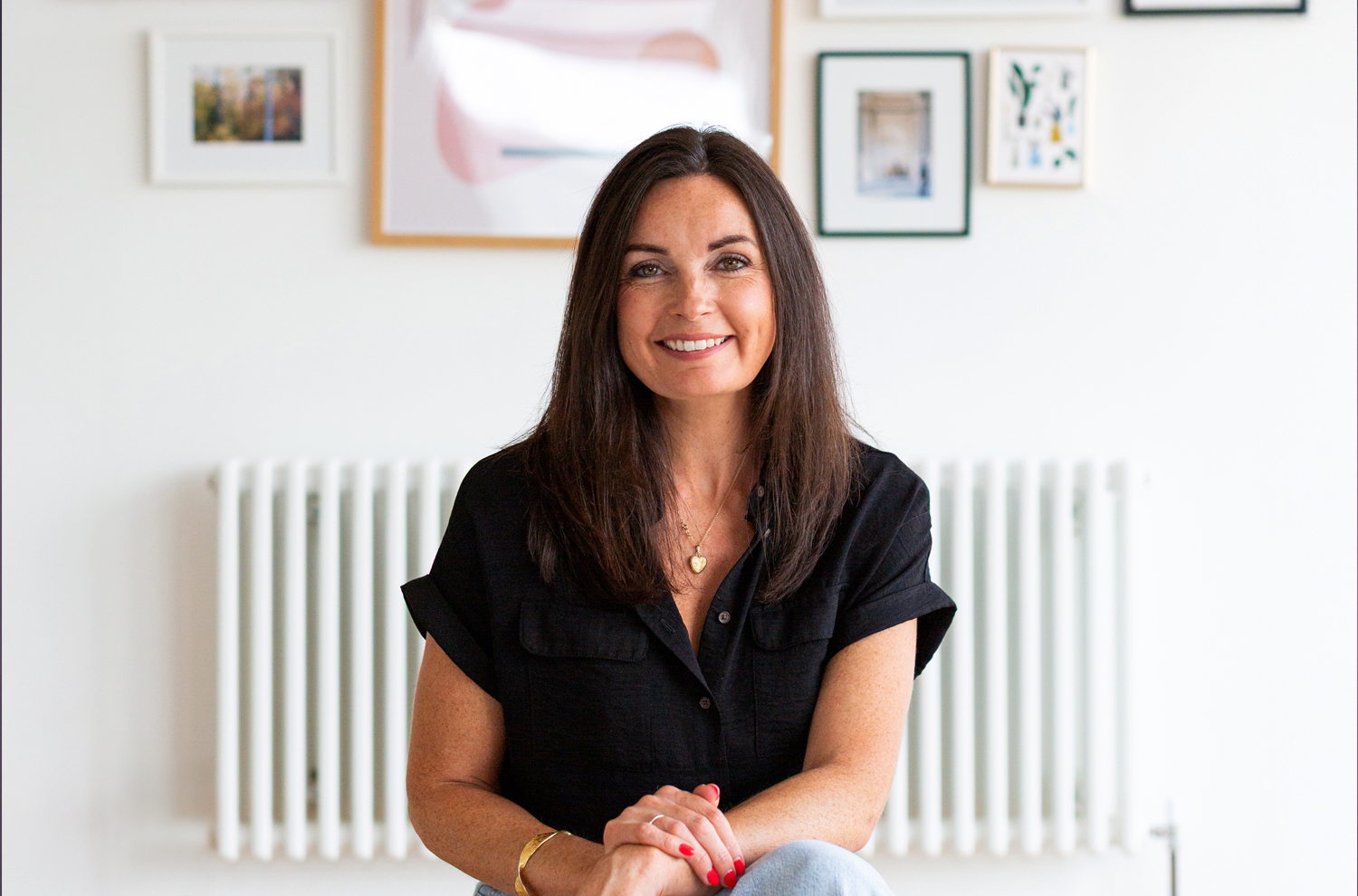
Ruth Edwards is a trauma-informed somatic coach, brainspotting practitioner and certified hypnotherapist who helps women (and men!) heal from the inside out. Blending neuroscience, nervous system regulation and deep emotional work, she guides clients to overcome anxiety, self-doubt, people-pleasing and emotional trauma, so they can reconnect with who they truly are.
A single mum of two teenagers, Ruth shares her journey of redefining success, creating a flexible business that allows her to be present with her family and following a deep calling to help others. This is a conversation about courage, healing and the freedom that comes when you back yourself.
Conversation Highlights:
- Making a bold career shift in your 40s
- What somatic healing, brainspotting & nervous system regulation really mean
- Navigating single parenthood while starting a business
- Marketing struggles & finding confidence online
- The importance of community and support when you’re building something new
- Advice for anyone dreaming of a heart-led business but doubting if it’s too late
Ruth’s story is proof that you’re never too late to pursue the life you really want.
Listen if you’re:
- Curious about somatic healing & brainspotting
- Starting a business later in life
- A mum navigating work-life balance
- Battling self-doubt or fear of judgment
- Longing to create something that feels purposeful
Favourite Quote For Mums in Business:
“Try to make decisions in life that are true to you and listen to your body, your body knows.” – Ruth Edwards
Connect With Ruth:
To learn more about somatic healing head to Ruth’s website thesomatichealingcoach.com or find her on instagram.
About The Host:
I’m Victoria Phipps – a Mum of two, analogue family photographer, charity co-founder, marketing person and now podcaster! My career has wandered all over the place and is becoming a bit of a complex tapestry as I head into this middle phase of life, but I can honestly say I’ve loved every minute of it so far.
I was raised by a nurturing Mother and an entrepreneurial Father and have inherited traits from both, so the tension between ambition and motherhood is one I grapple with on a daily basis! I’m fascinated to hear the stories of other women on a similar path, who are striving to build thriving businesses whilst being present for their children. It’s a tough juggle, but I hope the conversations shared on this podcast help Mums in business feel less alone and inspired to keep going in pursuit of their dreams!
If You Enjoyed This Episode:
- Please subscribe, rate and review the podcast – it helps other mums find us!
- Share in your Instagram stories, tag @mummeansbusinesspodcast and let us know your biggest takeaway.
- Share this episode with a fellow Mum in business who you feel would resonate with Ruth’s story.
Episode Transcript:
Ruth (00:07)
stay true to yourself. Try to make decisions as you go forward in life that are true to you. Listen to your body, your body knows, you know, really listen. And I think the more you make decisions that are aligned with your inner world,
the more your outer world becomes aligned with your inner one.
Victoria (00:32)
Hello and welcome to the Mum Means Business podcast, where we shine a light on inspiring women who have one thing in common. When they’re not managing tantrums, homework, P.E. kits and play dates, they are busting their gut to create something from nothing, to turn their passion into a thriving business and build a better life for themselves and their families. We dig into what motivates devoted mothers to pursue entrepreneurship and how they integrate their work and family life.
I’m Victoria Phipps, your host, and if you’re an ambitious mum in need of some solidarity whilst navigating the messy middle of making your big dream a reality, then stick around. This is for you.
Victoria (01:10)
My guest today is a trauma informed somatic coach, brain-spotting practitioner and certified hypnotherapist who helps women and men heal from the inside out. Blending neuroscience, nervous system regulation and deep emotional work, she supports clients to overcome anxiety, self-doubt, people pleasing and emotional trauma so they can reconnect with who they truly are.
Ruth Edwards is also a single mum of two teenagers and former corporate professional who now runs a growing online business, helping others heal what’s been holding them back and build lives rooted in self-worth, safety and purpose. Hers is a story of starting again.
She made the decision to pursue a heart led career, which helps others achieve their full potential and gives her the flexibility to be present with her children. But I know there is so much detail to dig into Ruth, welcome to the Mummeets Business podcast.
Ruth (02:03)
Thank you so much, it’s great to be here.
Victoria (02:05)
It’s a pleasure. forward to this conversation. You’re in a relatively young business. let’s start with the decision to make that shift in your working life. What made you do it?
Ruth (02:16)
Well, first and foremost, I started my business because I wanted to help people in a way that I wished I’d had support myself. So I discovered somatic healing and we can talk a little bit about that, what that actually is. And, you know, brain spotting therapy and nervous system work. And it’s completely changed how I navigate my life. that was what.
made me choose to do this and actually help people in a way that didn’t have that help myself. I wish to goodness I’d had all this stuff, you know, years earlier. So that’s in short, like my why. But actually, in terms of sequence of events, there was a lot of divine timing involved really, because as you say, I’d
had this long corporate career working for a large 23 years. And actually it got to a point redundancy was coming up. So I chose to take that. I saw that actually as an opportunity allow me to go on and do something different. But also at that point in my become a single parent.
and things had changed in terms of the landscape. So we’d had COVID, but then we were much used to from home. I’d moved from the North down to Shrewsbury. was actually, you know, working from home, being very flexible, but then things changed. We had to go back to the offices, but actually I was now having to travel two hours well actually up to three hours each day to sit somewhere where I didn’t actually.
have any of my team around me and it just felt soul destroying and also being a single parent, we were navigating that aftermath of becoming family and I really wanted to be there for my children and to be much more flexible in my work. So that was a big driver.
for why I want it to change things.
Victoria (04:18)
So did you always, I mean, you worked in a bank, is, you know, historically a very safe, secure job, you know, going back to jobs for life. You’d had this long career at Lloyd’s. During that time, did you ever have an inkling that You might want to do something entrepreneurial, or was it literally circumstance, timing, just that synchronicity of events?
Ruth (04:25)
Mm-hmm.
Victoria (04:40)
that sparked that thought for you.
Ruth (04:41)
Hmm.
It’s an interesting question because actually I think there’s a few things at play. think as I came into my 40s I began to think about my life and just everything very differently and when you think about the fact that culturally very much conditioned to follow a traditional path aren’t we? You know it’s school.
college, university, for a lot of us. And then a corporate career, which is very, very safe. And it’s all about being able to have a mortgage and the car and the family and everything. know, I that path. But I think more and more into my forties, I was starting to feel that actually my outer world doesn’t align with my inner one.
Whilst I’m so grateful for that corporate career, and all the skills it’s taught me, actually, you know, I starting to feel that I wanted more freedom and to have that control, you know, you can only take this set amount of leave each year. And, you know, I just felt very, I wanting to do something that was much more soul and heart led, I would say.
Victoria (05:49)
It’s that thing about almost having to put your hand up in school and ask to go to the toilet. You put your hand up in work and say, could I please go on holiday? it’s definitely quite constraining. And I have rebelled against that my whole adult life. And I’ve been very fortunate that when I have worked in a company, it’s been our family business. So all sorts of flexibility and that was built into my childhood because I grew up in an entrepreneurial family.
Ruth (05:54)
Yeah.
Yeah! ⁓
Mmm.
Victoria (06:16)
hours in there than for most, but they were fitted in around the things that we wanted to do as a family. And it’s that flexibility. And I think there’s something about, it sounds like you perhaps felt the same way. I hit 40 earlier this year and it’s that halfway mark. You you’re like, if I’m lucky, I make it to 80. That’d be nice. Anything after that feels like a bonus.
Ruth (06:23)
Yeah.
Yeah.
Yeah.
Victoria (06:41)
And have I done half the things that I want to do? And what does my life look like? And if I carry on on this trajectory, when I retire, will I be pleased? Will I be okay with how my working life went? Do I feel like I have agency? Because also you feel more mature automatically. Like 20s and you you’re still trying to prove yourself. And there’s something about, I mean, for me turning 40, I was like, I feel like I’m a grownup now.
Ruth (06:46)
Mmm.
Victoria (07:08)
I don’t know what happened. Like suddenly I became very mature and sophisticated, but you look back and you have actually got two decades of working experience plus, and you know stuff. And if you have a word with yourself, say I have value and actually maybe I could take a bit more control over where I put my energy. it is a moment of reckoning. Did you feel that way?
Ruth (07:12)
Yeah
Mmm.
Yeah.
Yeah, absolutely. it’s, you know, it’s a risk, isn’t it’s a big this may not work out, but I felt if I didn’t make that decision then I would never do it. It was, it was the opportunity for me to be able to, take that leap. And also as a mom, I think it’s so important to model for your children,
for them follow their passions and not feel constrained by other expectations and cultural
I just think that’s so, important, especially if you’ve got a child who’s not particularly academic, you know, it’s really important that that doesn’t define them, I think that’s where success happens as well, if you follow in your passions and the things that you are at.
Victoria (08:21)
I absolutely agree with you. And I think perhaps there was something about our upbringing and I do wonder, my child’s about to start school, to what extent the education system’s changed. You probably know a lot more about it, but there is, there was kind of a funneling, you know, you’re outside of academia, if that’s not where your strengths lie, then either have to lie in music or sport, maybe drama, but you have to have a thing.
Ruth (08:30)
Mmm.
Mm-hmm.
Victoria (08:46)
And actually it’s so much more complicated than that. And it’s that thing of fitting into a box.
And if you fell out of that box, it was like, well, you’re kind of failing. You know, you’re in the lowest group in this subject and you feel all the time that you’re not quite cutting it. And actually to show, especially in this modern age and with the digital online world, there’s so much opportunity to build a really thriving career that is so niche and is right up your street and lights you up, which is obviously what you’re doing now.
Ruth (09:07)
Yeah.
Mmm.
Yes.
Yes.
Victoria (09:21)
So,
the one thing I was also going to say is, yes, as a mum, you want to emulate that for your children, you want to show them, and you want to make them proud of you as well, which is very cool. But there’s also a responsibility about being a single mum.
Ruth (09:31)
Mmm.
Mm-hmm.
Victoria (09:39)
that it is a bit of a risk. And how have you reconciled that thing of betting on yourself? How’s that been for you?
Ruth (09:49)
would say that is the most challenging part of self-employed now and taking that leap is definitely because at the moment we are having tighten purse strings and for example the holiday we went on this summer was to my parents’ caravan in Wales and I’m making different choices in the short term but with the hope that
it will pay off but I think know I’m new in and I have to give it a chance and actually that holiday in my parents caravan was actually wonderful you know we there was limited wi-fi so we really connected like you know we we swam in the sea together and it was just actually you know I would say we had a better
Victoria (10:26)
Yeah, I bet.
Ruth (10:38)
It was more connected than the five-star all-inclusive the year before in Turkey. isn’t everything. And actually, it’s experiences, isn’t think there’s so much more financial success. So what is success? Well, actually, for me, I’m measuring my success differently.
Victoria (10:39)
Hahaha
Ruth (11:02)
than just purely financial. Yes, we have to be sensible. Yes, I have to have a roof over their head. yeah, I think That’s the key is how I even measure success. It’s more than just money, isn’t it?
Victoria (11:02)
Welcome on.
So what is it? If you look forward, say five, 10 years, obviously what you’ll be doing is you’ll be taking your children, who will be in their 20s then, to the Maldives on a five-star extraordinary holiday, and they’ll be wishing that their grandparents carry them. But in five years’ time, assuming your business continues to grow, what does that success look like to you?
Ruth (11:26)
Mm.
Hahaha
Hahaha! ⁓
I think it’s more about freedom, isn’t it? It’s about having that flexibility, being able to have my business, but actually take them to different
I think it’s freedom, flexibility and really showing them what’s possible.
Victoria (11:59)
Absolutely. And how feel about it? Because your children are 13 and 15. that’s a big change for them. And obviously at a time when their family dynamic has changed dramatically as well, how did they feel about you? know, when you were making that decision, did you have conversations with them about it?
Ruth (12:08)
Mm-hmm.
Yeah I did I was telling them all about it and they were like mom go for it you know you’ll be so good you’ll be good at this and yeah they were very very supportive and
Victoria (12:29)
That’s lovely.
Ruth (12:30)
even now they’ll ask me you know have you got any new clients how is it go you know they’re very interested in in what’s happening and
Victoria (12:38)
I think that’s gorgeous. And I think the fact that they are coming along on the journey with you and they’re old enough to understand, you know, as a child, think of our parents as infallible, don’t we? You know, to a certain extent, depending on our childhood and those experiences, they’re grownups, so they know stuff and we just entrust ourselves to them for better or worse. But I think there is something about those teenage years where you start to get to know your parent.
Ruth (12:38)
I don’t know what else.
Mm-hmm.
Victoria (13:06)
as a contemporary almost, and they’re not just mum. And so you can share a bit more of your own vulnerability with them. And I think that’s gonna be so brilliant for them to see that you were perhaps nervous to take this big leap. And again, invest in yourself when you’ve had this really, really safe, secure kind of institutionalized career to date, and they get to see that you were nervous, but you just,
Ruth (13:07)
Mmm.
Yeah.
Yes.
Mm-hmm.
Yeah.
Victoria (13:33)
just went and did it anyway. I think that’s really cool. Very, very cool. So tell me why ⁓ somatic healing and for anybody that doesn’t know what is it, let’s start at the very beginning.
Ruth (13:34)
Yeah. Thank you.
Mm-hmm.
Yes.
Victoria (13:44)
and what’s your journey with it?
Ruth (13:46)
Yes, okay, so somatic actually means in the body. So when we’ve experienced any kind of overwhelming event, so we’ll say the word trauma, some people might say they don’t have any trauma, but actually I would argue that…
everyone does because we’ve all we’ve all experienced events in our lives you know even the loss of a pet you know that’s trauma and if we couldn’t process things properly at the time our body holds on to so much it stores it
Victoria (14:04)
Yes.
Ruth (14:21)
and our subconscious. So even though we might logically be able to rationalize something, actually we haven’t processed it properly we’ll continue.
to get triggered by things and it affects how we show up, it affects our patterns, know, and it really affects how we go through our life. lot of things happen when we’re growing up, secondary school, you know, I had a really difficult secondary school experience and that really shaped how I went into adult life, you know, very low self-esteem.
low confidence and you know I’ve had things happen during my life for example baby loss I baby at 17 weeks due to due to edward syndrome which was which was a really difficult experience I was 40 at that time and you know there’s there’s been other things you know you know the divorce you know the breakup that’s you know we need
Victoria (15:06)
I’m sorry.
Ruth (15:23)
we need to heal from that. So I was looking for ways to heal and I’ve had counseling over the years. I’m open to say I’ve used antidepressants, I just never found the thing until I discovered somatic healing for me. That’s the difference. And that is about bringing in the body. The mind body connection is so key and it’s about
processing what’s been stored. You know, there’s that phrase, isn’t there? We need to feel it, to heal And so, I discovered that, I discovered brain spotting therapy. And then I went
Victoria (15:56)
And what’s that?
Ruth (15:57)
So brain spotting therapy is a really powerful processing past trauma and we use an eye position but it’s connected to what we’re feeling in the body. So might be describing something that’s happened and I might say to you, well Victoria, what do you notice in your body? And you might say, I can really feel a lot of sensation here in my chest.
will use a pointer and believe it or not find a position with your eyes where you’ll actually feel those sensations stronger then it’s a case of holding that eye position so we’ll find that spot and then holding the eye position at the same time as listening to specially created music it’s a different frequency ⁓
Victoria (16:21)
Ooh, okay.
Ruth (16:42)
432 hertz which is a more healing frequency and it also stimulates both parts of the brain so it moves bilaterally. So listening to the music, holding the eye position and then the just up, where those sensations go. So some clients might have a very physical process. They might say, ⁓ it’s gone from my chest now, it’s gone into my jaw or…
to back of my head, they might have new memories come but the beauty is they don’t need to even talk if they don’t want to, they don’t need to tell me an awful lot. and the key thing is, is the body knows it’s got an innate capacity to heal. It knows what needs to be released. So it’s that opportunity to do that. And,
timestamp events in the so no longer holding on to what’s you’re safe now. You’re in the present day. creates much more of a sense of inner peace resolution. would say in a nutshell. It’s a bit of a long winded explanation. It’s not much of a nutshell. it’s complicated to explain.
Victoria (17:42)
It sounds, no, it’s Yeah.
No, think really interesting. And what you said about the body having an innate capacity to heal. cut yourself, and with young children, I’m trying to explain this all to them now, they get very excited if they cut themselves
Ruth (17:59)
because
of the plasters.
Victoria (18:00)
because
of the plasters, is it going to be Elsa or Anna or Olaf plaster? Very exciting. But you know, your body will physically heal itself and it will do that without any effort on your part. But then you come to the mind. do you think there’s something about the way modern society is? And I’m going to say particularly for women, but I think for men as well in another way.
Ruth (18:24)
Mm.
Victoria (18:25)
and that they’ve been conditioned not to show weakness. But I’ll focus on women because that’s the point of this podcast. Because we’re busying ourselves, and I don’t say that in a derogatory way, I am the worst for busying myself. Because we are taking on the responsibility of supporting so many people around us, we distract
Ruth (18:32)
Mm-hmm.
Yeah.
Victoria (18:47)
So actually we very infrequently make time to connect with our body. And for a lot of women, it will be just exercise as in like, I’m going for a run or I’m going to, it’s, know, unless you’re really heavily into something that is more mindful in its practice, you’re not really listening to your body very much. And I think at that middle stage of life where you are so in demand from children,
Ruth (18:57)
Yeah.
Mmm.
Victoria (19:10)
and you’re pushing yourself in your career, and then you have perhaps parents who are getting older and you start to get a bit sandwiched in that respect. There isn’t much time. And it also comes back to self-care, you know, that you set aside that time to actually check in with yourself. But do you think when it comes to emotional trauma, actually the body is sometimes screaming at us to address something and we just keep battering it away?
Ruth (19:31)
Yeah. Yes.
Yeah.
Victoria (19:36)
because we’ve become
so detached from our physical bodies.
Ruth (19:40)
Absolutely, and been a statistic recently that 80 % of autoimmune disease is in women. ⁓
Victoria (19:47)
Yeah, I’ve heard that.
And we have a lot of autoimmune disease in our family. I think Gabor Mate has done quite a lot around this because I think he recognized that his wife actually was suffering for many years in this, in these kind of low lying ways, you know, just not quite supported enough.
Ruth (19:54)
Yes, it was.
yeah
Victoria (20:05)
and giving, always giving, actually being reluctant to receive help. You know, superwoman.
Ruth (20:05)
Yes.
Yeah.
Yeah, and if storing so much and just pushing on, then all of that cortisol that’s been pumping around the body, you know, we’re in our sympathetic part of our nervous system. So that’s when we’re in fight or flight. and all that cortisol, if we’re in that space for such a long period of time, that’s what leads to these…
these conditions, know, fibromyalgia, for example, and, so I think nervous education and regulation again, that forms quite a big part of my work with my clients, because actually, it’s very much looking at where they are in their nervous system, mapping where they are.
you know, a lot of clients, a lot of us, in society, we’re in fight flight, which is sympathetic, or we’re in freeze. You know, and that’s where we do feel quite dissociated, disconnected. It might look like we’re functioning, but actually behind the scenes, we’re quite disconnected. So it’s about
recognising that and what tools we can put in place to help regulate and move into a place of groundedness and connection. And again, I would say as a parent, that’s been, brilliant knowledge, but also as a business owner. you know, and for other business owners listening, thinking about where you are operating from.
You know, are you in fight flight all the time? and what can you do to regulate more and come into, what we would call ventral vagal the scientific term or your green light or come back online. yeah. ventral vagal the parasympathetic. Yes.
Victoria (21:49)
So do with your vagus nerve.
Okay.
Ruth (21:52)
So it’s the parasympathetic
part of your nervous system. And yes, vagus nerve plays such a important role in moving you in and out of these three states. We need all of them, but we want to be in ventral vagal as much as possible. So it’s about creating that nervous system flexibility.
call yellow sympathetic, red is when we’re in freeze. It’s a bit like a traffic light system and green is when we into ventral vagal place.
Victoria (22:21)
and is that kind of a settled space.
Ruth (22:23)
Yes,
Victoria (22:24)
kind of coming back to
Ruth (22:23)
when grounded,
and I think that’s where we access more true self energy. I love internal family systems theory, which is Richard Schwartz. I don’t know whether you’ve come across that, but he…
Victoria (22:36)
I heard
it years ago Dr. Chatterjee’s podcast and it sounded really interesting.
Ruth (22:41)
It’s phenomenal and again, I think it really helps. It’s helped me, it’s helped other clients understand themselves better. When we’re in true self he says that every one of us has access to these wonderful qualities. He calls them the eight C’s. So it’s when we’re calm, we’re connected, we’re curious, we’re confident, we’re creative. Those are all qualities that again, as business owners.
as parents, if we’re in that place, if we can access more of that true self energy, we’re going to be leading from a much better position, aren’t we? And again, we’re going to be parenting better. would say this nervous system work, learning how to better, noticing when I’m triggered, has made me a better parent. example,
If I’m triggered now, It makes me more reflective. the reason I’m triggered is not necessarily what they’ve done. It might be because I’m not feeling in control. Therefore, I don’t feel like I’m goes back to a core wound. Again, that’s internal family systems theory.
So actually it’s then what can I do to regulate better and wait until we’re all back online. We’re not in fight flight we could speak more logically and rationally we’re coming from a sympathetic part. Yeah, absolutely.
Victoria (24:01)
A place of stress, I suppose, yeah.
Yeah, and do you think part of your teaching then, once you’ve done kind of your healing work, and that will be individual to every client that you have, part of it is a kind of training. And similar, I suppose, to where traditional therapist might do the same thing is to notice your triggers.
Ruth (24:22)
Mmm.
Mm-hmm.
Victoria (24:24)
and to
actually dissect your own behaviour a bit more so that you’re approaching day-to-day life in just a more aware and perhaps a more sophisticated mindset,
Ruth (24:32)
Yeah.
Yeah, one of the things that is a really useful that I do with my clients is actually get them to track their triggers for a week. So we’ll look at what the situation was, but what image came in their mind when they were triggered, came up in terms of behavior, what emotion came up.
but also what meaning, so what story were they telling themselves right at that moment? that can be so insightful because then we can look at, actually is that story true? Is that true or is that story from 10, 15, 20 years ago? yes, or is it from something, yes, exactly.
Victoria (25:11)
or is that internal or is it external?
Ruth (25:18)
take each element. So for example, that story, and we can reframe that, or we can behavior and put a pause in, and that’s where the nervous system regulation tools come in. So when they’re noticing what’s coming up for them, they put a pause, regulate, put that pause in to change?
that trigger and that behaviour. So yeah, it’s a really useful, reflective way of looking at things and being able to then break those patterns.
Victoria (25:50)
How does it feel when you’re at work now and you’re speaking with a client and you can tell you’re making really good progress and that you’re adding value and that your knowledge because you’ve invested in yourself with all of this training.
Ruth (25:56)
Yeah.
Mm-hmm.
Victoria (26:06)
The information you’re giving them and the process guiding them through is really going to help them. And you can see it happening. And you think back to two or three years ago your previous job.
Ruth (26:11)
Hmm.
Yeah.
Victoria (26:18)
How does it feel to be doing that? You know.
Ruth (26:20)
yeah
just worlds apart i feel so much gratitude you know that i am in this position where i am actually i’m making a difference i don’t want that to sound conceited but i am making a difference to people you know ⁓
Victoria (26:34)
It doesn’t sound conceited at all. It doesn’t at all. And I think gratitude’s
an interesting word because you did it.
Ruth (26:42)
Mm.
Victoria (26:43)
You know, it’s not something that someone handed to you and said, okay, well, you’ve got this job. Would you like to do this instead? It’s all laid out for you. There’s so much work that goes into establishing a business from nothing. So much work. you know, you’ve been in an institution and you probably got quite comfortable there. You were very proficient. You were arguably a big fish in a small pond in your kind of department. You’ve been there so long. had so much experience.
Ruth (26:54)
Yeah.
Mm.
Victoria (27:07)
you take yourself out of that and you’re in a whole new world that you know almost nothing about. You know, you’re grappling with marketing yourself. How is that?
Ruth (27:10)
Mmm… Mm-hmm.
well that I’m not going to lie that has been a little I think at first I found it really difficult being visible.
fear of being judged, getting to grips. You know, when I used to do a reel, I used to have to feel like I used have to go and lie down in a dark room afterwards for about two hours once I’d posted it, you know, thinking what, oh, how is it going to be I have completely got over that now. And I think the thing that I tell myself is, you know,
The reason I’m doing that is to share my knowledge and it is to reach other people. And not my audience, if they don’t like what I’m saying, they don’t have to watch me, do they?
Victoria (28:04)
Exactly, exactly.
those early days, learning to market yourself is a real hurdle, is a real challenge, because it feels so personal. I think especially if you’re a service provider, and know, people must have identified you as working at the bank. You know, for years, was just part of who you were. You were in this corporate role.
Ruth (28:11)
Mmm.
Mmm.
Victoria (28:26)
And suddenly you’re on Instagram talking about this woo woo thing that no one knows about and do you even know about it and what she thinks she’s doing? And all those thoughts go through your mind and it’s totally natural and human, but I think to get to the point where you say you are at now so quickly in a fairly young business is amazing because it’s massive to grapple with those things
Ruth (28:32)
Yeah.
Mm-hmm. Mm-hmm.
Mm.
Mmm. Aww.
Victoria (28:53)
You know, your audience on social media at the time was likely friends and family. And suddenly you just change it up. And, you have that responsibility. I’m not here to entertain you. I’m actually going to do something that really matters to me. And if you don’t like it, please feel free to unsubscribe from my digital life. And that’s fine. And that’s up to you. You do that if you are cool.
Ruth (29:00)
Yeah.
Mm.
Yes, yes exactly.
Victoria (29:17)
feel free to support me and like everything that I publish, even if you don’t understand it, you know, it’s that. And I think actually to have got to that stage so quickly is brilliant. And especially if you are hiding in a dark room.
Ruth (29:17)
Mm-hmm.
Yes. Yeah.
Thank you.
I wasn’t literally but that’s what I felt like. But you know, but again, yeah and actually noticing I think that’s another thing of the my knowledge around the nervous system noticing how much adrenaline was in my body the minute I post you know actually noticing it and regulating and again using some of those
Victoria (29:33)
Yeah, it’s nerve-racking.
Yeah, and it’s madness that, mean, these are evolutionary tools that were designed to galvanize us to run away from danger.
So we are having the same stress response that we would have if a lion was chasing us, but actually we’ve just posted an Instagram reel. And your body doesn’t know the difference.
Ruth (30:05)
yes.
Exactly.
Victoria (30:17)
It doesn’t know the difference,
but it’s those signals that your mind is sending to your body. And we obviously live in a very different world and happily there aren’t lions chasing us, but that quantity of adrenaline and cortisol has a massive effect on everything that day, you know, and to learn how to recover from that is obviously hard work in itself. And a lot of people, as you say, won’t really have the tools to do that.
Ruth (30:22)
Mm-hmm.
Mmm.
Yeah.
Yes.
Mmm.
Victoria (30:43)
And I
think for a lot of people, it will stop them doing that reel again. And so what do you mothers and are perhaps thinking that they could start a business or perhaps in the early stages, but they to death of posting a reel, nervous, and they have all that anxiety over judgment friends and family.
Ruth (31:00)
Mmm.
Victoria (31:06)
And will they just think I’m a complete tosser if I start talking to my phone? All of that stuff, what do you say to them?
Ruth (31:13)
I think the important thing is to think about why you are doing it and actually, you know, the people that you need to reach. Think about them. Don’t think about your friends and your family. It’s your purpose, isn’t it? It’s what your purpose is. if you don’t reach those people…
what the downside of that for them is. You know, I think that’s the first thing. Then I think, you practically that leap. Once you do it and you do it again, you realise you’re not going to get eaten by that lion. you know, I was also worried about, accuracy, what I was saying. You know, was worried people might say, well, that’s not right, again, from a corporate career, we had to be so careful about what we put out.
but will find that actually people, you know, they do like, they do comment, they want you to do well. Most people want you to do well. And then third thing would actually using some tools, some nervous system regulation tools to help yourself.
regulate and bring yourself back into that calm state. It’s those practical things. then my other tip around the whole social media aspect would be I have only just started using Meta Business Suite. And this is a practical, I don’t know whether it’s helpful for new but if I had started that sooner, I think I’d be even further now, you know.
Victoria (32:42)
This is for
scheduling your posts. ⁓
Ruth (32:44)
scheduling, scheduling
your posts this summer I’ve decided right I’m going to use it and I’ve used it so that I’ve been able to post while I’ve been on holiday and it’s meant that I’ve stayed consistent and I’ve actually seen my views to my Instagram double.
And it makes the whole process of actually posting the way that you even do your caption. It’s dead easy. So if you’ve not done that yet, I would strongly, strongly recommend that in terms of ease and consistency. I wish I’d done it so much sooner.
Victoria (33:14)
It’s
that thing again freedom. So if we want to post content daily, do we actually want to be on our phone at that time of day, daily, know, stressing and often, you know, you’d post in the morning or maybe the evening as a parent, they are crunch times, you know, that’s if you’ve got smaller children, you know, that’s dinner bath bed and that’s,
Ruth (33:18)
Yeah.
Mmm. No.
Mm-hmm.
Victoria (33:39)
getting them out of the house in the morning. And it’s stress at all angles. Do you want your kids to see you on your phone? Do you want to be saying, know, shouting, put your shoes on whilst you’re trying to publish a post or write a caption? It’s, a really helpful tip. And you can aside time when it suits you in your working week to actually think about
Ruth (33:44)
Yeah.
Mmm.
Yes. Yeah.
Victoria (34:00)
your messaging. And I think I went through a phase of posting daily on Instagram for a very, very long time. And if you do it as a sort of discipline, without thought, you you hold yourself to the discipline, you can end up just putting out some quite lackluster content and much better to post less frequently and set aside the time to really think about.
Ruth (34:02)
Mm-hmm.
Mmm.
Yeah.
Victoria (34:26)
the message that you’re trying to put across and that will land a lot better.
Ruth (34:29)
Yeah.
Victoria (34:31)
So I’m glad that you’ve found a way to do it that suits you and suits your family life.
Ruth (34:31)
Yeah.
Yes, and it
even tells you when to schedule when your audience is most active, both for Instagram and Facebook. helps.
Victoria (34:45)
Do you feel your head around the tech the tools marketing small business in 2025 been a bit of a learning curve in itself?
Ruth (34:59)
absolutely. Because even though I’ve worked in corporate life, you understand all the different elements of a business to a degree because you’ve seen all the way a business works. It’s totally different when in on your own and you have to become the designer on Canva. I didn’t even know what Canva was. It’s all these different apps, isn’t it?
Victoria (35:21)
Yeah.
Ruth (35:25)
like a foreign language, of it, like lead magnets, funnels, all of this stuff. It’s so alien to me and I’m still getting my head around that to be honest, but that’s where I need to go next in terms of how grow my business?
what do I look at next? it memberships? Is it courses? How do I make sure I’ve different products that people who couldn’t afford to do a one-to-one, for example, could still access something?
but also how do I ensure a more steady income because it’s not consistent in terms clients. yeah, that’s where I need to go next in terms of creating more stability. But with that does come that technical, like you say, half of the battle is how to understand what to even do.
You know? that’s the one bit I miss is sometimes I feel really alone. I miss, you know, if I know what I need to do, I’ll get on and do it. And I think that’s the hard thing, isn’t it? not, it’s not having that accountability necessarily.
Victoria (36:14)
Yeah.
Ruth (36:29)
So it’s now about how I use my network, know, coaching groups and things like that to be able to get those skills and that support through community, isn’t it?
Victoria (36:40)
I think this is exactly it. That so many mums start their own businesses, and one of the factors will be to have a more flexible life and to have more freedom and agency over their schedule so they can be there for their kids. You feel like you’re doing it on your own. And you kind of take this big plunge, which is enormous in itself. And then you’ve been used to having someone hold your hand.
Ruth (36:57)
Mmm.
Victoria (37:03)
pretty much your whole life and tell you what’s next because all the way through school it’s like that, your parents do that when you’re younger and if you go to university or college or whatever and then you’re in your job, you’ve got a boss, you know, you’ve got a team leader, you’ve got a manager, whatever it might be and you’re guided and I think to come out of that sort of situation the middle part of your life.
Ruth (37:10)
Mm-hmm.
Victoria (37:28)
I can imagine it feels like you’re just lost at sea sometimes. And that makes it all the more impressive because you don’t like that and go and get your job back. Cause you have faith in yourself that you’re going to figure it out. And actually it’s that thing of asking for help because you’ve got this amazing cause and purpose and dream for a different source of life.
Ruth (37:32)
Hmm.
Yeah.
Mm.
Victoria (37:55)
and all the passion is there. I think there’s a risk in those very early days, if you don’t have support, that it’s too much and it feels too scary and you go backwards. And to have the tenacity to push forwards and actually to put your pride to one side and say, well, I need help and put your hand up again. And it’s not putting your hand up, can I please go on holiday? It’s putting your hand up and say, I’m not really sure what to do now.
Ruth (38:04)
Mmm, yep.
Mmm.
Yes. Yeah.
Mm-hmm.
Victoria (38:20)
And
you’ve obviously done very well in that you’ve got clients and you’ve got all this one-to-one work and you’re marketing yourself and you’re doing all the reels and you’re doing all the things, but it’s natural to think, okay, well, how do I scale it? Like what’s next?
Ruth (38:33)
Yeah.
Victoria (38:34)
what is it? And the opportunities in the online world now are vast. And you’ll hear people talking about all these options. You know, you should definitely start a membership and you should definitely do a course. And you should definitely, it’s just, and none of it is definite, and it’s exactly what coming back to what you do. Everyone is going to have a path that’s right for them in the work that you do. And so for you, it’s just about having somebody
Ruth (38:39)
Mmm.
Yeah.
Mmm.
Victoria (39:01)
guide you in the direction that suits you and your business. It’s very exciting, isn’t it?
Ruth (39:02)
Yeah.
very excited yeah it is exciting
Victoria (39:09)
Look a bit scared. I think it’s very exciting.
There’s so much you could do and
you’re only at the beginning. and you’re doing all the right things in that you are like doing all your research and asking for support and yeah, the world’s your oyster to a certain degree.
Ruth (39:24)
Mmm.
Victoria (39:31)
And I think what you’re doing now, you’re obviously offering people a transition one-to-one. You’re working with clients individually, you have an opportunity to offer that transition one-to-many where you are able to serve many more people and scale your business in a way that you can support
Ruth (39:45)
Mm.
Victoria (39:49)
people without having to completely erode your time. So tell me a bit more about that transition. So when people engage in somatic healing, what can they expect in that journey? Where does it take them from and to? And in your journey, where did you start and where did it take you?
Ruth (40:11)
yeah, so ⁓
tried different things like counselling, but that’s top down. And the danger is we can rewire things in. So when I discovered the somatic work, it was just like it unlocked something for me. enabled me to…
find much more inner peace and you know, things in a way that I couldn’t logically.
but also I think with the internal family systems therapy that I mentioned, you know, that again is about understanding some of the different parts of us that come up. So for example, we might have a people pleasing part, we might have an emotional eating part or an alcohol part or a self-sabotaging part and understanding that those parts are actually there for us with a loving intention.
but actually they can be quite destructive. I think for me part of all of work helped me understand myself so much better and to reduce shame about some of those parts that were coming up. But as I say then combined with with brain spotting therapy hard to
articulate how powerful it is but it’s that you know months later you might find actually that thing I can look back on that thing without the same emotional intensity and and I think person I was you know very low self-confidence very anxious a worrier you know I wasn’t meeting my potential really
and I think the difference in me is significant. I have brain-spotting on not being able to speak. I used to be so scared of speaking publicly, you know, and really, mean to come on this podcast, I was a bit nervous. That’s normal, isn’t it? But I think…
Prior to having that therapy, I don’t think I could have done this with you. I honestly don’t think I could. Mmm.
Victoria (42:14)
which is such a shame because your
message is important and there could be, even if it’s just one person listening, has felt really, really stuck.
Ruth (42:18)
Mm-hmm.
Yeah.
Victoria (42:26)
and has perhaps been to therapy, it’s perhaps on antidepressants and nothing’s landing, nothing’s making it better because these things are addressing symptoms, you know, the malaise. They’re not necessarily going to the root source of the problem, which is, I guess, what somatic healing is all about, identifying where that…
Ruth (42:39)
Yeah.
Mm-hmm.
Yeah.
Victoria (42:51)
comes from where that pain point is and going back and addressing that. And they might just hear you speak about it and explain the opportunity. And it might just be the thing that they choose to invest in that sorts them out and allows them to break free from those constraints that have been holding them And it’s hard if you…
Ruth (42:57)
Mm-hmm.
Yeah. Yeah.
Yeah.
Victoria (43:15)
I’ve always loved the sound of my own voice. So I can’t relate. My parents, God bless them, will testify to that. But I do appreciate that that is rare. And I still obviously would have huge anxiety speaking to an enormous group of people. But to get over that and to find out that source for you, like where does that come from?
Ruth (43:20)
Yeah
Victoria (43:42)
that resistance and to heal it to the point where you can share this message is brilliant. So what was it like when you first discovered Somatic Healing and who is it that kind of helped you through that initial journey to overcome your challenges so that you’ve been able to go on and do all these fabulous things?
Ruth (43:46)
Mmm.
Well I was, you know how you scroll on Instagram, you look at all sorts of different things don’t you, but was actually a one…
Victoria (44:09)
I never do that. No.
Ruth (44:11)
⁓ late at night.
But it was actually a woman called Caroline Strawson and she has set up her own School of Trauma Informed Positive Psychology and it was her that I went on to do. I think it’s actually the world’s first qualification Trauma Informed Coaching Certification that’s accredited with the International Coaching Federation. So it’s a really good
qualifications. That’s where I actually did my study in with And at the point at which I went self employed, I actually bought a franchise in Caroline’s mental well being company.
that was really helpful because it allowed me it was almost like a business in a box so I was able to to get the back office system as part of that so you know all of that setup that that can be quite difficult when you first set up
But it allows me to still have my one-to-one coaching business under my own brand.
but I’m also able through the franchise if I want to, to go in and deliver trauma-informed courses, workshops to schools and workplaces, which I’ve done a number of. My passion is the one-to-one work, I do have that opportunity as well.
Victoria (45:28)
I imagine that’s quite interesting going into schools and talking about that stuff. And it does just give you, I don’t know, a bit of a glimmer of hope that actually perhaps the education system is starting to embrace some new ways of thinking. And…
Ruth (45:36)
Mm.
Yeah.
Victoria (45:43)
with everything that you have learned and the journey that you’ve been through as a mum as well and navigating family dynamics, what would you now go back and say to your eight year old self?
Ruth (46:00)
I would say to not make yourself small, to your passions. this is making me upset. I don’t know why that’s brought emotion.
Victoria (46:17)
I think eight years old is quite a funny age because you’re a child on the cusp of some serious conditioning, but you probably still have a really strong sense of self. You’re starting to become more aware of societal expectations and perhaps less free than you felt when you were seven.
Ruth (46:19)
You
Yeah.
Mmm.
Victoria (46:41)
or six.
Ruth (46:42)
Yeah, yeah, I would say to her not care what other people think of you, to really…
try and stay true to yourself. Try to make decisions as you go forward in life that are true to you. Listen to your body, listen to your body knows, you know, really listen. And I think the more you make decisions that are aligned with your inner world,
the more your outer world becomes aligned with your inner one.
Victoria (47:17)
I love that. Yeah, I think that’s really powerful because…
As we grow up, inevitably we feel just tribally need to conform and to be accepted.
and to fit in, And in that, there is always a risk of losing what makes us us and what makes us unique. And I think the wonderful thing about starting a business in your is that you’ve almost
Ruth (47:38)
Mm.
Victoria (47:48)
come out of the other side of that period in life where you really feel this burning urge to conform and fit in because you’ve had that conversation with yourself where you know maybe you are halfway through maybe you’re over halfway through and there’s a certain amount of well sod it I’m gonna live my life according to my own values
Ruth (47:55)
Mm.
Hmm.
Victoria (48:11)
and pursue my own version of success, not the one in the rule book that I was handed as an eight-year-old girl. And that’s a really, really lovely feeling to have. And I feel like I’m just getting into that myself. And I’ve loved this conversation. I’ve learned something. I probably need some somatic healing, so maybe we’ll talk about that.
Ruth (48:33)
Hehehe.
Victoria (48:34)
But thank you so much for taking the time to talk with me today. I’m sure people listening will get so much out of this. And I wish you all the success as you scale your business.
And feel free to
Ruth (48:45)
Thank you so much.
Victoria (48:46)
invite me to the Maldives in five years time.
Ruth (48:50)
Thank you so
much for having me. Really appreciate it.
Victoria (48:54)
Pleasure.
Victoria (49:00)
The idea of leaving the safety of a career you’ve built for decades and starting a new business in your 40s can feel so daunting. We might wonder if it’s too late, have we missed the boat? Ruth Storey says no. Ruth Storey says if you’re craving more freedom in your life and you have an idea niggling away at you, then you are worthy of pursuing that heart-led business at any stage of life. Her own experiences led her to stumble upon a healing process that helped her so much.
She felt compelled to find a way to help more people reap the same benefits. She could have ignored that call and found another corporate job. Many would probably advise that that was the prudent thing to do, but instead she decided to seize the moment and bet on herself. Now she’s in charge of her own destiny and regardless of the outcome, she’ll never regret taking that chance. And I’m not in the least bit surprised that her kids are so proud of their mom.
Victoria (49:54)
Thank you so much for being here. I know your time is precious and I appreciate you tuning in today. If you enjoyed this episode, please subscribe, rate and review the podcast because we want as many mums as possible to find us and join in the conversation. If you have thoughts, questions, love letters or even hate mail, please send them my way. I read every single message. For more resources and episode show notes, please visit our website at mummiesbusinesspodcast.com and find us on Instagram.
at Mum Means Business podcast for behind the scenes content and updates. Until next time, I’m wishing you only good things in life and business, and I will speak to you soon.