
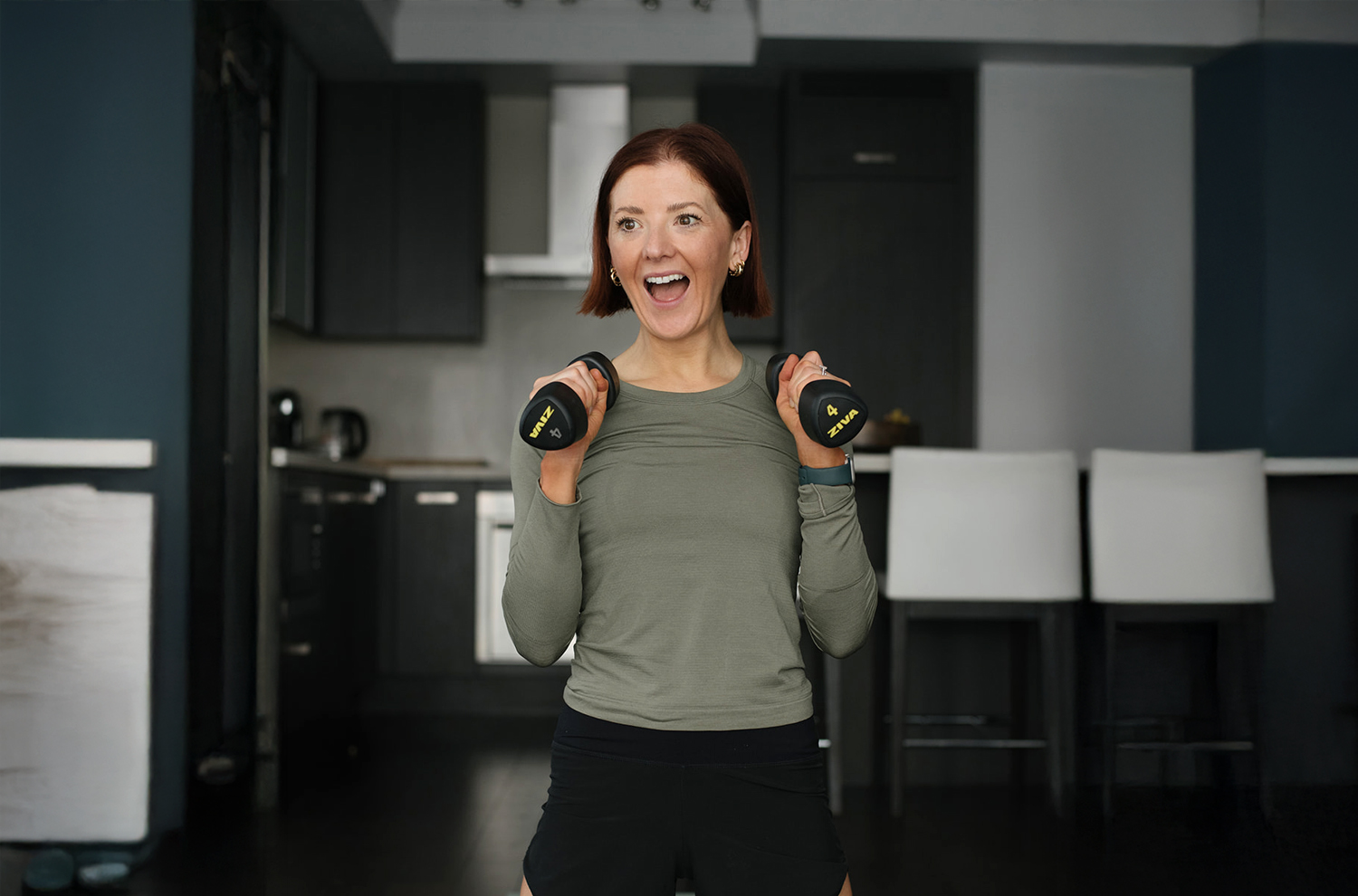
As we look forward to a new year I’m joined by Ruth Ashton, founder of RAPT Movement – a personal training business helping women build strength and return to exercise safely in the early season of motherhood.
Movement has always been Ruth’s way of managing life’s demands and coming back to herself. However after returning to work as a management consultant following the birth of her first baby, she found it unexpectedly difficult to re-engage with exercise as she had before. Physical changes, injury and a lack of time made traditional fitness routines feel unrealistic and often physically unsafe!
Ruth soon realised that many of her friends felt the same way. Intimidated by gyms and frustrated by messaging that offered either extreme workouts or gentle stretching with nothing in between, there was a clear gap in support for women navigating postpartum fitness.
In 2024, Ruth qualified as a personal trainer and fitness instructor and began developing a strength training approach based on what had actually worked for her during her own postpartum running journey. When an opportunity arose to move to Canada with her husband’s job, it felt like the right moment to take a sabbatical from consulting and launch RAPT Movement.
Now based in Toronto, Ruth works with women one-to-one in person and online, offering simple, home-based strength training sessions that fit into real life. Her philosophy is fitness for life. Not about getting your pre-baby body back, but about caring for and celebrating the body you are in right now.
In this conversation, we talk about postpartum recovery, the pressure to bounce back, the gaps in education around maternal fitness and how small, realistic changes can help women rebuild confidence and strength without overwhelm.
Conversation Highlights:
• Ruth’s journey from management consultancy to launching a postpartum-focused fitness business
• Moving countries with a young family and starting a business from scratch
• Why postpartum fitness advice often feels too generic or unrealistic
• The physical realities of pregnancy, birth and recovery that women are rarely prepared for
• How strength training supports long-term health and confidence after birth
• The idea of snack exercises and how they fit into everyday life with young children
Listen If You’re:
• A mum who wants to feel stronger but feels unsure where to start
• Navigating postpartum recovery and worried about doing the wrong thing
• Frustrated by fitness messaging that doesn’t reflect real life with children
• Curious about strength training as a foundation for lifelong health
• Looking for a gentle but empowering approach to movement after motherhood
Favourite Quote for Mums in Business:
“When it comes to exercise, think about what you can do rather than what you can’t do and be kind to yourself.” – Ruth Ashton
About Ruth Ashton:
Ruth Ashton is a personal trainer, fitness instructor and founder of RAPT Movement, a business dedicated to supporting women through pregnancy, postpartum recovery and beyond. Drawing on her background in management consultancy and organisational change, Ruth applies the same principles to fitness: small, sustainable shifts that create lasting habits.
Based in Toronto, Ruth works with women one-to-one both in person and online, offering accessible strength training designed to fit into busy lives. Her work focuses on helping women rebuild confidence, strength and trust in their bodies at every stage of motherhood.
You can find Ruth and learn more about the ways you can work with her on Instagram @rapt.runs.
About the Host:
I’m Victoria Phipps – a Mum of two, analogue family photographer, charity co-founder, marketing person and now podcaster! My career has wandered all over the place and is becoming a bit of a complex tapestry as I head into this middle phase of life, but I can honestly say I’ve loved every minute of it so far.
I was raised by a nurturing Mother and an entrepreneurial Father and have inherited traits from both, so the tension between ambition and motherhood is one I grapple with on a daily basis! I’m fascinated to hear the stories of other women on a similar path, who are striving to build thriving businesses whilst being present for their children. It’s a tough juggle, but I hope the conversations shared on this podcast help Mums in business feel less alone and inspired to keep going in pursuit of their dreams!
If You Enjoyed This Episode:
- Share this episode with a fellow Mum in business who you feel would resonate with Ruth’s story.
- Please subscribe, rate and review the podcast – it helps other mums find us!
- Share in your Instagram stories, tag @mummeansbusinesspodcast and let us know your biggest takeaway.
Episode Transcript:
Hello and welcome to the Mum Means Business podcast, where we shine a light on inspiring women who have one thing in common. When they’re not managing tantrums, homework, P.E. kits and play dates, they are busting their gut to create something from nothing, to turn their passion into a thriving business and build a better life for themselves and their families. We dig into what motivates devoted mothers to pursue entrepreneurship and how they integrate their work and family life.
I’m Victoria Phipps, your host, and if you’re an ambitious mum in need of some solidarity whilst navigating the messy middle of making your big dream a reality, then stick around. This is for you.
NOTE: This is the transcript from the original recording, rather than the edited episode so timings may vary.
Victoria (00:01)
My guest today is the founder of RAPT Movement, a personal training business helping women build strength and return to exercise safely in early season of motherhood. She says movement has always been her way of managing life’s demands and coming back to herself. But when she returned to work as a management consultant after her first baby, physical changes, injury, and a lack of time made it difficult to get back into exercise. She noticed that many of her friends felt the same.
intimidated by traditional gyms, but wanting more than a gentle yoga stretch. In 2024, Ruth Ashton qualified as a PT and fitness instructor and developed her own strength training approach based on what worked for her during her postpartum running journey. When an opportunity arose to move to Canada with her husband’s job, it felt like the right time to take a sabbatical from consulting and launch a new business. She brings the same principles from organizational change to her coaching.
Ruth (00:31)
you
When an opportunity arises.
the same thing.
Victoria (01:00)
small realistic shifts that lead to lasting habits. Ruth is currently based in Toronto and trains women in person one-to-one as well as online using simple home-based strength training that fits into real life with short targeted sessions. Her approach focuses on fitness for life. It’s not about getting your baby body back, it’s about celebrating and caring for the body you’re in right now. As someone who 100 % fits into the category of tired mum,
Ruth (01:15)
Your approach focuses on fitness for life. It’s not about getting your baby.
As someone who wants to cent fits into the category of higher funds
finding all the reasons…
Victoria (01:28)
finding all the reasons
not to re-engage with exercise after children, but whose excuses are wearing thinner by the week. I am so looking forward to talking to you, Ruth. Welcome to the Mummys Business Podcast.
Ruth (01:40)
Hi Victoria, so nice to be here.
Victoria (01:43)
It’s such a pleasure to have you and for full transparency for the second time.
Ruth (01:47)
for the second time! It’s a pleasure, it’s a pleasure. There’s very few people I get
up at 5am for and you are one of them, so there you go.
Victoria (01:55)
think you win all the brownie points. It’s so early where you are and you’re there in the dark in your building with your cup of tea, nursing a cold, like bless you. I really, really appreciate you getting up at the crack of dawn. I know that you’ve got a breakfast shift to get to. So let’s start by asking you. You took the sabbatical from your consulting role. You’ve moved to Canada. What made you
decide to start this business.
Ruth (02:30)
say that’s a great question. think, so where do I start? guess, so for me, ⁓ for a long time I’ve always loved fitness. Like you said in your very generous bio at the beginning, I didn’t really recognise that person, but there we go. ⁓ I don’t think anyone does, but yes, I’ve always loved fitness. It’s always been a huge passion of mine throughout my life. It’s something I’ve always come back to to make me feel kind of…
Victoria (02:47)
You
Ruth (02:57)
physically strong, mentally strong. And then after having my children, it was very much like a way of feeling like me. You your body changes, like you’re stretched, your boobs are weird, you’re tired, like all these things that happen after you have a baby. And fitness was a way of really kind of probably feeling a bit in control of my body and therefore kind of in control of my mind, this like moment in the chaos. And I really found that when I was on my…
Victoria (03:12)
Hehehe.
Ruth (03:26)
my both my maternity leaves there was a real like lack of classes for women like me who wanted to like move their bodies but wanted more than like going to a yoga class and rolling around and jangling something over a baby and those classes that you know were you know high energy high octane they weren’t really that available and ⁓ I did manage to find one local to me ⁓ an amazing gym ⁓ in South London but ⁓
felt like actually there’s an opportunity here to make this accessible to like more people so decided I would you know been thinking about retraining for a really long time and when I was and knew we were coming to Canada and I can tell you all about why we’re in Canada and you were coming to Canada I was like actually this is the moment to do it this is the moment to think about how I can like transfer my passion for fitness into something that could be a meaningful business helping other women so retrained and then ⁓
⁓ set up the business in June, July of this year when we moved over to Canada. So it’s been a huge learning curve, but excited to be working with some lovely women in London and also in Toronto as well. it’s ⁓ kind of exciting growing a business.
Victoria (04:38)
It’s so exciting and you’re right at the very beginning. And I think you could easily let’s talk about your move to Canada because you could easily, if I understand it correctly, have just kind of taken a nice little break and instead this is what you’re doing. So tell us why you’re in Canada.
Ruth (04:54)
Yeah.
So my husband is a doctor, he’s an eye surgeon and in the world of Instagram and Instagram businesses and podcasts, everyone talks about niching and he is super niche. He’s a pediatric coding surgeon and there’s a big hospital here called SickKids. It’s the best in the world for what he does and there was an opportunity that he applied for and he was successful in which is great for him and we had a long discussion about going because neither one of us have ever had to, we’ve been together for
like 16 years, a really long time, and neither one of us have ever had to compromise careers despite having two kids, know, busy lives, et cetera. And this was the first moment, and it was kind of a hard one. Sorry, I’m so slotty. It was a hard one for me because as a woman, I’ve had two children, two maternity leaves, felt like taking a step back, but then kind of flipped it on its head, and coming back to like my business now, it felt like,
Victoria (05:44)
Don’t worry.
Ruth (05:57)
actually, when am I going to get an opportunity to go to different country, to be around more, to support my children for a period of time. Consulting, you know, it is busy. At the moment, I do all the drop-offs and the pick-ups, which I love, and have a go at setting up something else for myself. So it was this kind of big opportunity that for my husband that actually spurred us on to decide to kind of make the move and for me to have a go at doing something different, I guess.
Victoria (06:26)
Yeah, it sounds like an amazing adventure for you to be doing this with your two small children as well. But do you think there’s something in kind of stepping off the conveyor belt for you that this felt like a moment and an opportunity that actually you might not get again?
Ruth (06:48)
100 % I think my firm in the UK have been super supportive of me taking this time out to do something different and you know having a moment to take a breath when you are working full-time, let alone when you’re a working full-time parent feels like such a gift. So actually it felt to me like okay I’ve got 14 months let’s go what are we gonna do how are we gonna make this great like how are we gonna you know make the most of this time because I probably won’t
get time like this again until I’m retired.
Victoria (07:21)
Yeah, but it sounds really energizing. And actually the fact that not only are you taking that time to lean in to parenthood and be more present with your kids, but you’re actually thinking about, what can I do for me? That’s a bit challenging and a bit different because it’s quite, you know, if you’ve been in a corporate role for a long period of time, in some ways, you know, everyone’s job is to a certain degree insecure, but you’re kind of protected and you’re
You’re, you’re in your team and you rise through the ranks and you can sort of plan your future. Whereas actually to do what you’re doing now and to kind of turn yourself very quickly into an entrepreneur is, is kind of exciting, but it’s also courageous, you know, just to think about the basics of how you start the business, you know, how do you go about finding clients? What do you do about marketing?
you’re in a new city, you don’t have a social network waiting for you that you can, you know, it’s so often the case, you know, I’m a family photographer and I’m surrounded by mums, so that helps. Whereas you’re going somewhere that you don’t really know anybody and you’re trying to find your feet socially as well. So how has that experience been to kind of become self-employed, start this new venture and find your feet with it? How have you found it?
Ruth (08:32)
Yeah.
God, I could give you a thousand different answers on any given day. mean, but I’ll start with the positives. I mean, it’s been such a learning curve and I guess I really love having the opportunity to, I’ve loved having the opportunity to like try new things, learn new things. Some things work, some things don’t. And really kind of like push myself in a different way because you’re right, in a corporate role, I’m fortunate in my firm that I have a lot of freedom to do
Victoria (08:50)
Hahaha
Ruth (09:15)
things like that, but equally you are still hamstrung by process and bureaucracy, blah, blah, blah, all the same things. So whereas here I don’t have any of that, which is great. So I have been quite fortunate in that kind friends in London have set me up with networks and then that’s enabled me to like build networks here, which has resulted in clients, which is brilliant. And the same thing at home, because I train people based in the UK as well, which is amazing. And I recently started up a running club for mums.
Victoria (09:34)
Great.
Ruth (09:44)
on maternity leave. So that’s been a really great way to meet people and to kind of build my brand, I suppose, with people who would be my kind of target market. there’s lots of like positives there around the kind of network building and business building. I’ve just like learned those boring things like Stripe integrations. I never knew I could do. And I kind of show my husband like, look what I made on the computer. And he’s like, cool, whatever.
Victoria (10:04)
you
Yeah, good
one.
Ruth (10:11)
But there’s lots of really great things about it in terms of learning and also the marketing as well of the business and building all of that out. It’s been a massive learning curve. But then the flip side is that you try something, you think it’s going to be awesome, it’s not even a ripple in the ocean. And you think that you’ve got a lead and then it goes to nowhere.
There’s lots of like challenging bits around it as well. And I think that I’m very fortunate that I have made two of the friends I’ve made here are founders, like business founders. And they’ve been amazing in terms of like advising me and providing that kind of reassurance that like Rome is not built in a day. And I think like the type of person I am is that I want everything to have happened like yesterday. Whereas this is teaching, is sort of teach and you must find this with the podcast. It’s like sort of teaching you.
Victoria (11:02)
Same, yeah.
Ruth (11:08)
to be patient. think that’s, and it’s like, know, we’re patient with our children or like try to be patient with our children by actually like, a lot of the time it’s like being patient with myself and like giving myself grace that like, it’s hard and like, you’re gonna have good days, you’re gonna have shitty days and like, just tomorrow is a new one, I guess, without using too many cliches.
Victoria (11:09)
Patience. Yeah. Yeah.
Yeah.
Yeah, well, no, definitely. And that’s the resilience point, which is, you know, to be on brand for you, that’s, that’s all muscle building. You know, that bounce back because yeah, when you’re, when you’re marketing your business for the first time, outside of your known network, you know, you put something out on social media and you think, God, I made this real. I’m really clever and this is really good and this is going to land really well. And then it’s literally crickets.
You have to take that and learn from it and bounce back really, really quickly. And that is a muscle that I think gets stronger and stronger as you go. But the patient’s point is so interesting that you kind of draw that parallel between parenting and business. Because actually there’s nothing that teaches you patience more than becoming a mother.
Ruth (12:21)
I would agree with that. I
would definitely agree with that.
Victoria (12:25)
Yeah, that’s like one of the biggest learning curves for me. You know, it’s that thing where your child’s walking down the street and you just need to get somewhere and you’re holding their hand and they just want to stop and look at stone and you’re like, my God.
Ruth (12:36)
my god, Yesterday,
there’s snow in Toronto at the moment. It snowed yesterday. Which it is, but then I’m also looking down the barrel of a five month snowy winter, which I’m a bit anxious about. But yesterday, my son, I’ve never seen him get out of the house so quickly, and we were walking to school and he was just there, plodding along, poking the snow, and I’m just like, but then they’re walking, so you can’t complain because they’re I’m not carrying anyone.
Victoria (12:41)
Amazing.
That’s true. Yeah.
Aww.
I know. ⁓
and also you don’t want to kind of temper that wonder of childhood. know, the whole city is suddenly covered in snow and yeah, he wants to stop and look at it and appreciate and move slowly and walk in different ways and kick it and feel it and crunch it. And actually you’re like, yeah, but we do have to actually just get to school. And there’s a lot of tension there always, but.
Ruth (13:12)
No.
completely.
Yep. Yep. Yep.
Victoria (13:27)
Yeah, the patience element is definitely then transferable to business because it can, it can feel like a slow burn. And sometimes you can feel like you’re screaming into the ether or you can get really excited about a lead, like you said, and then it just goes to nothing. And it’s like being ghosted on an online dating app. imagine like you’re getting all excited. You’re like, I think I’ve a new client. ⁓ we had a call and it went really well. And then they disappear and you’re just like, okay, well, I guess I don’t have a new client. And it’s personal because your business is personal.
Ruth (13:30)
Definitely. Yeah, I think so.
Yeah.
Yeah.
Yeah.
Victoria (13:57)
particularly
in those early days, you know, you’re trying something new and it’s quite a vulnerable experience. You’re kind of putting your service out there and, and obviously you get super excited and elated when something does land, but you have to then also take the rough with the smooth. So I appreciate you sharing the two sides of that because it can feel like a roller coaster ride.
Ruth (14:14)
totally.
Yeah, it really can and I’ve got amazing friends who are like, your socials look brilliant. I have some really super clients who I just love working with. bring me joy on a weekly basis. So it’s almost like you need to pick up those good things. then going back to the wonderment of childhood, your kids literally don’t give a shit what you do. They just want you to be around and love them.
Victoria (14:42)
Exactly.
Ruth (14:53)
you know, wait for you, wait for them while they kick some snow. And it’s, think it’s like coming, coming back to that all of the time. think like business building is super humbling, but also like it’s the same way as being a parent, you know, you think that, you think that people care so much more about it than you and everyone’s rooting for you, right? But like it’s fundamentally, it’s like, it’s important to you. And I think that that’s another kind of big.
learning I’ve had from setting up my own business versus being in a big organization is that you have to, you had the validation that one gets when you work in a corporate environment comes from your appraisal at the end of the year, hopefully your promotion, your bonus. Whereas in business now, especially in the early stages when you’re setting up, you’ve got to like have it from within. I know that that might sound a bit kind of naff, but it’s like one of the big things that
Victoria (15:48)
Yeah.
Ruth (15:51)
I’ve talked about some of the tactical things about building business, but it’s really taught me resilience. I think that’s the thing that is really coming up here. It’s that showing up when things feel hard and uncomfortable and you’re like, okay, I’m just going to do it anyway, even though it’s deeply uncomfortable and something doesn’t go right. You’re like, okay, and we move because that’s just how it… For 10 no’s you’ll get a yes, right?
Victoria (16:20)
Definitely, definitely. And you have to learn how to motivate yourself. There’s no, you don’t have a boss telling you what to do. You have to make choices about where you put your time and energy in your business and best move things forward. And on those days when you, when you get a bit of a blow, you know, there’s a knock in your business and you’re mentally just not really feeling it. You have to go anyway, because
Ruth (16:27)
Which, yep.
Yeah.
Victoria (16:48)
because no one else is going to, you can’t pass it over to a team member or like call in sick, you know, you can, but you’ll find that your bank balance isn’t looking very healthy in a couple of weeks time. So it’s that self-reliance, that resilience, that motivation, the relentlessness of it, which again is, so alike motherhood. No, but no, no, no, but this is, it’s, it’s interesting. Cause I didn’t expect this conversation to go this way, but.
Ruth (16:52)
No. No.
Yep. Yep.
Victoria (17:17)
There are so many parallels with motherhood because there’s so much joy in it too. Like the relentlessness is one of the hardest things about parenting, I think. You don’t get to choose your breaks. You were saying you’ve got a weekend coming up possibly where you’ve stolen some time to go and see a friend, but then the flights are in question and those opportunities to just get some head space and be your adult independent self.
Ruth (17:20)
100 %
I so.
hopefully.
Yep.
Victoria (17:46)
are few and far between for a lot of people. And actually just the day to day, the groundhog day, you know, the routines and dinner bath bed and whatever. And it’s the same, you know, in business, you have to show up, you have to be on social media, you have to, you know, go and spend a bit of time on LinkedIn if that’s what you’re doing. You have to pitch for things, you have to go and find those clients. And it is relentless, but the reward is enormous.
Ruth (18:05)
Yeah.
I think so.
Victoria (18:16)
really satisfying and you you’re creating something from nothing which again is what you’ve done with your children you know you’re building a family that wasn’t there before and yeah it’s really interesting there are so many parallels and go on.
Ruth (18:30)
100 % and I was just
going to say as you were talking, I think just thinking about the life that we’re living now, like we’ve moved to Canada, we were on this big adventure and like Chris has taken a new job, I’m building my new thing. It’s like all in the spirit of adventure, right? And I guess if I can give that to my children to show like after you have kids, your life does not need to stop.
Victoria (18:49)
Yeah.
Ruth (18:59)
you can still push yourself out of your comfort zone. can still move out, I mean, you can literally move out of your comfort zone by moving countries if you want. Please don’t leave me children if you ever listen to this. ⁓ You must live with me forever. Yeah, just live with me. But it’s like, we’re on an adventure and just coming back round to that first snowfall, like, this is our first Canadian winter as a family and like, it’s an adventure.
Victoria (18:59)
Mmm.
All stay at home forever, yes.
It’s gonna be cold.
Yeah.
Ruth (19:26)
and it’s new and we’re all experiencing it together, which is really nice
actually and I think there’s another kind of business parallel there.
Victoria (19:33)
Yes. And it’s, it’s that kind of autonomy of, you know, deciding your own destiny, which can be such a romantic thing. You know, it can be kind of thrilling and a little bit scary at times, but the opportunity for adventure is massive. know, anything that you do in your business, you kind of, it’s a ripple in a pond situation. Same with you moving to Canada. You don’t know quite how that’s going to work out.
Ruth (19:41)
Yeah.
Victoria (20:01)
You don’t know where it’s going to lead. You don’t know who you might meet and what might happen. You just, you’re just trying a thing. And I think it’s, it’s gorgeous that you’re all doing that together and that you’re showing your children that there’s a big wide world out there as well, you know, cause it, it’s so expansive, just travel in itself. And I think a lot of people will, mean, I certainly will reflect on early motherhood and think it was very much about being at home, which is fine. But.
Ruth (20:04)
Night.
Thank you.
Mm-hmm. Yeah.
Victoria (20:31)
But there comes a point where you have to kind of get out of your own head as well and think, actually, we really should go and look at somewhere else. And you’ve done that to the extreme, and it’s brilliant.
Ruth (20:41)
You’ve done that to be creative. Yeah,
but I think it’s really hard though when you’ve got small kids. You want an anchor in the storm and I think that’s why home is wonderful. For us it was such a wrench to decide to do this adventure because we
are very fortunate in that we have an amazing, we don’t have family close to us, but we have an amazing support network of friends who live close by. And I miss them all a lot. ⁓ But equally, like we’re talking like, what’s next like five to eight years look like? And it looks like going to the same park, it looks like going to the same parties, the sports games. And we know that like, we’re here now, next year when we go back, we’ll just, you
slot right back in. Exactly.
Victoria (21:34)
It will also be there. Yeah, it will be there for you because it’s a dance between like community
and belonging, but also adventure. And I think what’s what probably your children or all our children will teach us is that yeah, home is important. But actually in those early years, home is just you like wherever you are is home.
Ruth (21:52)
That’s literally
it. That’s what my two best friends send me a million voice notes a week and it’s the best thing ever. And one of them literally said that the other day, it doesn’t matter where you all are as long as you’re together. That’s the most important thing ⁓ about it all really.
Victoria (22:05)
Yeah.
together.
Yeah. And also
you are showing them, I mean, it’s early days for your business and you will kind of figure out, it sounds like it’s going really well. So congratulations. You will kind of, you, you will kind of figure out how to reintegrate that back into your life in the UK and how that fits with your job, whether that all shifts and changes or kind of recalibrate how it all fits with your network in London. mean,
Ruth (22:26)
Thank you, it’s going alright.
Victoria (22:44)
Like you said, you’re able to work online and coach clients digitally, which is amazing. So you can keep your clients in Toronto. You’re working with clients in London. And so you have a bit, you’ll have a bit of figuring out to do with that. But if you continue, even if you don’t continue, you you, you will have this to show your children that they can do stuff, that there is an alternative. You’ve got that experience to draw on and you’re showing them.
You know, mum built this, which I think is also very cool.
Ruth (23:19)
Thank you, yeah I hope so. think ⁓ as a mother of two small boys, I sort of feel like quite a lot of responsibility to show them that women, at the moment I do kind of, because I’m working for myself, I do naturally do more of the kind of maternal things, but like my husband will listen to this, I hope you listen to this. And he is brilliant, like I couldn’t wish for like a better.
kind of partner in life, like he always kind of leans in when he can, when he’s not working and stuff. But I also want to show the kids that like, it’s not just, mum isn’t just the person at home making their tea and doing bar time. I think it’s always really important to me. Like my mum was a teacher throughout my childhood and it was like super important to her. And it was also important to me to see like a woman working. So I kind of want that female role model in their life. So they know that, you know, women can do
Victoria (24:10)
Yeah.
Ruth (24:15)
just the same things as men can, really.
Victoria (24:19)
Yeah, and so often we think we should be modeling that for our daughters. So you have two sons, I have two daughters. And I think, I should be modeling that for them. it’s so, well, just as important to model it to your boys because they’re going to go out into the world and engage with women and you want them to meet, you know, if they end up having a girlfriend, a partner, you want them to meet them as equals and to not have those expectations.
Ruth (24:34)
⁓ it’s so important.
Victoria (24:48)
that you’re going to fall into those kind of gender stereotype roles that hopefully we can sort of leave in the 20th century a little bit and kind of move forward, but it’s a more equal balance in terms of parenting and mental load and domestic labor.
Ruth (25:06)
Yeah, I completely agree. think it’s really important. I almost like, I don’t know, maybe I’m biased because I’ve got boys. I almost think it’s more important for boys to understand it than girls because girls know the struggle, girls know the the assumptive norms of society that like, know, get little girls to bought tea sets when they’re very small, aren’t they? And boys are built like diggers and building toys. So, you know, for me, it’s very important that.
we are showing our children a different way and boys know that women can have jobs. have like, like they are like they are women are equal, better. but it is also that kind of like respect for like what, like what parents do, what all grownups do, I guess.
Victoria (25:47)
Yeah. And do your breath.
Yeah, I think it’s just what you were saying before about how your husband will join in as he can. Obviously at the moment, he has the kind of more demanding job. That’s why you’re there and you have the more flexible job. And so things lean in one direction, but that that is ever shifting. And on a whole, you are running this family as a team. And I think it’s just that, and it’s all about what you’re showing them day to day.
Ruth (26:08)
Yeah.
Victoria (26:24)
So I’ve no doubt that they will pick up on all of that, it is quite a responsive. I’m sure they will, but it’s quite a responsibility, I think, that we kind of feel we have to break certain stereotypes almost for the first time as parents. Because actually, this idea of equality and team in the home is quite new when you look back over history.
Ruth (26:28)
hope so.
Yeah.
Victoria (26:54)
It does feel tricky to navigate sometimes, but just the fact that we’re thinking about it, I think it’s kind of, it’s a start, isn’t it?
Ruth (27:02)
I think so,
I think so. I think it’s really hard for everyone to navigate because you often inevitably fall into a role. And I think, you know, lots of women, I have got a stat on it, because don’t know if going to talk about this, but I’m loving talking about this, is that, you know, a lot of women go back part-time after after children, and then inevitably the load then falls and is skewed in that direction. But…
Victoria (27:21)
Yeah. Yeah.
Ruth (27:28)
It doesn’t necessarily have to, just because somebody has a day off in the week doesn’t mean that they should therefore be doing all of the house stuff and that kind of house admin. ⁓
Victoria (27:38)
Yeah,
there’s a stat I think about domestic labour and it’s all around, I’m hopeless with stats, let’s just get that out there so I won’t be able to actually give you any numbers, but it’s all about, know, if the man is a breadwinner, the breadwinner in the family, the woman will be doing the, in heterosexual relationship, the woman will be doing the majority of the domestic labour. If it’s evenly split, the woman will be doing the majority of the domestic labour and if she’s the breadwinner, she still will be doing the majority of the domestic labour.
in 2025. you know, that’s, yeah, completely. But I’ve felt that because I have been the breadwinner and I have also done the majority of the domestic labor. That’s something that we’re working through, you know, always to kind of redress that because you can fall into it without knowing. And suddenly you just feel really exhausted and you have to have some quite difficult conversations because a lot of it for our generation, we are kind of emulating what we saw.
Ruth (28:10)
That’s wild, isn’t it?
Yeah.
Mm-hmm. Yep.
I know.
Victoria (28:36)
And you your mom was a teacher. My mom didn’t work when we were small. So she was doing everything. And my dad didn’t really, he still probably doesn’t know the difference between the washing machine and the tumble dryer. He’s hugely accomplished. He’s done all sorts of things in his business, but actually recognizing that he wouldn’t have been able to do that had my mom not had the tea on for him at 5pm. So it’s interesting. And it is a kind of quiet revolution that we’re trying to bring about.
Ruth (28:59)
Yeah, it is, isn’t it?
Victoria (29:05)
and show to our children so that hopefully they have an easier time of it and they just meet each other in the middle, kind of instinctively. Fingers crossed.
Ruth (29:12)
I hope so. I really hope so.
Yeah, I know. Yeah. God, you’re saying about your dad. My dad made me dinner once as a child and it was baked beans on toast and he burnt the beans.
Victoria (29:23)
Yeah, that’s my dad.
How do you beans? my God. How do you burn beans? gosh, I’ve never had burned baked beans.
Ruth (29:27)
You burned the beans.
It was, not that I
had one buy it and saved neither of them buy, really.
Victoria (29:38)
Oh bless him. I mean, I say bless him. It’s not okay, it? But my dad’s exactly the same. And like we love them, but they are, you know, they’re a baby boomer generation and they were brought up by, you know, the soldiers of the second world war. So it’s, everything in its context. What we should talk about, Ruth, is fitness. Because I really, I really want to kind of dig into some of the challenges that mums face.
Ruth (29:41)
No.
Mm-hmm. Yeah.
Wild. Yeah, yeah, yeah. Yes, we should talk about fitness.
Victoria (30:05)
postpartum because as I said at the beginning, this is our second recording of this conversation and I love that we’ve gone off on completely different tangents because it shows the power of conversation and actually we could probably just go on for days. But one of the things that we touched on, think, in that first recording is the kind of challenge around feeling deeply unsure of kind of
Ruth (30:14)
Completely different.
Victoria (30:32)
of your body in itself, which has gone through these massive changes, but also of what to do. Because I think I reflected, you know, I was really, really heavily into yoga in my early thirties, kind of obsessively and unhealthily, but I was probably in the best shape of my life in terms of, know, my muscle mass ratio. And then actually when I found out was pregnant with my eldest daughter, I kind of just stopped because life was busy. There were lots of other things going on.
And I wasn’t sure what to do safely. And then I did a few like gentle bits, but also it was COVID. We were building this house. I was like filling skips. I was physically active, but the yoga kind of went by the wayside and exercise in inverted commas that was for me, sort of wasn’t the priority. And then actually having had the baby, you know, your body is completely changed. And I was
I mean, and when I look back on it, it’s kind of just gorgeous. You’re so soft. And I don’t know how else to explain it. Like it’s like your whole body just softens. And I guess that’s the relaxin and all the other hormones that are kind of taking over at the time. ⁓
Something’s happened to your audio.
Ruth (31:51)
I’m not speaking.
Victoria (31:53)
No, I know, it’s just gone really airy.
Ruth (31:56)
That’s Can hear me now? Is it still the same?
Victoria (32:02)
it’s gone
down again. No, we’re good. I don’t know what happened, but it was like, it was like a big rush of air and then it’s come down. I mean, she’s gonna pause. Maybe that was, maybe that was, it was very loud. Okay, fine. It stopped now. It’s normal. Do it. Yeah, yeah, go for it. It’s fine. It’s all right.
Ruth (32:07)
That’s with a big lorry went past.
Do you mind if I blow my nose while he has a haphaporth?
Sorry, you could hear that, you?
Sorry. ⁓
Victoria (32:31)
It’s fine. It’s probably a good timely pause. I’ll try and remember where I was up to. So what I will do, just pause for like a few seconds and I’ll do a big clap. Just so that James knows to have a look at this bit.
Thank
And I guess that’s all the relaxing and all those hormones that are kind of taking over your body at the time. But I felt uncertain as to what exercise would be best for me in that moment. What was safe, what was gonna be too much. And so I kind of abandoned it as an idea. And five years later, nearly, I haven’t really picked that back up. So let’s talk about…
that kind of pregnancy postpartum phase in particular and what was your experience with exercise during that time? Because I know that it’s always been something that’s really important to you but how did that change or alter during your maternity experience first time round?
Ruth (33:35)
Yeah, sure. So I’ve got two children, age, similar ages to yours, I think, Victoria. And I think the guidance firstly has been so lacking for so long for women. There’s very much that kind of, know, women should kind of almost incubate for nine months. And then, you know, once you’ve had the baby, it’s all about the baby. Whereas actually there’s a lot of evidence that shows that women who exercise during pregnancy tend to have like better
Victoria (33:53)
Mmm.
Ruth (34:04)
outcomes, it also really helps with your recovery and actually we talk so much about what women can’t do in pregnancy but actually I think we should be talking lot more about what women can do. I think when, sorry that was me moving on my leathery chair, ⁓ I think when we had our first children there was so little guidance around what you should be doing.
Victoria (34:23)
It’s all right.
Ruth (34:32)
Personally, I didn’t actually do that much. I did lots of low impact stuff at home. I stopped running very early on, which I really miss because I really love running. We could have a whole podcast on running. ⁓ I stopped running early on and then after pregnancy, did lots of low impact and then started getting into strength training. That’s how my interest in strength training grew, guess, after my first son because ⁓
Victoria (34:46)
You
Ruth (35:01)
I was reading a lot about it, the benefits for things like bone density, muscle mass which kind of drop after you have, drop when you, after 30 I think you lose a percentage every year and then when you hit kind of perimenopause, menopause, you’re losing all that kind of estrogen in your bones which can result in things like osteoporosis. So I was like, okay, maybe I should think about these a little bit now and then kind of love the feeling of like being strong. And it also really helped me as a parent because you are constantly,
lifting, reaching, pulling, crawling on the floor, like all of these kind of very functional movements of motherhood and it really helped me with that. was not having so many kind of aches and pains and so on and so forth. then fast forward a few years, pregnant with my second child, the guidance had changed quite dramatically and it was essentially like carry on with your, whatever you were doing pre-pregnancy.
Victoria (35:32)
Mmm.
Yeah, yeah, yeah.
Ruth (36:01)
avoiding impact, avoiding twisting, know, shouldn’t really be like doing things like horse riding where you could get thrown a horse, but then I know lots of women will, if they’re experienced riders, will kind of carry on and so on and so forth. But at that point I was like, okay, I’m just going to crack on and I’ll stop when I’m in pain. I think I ran until I was like 20 weeks pregnant, which is massively different to my first pregnancy. I basically was getting like terrible, like pelvic girdle pain. So was like, I’ve just got to stop.
But I was lifting weights up until the day before I had my son. It was in the gym, like with a kettlebell and this enormous baby belly there. was having a C-section, so I like, just need to get rid of some of this anxiety. But for me, I loved feeling strong through my pregnancy. I think it really helped with my mood and energy because in the early days particularly, you just want to lie there and be very still and trying to be sick.
Victoria (36:38)
Hahaha.
Yeah.
Ruth (37:00)
At least that was my experience. But I loved feeling super strong through my pregnancy. And then that was around the time I started doing my training. And then going into that postpartum period, kind of continued, I suppose the postpartum period after my second son was a bit of a learning journey again, because I had learned so much about the importance of strength and continuing to exercise through pregnancy. And I was like, sweet.
I’m gonna go and I’ve got postpartum baby. I’m just gonna like crack on and I did all my like sensible like weights kind of building them up and I was like I’ll start running again and I was running quite well so I was like great I’m just gonna keep running further and faster. No that is not the answer just because you and I think the basic I ended up getting quite a bad hip injury and like having to cancel doing half marathon and like all these plans and I think like
The moral of this tale is, well there are two morals actually. Firstly, in pregnancy you can do a lot more exercise than you think you can. Before this episode goes out I’m going to see if I can find some good formal guidance as a brilliant woman called Maggie Davenport who works out of Calgary. She does a whole load of research on postpartum exercise and pre and postnatal athletes.
And there was a really good BMJ article that was released lately. So I guess it’s the, can exercise during pregnancy and it is safe within kind of some limits, but you can do more than you think you can do. But in the postpartum period, don’t rush. You need to just build it back up slowly. Your abs have been stretched, your glutes are weakened, you know, your pelvic floor. I think I read a stat yesterday that I think it’s 80 % of women have
Victoria (38:24)
Okay.
Ruth (38:53)
some form of pelvic prolapse. And most people are asymptomatic, but like 80 % of women after babies have some sort of pelvic prolapse. So we may be sat here, both of us, unbeknownst to us with a pelvic prolapse. And you know, people don’t know these things. So you’ve just got to not rush these things, I guess. ⁓
Victoria (39:05)
Yeah.
Yeah, but then
it comes back to like you were saying, you know, medical advice and medical care. You know, going into pregnancy, I don’t remember really having any advice about exercise and what was safe and what wasn’t. And, you know, in this country, the NHS, as we know, is stretched, it’s under resourced. And there’s not really a capacity to give new mothers bespoke
one-to-one advice on any of this stuff and pelvic floor, you know, that’s all tied into your core, your strength, you know, and actually, you know, if you want to have a pelvic floor assessment, you have to then go and pay somebody privately. You have to know about it in the first place that it’s an option, which a lot of people don’t. And then you have to go and pay for it privately, which might be a few hundred pounds, but
Ruth (39:49)
Mm-hmm.
It’s a lot of money
Victoria (40:03)
know, when people are on maternity, they may not feel
like they want to justify spending that if they feel kind of okay, like no one wants to go on a trampoline six weeks after giving birth, but that’s a universal, you know, but that we might not have that assessment. And then, you know, as we then move forward into kind of mid age, there are loads of issues around pelvic floor challenge.
⁓ that are probably a result of that stat that you just gave us, but that we just don’t know. And then we, you know, we all get told, don’t only do your pelvic floor exercises, but actually doing them every day is a thing to remember when new moms feel like they’ve got a lot of stuff to remember. And there’s, you know, go on.
Ruth (40:45)
I know. And also on the pelvic floor thing,
it’s one of those things where I, we talked about pelvic floor assessments. It’s so where if it’s within your means, I would highly recommend that any new mum goes and gets one because on the pelvic floor exercises, you could be sat there doing your kegel sinking, doing everything right. like depending what the problem is, you might be doing more, like could potentially be doing more damage. Cause if it’s like, like,
the muscles are almost like overtoned, like carrying all the exercises could damage you further. But it’s like a myriad of things. I know, it’s like, I, know, talking about like, is way beyond my scope of practice to talk about like diagnosing it, but equally like when I work with all my clients, I’m like, can you, ⁓ you know, how is your pelvic floor? It’s a question I ask all of them. And everyone feels a bit like I can.
Victoria (41:21)
Did not know this. Yeah. ⁓
Yeah, yeah.
Ruth (41:42)
Everyone feels a little bit uncomfortable because it’s very personal, but actually, it’s almost like you should treat it like a muscle. Just think of it, any association inside, it’s a muscle in our body. We need to work that muscle and look after that muscle. If you strain that muscle, it’s not going to be very good for a multitude of reasons. So it’s like caring for it as a muscle, if that is helpful. It’s like a disassociation image. Yeah.
Victoria (42:00)
Yeah, yeah.
Yeah. Yeah, yeah, completely. detach it. Yeah, exactly. You know, detach any
kind of any birth trauma, any kind of prudishness around it, you know, just put that all to one side. It’s a muscle just like your abs and your biceps, you know, it’s just something that you need to strengthen. But I mean, I have never had a pelvic floor assessment because I think I was just frightened. Like I had quite a traumatic first birth and well, I mean, you know,
Ruth (42:28)
Yeah. I’m sorry.
Victoria (42:33)
It is what it is. And then the second was much better, but both of them, you know, there were stitches, there was all sorts of stuff and I just have not wanted to know, to be honest. But that’s a burying your head in the sand sort of thing. And actually now, you know, sometimes you need a period of time to go by and there’s no harm having an assessment at any point. You know, as we go towards that kind of middle section of life.
Ruth (42:42)
which is completely understandable.
I would agree.
Victoria (42:59)
And we’re going to start seeing the repercussions of how we have looked after ourselves in that whole early phase. So there’s no wrong time to kind of check in with this stuff or to start exercise. So tell me, know, how do you, what are the challenges that you find, particularly, suppose, mothers that you’re working with?
Ruth (43:12)
No.
I completely agree.
Victoria (43:25)
What are the kind of trends and challenges that they’re experiencing kind of trying to reintroduce exercise in this season of life? Is that kind of a commonality?
Ruth (43:36)
Gosh,
yes, there’s lots of commonalities. So I think time is a huge burden. You you’ve got two small children, like lots of us have like caring responsibilities beyond our immediate family with like kind of elderly aging parents, we have busy jobs, you want to have a life. It’s really hard to fit fitness into all of that. And I think sometimes, you know, it gets to eight o’clock and you’re like, let’s put the kids down. The last thing you want to be doing is working out. So that can be a huge challenge. But I suppose like my counter to all of that is that you can
you can make a difference in a really short period of time. So, you know, a lot of my clients, I do a one-to-one session with them and then they have like two, maybe two or three 20 to 30 minute workouts that they do that I plan for them throughout the week that they can then like fit in when works for them. So that’s, that’s quite a kind of big one. I think confidence as well, you know, we’ve talked about our, you know, changing bodies.
And I suppose with confidence, it’s like knowing what to do. I think a lot of like the algorithm or at least my algorithm is about like weightlifting and being strong and lifting these, you know, and I love all of that. But if ⁓ you are new to that, saying like deadlifts and, you know, squats and like, you know, all these, you know, bench pressing, it’s quite intimidating. So. ⁓
That’s a massive challenge for lot of women who just feel like I can’t just walk into a gym and do… Gyms are really… I think there’s always lots of quite serious men who are like… now I’m… I mean, I think that’s in my head, I’m just there like, oh, give it a break. Because now I have done my training, I’m like, I knew that this is… No. Terrible form.
Victoria (45:06)
Yeah, gyms could be really scary places, I think.
Yeah. I enjoyed the sound effect. ⁓
Yeah.
Ruth (45:29)
⁓ But anyway, I think for a lot of women, it’s the confidence to even start and it’s that, well, I’ve not done it for ages. I’m really unfair. And it doesn’t matter. It just matters that you’re giving it a go. I think it’s like not worrying about coming from a place of being shit. It doesn’t matter. It’s just giving it a go is so important. So I think that’s a huge…
blocker for lot of women. ⁓ And I think, ⁓ there was one more that I was going to mention to you. And it’s completely gone from my mind. ⁓
Victoria (46:11)
That’s all right. I was going to ask
you about, okay, so snack exercising. Is there any point? Sometimes I think I’m just standing in the kitchen waiting for the kettle to boil. And actually the thought does cross my mind, like now would be a really good time to just do 10 squats. And sometimes I’ll do them and sometimes I don’t, if I’m honest. But part of me just thinks, ⁓ it’s just like, is it a drop in the ocean?
Ruth (46:16)
Yes.
No!
So snack it!
Victoria (46:39)
My poor neglected
glutes need a lot more than like 10 squats every few days, but tell me different.
Ruth (46:45)
So
snack exercises are a really great way of building fitness into your day. It’s these kind of short, sharp periods of work. doing 10 squats, 10 lunges, 10 press ups, it can have a massive impact because you are still building that kind of bone density, building up your muscles. You potentially will get your heart rate up a little bit. So doing those little and often aren’t.
will really help your body and will help to build your strength. They seem silly, but they are not silly at all. ⁓ It’s also really great if you’re a desk worker to kind of get up and move. You know, you’re getting your circulation flowing around your body. We all know all these things ⁓ and it’s just having a moment to do them. So guess I would challenge all of the listeners ⁓ to, you know, if you are sat listening, get up and do 10 squats, do 10 little lunges ⁓ and then maybe try a little incline press up on a desk in front of you.
and repeat that couple of times because that is going to make a difference, especially if you’re doing them on a regular basis. ⁓ I think snack exercises are great. And to the point of not knowing what to do and having that confidence, if you can just do that in the comfort of your own home, ⁓ then potentially next time you might think, OK, maybe I’ll do like 11 press ups or 12. And then it’s showing you what you can do rather than what you can’t do. I think when it comes to exercise,
So many women have these kind of self-limiting beliefs that like, I can’t do that. I can never do that. I could never run a marathon. I could never go to the gym. I could never do a full class. I’d be too hot. And it’s like, well, you can. It’s like, the only thing stopping you is your mind saying that you can’t do it.
Victoria (48:28)
Yeah, and I guess with the snack exercises, it’s habit forming, isn’t it? I think if you can just get into the habit of doing this tiny thing, like even if it’s just like once every couple of days, and you build that in, that it becomes as regular as brushing your teeth, then actually once that’s part of your routine, you can start to expand upon it.
Ruth (48:34)
100%.
completely.
Victoria (48:55)
And then it kind of feeds into the confidence element, doesn’t it? Because you’re like, well, actually I am doing it. And suddenly you’ve been doing it for two or three months and you do start to feel just a little bit stronger. And then perhaps the gym doesn’t feel quite so scary or like, you know, going on and doing like a YouTube video for half an hour or an hour doesn’t feel as terrifying. But I think sometimes it can feel like there’s a mountain ahead of you to climb. If you’ve been out of the exercise game for a while.
Ruth (49:02)
Exactly.
and be some.
Yeah.
Victoria (49:23)
The time element definitely relates, obviously. I mean, I’m sure you do, but it becomes about prioritizing it.
Ruth (49:32)
Yeah, it does become about prioritising it and I think also it’s like being kind to yourself as well when it doesn’t go well because like, you know, I’ve got two small kids, like the amount of times I’ve started a workout and the baby started crying or somebody wants me or like they need a drink or they need a wee, like I can’t even count it, like, you know, it happens to all of us and like, but equally that’s still not a reason not to do it, just because you might get interrupted, just because a child might…
appear. You just have to keep persevering with it. In my previous life, in my other life, I do large-scale transformation consulting. A lot of that is about helping people to navigate change in a way that works for them. One of the things that we always say is make it easy, make it quick, make it stick. I guess it’s that you’re putting the kettle, do your squats.
You know, you’re at your desk, do some, you know, you’re about to start work, do some lunges. And it is also like break, it’s about like breaking patterns, isn’t it? Like we all, like in the mornings we make a cup of tea, we have a breakfast, we sit down at our desk, you know, that then you just kind of often fall into lethargy. Like how do you, how do you break that? And using exercise. And then as you say, it’s like, oh, I can do this. And like, I’ve seen that for so many times in my clients that like, you know, they come to me and they’re like,
I’ve not worked out for years, I don’t really know what I’m doing. And in the first session, they’re so tense, their shoulders are up here. And I’m just thinking of one particular client who, she was doing walkouts on the screen and she was just coming up and making silly faces at me. And she knew I was videoing it and I was cracking up. And I just thought that, and she was doing perfect form whilst making these silly faces. And I felt so proud of her for doing that and just having fun with it.
Victoria (51:18)
You
Yeah. Yeah. Exactly.
Ruth (51:29)
I think
Victoria (51:29)
Yeah.
Ruth (51:30)
that’s the thing, it can be fun as well. know, exercise does not have to be a chore. I wrote a really long blog on this yesterday and I need to publish it, but about how I think that, I think we as millennial mothers have been brought up into like the patriarchal age of exercise. You know, at school it was sports teams, it was all the boys’ sports teams. I played sports at school, but you’re like, the boys were the stars of show. It was never about the girls’ team.
And it’s almost like continues into adulthood that, you know, it’s just not in our DNA necessarily to exercise and, you know, we can break that, I guess.
Victoria (52:01)
Yeah.
Absolutely. I think, you know, coming back to what you were saying about constantly being interrupted by your children, that’s definitely been a kind of an argument that I’ve managed to persuade myself not to bother because the children are inevitably going to come and ruin it five minutes in. By ruin it, I mean disturb me. But how good coming back to what we were saying earlier about what we’re teaching our kids to show them that Mummy
Ruth (52:25)
Game. Name.
Victoria (52:36)
appreciates her body and prioritizes its care and takes time to exercise because she wants to be healthy and actually demonstrating that in front of your kids, you know.
Ruth (52:39)
Mm-hmm.
I think that’s it.
I love that and I think it’s one of those things where it’s like why don’t we our kids the same, ourselves the same care and love that we show our children and it sounds really naff and like some sort of mean but actually like from what the women that I’m working with like the pride that they are showing in showing up for themselves for the first time for some of them in a really long time actually.
is astounding and you you can see it and I’m getting pictures of like the workouts that they’ve done and the meals that they’ve made and it’s like the love that they’re showing for that. But you know, think about it. It’s the same as when we send like pictures of like my son started ice skating on Sunday because we’re living the Canadian dream. It was beyond cute. And I was selecting everybody these pictures of him because I was so proud of him. And like, I feel like my clients sending me this stuff to me is like the same. It’s like, you know, look what I’m doing. Look, isn’t this brilliant? And like,
Victoria (53:37)
Yeah.
Mmm.
Ruth (53:45)
you know, we can just show them it’s, show that love for ourselves, I guess.
Victoria (53:49)
Yeah, definitely. And really rewarding for you to get that feedback from your clients as well.
Ruth (53:53)
I love
it, I love it. It’s the best bit about my job.
Victoria (53:56)
Yeah, no, can completely understand that. So when this episode comes out, it’s going to be 30th of December, I imagine the listeners are feeling quite full of cheese and chocolate and turkey leftovers. What one bit of advice would you give to a mum who’s looking forward at 2026 and thinking, right, this is the year I really should get my shit together and start deliberately
and consistently incorporating some exercise to get my fitness back. What would you advise? What would you tell them?
Ruth (54:34)
Don’t be afraid. It’s easier than you think. And this is a moment for you to care for yourself. I think the other thing, I’ve come back to work, my third thing that people challenge struggle with, women are so hard on themselves. If they miss a workout, I’ve failed. It’s ruined. No, it’s not. You’ve just had a blip because life happens. Like exercise is super important and it’s great for our bodies, it’s great for our minds, but it’s not the most important thing. It’s about like,
Victoria (54:51)
Mm.
Ruth (55:03)
feeling happy, calm, connected with our families, our loved ones around us. Going back to what you said at the beginning, we’re our children’s homes and actually if exercise enables you to show up for them in that home, great. But it’s one of the things in life that’s, there are other things, right? So be kind to yourself, enjoy Christmas. I hope you’ve had a brilliant Christmas is what I would say to everybody, I hope you like.
Victoria (55:32)
you
Ruth (55:32)
ate everything you wanted to eat, drank everything, you had a lovely time
with your family because that’s so important and then tomorrow is a new day. If you start on January the 1st, brilliant. If you want to start on February the 1st, also great. If you want to do it, just start. The only thing that is blocking you is you, I guess.
Victoria (55:52)
Yeah, just get some snack exercises in and build up slowly. Yeah, yeah, definitely. I think that’s gonna be me when this episode comes out. It’ll be a very timely reminder that 2026 definitely should be my year for getting back in the game as well. I really, really appreciate your time, Ruth, today. It was dark when we started this conversation and now I can see it’s light behind you and there are people wandering around. So I will…
Ruth (55:55)
Yeah, get some snacks in. Yep.
Great.
Hope so.
It’s morning. Yes, it’s morning.
Victoria (56:19)
ask you one last question and then I will let you go and feed your children. What would you now say looking back to your eight-year-old self?
Ruth (56:31)
Gosh, what would I say back to my eight year old self? I would say…
Life takes you in all sorts of different directions and what a joy that is and enjoy it. Try and enjoy it rather than focusing on the next hurdle. Enjoy the moment rather than looking for the hurdles.
Victoria (56:54)
Amazing. It sounds like you’re doing that right now. I’m quite envious. Yeah, your big Canadian adventure. It sounds fantastic. I hope you enjoy every last minute of it and enjoy the Canadian Christmas. I hope you get lots more snow. It all sounds very festive and fun, but wrap up warm. Tell me what…
Ruth (56:58)
giving it a go giving it a go thank you
It’s beautiful. Yes. Thank you. Thank you. I literally have done
a post about like this morning about wrapping up. Yeah.
Victoria (57:19)
have you? There you go. Timely.
⁓ Tell me where everybody can find you and go and learn more about what you do and your approach to strength training and fitness. Where should they go?
Ruth (57:30)
Amazing, so on Instagram you can find me at Wrapped Runs and my website is WrappedMovement at ⁓ MailerPage.io, rolls with the tongue. ⁓ I do that bit again? In fact I need to know what my, in fact I’m just gonna go to my website so I can read what it is.
Victoria (57:42)
you
Yes.
That’s all right.
Ruth (57:56)
Okay, so where can you find me? You can find me on Instagram at Rapt Runs. My website is raptmovement.mailerpage.io. Really rolls off the tongue there, but I’ll hopefully put it in the show notes. And ⁓ if you’re a Toronto-based mom who’s interested in running, I also run the Baby Run TO, which is a mom’s running and strength group. So I run that every week. ⁓ And in terms of my approach to fitness,
It’s very much led by you, the time that you have ⁓ and what you’re looking to achieve really. So a lot of my clients do two to three, 20, 30 minute strength sessions a week ⁓ and I’m supporting them through all of that. So if that’s something that is of interest to you, I’d love to chat to you more about how I can help you fit fitness into your life.
Victoria (58:46)
Amazing. That was a gorgeous elevator pitch. I loved it.
Ruth (58:51)
Thank you.
I try, I try. It’s the consultant in me.
Victoria (58:57)
no, it was brilliant. It was brilliant. Thank you so much, Ruth. I’ve loved this conversation. You’ve inspired me to, ⁓ yeah, take the brave action and I’m going to go and do some squats right now. Thanks so much.
Ruth (59:02)
Me too.
Yes! I love this! That fills me with joy.
Thanks
so much for having me. Take care.