
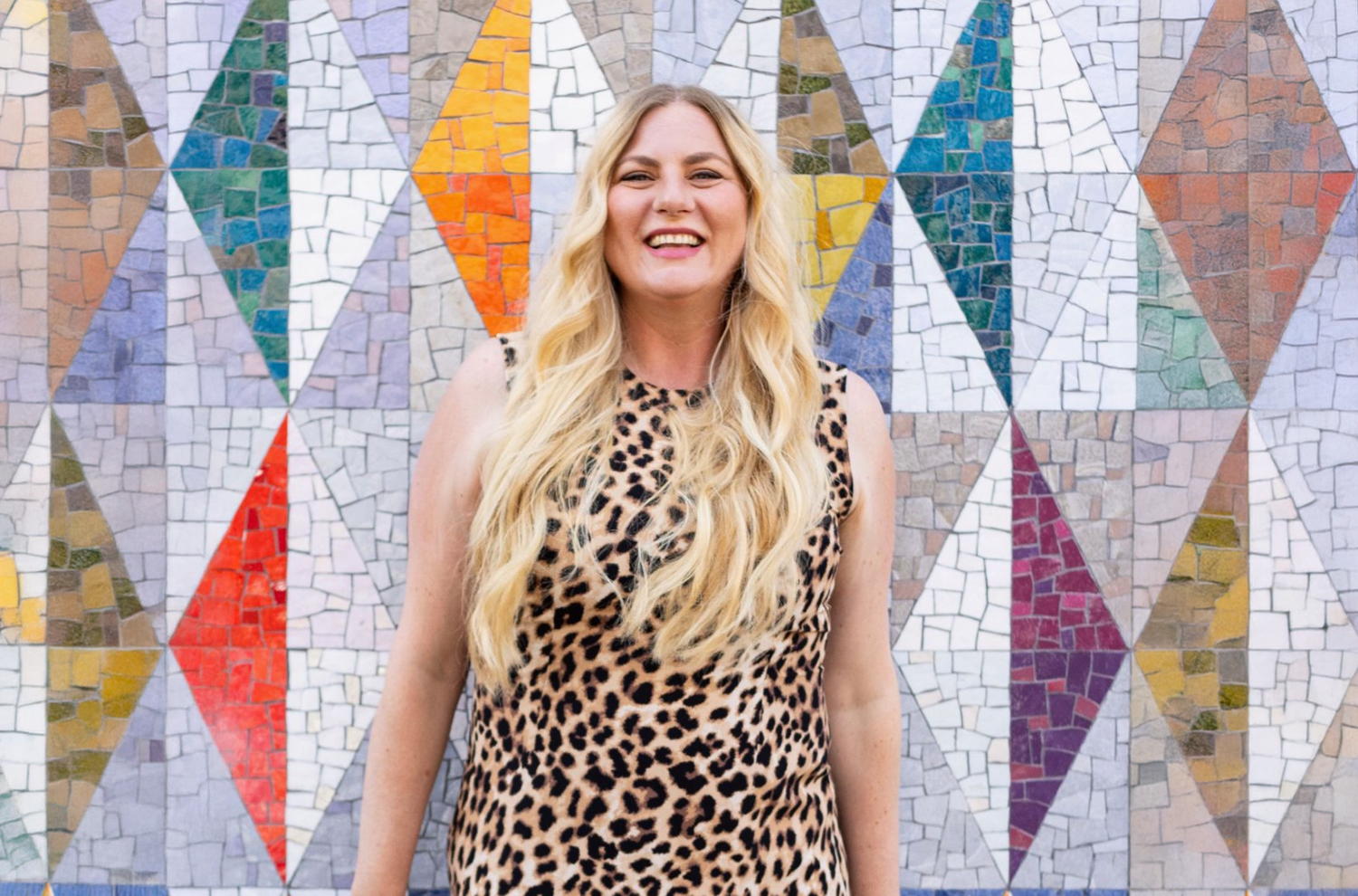
Rebecca Cracknell is a coach, mentor and teacher for women who are building businesses in order to change their lives.
Through her podcast ‘A Woman’s Guide to Starting Fires‘, her 1:1 mentoring, intimate group programmes and unconventional coaching experiences, she invites female entrepreneurs to break free from the shoulds that society has imposed upon them and unlock the most unapologetic and ambitious visions they have for their lives.
Reframing vulnerability as strength, Rebecca encourages women to question everything they previously believed about what is possible for them. She goes deep, challenges her clients and creates space for the kind of honest, uncomfortable conversations that lead to genuine transformation.
In this episode, we explore Rebecca’s own journey from teacher to entrepreneur, the slow burn of building a business through authentic connection and the internal work required to untangle the conditioning that keeps so many women playing small. It’s a conversation about shame, ambition, purpose and the courage it takes to finally go all in.
Conversation Highlights:
- How Rebecca transitioned from teaching into coaching and what that journey taught her about reinvention and resilience
- Why moving from content creation to coaching required a fundamental shift in how she showed up online and in her work
- Reframing social media as a tool for genuine connection rather than performance and what that shift unlocks for entrepreneurs
- The slow burn reality of building a business through social media and why consistency and process matter more than overnight results
- How internalised stories and shame quietly shape our ambitions and what it takes to bring them into the light
- The relationship between women, money and ambition and why challenging the narratives around all three is essential for business growth
- What it means to live in your highest purpose and how small, intentional tasks can connect us back to that sense of meaning
- The advice Rebecca would give her younger self and why it speaks directly to every woman who has ever felt held back
Listen If You’re:
- Feeling like something invisible is holding you back from taking the next step in your business
- Ready to question the stories you’ve been telling yourself about what you’re allowed to want
- Building a business through social media and struggling to show up authentically
- Curious about coaching that goes deeper than strategy and tactics
- Navigating the tension between ambition and the conditioning to stay small
- A mother who wants to model unapologetic purpose to her children
Favourite Quote for Mums in Business:
“We only have one life. If not now, when?”
About the Guest:
Rebecca Cracknell is a coach, mentor and mother of three who works with women ready to build businesses that genuinely change their lives. Through her podcast ‘A Woman’s Guide to Starting Fires’, her group programmes and deeply personal coaching experiences, she helps women dismantle internalised shame, unlock their ambition and step into their fullest potential. Her approach is honest, direct and rooted in the belief that every woman has a unique purpose she is meant to bring into the world.
You can connect with Rebecca Cracknell via Instagram and Linkedin.
About The Host:
I’m Victoria Phipps – a Mum of two, analogue family photographer, charity co-founder, marketing person and now podcaster! My career has wandered all over the place and is becoming a bit of a complex tapestry as I head into this middle phase of life, but I can honestly say I’ve loved every minute of it so far.
I was raised by a nurturing Mother and an entrepreneurial Father and have inherited traits from both, so the tension between ambition and motherhood is one I grapple with on a daily basis! I’m fascinated to hear the stories of other women on a similar path, who are striving to build thriving businesses whilst being present for their children. It’s a tough juggle, but I hope the conversations shared on this podcast help Mums in business feel less alone and inspired to keep going in pursuit of their dreams!
If You Enjoyed This Episode:
Please subscribe, rate and review the podcast – it helps other mums find us!
Share in your Instagram stories, tag @mummeansbusinesspodcast and let us know your biggest takeaway.
Share this episode with a fellow Mum in business who you feel would resonate with Rebecca’s story.
Episode Transcript:
Hello and welcome to the Mum Means Business podcast, where we shine a light on inspiring women who have one thing in common. When they’re not managing tantrums, homework, P.E. kits and play dates, they are busting their gut to create something from nothing, to turn their passion into a thriving business and build a better life for themselves and their families. We dig into what motivates devoted mothers to pursue entrepreneurship and how they integrate their work and family life.
I’m Victoria Phipps, your host, and if you’re an ambitious mum in need of some solidarity whilst navigating the messy middle of making your big dream a reality, then stick around. This is for you.
NOTE: This is the transcript from the original recording, rather than the edited episode so timings may vary.
Victoria (00:00)
out there. My guest today is a coach, mentor and teacher for women who are building businesses in order to change their lives. In her podcast, A Woman’s Guide to Starting Fires, she invites female entrepreneurs to break free from the shoulds that society has imposed upon us. Reframing vulnerability as strength, Rebecca Cracknell challenges us to question everything we previously believed about what is possible for us in this life.
Rebecca Cracknell (00:00)
phone.
Victoria (00:28)
This mum of three is not here to waste time or beat around the bush. Rebecca goes deep with her clients through one-to-one mentoring, intimate group programs and workshops and coaching experiences that look very different to your typical Zoom call. Rebecca encourages women to unlock the most unapologetic and ambitious ⁓ visions they have for their lives. If you’ve ever felt like something is holding you back from taking the next step towards your goals, then this conversation is for you.
I have no doubt that in 50 minutes, you’ll be feeling empowered to rewrite your story and finally begin to live in your highest purpose and fulfill your fullest potential. Rebecca, your message is so inspiring and I cannot wait to dig into all this good stuff. So welcome to the Mummeets Business Podcast.
Rebecca Cracknell (01:16)
it’s so good to be here and listening to that. Wow, that is an intro.
Victoria (01:23)
Don’t you sound good?
Rebecca Cracknell (01:25)
Yeah, I mean it’s great isn’t it when somebody else says back to you all of the best things about the work that you do in the world rather than when you’re sat at home like managing your own business and all of your doubts and insecurities are there right there with you.
Victoria (01:42)
Yeah, do you know what I love? I just love crafting these intros as well, because I think we all need to hear that because you can get so stuck in the weeds of the day-to-day chores in your business. And actually just to kind of step back and have somebody just tell your story back to you is so nice and uplifting and it’s all true. So let’s start at the beginning, starting your own business as a mum, what made you do it?
Rebecca Cracknell (02:10)
So I think I’m that classic story of I had a career, I had some kids, career didn’t allow me to be the mum that I wanted to be. I then had a big period of thinking.
Well, that’s the end. I will just be the mum that I want to be and that will be enough. And I literally, I’m just about to record a podcast on this, a solo episode today. So I’m going to tell this story and call it a warm up. But essentially I remember I had my youngest child, so my third born, in the back of the car asleep and I’d driven sort of slowly to school. I was doing quite a long school run at the time and
Victoria (02:42)
cool, this is a warm up.
Rebecca Cracknell (02:58)
in order to get him to go to sleep because he was a crap sleeper and he was asleep in the back of the car and I was parked up outside the school. I was actually parked up outside my friend’s house who lives next door to the school on her wifi because there’s a bit of a wifi blocker around the school, you know how it is. And I was just scrolling thinking…
what the fuck am I gonna do with my life? Like is this it? And I was so grateful for my family, my children. I was grateful for the fact that I had a partner who could, was he my husband at the time? No, he was just my partner at the time, who could provide for us so that I could be at home and be the mum that I wanted to be. But I knew that there was like this part of me that was so deeply unfulfilled and I
told
myself all of these stories about the fact that I was an ex-teacher, my only skill in life was standing up in front of 30 children and making them vaguely care about getting a C in English at GCSE and therefore I’d never worked in a business, I knew nothing about work beyond the classroom and therefore I was massively unemployable and
There was a big period where that was the story that I believed. And then I remember this day sat outside the school really vividly because I kind of was looking at opportunities work. I’d sort of followed some accounts online for a long time where people had had children and kind of made online businesses and done.
something in that vein. I’d sort of had a brief conversation with a friend around how that was something that I wanted to do and sort of looked into it a bit but it just felt so far out of reach and this day in the car I think was the first day where I was like well what have you got to lose?
And I basically looked at a couple of things whereby they were like freelance, writing roles, content creation, things like that. I was doing a little bit of tutoring as well and somebody who I met through that work kind of said,
Well, we’re looking for someone to build some courses, come and write for us. And I knew a friend who was a coach and she was like, I need someone to do my social content. Can you come and do a bit of that a couple of hours a week and I’ll pay you like nothing, essentially. And then one of these things that I had found when I was sat looking in the car was writing blogs and it was writing blogs for ⁓ another tuition company and they were going to pay me 15 pound an hour.
Victoria (05:40)
Hahaha!
Rebecca Cracknell (05:56)
And I was like, I can write a blog. No, not even 15 pound an hour, 15 pound per blog. And I was like, I can write a blog in an hour. I can write a blog in an hour. Yeah, that’s fine. Of course I can write a blog in an hour. So that’s 15 pound an hour. That’s good. That’s good, right? And I, yeah, not good for anyone listening at home.
Victoria (06:03)
Okay.
But,
but when you’re earning nothing…
Rebecca Cracknell (06:19)
Yeah, absolutely. And I was like, and that’s getting paid to write. Like I can do that at home in my pajamas if I want to. And I was so grateful for it. And then what I did next was kind of the scary thing. That was when there was one of these accounts I’d followed online where they were kind of working with women who were mums, who were also running businesses and they had a community. And I didn’t have a business at this point. And I was like, fuck it, I’m going to join.
joined and I think I signed up for three months at 45 pound a month and it was kind of like an accountability group and I can remember sitting on one of the calls and saying out loud that I wanted to make a thousand pound a month from doing this work and I remember people’s faces were kind of like poker faces because to me that was like this big impossible figure that I was never going to make.
could see these were women who had their own businesses who were already doing that and they were like mm-hmm yeah that that’s great well done like and it was the first time where I could feel that
because I could see the crack in there, in there for, ⁓ that’s not a mad dream, that’s entirely possible. And from there, I built up a bit of a network, I connected with people and I started out creating content because again, that story around no transferable skills.
Victoria (07:43)
Yeah.
Rebecca Cracknell (07:56)
taught me that the only thing I could do was right. But very quickly when I was helping other women who were building their businesses with their content, I realised the teacher in me and the coach in me was the thing I couldn’t run from. And the rest was kind of a process of trying to face up to the thing that I was trying to run from.
Victoria (08:25)
Yeah, I think it’s so interesting because to put yourself in a community of women that you almost, wanted to be them, but you definitely weren’t them. know, really the reality of probably your day-to-day life at the time is you’re a stay-at-home mum who is perhaps doing a little bit of something here and there as and when someone asks you for not very much money. You certainly, did you feel a lot of…
Rebecca Cracknell (08:36)
Yeah.
Victoria (08:53)
a bit of anxiety going into that group. But actually on reflection, it was perhaps just the best thing, exactly what you needed.
Rebecca Cracknell (09:01)
Yeah, it was exactly what I needed and the real truth is I would have never put myself in that group had I not been a mum because I think for me in my career I was kind of like confident in my work and able to do what I was doing and I was like I don’t need anybody else like I’ll just follow this path and I’ll do these things and I had friends and I had friends at work and friends out of work and I had a sense of you know like I’ve earned my place of being here and then when I was
a mum I was like fuck I haven’t got a clue what I’m doing and I dared myself to do that thing as well of putting yourself like going to baby groups was the example of that and it was the first time that I’d really stepped outside of my comfort zone done something where I felt like a complete beginner and was prepared to learn from other people and I don’t think I would have done that
with the business of putting myself into like a room with other women who were already running their business if I hadn’t done that thing first. Like the being the mum had.
told me I had like a strength to do that and it wasn’t going to break me and I was like well if I walk into this room, I didn’t even do it in person you know like Zoom, if I go into this Zoom room and people think well who is she to be here like that’s not going to break me.
Victoria (10:22)
You
that’s really interesting. It’s not something I thought about before, but actually you’re right. For most of us, we kind of leave school and we have a direction of travel in our career, even if it’s a bit wibbly in terms of it’s not a straight line, is it? But we have a direction and we get ourselves into a job and then we’re kind of climbing a ladder of sorts. That’s what we were told to do, to climb this ladder. So in teaching,
You know, you’ll progress, you’re gaining experience and you find yourself after five, 10, 15 years, whatever it might be, quite respected, you’re experienced, people come to you and ask you questions. And there’s a lot of ⁓ pride that you can take in that, that you got yourself to that point and you feel confident, importantly, because the confidence comes from the doing. And then actually it can feel quite safe and quite comfortable.
And if you’re happy in that role, there’s no need to change anything. You can kind of look forward and think where you might be, you know, how you might progress, but you’re comfy. And then actually it is having children for a lot of people is the first time that you’ve had to become a beginner again. You weren’t a beginner. You know, the last time was probably at school when you were five and you were having to learn how to read and write for the first time. And it’s humbling.
Rebecca Cracknell (11:48)
Yeah, and I think the reality is,
yeah, like for me, looking back, I’m like, ⁓ I wasn’t uncomfortable at school.
like I’m September first born, my mum always says, like you could read when you went to school. And I’m like, yeah. And then I went to a school where my parents taught and I’d never in my life been uncomfortable. And I told myself, you know, like you say about, about like a teaching career, I told myself like, yeah, the comfort is kind of like the reward. Like I knew nothing about.
Victoria (12:06)
Okay.
Hmm.
Rebecca Cracknell (12:22)
the reward and the fulfillment that comes from testing yourself and challenging yourself. And for me, my business has been that. It has all been about putting myself in those rooms, in those positions where I feel very uncomfortable at times. It’s been about looking long and hard at myself in the mirror and going, okay, so like…
Victoria (12:27)
Yeah. Yeah.
Rebecca Cracknell (12:46)
What are your deepest fears around this? How do you want to challenge yourself to do that? What is it you truly desire? And it’s been the process of me doing that that has allowed me to see that for so many women.
building that business is their opportunity to rewrite that story and actually go after the thing that they want and unlearn all of that stuff that they’ve been taught about like climb the ladder be safe and comfortable create like a life that is Sometimes ticking boxes and don’t get me wrong I love my life But a lot of that is like I was chasing find the partner find the kids get the house etc
Victoria (13:29)
Yeah.
Yep.
Rebecca Cracknell (13:32)
And there’s more within that too. And I like, I’m woman in my forties and I feel like I’m only just getting started.
Victoria (13:43)
Yeah, it’s, and it’s amazing because you don’t know about the potential personal growth until you step out of your comfort zone. And so if your parents were in the teaching world and you become a teacher, well, first you’re at school, so you’re on the other side of it, and then you become a teacher, it’s so comfy, isn’t it? It’s all that you’ve ever known. It’s all that was ever discussed around the dinner table. And so actually in a funny way, had you not become a mum for whatever reason,
You wouldn’t have had to leave that role. You wouldn’t have felt uncomfortable. And as a beginner in your season of motherhood, not knowing what the hell to do with this first baby, you wouldn’t have pushed yourself to go to the baby groups. You wouldn’t have learned that actually you can be a beginner. You can be a beginner in something in your thirties.
and you can learn and you can become confident in that. That’s the thing, isn’t it? You learned that just by doing, you will become confident, you will gain experience, and then you will not think about it twice. You now you’re a mum of three, you probably feel very, very confident as a mum in a way that you didn’t at the beginning.
Rebecca Cracknell (14:56)
Yeah, maybe sometimes a
bit too confident as a mum. Yeah.
Victoria (15:00)
Well, mean, yeah, but you’ve got
three children, I think have it. Yeah, you can, you can absolutely feel confident as a mom. And I think then to understand that pattern, it does kind of take the fear out of, okay, well, I’m going to put myself in this room. And you know, the pattern, you know, the journey, you know, you put yourself in there, you feel fucking uncomfortable. You feel anxious, you feel like an imposter. And then hopefully someone is nice to you. You ask some questions, you start to learn.
And you know that if you stay in that room in a year’s time, you won’t feel that way anymore. But a lot of people don’t get to that point where they are willing to put themselves out of their comfort zone or where they have to. Some people are forced to. So actually I think that’s a really interesting parallel between like motherhood and business because they are both like holding a mirror up, aren’t they? And they kind of force personal growth whether you want it or not. You have to do that work.
So tell me how did that work for you in terms of, okay, I want to do something and you’re in this room with all these women, these mums who are running businesses. How did it transition from, okay, I might do a bit of social media there or I might write a blog post here or, you know, do some copy for somebody, write some courses to, okay, I’m going to coach women how to.
be that best version of themselves and to get their business to where they want it to be. What was that transition like?
Rebecca Cracknell (16:27)
So essentially I built quite quickly a content creation business that met that target and exceeded it that I’d set myself. And I had money, I had clients and I was busy all of the time. And that was great, but it…
a bit like actually finding myself in teaching. Now I’m sitting here looking at it, like it wasn’t the direction I planned and I ended up there. And what I found when I was in that space and I was, was predominantly, I wasn’t just helping women with content, I did other bits too, but I was predominantly working with women who had their own businesses who were doing social content. And what I found was that
part of me that was really good in the classroom at bringing out the best in somebody so that they could achieve more.
that part was there too. And I always say, like, if I could get a room of 16 year old boys who did not give a shit about getting a C at GCSE English, not just to get that C, but to care about getting that C, like, I could help you get that thing that you can’t stop thinking about. And I saw myself doing it. Now, the reality was that I had a whole load of stories in my own head about
Who was I? Who was I to do that? Who was I to coach other people? Who was I to help other people with their business? Like I say, I’ve never even worked in a business, but…
Whilst I help women with their business, like I’m not a business coach, I’m somebody who helps you to take your vision, your dream, that itch that you can’t quite scratch and turn it into like a life that looks and feels good through the process of building your business. And for a long time, I kind of like, I was selling people content and I was doing content with people and then
giving them the coaching and it wasn’t
Victoria (18:42)
Yeah, so it’s kind of, you
couldn’t help yourself. It was just, it wanted to come out of you.
Rebecca Cracknell (18:45)
Yeah and
yeah and like I’m somebody who like say first thing I did for building a business was I went and got in the room and since I’ve started like I invested in my own coach I’ve worked with I think nearly four years now I’ve been in masterminds I’ve been in other communities etc and I’ve always put myself in that space where I wanted to learn from and grow.
from working with other people because I saw the opportunity in like, I’m creating this thing from scratch, why would I not want to find out everything about how I could do that to the best of my ability? And yeah, whilst I was doing that thing that was coming out of me, I told myself a whole load of stories about who I was to do that, like.
you’re not a coach, like you haven’t got the experience in business, you are not somebody who other people look up to. For example, I told myself all of these stories and yet…
I could see and more importantly I could feel in those interactions that this was like my power and every time I tried to run from it it kind of came back back stronger.
And I essentially had to have like a bit of a bit of a talk with myself of like, you can keep running from this, but you’re not going to escape it. Like it’s going to keep coming for you. And it was kind of towards the end of about my third year running business. I’m not, really bad at dates and times. So apologies. I’m probably getting these really wrong. ⁓
I like, can’t keep running from this all the time. And I was in the process of planning a retreat with another coach. And I kind of realized it was the first time where I was not selling content creation because I kind of had moved from doing done for you content into teaching people how to do content. And that felt like a sort of nice middle ground.
whereby I was teaching and delivering and mentoring people around their content but I wasn’t quite calling myself a coach yet and that was fine it felt it felt good but in planning this retreat like what we were planning was transformational work and then the retreat was in the January of this year so kind of like I think that’s maybe fourth year maybe fifth year going into business but
delivered this retreat and in moments it like it was being in flow. There was nothing about what I was doing that felt hard. The power and the transformation felt like unavoidable and you could see it play out in real time and
I made a commitment to myself at the end of that retreat when we were all committing to the change that we wanted to take away from that.
made a commitment that I was going to stop running and from there that was the moment when I was like I am a coach I am a mentor and I am a teacher and actually my true power is my ability to move between those three because so one day this week for example I was working with one-to-one clients like in the morning we were in Telegram picking through a mindset challenge in real time that’s like the coaching work and then in the afternoon
I’m on a call with somebody and we’ve got up like a DubSado workflow and I’m literally teaching them how to do it and I told myself it had to be one or the other and the reality is like when I was a teacher and I’m sat in that classroom with those 16 year old boys like part of me is teaching them this is how you write analysis of Shakespeare and part of me is going this is why you should care about Shakespeare and who you are in the world and what your
it’s going to look like and that’s my differentiator that’s what sets me apart from other people who are doing what I do.
Victoria (23:20)
Yeah, and why not? think, you know, where we’re always told, aren’t we, you know, you’ve got a niche down, you know, go as tight as possible. But actually, if you can offer a broader client experience, like, you know, people don’t want to, and you think about a coach, you know, we’re bombarded by messages of people who say they’re to help us in one way or another in our business. But if you want to build a really positive,
inspiring, functioning relationship with a coach. How much better to have a coach that can do all of that for you, rather than just have to choose somebody over here for that and then somebody over here for that. You know, to be able to have somebody who can keep you on track in terms of your vision and your direction and where you’re spending your time and hold you accountable and pick you up when you fall and celebrate with you when you win.
but who can also practically show you how to get the systems in place that they know are going to support you in that direction of travel. And yeah, why not offer a more holistic service to your clients? And I think what is so nice and what I just love is hearing people talk about like that experience that you had on your retreat, where you just feel completely aligned.
You know, obviously you’re a natural teacher, your parents were teachers. I think to go into teaching, have to, it’s, you know, specifically at the moment, and I’ve spoken to a lot of former teachers on this podcast, even though it’s just a very baby podcast, I think it is hard at the moment. There’s a lot of pressure and it’s a lot of hours, but at its core to teach is a calling, I think. And you have to have something in you that feels aligned with that.
in order to pursue it in the first place. But then to understand that that’s actually just in you and it’s not only to teach as in, know, this is how you analyze Shakespeare, but to have that kind of romantic, aspirational, inspirational attitude towards it as well, that you can actually infect people with your enthusiasm and make them see the bigger picture. And it sounds like that retreat.
was just a really gorgeous moment for you where you’re like, fuck it, this is actually what I’m supposed to be doing, because I’m having the best time and I feel just completely in my purpose. And we’re all looking for a moment like that. And you think back to when you were sat in that car outside your friend’s house, just kind of searching, really just searching everywhere. Like, what can I basically do? Could I do this? Could I do that? And it sounds like the social media business was more a response to demand.
than a calling that came from you.
Rebecca Cracknell (26:17)
Yeah, yeah, absolutely. Like I love social media, but it wasn’t that I set out thinking I want to help people in social media. Like it’s still a big part of the work that I do because I think that demand is still there. But actually I think the reason why I’m great at it is the thing that I’m good at is helping people to find their voice and articulate their own power and…
Victoria (26:19)
Yeah.
Rebecca Cracknell (26:45)
So many women in business are fucking incredible at what they’re doing and they are changing people’s lives and I always say this, like you’re changing people’s lives and you’re changing the world with your work. But that…
how of social media can be such a big barrier to people because they can get caught up in like stories about visibility, about like practicality of like, well, how the, how the fuck do I even create real, let alone find the confidence to be in it? And I think some of the work that I, I kind of started doing was, was through that. It was like, well, this is the how and I can.
I can help you in that way but I think when I truly looked at it, it was so much more than that too because it’s never just about the content that you’re putting out, it’s about understanding that power.
Victoria (27:41)
Yeah, and I think it’s particularly hard. We can talk about social media for a moment for kind of millennial women who were brought up at a time, you know, I’m sure you were told not to show off at certain points in your childhood. I certainly was. My mom is absolutely gorgeous, but she’s very different character to me.
And I remember her telling me quite a lot to just sort of like calm myself down, just to kind of, because that was the era in which we grew up. know, the Queen’s English was still on the BBC News. There was a way of doing things. Everything was proper. And I think kind of trying to unlearn that and put yourself in front of a camera and describe to…
you don’t know who, what it is you do and what you can offer can be absolutely terrifying. And then to be told, ⁓ make sure when you do it, you’re authentic. It’s like, I mean, I’m a photographer. I’m a photographer, so I think I just liken it to like when I tell people, you know, I’ll be natural. It’s just awful. It’s the same thing. It’s like, you know, suddenly you just forget who you are completely because you’re like, and it’s deeply uncomfortable.
Rebecca Cracknell (28:46)
Yeah. ⁓
Victoria (29:05)
So what advice do you give to your clients about that? Because I think social media has evolved, know, five, 10 years ago, you could be a bit more proper and everything was very curated, very branded. And it was more, I don’t know, it seems to have just, I think TikTok came along and it’s unraveled. And now it’s just be as human as you can possibly be, get to the point. There are so many kind of…
different areas of advice. What do you say to women who are kind of going into that kind of in the early stages and who haven’t found their feet? How do you help them?
Rebecca Cracknell (29:40)
Well, I’m going to take this on a tangent first because essentially, yeah, I was that millennial girl growing up who was told like, don’t be this, don’t be this. But I was also, I was larger than life. I was a handful and I would have fucking loved to have social media. When MySpace came out, like I was a fully growing woman at that age and I loved MySpace. Like, don’t get me wrong. And I think that for me, some of it kind of came.
from self-expression and I was like okay and actually like to go back when I had, I’m really going on attention here, when I had my first daughter, so 2012, like I was blogging like at four in the morning because I was like I’ve got, I’ve got a…
I’ve got tool to like share my voice and my experience. I think I had three readers, don’t get me wrong, but it was suddenly like, I can say how I’m feeling and I can find a way to express this experience that I’m going from. So I think in some ways I am different from a lot of women in business who are like, actually they would choose not to maybe be on social media. So I’m gonna caveat this with that.
But I’m going to use a specific client example here and I won’t name her but I’m sure she won’t mind me sharing.
someone, she’s a woman who was in sales and marketing as her previous career and she hates social media. She literally is like why would I want to spend my time on social media? It feels icky to get my face on there, it feels terrifying to like sell my services on there and it ultimately feels like I’m shouting into the void. I don’t want to spend my working day creating Canva graphics because I’m crap at it and it’s time consuming.
And so in our work together, like we have essentially found a way for her to reframe the experience of being on social media. And that isn’t just, I’ll just be you. It’s okay. So what does it mean for you to be in that space? And her work is all around.
connection and like we’ve reframed her sales story around connection too and she you know is able to smash that now too without it feeling icky but for her the experience of connection matters so instead of her creating reels with like catchy hooks and blah blah blah we looked at how can you give yourself what you need which is connection
by being present in this space. And she essentially is ⁓ running like a challenge that has brought in other people who are in her industry to participate in that. It opens up organic conversations. It creates accountability for her for in those moments when she doesn’t want to be showing up with her work. There’s purpose to it. And I think we often think about purpose in like…
the biggest picture of like, is my purpose? What was my reason for being put on the planet? But actually when we can give purpose to the small parts of our work, so for some people that is social media, like how can I give social media purpose? Well, this is my tool for being able to connect with somebody else. This is my tool for self-expression. This is my tool for whatever it might be. But equally, you know, even doing your accounts, like if you can give it purpose,
It transforms the thing that you have to do into something that fuels you as well. And I think with social media, if you are somebody who’s running their business, who has all these stories like ingrained in you about…
being visible is showing off or celebrating your success is arrogance or you know like even being vain and like looking a certain way on screen and performing then it’s going to rob you of that purpose but if you can come at it from a space whereby
you doing something on your terms is going to help you get the result that you want.
then it suddenly has a different sense of direction. And you can find a way to drown out the noise of everybody telling you like, post this many times a week and now the aesthetic is this and follow this trend. Like you’re doing it for you rather than doing it to tick off certain boxes of what good content looks like. And don’t get me wrong, I also believe there is a power in learning.
Victoria (34:19)
Mm-hmm.
Rebecca Cracknell (34:35)
what good content looks like in the same way as when I’m teaching those children to analyse Shakespeare I’m like okay so this is how you use quotation and use this trick for explaining your book like there are ways you can get better at it but it has to come from it having purpose for you for your business for your work and ultimately for those people whose lives you are changing with your work.
Victoria (35:04)
I lost you for a second there.
Can you hear me all right? Okay, fine. No, no, no, I got to purpose. So if that was around the time you were closing, that was fine. No, no, no, think I got to almost the end. And if you rolled a natural sentence then that’s fine. So I’ll just start with a new question. Yeah, I think just one of our internet’s just conked out for a sec. I’m just gonna pause for a second, do a big clap and then ask you another question. Okay, won’t be a question, it’ll be a big ramble.
Rebecca Cracknell (35:09)
can hear you, yeah. How much did you lose? I went off on one.
I said that quite a lot! ⁓
Victoria (35:38)
I think that’s a really, really clever way of reframing it because so many of us, particularly on a day when we’re just like feeling a bit low in our business anyway, and perhaps we’re naked and perhaps the kids have just been driving us crazy and everyone’s ill or whatever it might be, social media can feel like the enemy and it can feel like…
Rebecca Cracknell (36:01)
Hmm
Victoria (36:06)
it’s not the place to put your energy. I understand where your client came from in terms of moving the needle. And I think it’s about understanding that it is like everything, a slow burn. But actually, if you can kind of understand the rules, like you say, have that basic understanding of what makes good content, but then actually once you understand it, just break the rules if you want to.
It’s that classic thing, isn’t it? And this is what I love about your messaging. It’s like, yeah, there are ways of doing things, but if they don’t feel good to you, don’t do those ways. Understand that those ways exist for a reason and why they’re there. But if it feels wrong, and I think that’s something that’s really consistent in everything that you put out, which is so refreshing. It’s like, what feels good? And it sounds like that was a lesson that you kind of had to drag yourself through as well to get to that retreat at the beginning of the year where you finally land on something. You’re like, this feels…
right. And it’s the same with social media. If it feels like it’s an aligned message that you’re putting out that is connecting to your target audience, then that brings the purpose in doesn’t it? It all feels better.
Rebecca Cracknell (37:17)
Yeah and I often teach as well, like you spoke about moving the needle forward and actually sometimes with social media it is a slow burn at times and it can feel like you’re investing a lot of energy on very little return. But what I teach is I always teach of like ground it in the impact of your work and
all of the places where you are already making an impact in the world, if you use that as your starting point, then like things get easier. So the analogy I always use is like when I feel like a crap mum, which is…
often because I’m a human. The one thing I do that makes me feel like I’m a great mum who’s smashing it is I can pick up a book like you can see behind me in my house is a library. I pick up a book and I read with my kids and instantly I’m like yeah I’m smashing it I’m a great mum. My kids have got everything they need I’m brilliant and I think it’s the same with your work like there are so many things that you need to be doing when you’re a solo business owner or when you’re
Victoria (38:01)
Hehehehehe
Rebecca Cracknell (38:29)
like growing your business, but particularly as a solo business owner, because you’re doing it alone. And you get all of those messages about like, you need to be on your SEO and you need to be like doing this and tell me about your money mindset and all of the different things. But actually when you ground it in, where am I already making an impact? Then not only do you get to see
like how to drive things forward because you know that works. You also get to feel the confidence that comes with that, that motivates you to do that too. And that allows you to trust in yourself. So when it comes to social media, rather than like, what content should I be creating? I often teach as well, like the idea around, well,
what did you do in your work today? What conversations did you have? What transformations did you create? And if you can create content around that, that is gonna give somebody else value. And.
It may not change their life completely just by seeing it online, but it’s going to give them that seed where they can see and feel your power too. Because we often think about like, people have to be in our presence to feel our power. But actually, if you can do that in the online space, like that’s magic. If someone else can feel that through that connection on their screen, that’s what stops the scroll.
Victoria (40:12)
Yeah, and I think you’re so right. And I think it can feel really difficult, but a lot of it with that is practice. Like I find in these conversations that I’m having with other moms, like the theme of selling yourself, selling your service as a solopreneur, if you like, can feel so vulnerable, so personal. And again, it comes back to this conditioning that we’re not,
both to big ourselves up. And there’s something about being British, there’s something about being female, there’s something about, you know, having been born in the 80s. It feels uncomfortable, but actually, it’s kind of about practice and accepting that you’ve just got to kind of push through that awkwardness to get to the point at which it feels good.
but it’s awful to have to kind of fail in. I’ve done it so many times. my God, the awkwardness of the reels that I have put out over the last say two or three years since I relaunched my photography business. I’ve archived a lot of them now because I just can’t bear it. But you kind of have to practice a little bit to get to that point where it feels natural. And I often think in these conversations, myself, my guest, or if I go on someone else’s,
podcast, sometimes I look back and I’m like, God, what I said there was so good. I sound like I really know what I’m talking about. I sound really enthusiastic and I sound really energized by it. But actually, if you put me in front of my own phone in a quiet room, it’s hard to muster that passion, isn’t it? There’s something about just being in conversation with someone where it can feel more free flowing and more natural. But it is awkward the first few times you kind of talking to yourself via the phone.
in a quiet room and you’re going to mess it up and actually give yourself a bit of grace to just keep going with it. just, yeah. I think what do you think gets in the way of, do you think it is that kind of key work around defining the message that kind of stops people and builds up a bit of resistance that they kind of lose their focus there on what they’re doing?
Rebecca Cracknell (42:29)
So I
think, first of all, think lots of us, because we’ve possibly pivoted from another career to start out in our business, we don’t fully understand the power of the work that we do and we think it’s one thing.
And again, through that process of practice, you can truly understand it. And I think that comes down to the message. And you came on my podcast, we had a great conversation about the power of your work in the photography sphere and the analog nature of that and all of the magic. like you say, like, spoiler, I just had that feeling where I was like, yeah, I’m fucking smashing this interview. I’m saying some great shit. And you probably felt that in that, you probably felt that in
Victoria (43:10)
You did!
Rebecca Cracknell (43:13)
that moment too because you’re talking naturally around the work that you do and I think it’s there’s something in there about the process that
helps you get to that point where you nail your message. Like we’re told, like nail your messaging, get it spot on. But actually, if you’re somebody who’s come into this work from elsewhere, it takes time to understand the power of that. And it takes doing the work and it takes talking about the work. And when it comes to social media, takes showing up on social media and being a bit shit at it to really recognise that…
you’ve got it in there it’s like how can you take that magic and transform it but it comes from that process and you can kind of want to press fast forward a lot of the time of like god when will when will I feel good in this but
the power is in the process because that gives you the thing that you need in that kind of feedback loop of you watch your reel back and go, God, why did I not sit in front of a ring light for that? I look terrible. Or why have I said ⁓ or like a zillion times? Or my God, if I say the phrase, hi guys again, like I’m gonna wanna kill myself. Like whatever it is that you’re doing and that’s like not me criticizing any one of those things.
Victoria (44:32)
Yeah.
Rebecca Cracknell (44:38)
that’s me speaking from my own experience of looking at my own content doing that. I always say if you if you don’t cringe at the content you were creating six months ago you’re probably not growing and that feedback loop of being able to identify that doesn’t meet my standards of what I want and I’m actually not conveying the message in the way that I want like that is what gets you to the point where you can then do do it better.
Victoria (44:42)
Yeah.
Yeah.
Rebecca Cracknell (45:09)
I actually shared a reel the other day that was like a video of me when I was first talking to camera and
it’s terrible lighting. I look like I’m terrified as opposed to kind of connecting with anybody the other side of it. I didn’t include the sound, I didn’t actually listen to the sound or what I was saying when I was making that reel because it was too cringe and I said like I’m so glad that I decided to be shit at something so that my whole life got to be fucking fantastic because it’s through that process of being bad at it a bit
Victoria (45:25)
Hahaha
Rebecca Cracknell (45:47)
like
me terrified going to my first baby group that you get to the point where it suddenly feels good. So I think there’s the sort of lie of like you can press fast forward you can’t let the only way to press fast forward on it is to act and to get to get there like there’s nobody is gonna come along on wave and magic we’re to make you good at it you’ve got to learn that.
And such a part of learning anything is practice.
Victoria (46:19)
Yeah, and it is the doing and kind of just to a certain extent, you know, just putting your shame and embarrassment to one side and just doing it anyway, because anyone that criticizes you, you know, I say it all the time, as does Brené Brown, you know, get in the arena, unless, and that has helped me so much because you worry so much in those early stages, what people will think when you kind of start to really push your business online. And obviously you’ve got friends and family and whoever from school, you know, following you.
but you’re just doing a thing, you’re doing it. So just do it, just be shit at it, just do it. If they wanna laugh at you behind your back, go. Because actually all the people that you see online who are winning at life and who seem to have it all figured out, they were shit at the start too. Like you’re not gonna scroll back a decade to find their first reel. It’s just about keeping going and just you will get better every time you do it. And I think there’s definitely something about forcing.
and respecting the process, forcing it is not going to get you there any quicker. And it’s about being consistent without kind of putting too much pressure on yourself and giving yourself grace. But I do think, and it kind of ties back into what we were saying earlier about putting yourself in the room, you know, actually you can accelerate the process of that personal growth and that business growth by investing in somebody to support you like you.
And similarly to what you were saying, kind of as in your teaching role, you know, and I think there’s an age element to it as well. I don’t know about you, like in my twenties, I wouldn’t have asked anyone for help with anything. And I think perhaps as a teacher, you understand the process of like, if you learn something, then you’ll be better at it. And I just, I don’t know, it all went over my head. I felt, I felt too proud.
to ask for help with anything. And even in the first kind of, I’d say almost 10 years of my photography business, I just kind of suffered alone with it. And it worked to a certain extent, but it could have been so much more if I’d have asked for help. And, you know, that was 2009 when I started that. So there wasn’t as much online support around, but now there is. And to what extent do you think the work that you do,
You you mentioned before, sometimes people think they know the direction they’re going and they think they know where their strength is. And perhaps somebody like you can come in and be like, well, actually, is it this? Is it not that? And to have that fresh perspective, to what extent do you think that can help to kind of just allow people to focus on where their direction really is?
Rebecca Cracknell (49:00)
Well, I think you summed it up when you said about get over my shame and embarrassment of doing this because it’s never solely about the content or the social media or the shouting about your work or the getting yourself in the room. It’s the stories behind that. And so those stories of like, ⁓ my gosh, like I don’t want so and so from school to see this because I’m ashamed of X, Y and Z.
they’re the things that you truly need to address in order for you to be comfortable with being visible. Or maybe it’s the stories of like your mum or whoever, not your mum specifically, a mum or whoever telling you that it like it’s, you know, it’s not ladylike to shout about, yeah, showing off or whatever. Like.
Victoria (49:38)
You
showing off and yeah.
Rebecca Cracknell (49:49)
Those are the things that are standing in the way of you having what it is that you want. And actually, and this is something I talk a lot about in my work, So many of us are tuned out from what it is we truly want because we have been taught to feel guilty or embarrassed or ashamed about that too. Like…
don’t be too ambitious, you have to to work really hard to get something like that, or, ⁓ women who want X, Y, and Z are just vain, superficial, like there’s so much of that in there. And the reality is, yeah, absolutely, and the reality is we don’t pick what we desire.
Victoria (50:28)
Yeah, yeah, and wealth is vulgar.
Rebecca Cracknell (50:39)
like we don’t choose the thing we desire, it’s there inside us and unless you do the work around that, like your ambition in your business is probably not at like 100%. And so what you’re building with your business is kind of built on those stories about what you are allowed to want.
Victoria (50:40)
Yeah.
Rebecca Cracknell (51:06)
what your strengths are allowed to be and the degree at which you’re allowed to be visible. And I think it is in doing that work, that work that feels confrontational in terms of supporting your business that allows you to unlock the potential of it.
And then you can go, well actually, yeah, do know what? I’ve got some shitty stories about making money and sales. I’m going to go and work with someone on my sales or I’m crap at technology and I want to be good at technology. I’m going to go and work with somebody who’s going to teach me about these systems and processes. But unless you’re prepared to face those stories of like who you are and what you’re capable of.
so much of your potential gets lost.
Victoria (52:06)
Yeah, and I think that message in itself will land with a lot of women and also make a lot of women, including myself, feel uncomfortable because it’s true. It’s what is deemed acceptable to reach for. You don’t want to alienate anybody in your kind of social circle by
declaring an ambition that’s too grand because then, know, have the hoodie. Go on.
Rebecca Cracknell (52:41)
particularly, sorry,
I was gonna say particularly as a mother because we’re taught like, there’s your gift, you’ve got that, congratulations, yeah. And so, so many people are filled with like that gratitude for, I’ve got an incredible life, I’m so lucky, why should I want more?
Victoria (52:47)
Yeah.
Yes.
Yeah.
Yeah, and it’s obnoxious to want more, right? You know, have your beautiful children, everyone’s healthy, and these messages, we receive them at every stage. You know, we receive them when we go into labor and we have our child. We could have a harrowing experience having our children, but as long as baby’s okay, you know, that’s all that matters. And all of these messages at every stage are keeping us small. And then, and to the degree that actually then,
we keep ourselves small because we don’t want to say, well, yeah, I’ve got my kids, but I want more. Yeah, I’ve got this nice house, but I want this. I want that. I want to go on three holidays a year. I want to have this car. I want to make this impact. I want to be able to donate to this charity. I don’t want to be in debt anymore. And the whole thing about not talking about money as well, you know, how are we supposed to address our money mindsets when we’ve been told not to talk about it?
even with each other, you know, can have your closest girlfriends. And this is a subject you don’t really go near. And it’s rude. I’ve done it with friends because I’m, I like to make people feel awkward sometimes, you know, my closest, oldest friends and one of them just bought a house out in a lovely part of East Cheshire. And, and I was like, how much was it? And she was, she had been told by her husband not to tell anyone. And she was deeply uncomfortable.
And I’ve known her since I was 11. was like, come on, how much was… Because I just want to have the conversation. I will happily tell anybody any of our financial kind of situations around what our mortgage is. We’ve really stretched ourselves with this house and it’s caused a great deal of financial discomfort. But it was a kind of leapfrog situation because we were ambitious. Like we want the forever home for as long as possible. We don’t want it to be something that we’re thinking about in our 40s if we can make it work.
Let’s just have it and then we’re done. But, you know, I’ll happily tell anybody what our mortgage is because I just think now, I was told all the time growing up not to talk about money, was vulgar. But how are we supposed to progress and share and connect around money and address our own money mindset and how we feel about it if we don’t talk about it? Because essentially money is freedom, but we have a lot of blocks around it.
it’s not free and a lot of this can come in from religion, it can come from all sides, know, telling us that to want money is vulgar and very un-ladylike, you know.
Rebecca Cracknell (55:40)
Money is also power too and I think that that’s part of the story because women with power can do incredible things but it’s scary to think of women holding power for a lot of the population.
Victoria (55:59)
Yeah, which is mental because I just can’t think, I mean, we’re very early on in terms of our ⁓ evolution for women holding power. You know, there are very few isolated cases and even now women in power feel like they have to emulate a kind of alpha attitude towards things. So to have women in feminine power is something that we’re kind of still progressing towards. I don’t think we’re there at all.
But all the data is there to show that women with money do incredible things. know, Jeff Bezos, ex-wife giving billions to charity. Literally, is he giving billions? I don’t know, but like women who have money are generally using it to make the world a better place. And I don’t know where that fear comes from. And I think it’s just challenging the status quo that has existed for such a long time in which we’ve all grown comfortable.
and then we can get well into the realms of internalized misogyny and what it’s doing. But I think the work that you’re doing in putting this messaging out just to challenge us all to kind of think.
in a new way about it to challenge where those ideas come from and whether they are internal or whether they are conditioning. That’s kind of the powerful work because if we want to live our happiest, best, most fulfilled lives, we kind of have to do recognize what we want and it can feel uncomfortable and it shouldn’t. I really believe it shouldn’t. So I really appreciate.
everything you put out into the world through your podcast, through social media, and don’t stop. Because all of these things, every time I see them, they challenge my thinking as well. And I think we all need that daily.
Rebecca Cracknell (57:44)
Well.
couldn’t stop sharing on social media if I tried now so yeah like I say it’s my self-expression and if 14 year old me could have had an Instagram account like she’d have loved that and so yeah I mean I won’t think about that in too much depth but yeah like it’s a form of self-expression for me and that’s what I want to model for other people too so you saying that is like
Victoria (57:59)
Imagine where you’d be now.
Rebecca Cracknell (58:15)
the highest compliment.
Victoria (58:18)
Yeah, definitely. Okay, let me ask you one last question before I let you go. What would you now say? How old are your children?
Rebecca Cracknell (58:27)
A 13 year old, a 10 year old and a seven year old.
Victoria (58:32)
Okay, fine. So you know a bit about eight-year-olds and you’re a teacher. What would you now say to your eight-year-old self?
Rebecca Cracknell (58:42)
I get asked this question a lot and my eight-year-old self knew her own mind. She trusted herself and she was wildly ambitious and I think what I would say to my eight-year-old self is probably like don’t let the world rob you of that.
Victoria (59:11)
Yeah. Yeah, I haven’t had an eight year old yet, but I look at my daughters and they are exactly what you described. They really know themselves and they’re not afraid to express what they want at all under any circumstances. And, know, it’s kind of, you know, at times it can be frustrating when they want something you don’t want to give as their mum, but
You know, I have a lot of respect for that. And it does make me sad to think that there might come a point where they think twice before expressing what they want, because that feels like it’s the beginning of everything that we’ve been talking about. So definitely good advice and something to try and, guess, for all of us to think about when we’re raising our little people. So tell me where everybody can find you, track you down online, take a look at your social media and connect with you. Where should they go?
Rebecca Cracknell (1:00:03)
So I burnt my website last year when I realised I was selling A and giving people B. So you will not find a website, but I’m very much an Instagram girly. So you can find me on Instagram most of the time, probably too much time, at Rebecca L. Cracknell.
Victoria (1:00:26)
amazing. And I kind of love that you burnt your website and didn’t feel the need to resurrect it urgently. Because what you know, do we need it if your business is working without it? Do you need it?
Rebecca Cracknell (1:00:36)
I grow
and change too quickly to pin anything down and I’m a big fan of Flowdesk. Flowdesk checkouts do the heavy lifting for me but don’t any SEO experts come for me.
Victoria (1:00:44)
Yeah.
Rebecca, it’s been a pleasure to talk to you. Thank you so much for your time. I’ve appreciated it. Lots to think about.
Rebecca Cracknell (1:00:59)
Thank you.