
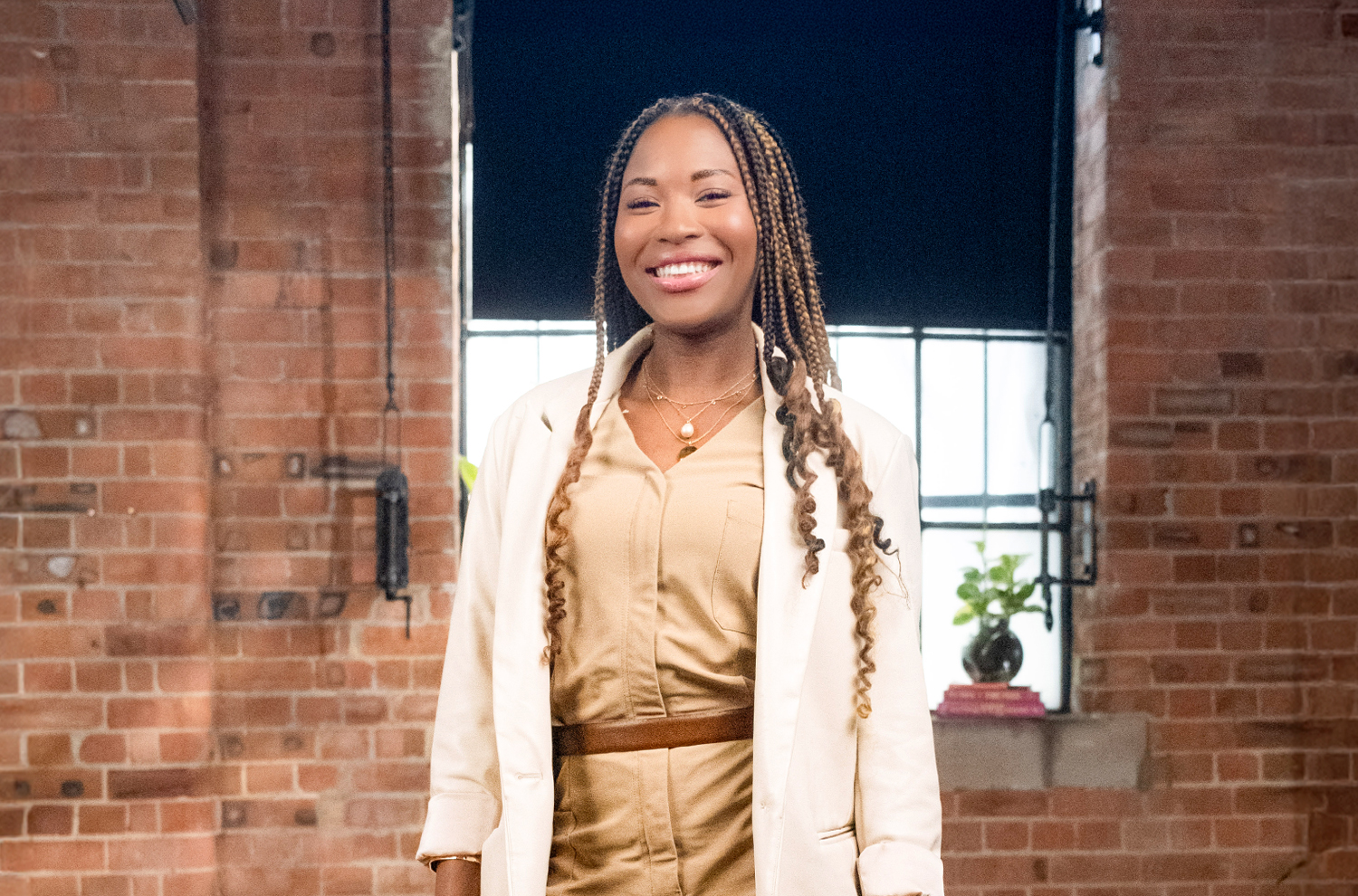
This week on Mum Means Business, I’m joined by Rachael Twumasi-Corson – a multi-award-winning serial entrepreneur, public speaker and non-executive director.
Rachael founded her first company, Afrocenchix, at just 18 years old and scaled it to international success, raising over $2 million in investment before exiting the business in 2023. An advocate for ethical leadership and powerful storytelling in business, she has delivered talks for global organisations including Google, Meta and HSBC.
Today, Rachael serves on multiple boards, was recently appointed Vice Chair of British Mensa and is on the cusp of launching her new haircare brand Ayaa Botanicals. She lives in London with her husband and four children.
As a busy Mum, Rachael believes work-life balance is a myth. Instead, she champions the idea of work-life harmony – a more realistic and compassionate way of approaching ambition, family life and personal wellbeing. As she puts it, balance leads to stress and frustration, while harmony creates freedom.
In this conversation, we explore what harmony really looks like in practice. Rachael shares her entrepreneurial journey, the mindset shifts that have supported her through different seasons of motherhood and business and the practical systems she uses to stay grounded when life feels full.
Conversation Highlights:
• Why work-life balance doesn’t exist and what to aim for instead
• Rachael’s journey from teenage founder to scaling and exiting Afrocenchix
• The realities of building a business alongside raising a family
• How health challenges can reshape priorities and redefine success
• Navigating public spaces, expectations and pressure as a working mother
• The orchestra metaphor and why harmony requires both mindset and systems
• Rachael’s simple 5,4,3,2,1 method for starting the day with intention
• How identity evolves through motherhood, exits and new beginnings
Listen If You’re:
• A mum trying to juggle ambition, family life and your own wellbeing
• Feeling frustrated by the idea of perfect work-life balance
• Curious about building systems that support busy seasons of life
• Navigating identity shifts through motherhood or career change
• Interested in redefining success on your own terms
Favourite Quote for Mums in Business:
“Work-life balance is a myth. Work-life harmony is freedom.” – Rachael Twumasi-Corson
About Rachael Twumasi-Corson:
Rachael Twumasi-Corson is a serial entrepreneur, speaker and non-executive director. She is the Founder of Afrocenchix, a pioneering haircare brand she scaled globally before exiting in 2023.
Rachael currently runs multiple businesses, sits on several boards and was recently appointed Vice Chair of British Mensa. Her work focuses on ethical leadership, storytelling and helping others build lives and businesses that feel aligned rather than perfectly balanced.
She lives in London with her husband and four children and continues to explore new ventures inspired by personal experience, resilience and a commitment to long-term impact.
Learn more about Rachael on her website or connect with her on instagram or Linkedin.
About The Host:
I’m Victoria Phipps – a Mum of two, analogue family photographer, charity co-founder, marketing person and now podcaster! My career has wandered all over the place and is becoming a bit of a complex tapestry as I head into this middle phase of life, but I can honestly say I’ve loved every minute of it so far.
I was raised by a nurturing Mother and an entrepreneurial Father and have inherited traits from both, so the tension between ambition and motherhood is one I grapple with on a daily basis! I’m fascinated to hear the stories of other women on a similar path, who are striving to build thriving businesses whilst being present for their children. It’s a tough juggle, but I hope the conversations shared on this podcast help Mums in business feel less alone and inspired to keep going in pursuit of their dreams!
If You Enjoyed This Episode:
- Share in your Instagram stories, tag @mummeansbusinesspodcast and let us know your biggest takeaway.
- Share this episode with a fellow Mum in business who you feel would resonate with Rachael’s story.
- Please subscribe, rate and review the podcast – it helps other mums find us!
Episode Transcript
Hello and welcome to the Mum Means Business podcast, where we shine a light on inspiring women who have one thing in common. When they’re not managing tantrums, homework, P.E. kits and play dates, they are busting their gut to create something from nothing, to turn their passion into a thriving business and build a better life for themselves and their families. We dig into what motivates devoted mothers to pursue entrepreneurship and how they integrate their work and family life.
I’m Victoria Phipps, your host, and if you’re an ambitious mum in need of some solidarity whilst navigating the messy middle of making your big dream a reality, then stick around. This is for you.
NOTE: This is the transcript from the original recording, rather than the edited episode so timings may vary.
Victoria (00:01)
My guest today is a multi award winning serial entrepreneur, public speaker and non executive director. She founded her first company, AfroCentrics at 18 and scaled it to international success, raising over $2 million in investment before exiting in 2023. An advocate for ethical leadership and storytelling in business. She’s delivered talks for global organizations, including Google, Meta and HSBC.
Rachel Tawmasi-Cawson currently runs three businesses, serves on multiple boards and was recently appointed vice chair of British Mensa. She lives in London with her husband and wait for it for children. As a mum-of-four, Rachel believes work-life harmony is a more realistic objective than work-life balance, which she argues does not exist. She says you don’t need to pursue perfect balance every day.
Focus instead on feeling aligned and finding your rhythm over time. Balance is a myth. It isn’t possible and leads to stress and frustration. Harmony is freedom. Rachel, I have to be honest. You’ve achieved so much. I feel like I could go on and on. Your CV makes me question what the hell I’ve been doing with my time. And I am desperate to know how you managed to juggle all of these things and achieve that harmony in your life. So let me put…
put a cork in it and extend a very warm welcome to the Mum Means Business podcast.
Rae (01:28)
Thank you for the warm welcome. And I absolutely do not juggle all of these things. I think that is part of the work-life balance myth. We don’t juggle, we don’t balance. You just focus where you are and you can get so much more done.
Victoria (01:42)
Okay, well, I need to, we need to dig into this really deep because I want to understand how you focus, how you choose where your priorities are at each stage of the day, at each time of the week, the year, whatever it might be. But first, let’s go back a little bit in your story. You started a business when you were 18 years old. So what made you do it?
Rae (02:03)
Yes.
That’s a great question. So I was 18, I was in law school and I felt very different. At that point I was in one of the top law schools in the country and there weren’t many people who looked like me. I also, coming from a working class background, I found that people had lots of presumptions. So you know, the kind of, where did you go to school question would come up quite often. And I had no idea why people from, not from London, were asking where I went to school. I thought you’re not going to know my
It took me about a year and half to realise that there are, you know, a set of schools that everybody knows because they’re in intervarsity competitions and they, you know, go to balls together. I just didn’t know about this world and I was in law school where all, you know, the private school kids.
get together. So I went through this phase of feeling very different and at this point I was still chemically straightening my hair. My mum had always done that since, you know, I was a little girl.
was all I knew. But I have eczema. I have lots of allergies. So I was constantly suffering from burns on my scalp, on my neck. it was just covered in scabs and scars. And ⁓ a friend of mine essentially said, why are you doing this? And it was the first time someone had asked me that because I thought this is just what you do. You have to fit in, you have to straighten your hair, you have to apply the chemicals, get out the GHDs, burn yourself in every way possible in order to almost have permission.
to show up in spaces where you don’t feel that you belong.
And I started writing about this, I started blogging, I was a bit of a nerd, I used to like build websites and I had a blog and a YouTube channel. So I started talking about what I was learning on ingredients in the cosmetics that we use and I learned that the chemicals I was using to straighten my hair in relaxer, of course they were giving me burns because the main ingredient was caustic soda. That’s the main ingredient in drain unblocker and oven cleaner.
Victoria (04:06)
Right.
I was going to say, isn’t that draining
blocker? Yeah. Yeah.
Rae (04:11)
Absolutely
it is. And we’re applying this, you know, to the scalps of little girls with afros without a second thought as to the health, you know, the health risks of it. And I had people comment on my blog from all around the world, including, this one really shook me, someone who worked in a morgue in the States who said that they found on the brain of African American women there would be this scarring pattern and when they asked someone more senior about it
It was really horrifying. They were told by this senior doctor, it’s because of all the chemicals they put in their hair.
So we’re applying chemicals to our scalp that are leaching through the skull onto the brain and causing scarring over years. So that was enough for me to give up chemically straightening my hair. Then I didn’t know what to do. So I started to look at, okay, how do I look after my afro hair? I’ve never had to do this. And ⁓ very long story short, ended up starting a business to solve that problem for myself and for, it turned out.
Victoria (04:51)
Wow.
Rae (05:16)
tens of thousands of women and men around the globe. Exactly.
Victoria (05:16)
the world. Yeah.
I mean, that’s classic in terms of an entrepreneurial process. You know, you have a problem, you identify it, you find a way. I mean, how did you even go about finding a way to solve that? you how did you do you know what’s funny? And I don’t I hadn’t even made this link before we before we started recording. So I’ve started doing on social media kind of little
Rae (05:28)
Absolutely.
Victoria (05:44)
carousels digging into mothers who have sort of bucked the trend and built phenomenal businesses in history. Because it’s all very well, kind of we’ll talk about what we’re doing now, but I think actually seriously disadvantaged women at a time when it was not really possible and the odds are stacked against you did manage to build businesses and raise their children.
Rae (05:53)
Ooh.
Victoria (06:09)
And there is an incredible story, I don’t know if you know about her, of a lady called Madam C.J. Walker in America. Yeah. And it’s phenomenal. And actually, it’s so crazy to me as you’re talking, because as I was researching her story, I mean, she was the first woman, first child in her family not to be born into slavery. So we’re going back a long time. And obviously, she’s in America. But she…
Rae (06:15)
I knew you were going to say, Madam CJ Walker. Yes.
Victoria (06:36)
was experiencing similar symptoms to what you’re talking about now. And this is such a long time ago. You know, she was losing her hair. She had like alopecia. She was suffering with skin conditions and exactly the same story as yours. And it’s kind of insane that, you know, she, she did that and you know, her business was kind of taking off in the early 20th century. And a hundred years later, there is still space.
Rae (06:42)
Yes.
Victoria (07:03)
for this for you to move into because it’s not yet solved. despite everything, excuse me, despite everything that she did, your mum is still putting this stuff on your head from a young age because it’s just what you do. And isn’t that fascinating?
Rae (07:20)
Yeah.
oh it’s a complex story. madame cj walker actually uh invented the relaxer, the chemical straightener. uh but of course at that time we didn’t have the science to know how harmful it was. so she was trying to solve a problem and she solved some problems and this is often the way that progress works. you know we solve one problem we cause five others, someone else picks up the baton and runs with it. i think it’s incredible that she was the first self-made female millionaire anywhere. you know it’s
Victoria (07:28)
Okay.
Yeah.
Yeah, yeah.
Yeah. Yeah.
Rae (07:52)
incredible
she was able to do that and she faced so many rejections, so much struggle. Of course as you said, being the first person in your family to not be born into slavery but having that generational trauma to deal with, that’s a lot to handle. Being orphaned, being abandoned by her husband as a single mum.
Victoria (08:05)
Yeah, I’m being orphaned. Yeah, I’m being orphaned at such a young age and going in. Yeah.
And going into domestic service at like 10. And I’m just thinking, God, you know, the things that we talk about now, I mean, of course there are people like you were talking about the law school. There are people who are cruising into life, you know, the path is laid for them and they have so many advantages and so many privileges.
Rae (08:25)
Absolutely.
Victoria (08:30)
But actually the disadvantages that we’re talking about now, when I was reading her story, was like, God, these are not really disadvantages. That is a disadvantage. You are orphaned, you are abandoned, you have a child, you’re 14, your parents were slaves, you have no place in the world and yet you manage to forge this path and take your place and you create it. It’s phenomenal. mean, I’m…
Rae (08:51)
Yeah, it’s an incredible story of resilience.
Victoria (08:56)
I didn’t realize, I don’t think I dug enough deeply into it to realize that she actually invented the relaxer, which did not solve the problem. But then that’s good because NTU, a hundred years later, but she probably had hugely limited resources and you could just, you know, comparing in the context of her time, medical care wasn’t where it is today anyway. So yeah, I think there are, there are interesting parallels. Yes. Well, exactly. You know, people are still probably putting leeches all over themselves.
Rae (09:05)
She made a lot of effort.
absolutely.
No. I think we were still bloodletting.
Victoria (09:25)
But amazing. yeah, how did you go about creating a product? You were at law school at uni. Like, how does that work? What were you doing?
Rae (09:26)
Absolutely.
I was but
I am.. I’m a science girlie. So I did take sciences at A level and I’ve always been a massive science nerd so even after my law degree I went on to to get an MSc and I studied trichology along the way which is the science of the scalp and hair. So the reason I did law is I felt that I was too deep into sciences and I didn’t really understand how the people part of the world worked.
Victoria (09:39)
Okay.
Rae (10:01)
So I thought I needed a break. I didn’t really want to do politics. I didn’t want to do philosophy. I almost applied for medicine and then it was a last minute change of heart. I think I wrote about seven or eight personal statements before getting on Ask Jeeves and typing in what do you study if you don’t know what you want to do with your life and Ask Jeeves said 50 % of law students go on to do other things. So part of that 50%. Uh, so anyway, I arrived at law school. For some reason I took some graph paper with me from like my
Victoria (10:01)
Right?
Jeeves, God.
you
Rae (10:31)
chemistry, my chemistry textbook or something. And of course at any university you get a library card and that is a powerful thing. So I used my library card, I read cosmetic science journals, I went to the British Library, went on Mintel and looked at all the research they had here. And essentially I just taught myself a cosmetic science degree on the side which was fun and started to prototype. So I made small batches of things, checked it worked on me, went out, sold
it in market stalls. Legislation was not where it is now back then. We’re talking when was this like 2008? 2008 yes. so since then there’s been new regulations which I wholeheartedly agree with but at the time I was able to just go out there sell some some products, some oils at market stalls, give people surveys and conduct research that way and actually that same process is what I still do now so even now when building iobotanicals
Victoria (11:09)
Okay.
Rae (11:31)
my new hair care brand. It’s very much started off with a pipette and a petri dish in my kitchen dripping different things together. Then it goes now to the lab to get things on a higher standard. We get some prototypes, send it out to people and ⁓ once we have above a nine point.
Victoria (11:44)
Hahaha.
Rae (11:51)
over a nine out of ten star rating from a trial group of between 20 to 50 people, you know, real people, real families with different hair textures. At that point we say prototype approved, off to another lab for more testing. So yes, it’s been a process I’ve learnt so much and it’s, it’s incredibly fun. And now my kids are involved so it’s very different.
Victoria (12:08)
Yeah.
Yeah, I think that’s…
Okay,
awesome. Well, we will come on to that. So it’s interesting that you, you literally were finding your own way in your small environment, local environment, and literally just going to market stores and doing this in your kitchen. But actually the process, once you scale it is, is really quite similar. It’s just, obviously you’ve got to tick all the appropriate boxes and legislation, as you say, has come on, but
Rae (12:23)
Yes.
Exactly.
Victoria (12:43)
that kind of market research element and that testing and getting it to a certain point. And to what extent did you just feel that intuitively you just had the research is at the heart of this? Because I don’t know how much research you were able to find on, you know, women’s experience or like the experience generally of how people are caring for afro and curly hair. Like, was there much out there or did you feel like
Rae (13:11)
No. ⁓
Victoria (13:13)
That wasn’t, okay.
Rae (13:13)
gosh. Yeah it was awful. So ⁓ Mintel obviously world leaders in research, that’s where you go if you want to find something out. Guess how many women they had surveyed for their black hair report?
Victoria (13:25)
I don’t know, a thousand, I don’t know, tell me.
Rae (13:27)
A
thousand is a really reasonable guess. That would be a sensible number. It was 30. 3-0. 30 women. That was the leading industry report in 2008 when I started F.R.E.S.E.N.Chicks. So a friend of mine at uni and I who initially started the brand and then my brother got involved when that friend did a year abroad. So was very kind of…
Victoria (13:35)
okay. Yeah.
Rae (13:51)
choppy and changey but we took clipboards, printed out some research questions, went along to the afro hair and beauty show in angel and just stood outside and asked women questions. And we spoke to a hundred women then celebrated because we’d beat mintel. We’d beat mintel. And what’s really funny is years later I was on this google accelerator and ⁓ so google for startups run various programs and accelerators which are wonderful. They very kindly shared some research with me that they’re done.
Victoria (14:04)
so you’re winning.
Rae (14:21)
with Mintel into the black hair space because everyone saw this is booming, this is big business, it’s worth billions globally and at this point they’d spoken to 900 women and I was like that’s cute I’ve spoken to 30,000 and I have data, I have a survey set so that’s been been my mission for a while to beat Mintel and I think I’ve done a pretty good job when it comes to my niche.
Victoria (14:37)
Yeah.
Yeah.
Yeah, definitely.
Rae (14:46)
yeah there was not much
research out there. I had to do it myself. And in a way that was a good thing because it meant that I had to get very good at doing research.
Victoria (14:55)
Yeah. And you’ve got to know your customer really well because not everyone’s experience is going to be the same. And everyone’s going to have their own, you know, 31 people. It’s just not going to cover it as a, yeah. Yeah. So tell me about how that all evolved because, know, by the time you exited, which is, so how long were you in the company for?
Rae (15:01)
Exactly, Nuance.
15 years.
Victoria (15:16)
Okay, so that’s a long journey. What did that look like for you? And how did that fit in with like your personal life? you know, meeting your husband, having all these children, how did that all kind of integrate together?
Rae (15:33)
Yeah, so I used to joke that Afro-Senshix was my first baby and my husband did not like this joke. So by the time I was pregnant with my eldest daughter, I joked that, well, she’s my third child and he was very unimpressed because the first was Afro-Senshix, the second was my turtle that I got at university. But.
Victoria (15:36)
Yeah. I know, I think that’s fair.
All right.
Rae (15:54)
Alas I’ve now accepted my first child is my actual child I gave birth to. Giving birth will change your perspective on these things. But yes so I did complete my law degree. I didn’t I didn’t feel that the trend of dropping out to pursue your startup was for me. So I finished my law degree. I actually worked as a data analyst for a few years in the corporate world. So first at Cadbury head office then at Tesco head office.
Victoria (15:58)
Child.
Yeah.
Rae (16:22)
all whilst doing Afro-Centrics weekends, evenings, literally making batches of products, shipping them out to customers after work. Then I decided that it was, yeah, it was a side hustle, but my plan was always to kind of bootstrap it and go full time. So I worked in education for a few years. I met my husband at church. I always joke that he tricked me into working at his school so he could win me over, which is pretty much what happened. I left his school and within a year, I think we were married.
Victoria (16:30)
Amazing, yeah. So it was a side hustle.
you
Rae (16:52)
and.. and pregnant. For our little honeymoon baby. So.. so yeah. So he actually then helped out because when I was pregnant I couldn’t get involved with the manufacturing in the same way and I have these photos of my husband with a hairnet on and another net over his beard. Kind of mixing a vat of product. Because someone had to stand in for me. Uh.. but it wasn’t actually until I had my son, my second child, that I went full time on the business. So I had this really interesting period. So I had my eldest daughter in 2006.
Victoria (17:07)
No, ⁓ god.
Rae (17:22)
At which point Afrocentrics has been going for a while, it’s made enough money to hire an employee, but I’m still working. Then I went on mat leave and at this point I’d gone all the way through the education system. I’d worked in a primary school, a high school, and then I was working at a university.
Victoria (17:42)
Okay.
Rae (17:42)
⁓
in the student business advisor team, which was super fun. So after my masters, I worked at ECL for a while. ⁓ then I had my baby and because I was side hustling and I was doing lots of little
side quests along the way. So I was tutoring, I was doing all sorts of stuff. I got a phone call when I went on maternity leave from the tutoring agency I used to work with and volunteer for their foundation app and they basically said we heard you’re going on maternity leave and you’ve paused your profile, do you reckon you could come and interview for a program manager role? And I said I’m not leaving my very small baby to come back to work yet. They said you can do it from home. So I picked up this job which was fantastic, working for this foundation, sending
tutors into super deprived schools and just coordinating the project and I would literally do this work in bed whilst breastfeeding my daughter.
Victoria (18:33)
So I mean, ideal. Yeah, yeah, yeah.
Rae (18:33)
So that was fantastic right? And it meant
you know I had some more income I could funnel into the business. Then I had another call from my old boss at UCL who said I’ve set up this GovTech space you were quite good at UCL can you come help me run it? Again I said my baby is four months old so absolutely not and he said well bring her with you. So I drove drove into Westminster, my brother had a Tesla at the time and back then you could park anywhere for free.
Victoria (18:56)
Wow.
Rae (19:03)
was no congestion charge it was great. So he was like where can I drive you to? So he came and picked up my travel cart, drove it into Westminster, we set up a corner of the office that was.. there was the play stroke nap corner and I literally brought my baby to work. So I was in there two or three days a week, he actually gave me some office space upstairs to run Afro-Centric so I had my tiny team up there whilst coordinating and running the space. It was so much fun and we used to joke that some offices have an office dog, we have an office baby.
Victoria (19:15)
Nice.
You
Rae (19:34)
I think that was really important experience for me because about a year later we raised some investment, we got our own office, actually went full time, almost full time on the company. I’ll come back to that. ⁓ But we had an office and I…
Victoria (19:45)
Mm-hmm.
Rae (19:50)
move that playpen into my office and that became for the next I think five five to seven years like a mainstay. So with both of my children they would come into the office, I would have meetings with one of them tied to my back or you know breastfeed on stage or during pictures ⁓ and then when my team had children I said to them look you can you can bring your kids in as long as you can focus and as long as it’s helpful for you if you need to bring your baby in. I mean from about zero to one-ish.
Victoria (20:05)
Yeah.
Rae (20:20)
you could.. I would be in meetings and people would be shocked when I stood up and they saw a baby on my back. They literally did not know she was there because she slept so much. And then of course they become tiny little tyrants when they turn two. But up until then…
Victoria (20:21)
It’s fine. Yeah. Yeah.
Mm-hmm.
Rae (20:35)
it’s fairly.. it’s fairly straightforward. i almost wish you could take your maternity leave in bits, you know, a couple of.. a couple of weeks or months to recover, pop back in with your baby so you can breastfeed, you can bond, all of that stuff. and then when they become little monsters have another.. have another little mat leave. i think that would be ideal right? but we’re not quite there yet as a society. that would be perfect. uh.. in any case i went..
Victoria (20:43)
Yeah. Yeah.
you
Rae (21:02)
properly full time after I had my son, actually raised another round of investment on my due date. But it was the hospital due date on my due date. I knew when I was going to give birth. So I did this big pitch, spent the day before giving birth in bed.
talking to lawyers, talking to investors, signing term sheets. Then the next day went into hospital, had my baby. And after I think this time I took a little while, I took five months, which was a long time for me. Then I went back into an accelerator where again, they said, you know, just bring your baby along. So I very much built Afro-Centrix when it got to the stage where it was a proper business, I had a team, built it up to 18 people and being in Selfridges, in Superdrug, in, you know, stores across the country, stores around the world. We had a store in New York.
one
in Paris. We had our products in those stores, they were not our stores.
we were selling to.. how many countries was it? ⁓ I think it was about 57 countries around the world. So it grew quite rapidly and in that kind of high growth period my babies were with me and that completely changed the way that I saw business, the way that I ran business and I hope it changed their perception of what business can be and their their concept of things like work-life balance. Because for me it just it wasn’t really there, it was all about finding harmony and focusing where and
Victoria (22:03)
Yeah.
Yeah.
Rae (22:23)
needed to focus at the right time. But I definitely learned that the hard way. know, many, many mistakes were made along the way.
Victoria (22:28)
Yeah.
Yeah, I mean, it sounds like I mean, I had a similar experience. So I had my I’ve got two girls, four and three. And the first one was like right in the middle of COVID. And I was doing some work at the time for my father’s business, which like energy industry is quite heavy industry, quite male dominated. And because they were having a tricky time, and I was doing marketing for them, they couldn’t work because of the lockdown restrictions. So I would again, I would take
my babies into work all the time. But you know, I felt that I could do that because I’m like the boss’s daughter. And no one’s going to question me. And also it was extraordinary times because it was COVID. And I actually found like you like I could get a hell of a lot of work done, especially when they were little like babies and napping. And also everyone wants to see them. So people are kind of passed them around and you know, and you get on with your work. It’s just, yeah, exactly.
Rae (23:05)
Yeah.
Yes, so much.
Yeah exactly. The office baby! I’m sure it reduces stress.
People would be really upset with me if I came in without my daughter. Like my husband’s a teacher so in the holidays I’d leave her with him and they were like where is she? I brought her a puzzle. What’s happening? I need my cuddles. I don’t know if it was the same with you.
Victoria (23:27)
Yes, absolutely!
Where’s the baby? But yeah.
Yeah, no, definitely it was. I mean, there were a few people because of lockdown, but everyone that was there wanted to like breathe in my baby. And actually, I think it was kind of gorgeous because I did feel that I was dispelling this myth that if you are a mother to an under one, then you can’t work. can’t, you you need to concentrate all your energy there.
Rae (23:47)
Honestly.
Victoria (24:03)
And I really struggled with this because I didn’t want to. ⁓ wanted to, very boring, very repetitive. No.
Rae (24:06)
it’s also painfully boring. we need to be honest about that. there’s no conversation. there’s no..
there’s no real value ad. you know they’re cute but you’re with them 24 7 and i think it’s good to be with them all the time but your brain needs a little bit more stimulation right?
Victoria (24:19)
Yeah. Yeah. Yeah.
But in order for you to be a good mom, like you need to have that respite from the kind of relentlessness of those mundane tasks. Yeah. Naps, timing, where are they up to with this? Yeah. When was the last time they ate sweet potato? I mean, it’s so, there’s a lot of it, but it’s a lot of really boring stuff to hold in your brain. And I just, I was probably similar to you. I just needed, I crave that challenge.
Rae (24:29)
nappies and feeding and sleep.
Yes.
Victoria (24:48)
But did you ever find in all those experiences, because it sounded like when you found this new job and then you had that office space and you were able to take your baby, like everyone, everywhere you went, and presumably because you had already built relationships with them, they encouraged you to bring your baby along for the ride. Did you ever have an experience where you felt like your baby wasn’t welcome? Or do you think, okay.
Rae (24:48)
Yes.
yeah, I mean most of the time, most of the time, let’s
be honest, even just being in London, having to get on the tube, having to get around, and I would have my baby in a carrier, and you know, I have an international family, so having to travel with my baby, there’s a lot of hostility at the moment, if we’re honest, towards mothers and young children, and you know, fewer mothers are having children. I think probably for the first time in history we’re seeing large amounts of the adult population who just have no interaction with kids at all, and
Victoria (25:17)
Yeah, yeah,
Rae (25:41)
perhaps have forgotten how to have tolerance for kids. Because kids can be annoying, they can be noisy. So can adults, I would like to point out. Most of the time when we’re irritated in public, it’s not a child, it’s an adult. But we have this sense somewhere that children should be seen and not heard. And we just expect that children should not disrupt us. And many people have chosen to have a child free life, that’s fine. But I think it’s important that it’s made clear that you can have a child free life, fine. But you’re not entitled to child free work.
Victoria (25:47)
Yeah. Yeah.
Rae (26:10)
and you don’t need to be hostile to people with children. You know, and it’s little things. It’s like getting to the supermarket. I’ve got four young kids. I need to park in one of the child bays so I can get the kids out safely and whatnot. And they’re all taken up and I’m kind of driving around watching people. People are returning to their cars. They have no kids with them. There’s no car seat in the car.
Victoria (26:29)
Mm-hmm.
Rae (26:31)
there’s this feeling of it’s not fair, parents get a special treatment. It’s like well you don’t need an extra wide bay to get out a double buggy. You don’t need to make sure that your kid doesn’t get hit by someone’s car door. You can park in the normal bays. You don’t need to park in these spaces that are designed to stop children getting hit by cars and to make life a little bit less stressful for parents. And I think
back when most people were having children, or at least were around children, people would be able to empathise a little bit more with mothers. But unfortunately we have reached this this stage where you know over 30.. what is it? Over 50 % of women by age 30 do not have a child and that’s the first time in history in the UK. It just means that we kind of have this empathy gap and it’s not even that like oh these are horrible people it’s just
it’s hard to be compassionate and empathetic if you can’t even imagine what someone is going through. A lot of people see parents as you know entitled, annoying, there’s always these debates online of you know you didn’t book a seat, why are you asking to sit next to your child? I just think do you know what it’s like to look after kids? Someone didn’t have time to to
book in their seats. You have.. they’re operating maybe on like five hours of sleep and have been for several years. They made a mistake. Do really want to sit next to the kid when you could like take.. take your pick? I.. I’ve been in that position where I’ve said hey I have these two seats. The airline moved me last minute. There was nothing I could do. You could be in the middle or choose wherever you would. You want to sit on the end seat. You want to sit on the window seat and sometimes people just be difficult and say no I want the middle.
Victoria (27:42)
Yeah.
Mm-hmm.
Rae (28:07)
it’s like okay I’m gonna be passing snacks over you, my kid might be sick on you, like it’s your choice but I’m trying to choose something to make life better for you. And I mean I’m sure we all have these stories, it’s not I’ve been a parent for 10 years, even in pregnancy you know people not wanting to get up for you, ⁓ when you ask politely for a seat and you’re massive and you have a little badge on.
And then the element of race as well. So there was a period where I was having, you know, I was pregnant with my daughter around Brexit and I think public racism was at this kind of high peak. I would have people say things like, well, don’t come over here and have babies. I was born in this country, you know, you do you know my genetic heritage? I have English DNA. This is my country as much as it is yours. I don’t, I don’t know if you are even English. You just are white. You know, you have all sorts of interesting assumptions here. But what’s what I found really
Victoria (28:45)
I mean…
Yeah, yeah.
Rae (28:58)
fascinating is I’d get into these debates and it would turn to immigration, it would turn to oh if you’re so if you’re so sick stay at home then don’t go to work. But then these comments about oh you mums you’re a drain on society. So which one? Do you want me to work and pay taxes? Do want me to stay at home? Are you gonna pay for me to stay at home and join society? And it’s almost like you can’t win. So I’d get into these debates and frustratingly it would often end with oh maybe not you as if I’m one of the good ones. Both mums and immigrants. And I think a lot of mothers are
Victoria (29:15)
Drain society, yeah.
I mean, for God’s sake.
Rae (29:28)
experiencing this. So it was all over the place. You do kind of have to learn to ignore it and just look at people with compassion and say they just don’t really know any better. And that’s okay.
Victoria (29:38)
Yeah. And
yeah, you definitely, I can think of like a very few times when I would actually engage with somebody on it. I’m just like, it’s so not worth my time. Yeah, it’s so not worth my time. Yeah, completely, completely. But it sounds like you had quite a forward thinking and enlightened, you carved out for yourself this forward thinking enlightened way of working through those maternity years. And
Rae (29:47)
Yeah, I’ve learnt not to. Protect your peace, honestly.
yes. it was
almost by necessity because also let’s be honest i could not afford child care. ⁓
Victoria (30:09)
Yeah, well, especially in London, but also, you know, did it ever occur to you to not do all of those things? You know, I don’t know what, yeah, go on.
Rae (30:11)
Yes.
It did but
I cared.. I cared about my business. I cared about my children and I thought some things will fall to the wayside. You know my house might be completely crazy but it’s okay. I can.. I can book a cleaner and focus instead on my business and my children and that’s where I want my focus to be. I’m not going to be a domestic goddess right now. I’ll cook.
but i’m not folding laundry. i have to choose where i’m going to put my focus and ultimately we all have to choose what it is that brings us joy and sustains us as well as figuring out okay what are the things that i need to do not just i need to get done but what what is it that i need to do and we start off there. that makes a huge difference.
Victoria (31:01)
That’s a very subtle difference though. What is it that I need to get done versus what is it that I need to do? Yeah.
Rae (31:05)
Yes.
completely different though. Completely different. Because
it’s all about thinking about automation, delegation, deletion. Right? So I think we’ve all seen that kind of Eisenhower matrix with important, urgent, not important, not urgent, that whole thing. And this idea that you should only be doing important stuff. It’s not fully true. There will be things that you know it’s not important, but it is urgent because like your kid thinks it’s important. So I guess it’s kind of on the borderline. It’s like, it’s important to my three year old, but they have no concept. Like I really
Victoria (31:16)
Mmm.
Rae (31:38)
need to go get matching unicorn hats for my twins. They have hats. This is not really an important task but.. but it will.. it will avoid a tantrum. There’s some urgency. It makes them happy. So.. so things like that you might say okay I’m gonna go shopping for the unicorn hat. You might outsource it. If you have a PA you might say hey here’s the spec. Could you order it for me? You can use chat GPT. You can ask..
Victoria (31:45)
You
Yeah, but it makes them happy. Yeah. Yeah.
Rae (32:06)
an auntie, you know, ask your mum to help out potentially if you have her to support you.
Victoria (32:08)
Yeah, Yeah.
Rae (32:13)
That is a very different way of thinking to this is my to-do list, I am overwhelmed, where do I get started? If straight away you take your to-do list, you just divide it out into the matrix and straight away if it’s not important and it’s not urgent just delete it. And some of those things will feel like they’re important and they’re fighting for your attention. If you think they’re that important then maybe you’ve put them in the wrong quadrant. But if you’re really honest with yourself there’s a lot that we do that we don’t need to do, that we can just delete. We.. if you have young kids, you’re overwhelmed, you’re stressed out,
there’s a school bake sale you do not have to contribute to the school bake sale if you don’t have the capacity. If you love baking do it. If your kid really wants you to do it do it. But if you’re doing it because of the pressure of the PFTA chill out. It’s really not that deep. You know I love to bake but recently it just so happens the school bake sales have come up at times where I’m overwhelmed so I’ve just had to mute the group chat, ignore the mum guilt in my head.
Victoria (32:56)
Mm-hmm. Yeah.
Rae (33:07)
I bake with my kids regularly. did not have.. I had big projects and big deadlines around that time. It had to be deleted. It’s in the quadrant of this is not important and not urgent. You know, I’ll buy some cupcakes. That will be my contribution. That’s absolutely fine. And it’s really difficult for us to do this because there’s so much judgment against mum. So you feel that everything is important and urgent. It’s not.
Victoria (33:28)
Yeah.
Yeah. And did that take you quite a while to kind of be ruthless about that? You know, as you entered mumhood, you know, with your first, did you, do you feel like your mindset with all of that stuff was different to how it is now for kids in? Yeah.
Rae (33:33)
gosh.
Absolutely, absolutely.
I’ve had to learn and I think actually…
it was the second child. I think the jump.. the jump from zero to one. Life-changing. You’re a different person. It’s huge. One to two I kind of found harder in a way because you.. you think you know what you’re doing and you absolutely do not know what you are doing. ⁓ you have to learn everything again. You realize how much you forget. But also now there’s two little kids vying for your attention. And then do not get me started on twins because at least when I had a newborn and a two-year-old the higher
Victoria (33:50)
Mm.
Yeah, I did. Yeah. Yeah.
Rae (34:15)
hierarchy of needs was clear right? If the newborn needs a feed, the newborn needs a feed. The Lego tower and the fort will have to wait. And there’s ways you communicate that with your kids so they don’t get a rivalry. You know like the whole…
you’re telling your toddler the baby needs me. You also tell the baby ⁓ your big sister needs me right now. The baby doesn’t know what you’re saying, the toddler here. So there’s all these little things you can do. But ultimately my gosh like having having two there’s there’s a lot of needs and then when you when you add twins to the equation you now
Victoria (34:37)
Yeah.
Rae (34:52)
don’t just.. like my twins are 45 minutes apart. Longest hour of my life. My contraction stopped. Story for another day. But.. but I can’t say oh you’re the older one. You’re older by like an hour. Like you both need a feed or.. or you’ve both had a feed. One of you’s fallen asleep after four hours of me trying to get you to sleep and is sleeping on my chest and the other one does a poo explosion. What do I do? And by myself. Whose needs do I prioritise? That is like an entirely different
Victoria (34:56)
God. Yeah.
No.
my god. ⁓ my god. Yeah.
Rae (35:22)
just mind-boggling conundrum. And I think it was for me that shift. So there was a big shift around having my second child. It’s completely different. And then having the twins just, it made act, if I’m honest, everything fell apart. Everything imploded in my life. You know, I couldn’t do things the way I was doing it. I actually had someone on my board ask me, will you be like the Yahoo CEO who went back to work after two weeks?
Victoria (35:38)
you
Rae (35:50)
I said probably not because that’s.. I don’t even know if that’s legal in the UK. I think two weeks is the absolute earliest you’re allowed to work but no. ⁓ I said I’ll check in after three months and my twins were born with various health challenges and they needed surgery so I was not coming back. I was looking for someone to run the company for me. I couldn’t find someone so then I was speaking to the three people who wanted to buy the company and trying to negotiate a sale that would keep everyone’s jobs, keep the products the same, look after the customers, look after the investors.
Victoria (35:55)
you
Rae (36:20)
And it was, it was really difficult. I was doing that whilst navigating the healthcare system, trying to ensure that my twins who’d kind of fallen through the cracks because of just administration, administrative complications and the fact that we had doctor strikes. It was a really stressful and difficult time. And as everything fell apart, my health crumbled. I was dealing with, you know, worrying that my, my twins might not make it. And
praise god they’re completely fine. i look at them now and i.. i.. it’s so hard to imagine these with the same babies that still weren’t back at their birth weight by three months old. sometimes i see their little scars from surgery and i just.. i’m so incredibly grateful that they are healthy, they’re happy, you know, energetic little girls because they were very young little babies. and going through that kind of thing it forces you to reconsider what actually matters in life. you know, what are my values? what are my goals? what do i want to
Victoria (37:07)
Yeah, yeah.
Rae (37:16)
achieve? What kind of example do I want to set for my children? And I realised that even though I think around the first baby I had things right, I knew my priority is my kids come first, my family comes first, the business is important to me so I’m also going to do that whilst prioritising my kids. Somewhere along the way the pressure of you know..
being pregnant again, being sick in my pregnancy, having all these voices from the investors, which I don’t think were malicious. It was, you know, well-meaning, but most people on my board did not have children. They didn’t know what they were, what they were saying. It was so much pressure that I kind of lost myself and I started to slip into being a bit of a workaholic in a really performative, pressured way. I felt that, you know, oh, I had to be this example. It’s really hard for black women in business. People are watching me. I have to do a great job.
Victoria (38:07)
Yeah.
Rae (38:07)
having
the twins helped me shake that off because the truth is I don’t think madam CJ Walker got up and decided I’m gonna set a legacy and make sure the Victoria is discussing me on her podcast in a hundred years time. You know, for some some people their story will be an inspiration but it’s it’s a strange goal to feel that you have to have. It wasn’t even something I wanted I just thought if I do this well doors will open for other people so I have to do it really well and publicly and my view is completely different now.
Victoria (38:19)
No, absolutely not.
That, I mean, that is an awful lot of pressure because that’s not just pressure of your investors who perhaps are child free and can’t relate to what you’re going through. But the pressure of the whole of like a global community. Yeah, basically on your shoulders. And I can totally see how you might feel that way. And there’s loads of good in that, you know.
Rae (38:52)
all of inequality. Yeah.
Victoria (39:04)
that you do want to open those doors for like, you know, your daughters, let alone other people’s daughters. And you want to pave the way and it does. Yeah. Yeah. And it does. It does. That is how it works. You know, you have to have people forging the path in order for everybody else and opening those doors in order for everybody else to be able to follow. And if you can’t see what you want to be, it’s so much more difficult to get there. So all of that makes complete sense.
Rae (39:07)
Yeah. Yes. Exactly. And you want to help the community.
Honestly.
Victoria (39:33)
But that is a lot when you have these tiny children at home and you’re kind of, ⁓ I don’t know, like imagining yourself on a pedestal to a certain extent and that you need to, yeah, but it comes from a really, really good place because it is outward thinking.
Rae (39:37)
Absolutely.
It’s very unhealthy. Yes.
I think it starts that way.
it starts that way but that pressure can become so toxic and unhelpful. So I wasn’t seeing mums breastfeeding on stage, you know carrying, wearing their baby at work but we were there. You know there were mums, mums like you, mums like me and actually there was a mum when I worked at UCL there was a mum who was based in the same building and she worked for this VC fund and she brought her baby, her little premature baby, to work with her. He was always in the carrier and I was like wow you can do that. Then when I found out I was pregnant I was like
I’ll do what she did and
she inadvertently inspired me just by being there. and i think even though that was really beautiful i then felt like well then i need to be visible so other women can see that i’m doing this so they can do this. the reality is though it was hard and it’s different. i couldn’t have done it with my twins. if i’d had twins first i would not have been.. i would have been at home for as long as i could have been. but with being an example i think you just need to focus on those close to you. you know i don’t think there’s anything wrong with trying to be
Victoria (40:44)
Yeah, yeah, yeah.
Rae (40:56)
an example. But even if you’re told by journalists or by investors or by people in your community that, wow you’re a great example on the world stage, you just kind of have to shrug it off. Because it’s a lot of pressure. It’s a huge amount of pressure. And try to just.. now I’m like I want to be an example to my children. And that is the primary focus.
Victoria (41:15)
Yeah, yeah.
Yeah. And there will be ripples with that by being an example to your children and going out into the world and, being the mum that you want to be for them and making your life work for you without fear of that judgment as well. And just doing it, you will inevitably influence other people outside of your immediate family. That’s just going to happen, but it’s not what’s driving you. And I think that’s the subtle distinction.
Rae (41:21)
I hope so.
Yes.
Exactly.
Victoria (41:45)
And yeah, I can, I can totally imagine. I mean, the amount of pressure coming at you from all angles when you’ve got two babies in hospital and you also have your two older children who want their mom and they’re kind of wondering what is going on. And you have this business is, is that then, did you imagine before you went into your third labor with your twins?
Rae (42:02)
Yes.
Hmm.
Victoria (42:14)
that you wanted to exit your company? Or was that something that was like a reaction to everything that shifted? Yeah.
Rae (42:17)
No, not yet.
It was a reaction.
it was,
I cannot do this, I can’t find anyone to step in and I tried everyone. I tried, you know, uh, different investors, my ex-business partner, just, uh, advisors and some people were open to it but there was no one who felt that they could commit because running a startup, especially through, at this point we’ve got, you know, war in Ukraine, we’ve got Trump approaching the White House, you have all this fear, uncertainty and doubt and it’s the most difficult time to run a startup, you know.
a global recession after a pandemic. No one really wants that kind of pressure. So as I couldn’t find anyone to do it and the only option was to sell, it was an exit that I had to have and that felt like a huge failure after I’d given you know years of my life to this business. And my kids were asking questions, the older ones had grown up in the Afro-Senshiks office, they’re like what’s going on? And when they saw that the you know the business deal I had wasn’t going exactly as I’d expected and as I told them they’re like you know what’s happening? Why are people being naughty?
and I’m kind of sat there thinking they’re absolutely right. People are being very naughty and I felt at the time you know very taken advantage of. I wasn’t happy with the way that the the exit was negotiated. It was it was expensive, it was difficult and I was having to agree to things on the fly. You know sometimes in a hospital corridor just because I needed to get off the phone and get back to the bay before my babies woke up and I cannot explain what a dark and difficult time that was. would not
Victoria (43:42)
Yeah, exactly. Yeah. Yeah.
Rae (43:52)
wish it on my worst enemy. Having your kids sick is hard. Having to also have the pressure of running a business, you know, sorting out your team whilst you are sleeping overnight in hospitals, you’re in under the care of three different hospitals in three or four times a week, having to do emergency, you know, midnight drives and then stay over, having to have the bag constantly packed to then figure out child care for your older two. It was.. it was hellish and I looked
back and at the time I felt like a total failure and I was so upset about the exit it wasn’t what I’d planned to do. I wanted to build this legacy company, you know, with an on-site crash where employees could have lunch with their kids and then we’d have these wonderful people looking after them and set that standard in the way that, you know, Cadbury set a global standard for having the first employee housing, the first staff canteens and, you know, now those things are so normal but before
Victoria (44:36)
Yeah.
Mmm. Yeah.
Rae (44:53)
the Cadburys did that and you know created this village in Bournville it just didn’t exist. So I wanted to do all this stuff but ultimately I had to dial dial it all the way back and just focus on making sure that my children survived. It was it was a really difficult time but now when I look back I am quite proud of the fact that you know the company’s still going. I did manage to negotiate an exit. It wasn’t as I wanted it to go but I think given the circumstances it wasn’t
It wasn’t the worst way it could have gone.
Victoria (45:24)
Yeah. Yeah. I mean, what did that do to your sense of self? You know, your identity? Yeah.
Rae (45:30)
⁓ obliterated it completely.
⁓ it was smashed to smithereens and I had to completely rediscover myself.
And what’s interesting, you said earlier that when you went to work with your first baby you needed it. And actually the conversation about women and work and tradwives and should we be at home, should we be out there, I think that there are so many different facets to our identity and who we are as people and we show up with different parts of ourselves, parts of our nature in different spaces. And actually being domestic, you know, being at home with my kids, that brings out a nurturing, compassionate of you
maternal side. and i like that about myself. i enjoy being kind you know.
When I went back to work and I went as a contractor and actually I was running someone else’s business, I didn’t realise until I got in and I got to the end of the first month and I was like, wow, sales are up, spending’s down, I’m actually quite good at that. How much that part of my identity was important that actually I am good at running companies and if I don’t do that I lose a part of myself. I thoroughly enjoy it. I don’t know if I’ll ever fully retire. I’ll probably, you know,
move into some board roles. I mean my grandfather lived into his 90s and he was working pretty much up until he passed on and I see how good that was for his mental health, you know, no signs of dementia. He was, you know, not doing very active work. I mean he had a walking stick at the end and things were difficult for him.
Victoria (46:58)
Yeah.
No, but he was challenging
his mind. Yeah, but he was on it. He was interested.
Rae (47:07)
was challenging his mind. He was you know on the radio
writing his newspaper column you know verbally dictating at a point and keeping yourself you know plugged in. It is a part of who you are that I think is important not to lose and I want women to have that option. Not every woman will feel that way but typically if you find you’re really good at something having the opportunity to do it. Whether as a volunteer or as an employee or as a business owner or as a sole trader I think it’s so good for people whether you’re a man, a woman, a mother f****g
Victoria (47:12)
⁓
Rae (47:37)
whoever you are. I think it’s good for people to work.
Victoria (47:42)
Yeah, no, I agree. so.
what point you you get to a stage where your babies are okay. They come home, relief. How do we put this family of six together? What’s our rhythm? How is all this going to work? And what was the next chapter like for you in that sense? So you’ve exited. What sort of, what made you decide, you know, you’re a serial entrepreneur, you need to get back in the game.
Rae (47:50)
Yes.
did not decide that. i said i’m never doing this again i’m gonna get a nine to five. yeah and it was.. feel like god decided for me. it was quite funny actually because i kept saying ⁓ maybe.. maybe i can do this and people would bring opportunities to me which was really nice. ⁓ so i had people reach out to say can i do this consulting? ⁓ can i come and do this keynote? and i saw public speaking as being tied up in afrocentrics. it was like kind of a free marketing path.
Victoria (48:17)
did you?
Yeah,
Rae (48:40)
because I
Victoria (48:40)
yeah, yeah.
Rae (48:40)
used to, I used to work in schools when I was at university at law school. I had so many side jobs because I was self-funding. One of my jobs was working for Debate Mate, which at the time was sending, sending university students into rough inner-city schools to teach kids to debate, but also into private schools who would pay for the programme. And those skills, they also sent me to Nepal, to Hong Kong, all over the country, all over the UK. It was really fun.
got quite good at teaching public speaking and debating skills which meant I got better at doing that. So I saw it as a thing that I did for Afro-Centrics to raise the profile but of course people had seen me on stage. So in this strange what do do with my life now period and I was just I was in therapy, was sorting myself out, I you know my body had fallen apart, I was struggling with my mental health, people started to reach out so I started doing a keynote here, a training session here, consulting here.
all whilst people were sending me jobs saying you’d be great at this and I’d apply and I kept getting through to the last stage and then something would happen and the job would disappear. This happened I kid you not three times including almost going to run a course at a university. I Cosmetic Science Entrepreneurship was founded perfect for me. Yeah they said you know you’re our top candidate but we can’t offer you the job because the Dean has pulled the course.
Victoria (49:52)
Ideal, yeah.
⁓
okay.
Rae (50:00)
And it was repeatedly.
was things like that over and over again. So I thought, okay, well, the world is in a strange place right now. Lots of things are appearing and disappearing. I suppose I’ll contract for a little bit while I figure it out. And at the same time, I was trying to sort out my kid’s hair. So my husband is Welsh. I’m Ghanaian and Dutch. Mostly. I’m actually a bit of a genetic mongrel. I did a DNA test and I just had to scroll for a long time. So I’m a child. Child of the globe. And absolutely. And it shows
Victoria (50:26)
Yeah. Child of the world, yeah.
Rae (50:30)
in my kids. We have so many hair textures, so many looks and I was struggling to find products for all of them and I thought this is ridiculous. I literally made hair care products. So what did I do? Again I started to make products to solve my problem. I thought I can find one product of all the more. I can find a product that’s going to work for all of us. At the same time
company that bought F.R.E.C. had slightly changed the formulations and people were reaching out to me and saying you know I miss your old products when are you going to bring them back and we’d had a deal that they wouldn’t change the formulation so I was really upset about that but I thought I’m still not gonna do it I’m not gonna buy it but by this point you know it’s a year down the line I’m using these homemade products I’m speaking to this factory and they’re like you’ve done it before just you want to give it a go together and suddenly I found myself
Victoria (50:59)
Okay, yeah.
Rae (51:19)
a partnership with a factory building a whole new brand, iobotanicals, which is essentially about making ethical and sustainable hair care that you can, that you can trust, that is inclusive, that you know, can work for the whole family. My husband with his straight hair, my kids with their wavy, curly, coily hair, me with my afro hair. We can all use these products and trust that they’ll be kind to our skin, to people, to the planet, and…
cannot believe I’m doing this again because I said I wouldn’t and yet here I am again trying to solve a problem for myself and help other people along the way. So it’s fun but definitely not what I would have said I would do if you asked me right after the exit. I probably just sort of cried for an hour if I’m honest.
Victoria (52:03)
Yeah, of course.
Yeah, but it’s completely understandable. You’ve used the word fun loads. Yeah, well, yeah, but I mean, just talking about your work. And I love that because I think historically there is this kind of, I don’t know, expectation for a lot of people, the work is like the slog, you know, that you’ve got to get through the work. No, exactly. You know,
Rae (52:10)
have I? I’m in my fun era.
It doesn’t have to be. It doesn’t have to be. There are parts
that are a slog I hate dealing with.
Victoria (52:32)
Of course.
Rae (52:34)
with the accounts for instance. But it has to be done. The admin is a slog, you get through it. But it should be fun. We spend so much of our lives working. Find the thing. And it’s not necessarily follow your passion. Sometimes you just need to pay the bills, right? And that’s fine. We’ve all been there. I worked in a call centre after university. That was not fun. But I had fun in between on my breaks. I loved my colleagues, you know? There’s always something you can find, some element that makes life just more enjoyable. I think that’s important.
Victoria (53:03)
Yeah, and yeah, and we only live once. And it is, I suppose, scary for a lot of people to imagine this kind of entrepreneurial life if they haven’t had it modeled to them. And we come back to kind of this leadership thing.
where you are showing people just by living, and this is the difference, you’re not showing people because you desperately need to show them all so they all know, you’re showing them by living your life and making it all work for you, that that is possible, and you’re bringing your children with you. And what do they think of what you do? Because they’ve never known mum really have like a nine to five, corporate and never had a boss. How do you bring them into it now?
Rae (53:54)
yeah so it’s funny my oldest wants to be a
entrepreneur, she wants to start a business. She’s been saying this since, I don’t know, for the last four, four or five years. And I told her if you still want to do this when you’re 10, I will help you out. But you’ll have to pitch to me for your startup capital. She, I mean, she also wants to be a ballerina. She also wants to be a researcher and specifically investigate axolotl genetics so that she can help people in wheelchairs. Oh, and axolotl, it’s this, it’s like a mole salamander from Mexico. And she
Victoria (54:08)
Yeah.
don’t even know what that is. Okay.
Okay.
Rae (54:27)
⁓ if you cut off one of their limbs they grow it back.
also organs. So if a predator bites their brain they will grow back their brain. Which is pretty impressive. They’re basically right? They basically kind of stay in neonate form for forever which is helpful. And ⁓ she wants to research them so she can help people in wheelchairs to regrow their limbs. Yeah. Which is the sweetest thing in the world. So med tech startup wanting to wait and to happen. Exactly. Exactly. So I will be her first investor.
Victoria (54:31)
Right. OK.
Yeah, yeah, it’s a good skill to have, yeah.
Wow.
Yeah.
grow their legs. my god, I mean, this is first principle thinking. You never know. Yeah.
Rae (55:01)
for sure. I’ll write her a check. And she’s really into this. Like I took her to this science conference and she she was speaking to a marine biologist for half an hour and he was like get this go on axolotl she knows more about them than i do. They were like exchanging facts and he ran out. He’s like wow you know all of mine and then some. You should really you should consider this marine biology thing. So who knows. But i think what i have modeled to my kids is you can do whatever you want. You can’t be everything but you can be anything. You can be the best at what it is you do. You know try
Victoria (55:09)
my god bless her.
Wow.
Yeah, that’s very cool.
Rae (55:31)
your
hardest at things and doors will open. You don’t know what your path will look like but you’ll you’ll do well. I think I’ve managed to model that to them because that is how they approach their schoolwork, their extracurriculars. So I feel quite proud of them and it’s very cute that they will you know come along with me sometimes when I do talks and sit in the front row. My daughter will tell me I’m boring but I can see when I look at them they they’re proud of mommy and it shows them that they can do it too. So they’re very confident children. I was not confident like that as a child.
Victoria (55:55)
Absolutely.
Rae (56:01)
at all. And it’s really nice to see that changing with the next generation.
Victoria (56:06)
Yeah, definitely. Well, we always kind of have this ambition that whatever sort of obstacles or challenges we felt that we had to kind of drag ourselves through kicking and screaming to get to the other side, if we can help them not have to go through that, then that is the gift, isn’t it? And that is that is the progress. I think I think it sounds like you’re doing an incredible job with them. And I just want to ask you about this. No, I just want to ask you about this harmony.
Rae (56:21)
Yeah.
absolutely
Thank you. I try.
Victoria (56:36)
issue. How do you distinguish? So you reject the word juggle. Okay, that’s fine. It sounds awful. Yeah, well just juggling in itself. I mean, just the physical act of watching someone doing it. I find that quite stressful. So yeah, I mean, there are a lot of things. Practically, what advice do you give to mums who are trying to run a business and are also trying to be present for their kids?
Rae (56:41)
Yes, I do not like it. It’s stressful. my gosh. Yeah, I can’t juggle. Right?
Victoria (57:04)
and do all the things that we’ve talked about, know, show their kids what’s possible, inspire their kids, but also be there for all the kind of bumps and bruises and everything and be present and practically available. And they’re juggling this version, these versions of themselves, the ambition and the nurture and trying to find their own way through that because they are both of these things. We are all complex as mothers.
Rae (57:27)
Yes.
Victoria (57:32)
We are still women with ambitions and things we want to do, but there’s this whole role that is so important to us. And when the chips are down, it’s the most important thing. It’s absolutely the priority. So what advice do you give to mums who are just trying to find their rhythm with all of this stuff?
Rae (57:42)
Yes.
⁓ Victoria I love this question and I love that you use the word rhythm because that’s so key. So two things. Think about your mindset and also think about practical tools. What I mean by that is
Victoria (57:56)
Okay.
Rae (58:07)
if you are seeking work-life balance, what that conjures in my mind is this idea of kind of walking a tightrope and you could fall off at any point. And that’s how it feels when you kind of slip up in something. Whereas work-life harmony, it’s a mindset shift. You’re thinking I’m not on a tightrope, I’m not balancing plates, I’m not juggling balls, I am conducting the choir of my life. I’m conducting an orchestra to play the soundtrack of my life. And there will be points where
Victoria (58:26)
Good.
Rae (58:37)
turn to the percussionist and I need that to be louder. Maybe that’s the clatter of Christmas and organizing, putting up the Christmas tree with your kids and decorating the house and you know messy gingerbread men. Maybe you need that to be louder right now. And there will be times where maybe winter January, February things are picking up at work. You turn that down a little bit, calm things, and you turn and you focus more on
the keyboard, the piano, whatever it is, that part of your life. So when you watch a conductor and they’re figuring out the different harmonies, levels go up and down. You know, the conductor turns their attention different ways. That’s how I see my life now. I see it as, okay, I’m in a season where I’m focusing more on my health and wellbeing. You know, I’m going to the gym. I’m thinking about what I eat more carefully and I’m trying to change habits. Then once those are playing in the background,
Hopefully they can stick and I can turn my attention elsewhere. So I know right now I am about five months off of launching iBotanicals and that is going to be insane. I know this because I’ve launched multiple brands before. Launches are always stressful. So right now I’m really doubling down on making sure my kids are okay. You know, my daughter goes to high school soon. I’m out here. She’s in year five. I’m with the year six mums at the open days because I need to sort it out now and make our decisions and figure out, you know, any scholarships or any exams.
she has to do or whether we’re not doing that at all, whether we need to like move to be in a catchment area, all those big decisions. I’m not going to be able to do those next September when the forms are due because I will be in launch mode of my new startup. So I know I need to do that now. So I’m thinking ahead and I’m thinking about the rhythm and cadence of my life. I know I want things to be calm but fun.
Energy is important. My kids need a lot of stimulation, a lot of fun and so do I actually. So I am currently building forward the future and what I would say is the mindset shift is about thinking I’m not juggling.
Victoria (1:00:29)
You
Rae (1:00:43)
i’m setting the rhythm for my life. i’m conducting the soundtrack to my life. that is a mindset shift and it reduces stress when you start to do it. one of the most useful practical tools.. you need a whole toolkit to help you with this because it’s all well and good to say that but how do you actually do it? and we don’t have much time but my favourite tool which is one.. i always find a way to slip this into my keynotes. i can’t even remember how i came up with this. i think i was just very overwhelmed one day. anyway it’s called the 54321 and i do this most mornings. so i set a five minute timer
I take four deep breaths. Breathing is important. We don’t have time to go into it but but what
Victoria (1:01:18)
Sometimes we feel we don’t have time to breathe.
Rae (1:01:21)
That’s why it’s a five minute timer. Everyone has five minutes. And if you don’t do an abridged version, actually I found that most of the time this actually takes me two and a half minutes. So there’s no excuse. But I set the five minute timer so I can like feel I’ve given myself five minutes. And what you do with the five minutes, four deep breaths, you can either do a physiological sigh, which is where you go in and then take a sharp inhale at the top and then sigh it out. And that has been proven to move, to pass into our parasympathetic nervous system, know, rest and digest.
and chill us out. Four of those or you can do a box breath. So like in for four, hold for four, out for four, hold for four. I’ve taught my kids these techniques. They’re very simple. Pick one or pick another technique. Do those things. Science-based breathing techniques. They’re great. There’s a book I’d recommend called Coherence by Dr. Someone Someone. I can’t remember his name but I’ll try and send it to you Victoria. Read that book. It’s about breathing and heart rate variability and how it’s really good. Anyway, you’ve had your five minute timer. You’ve done your four breaths.
You then, you get a pen and paper. You can do it on your phone, I prefer to do it physically, then I like take a picture or copy onto my phone. You write down your three big things for the day. You do not consult your to-do list. Three big things you know you need to do. If you have a meeting or an interview or a keynote or presentation that day, that’s one of your big things. Don’t be coming to put three big things when you already have big things in the diary. So three big things you have to achieve that day that are important, that will move the needle. These should be important and urgent things.
Two things your future self will thank you for. So these are usually important, not urgent things. So you don’t have to do them now, but if you do it, it makes your life easier later. And then one act of self-care. That can be you go out for a match, it can be you take an actual lunch break, it can be you make a nutritious meal with your kids, and today you’re going to teach them to chop vegetables so they can help you out with meal prep and learn a life skill and everybody wins. Whatever it is, it might be you go to the gym, it might be you book
book babysitters for a date with your husband. Whatever it is for you, pick an act of self-care and do it. And the two future things, they don’t have to be work things. It can be that you book an online shop. It can be that you schedule payments to the cleaner so that you don’t have to figure it out every week. But you need to do them. So you…
you write down those things and you will still be within your five minutes, I promise you. I do this pretty much every day. So five minute timer, four deep breaths, three big things, your big rocks. That is essential. Your things you have to do, two things your future self will thank you for, one act of self-care, you probably still have two minutes on the timer. So that’s when you literally write it out. So I do a half hour by half hour schedule for my day. I make sure I start off mapping the three big things. When will I do those things? Thinking about my energy levels, thinking about when I have the
time thinking about when I have to do the school run and blocking that time out. When will you do your active self-care? Schedule it in. It’s not a reward. You don’t have to do it last. You can do it first. You can go to the gym first. You can even have a match or it can be a double act of self-care. And then you can do your first big block.
Victoria (1:04:16)
Yeah, that’s an important point. Yeah. Yeah. ⁓
Rae (1:04:26)
of your big things, then a thing your future self will thank you for. However it is you schedule it, just make sure they all fit neatly into the day. And it takes some adjustment. Sometimes you realise your big thing was actually a massive thing that’s going to take a month and you need to break it down. But as you do this you’ll find that your days will get smoother, the way you’re thinking about things will change, your entire mindset will shift.
Victoria (1:04:40)
Yeah.
Rae (1:04:49)
because you are consistently in that side of the Eisenhower matrix where the things you’re doing are important and you’ll see things drop to the wayside because you’re relentlessly prioritizing. People won’t like it because you’re not free to just pick up whatever is thrown onto your plate, which as a mother we tend to do that, because you don’t have time, because you have a clear plan for your day. So that is I think the most important tool for work-life harmony, it’s absolutely my favourite. So try it out, let me know what you think.
Victoria (1:05:16)
I love it. I love it. yeah, just five minutes at start of the day, I’m terrible for not planning through my days and kind of just letting everything hit me. And we can so easily get into that habit where we just absorb, absorb, absorb. And then because we’re not prioritizing and we’re not thinking about what is meaningful and what isn’t, we can so easily get distracted and end up doing what is meaningful for other people.
Rae (1:05:18)
Thank you. So do I. ⁓
Yes.
Absolutely.
Victoria (1:05:46)
And actually you don’t move the needle, whether that be in your business or just in your mental health. You don’t, you don’t get yourself to a point where you feel like, okay, things are feeling smoother. And that is where we are going to perform best. You know, if we are in that kind of more relaxed state and feeling less overwhelmed, it’s a brilliant, brilliant tool. I’m very memorable. You should write a whole book on it. Do a Mel Robbins. She’s got a five, four, three, two, one. Okay.
Rae (1:06:12)
⁓ I may or may not have started on a manuscript. Does she? That’s hilarious.
I need to read it clearly.
Victoria (1:06:16)
Yeah, 5,
4, 3, 2, 1. But no, it’s different, totally different concept. But yeah, you need to spread that out into the world. I’m sure you’re doing that already.
Rae (1:06:22)
Hmm.
I will try. I actually have
started writing a manuscript. Mainly as like a handbook for how I can, I really enjoy life and I’m like I want to continue enjoying life. Why is it I now enjoy life when life was hellish? You know, almost two and a half, three years ago. And I’ve managed to help other people to figure out how to enjoy life. So how do I scale this? So I have started writing a manuscript. So watch this space. And I do write about it on my sub stack. So there’s some tips there and on Instagram.
Victoria (1:06:30)
⁓
Yeah.
Amazing. Amazing.
Cool, in a minute I’m gonna ask you where can everybody find you, but I have one last question before we get there. So you have four children under the age of 10. So looking back at Rachel, aged eight, what would you say to her now if you could have a conversation?
Rae (1:06:57)
Go for it.
I do. Yes.
that’s actually quite emotional. Life was quite hard back then. Eight year old Rachel was going through some things. I would just give her a hug and tell her things will be okay.
And I would tell her to not stop writing and not stop playing because I feel that as an adult part of my work-life harmony has been looking at the different areas of our life. You know, we need, we need spiritual fulfillment. We need physical exercise. We need intellectual pursuits. We need, you know, a social life. need emotional health. We need creativity. We need all of these things. And when you’re in a kind of…
focus on work, you know, with this be perfect driver, whether from yourself or from other people, the things that drop to the wayside, usually your health and wellbeing, your creativity, all of those things. And the other day I actually found my school report, my dad gave it to me, he was clearing some stuff out from that age. And I found it really interesting because my daughter is now pretty much that age. And I’d said that I love PE and art and writing and all this stuff. And I thought I became an adult and made no space for
Victoria (1:08:06)
⁓ yeah.
Rae (1:08:21)
these things other than a marginal hobby that gets dropped out easily. And now I regularly train karate, I play hockey with my kids, I you know play basketball, I go to the gym and it feels that these are new things because I’ve never had a gym membership in my life. However I feel like I’m returning to myself as an eight-year-old. And what I’d to eight-year-old Rachel is just hang on in there, things will get better, you will be fine and I just tell her hold on to your faith, hold on to your creativity, you’re gonna have a great life.
Victoria (1:08:21)
Yeah.
Rae (1:08:49)
and she probably wouldn’t have believed me because things were very difficult back then. so i’d give her an extra hug. that’s what i’d do. ⁓ that’s a that’s a beautiful question.
Victoria (1:08:52)
Yeah, well.
I think it’s more meaningful as a question when you have children because you have such, yeah, I think that age is a really interesting one because you’re kind of starting to move from childhood towards kind of adolescence and self-awareness. But I think we just have so much love for our children going through this time in life. And we just want it to be so beautiful for them.
Rae (1:09:04)
That age, yes.
Mm.
Yes.
Mm.
Victoria (1:09:25)
And when
we think back with all the hindsight that we have on ourselves, I just think it’s really is quite a ⁓ touching and reflective sort of thing to do to just ask like, yeah, just reflect on yourself at that time. What was life like and how has that journey gone? So.
Rae (1:09:41)
Hmm. It’s profound because I think
you realise that you were a child. A lot of the time when you look back, you think of yourself now and it’s hard to imagine yourself as a kid. Then you look at your kid that age and you’re like, I was a baby. What could I have done? You know?
Victoria (1:09:47)
Yeah.
Yeah, you feel so
you feel yeah, exactly. Exactly. And you feel so much love and affection for that little girl. And that little girl is actually just you. It’s just you. So yeah, I love it. Tell me where can everybody find you? Where should they go?
Rae (1:10:00)
Absolutely. Yeah, it’s beautiful.
So.
I do hang out on social media maybe too much but I love putting out content on work life harmony so I think Instagram is a good place to find me for that kind of thing. Just life updates. I’m on a creative recovery journey as well so I share that there and it’s just at Ray Corson. At Ray Corson on most things. I’ve got a YouTube channel where I’m building my business in public so that is quite fun. So I am sharing tips for founders. Otherwise where am I? Those are the main places. Instagram, YouTube, bit of LinkedIn. I’m on TikTok.
but I mostly just repost videos from Instagram. So that may change. I may start vlogging or something, but I think Instagram, YouTube, and of course, Substack, that’s probably the most important one. my website is just RachelChimasiCawson.com and you can find my Substack there or just search me on Substack. So I’ve got over 25,000 subscribers now, which is really quite cool. And it’s, it’s thank you. Yeah. Founders, leaders, and creatives. And I talk about work-life harmony and just how to go after your goals.
Victoria (1:10:44)
Yeah, same.
⁓ congratulations.
Rae (1:11:11)
That is where you can find me at Ray Cawson. Google me.
Victoria (1:11:16)
Awesome. Thank you so much, Rachel. This has been such ⁓ a brilliant conversation. I’m kind of buzzing. I’m going to go and do some five, four, three, two,
Rae (1:11:24)
good. Do it.
Let me know how you find it. I’ve absolutely loved talking reviews. So thank you for having me on the podcast.
Victoria (1:11:31)
you’re so welcome.