
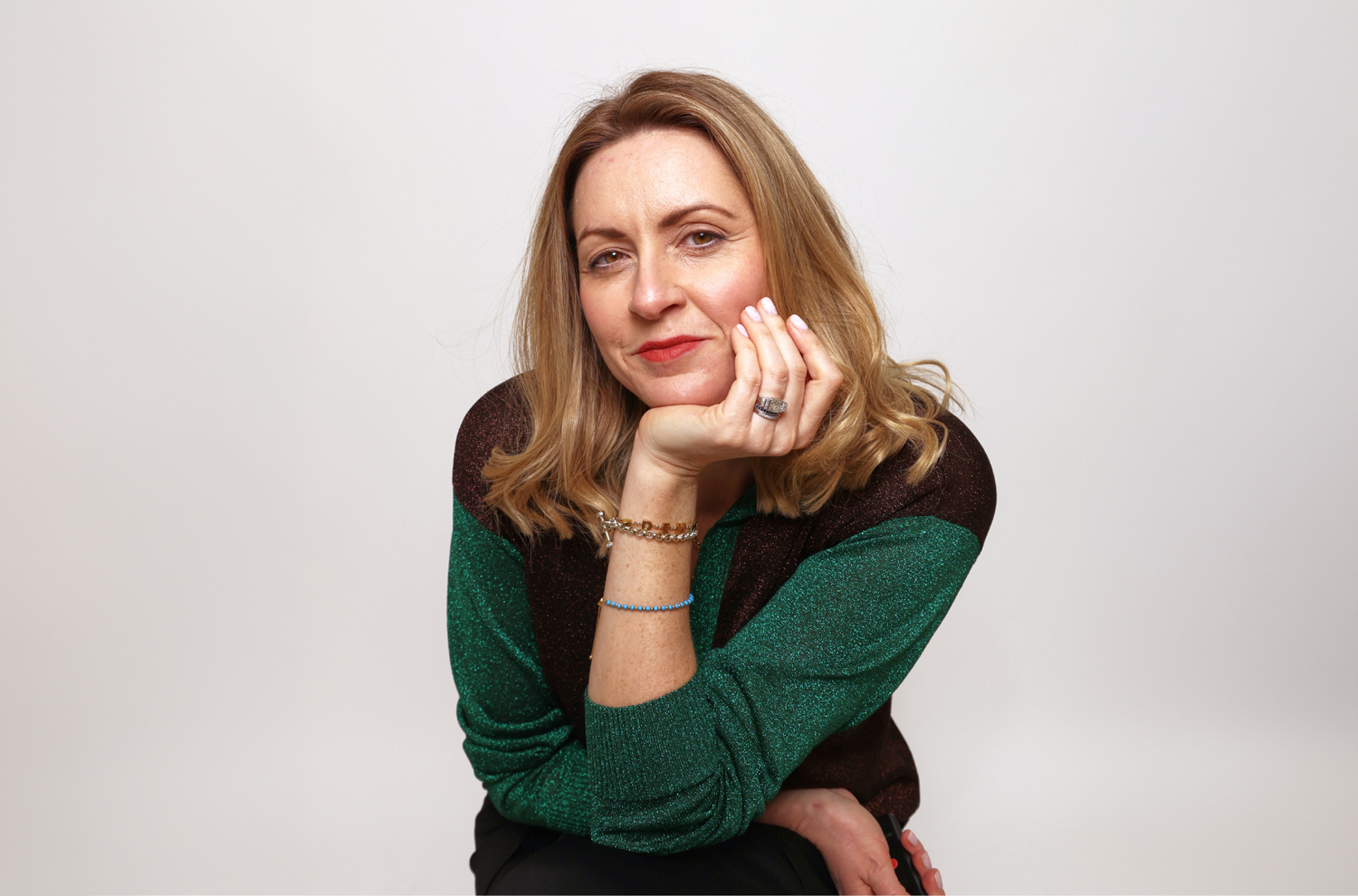
Nicky Denson-Elliott is a professional feminist, community builder, writer, podcaster and mother of two whose work sits at the intersection of feminism, creativity and business.
Through The Wilder Collective, her Wilder:LIVE events and her award-winning podcast Women’s Business, she supports female founders, creatives and leaders to own their value, unlearn patriarchal conditioning and build businesses that don’t just look good on paper but feel good day to day.
Her mission is clear: to help women turn intention into momentum and ambition into action, while dismantling the internalised misogyny that so often holds them back. Nicky brings both levity and depth to conversations about the societal pressures that encourage women to play small.
In this episode, we explore the messy middle of entrepreneurship, the importance of community in finding clarity and the transformative power of opening up publicly to big conversations. It’s a conversation about failure, pivoting, reparenting and the courage it takes to build something that truly aligns with who you are becoming.
Conversation Highlights:
- The leap from corporate life to entrepreneurship and navigating the uncertainty that comes with it
- How motherhood, guilt and mental health intersect with the pressure to succeed in business
- The journey of building and eventually stepping away from Wilder Ones clothing brand
- Transitioning into podcasting and the freedom that comes from following a new direction
- Why embracing failure is essential to business growth and personal evolution
- Breaking the silence around money, gender and the conditioning that keeps women small
- Reparenting yourself and developing emotional intelligence as an adult
- The impact of societal expectations on women’s ambition and sense of self-worth
- How aging brings wisdom, clarity and permission to prioritise what truly matters
- The power of community in moving from floundering to momentum
- Aligning past experiences with current goals to create a sense of purpose and direction
Listen If You’re:
- In the messy middle of building a business and searching for clarity
- Trying to unpack the ways patriarchal conditioning has shaped your ambition
- Craving a community of women who understand the tension between motherhood and entrepreneurship
- Ready to stop playing small and start owning your value
- Navigating guilt, mental health or identity shifts as a mother in business
- Looking for permission to pivot, fail and try again without shame
- Interested in feminism, emotional intelligence and building a life that feels aligned
Favourite Quote for Mums in Business:
“Millenial women are in an era of unsubscribing to the stories that have kept us small our whole lives.” – Nicky Denson-Elliott
About the Guest:
Nicky Denson-Elliott is a community builder, podcaster, founder of The Wilder Collective and all round champion of women! Through her work, she helps women unlearn the patriarchy’s tricks, communicate with purpose and build businesses rooted in fulfilment rather than external validation. Her podcast Women’s Business has won awards for its honest, insightful conversations with female founders and creatives. Nicky is a mother of two and believes that happiness and alignment are worthy ambitions in business and in life.
You can follow Nicky and connect with her work on Instagram, Substack and LinkedIn.
About The Host:
I’m Victoria Phipps – a Mum of two, analogue family photographer, charity co-founder, marketing person and now podcaster! My career has wandered all over the place and is becoming a bit of a complex tapestry as I head into this middle phase of life, but I can honestly say I’ve loved every minute of it so far.
I was raised by a nurturing Mother and an entrepreneurial Father and have inherited traits from both, so the tension between ambition and motherhood is one I grapple with on a daily basis! I’m fascinated to hear the stories of other women on a similar path, who are striving to build thriving businesses whilst being present for their children. It’s a tough juggle, but I hope the conversations shared on this podcast help Mums in business feel less alone and inspired to keep going in pursuit of their dreams!
If You Enjoyed This Episode:
Please subscribe, rate and review the podcast – it helps other mums find us!
Share in your Instagram stories, tag @mummeansbusinesspodcast and let us know your biggest takeaway.
Share this episode with a fellow Mum in business who you feel would resonate with Nicky’s story.
Episode Transcript:
Hello and welcome to the Mum Means Business podcast, where we shine a light on inspiring women who have one thing in common. When they’re not managing tantrums, homework, P.E. kits and play dates, they are busting their gut to create something from nothing, to turn their passion into a thriving business and build a better life for themselves and their families. We dig into what motivates devoted mothers to pursue entrepreneurship and how they integrate their work and family life.
I’m Victoria Phipps, your host, and if you’re an ambitious mum in need of some solidarity whilst navigating the messy middle of making your big dream a reality, then stick around. This is for you.
NOTE: This is the transcript from the original recording, rather than the edited episode so timings may vary.
Victoria (00:01)
My guest today is a professional feminist, community builder, writer, podcaster, and mum of two. Her work sits at the intersection of feminism, creativity, and business, helping women turn intention into momentum and ambition into action. Through The Wilder Collective, her Wilder Live events, and her award-winning podcast, Women’s Business, Nikki Denson Elliott supports female founders, creatives, and leaders to own their value, unlearn the patriarchy’s tricks, communicate with purpose and value happiness and fulfillment as worthy ambitions. In short, Nikki is on a mission to help women build businesses that don’t just look good on paper, but feel good day to day. As millennial women, many of us will have felt at one point or another, a societal pressure to play small. Nikki articulates this feeling beautifully on all our behalfs. Peace, hang on. Bringing her community along for the ride.
she dismantles internalised misogyny piece by piece and exposes the countless ways that patriarchal hangovers impact a woman’s ability to thrive in 2025. This all sounds rather serious, but having lurked in Nicky’s world for several months now, I can also tell you that she has the driest sense of humour, the quickest of which, and is also a clown school graduate. My favourite people to talk to are those who can be under eff-
Nicky Denson-Elliott (01:19)
Thank
Victoria (01:24)
effortlessly between the silly and the serious. So I’m very much looking forward to this conversation. Nikki, welcome to the Mum Means Business podcast.
Nicky Denson-Elliott (01:32)
⁓ thank you for having me and I’m so glad you picked up on my dry sense of humour and quick wit.
Victoria (01:37)
I know, well, and this is something we’ll probably come on to. I think there’s something about talking about feminism and internalised misogyny and learned sexism and all these things. They do kind of sound very serious. And actually, and I don’t know, it’s something we definitely should touch on actually, because in an effort to kind of break that down, there is a sense in certain social contexts that you can…
be perceived as a bit of a Debbie Downer, which is absolutely not what you are and not what you’re trying to do. But yeah, perhaps we’ll come to that later on. Let’s start at the beginning. So you had what many would describe as a more corporate career, and now you are a female founder, an entrepreneur, and a community builder. What made you take the leap from one to the other?
Nicky Denson-Elliott (02:35)
So I had taken the leap before in my corporate career. I had started my own business when I was 27, but I worked in events. So I started an events company off the back of leaving another one. So I had previous, if you like, with entrepreneurship. And I think I’ve always had that spark in me. And so when my youngest was born in 2020,
and I was on mat leave during a pandemic, I had a big shift in perspective, very cliched, but at that time that corporate job was in London, it was quite far away and I was doing a horrific commute and I was just like, the balance tipped for me. And I had an idea to start a unisex kids clothing brand.
And I think it was at a time when during the pandemic, small businesses were thriving online because nobody was going out and spending any money. So they were spending their money on small businesses and there was a real upswing and that kind of thing. So I thought I could kind of jump on that bandwagon very naively and do it. But what made me think I could do it? Just my own kind of innate ⁓ naivety. I think you need to have a lot of it in business.
Victoria (03:57)
Yeah.
Nicky Denson-Elliott (03:57)
that I just thought I I plowed a load of my savings into it. Like it was absolutely no mean feat, but it was in some ways idiotic, in other ways inspired because it’s all led me here, but at the time hugely challenging and financially crippling.
Victoria (04:19)
So that’s something you started during the pandemic, during your maternity leave with your youngest child. That’s such a common story, isn’t it, about starting businesses and maternity leave, and I think specifically online. And I can see…
Nicky Denson-Elliott (04:23)
Yeah. Yes. Yes.
Yeah, and it’s something I’m
really passionate about because I think I’ve said this before and a lot of people don’t agree and that they’re entitled to their opinions and my experience of Matleave was that it was very boring. And the second time I actually enjoyed it more because I think I had already gone through the process of maitrescence and I had already changed so much. But I found the distraction of having a business idea and having something to plough myself into. ⁓
you know, I was doing research when he was napping, I was working on something that was driving me forward. And that for me, when my brain was otherwise atrophying, just fucking dangling stuff at a baby, sorry, can I swear? Fucking dangling stuff at a baby. I really appreciated the outlet of doing something for me that I felt excited about.
Victoria (05:15)
Yeah.
Hahaha!
I completely relate to this. I had a sort of ⁓ internal crisis, I would say, of identity after my first. And my first was born around the same time as your second, so she was a COVID baby. And I think in your second, at least you know what to expect. Like you know what you’re getting yourself into. You know how repetitive it’s going to be, how you’re going to be sleep deprived. You kind of are armed with at least that sense of perspective and you’re more experienced. But this thing about
craving a creative outlet or craving something that challenges your brain. I mean, do you ever think back and wonder whether it could have been any other way? know, did you ever at the time feel guilty that you perhaps weren’t sinking into it? You know, there’s so much messaging about just, you know, enjoy the moment, it goes so quickly. Just chill, just be with your baby.
Nicky Denson-Elliott (06:25)
Mm-mm.
Victoria (06:26)
you know,
did you struggle with that or did you feel very confident that that was absolutely something you had to do for you?
Nicky Denson-Elliott (06:32)
No guilt whatsoever because I spent every minute with my baby because we were in lockdown and my daughter as well, you know, because she got chucked out of nursery. So the time that I was spending on the business was piecemeal. You know, it was limited. It was in chunks when he was napping and she was having a bit of downtime after lunch. It’s not like I was working full days. And, know, when my daughter turned one, I went back to my big job and she went into nursery for 11 hours a day.
Victoria (06:38)
Yeah, yeah, yeah.
Hmm.
Nicky Denson-Elliott (07:00)
When my son turned one, he went into nursery for three mornings a week. And that was all because, you know, I, didn’t have my income and I was working for myself. So like actually the setting up the business gave me freedom to spend more time with him. And it felt, it felt really good to have the balance of like doing something that I wanted to do. Cause they’re like sleep when the baby sleeps and all that stuff.
I just, I love sleep by the way. Like I endorse napping so wholly, but because I had something that I was really excited by and really engaged by, that was like a lifeline that I wanted to be working on. And so that’s, that’s what I focused on. And I felt like the balance was, was really strong because I, certainly did not have any shortage of time with him.
Victoria (07:51)
So when you compare the two maternity leaves then, so I’m assuming that you then didn’t return to your job at all after your second, you just went all in on the business. So comparing how you felt about that when your maternity had kind of come to an end and you’re sending whichever child off to nursery, how differently did you feel second time round having created this different situation for yourself?
Nicky Denson-Elliott (08:19)
felt really differently and had to pick through a lot of feelings of guilt. But I do work around mum guilt and mum shame and guilt is something that we feel when we’ve actually done something wrong. But we use the term “mum guilt”, I’ve got loads of mum guilt. And we’ve done nothing wrong at all. We just feel that we’ve done something wrong because of all the expectations on us.
Sending my daughter to nursery when she was one and I was in my job was what I needed to do for my sanity and it was what was best for our family and then not doing it with my son. I did reflect on it and I felt bad. I was like, I never, didn’t have as much time with her, but I wasn’t in a good place mentally when she was born and in the subsequent month or year at all. And so…
you know, as a mother, have to put our sanity first because, you know, people say you can’t pour from an empty cup. And like as a mother, cannot, you know, the number one indicator of a happy and well-balanced child is a happy and well-balanced mother. You know, that’s fact. And so even though I do feel some sadness around that, I also have to reconcile it. I have an eight year old daughter who is happy as a clam. We are incredibly bonded.
She is amazing. I’m obsessed with her. And, you know, she is who she is and maybe she’s the sum of all parts, but she’s totally fine. And none of that, I don’t think any of that has impacted her negatively. And I just feel really bonded with both my kids because of the choices I’ve made about my work since he was born, because she was only three when he was born. And I regret none of that.
Victoria (09:49)
You
That all sounds really healthy. I appreciate you sharing that.
Nicky Denson-Elliott (10:16)
⁓ I’m
actually perfect Victoria, I’m not sure if I told you.
Victoria (10:20)
I should have put that in the intro. I missed
that bit out. No, but it is something that we all grapple with. you’re so, think just that question to ask yourself, have I done anything wrong? It’s so important. We don’t do it. I mean, I’ve really struggled with mum guilt. And I think it’s because of all of our lifelong experiences of motherhood, watching other people do it, and then listening to…
various aspects of society and bodies and institutions and your own parents and your own friends, everyone’s got an opinion on it. And you also put a lot of pressure on yourself to live up to certain expectations that some of them are completely daft, you know, and not important at all.
Nicky Denson-Elliott (11:07)
Totally.
And because of all that societal stuff, our kids pick up on it as well. So they then have that expectation of us. So if my daughter will say to me like, mommy, did you order me that book for the author visit? You know, and I haven’t done it one time because it’s just a ball that I’ve dropped. I will just say to her, do you know what? I didn’t. I’m sorry. I wasn’t able to prioritize that. And that’s the language that I use over saying, no, I messed up.
I made a mistake, I did something wrong because my daughter is loved, nurtured, fed, watered, she has a safe home, like she is completely well looked after. Occasionally do I drop balls because I’m a human being? Yes. Teaching her about humanity is a happy byproduct of making mistakes because she’s a human too and she’s going to make mistakes. And if she thinks that I’m a super mum, which is another narrative that I detest because it
Victoria (12:01)
Mm-hmm.
Nicky Denson-Elliott (12:02)
dehumanizes mothers who are innately human, innately capable of making mistakes, then that’s a great lesson for me to teach both my kids. I make mistakes, you will make mistakes. It’s not about making the mistakes, it’s about how you move on. And so I will just say to her, I do apologize, but I wasn’t able to prioritize that. She’ll be like, that sucks, I wanted the book, but we move on.
Victoria (12:26)
Yeah, yeah. Yeah. And I think just sharing that and taking the time to explain it in that way. You know, there’s so much, you know, so much rhetoric that we should communicate our flaws with our children. But there’s such a subtle difference in the way that you’re saying it to saying, my gosh, I’m so sorry. I forgot and I failed you. You know, it’s not quite, you know, you’re taking it to another level. And this is what I mean about the subtleties and
Nicky Denson-Elliott (12:49)
Yeah. No, I haven’t.
Victoria (12:56)
It’s so hard to kind of dissect all the parenting advice that mothers are flooded with about how to communicate with our kids. And actually there is so much power in the nuance of the language that we use and just sort of saying, actually, I don’t really feel that I need to, you know, go and flog myself about this because mummy has a lot to think about. And this is one thing that I wasn’t able to get done in time.
Nicky Denson-Elliott (13:13)
Yeah.
Victoria (13:26)
and I’m sorry that you’re sad about that, but we will get you the book and you might just have to wait a little bit. And it’s not like, God, I failed you, you know, and bringing them into it in that way. And then they see you as, I don’t know, well, how do they see you if you do that? You tell me.
Nicky Denson-Elliott (13:35)
No.
You know, I don’t know if they understand the nuances of the way that I’m trying to parent them now, but I do hope that they will come to understand innately their own humanity and that that was modelled to them by me and their dad. And like I say, I don’t know if they’re like, do you know what, mummy, actually, I’m so glad you said that because it’s really taught me something about humanity. Like, obviously they’re not quite, they’re not quite there.
Victoria (14:07)
They’re definitely not like that, No,
Nicky Denson-Elliott (14:11)
they want what they want, and they’re disappointed when they don’t get what they want.
Victoria (14:13)
but it’s subliminal. Yeah.
Nicky Denson-Elliott (14:16)
But that’s it’s okay to be disappointed when you don’t get what you want. You know, I don’t want them to just think the world is full of injustice and unfairness. But also they do need to build some resilience and understand how the world works. And I’m not here to give them every single thing that they asked for without question. And so I just balanced that finally. So if I say sorry, I wasn’t able to prioritise that. My daughter might be like, ⁓ but
That’s really the end of it. You know, that’s that’s a full stop and there isn’t a huge amount of debate that comes after it. She might be pissed off, but them’s the breaks.
Victoria (14:50)
but also what it does do. I’m kind of trying to unpick my own clumsy question. Is it says to her, mummy is important and has things on, you are important and have things on, but I am not here on this earth entirely to fulfill all of your requests that I have my own stuff. And I think if you sort of labor under the apology,
There is something in that that does kind of reinforce that they are the center of your world and you have let them down because you dropped this one ball. And actually if you kind of separate that you’re two independent humans, and of course you’re the adult and you’re the carer and they’re the child and the caree, and of course you have a responsibility to them, but you’re kind of, you’re not allowing yourself to berate yourself or be berated by her if you’re going to be a human being and drop the ball.
and there’s a respect I think you’re building in her, although it’s kind of under the surface. Like, okay, mummy has her own stuff. Mummy’s an independent person.
Nicky Denson-Elliott (15:54)
No, honestly,
is huge for me. And it’s a word that we use a lot in our house about being respectful or disrespectful because I don’t… So this might be controversial, but there’s really not a lot I won’t say to my kids as long as it is in an age appropriate way. There’s nothing I won’t talk to them about. There’s no question of theirs that I will not answer because any judgment or shame that I have around certain topics are mine and they’re inherited. So if they want to ask me…
about sex or body parts or bad language, I will explain it to them and like with respect and we talk about respect a lot and I think it’s my number one kind of parenting hack is that if they are really challenging me, I will just tell them, guys, I’m a human and I’m finding this really difficult like
And it’s weird how disarming it can be because I think kids do put you on a pedestal. They think you’re their parents and you know everything and you know that you don’t and you’re absolutely at end of your tether. So if you bring them into that and if you sort of like peel back the curtain and you’re like, guys, I’ll be honest, I’ve had quite a long day. I’m exhausted. And you’re just really winding me up. I don’t really know what to do here. Can you help me? Like, please, can you help me? Can you at least not?
disrespect me by ignoring what I’m saying to you. You know, those are words that I use, like, that’s an example that I can think of. Then I’m not saying it’s like, okay, mommy, we have now perfect angels, we’ll do whatever you want, like I wish, but sometimes it can take the temperature down in those like high octane situations. And it can help. And so I am happy.
to display my humanity to my children constantly. And I’m happy to ask them to treat me respectfully because I always treat them with respect and I just ask for that back. And I think that’s okay to ask of children.
Victoria (18:01)
And you’re really stretching their capacity to think in a mature way about this stuff at an early age, which is no bad thing. Yeah.
Nicky Denson-Elliott (18:08)
Yeah, but also just logically. Yeah,
just logically because they know as kids, like they know when someone’s mean to them or they know when someone does or says something mean. And my kids know that that’s never about them and that that’s about the person. And we, like I said, we use the word respect a lot and it comes down to that. Like my kids being respectful of me and other people is ⁓ fundamentally important to me.
Victoria (18:34)
Yeah, and whether you like those people or not, that’s a key thing that I’m kind of coming into now. You know, my daughter’s just started school, she’s deciding whether she likes people or not, and she’s telling me all about it. I’m like, it’s okay to not like them, that’s fine, they might not like you, but you still have to be polite, you still have to be courteous, and we’re going through all of that. So okay, in that line then of being human and making mistakes, you cite this first business, the clothing brand, as perhaps,
Nicky Denson-Elliott (18:46)
Yeah.
Mm-hmm.
Victoria (19:04)
a catastrophic mistake and perhaps the most inspired thing. And obviously one thing leads to another, but tell me the story of that business. What happened?
Nicky Denson-Elliott (19:15)
So I’ll try and be succinct. I set up that clothing brand because I have a daughter and a son and I wanted to create unisex clothing that could be passed between them. So it was inspired by them. I had no experience in retail, fashion, buying clothing, anything like that. I designed everything totally from scratch, had it made totally from scratch and launched the business, worked on it all of 2020 and launched it in spring 2021.
evolved it into women’s wear as well. So I launched with one matchy-matchy like mummy and me jumper and then the women’s wear did quite well and there was interest in it so I did more women’s wear then I moved away from kids wear and focused on just on women’s wear. By spring 2023 there had been real ups and downs. I had had sellout collections, I had had 10k months you know that everyone’s obsessed with.
and I’d also had real challenges with my factory where they had let me down on certain order runs and then I ordered, I designed a product that just didn’t sell as well as the others and because my cash flow was so finely tuned it basically just killed the business and I was like I’d already put tens of thousands of pounds of my personal savings into it which was not something that I just had to washing around.
That was a decision that I made in the naivety of thinking that I would just make it back. Spoiler alert, never made any of it back. And so I got to a point where I was like, this just doesn’t make any sense anymore. And who am I doing this for? Because my really loyal customers love it. And they’re like, please don’t go away. Please don’t go away. And I’m like, guys, at the end of the day, like, you’re not buying enough stuff. And I’m out here, like, absolutely sogging my guts out. I just wasn’t in love with it enough.
And I don’t say that flippantly like, I have to love it. And if not, I’m just going to suck it off. But it’s just, it was so hard and it didn’t make any business sense. And I’ve always been able to be quite cold on the business front, separate head from heart. Like my heart loved it, but my head knew it didn’t make any sense to continue. And it’s not a decision that I made really easily or quickly. Like I can be flippant about it now, but
Victoria (21:14)
Yeah.
Nicky Denson-Elliott (21:34)
it did take a bit of soul searching to come to the decision, but essentially I wrapped it up in the spring of 2023, which was the same time as I launched the podcast, not knowing what I would do with the podcast, what it would become, how it would evolve into kind of what I do now, but just knowing that I didn’t want to let go of some of the incredible women I had met on that journey and that I wanted to elevate their voices, the women who were working for themselves, running small brands, small businesses. I just knew that
I wanted to stay in that world and keep talking to those women because they had really inspired me. And so, you know, the end and the wrap up of the clothing brand coincided with the launch of the podcast.
Victoria (22:17)
So how are those two, okay.
So in terms of business, you’ve closed it down. And what was the name? It was Wilder. Wilder Ones? Yeah, yeah, Okay, so you’ve closed it down and you launched the podcast. That must have been a really tricky time in terms of you understanding your direction.
Nicky Denson-Elliott (22:25)
Hmm. Wilder ones, wilder ones, yeah.
What direction? Absolutely no direction. was like some kind of like fucking like, I don’t know, split atom. I just went in all directions. I didn’t I didn’t have any idea at all what I was going to do longer term. What I started doing was doing bits of social media marketing for people taking random almost like VA style contracts for people that I’d worked with just to keep
Victoria (22:42)
hahahaha
Nicky Denson-Elliott (23:09)
small turnover in the business to cover the costs of running the podcast because I was self editing, self producing. So just the costs of like, the software that I host it on the software that I record it on and stuff. ⁓ I thought about launching a marketing agency, I thought about going into kind of like content, not content creation for myself, but for other people like social media management for other people. I didn’t love any of that stuff. But honestly,
Victoria (23:17)
software.
Nicky Denson-Elliott (23:38)
No clue. No clue what I was doing until last year. Like it didn’t, it didn’t all come together quickly at all. And I would like to normalise that for people. I would like to normalise stuff taking time.
Victoria (23:53)
Yeah, I’m really big on that. I think I have had, how old is my daughter? Nearly five, like five years of not knowing what the hell I’m doing. Because, you know, having children absolutely just slips your whole life on its head. And for me, there were a lot of other kind of, it was synchronized with a lot of other kind of pauses in work, things coming to an end.
and this big question of what’s next for me. And it is hard to kind of filter that when you are kind of fighting fires in the early years of motherhood and you feel like you just don’t have space in your brain. Yet in every spare moment that you do have, this is playing on your mind. Like, what the fuck am I doing? What the fuck am I doing? Where is this going? What am I gonna do next? And particularly, suppose,
you must have felt like in the early stages after your second paternity that you had some momentum and you had direction with the business when you launched it. And it seemed like, you know, at the point at which you’re getting your first 10K month, you probably feel quite good and that you’re doing all the things that Instagram said you could do. But then when that starts to wane and that…
It’s hard to let things go, I think.
Nicky Denson-Elliott (25:16)
really hard. I was in obviously I said I was financially invested in that business. I was very emotionally invested and I had built up great relationships, not just with other female founders, but with my customers, like amazing loyalty from some of my customers and genuine friendships and conversations in the DMS with them. And I, you know, saw people out and about wearing my clothing and like could talk to them about it, which considering how little of it there was in the world and relative terms was incredible. yeah, there was there was things about it that
Victoria (25:42)
That’s very cool.
Nicky Denson-Elliott (25:46)
were absolutely amazing, but then the things about it that weren’t amazing outweighed the things that were, and it was just time to draw a line under it.
Victoria (25:57)
Yeah, and did you ever consider going back to your J-O-B or A-J-O-B?
Nicky Denson-Elliott (26:03)
Absolutely.
Never ever. Not at all. I think I had been a partner in that business and so when I left I sort of had to speak to my business partner and say can I extend my maternity leave? He was like we’re just really like really hanging out for you to come back and I was like okay let me just make this easy I’m just not gonna come back at all then and
it was kind of like we cut the cord. And I did feel a certain type of way about that because that was like a big business and there was big opportunity there. But it was all at the expense of other stuff. It was the expense of, you know, a horrific commute and time away from my kids and like just having two kids and two variables at home, it just felt like the balance totally shifted. And so even though
In the early stages, when I saw some of the stuff they were doing, I did have the odd pang of like, if I was there, what would this be like? Or would I be part of that? But I can safely say that I have absolutely none of that now. And it was never strong enough to make me consider it ever. I’ve never been good at having bosses and I’ve barely ever had bosses. I had one boss before I set up my own business.
Victoria (27:18)
you
Nicky Denson-Elliott (27:21)
for the first time and I never really have considered myself to have had a boss since then and it’s just not for me which is hilarious because I’m actually really I’m a big conformist like I’m a big rule follower I do not like breaking the rules I’ve never broken the law but ⁓ bosses no not interested
Victoria (27:42)
I think it’s an extension of school in some ways. You you kind of have to raise your hand and ask if you can go on holiday and the restrictions on your freedom. think once you, I’m exactly the same. So I had a boss, I worked for a year in an architecture practice in Liverpool after I finished uni. And that was kind of the only boss I had. And then I went and worked at my dad’s company for six months, six months, whilst I figured out what I was going to do next.
Nicky Denson-Elliott (27:49)
Yeah.
Victoria (28:10)
And I was there for, I mean, I’m still there two days a week. So that whole time, like almost maybe 16 years, 17 years, because we set up a charity together and we did that for a long time alongside my photography business. So my dad is not, I wouldn’t consider him a boss and it was very flexible. And I’ve always had the kind of, because he’s always been entrepreneurial. He’s very big on the freedoms. And in that sense, I’ve kind of had his support.
in living a more flexible life. And that’s not to say that it isn’t hard work because in a lot of ways it’s much harder. You end up working a lot more when you set things up for yourself, but it’s just that you can bend and you can put that work wherever in the day or in the week it fits you, which is a freedom I think once you’ve tasted it, it’s hard to go back from that.
Nicky Denson-Elliott (29:00)
it’s for you. Like you are no longer accumulating wealth for other people. Whatever work you choose to do and fit into the day benefits you alone and it might not be to the tune of much to begin with. You know you might be like yeah but in a corporate salary I would be earning x y and z but it’s like actually when you work for yourself there is no ceiling to what you can earn.
Victoria (29:02)
Hmm.
Nicky Denson-Elliott (29:24)
it might not be loads at the moment, but the reality is that there is no ceiling and in that corporate job there is so I’m not money motivated per se I’ve done a lot of work around like money mindset and stuff recently with with the research I’ve done and I think that women have a huge amount of conditioning around money and worth and value so I want to be careful what I say about how I feel about money because it’s been a journey but
Yeah, I’m not into accumulating wealth for other people, that is for sure.
Victoria (30:00)
think as well, I don’t know if you relate, but there’s kind of a sense of play that comes with entrepreneurship. It is a kind of addictive game where you’re constantly trying and testing and failing and refining and pivoting and shifting and reacting and all of these things, you know, as the world evolves around you, you you set up your…
Nicky Denson-Elliott (30:09)
percent.
Victoria (30:29)
⁓ children or unisex clothing brand during the pandemic when everyone was going online and suddenly there was a real buzz I think Instagram just kind of that’s when it I know it was there before but that’s when it kind of got really really really busy and really loud and everyone was quite willing to spend money online because they weren’t going out and they weren’t doing anything you know their social lives were dead and they had a bit of extra cash and it was a dopamine hit.
Nicky Denson-Elliott (30:42)
Yeah, agreed.
Yeah, absolutely.
Victoria (30:57)
you know, go and buy something and then it’ll arrive and that’ll make me feel better for five minutes. So that makes sense. So you try it and you do it and it works for a little bit. And then the world changes and we open up and people kind of disappear a little bit and you put something out there that doesn’t work and you’re constantly responding and having to make decisions about what to do next. And it is a kind of game.
Nicky Denson-Elliott (31:16)
Yeah,
I totally and I just had this conversation with someone on my podcast, everything is a test. Everything is an opportunity to try something and iterate. And I think as humans, we can, especially as women and mothers and what we were talking about before around guilt and stuff, we have a tendency to people please. So we want everything to be a success in inverted commas and
That’s not normal in business. Like I use him as an example all the time, even though he’s a toxic billionaire, but James Dyson made a thousand Hoovers before he landed on the one that became the Dyson that literally made him a billionaire. But nobody talks about that because he’s James Dyson. Failure is totally, totally normal.
necessary. You know, some of the biggest and best inventions in the world have been invented as an accident when they were trying to create something else. And so for me, that freedom and creativity that I have in running my own business, where it’s up to me, and I get to try it, and I get to test it. And if it fails, I get to take the learnings and move on. That’s a gift. That’s a huge part of the enjoyment of running a business for me. Of course, it’s not always easy. And failure can feel hard.
Victoria (32:19)
Mm-hmm.
Nicky Denson-Elliott (32:41)
But there is always a learning in there after the fact. After you’ve let yourself feel a bit shit about it for a day, you’re like, ⁓ there was so much in this. And I’ve had moments over the last couple of years. And before I launched my community, when I was working for other people, I got really burned in a couple of instances and it was really, really hard. But I’m so glad I had all of those experiences because…
they were incredibly humanising and put me exactly where I needed to be in order to do the work that I do now.
Victoria (33:13)
Yeah, and it’s all a process, you you’ve got lessons yet to come. We all do. And, you know, it might be, you know, that there are still countless trials and failures until you get to the place, you know, your community, relatively speaking, is still young. And it’s kind of it’s really exciting to project forward and think what that could become.
Nicky Denson-Elliott (33:18)
For sure.
yeah.
Victoria (33:40)
But I think that’s really helpful to kind of accept and normalise that before it can reach its potential, before any business can reach its potential, it has to fall on its ass probably a few times. And you have to personally, and this is all about like, know, if you’re growing a business, you have to be ready to do a lot of personal work and to really reflect on your strengths and weaknesses and your blocks and money, I think for women is a huge part of that. think I…
Nicky Denson-Elliott (33:50)
complete.
Victoria (34:10)
commented on one of your Instagram posts at one point, you growing up, my mother told me, you know, you don’t talk about religion, you don’t talk about money, and you don’t talk about there was certain things and there was like, it’s a rule list. And I don’t know, I can’t remember her specifically saying that to my brother, maybe she did. But it’s certainly something that she thought was impolite. And actually, I wonder now whether that’s just and she’s, you know,
Nicky Denson-Elliott (34:34)
Yeah.
Victoria (34:40)
God love her, you she wants to be polite and courteous and doesn’t want to upset anybody or make anyone in a conversation feel uncomfortable. And for her generation, perhaps to sort of talk about how much their mortgage is or how much, you know, is deemed impolite. But now I think, you know, the world turns and it means that we are chronically ill informed about money as a gender.
We’re not taught what to do, how to create it, how to build it. And there are certain echelons, particularly, suppose, of a white male privileged society where they just pick it up as they go. It’s just there and they’re surrounded by people in the know. And so we’re at a disadvantage.
Nicky Denson-Elliott (35:25)
Well completely.
And we’re only one generation into this really. Wasn’t it in the 70s that women could get their own credit cards in their own names? It was so unbelievably recent some of this stuff. So one generation ago, our mothers were not, by and large, were not living their lives the way that we are expected to and told to live our lives now. So we are…
rewriting the script. We’re also re-parenting ourselves, like you say, because there was so much emotional intelligence around now that wasn’t around then. So, I mean, it’s exhausting. There’s a lot for women to do now. There’s a lot for all people and for parents to do. There’s a lot of awareness. But I think I’ve grappled with…
that and have exactly, you know, very similar experiences to you. No shade to my parents, no shame on my parents, like they are who they are, they grew up when they grew up. But I have a responsibility to reparent myself differently so that I can parent my children differently because some of the way that they behaved would not wash now and I wouldn’t want it for my kids.
Victoria (36:41)
But it, and because it potentially limits their capacity to build wealth and to fulfill their potential as humans, because I think, I don’t know about you, like as a child, I would regularly hear how bossy I was. And that was, know, I think I, I don’t know how I felt about it at the time, but I definitely registered it. And I definitely felt like that’s not what people want.
That’s not how I win their affection by behaving that way. Go on.
Nicky Denson-Elliott (37:17)
yeah,
the research project that we did, Good Girl Economics, we did quantitative and qualitative. And in the qual interviews which I conducted, what came up so often for people was this good girl conditioning, was being told not to show off, being told what was good, what was expected, what was acceptable.
explicitly and implicitly told and all of that stuff goes in. So then when you grow up and you’re told women can have it all women can have it all you’re like ⁓ okay I can have it all but you’ve got all this conditioning that you have absolutely no responsibility for in terms of the way that that went in. How do you navigate that? You can’t just go yeah I can ask to be paid whatever I want and I’m worthy of that I can show up online
and put my face all over the internet, I’m worthy of that. Like that comes with so much like self-reflection, fear, lack of confidence. Of course it does. You know, of course it does given everything that we’ve been taught and told. it’s, oh, there’s a lot.
Victoria (38:38)
It’s actually quite heartbreaking really because I’m just listening to what you’ve just said. It’s as a child, you really just want to be liked because all human beings do. And you behave in a way that feels natural and authentic to you as children do. And when you’re little, that’s cute, right? It’s when you’re three, you can do what you want, it’s just cute. But then when you get to kind of seven, eight, nine.
Nicky Denson-Elliott (38:57)
Yes.
Victoria (39:06)
and you continue to behave as yourself, it’s like the world around you starts to mold you into something that it deems acceptable and also likable. If you’re going to be bossy, people won’t like you. If you’re going to show off, don’t show, I definitely heard that, people won’t like you. And we’re so desperate to belong just because we’re animals and we’re pack animals.
Nicky Denson-Elliott (39:17)
Yes.
Absolutely.
Victoria (39:32)
And so
you do, kind of like, okay, well, I’ll stop doing a bit of that. And it’s all subliminal, subconscious, but then you’re so right. We kind of all hit 40 and the world’s like, be more authentic, be more you. And we’re like, I don’t know who that, it’s such a hard work to actually dig down and remember because you’ve spent decades just trying to follow these rules, which are very prescriptive about.
You know, like you say, what a good girl does, you know, she goes to school, she works hard, she gets her exams. She doesn’t get pregnant, she doesn’t do drugs, she doesn’t do this. And then she goes to uni and then she goes and she gets married and then she has children, but she also has a glistening career and none of…
Nicky Denson-Elliott (40:14)
But also
don’t forget about how she presents herself to the world. Don’t forget about the fact that she is aesthetically beautiful, slim, unlined, her hair never turns grey.
Victoria (40:17)
yeah, yeah, yeah.
But she doesn’t wear,
yes, exactly. She doesn’t wear skirts that are too short. She doesn’t show too much skin. But then if she dresses in like big baggy stuff, she’s just not showing her figure and it’s such a shame. She’s got such a lovely figure and she never shows it. I did both those things in my teenage experience. I definitely dressed like a slut bag and also dressed like a kind of grungy combats and a hoodie. And both of those, I remember feeling like they’re both deemed unacceptable.
Nicky Denson-Elliott (40:30)
Yeah.
Me too, me too.
Victoria (40:52)
for different reasons and I should find a kind of balance. But all the time, you’re just trying to be liked and fit in and accepted. And it does, when you filter it down, you have conversations like this, you do realize just how prescriptive it was. And all the magazine rhetoric, you know, we both kind of will have read everything from like J17 to whatever. And, know, the kind of just abuse that…
Nicky Denson-Elliott (40:58)
completely.
Victoria (41:20)
beautiful women would receive in articles where they happened to, you know, show that their skin was human, that they had a bit of cellulite or that they perhaps had put on a pound and a half and that wasn’t allowed. And all of these things, although that wasn’t directed at us, you know, it’s directed at our kind and it just sends a message that this is what is acceptable. Don’t be too fat, don’t be too thin. ⁓ You know, it’s, and in the nineties especially, you know, the sort of Kate Moss aesthetic.
prevailed and rained on high. And it’s really hard to unpick all that stuff and try and find who you are authentically to present yourself online, to get people again to know, like and trust you. There’s a big like in the middle of that so that they can become your customer and they can invest in you and that you can serve them in the way that you feel you can with whatever offering you’re putting out into the world. It’s just, it’s just a brain fuck, isn’t it? It’s just too much.
Nicky Denson-Elliott (42:18)
It
is a massive brainfuck and it’s something that we just were not aware of in our 20s and 30s and obviously not as kids. And so when you, don’t know if it’s just a coincidence that we’re all turning, this happens to all 40 year old women, I feel like it doesn’t. I feel like we’re in an era of unfuckinging, like an era of just kind of understanding that and just being like,
Victoria (42:35)
don’t know, yeah.
Hahaha
Nicky Denson-Elliott (42:48)
That’s not my story. That is no longer for me. That might have been my story, but I no longer subscribe and just kind of putting it to one side because there’s so much that is challenging around ageing and forget what your face looks like and how the world wants you to look. There’s stuff that’s challenging around how differently you feel in your body, what your hormones do to you, know, pain, injury, like all of those things that come more easily to you, but there’s so much good in it.
and this wisdom, this knowledge that you cannot unlock in youth, you do not have access to it, that is, it’s not there. Exactly. And you know, I heard someone say this week, and it’s so obvious, but I haven’t thought about it like this before.
Victoria (43:25)
Well, it’s not there. You haven’t accumulated it. Yeah. You haven’t got it yet. You haven’t earned it.
Nicky Denson-Elliott (43:37)
No young person has ever been old, but all old people have been young. So it’s like, we all, we’re all young in our heads and we all have that wealth of experience, but no young person has any of that benefit. So yeah, they’ve got these line free faces that we all think is really important, but what do they signify? They don’t signify any wisdom or real lived experience. It’s like,
We’ve got to stop being so obsessed with aesthetics and appreciating like the wisdom that you get as you get older. And I don’t mean old old, you know, I’m in my forties, but you know, great. The second half of my life is going to be very different to the first half. And that’s good. That’s something to celebrate because I have let go of a lot of stuff and now I’m ready to be really, really grateful for
everything that I have, everything that I’ve learned, everything I understand and just feel quite free.
Victoria (44:39)
Yeah, the freedom is massive and you’re on the path to enlightenment. We all need to kind of get on that train with you because you’re right. I mean, I feel like I don’t even know why. I feel like I’m quite lucky. I kind of don’t give a shit about my aging face. I’ve decided I’m just gonna go gray. I’ve never dyed my hair in my life because it’s red and everyone constantly, that is one thing society said. My hair was beautiful. So I’ve decided to keep it and just let it go white because that’s accepted.
Nicky Denson-Elliott (44:44)
Absolutely.
Victoria (45:09)
have a lot of issue with that and I completely agree with you about the wisdom element of it and I’m so much happier now than I was in my 20s or in my 30s and I think there’s something about motherhood as well that that just gives you such a sense of purpose and I really believe like purpose in whatever sort of season of life you’re in is such an undervalued
factor in your contentment. And I think that’s one of the reasons why I’ve struggled so much post, in my sort of maternity era is because I didn’t feel like I had direction. And I knew I had a purpose with my children, but as far as like the woman goes, I didn’t know what impact and what direction I was supposed to move in next. And I think that’s painful in a lot of ways when you’re already in the thick of like nappies and sleeplessness and the fog of maternity.
Nicky Denson-Elliott (45:41)
Absolutely.
Victoria (46:08)
So tell me about, I wanna get onto your community. What made you, because this is a community of women that are all having these conversations, which is why it’s so brilliant. So you had your podcast for how long and what made you decide to do this, to start building a community online?
Nicky Denson-Elliott (46:28)
It was organic. the podcast was about a year old when I suggested that I hosted a networking event in London because I was like, I’m having great conversations with loads of people who listen to the podcast. I’m having great conversations on the podcast and I’m just having them myself. And actually magic would happen if these women that I’m talking to could all talk to each other and all meet each other and share their experiences.
So said, shall I do a networking? People said, yes, sold tickets really quickly. So was about 40 people in a room in Liverpool street. And it was as magic as I had thought it would be. It was a great atmosphere. People loved talking to each other. They were really energized by it. And after the event, they were like, can we all have access to each other? Like, can we have a list of everyone that was there? And from a GDPR point of view, I was like, And also,
Okay, maybe there’s something in this, you know, I was in other communities and I was like, could I turn this into a community bearing in mind, I’m not monetizing the podcast, I’m doing odds and sods of work for other people, but it’s not like driving me. Could I ⁓ launch a paid for subscription based community that is low cost and no pressure so it’s accessible for these women? But yes, there is a paywall.
And the benefit of that is that it brings all these people together and it does give them access to each other. And so the first event was in March. And by the second event in June, I used that to launch the community. And I got 75 members in that launch, which was unbelievable because I was aiming for 50 but that felt quite outlandish. And to get to that and then just grow it from there was amazing because it just
brought more brilliant women into my world and into each other’s worlds and allowed me to connect the dots between them, facilitate these conversations. So yeah, happened organically off the back of events and events had been my corporate career. So there was this kind of really healing harkening back to the world that I had left and I had left being completely out of love with events, finding them really, really draining to…
doing events on my terms, know, between school runs during the day and with people that I wanted to hang out with in a short burst. And it was just like, yeah, quite a nice full circle moment.
Victoria (49:02)
think that’s so often the case. had a conversation with somebody on the podcast and I can’t remember who it is. It’s not gone out yet. But it’s this idea of chapters closing. So I think when we decide we’re gonna leave whatever job we had before and we’re going to start a business, it can feel like quite a hard boundary between the two. And actually when it sort of starts to really, it was Pippa. Okay, so when it sort of,
starts to converge and you start to bring in all the skills that you’ve built at every stage, you know, for you, whether it was events, working in the corporate world, whether it was building the clothing brand, having that, having to shut that down, all the lessons and even motherhood, you know, everything, you’re picking up skills all the time in motherhood. You know, your productivity levels are off the scale. You have such clarity, I think.
as a mum because you have such limited time. So you can be hyper-focused and all of these things, if you can bring them together and you just feel like there’s this convergence of everything you’ve done before, I imagine, I’m not quite there, I feel like that must make you feel really aligned, like it all makes sense.
Nicky Denson-Elliott (50:25)
It does and it took a long time to get to that point and I genuinely don’t think I have felt more like that until the last few months because even after I launched the community and that felt really great I wasn’t completely clear on who I was online and what I was talking about you know because was I talking about community building or was I talking about
being a sort of feminist founder and my feminist ideals or was I talking about the sort of wilder ethos of my business and building a business that suits you and I feel like over the last maybe six months since I like hard launched Wild Alive which was my in-person large-scale event that you were at and changing my name to take my birth name back into my name getting to do more writing which is something that I have
always aspired to do and always loved but sort of wasn’t on my bingo card. And then finding my voice and confidence online and being able to grow in that space and I don’t just mean grow in terms of numbers which is helpful from a funnel point of view but also grow personally in terms of what I’m talking about and what I’m learning and what I’m sharing. That has all felt really really good over the last few months but it took all of that time.
from 2020 and being on Mat Leave and everything that happened afterwards, including what I’m doing now to get to this point in what I’m doing now, if that makes sense.
Victoria (52:02)
No, completely. And do you feel that, you know, it’s easier because it feels aligned with the direction, you know, in terms of putting out content, know, putting out content and thinking of content and, you know, designing content and all the time we spend on it, it’s a lot of work. But when you’re not clear on your message, I think it can feel absolutely exhausting because you’re kind of, and it’s this thing about failing in public.
Nicky Denson-Elliott (52:24)
so much.
Victoria (52:31)
which I have done a lot. mean, my Instagram over the last four years has been, I mean, I think I’ve talked about everything. I’m not sure there’s anything I haven’t talked about, but you’re just trying to find your way and see what lands, but also not just what lands from a business perspective, but what feels right and what feels easier. And do you feel like it’s easier now?
Nicky Denson-Elliott (52:53)
Yeah and you know what’s so fascinating is that my word of the year for this year was easeful and I chose that word because easeful is different to easy right I didn’t want it to feel easy but I wanted it to feel easeful, aligned, meant, natural and I don’t think it has felt easeful until the latter part of this year.
Victoria (53:05)
Yeah, yeah.
Nicky Denson-Elliott (53:19)
but I feel like I will close out the year being like, yes, I didn’t do the whole year on easeful, but I closed it out in an easeful place and it took the year to get there because yes is the short answer. Yes, I do feel that because the work that I’m doing and what I’m putting out there feels like the ideas keep coming to me, it feels.
aligned then when I do put it out there it resonates, it spreads, it grows, that will give me another idea and so it’s just like a positive snowball that does make the whole thing feel more useful.
Victoria (53:59)
Yeah, I completely appreciate that.
Nicky Denson-Elliott (54:01)
And I hadn’t actually reflected on that, hadn’t actually reflected
on that until just now, even though I have the word easeful up on the board in front of me that I look at every single day. So I’m actually really glad you asked me that question, because it’s given me a lovely moment of reflection.
Victoria (54:15)
Good, well you’re very welcome. And I think that is the point of having these words, you know, the word for the year is this. The point is that we start at the beginning of the year, we don’t feel anything like that, but hopefully by the end, we’re kind of slowly moving in that direction and perhaps we’ve reached it. And it’s about constantly identifying where the change needs to happen ⁓ and just making small steps in the right direction. What would you say to
women then, mothers in this case, who feel like they’re floundering. Like what lessons have you learned through that whole process of getting to where you are now and those frustrations that you might have felt on the journey, the journey.
Nicky Denson-Elliott (55:03)
I would say everyone flounders, no one is immune to floundering. And you and I said this to each other before we started recording. I started my podcast with zero downloads, zero guests, zero knowledge and experience, but I did it because I wanted to do it and I thought it could lead to good places and it has led me to where I am now, but I wouldn’t be here unless I had done that thing. So you almost have to.
succumb to the flounder and it’s really hard to do that especially as women who are innate people pleasers and who do want to fit into the mould that society has created for them so they do want to be pleasing and acceptable and kind of not inconvenient yeah like absolutely and actually it is okay to flounder around like
Victoria (55:49)
liked. Yeah, yeah, yeah, yeah. Yeah.
Nicky Denson-Elliott (56:00)
getting your shit together. That’s all there is to life. You just get your shit together one day and then you go to bed and wake up and you have another day to get your shit together. Like that that’s living. just it is tiring. But it can. But it’s also fun. And I think you know what you said at the beginning about how a lot of the work that I do is like really serious subject matter. You’re not wrong. Like it is serious.
Victoria (56:09)
Sounds very tiring, but yes. Then you start again the next day. Yeah.
Mm.
Nicky Denson-Elliott (56:28)
But I am a really un-serious person. I actually hate seriousness. I think part of the reason that I didn’t exist well in a corporate environment and didn’t exist well with bosses is because I just want to take the piss in situations. I just want to like find levity and humor. And that’s probably trauma-based. Like it’s probably some deep root of trauma. But I just, come on, like, can we just have a bit of…
Victoria (56:54)
yeah,
no completely. And that’s why I could never have gone into a corporate world because, you know, embarrassing things happen around a board table and everything pretend it didn’t. And I’m like, well, I am literally the silliest person when I go into the office of my father’s company, which is like heavy industry, very, very male dominated. I am like the silliest goofball there. And I think that’s kind of what I bring. And I think you need it, you know.
Nicky Denson-Elliott (57:21)
Absolutely.
Victoria (57:22)
And it might mean that I’m not taken very seriously, but that’s up to other people, that’s their perception. And actually the work that you’re… Yeah, yeah, yeah, completely. Completely, but then I think that’s a whole other conversation about actually people feel like they need to fit into this corporate box. And there are a lot of rules and regulations in order to progress in that world that people feel they need to adhere to from like the colour tie they’re wearing. You know, it’s very, very particular and that is not a world that I…
Nicky Denson-Elliott (57:27)
I know, and sometimes people need to get over themselves. Sometimes people need to get over themselves. Yeah.
Victoria (57:51)
personally feel like I would fit into very nicely, but that’s kind of a prison in itself. ⁓ So yeah, no, there’s an awful lot and that’s probably a whole other conversation. And I’m very mindful of time because I’ve kept you for a real long time and I knew I would. So let me ask you one last question. We’ve reflected back, you know, as mothers and how we’re conditioned, you know, how we see our children now and your daughter, is it your daughter is eight? She eight?
Nicky Denson-Elliott (58:20)
My daughter’s eight,
my son is five, yeah.
Victoria (58:21)
Yeah,
okay, so reflecting back to when you were eight years old, what would you say to yourself?
Nicky Denson-Elliott (58:31)
Let me just think about what Nikki was like when she was eight.
I think I would say to her that eventually she would stop having nosebleeds because I used to have such bad nosebleeds that I was literally worried that I would bleed to death from a nosebleed.
Victoria (58:49)
No.
Nosebleeds are really scary when you’re a child. You don’t understand them, yeah.
Nicky Denson-Elliott (58:54)
Yeah, and I used to have so many
and I used to end up in hospitals so it’s by the by but I was literally fearful of bleeding to death from a nosebleed which I don’t think has ever happened in medical history. So I think I would just tell her on a practical level, yes you will stop having nosebleeds and I think I would tell her to just…
Victoria (59:03)
Well, we found the trauma. There’s the trauma.
Nicky Denson-Elliott (59:20)
start being unashamedly herself as soon as possible because in a way she was, in lots of ways she was, but there is a lot of conditioning and shaping that went on and a lot of anxiety that started quite young for me and I wish I hadn’t carried that with me so I think that’s what I would say to her yeah and also give her a cuddle for sure, who doesn’t love a cuddle?
Victoria (59:50)
Yeah, yeah, I kind of think, you know, obviously we can’t change it and nor should we want to, but it is interesting to like reflect back because I think eight years old is kind of that point at which that hyper self-awareness kind of starts to kick in and we start to lose the kind of innate childlike innocence that allows us to be entirely ourselves. And we start to…
kind of go on that journey of fitting in.
Nicky Denson-Elliott (1:00:22)
And also like, how do you do it? Because I do, you know, I ask a similar question on my podcast about advice, careers advice people would give themselves. And I’m the same as you, it’s not because you get a do over, you can’t change anything, but it’s useful to reflect, to think about our children, yada, yada, yada. But like, when I think about my daughter now being eight, nearly nine, and how malleable she is right now, and how crucial these years are in her, you know, their formative years, it’s like…
there’s only so much you can do. Like we’re all going to carry stuff with us. We’re all going to have issues. We’re all going to have trauma. We’re all going to have experiences. We’re going to be the sum of our parts. And you just want to wrap your kids up in cotton wool and pickle them in a jar and just look at them and get them out for the odd cuddle. Like I certainly feel like at the moment with the age that my kids are because they’re just perfect and delicious. ⁓ So, you know, what would I say to myself? And when I think about her,
Victoria (1:01:07)
Hahaha
Nicky Denson-Elliott (1:01:21)
being 41 and somebody says to her, what would you tell your eight year old self? You’d be fascinated to hear what she would have told herself. How can I not fuck her up? By the last.
Victoria (1:01:29)
Yeah, but this
is it. Yeah, this is it though. can’t, you know, we can’t. And I think the only thing we can do, the most important thing we can do as parents is stay close to our kids. You know, just build really close, trusting, as you say, respectful relationships so that whatever happens, yeah.
Nicky Denson-Elliott (1:01:48)
And even asking ourselves these questions, like
my parents never would have reflected in that way. And again, not their fault, but even reflecting on that and being mindful of that as I parent her and her brother is a step forward, right?
Victoria (1:02:05)
Yes, exactly. But I mean, we have to kind of accept things. As you said, there’s no shade and no shame. know, they were raised by the keep calm and carry on wartime generation. And we are all at the mercy of the environments in which we grow up. But I’m very, you know, it’s easy to be pessimistic about, you know, what will the working world be like for our kids? There are so many unknowns. But I think also as, yeah, but also, you know,
Nicky Denson-Elliott (1:02:29)
⁓ it’s so easy.
Victoria (1:02:35)
You have to be, I’m a very hopeful person. You have to be hopeful. And there are so many people out there, particularly women, working really, really fucking hard to make the world a bit better, including you and what you’re doing to kind of, because everything you’re doing and all the messaging that you put out on social media, it’s literally like, I feel like if I’m in any way enlightened to all of this stuff, it’s largely down to you. And I don’t say that to kind of flatter you. I mean it genuinely.
because it’s so subtle, but we have an opportunity to actually understand it so that those sort of micro messages that we received are not, so that we’re aware not to kind of do that to our daughters. And I think enabling our daughters to actually be empowered. So it’s not like the world’s telling you at once to place more and then you can do it all.
Nicky Denson-Elliott (1:03:22)
Yeah.
Victoria (1:03:32)
which is like, doesn’t work. Those two things don’t fit together to actually give them the confidence and the mental health resilience that they need to fulfill their potential in whatever space, whatever the world looks like, that you’re just equipping them as best as you can. And I think, you know, the more wealth and power that we can get into women’s hands, the better going forward.
Nicky Denson-Elliott (1:03:58)
Absolutely. Yeah, because they’re showing
that when they have it, women do great things with it. And I think, you know, I am thrilled and flattered to hear that my work impacts you like that. And when I hear that from other people, like that keeps me going. That’s part of what has started to click for me in my work and feel more easeful. And I want to keep doing more of that. And that’s what I will do. In the face of
Victoria (1:04:25)
Good, okay, well that’s
agreed. Yeah, great, good. That’s that then, sorted. I just need to figure out I’m gonna do. So you’re done, that’s great. Okay, so tell me where everybody can find you. They absolutely need to go and follow you on Instagram. I would highly recommend joining the Wilder Collective. It is excellent. So where should they go?
Nicky Denson-Elliott (1:04:26)
in the face of black and anything else that we can do that’s what I will keep doing for now.
you
thanks, Victoria. Yeah, my Instagram is nickydensenelliot.com. My website is nickydensen, no, my Instagram is at nickydensenelliot. My website is nickydensenelliot.com. And on there, you can find information about the Wilder Collective, apply to join us. It is an online community for female founders and freelancers and just a safe space to exist in all the ways we talked about before. So yeah, I’d love to have you.
Victoria (1:05:02)
way around.
and they should listen to your podcast called.
Nicky Denson-Elliott (1:05:24)
of course, my podcast is called Women’s Business. It’s award winning, award winning.
Victoria (1:05:29)
Yes,
it’s been validated officially. It’s very good. Awesome. Nikki, thank you so much for your time today. I really appreciate it, especially considering it’s half term. I know what that’s like now. This is my first one. No ditto.
Nicky Denson-Elliott (1:05:42)
Oh, my children are not with me. No, my children are not with
me. So it’s a thrill. Thank you for having me.
Victoria (1:05:48)
You’re welcome.