
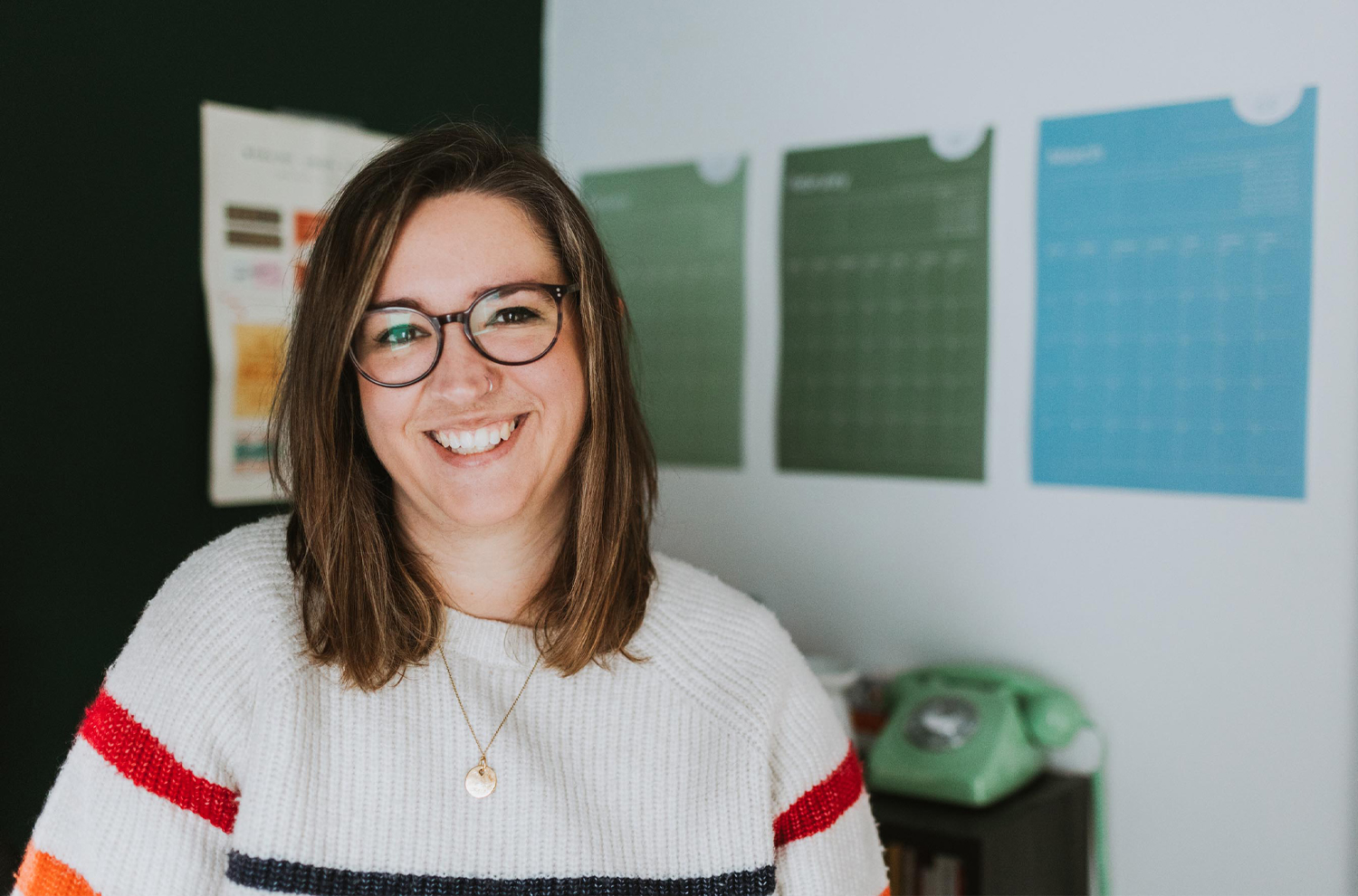
This week on Mum Means Business, I’m joined by Liz Mosley – a graphic designer, Adobe Ambassador, podcast host and public speaker who is on a mission to help small business owners feel more confident about their branding and marketing.
Liz believes that when branding is not only beautiful but also strategic, it can transform the way business owners show up. Through her design work, she creates bespoke branding and websites that leave her clients feeling excited and empowered to share what they do with the world.
Alongside client work, Liz has recorded over 200 episodes of her podcast Building Your Brand, all within the constraints of the school day. She is a mum of two and a passionate champion for small businesses navigating marketing, visibility and growth.
Liz is also well known for her rejection challenge. In 2023, she set herself the goal of collecting 100 professional rejections in six months after realising how much fear of rejection might be limiting her own business growth. Since then, she has been sharing what she has learned and helping others see that rejection is a normal and unavoidable part of creative work and entrepreneurship.
In this conversation, we talk about motherhood, business, rejection, resilience and trusting your instincts. Liz shares how her career has evolved, what she has learned from putting herself out there and why doing work you genuinely enjoy makes consistency and growth far more sustainable.
Conversation Highlights:
• Liz’s journey into entrepreneurship and finding her place in the small business world
• Why rejection feels so personal and how to reduce its emotional impact
• The origins of the 100 rejections challenge and what Liz has learned so far
• Navigating identity shifts through motherhood and business growth
• The realities of content creation and how it has evolved over time
• What happens when your work goes viral and how to manage the aftermath
• Why vulnerability and human connection matter more than perfection
Listen If You’re:
• A small business owner held back by fear of rejection
• A creative navigating visibility and confidence
• Trying to balance motherhood with running a business
• Curious about podcasting and content creation
• Looking for permission to trust your gut and try things without guarantees
Favourite Quote for Mums in Business
“Rejection is a normal part of being a creative and a business owner.” – Liz Mosley
About Liz Mosley:
Liz Mosley is a graphic designer, Adobe Ambassador and host of the podcast Building Your Brand. She specialises in creating strategic branding and websites for small business owners who want to feel confident sharing their work and growing their businesses.
Liz is passionate about helping creatives overcome fear of rejection and build resilience through visibility, experimentation and self-trust. She shares practical marketing advice alongside honest reflections on running a business and navigating motherhood.
You can find Liz on Instagram, via her website and listen to Building Your Brand wherever you get your podcasts. Liz’s rejection sticker chart can be found here if you’d like to join the challenge yourself… which I highly recommend!
About The Host:
I’m Victoria Phipps – a Mum of two, analogue family photographer, charity co-founder, marketing person and now podcaster! My career has wandered all over the place and is becoming a bit of a complex tapestry as I head into this middle phase of life, but I can honestly say I’ve loved every minute of it so far.
I was raised by a nurturing Mother and an entrepreneurial Father and have inherited traits from both, so the tension between ambition and motherhood is one I grapple with on a daily basis! I’m fascinated to hear the stories of other women on a similar path, who are striving to build thriving businesses whilst being present for their children. It’s a tough juggle, but I hope the conversations shared on this podcast help Mums in business feel less alone and inspired to keep going in pursuit of their dreams!
If You Enjoyed This Episode:
- Share in your Instagram stories, tag @mummeansbusinesspodcast and let us know your biggest takeaway.
- Share this episode with a fellow Mum in business who you feel would resonate with Liz’s story.
- Please subscribe, rate and review the podcast – it helps other mums find us!
Episode Transcript:
Hello and welcome to the Mum Means Business podcast, where we shine a light on inspiring women who have one thing in common. When they’re not managing tantrums, homework, P.E. kits and play dates, they are busting their gut to create something from nothing, to turn their passion into a thriving business and build a better life for themselves and their families. We dig into what motivates devoted mothers to pursue entrepreneurship and how they integrate their work and family life.
I’m Victoria Phipps, your host, and if you’re an ambitious mum in need of some solidarity whilst navigating the messy middle of making your big dream a reality, then stick around. This is for you.
NOTE: This is the transcript from the original recording, rather than the edited episode so timings may vary.
Victoria (00:01)
My guest today is a graphic designer, Adobe ambassador, podcast host and public speaker who is on a mission to help small business owners feel more confident about their branding and marketing. She believes that when your branding is not only beautiful, but also strategic, amazing things can happen in your business. And so she works with her clients to design bespoke branding and websites that leave them feeling excited to share what they do with the world.
With what little time she has remaining within the confines of the school day, she has also banked over 200 episodes of her podcast, Building Your Brand. Now, if you’re a podcast addict like me, you will know that I am talking about the marvelous mum of two and champion for small businesses, Liz Mosley. You might also know that one of Liz’s favorite things to talk about is rejection.
In 2023, she set herself the goal of getting 100 professional rejections in six months to try and minimize the negative impact that she suspected her fear of rejection was having on her business growth. Over the last two years, she’s been sharing what she’s learned and trying to help others see that rejection is actually a very normal part of being both a creative and a small business owner. As the proud owner of an original Liz Mosley rejection sticker chart,
I am very excited to hear an update on how the challenge is going and also to dig into your experience Liz of all things motherhood and business. So a very warm welcome to the Mum Means Business podcast.
Liz (01:31)
⁓ thank you so much for having me. That was an amazing intro. Thank you.
Victoria (01:34)
I
think I love writing them. It’s kind of surprise from this whole podcast experiment. But yeah, I really love it. Everyone’s got such a unique story. It’s nice to kind of just start and set the scene with that. So how’s the rejection challenge going? Have you completed it yet?
Liz (01:52)
Yeah.
my goodness, I’m so far from completing it. It’s embarrassing. It’s embarrassing at this point how far I am from completing it. I did get another rejection the other day though. So that, you know, that’s like one step in the right direction, making slow and steady progress. But yeah.
Victoria (02:05)
So progress.
Yeah. It’ll be interesting
to see if you’re still talking about it in a decade, like still plugging away. I’m at 87.
Liz (02:14)
I know, you’re still trying to get to 100. Yeah, yeah,
yeah. I need to find some ways to speed up the process, to be honest.
Victoria (02:25)
I don’t think we’ll get bored of it to be honest. And it’s actually, we’ll dig into it, but it’s actually quite hard to complete this challenge as I’m finding to. But let’s go back a little bit in your story. So tell me what made you decide to start a business, whether that was kind of going freelance as a graphic designer, betting on yourself.
Liz (02:33)
Yeah.
Victoria (02:50)
Where were you up to in life when you made that decision and what did it look like?
Liz (02:54)
It’s really funny because when I was at university, loads of people came out of the course and their sort of big goal was to set their own design agency or run their own business. And that was never my goal. You know, like I was almost like adamantly against the idea of working for myself and I wanted to work for other people. And I think at the time that actually served me well, cause like I went and got, you know, a bunch of experience and I think, I think that was really good for me, but it was basically when I was working in house and some
family members of colleagues started asking me to like do freelance design and so people, I was in this design team, people would come and be like, oh, I’m, you my sister’s setting up this business, would you design her branding and that sort of thing. And I was like, oh, you know, I can do that. At first I was a bit like, oh no, why would I do that? Like I’m too busy. But then I was just like, oh, do you know what? might be quite fun to do something outside of my in-house design job. And so I think it kind of happened accidentally. And so I started off doing these, you know, like freelance design projects outside of work.
and I think going through like the process of that, getting excited about the small business owners that I was working with, that really gave me a taste for it and I guess like gave me that confidence that ⁓ actually maybe I could do this and so then…
I set up my own little small business designing greeting cards basically and like prints and I basically wanted an outlet where I could design things that weren’t for a client so I was just designing them for fun and at this point it was like a hobby business so I was kind of just like you know if people buy them great if not it’s not a big deal and I could you know do
like markets. At this point I was living in London so I could go do all these like craft markets and it was a really nice thing to do at the weekend. So I kind of had those things ticking over on the side and then basically having kids was the catalyst for me to go all in on my own business so I…
realised. Like I was very open to like not knowing how I was going to feel once I’d had a baby about whether I wanted to go back to my job or whether I didn’t and I realised pretty quickly that there was no way I wanted to go back to my nine-to-five job, partly because we were living in London, the commute would be really long, I would barely get to see you know my kid.
And it just wasn’t really what I imagined. So decided to not go back to my job. We moved out of London and I guess decided to go all in on running my own business. But at that point it was very like stop, start, because it was like, okay, maternity leave ended. But obviously I was still like…
stay-at-home mum, we were near family so my parents would look after my son like a couple of days a week and I would work in those slots but it was like a very limited amount of time. So I kind of like had this sort of weird stop-start like…
period, you then he started nursery and so then I had a bit more time and then I got pregnant so then had another kid then like stopped again, you know, then did that maternity leave. So it was all it was all very sort of disjointed but I really appreciated, I guess, the flexibility of being able to increase and decrease what I was doing, you know, depending on what cycle I was in of giving birth to a child. And then after my second maternity leave, I guess I got a taste for it at that point and I was like…
Victoria (05:53)
Hehehehehe
Yeah.
I’m
Liz (06:17)
I love the flexibility of not having to ask anyone’s permission for holiday, not having to ask anyone’s permission to like go off for a couple of hours to do something at my kid’s school or go to like a Christmas concert or anything like that. And like it started to…
I don’t know, gain traction maybe not, but I was like starting to build at my client base. I was starting to get consistent work. Like it felt like something, you know, that I could actually do. And I could actually turn into something that pays me, you know, like a proper salary. I decided to stop the stationary side of the business and go it all in on like the services side of my business. So branding design.
⁓ cause I felt like I could, I could sign up, kind of pursue one or the other. Like I didn’t feel like I had capacity to do everything I wanted to do with both businesses. So I picked one, totally feel like it was the right decision, wound down the stationary business and then went all in on building my branding business. And yeah, that’s kind of takes me to where I am now where my kids are quite a bit older. And so I’ve sort of been doing it, I guess, not full time, full time, but pretty much full time for the last
six years.
Victoria (07:28)
So how old are your children now? Nine and seven? Yeah. So we’re going back, you know, your second one, you’re coming out of your second maternity leave sort of five, six years ago. And what sort of work were you doing? Was it all for small businesses? Because the thing about, it was interesting what you saying about coming out of uni and everybody wants to set up their own agency because an agency feels like quite a grand word, doesn’t it? Like…
Liz (07:31)
Nine and seven, yeah.
Mmm.
Victoria (07:56)
that’s serious and you’re like pitching to Nike, you know, like you’re pitching, you know, you’re looking for the big like corporate branding deals, whereas actually what you kind of found yourself doing and what appealed to you was not that, it was the small businesses.
Liz (08:00)
Yeah, yeah. Yeah.
Yeah, smaller businesses.
Yeah, and I think the way that came about, someone asked me the other day why that was like my favorite, I guess like target audience or like my favorite clients to work with. And what happened was is when I was doing the stationary business and I was going to all these craft fairs, I was meeting all these really creative small businesses, you the makers, like.
Victoria (08:32)
Yeah.
Liz (08:36)
and I just kind of fell in love with that group of people and what they were doing. Maybe independent business is a better way to put it. And I think that’s where I realised that was who I wanted to work with. I would say I’m not a very corporate person.
I’ve worked in more corporate settings and it just doesn’t really lend itself that well to A, my design style and B, just who I am as a person. So I just wasn’t that interested. Like the thought of working with like Nike wasn’t that exciting to me, but obviously, you know, corporate does have much bigger budgets. So I kind of like very intentionally built my business in a way that would support me working with clients that would have smaller budgets.
Victoria (09:04)
No, I relate to that, yeah.
Liz (09:24)
So like for example, I actually now do loads of work with Adobe, which is a huge corporate company. mean it’s like less, it’s quite a variety of different things I do for them. But what’s really nice about that is I feel like that almost subsidises the work.
you know, the clients that I want to work with. means I can work with like clients with a smaller budget. So I feel like the way I’ve made it possible is by varying my income streams. So they’re not all just coming from branding clients because that is the group of people that I love to work with. And it did come from, you know, being one of them and being at all those craft fairs with them. And that’s not to say that I only work with makers and stuff, but I think that definitely informed, you know, the sort of
size of business and the type of business that I work with for sure.
Victoria (10:15)
Yeah, and I think actually the two align in a sense because, you know, small business owners and particularly creatives are doing all the things and they’re doing it with Adobe Creative Cloud as their tool. actually, yeah, exactly, Adobe Express. So actually, you know, the whole thing is about supporting smaller enterprises. ⁓
Liz (10:29)
Yeah, often. Yeah. Or like Adobe Express. Yeah, totally. Yeah, yeah.
Mm.
Victoria (10:44)
And so the two make sense. And I’ve heard you speak about, you know, your experience with Adobe and some of the big events that you’ve been to and that actually there’s a real like community vibe to it, that it is all about creativity ⁓ and the conversations do take into account the small businesses that they’re serving. So I feel like it’s not like a sellout situation where you’re like getting Nike to pay all your bills and then you go and like donate your services at a lesser, a discounted rate for small businesses. I feel like.
it all kind of fits with you. Yeah.
Liz (11:14)
Yeah, it does fit. Yeah.
Yeah, I think so.
one of the ways I’ve described it before is like my overarching umbrella is supporting small businesses. Whether that is I do their branding for them or maybe it’s like educational and like sharing a tool that’s going to help them. And so that is why it did feel really aligned the whole sort of Adobe Express ambassador kind of thing, because that was a tool that I can recommend to small businesses. And then it fits into my workflow really well, because obviously I’m using the rest of Creative Cloud and they all integrate together.
and so when I create branding I can then hand the files off to my clients, you know, with the tool that is accessible to them. So yeah, it definitely feels very aligned and I think that is really nice, you know, like that makes it a lot easier that it all still fits under that umbrella of what like my overall mission and goal is. So yeah, yeah, I’m glad you noticed that.
Victoria (12:08)
Yeah,
I do. It’s not lost on me. No, I feel like now as you speak about it, kind of the story and the purpose of your business is really tight and really neat and really comprehensive. And I am going to go on a limb and say that when you were coming out of your second maternity, it wasn’t quite like that. And that that is something that’s evolved. And this all ties into kind of your
Liz (12:31)
⁓ yeah. Yeah.
Victoria (12:36)
identity. So before you have children, you’re a graphic designer, and you work in an agency. So in house, okay. Yeah, so you’re you’re you’ve got a boss, you’re a graphic designer, you go to work, you clock in, you clock out, people ask you what you do, you say I’m a graphic designer, you’re in London, all makes sense. And then you have these babies come into your life and just like throw everything up in the air.
Liz (12:44)
I was in house at that point, but yeah, yeah, yeah.
Hmm.
Victoria (13:03)
And that leads to some really big shifts, like a physical shift where you’re like geographically relocating yourselves as a family and also a shift in the time you have available and a shift in your priorities. So what was that kind of, what was that like to kind of grapple with all these different identities? Now you’re a mum as well and you’re not in London and you’re trying to piece some sort of business together. How did that?
kind of feel to you at the time.
Liz (13:36)
So interesting. mean, going back to your point about like the identity and the graphic designer, my husband always gets really frustrated because whenever we go to anything social, people will be like, oh, what do you do? And I’ll be like graphic designer. And he would be so, and everyone would be like, oh, cool. And he’d be so jealous because he has never done a job that’s easy to explain in two words. Whereas I’ve done a job where I can just say the title. People might not really understand what it entails, but they’ve heard of it and they think it’s a cool job. And so he used to be so annoyed. But yeah, so, so it is,
Victoria (13:55)
Okay.
Yeah. ⁓
Liz (14:06)
that you know there was that sort of very sort of clear identity thing I think for me
One of the things I realised when I was on my first, so when I was on my first maternity leave, I had an amazing maternity package from the place that I was working. And what it meant was that I could actually still work on my card print business. ⁓ And I would do little bits on that. know, like it was mainly just like we’d go out for a walk each day to the post office and just like, you know, deliver some orders. Maybe if he had a really long nap, I would like design a new card or, know, there was like no, there was kind of, was very kind of like low pressure, but it was some
creative that I could still do. I remember when we were in the hospital I designed some enamel pins and they got delivered that week and they ended up being my sort of like best-selling product and I would go and you know like post them and everything.
So one of the things I realised was I think I would have felt very lost and I would have really struggled if I didn’t have something else creative beyond keeping my baby alive to think about. You know, like I really needed that connection to my old self and to feel like I was doing something that was just for me and that was not just, you know, all consuming about like, you know, how many times my kid poos.
Victoria (14:56)
That’s cool.
Liz (15:26)
and how many times I fed them and everything, which was obviously all consuming, but I just needed something else. So I think that really, really helped me. I think at the time…
Victoria (15:26)
Yeah, yeah,
Liz (15:36)
If you had asked me, I would have, I’d convinced myself when I was in the moment that I was like, you know, totally fine and not much had changed and it hadn’t impacted my identity when in fact, like looking back on it, I felt like it blew the whole thing apart, completely like exploded who I was and then I spent years sort of like putting that back together and learning.
I guess just like how to understand who I was and what my life was gonna look like, like post kids. And it is funny how in the moment you convince yourself that everything’s fine, and then you look back on it and you’re like, my goodness, I was not fine. I was getting by day to day, but it was really, really hard. So I remember one of the sort of key things that I felt at the time was…
Victoria (16:11)
Yeah.
Liz (16:26)
Like I really appreciate having that little creative thing, that little creative project that I could keep ticking over that was very sort of like low pressure. But I also remember looking around at lots of friends and other business owners who it just felt like they were flying. You know, like that was their time. Everything was like picking up, everything was taking off of them. And I just felt so behind and so frustrated about how slowly I had to do everything at that point in my life. And on one hand, on the one hand, was
totally happy about it because I always knew and felt very content with this as the choice that I made and I knew it was the right choice. I knew it was what I wanted to do. I wanted to be a mum. I was very happy about the decision that I’d made, but it was also still frustrating to have all of these ideas and this creativity swirling around in my brain and just not really be able to do anything about it and watching everybody else, well, what felt like everybody else doing something about it and it obviously doing amazingly. So I remember
Victoria (17:22)
Yeah
Liz (17:26)
that being quite difficult. But I genuinely think that having kids made me more ambitious than I’d ever been before.
And I think probably that combined with the decision of not going back to my job and setting up my own thing and there being this kind of like, I guess, motivation to make it succeed and to like provide for my family and, you know, contribute and all that kind of thing. I found that very sort of motivating and I really enjoyed it. And there were times when it was hard and I, you know, there’d be times where maybe like I was really tired because neither of my kids slept very well and I had a deadline and I would
turn around to my husband and I would be like, you know what, maybe I’ll just, let’s just live on your salary and I’ll just be a stay at home mum. And he used to laugh at me and he used to be like, you would not be happy if you weren’t doing both. And I think it was really helpful to just have that acknowledgement of someone who knew me well enough to know that for me to sort of be the best version of myself. I genuinely think like the best, a better mum was to have this like really nice balance of the two.
Victoria (18:13)
You
Liz (18:38)
Like there was something that was for me which was building my business and then obviously, you know, was still spending a lot of time with my kids, which is what I wanted. And then I just feel like from that point, and this all kind of has happened accidentally because like I said, I didn’t go into my career with this as a goal or thinking this was going to happen, but it was almost like this happy accident that actually this career I chose and did lend itself well to being self-employed, being freelance, and I could build a job for myself.
like I could design it around my kids and how much time I wanted to spend with them, you know, how we wanted to live our lives. And so that, I mean, that’s a huge privilege for sure. But I feel very grateful for that. I can’t remember what your question was now, but hopefully that kind of answered it.
Victoria (19:21)
It was a very good answer. Whatever the question was, the answer was great.
I think I’m just sort of trying to sort of imagine you kind of navigating all that. You say it’s a big privilege and of course it is. And the freedom and the flexibility is so helpful when you’re also raising a family. But I think it takes a lot.
to make those choices in that moment in early motherhood when you’re kind of floundering. And absolutely, like I definitely had times where like, just, know, it must’ve been a nightmare for my partner to be around me at times. Sometimes I would get up at four in the morning and my baby had probably only just gone to sleep like two hours before. And I’m just like, come downstairs, like creep, because I know it’s naughty and I should be asleep. And I just start writing down like random ideas of things I could do in my head, like on the sofa here.
then the next day I could literally be like, I just feel like I’ve got too much on my plate and I probably should just sink into this motherhood thing and not try and do anything else. And how do you cope with a woman like that? I totally get your experience because I think a lot of women feel exactly the same way. And there are conversations I’ve had on the podcast where many describe that first year after having a baby as one of the most creative.
Liz (20:33)
Yeah.
Victoria (20:50)
productive times in their life. And this sense of urgency that you talked about, which partly comes from the kind of comparison-itis that you look around and suddenly your time is so constrained because you’re like trying to do your thing in the cracks of the day when it’s convenient for your baby because your baby’s asleep. And you don’t have time to kind of progress and you see everybody around you flying. Everybody, like you say, everyone. Nobody is struggling. Everyone is flying and you’re stuck.
Liz (21:16)
Mm.
Victoria (21:19)
changing nappies and that’s hard. But to kind of give yourself grace and understand now as I guess you do and I’m not quite there so my kids are four and three that actually you will have more time. But in the moment it feels like you won’t, it feels like you have to do it all and it feels very panicked and urgent even if you don’t necessarily know where you’re going which you didn’t because it kind of has evolved but you’ve made decisions.
Liz (21:36)
Yeah, it’s never gonna happen.
Victoria (21:49)
you and your husband about how you want your life to be with the information you have in that moment. And that’s kind of all we can do, isn’t it? Really.
Liz (21:56)
Mm.
Yeah,
totally. And sometimes it takes like, I think sometimes it takes things outside of you to almost like force your hand. like, so we obviously made the decision to move to like relocate as we talked about, but then in the pandemic.
my husband decided, so he was working full time, he decided to quit his job and he could do that because I had started to build my thing up that gave us like, it wasn’t like we could live off what I was earning, but it like gave us the sort of security and confidence that I could probably like scale it quite quickly if I needed to, like if I had more time. And so now for the last six years, we’ve both been self-employed.
And that has made a big difference as well, sort of to your point of like, you’re still in the point where you don’t really feel like you’ve got as much time. Like all of a sudden, I went from having like a few hours every day to we split childcare and working 50-50. And so for him, I think it was really hard because he suddenly had less time to work, but it made sense because my business was far more established than his. And then I suddenly had more time to work.
And that actually, don’t think, if it wasn’t for the pandemic, I don’t think we would have had the guts to make that decision. And so sometimes like things have to happen outside of you to almost set a path in motion that ends up being really, good for you, but is really scary in the moment. And I think now both of us would say, like, we can’t really imagine.
like going back, you know, we can’t really imagine it any other way now because we have constructed this life and like there’s definitely like, it’s not all perfect, you know, there’s definitely pros and cons to working for someone else and there’s pros and cons to working for yourself, you know, like sometimes we have cashflow issues because we’re both waiting for big invoices to be paid or, you know, ⁓ like…
Yeah, just like the way clients come in, it’s not like you’re getting the same amount each month or whatever. But on the whole, it works really well for us. yeah, wasn’t… Some of the decisions were made with the information we had around us, and then some of the decisions were almost forced upon us and worked out well.
Victoria (24:19)
Yeah, but in those circumstances, kind of, have to trust your gut. And it kind of forced you to take brave action. And it’s very cool.
Liz (24:25)
Yeah, which is cool. ⁓ I’m so grateful for
that. Yeah, I’m grateful that that happened because I’m not sure we would have done it if it hadn’t and who knows what we might have missed out on.
Victoria (24:33)
Yeah, yeah,
but that’s it. But now you have what sounds like a really enlightened and progressive family life whereby you are dividing the child care as equals and you both, and it must have been so interesting for you to kind of have come out. kind of, I’m not trying to give you like, like go into your relationship, but to kind of come out of maternity when you’re feeling a little bit kind of like vulnerable and unsure.
and you’re trying to build this thing, but it’s in the very early stages and you’re still kind of recovering from this shock to the system of becoming a mum and your husband has got his steady job and he’s out at work doing his thing. And there’s a sense of security in that, that’s there. And this is a thing with going self-employed, we sacrifice that sense of security and we live much more with the ebbs and flows.
Liz (25:14)
Mm.
Victoria (25:31)
of business, like you say, if two invoices aren’t coming in in the same month and one’s yours and one’s his, then you’re a bit stuck and you have to navigate that. But then you might have a time where happily you’re just flooded with money and you can go off dinner and have a lovely time. And it’s quite, it’s like that. It’s less reliable. But then actually for him to come home and say, well, I want a bit of this. I want a cool job and I’m going to do my own thing. But your business is now the steadier one.
Liz (25:43)
Yeah.
Victoria (26:01)
And you’ve had that really intense maternal role where you are the primary caregiver at home with your babies in their very early infancy. And suddenly you have to kind of like just completely change the weighing scales because you need time to work on your business because your business is more advanced.
and he’s just got his baby business over here, so he’s gonna have to go and pick the kids up. I just think that’s really interesting and that you’ve navigated that together and now you’re at this position where everything feels really kind of positive in your house. I think it’s great.
Liz (26:27)
Yeah,
Yeah, yeah, I think it’s good. you know, like there was definitely tensions at the start where, you know, we’re navigating what that’s like. Like I said, for him, you know, he had less time, but I think he would look back on it very positively as well in the sense of, you know, like the amount of time he’s had with the kids. And I was like very clear that I didn’t want to like, I didn’t want to lose. I didn’t want the roles just like flip completely. So we structured our days. So like we both had a good chunk of time.
Victoria (26:56)
Yeah. Yeah.
Liz (27:08)
with the kids and it did feel like it was a very sort of balanced…
split. Like I think one thing we’re quite good at is playing to our strengths in terms of like how we divide you know more of the kind of like home tasks and things like that. So we’ve sort of divided everything up and it changes at times and we do have to like check in and be like okay do we feel that is does this feel balanced does this feel okay like making sure that one isn’t resenting the other or anything like that but yeah on the whole I think it’s just been it has been really positive for both of us.
Victoria (27:42)
and just probably really positive for your kids because you both have that creative time away from your role as parents to kind of fill your cup back up and reenergize and breathe. And then you both get to come in and be your best self and play. And you’ve got the mental bandwidth because you’ve had just a little bit of head space and they’re probably getting the best of you.
Liz (27:48)
Yeah.
Yeah, I think so.
Well, yeah, I don’t know what I don’t be interesting to hear what they what they think about that. think like one of the things that we both struggle with and I think actually like the way we set it up does stop us from being like this. But I think we both have the potential to be workaholics because we really enjoy.
Victoria (28:06)
Always, they probably always are.
Liz (28:24)
our businesses and what we do. And one of the things I do really struggle with is switching off from my business, like when I’m spending time with the kids. So that’s something that I’m like always working on. And I think that’s just, I think that is, that is one of the cons of working for yourself. You know, like when I did my nine to five, I would come home at five and I literally just would not think about work. And that was really nice. And I feel like…
I don’t have that now, but at the same time I can happily, know, we can just, me and Neil can just decide, oh, let’s go for lunch in the middle of the day. Do you know what mean? Like what a treat. Or, you know, I can decide that I’m going to go and volunteer at like the kids school and help out with something. So like there’s, there’s definite pros and cons. I mean, it is so funny getting my kids’ perspective on what we do and thinking about their perspective because…
Victoria (28:56)
Yeah.
Liz (29:13)
Like, what they’re seeing is very different than what I, well not very different, like, yeah, pretty different from what I saw when I was a kid, you know, which was like my dad went away, you know, was out at the office all day and my mum was at home. And then she did sort of run her, like have her own business later on. ⁓ like, we are both, we both work from home. Like we’re both at home all the time. And I don’t think…
Like the other day, oh no, this was a little while ago now, but it was just so funny. One of them was just like, Oh, daddy’s retired, isn’t he? I was like, what? I was like, what do mean he’s retired? And then they were like, well, he’s just at home all day. And I was like, he’s working, he’s got his own business. But like to them, they was looking at my parents who are retired and at home all day. And so they just made this assumption that Neil was retired, which absolutely cracked me up. And so I do have funny conversations with them. Like the other day I found out that they think that I
Victoria (29:51)
You ⁓
Liz (30:06)
I’d just been to Adobe Max, which is this event in LA, and they were like, well, you work for Adobe Max, don’t you? And I was like, no. And so it’s really interesting. They’re trying to get to grips with what it is.
Victoria (30:15)
Hahaha!
Yeah.
Liz (30:21)
that we do and how we work. And so like they’ve got some, you know, they’ve got some bits of the puzzle, but not all of it. And I think it amuses them. I mean, and I think, I think when they look back on it, they will, you know, love the fact that we were always around, you know, one of us is, I mean, we’re both pretty much always in the house, but one of us is always, you know, there with them. And so that feels really, really nice. But yeah, it is funny trying to, getting their perspective on what it is that we actually do.
Victoria (30:36)
Yeah.
Yeah,
and it’s a far leap from, know, had you stayed in your graphic design job, you would have been a graphic designer. They could put that label neatly around you and you go off to work every day and do that. And now it’s like so much more complex, but I do feel like it’s more reflective of modern work. So my partner now works from home and he’s in like, I mean, I don’t even necessarily, he was a website developer and now it’s like evolved because AI is doing that. ⁓
Liz (30:55)
Mm.
Yeah.
Yeah.
Victoria (31:19)
He now has a more complicated job title that encompasses other stuff that I don’t really understand. But yeah, he works from home and I work, I’m from home three days a week. So it’s similar now. And actually you’re so right. It’s very different to what I saw, which was very traditional. Like dad leaves at eight o’clock, he goes to work, he comes back at five, we’re there, we all have dinner together, his dinner’s on the table. Like it’s such a leap and actually.
Liz (31:20)
title, yeah.
Hmm.
Yeah.
Victoria (31:45)
I’m so pleased that your kids at the age they are now still don’t quite understand it because our children are just like, not even interested yet because I mean, at the moment, my daughter’s just obsessed with the nativity story and she just can’t talk about anything except who she calls Jesus. ⁓ So she’s not at all interested in us and because she just started school in September, it’s all about her teacher and we don’t know anything and the teacher knows absolutely everything. So we couldn’t be less interested, less interesting to her.
Liz (31:49)
Yeah.
⁓ my goodness, amazing. Jesus. Yeah.
you
Victoria (32:14)
but I’m really kind of intrigued to see how they grapple with what it is we do because it’s so multifaceted. And now your business has evolved into, like you talk about a variety of income streams. Like you are a graphic designer, but you also have this podcast. And how long has it been going now?
Liz (32:38)
think it’s four and a half years now. Yeah.
Victoria (32:41)
Yeah, which is a long time. So it’s like really
established, very well known, excellent. And that’s a whole other thing that doesn’t fit inside graphic designer. So you now have unfortunately gone those jobs that takes a bit of explaining, sad times, but isn’t it.
Liz (32:53)
Yeah.
Yeah, I mean I don’t know,
I just say graphic designer. But yeah, well no, if it was something like this, if it’s people outside of like the…
Victoria (33:02)
Do you? Okay.
Liz (33:08)
you know, this world, then I would just say, yeah, I’m a graphic designer. If it was in like this kind of context, then I would, you know, elaborate. But you’re right. Like I can’t explain what I do as neatly anymore because there is so much more to it than just the graphic design element. And yeah, like, I mean, it is really fun that, know, things like they obviously are piecing together bits that I do. So I’ve got like a pretty good setup in the office now for like podcasting. So I’ve got this like big mic here and there’s like lights and everything and they love the mic and they’ll
come in, I’ll find them in here, like chatting into it, like just do it. But they’ve like obviously picked up, like they don’t really watch YouTube. I don’t think they ever watch YouTube actually, but they have obviously like picked up on things that I’ve done, maybe videos they’ve seen that I’ve made that I’ve shown them on Instagram and they’ll be in here and they’ll be like, so follow and subscribe. And I’m like, my goodness, like I don’t even say that, but where does that come from? And it’s just so funny. Like, but yeah, they’re, they’re obviously, you know,
Victoria (34:00)
⁓ blast them.
Liz (34:08)
picking up on those things, like the variety of things that I do and trying to kind of understand that. And you’re right, it’s like so different from before where now…
We’re just doing all these different things. Someone described it the other day and it really resonated with me that like business owners now almost have to be like a full production media studio. You know, like the way they come out with content. I was like, is someone described my, yeah, someone described me like that in the context of my podcast. And I was really taken aback and I was like, my goodness, I guess, yeah. Like the way that I’m putting out content and the way that I’m…
Victoria (34:31)
Yeah.
Liz (34:47)
distributing that is like a mini sort of media studio and so yeah it is interesting yeah.
Victoria (34:52)
It literally is.
It is, but actually with that comes like a great burden to sort of satisfy that relentless demand and to constantly be churning out really good quality stuff, whether it’s entertaining or it’s informative or whatever it might be. And yeah, you have, mean, this podcast is fairly new, but I feel it.
now more than I did when I just was concentrating on the photography business. It’s kind of, it feels insatiable, the creation of content. And it’s, and my daughter’s the same. She, ⁓ I had to make a reel the other day and I was upstairs doing it and she was, I’d sort of banished her to the side of the house. I like, just need like five minutes. Just stay here five minutes and play with this and I’ll come back.
Liz (35:26)
Mmm.
Victoria (35:43)
and she came in and she sort of was creeping in at the end of it. And then she said, mommy, I want to do one. And so we made a reel like of her show. And I actually think that’s really cute. And to look back on it will be quite funny. they do find it curious because literally if we imagine 10 years back, like this is insane. It’s insane that we are expected to like basically produce videos to market ourselves. And it’s a lot of pressure if
Liz (35:50)
So cute.
It’s wild, yeah.
Victoria (36:13)
you’re a millennial and you kind of had assumed that that was for, that’s for like the TV people. And now we just have to do it with our phones and we have to, you know, gain the skills to do that in a way that’s like natural, which is so painful to go through. If I look back at the reels that I was putting out like three or four years ago about my photography business and I have archived so many of them, cause I’m like, I literally want to die looking at this.
Liz (36:19)
Yeah.
Mm.
Hmm.
You
Victoria (36:40)
because it’s so like clipped and like polished and you know like I sit up very nice and straight and like deliver a thing and I’m obviously like consumed with sort of nervous energy throughout the whole thing. So when you started your business, your graphic design business, that wasn’t such a demand I imagine as it is now.
Liz (37:03)
I mean, I’m like, was on Instagram, but I, you know, I am old enough to be one of the early adopters of Instagram where we were all sharing pictures of our breakfast, you know what mean? Like with a heavy filter. And so I feel like I’ve gone through all those iterations. So I remember definitely feeling this pressure to like post.
Victoria (37:14)
Hmm, I was right there with you.
Liz (37:24)
beautiful pictures on Instagram, but it was so much simpler back then. It was literally, you know, the number of flat lays I did of like random things around the house. Like I remember my husband always like laughing at me because I was making all these like little scenes that were never that realistic of what our house looked like. And then he’d see it on Instagram and he was like, where’s that in our house? And I was like, I moved everything around. I like made it look pretty. And he was like, okay. Yeah. Yeah. So yeah, there was definitely less pressure back then. And I am
Victoria (37:43)
That’s why the sofa’s in the bedroom.
Liz (37:54)
grateful for that because I think that would have been quite full on. I think I actually really enjoy it. Like I do enjoy making content which I know not everybody does and I think part of that is that I just
I actually enjoy finding lots of different ways to express my creativity. So I know, you know, like there’s some designers out there who they just want to sit in a room and they just want to draw and design all day long. And they’re like very frustrated about the other things in their business that they have to do. And I totally get.
that that would be frustrating. think for me, I have always loved variety in my business. so yeah, like designing branding is still my, you know, my true love and I would never want to stop doing that. But I also get excited about learning something new in a video editing, you know, software and coming up with creative edits for my reels. And, you know, now my latest thing is, you know, editing blogs for YouTube and stuff. So I, I like learning new things, new skills.
So I think that has really helped because you know then when there’s like new things to try and do I’m of like open to exploring them as like you know a new way to be creative I think. I mean not all of them, not all of them I love but most of them.
Victoria (39:13)
Yeah, exactly.
Yeah, but this is the thing about social media and I do see that like it is also an opportunity to be a creative outlet all unto itself. Creativity isn’t something that kind of is kept in a very traditional box. There’s so much creative freedom to be had in content. ⁓ And that kind of leads into your podcast. At what point in your business did you decide that a podcast would be a helpful addition?
Liz (39:25)
Mm.
Mm.
Yeah.
So, okay, here’s the thing with my business, right? I don’t do anything strategically and then I retrospectively add the strategy in. So basically, I had made friends and I think I’m just lucky that it’s worked well, but I had made friends with Lucy Leucraft, who is my podcast editor. I think we’d just become like Instagram friends and we were just chatting and she was, you know, she was like.
Victoria (39:49)
You
Okay, right.
Liz (40:11)
nudging me like, hi, you should do a podcast. And I was like, she needed new branding. We were sort of talking about these different things. And then we basically decided.
to do a skill swap and to just give it a go. And I had thought that I would enjoy doing a podcast just on what I know about myself. So like I’m extroverted, I love talking to people, you know, that’s always been really interesting to me. But I’ve done my classic thing where I was like, well, everyone’s doing it, so I’m not going to do it. And I put it off for ages. And then when she was, she kind of was like, why don’t we do a skill swap? Give it a go. I’ll edit, you know, 12 episodes. I’ll edit a season for you basically. And you do my branding. And then it’s like,
nice way for you to find out if you want to do it or not and I did it and then never stopped and so like it wasn’t from a very like strategic
this is how this is going to impact my business. It was more of a kind of like, I think this is something that I would enjoy that might have a benefit for my business. And I’m kind of glad that I went into it that way, because if I’d gone into it really strategically and with results I wanted to have, I think I would have really struggled because it took a long time before I saw sort of any kind of benefit or results to my business. So I had to be doing it for the love of it.
Like that was the only way that I kept going was because I was doing it because I enjoyed it and I kind of wanted to keep doing it whether it had any like positive benefit for my business or not. And then, you know, eventually it did have a hugely positive impact on my business, which is where I like retrospectively had the strategy back in.
Victoria (41:46)
Yeah, let’s do that. Let’s
do that. Let’s the strategy. What have you come up with?
Liz (41:49)
Yeah, add the strategy in, come up with a plan. Yeah,
but that was kind of how it started. You know, I guess a lot of things in my business are like, I’m just going to try this thing. It’s a bit of an experiment. We’ll see what happens. And some things I do and then they get shut down immediately. And then other things, it’s like, OK, this is is this is a keeper. I’m going to keep going with this.
Victoria (42:13)
Yeah, but so much of business is this trial and error. You know, like you said that you had set up this kind of print shop and you were designing the cars and then you also went into delivering your graphic design service and at some point you have to look at them both because you’ve only got limited time and you’ve got these babies to look after. You know, if I can give my time to one, which one feels better?
Liz (42:17)
Yeah.
Mm.
Victoria (42:36)
Essentially,
you you can look at the numbers and all of that, but if you have to choose one thing to do with all your spare time that is so precious, now you’re a mum, you have to enjoy it. So you pick the graphic design. Presumably part of that is that you wanted to be dealing with people as well. You wanted to have relationships in your life, you know, in your business, whereas the other one would have perhaps been a bit more isolated, like you working away at it, chipping away at home.
Liz (42:53)
Yeah. Yeah.
Victoria (43:05)
And then with the podcast, like, yeah, I mean, I have no idea where this podcast is going to, but I knew that I would really like it. So I totally get that. And there’s something to be said for actually just starting something because you think in some way it’s going to be enjoyable and it will enrich your life. And a lot of it, I guess now you can like take some hindsight and call it strategy and put it back at the beginning.
Liz (43:12)
Mm.
Victoria (43:33)
You you build relationships through podcasting. It’s kind of incredible that you can just talk to somebody you’ve never met like we are now. And by the end of it, you’re basically friends. ⁓
Liz (43:38)
Mm.
Yeah, yeah, so good. Well, one of the things that I always
say is, and I would never have predicted this at the beginning, is the best networking tool I have ever come across, like in the sense that I have basically got to interview like some of the…
biggest names in my industry who I massively admire. And like, I could drop them a DM now and be like, hey, remember we chatted about this? You know, like, do you want to do this thing? I mean, not necessarily that they’d say yes, but like the fact that I even have like that connection and way to contact them is huge. And I think…
Yeah, it’s that is it. And I think, you know, coming back to your thing about the trying things and enjoying it, like one of the things I have realised, you know, I do believe that consistency is really important and.
has a huge impact and I think it’s so much easier to be consistent with things that you enjoy. And there’s like some things in my business that I know that I should do in inverted commas and I’ve just had to accept like I don’t enjoy them and I’m not going to be consistent with them and I can’t do everything so I’ll just let those things go and I’ll focus on the things I do enjoy and I know I can be really consistent with like LinkedIn being one of those. I’m always like I should be posting on LinkedIn and there’s loads of people who have built incredible personal brands with LinkedIn.
and I just have to kind of accept that that’s probably not going to be the platform for me and that’s okay.
Victoria (45:08)
Yeah, yeah,
yeah, but we can sort of succumb to the pressure of feeling like we have to do all of the things. Like I feel the same way about TikTok and it was starting, yeah, well, it was starting this, it was starting the podcast and I was creating content for it and one of my guests who’s so, like such a lovely lady, she had just set up her own business and she was doing really well on TikTok. And she was like, I just think it’s kind of the same content you’re putting out on Instagram, just chuck it over there.
Liz (45:15)
Mmm.
yeah, I’ve given up on TikTok as well. ⁓
Victoria (45:39)
you’ll do really well and if it gets you more listens, like it’s not actually that much work. you know, so I followed the advice and I did it and it feels like an awkward burden that I’m half engaging with and half not and I’m usually playing catch up and I don’t really understand it. I don’t really want to be there ever. Yeah.
Liz (45:58)
very different. Yeah, this is the thing is
that every platform really does have a different feel and I think…
What I’ve learned is that you have to be a consumer of the platform to make content on it well. so like this, my classic example of this is like YouTube. I for years have been saying, I really want to get into creating content for YouTube. I never consumed content on YouTube. And so I would have these real sort of stop starts of like, yeah, I’m going to make a video. But I wasn’t like consuming videos there. so none of it made any sense to me. And then in the summer, all of a sudden I started watching
a bunch of vlogs, totally got into them. You there was one I was watching like sort of religiously like a TV program every week and it was almost like something just suddenly clicked for me and I was like, ⁓ now that I’m consuming the content here, I know how I want to make the content and I get it and I sort of understand the platform a bit more. I had this really weird experience with TikTok where I followed the same advice as you and I was like, you know what, I’m just going to like put up some videos I’ve already made on TikTok.
Victoria (46:49)
You get it.
Liz (47:03)
and just see what happens. And the second video that I posted went insanely viral, insanely viral. So I think I had like 2.5 million views by the end. what happened, so I went from like 50 followers to like 7,500 followers, like in two days. And it was like totally addictive and it was really exciting. And I was like, TikTok is going to be my platform and I’m going to like make loads of content. And I did make a whole bunch of other videos, but it all happened.
Victoria (47:09)
wow.
Liz (47:33)
the wrong way round and I like someone a friend of mine does a talk where he actually references what happened to me because he did it the other way where he had like created hundreds of videos and then one went viral and it worked really well from him because he had this backlog of videos that everyone could then go and watch and see and he was already in the sort of like rhythm of making them whereas for me fluke went viral on the second one but then I was scrabbling around not knowing I hadn’t learned the platform yet I didn’t know what I was doing
and I just never got into it and so I kind of have now just abandoned it and I check it like once a month pretty much now which is like shocking so yeah it didn’t it didn’t work out well for me
Victoria (48:09)
Hahaha
Yeah,
and this is the thing, like you can go viral, but with all those people having their eyes on your one video, like unless you have something to do with them immediately or somewhere for them to go, it can just be like a flash in the pan that actually has no influence or impact on your business whatsoever. It’s not like you get 7,000 followers and you’ve got 2.4 and suddenly a million pounds lands on your bank account. It’s just not like that. So.
Liz (48:27)
Mm-hmm.
Nothing.
Absolutely not. And as it
was happening, my husband was like, well, what do you get? Are you getting paid for the views? And I was like, I don’t get anything. And also I had nothing to sell them. I didn’t have any sort of small digital products or anything like that. So yeah, there was literally no benefit to my business. It was a fun story to tell, but I had no benefit at all.
Victoria (49:02)
I still think fun to go viral though. I think it’s just to have the experience. I’ve never had it. So we’ll see maybe one day. Yeah, just, yeah, definitely just to see. Cause also then you have to kind of, I presume come down once your third, fourth and fifth and sixth video don’t go viral. And then I don’t know. It’s a kind of roller coaster for your ego in a way, I think. Yeah.
Liz (49:04)
Yeah. It is interesting.
Yeah.
It’s very addictive. I remember over those two
days, I barely got anything done because I was constantly refreshing. Yeah, like because every time I refreshed it went up by like thousands of views and it was just wild to watch. So I was like, yeah, definitely. Ideally, don’t go viral when you’ve got like a deadline on something.
Victoria (49:28)
I’m just too excited.
Yeah.
Hahaha!
Yeah, no, I can relate to that. I would be exactly the same. I do want to talk to you about rejection, Liz. You had a friend, am I right, who had written a blog post about this kind of, was it like a no thank you challenge? Which is really polite. And so what made you think, however long later, that you wanted to kind of take this on yourself?
Liz (49:59)
Yeah, she called it a no thank you challenge. It was just so like polite. Yeah, so nice. Yeah.
So it’s Katie Chappell, she’s an illustrator and she wrote this blog post and she’d done it quite a few years before me. And I think, you know, there’s quite a lot of people, there’s actually a really good TED talk. I’ll try and find it and send it you, but there’s like a TED talk about the kind of concept. But what happened was I got a rejection. So I was at a conference, I asked this really well-known guy to be on my podcast, on a whim, but in Instagram DMs. And he basically was like, how many downloads do you get? And I told him, this was like early days of my podcast. So within the first year.
And he was like, yeah, I’m looking for sort of a bigger audience. And, you know, this guy, he’s got like a million Instagram followers. So of course, you know, he’s going to be strategic about what opportunities he takes and which ones he doesn’t. But what the sort of turning point for me was a couple of months later, I was thinking about someone who I wanted to invite to be on my podcast. And I remember having the thought process of, I’m not going to do that because that didn’t feel good when his name’s Chris, when Chris said no to being on my podcast. And I suddenly had this kind of realization that
my fear of feeling that again was holding me back from doing what I wanted to do in my business and with my podcast. And so then I remembered this blog post that Katie had written and I decided to set myself this challenge to get a hundred rejections. And what was really cool about it is that the mindset shift was instant. So I had taken something that was difficult and turned it into a win-win situation. And all of a sudden it just became like really fun and exciting. And it was like, okay, what am going to pitch?
for, you know, like it really turned it round. And like one of the things I always say is it doesn’t, it’s not like I’m cured from feeling negative emotions about rejection and that was never the goal. Like I still feel disappointed, but the huge thing for me is that
I recover so much quicker. I don’t let it mean something that it shouldn’t mean or, you I can stop myself from spiralling in that direction much quicker now. And also it’s just really inspired me to go for opportunities that I probably would never have gone for before. And it’s gained momentum. Like I think it gave me a lot of confidence. And I think that then resulted in me getting loads of other opportunities.
not things that I was pitching for, like people coming to me because I was just suddenly showing up in a really different, more confident way. And so, yeah, and I’m still like, well, yeah, I’m still trying to get the rejection. So I’m still not very far in to reaching my goal, but it’s just been an amazing experience. And, you know, obviously I made content about it and then that’s kind of snowboard and I’ve had lots of people get in touch with me being like, you know, I’ve, I’ve done the same thing or I pitch for this thing and they said yes.
expecting it so thanks for inspiring me to pitch for it and you know like really encouraging things and I think you know we talked about how the Adobe thing fitted in with the small business you know stuff that I do and I just think this fits in with it really nicely as well as a way to like encourage and support small businesses and
It all comes back to that umbrella of supporting small businesses with how they show up online and how they share their brands with the world. So yeah, it’s been really fun, a really fun process.
Victoria (53:33)
I think I bought your rejection sticker chart maybe like six months ago, don’t really know, six months ago maybe, yeah. And I pitched to go on a podcast and this was a photography podcast for photographers. And I’d never been on a podcast before and I was absolutely terrified to pitch. And then the morning of the recording, I bought this microphone for that.
because you know, all the gear and no idea. And I literally like, I blocked out nothing for the whole, it was like 11.30. I did nothing the whole morning except test it. And like, I was like doing little tests, Zoom calls with my partner upstairs to like make sure it was working. The anxiety, honestly, it was on a whole level. And I got myself all set up and I like surrounded, I was like on the kitchen counter, I surrounded myself by cushions, because I was like acoustically, I need cushions.
Liz (54:04)
Yeah.
⁓ nice.
Yeah, nice.
Victoria (54:32)
It’s just, it was very intense and probably there was so much electricity running through my body by the time we actually logged it logged on and I did it. It came out sort of four or five weeks later and I absolutely loved it. And I was nervous to hear the final edit, like the episode come out and I actually was really, I’m going to say like impressed by myself, but I was surprised.
that I actually sounded like I knew my shit, like I knew what I was talking about, which I shouldn’t be surprised because I’ve been a photographer for 16 years, but I honestly, I just have so much imposter syndrome around talking to other photographers about photography. And I think that’s a thing in like a creative world that we often have. You know, we’ll talk to lay people about it, but like, it’s kind of, it’s just very competitive in its kind of culture. So.
Liz (55:16)
Yeah.
Victoria (55:28)
I then was like completely addicted and after that came out, I was like, right, I’m going to start a podcast. I didn’t really know necessarily what it was going to be about. And seven weeks later, I started a podcast and I wouldn’t have done any of that. And now you’re on it, which is so weird actually, isn’t it? It’s a nice little full circle for me. Obviously you were not aware of any of this story, but it’s, it’s very cool because I wouldn’t have perhaps pitched to that podcast as a photographer had I not heard about you doing this challenge.
Liz (55:45)
You
Victoria (55:58)
So, and I’m just one person, know, there are ripples everywhere when we do this stuff and it’s, you know, we have an idea and we think it will be helpful for somebody. And this is the beauty of content creation. We talk about it and it actually is helpful. And you don’t know where those ripples are going and how they are impacting people’s lives. And it is about courage. And like you were saying, it’s stretching the muscle and building the muscle of resilience in the face of rejection.
And I just think the chart is so good, because I just really relish the thought of putting a little orange sticker on a smiley face. And it’s like you can’t lose. And actually, if I pitch with something now, my least favourite thing is when you get a no, not right now, because I’m like, no, there’s no closure for me here. I need the sticker or I need a yes. Check back with us. Yeah, check back in three months. And I’m like, no.
Liz (56:33)
It’s so satisfying, isn’t it? Yeah, yeah.
Yeah, don’t give me your ambiguous, get it back to me. Yeah, yeah,
Victoria (56:57)
You don’t understand. Yeah,
Liz (56:57)
Where do I put that?
Victoria (57:00)
you don’t understand. I’ve got this chart. need to… But it’s crazy, the psychological impact of it. And I do think as small business owners, know, lot of people are spending a lot of time alone in their own heads. And these opportunities or things that we feel are gonna lead to growth for us can…
Liz (57:01)
I need you to say no. Yeah.
Victoria (57:24)
just become bigger and bigger and bigger the more we think about them. ⁓ And there’s a lot of resistance just ready. know, the imposter syndrome is over here. You know, all the repercussions, what might happen and how you’re gonna feel if they say no, it’s all just there ready to talk you out of it. And actually all it takes is an orange smiley face to say, no, fuck it, I’m gonna do it and just send the email.
Liz (57:27)
Yeah.
Yeah.
And I think, I don’t know if you do the same, but one of the things that I’ve really caught myself doing, and this like links back to what I saying, you when I was on maternity leave, is I just look around and I just always assume that everybody else is having a great time and no one else is struggling with any of this stuff. And I think it’s definitely changed now, but I think in the past we were all so obsessed with like,
Victoria (58:04)
Yeah.
Liz (58:12)
looking professional and professionalism that there was this like real taboo of like, ⁓ you don’t ever share a failure because that is not going to look good. And some people, you know, I’ve had people ask me, you know, like, do you think it’s put off clients? Do you know, what do you think the impact has been of like talking about rejection? And I actually think
it’s done the opposite. Like the number of clients that I’ve had that talk to me about it, that tell me a story that’s happened, you that they’ve pitched for because of it. Like I don’t think it has had a negative impact at all when it comes to clients. I mean, obviously I can’t know that because there’s loads of people that might have decided not to work with me because of it. But my general sense is that it hasn’t. But I think, yeah, I would look around and I would just like assume, well, no one else is getting rejected. Like no one else is struggling with this. And so that’s why I really, really wanted to talk about it just for the fact
Victoria (58:47)
You
Liz (59:02)
of people being able to see, you know, look at someone else and be like, okay, well, it’s not just me that just had to deal with this really disappointing rejection. You know, like I know that it’s happened to Liz as well. And I think like that’s what’s really cool. And it, know, it is changing now and people talk about this stuff so much more. People talk about their failures and I don’t know, I don’t know about you, but that is, you know, as someone who enjoys connecting with people, finds people interesting, loves hearing their stories. I just, I love that stuff. You know, like I wanna hear it.
hear about how you had this like really difficult situation and you overcame it like that is so much more interesting to me than hearing about how perfect everything is in your life and so I feel excited that more people are having the courage to like share those stories.
Victoria (59:49)
Yeah, I mean, it’s about being human, isn’t it? And you can’t relate to somebody who’s perfect, who everything goes right for them. And every time they pitch, know, a leprechaun lands on their doorstep with a pot full of gold. Like, it’s just, it’s not real life. And actually the people whose story I’ve heard, which is one of overcoming challenges or…
Liz (59:52)
Mm.
Yeah.
Yeah.
Victoria (1:00:13)
one of, I’m not there yet, this is where I wanna go and I’m not there yet, or can you help, or do you know anyone? I just really want those people to win. I really want them to win. And if someone’s just online telling me how they’re winning all the time, I don’t care. Like, good for them. I’m not interested, I’m not invested in it. don’t kind of relate to that because that’s not my experience, because I don’t feel like we do win all the time, but I think you’re right.
Liz (1:00:16)
Hmm.
Yeah.
Yeah. Yeah. Yeah.
Victoria (1:00:40)
it’s starting to change. And actually when you put it into context, you know, for our parents’ generation and their parents, you you didn’t share your failings.
Liz (1:00:49)
⁓ yeah. And that whole, you know, like
don’t air your laundry in public. I feel like a whole generation was completely destroyed by that one statement. And like, obviously there’s levels, you know, like there’s certain things. I think, you know, you have to be, have boundaries and that’s going to look different for everything. And there’s like a whole bunch of stuff that I just would not share online ever, you know, and that’s like the boundary that I’ve drawn. But like, actually there’s so much stuff that I’m like, you know what? think I am happy for you to know this thing that went wrong.
Victoria (1:00:53)
Mmm.
Liz (1:01:19)
And then, you know, like I might not necessarily share it right in the moment. I might wait until I’ve like processed it and I’m feeling a bit stronger to hear other people’s opinions about it. But yeah, I’m totally with you. Like I want to, I want to hear the human story and I, you know, not to send us off on a goose chase of a conversation, but you know, I’ve said this so many times now. I just think in the age where…
Victoria (1:01:37)
You
Liz (1:01:43)
I feel like all everyone talks about is AI and how AI is gonna help us.
I am so bored by AI content, like so bored. And I’m like, no, give me the human. I want real people. If you give me like an AI avatar or if you write something with Chat TVT, I literally could not care less. I want to know what a human thinks. And I think the people who are willing to be vulnerable and share are the ones that are going to win in this next like period of like online, whatever this is. Because eventually people are going to create
Victoria (1:02:14)
Whatever this is, yeah. Yeah.
Liz (1:02:19)
that more and more and more. They want that connection and they want that real life because it’s what will be relatable to them. And so I have a lot of hope that that is going to really dominate in the next few years as people get fed up of very generic beige content that feels very robot-like.
Victoria (1:02:42)
Yeah,
yeah. mean, I suppose it depends who wins in the end. I mean, if AI wins and we’re all wiped out, then it doesn’t really matter, does it? But I think, assuming that we prevail in some sense, people intrinsically crave human connection. Like, we are tribal and we can’t relate to a robot in the same way that we can relate to each other. And I think you’re right. I think actually the value of AI will diminish. And I think we just need to, I’m not an expert on it.
Liz (1:02:50)
Well yeah.
Hmm.
Mm.
Victoria (1:03:10)
if we can find a way that it can help us, but frees up our time to actually do the creative stuff. it helps us. At the moment, sometimes I feel like it’s, I’m quite, you cause I do use ChatGPT to help me with like, you know, show notes for the podcast and stuff like that. But podcasts are good because it’s, they’re starting off with something so human. So you’re setting a really human tone. And I think actually that’s an advantage with podcasts and AI because
Liz (1:03:27)
⁓ yeah.
Mmm.
Victoria (1:03:40)
what you’re giving it is so flawed and imperfect and all the ums and ahs and wandering conversations that it’s kind of got that as a starting point. And I don’t know that I could create all the content around it without it, but sometimes I do feel like I’m actually doing a lot of the kind of donkey work. And actually I think that’s the bit that needs to be redressed. Like we need to be able to lean into what it is that makes us human and to be afforded more time to connect with each other and to be fallible.
Liz (1:03:42)
Yeah.
Victoria (1:04:09)
and to have these conversations, I think. If we can get there, then that sounds like a promised land, but who knows? Early days, ⁓
Liz (1:04:15)
Yeah, I definitely
agree like repurposing, know, like taking a core bit of content and then it…
like it helping you get that, yeah, AI, know, like chopping it up with AI and making it into consumable formats. You know, those sort of tasks that are not as fun. And I think, you know, for small businesses, it can be a bit of a superpower in that, you know, if we are thinking of ourselves as little like media production studios, you know, like it is going to help with some of the admin side of things where, you know, you need to get stuff out and that is going to help. So yeah, I’m definitely not like anti all AI, but I think, yeah.
Victoria (1:04:23)
AI-ing it.
Liz (1:04:52)
it’s gonna be interesting to see how it plays out.
Victoria (1:04:55)
We’ll check back in in a few years time. In the apocalypse. Yeah, running the podcast. Yeah, our avatars can interview each other and see how that conversation goes. Liz, before I let you go, I have one last question for you. So this is right in between your children’s ages. Looking back now with all the experience that you’ve gathered doing all these multidisciplinary things.
Liz (1:04:57)
Yeah. Yeah. When your AI avatar ⁓ is like interviewing me. Yeah. Yeah.
Victoria (1:05:24)
What would you say to eight-year-old Liz if you could have a conversation with her?
Liz (1:05:29)
amazing.
I think I would really just encourage her to pursue the things that she’s interested in. I think, like, especially when I look back to that age and the things that I was doing and the things that I loved, like so many of them were signposts to what I’m doing now. And it’s really cool to go back and see that. And so I think, just really like encourage her to have the confidence to pursue the things that she enjoys doing. And…
I think care less about what the world thinks about her and what everybody else thinks about her and focus on what she wants to do, for sure.
Victoria (1:06:11)
really good advice and it sounds like you’ve kind of followed it.
Liz (1:06:15)
I think so, yeah. As I was saying, I was
like, I think I actually did that. think I care too much about what other people think and that maybe like slowed me down a little bit. But I think on the most part, I have got there in a sort of messy, windy way. And I think, you know, ultimately having to create content and share.
myself a bit more vulnerably online has forced me to get over that kind of fear of what other people think because I was kind of like I’m not willing to give up this thing that I want to do because so-and-so might think I’m silly so that’s helped.
Victoria (1:06:51)
Yeah,
yeah, yeah. I think, to be honest, I’m not sure now, looking back, whether we can avoid that kind of era of extreme self-awareness, because it’s really just our wanting to be liked and to be accepted and to fit in and to belong. And all of those things, again, are so human. So we can take it to extremes, but we kind of do have to go through that process of navigating it before we can let it go.
Liz (1:07:06)
Yeah.
Yeah.
Victoria (1:07:20)
I think.
Liz (1:07:20)
I think
so, yeah. I think, like sometimes you need the dark to see the light, right? You need to experience the sort of negative side of something to then enjoy the positive side of something. So yeah, I agree. think a lot of the time it’s not about erasing the negative and it’s not about getting rid of the negative. It’s about like, what do you then do with that? Like, what do you then do with what you’ve learned from that?
Victoria (1:07:26)
Hmm.
Yeah, that’s a really great note to end on Liz. Brilliant, I’ve loved this conversation. It’s wound around all over the place. It’s been great. Thank you so much for your time. I really, really appreciate it. It’s been great chatting with you.
Liz (1:07:54)
Me too. Thank you.
Thank you for having me and you’re a great podcast interviewer. I loved it.
Victoria (1:08:05)
you