
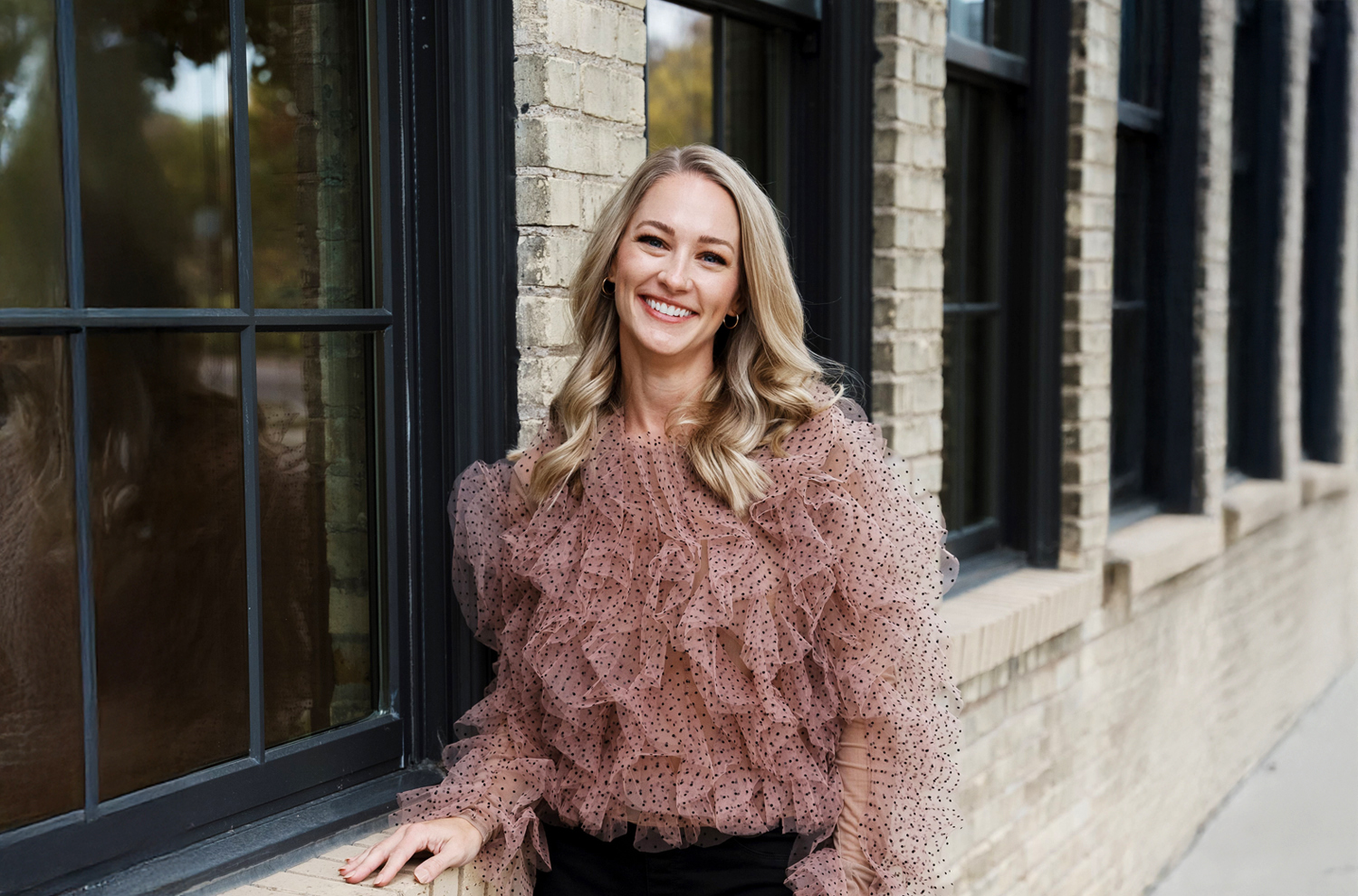
My guest today is Krystle Frey – a Wisconsin-based mum of two, former professional ballerina and founder of Pivot Ball Change, a full-service podcast editing business designed to help busy female entrepreneurs reclaim their time and creativity.
Krystle’s story is one of bold pivots, resilience and trusting your instincts. What began as her own creative outlet during early motherhood – a podcast connecting mums through honest conversation – has evolved into a thriving media network where she and her team manage the editing, production and publishing for female-led podcasts across the US.
We also talk about imposter syndrome (and why Krystle’s never really struggled with it), finding courage to put yourself out there, and learning to celebrate how far you’ve already come.
Conversation Highlights:
✨ How her career as a professional ballerina shaped her discipline, resilience and ability to take rejection in stride
✨ Why she started her first podcast as a way to reconnect with creativity and community during the isolating early months of motherhood
✨ The mindset shift that helped her turn a creative outlet into a sustainable business
✨ The lessons in risk-taking, confidence and courage she’s carried from dance into entrepreneurship
✨ The power of small pivots and how to build a business that fits your life as a mum
Listen if you’re:
✨ Considering a career pivot or a change of direction in your business
✨ Struggling to build your resilience when it comes to rejection
✨ Curious to learn more about the realities of podcasting and whether it could work for your business
✨ Feeling a lack of creativity in your life since motherhood and looking for inspiration
Favourite Quote For Mums in Business:
“ “No” isn’t a dead end – it’s just a chance to reroute.” – Krystle Frey
About the Guest:
Krystle Frey is the Founder of Pivot Ball Change, launching powerful podcasts and video content that amplify women’s voices by telling their stories.
You’ll find Krystle on instagram and if you enjoyed the episode and have a podcast of your own you’d like support with find out more about the services Pivot Ball Change can offer, so you can get out of the editing suite and back to recording conversations that matter!
About the Host:
I’m Victoria Phipps – a Mum of two, analogue family photographer, charity co-founder, marketing person and now podcaster! My career has wandered all over the place and is becoming a bit of a complex tapestry as I head into this middle phase of life, but I can honestly say I’ve loved every minute of it so far.
I was raised by a nurturing Mother and an entrepreneurial Father and have inherited traits from both, so the tension between ambition and motherhood is one I grapple with on a daily basis! I’m fascinated to hear the stories of other women on a similar path, who are striving to build thriving businesses whilst being present for their children. It’s a tough juggle, but I hope the conversations shared on this podcast help Mums in business feel less alone and inspired to keep going in pursuit of their dreams!
If You Enjoyed This Episode:
- Please subscribe, rate and review the podcast – it helps other mums find us!
- Share in your Instagram stories, tag @mummeansbusinesspodcast and let us know your biggest takeaway.
- Share this episode with a fellow Mum in business who you feel would resonate with Krystle’s story.
Episode Transcript
Hello and welcome to the Mum Means Business podcast, where we shine a light on inspiring women who have one thing in common. When they’re not managing tantrums, homework, P.E. kits and play dates, they are busting their gut to create something from nothing, to turn their passion into a thriving business and build a better life for themselves and their families. We dig into what motivates devoted mothers to pursue entrepreneurship and how they integrate their work and family life.
I’m Victoria Phipps, your host, and if you’re an ambitious mum in need of some solidarity whilst navigating the messy middle of making your big dream a reality, then stick around. This is for you.
NOTE: This is the transcript from the original recording, rather than the edited episode so timings may vary.
Victoria (00:01)
My guest today is a Wisconsin-based mom of two, creator and founder of Pivot Ball Change, a full-service podcast editing business designed specifically for busy female entrepreneurs. What began as her own podcast for creative moms has evolved into a media network where she helps fellow women streamline their podcast video and audio editing so they can focus on what truly matters to them. Kerball, Crystal Fry, actually started her career as a professional ballerina.
which she says brings a unique perspective to podcast editing. honed her own method of applying the precision and rhythm she developed editing thousands of hours of performance music to the world of podcast audio. And now she’s trained her team to do the same. Not only did Crystal study dance at the University of Wisconsin Madison, she also holds a degree in dental hygiene from Madison College. So she is no stranger to a pivot.
I’m excited to have my second mom from across the pond on the podcast and I cannot wait to hear your story, Crystal. Welcome to the Mummy’s Business Podcast.
Krystle Frey (01:05)
Thank you so much, Victoria. I’m honored and excited to be here today.
Victoria (01:09)
Yeah, I’m so looking forward to our conversation because I think a lot of the topics that we’ve kind of covered in this podcast is very, it’s a baby podcast. So it’s still kind of picking up pace, but there’s so much similarity and synergy talking to women in the States and talking to moms here. It’s really, I think, reassuring that there’s a kind of solidarity that we’re all grappling with the same stuff. So hopefully that will be the same in this case. And
Just to dive straight in, it seems as though your latest business was really entwined with your journey going into motherhood. And you made this big decision at quite a chaotic time in any woman’s life to invest in yourself, bet on yourself and start a business from scratch. So what made you do it?
Krystle Frey (02:02)
I think, like you said, Victoria, it was motherhood that propelled me into craving a creative outlet for myself. I became a mom in 2019, the end of 2019, which we all know we went straight into COVID after that time. And so my little one was home with me for six straight months. And I think all of us moms, kind of connect on, hopefully we heal eventually.
Physically after birth, I think a lot of us heal again. I say hopefully Mentally after birth. I know I really struggled with I look back now on it was undiagnosed But I think that I had postpartum depression. I just didn’t know it which is pretty common for women, right? and The side of me that wasn’t healing was my creative side and I think a lot of moms can relate to that is we
Victoria (02:58)
Yeah.
Krystle Frey (02:59)
just push it back once we become a mom and it becomes a part of us that can be lost forever if we don’t really hone in and listen to that voice. I found that that voice, it wouldn’t go away. It was constantly chirping at me. And at the time when I did go back to work after our first son was born, I was practicing dental hygiene, which is a great job. It’s a secure job. I loved the interaction that I had with my patients, but
I always told my husband that I felt like I was a machine doing a job as a dental hygienist. I found no creative aspect in it at all whatsoever. So I think that was part of it too, is there was no area in my life where as a former professional dancer, talk about creativity. That’s the ultimate creative job, right? Which I am so blessed and so thankful that I had that opportunity in my life, but I knew there was more, right? Because of that background that I had and because how that was so
Victoria (03:45)
Yeah.
Krystle Frey (03:58)
filling for me. I actually I always attribute me starting a business, the catalyst to it was a book I read and the title of the book is just B one word B E and it’s an interactive book in the sense where it gives you prompts as you’re reading but then there’s journal pages as well where you can jot down your ideas and so
Basically, I came to the idea of starting my own podcast because I was an avid podcast listener and it was something that I could do from home, right? When my son was napping, but it was also a place where I had a little bit more creative freedom. It could be something for just me, which I needed desperately. And I think a lot of moms need that, right? And we need to spread the message that number one, it’s okay for moms.
Victoria (04:33)
Yeah.
Krystle Frey (04:49)
to need something for just themselves. and, and number two, it’s okay if it takes you a little bit to figure out what that looks like after you become a mom, because oftentimes it doesn’t look like what it used to look like. So that’s how motherhood and starting my own business kind of became one thing. And like I said, a pivot ball change, which is now a podcast network and I do the production side of things, but it started as me hosting my own podcast, like you mentioned in.
Victoria (04:52)
Yeah, absolutely.
Krystle Frey (05:19)
that beautiful introduction. So I interviewed creative moms and we talked about, how do you figure out how to be creative now that you’re a mom? And it was, it was really great. And I love all the pivots that I’ve taken along the way.
Victoria (05:32)
Do you feel like creativity was sort of part of your identity when you were dancing? You know, that that was kind of a central part of who you were and such an important way for you to kind of express yourself and kind of just get all that energy out into this kind of beautiful creative form, which is dance. But that actually something about kind of, I’m gonna say in a vertical, it’s like growing up.
And obviously you went into dental hygiene, which is very different. It’s a kind of functionary thing and you’re probably doing the same sort of thing every day with every patient. And then becoming a mum, that, that creativity kind of had died. And to what extent do you feel that that was important?
Krystle Frey (06:23)
Very much so. I didn’t realize when I was dancing that creativity was a part of my identity because it was all that I had ever known. I started dancing the typical story that you hear, right? When I was three years old in the little ballet and tap classes. So it was my entire life and I didn’t know any different. But the beautiful thing about dance as an art form is not only is it
using the mind in a creative aspect, but you’re also using your body and you’re learning a lot about your body. And like you mentioned, it taught me so much. I grew up with ballet. Ballet taught me how to grow up and it taught me how to grow up really fast. I was really mature. I was really self-confident. ⁓ It taught me the power of hearing no and building the resistance of hearing no and that it oftentimes doesn’t have anything to do with you.
Right? As a ballerina, you’re constantly in these audition rooms where you’re just told no, and you don’t tell, you’re not told why. So that has built a lot of resilience in me where now as an entrepreneur, I’m able to understand that pivots, if you will, are essential and being told no is not, the end of the world. But going back to, to more of your question, I did feel like it had died. A part of me had died. And like you said,
dental hygiene, there was no creative part of it to me. And so I didn’t realize how much I creative freedom in my life. And I feel like being an entrepreneur is a perfect fit into my puzzle. Because as you know, Victoria, once you become a mom, your life really becomes a puzzle, right? You’re constantly shifting. And that’s how I came up with the name of my business. Having my dance background and realizing like,
Victoria (08:10)
Mm-hmm.
Krystle Frey (08:17)
Holy cow, you’re constantly pivoting, you’re constantly like changing your direction as a mom and you have to be flexible and I’m very type A so that was a learning journey for me amongst many. But yeah, I didn’t realize how much I was missing that creative piece in my life and also I wasn’t dancing anymore once I became a mom. We live…
Victoria (08:25)
Yeah.
Krystle Frey (08:46)
far out in the suburbs and so to get to an adult ballet class is it’s over an hour drive and now I have to find childcare and there’s just so many more elements to make that happen. So I think in order for me, it’s a non-negotiable. The creativity aspect, you know, you asked me like how important was it or how essential is it? I think is what you phrased it, how you phrased it. And for me, like I said, it’s a non-negotiable.
It took me a long time to get to this point where I can now say that and I can now ask for what I need and I know how to set boundaries and I know that I need the space to be creative. So it’s not like I came to this conclusion overnight. And I think a lot of times we hear, you have to your cup first or you have to take time for yourself. And it’s just not as easy once you become a mom. So if there’s any moms out there that are listening and they’re thinking,
Well, yeah, it’s easier said than done. I don’t want you to think that I got here overnight. I’ve been in business now for myself for four years and it’s, it’s constantly pivoting and it’s still pivoting. And I think that’s one of the most beautiful things about entrepreneurship is that you have the freedom and the creativity to pivot.
Victoria (10:03)
Yeah, definitely. I think I can really relate to this story because you said you had your first child end of 2019. I had my… So that was just coming into COVID. So she was a baby. Is it she, he? He was a baby. So I found out I was pregnant in that March 2020. So I had a COVID baby, but I guess a year after you. And it was a really…
Krystle Frey (10:12)
Yes.
He.
Mm-hmm.
Victoria (10:31)
isolating time to have that maternity experience. And I don’t know about you, I’d had friends that had children and it had been this big celebration and baby showers and like, you know, first birthday parties and everyone floods to see the baby when it’s born and people are dropping off, you know, frozen meals for your freezer and just looking after you. And actually to go through that during the pandemic was a very different experience in a lot of ways.
and I think unnerving, isolating, just not having, you you don’t have the village that they tell you that you need to raise a child at the best of times, but in the pandemic, I think it was, that was just emphasized that you felt very alone. And I’m not surprised you struggled with ⁓ a bit of depression during that time. And I think actually it’s not until later that you realize that that’s what it was.
Krystle Frey (11:28)
Mm-hmm.
Victoria (11:29)
because
I don’t know about you, felt I kind of went into a bit of a shock when I had my first baby. And I think you’re in such a haze because you’re deprived of sleep. And then you’ve got this whole, you know, the world’s falling apart around you and you’re just kind of nestled down in your bubble. And I don’t think I could identify it similarly to you as a need for self-expression or creativity, almost for survival. And…
Krystle Frey (11:57)
Mm-hmm.
Victoria (11:58)
I don’t, you the word creative is so, I don’t know, it’s a heavy word and it’s a word that at school we kind of identify with art or music or dance or, you know, we don’t, and if we’re not good at any of those specific things, then we don’t identify as creative. But do you think that everybody is creative and everybody has that need for this sort of self-expression in one way or another?
Krystle Frey (12:06)
Right.
I do, and I think that’s a really great reflection on your part is we do identify that word creative with the typical arts. And what I do as a podcast producer now, I don’t think people would think as a creative field, right? It’s more.
tech. think people would say like I work in the tech industry and if you were to ever ask me in my life if I thought I would work in the tech industry I would say no. But to me it’s it’s very creative what I do. I think everyone has a creative mind. If you have ever had any idea of your own you’re you’re creative right? And if you bring that idea to life
you’re even more creative. And I think that’s how we build confidence too, is if we get an idea and then if we express the idea or we share it to someone else, right? That’s really brave because now you’re taking your own thoughts and you’re putting them into the world and you’re creating a reality that wouldn’t have been had you not spoken it out loud. And then if you actually bring that idea to life, whatever it is,
whether it be you are creating a painting, if you will, when we think more traditional way, or you’re creating a business, right? That’s creative. And so I do think that everyone has a creative mindset. It’s just how you are looking at it and how you are defining it. And I think we have to be careful to not go with the traditional definition of it. And I would even encourage people to kind of flip the script.
reflect and think, is there a part of my life that does fulfill the creative side of me? And if you’re craving that and you don’t have anything that’s fulfilling, I would encourage people to listen to that voice. And when you do feel your best or you do feel really confident, dive deeper into that and ask yourself,
am I creating here and if I am, what am I creating and how do I do more of that in my life every day?
Victoria (14:47)
Yeah, it definitely takes a little bit of self-reflection and just redefining and opening up that word. You know, I always just say to create something from nothing because it could be anything. You know, you could go and, you know, just tidy up and arrange a tiny corner of your garden and you’ve created something that wasn’t there before. You know, you can just jot a few words down in a journal and you’ve created something that didn’t exist before. It doesn’t have to be this sort of big project, nor does it have to be a work of art. It’s literally just…
Krystle Frey (15:03)
Mm-hmm. Right.
Victoria (15:16)
making something. And I think, especially now kind of with the rise of AI, that is that is where we lean into what it is to be human. And so you looking back and identify it’s strange, you kind of grew up being creative and didn’t think anything of it didn’t need any definition. It was just you in your kind of playing because you love to dance and it’s play it feels like play as a child and you just carry that through into adult life. And suddenly you’re deprived of it and not being able to go to the dance class, you know.
that’s so, it’s so kind of typical of becoming a mum, that just like logistically, it doesn’t work anymore. You know, you can’t fit that in and the journey and it’s, you’re so overwhelmed as well. You just can’t even be bothered to kind of think about how you could possibly make that work in those early stages of motherhood. So you sacrifice it. And the word sacrifice is kind of a funny one because obviously you are a mother and that’s a huge privilege and you love your children.
but it is a personal sacrifice because in this season of life, you’re not able to do what you’ve always done. So there are all sorts of things that you could have been drawn to to kind of reclaim something for yourself and express that creativity. Why do you think it was podcasting?
Krystle Frey (16:38)
That’s a great question. As I mentioned earlier, I was an avid podcast listener and I listened to, in particular, podcasts where they were hosted by moms. And so I saw a bit of myself in that, right? And I said, if they can do it, why can’t I do it? And that’s…
Victoria (16:45)
I can relate.
Krystle Frey (17:04)
always been my philosophy in life. think anyone can do anything if they if they put their mind to it and if they are willing to fail probably over and over again. And I think the part of podcasting that I was really really drawn to and this directly reflects back to motherhood and lack of right? We’re lacking so much especially as first time moms you spoke about we’re lacking sleep we’re lacking probably nutrition we’re lacking
just being in the outside world and feeling like you’re a normal part of society. And that was that was exactly where I was going to get to. That was the part of podcasting that it was connecting. was connecting with other moms and hearing them share their stories. And I felt so empowered by creating this platform for other moms to be able to share their stories and hearing their stories. Just every single woman that I interviewed on that podcast, I was able to connect to
Victoria (17:39)
Connection, yeah, yeah.
Okay.
Krystle Frey (18:04)
a tiny part of their story in at least one way. And I think…
having that sense of connection when you are so isolated and you’re living in a COVID world, which hopefully we never have to do that again, but podcasting was a way where I could develop relationships and feel connection and have friendships in that world, which it felt impossible, right? We couldn’t even leave the house with our babies. So how are we supposed to connect with other women and how are we supposed to
share our stories and share our triumphs and share our wins and be able to be like, ⁓ that that’s normal. Wait, that happened to you. Wait, that happens to me too, right? That’s so important in motherhood, I think. And if you don’t have that, like talk about being in a haze, like you say, I always say for me, it felt like I was in like a dark hole and I just couldn’t like, I couldn’t dig out of it. And I look back on that time and it was so like, like a cloud.
Victoria (18:54)
Yeah.
Krystle Frey (19:11)
I just felt like I was living. look back and reflect on that time and it just felt really cloudy. So I think that was what drew me to podcasting. Whether or not I knew that, I don’t know if I knew that that would be such a big takeaway. I think maybe subconsciously I was craving that and that was definitely the thing that drew me to podcasting the most as an outlet.
Victoria (19:40)
Yeah, I don’t think when you’re in those early stages of motherhood, you have much capacity to be strategic. You’re not thinking, ⁓ I need to make a business and I’m going to do this and I’ll start with a podcast and we’re going to scale it this way. And then we’re going, you’re just not in that place. You’re just like, someone talk to me. Somebody, somebody talk to me. And that solidarity, particularly mom to mom, mom to mom is vital. And I,
Krystle Frey (19:45)
Right. ⁓
Right. No.
Exactly.
Victoria (20:08)
I completely understand why you would crave that connection. I don’t think I really appreciated female relationships until, like fully, until I became a mother. Do you feel like that?
Krystle Frey (20:23)
I do and I consider myself really lucky in the sense that I have a really close group of girlfriends who we all became best friends in middle school and somehow we’ve survived all of life’s cycles that we… It is amazing and I think the reason that we’ve all stuck together as long as we have is because we all hold this friendship to the same level.
Victoria (20:39)
Which is amazing, lovely, yeah.
Krystle Frey (20:52)
I was talking to one of the girlfriends that’s a part of this group and you know, we were saying it’s just, it’s amazing. We all live all over the United States now. We all live in, there’s a group of six of us. Two of us still live in Wisconsin where I’m located, but the rest live in different states and on the coasts. And we were saying it’s amazing that we’ve been through, you know, high school graduation, we’ve been through college, we’ve been through all the boyfriends and the breakups and we’ve all been now in each other’s weddings and we’ve all had children.
we still at least get together once a year. And we were talking about how, why, right? Like why has our friendship withstood the test of time? And we were talking about how each of us has a really great sense of integrity, right? If one of us says that we’re going to do something for the other one, or if one of us commits to a trip.
to visit another friend, we know without a doubt that the other person, if they say that they’re gonna be there, they’re gonna be there for us. And if for some reason, because life happens, right? Especially now that we become moms, if something like that happens, we will notify each other right away if it’s going to affect the other friend’s life because…
we value that friendship in such a high capacity that we don’t want anything to ever come between us. So I think I did understand the true value of female relationships before I became a mom, but now it’s just amplified to the next level where I’ve found that I have since expanded my friendship.
group and I’ve been able to connect with other women who are also moms who I would have never established a relationship with had we not had that commonality amongst each other. You know I think in today’s world we just have exposure to anything and everything right? We’re exposed to just way too much and it just seems like everything is extreme like
one person can have an opinion this way and the other person’s opinion can be this way and we just…
We think that we can’t get along with those type of people and what motherhood, the beautiful thing about motherhood and what it’s taught me about friendships is that I can be friends with another woman who is a mom who may have completely different political views or completely different religious views than me. And because we share the common bond of being a mom, we understand each other on a whole different level and
Victoria (23:46)
Yeah.
Krystle Frey (23:50)
we can see past those things. Not that we need to see past those things. Those things are important, right? And they make us who we are and they make up our morals and everything like that. But I think that’s really something that had I never become a mom, I don’t think I would be as open to.
Victoria (24:11)
I think there’s so much in there that’s so valuable because really it’s about respect. I think there’s definitely, you know, obviously you and your friendship group, what you’re talking about really that has held you together is that you respect each other so much. You know, you will invest in each other, but if for whatever reason something comes up, no one is flaky. Do you have that word in the States? do. Yeah, so no one’s just bailing for no reason because you really…
Krystle Frey (24:34)
Yes, yep.
Victoria (24:39)
love each other and want to spend that time together and want to invest in that friendship because you have a really healthy dollop of respect for each other that has obviously built over years. And that’s so wonderful that you have that. And I have a couple of friends from school that I have the same thing with. And you just, can look forward and think, okay, well, you can imagine being grandparents together. And it’s just so lovely. I love it. But the thing about coming back to motherhood, it is like, and I don’t think you realize this until you become a mom, it is like a secret club.
Krystle Frey (24:59)
Right.
Victoria (25:09)
Because you can immediately connect with any woman when it comes to motherhood, because like you say, regardless of their religious views or their politics or their own particular life experiences, which may be very different to your own, they love their kids and you love your kids. And we’re so, it’s such an intense experience being a mom. And I’m still trying to work out the intensity, you know, it’s biological. It’s just this.
Krystle Frey (25:09)
Yes.
Right.
Victoria (25:37)
huge connection that you have to your children, that I do wonder whether dads feel it so viscerally. And women are interested in other women’s stories. You know, you’ve only got to give birth and suddenly everyone’s telling you their birth story once you’ve had your baby and they’ve been like dying to tell you, but they didn’t want to frighten you. So they waited to leave of yours and then it all comes out and everyone’s kind of connecting in that way over. And it might be a really traumatic experience that you want to tell each other you want to connect because
Krystle Frey (25:55)
Hahaha
Victoria (26:07)
It is a life experience that bonds us. And in that way, I feel like actually motherhood does lend itself to podcasting. And obviously this is something that you will have found because immediately, you know, we haven’t spoken before, we are thousands of miles away from each other, but we’ve got some stuff to talk about because we are both parents. And it’s, you just approach it kind of just with this mutual understanding of that experience.
Krystle Frey (26:12)
Thank
Victoria (26:37)
And that’s obviously something that you found worked for you in that first podcast that you started. So tell me the story of that podcast. How long did it run for? How did it evolve to become Pivotball Change?
Krystle Frey (26:54)
Yeah, thank you for, for first of all, just allowing me to tell my story, right? Because like you said, I think a lot of women have a story to tell and I think everyone deserves a spot to tell their story. And that, guess that’s part of my story too, is that I wanted to create a platform so that other women could be heard. And the whole mission statement that I’ve come up with for Pivotal Change is amplifying women’s voices, right? Because I think, especially in motherhood,
Victoria (27:07)
Yeah, absolutely.
Krystle Frey (27:25)
we just, we get quiet because maybe we just don’t have the capacity to, to be able to share our voices because we’re focused on, on other human beings so much and we’re giving so much of ourselves to other people. So the story of Pivot Ball Change, it started in December of 2021 and it ran for about a year. And I interviewed different creative moms. used my network of
professional dancers who I knew had become moms essentially, but then it branched off and we got into other creatives on the podcast as well. And I wanted to be able to monetize my podcast, which is another thing that I think is really important to talk about with creative women is that I think that they deserve and should be, and they need to get paid for sharing their creativity.
because you’re putting so much time, Victoria, you and I were talking about this before we hit record that podcasting in and of itself, takes a lot more time than people think it does. And I’m a, I’m a, I’m a firm believer that yes, it’s, it’s just a conversation, but you, you’re putting your heart and soul out there. There’s all of the production side of things behind it. And so one of my goals with pivot ball change was within the first year, I wanted to be able to monetize my podcast.
Victoria (28:32)
Yeah, I had no idea.
Krystle Frey (28:51)
in some sort of way. And I didn’t know exactly what I wanted that to look like, but having listened to lot of podcasts, I knew that there was this thing called sponsorships, right? I would hear these ads and podcasts and they were becoming more and more prevalent. And so I was able to monetize it and I was able to book two sponsors within that first year and they were able to sponsor at a higher level than.
the going rate in the industry, if you will. And I think one of the biggest misconceptions about podcasting is that you have to have 10,000 downloads before you can open up that level of being able to get sponsors. And that’s just, that’s just not true. So I was able to think outside of the box and I’ve found in business is if I want something to happen, I have to make it happen. I have to put myself out there. I have to create the opportunities for myself.
And that’s exactly what I did. So funny story about landing that first sponsor for myself. I had interviewed a woman who is very well known in the dance industry. She’s a mentor. She’s actually local to Wisconsin, but she’s nationally known around here and she was a great podcast guest. And one night my husband and I were watching shark tank. Do you guys have shark tank over? Okay. Yeah.
Victoria (30:09)
Yeah, yeah, we have dragons, Dan. It’s the same thing. Yeah.
Krystle Frey (30:13)
So you’re familiar. So we were, yeah, we were
Victoria (30:14)
Different animal, but yeah.
Krystle Frey (30:17)
watching Shark Tank and there were these two moms that were on the show and they were dancers and they had invented a sock for dancers, a compression sock specifically designed for a dancer’s foot to give them more support, help them have longer careers. And my husband jokingly said to me, are you going to have them sponsor the podcast? And you know, it was late at night after we put the kids to bed, like I’m half asleep and I was just kind of like, yeah.
Well then the next morning I woke up and I was like…
Why not? Right? Yeah, they’re two moms. They have a product that is directly correlated to what my podcast is all about. Let’s give it a go, right? So I start digging and I start doing the background work and I start being due diligent about who these two women are and with the tools of social media, which I think can be a curse and a blessing, but I was able to find that we had a common friend.
And it was this woman that had been on my podcast. And so I contacted her and very busy woman, right? And I said, Hey, any chance you know these two women that were on Shark Tank? She responded right away and said, yep, here’s their email. I’m going to connect you. think you’d be great. Those two women that own the company, they ended up being guests on my podcast.
Victoria (31:17)
handy, yeah.
Krystle Frey (31:38)
After they were guests on my podcast, they reached out to me and said, here’s my personal cell phone number. Call me at this time. We want to talk. And of course, when anybody says we want to talk, you’re always like, you always think the worst, or at least I do. Right. And I’m like, right. Right. And you know, like copyright and everything like that. I was like, boy. ⁓ but they got on the phone with them and they said, we want to sponsor your podcast. And I was just like, ⁓ my gosh. And so that’s just, that’s the power of.
Victoria (31:50)
What did I do? Yeah, yeah.
Yeah.
Amazing.
Krystle Frey (32:05)
Call it what you want, call it the power of motherhood, call it the power of connection, call it the power of putting yourself out there and creating the opportunities that wouldn’t be possible had you not created them for yourself. that was a really big moment, was to be able to get paid for my new art form. Having been a professional dancer, I knew it was possible, right? I got paid to do something that I loved, and so come full circle and having the opportunity to again.
Victoria (32:24)
Yeah.
Krystle Frey (32:34)
get paid for something that I was so passionate about and it was was my baby. That was just it was a it was a really exciting moment in in the world of business for me.
Victoria (32:45)
Yeah, but you did
that. Yeah, you did that though. You again, the opportunity wouldn’t have come about, you know, you have to make that happen. Do you feel like you always had that? Because I’ve spoken a lot on this podcast about imposter syndrome, which is kind of the opposite of what we’re talking about now, you know.
somebody in your situation, you know, their husbands on the sofa, like, oh, you’re going to get into a podcast, you ha ha ha. And they just think, oh, for goodness sake, as if like, they’re going to sponsor my little podcast, you know, and they just, you know, move it to one side, like, there’s no way. And that’s it, the idea dies. Whereas obviously you’re tired, you sleep on it and you wake up the next day and you’re like, yeah, why not? I’m going to do something about it. And the thing is, if they’d have said no, you’re no worse off. So where do you think that kind of
Krystle Frey (33:32)
Exactly.
Victoria (33:34)
Do you think that courage and that kind of, you talked about resilience before coming from your dancing career, do you think that’s in you? Do you think it’s something you picked up through that experience?
Krystle Frey (33:45)
I do. I definitely credit it to dance and it is a skill set that I do not take for granted one bit because like you said, you talk to a lot of women on this podcast and imposter syndrome kills so many dreams. And to be honest, I’ve never really struggled with imposter syndrome and I credit that to two things. One is my dance background and
at a young age, probably too young. That’s a whole different story. The world of dance and what it exposes you to, ⁓
I learned that.
being told no on a regular basis is going to happen. And because when I was 12, I was auditioning for summer programs over here in the States. If you’re a ballerina, you train at a school year long. And then typically during the summer, you go to a different state and you train at a different school for the summer. And it starts at the young age of 12. And so at 12, I left home for six weeks and it is, ⁓ just in it.
Victoria (34:53)
That’s a lot, isn’t it? You’re still a kid, you know.
Krystle Frey (34:57)
I would cry every, you know, every day for like half of the summer camp because I was, I was homesick. Uh, but at the same time I loved it and I couldn’t get enough of it. So it was just, it was, it was very confusing at such a young age, but I felt that was what you had to do because ballerinas, I started my professional career at age 17 and I was retired by age 24. So talk about having to grow up really fast, but.
Victoria (35:03)
Yeah, I bet.
Krystle Frey (35:28)
I will say that that is what built my resilience because I think if you’re not exposed to the world of ballet, and I’m sure this is probably true in other professions,
But I look at, because again, this is what I know, my friends that I went to school with, like they played sports through our school and everybody made the team and they never had to try out for anything and they never had to audition and they were never told no. So then all of a sudden you go to college and again, you’re studying, you’re not like interviewing for jobs or anything. So then by the age of like 22, 23, you start interviewing for your first job and you’re told
know for the first time in your life maybe. it’s it’s crushing, but now put yourself in my shoes. I’ve been told no on a daily basis since I was 12 years old from someone other than my parents and other than my teachers. And so that really took for anyone that does suffer from imposter syndrome. It’s not something that I was born with. It took years and years and years and years of building that, that skill. So I think that.
Victoria (36:15)
It’s crushing, yeah.
Krystle Frey (36:41)
comes from dance 100 % and I’m forever grateful for that. The other part of it is my parents. So I have two older brothers and all three of us are entrepreneurs. And so how do you figure that out? Where does that come from? And I always say it has to come from our parents, right? That’s the only commonality that all three of us have. And we haven’t all…
Victoria (36:53)
Amazing, okay.
Krystle Frey (37:08)
been entrepreneurs our whole lives. at this point in time, all three of us are entrepreneurs and my brother’s actually just joined forces and have a business together, which we’ll see how that goes. I think our parents were the type of parents who…
Victoria (37:18)
Yeah.
Krystle Frey (37:28)
They believed in us so much and we were brought up in a world where
They would do anything that they could to be able to support us in our dreams. And they actually never told us no. If there was something that we wanted to do and they could help make it possible, they would help make it possible. They would get us to where we needed to go. ⁓ Both of my brothers ended up playing college football. No one from our community, from our high school had ever gone on and played at a collegiate level.
they would both attribute that to my parents. You my parents were the ones that were taking them on college visits and helping them decide and make those decisions and go on and succeeding college playing football. And same thing with my parents. Like I had an opportunity at 17 years old to leave home and become a professional dancer and they had no idea, right? Neither one of them danced. Obviously my brothers didn’t dance being football players.
So they didn’t know that world at all. And now as a parent, I look back on that and that had to be so, so, so scary for them to be able to just let, let their babies go. Yes, we were, you know, 17, 18 years old, but still. So that’s another thing that I think has really built up that attitude that I have of not being afraid of failure, because like you said, no, it’s just, it’s a word and it’s a full sentence and it doesn’t mean anything. And your life, if you get told no,
you’re exactly where you’re at. But what if you get told yes? And so don’t not ask because you’re afraid of being told no. Ask because there’s a possibility that you might hear yes.
Victoria (39:17)
Yeah, and I think that’s a really valuable advice for anyone going into the world of business because you have to build up that rejection resilience and you will be surprised. I I think I played it safe for a long time in my photography business and I was, I don’t know, my parents told me no, but it’s interesting, isn’t it? The nuance of different experiences.
did a bit of art and then I studied architecture and it’s a very critical environment, which I imagine is the same with dance, but I took it completely differently. Maybe it’s because I was doing that later on in life, so sort of late teens, early twenties. I took it as, you don’t want to get it wrong. You know, there’s a right way of doing it and there’s a wrong way of doing it because, I mean, architecture can be quite prescriptive and you have to justify absolutely everything that you decide to do.
which I found so frustrating. So yes, it is creative, but there’s a cap on it because someone’s going to tell you that that’s wrong. And I think that tormented, that kind of distorted my mind a little bit when it came to my sense of confidence in my own decision-making when it came to creativity. So I had my photography business, but for the most part, it was a side hustle because…
Krystle Frey (40:20)
Mm-hmm.
Victoria (40:37)
I didn’t want to take it too seriously. And it’s only recently that I’ve started kind of really putting myself out there with it at the grand age of like 40. And it’s amazing when you do put yourself out there. The rejections are fewer than you think. And the potential for growth and connection again is enormous because everybody has that yearning to connect.
Krystle Frey (41:01)
Mm-hmm.
Victoria (41:06)
And if you can pitch something to somebody which is mutually beneficial, then why would they say no? It’s just about practicing the way you do it and about taking yes, no is a full sentence, but it doesn’t mean no forever. It might just mean no, that’s not right at this time. And you go away and you think about it and time passes and something else happens and it might be the perfect thing in a year’s time. But I think having that…
I don’t know, it is courage at first. And it was courage when you were 12 years old and you were going off to summer school and like putting yourself out there. And that must again have been really hard for your parents because they probably didn’t want to like lose you for the whole of summer. You know, summer’s such a, and I’m only learning this now because my daughter’s, my eldest daughter’s just started school, but summer now is going to be this really intense period where we have to have all the fun, you know, and to send your little girl away. You’re only 12 years old, that’s a lot. And again, it shows that they were,
Krystle Frey (41:47)
Right.
Mm-hmm.
Victoria (42:03)
steering you towards your intuition for your own passion. You showed an interest and they support you. If you’d have showed an interest in something else, you know, that you really wanted to do, tennis or whatever it might’ve been, that they were willing to be led by you. And I think that breeds a lot of confidence as well, that you know that, you know, your autonomy is respected.
Krystle Frey (42:18)
Mm-hmm. ⁓
Victoria (42:29)
by your parents who are the most important people. And there a lot of parents, and you don’t learn this till you get older, that are quite prescriptive with their children. You know, go and be a lawyer, go and do this. And that is a burden for children to then carry into adulthood. So it sounds like you were very fortunate. I feel like I was as well, in your upbringing. And I think it also sets a great example when you become a parent yourself, you know, that you know.
Krystle Frey (42:36)
Mm-hmm. Yes.
Mm-hmm.
Victoria (42:56)
If you had parents that did it well, you can kind of, you know, follow in their footsteps, which is really lovely. So what made you decide to end the podcast and instead start Pivotball Change in its new form and start supporting other podcasters with, suppose, in inverted commas, more of the tech side? What led to that decision?
Krystle Frey (43:01)
Mm-hmm.
Mm-hmm.
I think a part, too, that is important to the story because I talk about how, you know, I’m confident and I put myself out there while I don’t have low moments. I don’t want people to think that I don’t ever have low moments. And when I…
Victoria (43:32)
Well, you’ve already described one,
know, motherhood can bring massive lows as much as it brings enormous highs. you know.
Krystle Frey (43:38)
Right, and another part in my business journey, when I ended the podcast, I felt like a huge failure because I saw all these other podcasts that were so successful in my eyes, right? And that can be defined however.
Victoria (43:52)
Yeah. Yeah.
Krystle Frey (43:56)
you define it. So if they were able to release episodes every single week for years on end and made all this money and they left their corporate jobs and so in my eyes it was right exactly which isn’t the case right there’s a lot of who knows what’s really going on behind the scenes and
Victoria (44:06)
lived happily ever after. Exactly.
Krystle Frey (44:16)
So I felt like this huge failure, but the lesson that I learned in that is people looked at me ending my podcast as like a huge celebration. Like they, celebrated it and I was kind of like, ⁓ but what they were looking at was
look at this thing that you did. Like that’s it. It’s amazing. Like you created this podcast out of nothing you taught yourself. I learned how to podcast from watching YouTube videos and listening to other podcasts. And so that helped me kind of get over it. And that’s another thing. I think you just, you had to get over yourself, right? Like I ended the podcast, but it in hindsight, like it doesn’t, it doesn’t mean anything. It doesn’t define me. So let’s pivot and what are we going to do next? Right. And I think
Victoria (45:08)
And also it doesn’t
negate that, know, the podcast still exists. It’s still there, it still has value. You know, it’s not like you never did it. And it’s just all the experience that you gained during that, you then go and take with you into whatever your new project is.
Krystle Frey (45:11)
Exactly. Right.
Mm-hmm, exactly.
Right. And if I hadn’t taught myself those skills, then I wouldn’t have been able to take the business to where it’s at right now, which is producing other people’s podcasts. If we primarily work with females that are moms, because I get it. I understand what my clients are going through when I’m listening to the content that they’re putting out into the world. I understand it. I’m connecting with them and what their goals are for the podcast on a different level. Because as you and I were talking about Victoria, we just
you’re part of the mom club. It’s a secret club. You just get it. You can’t, you can’t explain it, but you just get it. And so I had talked earlier about my goal was wanting to monetize my podcast and my end goal was to be able to get out of dental hygiene because I was so unhappy in that career. And so I realized quickly that this editing skillset that I had was rare.
Victoria (45:56)
Yeah.
Krystle Frey (46:22)
the level that I was editing at, it was highly sought after and it was a pain point for people, right? Nobody wants to edit their own podcasts. And so I was a huge fan of this one podcast in particular, and it was genuine. had listened to their podcast from day one. I had interacted with their podcasts, with their social media. And so I put myself out there. I said, I sent them a DM on Instagram and I said, Hey, if you guys are ever looking for a new editor,
Here’s my podcast. Here’s what I do. So I gave them an example of it and I said, I would love the opportunity to be able to support you guys in any way possible. I fully believe in your message and they messaged me back right away and they said, we just signed a contract with another editor for six months. However, like we’ll definitely keep you in mind in the future. And so what you were saying, Victoria, this is a perfect example of this. was told no, but it wasn’t no forever.
You better believe that I looked at that message and I circled six months on my calendar and I wrote myself a note and I said you better follow up with them and you better believe it. did. I followed up with them a little bit in advance because obviously contract negotiations happen before they actually and so I followed up again and they said yeah we would love to have you try it and so they sent me raw audio and had me at that time I was just
Victoria (47:27)
Yep.
Krystle Frey (47:48)
editing audio because that’s all that podcasts ever were right now it’s like everybody has a video and that’s a whole different story for podcasting but they sent me sample audio and I think it took me eight hours to edit like a 30 minute episode because I was so I was so nervous and like wanted to be so meticulous and you know I sent it back to them and they were like great we’d love to have you and they have three podcasts so my first client that I gained was essentially really three clients
Victoria (47:54)
Yeah.
Krystle Frey (48:16)
And they’re still my best client today. They refer me all of the time. And anytime that I have business questions or I have an idea, I can run it by them and they’ll give me free advice. And they’re definitely mentors for me. So really that’s, it was the monetization side of it is what got me to where I’m at now is my goal was to be able to leave the dental world and take my business full time.
And so, ⁓ I was able to do that just this past May. finally left the corporate safe world and in dental. And so I’ve only been at this full time for, for a few months, but it’s, you know, I think we, we have to look back. And I was talking to my husband about this the other day, because I’m not going to lie. This is another thing. think people think. Like once you become an entrepreneur, like it’s all rainbows and butterflies. Like I’m making about half the amount of income that I was making in my
corporate job. And I think that’s so important to be transparent about. So we’re looking at this year as like it’s a building year. I know I can get there, but I need the time to be able to really dedicate to my business to be able to get there. So the goal is to be able to meet the income that I was making within, you know, a certain timeframe. And I was talking to my husband about this and
Victoria (49:19)
Yes. Yeah.
Krystle Frey (49:43)
about just the changes and the pivots that we’re gonna have to make. And I said, you know, one of the things that I think is really important for me, and I’ve been doing this all summer, is anytime I realize that I am doing something that I wouldn’t have been able to do in my corporate job, I jot it down in a journal. Like the other day, our son goes to farm school in the summertime.
And it’s this great farm and forest outside and all the elements, you know, doing like the mud kitchen and they’re making their own food. And it’s just a great experience. And I said to my husband, said, we wouldn’t have been able to do that with him this summer if I was working in my corporate job. Like I would have been able to take him and drop him off there and pick him up there. And so I write those little things down because I think it’s really, really important to look at where you’re at.
wherever it is, whether it be in business, whether it be in motherhood and reflect on where you once were and where you are now. And really, it only takes a couple of minutes, but be like, wow, look how far I’ve, I’ve come, you know, and be, and be proud of yourself. think women were so afraid to be proud of, and I still struggle with that. Like it’s really hard for me to express excitement, which like that is
Victoria (50:49)
Yeah, definitely.
Krystle Frey (51:01)
It saddens me and I’m working on that. I’m working on sharing my joy and my excitement with other people.
Victoria (51:09)
Yeah, that makes me really sad. I think you should definitely be excited about everything you’ve done. And you’re so right. And it’s societal. I think we’re so ready to shrink and so ready to doubt ourselves. And just that small exercise, like you say, that sounds invaluable because, and it’s part of the reason why I do these intros on the podcast, because I think I want to start all of these conversations reminding every guest that I interview.
just all the amazing things that they’ve already achieved. Because I think as well, when you’re building a business, you have these big ideas of where you want to take it and you’re always looking forward and the future cannot come quickly enough. And you’re impatient and you’re frustrated and you you’re creating content and that’s kind of exhausting and you’re marketing and you’re pitching and you’re trying and you’re trying and you’re trying. And actually, if you just take a moment out of your day.
Krystle Frey (51:51)
Mm-hmm.
Victoria (52:06)
to just compare with where you were last year, you’ll feel so much better because it can feel like you’re on a treadmill to nowhere, but that’s just not the case. And every little action that you take is moving you forward. And I’m very impressed by the courage that you’ve had. And obviously all of that training and the resilience that you built during those early years when you were dancing.
Krystle Frey (52:08)
Mm-hmm. Yeah.
Victoria (52:35)
has stood you in such good stead. And I’ve no doubt that you’ll achieve all the things you want to achieve, but you’re not afraid. And I think that is a superpower that you can harness because that is, like you say, imposter syndrome is the killer of dreams. So many women, they have an idea of what they could do to make their life a bit better and to make themselves a bit happier, but they just don’t feel like it’s…
Krystle Frey (52:40)
Well, thank you.
Mm-hmm.
Victoria (53:01)
It’s not for them, know, who were they to do that? And it’s so sad. And that’s just a whole generational challenge that we’re facing. And we have to kind of push through that to show our children that that’s not helpful. And actually you can teach yourself a new skill because you need a creative outlet and you land on this thing. And maybe, you know, it’s not for you, you’ve never done it before, but it’s the first time for everything.
Krystle Frey (53:04)
Right.
Mm-hmm.
Mm-hmm.
Victoria (53:31)
And suddenly you know what you’re doing. And suddenly you’ve got a podcast that people like and that people want to be a guest on and they want to talk to you. And then suddenly you’ve got a business where you’re helping other women do that. And you’re so right. There is something about being a mom, creating a business that gives you the flexibility to be there for your child or your children and anything that you can do from home.
Krystle Frey (53:34)
Yeah.
Mm-hmm.
Mm-hmm.
Victoria (53:59)
in that early season of their childhood is a win. And so have you found that actually the support you’re able to offer enables your clients to keep that going because the consistency element of podcasting is overwhelming and the consistency is vital, you know, is what I’m kind of figuring out. You know, I can’t skip a week without telling people why or like, you you kind of get into a rhythm and people expect it.
Krystle Frey (54:02)
Mm-hmm.
Right.
Victoria (54:29)
And so your support is helping overwhelmed moms to have this creative outlet and to keep it going because they must get to a point. mean, editing, honestly, I had no idea. You you said you did eight hours for that pitch, ⁓ trial podcast audio. I think the longest I’ve spent on one was about 14 hours. I was like, this is ridiculous. Yeah, so.
Krystle Frey (54:38)
Mm-hmm.
Yeah, yeah.
Victoria (54:57)
What do you feel like the transition is that you’re offering mums, you say primarily you work with women in business, that helps them to move their business forward?
Krystle Frey (55:03)
Mm-hmm.
I, my hope and I know because it’s been proven now time and time again in business is that it gives women this major sense of relief, right? They are able to put this thing. It’s their voice. It’s, know, Victoria, right? Your, your, your podcast is very personal because you’re sharing a side of you that you don’t share.
and other facets. And so when women
trust their product with me. I don’t take it lightly.
And I’m honored and I look at it as a huge privilege that I’m able to provide this huge sense of relief for our clients because I think moms, they then know and they trust that we’re going to take their product, we’re going to fine tune it, we’re going to make it the best that it can be. And
I eventually get to the point with all of my clients where there is no back and forth. I don’t even have to bother them. Right? We have our systems in place. We have our processes in place. They put what they need to put where they need to put it. I get what I need and they are hands off. And so all they have to do is worry about the content, the creative part of it, what they want the podcast to be. They go on, they record.
And that’s it. They’re done. Like their hands are, their hands are washed. We literally take care of everything else for them so that again, and my mission statement, they can get back to what they care about most, whether that be they’re using their zone of genius within their own business to do what’s going to get them to where they want to be in their business or whether they use that time that they’re getting back to be able to take their son or daughter to the music class.
for the summer or go on vacation because they know everything on the backside of their podcast is auto set and it’s going to be taken care of. So had I not started my own podcast, had I not taught myself how to edit, I would not know the value of that. And so I think again, that kind of goes back to
reflecting back on where you started and when people ask you the why behind your business, just looking back and being like, that’s the why, right? We often talk about what’s a good business idea. You know, you were saying a lot of women want to do something that they can do from home and it’s invaluable when kids are in the younger years. And I always tell people, look at pain points, right? And that’s a great business idea. If you can solve a problem,
Victoria (57:44)
Hmm.
Hmm.
Krystle Frey (58:05)
And if you can’t come up with something, look at your former self. What were the pain points for you? And so that’s how pivot ball change has gotten to the point where it’s gotten to today, because I was spending hours and hours and hours editing my own podcast when I knew it wasn’t the best use of my time. And so that’s how I eventually pivoted into creating the production side of pivot ball change. That is now a network full of powerful impactful.
Victoria (58:23)
Hmm.
Krystle Frey (58:34)
women and we continue to grow and I just, absolutely love being able to help other women make their dreams a reality.
Victoria (58:45)
That’s powerful, isn’t it? And it’s this thing about getting out of the weeds in your own business because, you know, even in my case, if I’m spending 14 hours, I mean, that was a bad edit. That was a big week, but it’s not normally that long. But those 14 hours, like I could have been using that to think strategically in my business to think about growth. And instead I was editing and like, you know, in the depths of where to put a pause in a sentence. And that is not the best use of my time. It’s not.
Krystle Frey (58:56)
Hahaha
Mm-hmm.
Victoria (59:15)
It’s a skill that I now have to a certain extent, but I’m not an expert in it. And if not that, it was eating into my sleep. Like I was just awake and then I’m functioning poorly in everything else that I’m doing in family life and in business. So absolutely. And to help a busy, overwhelmed mum who is trying to grow a business and raise her children to get out of those weeds and just concentrate on the bigger picture.
Krystle Frey (59:25)
Mm-hmm.
Mm-hmm.
Mm-hmm.
Victoria (59:44)
is an incredible service. And yeah, I’m very impressed. It seems like the whole thing has been completely organic and you are now exactly where you’re supposed to be. And it is exciting. And I feel like you should definitely show that excitement. Just get it out.
Krystle Frey (59:55)
Well, thank you. Yes.
Well thank you. I appreciate
the encouragement. Yeah, it’s something like I said, something that I’m continuing to work on.
Victoria (1:00:11)
Okay, well, to wrap up, I have the same question that I ask absolutely everybody. And this is, we have already touched on your childhood and you’re starting to dance. And I think it’s really interesting as mothers to reflect back on how we were as children, because so much happens between childhood and where we are now and motherhood that kind of conditions us or alters us in all sorts of different ways. So,
with all the knowledge and experience you have now, what would you go back and say to your eight year old self?
Krystle Frey (1:00:46)
I was so shy and so timid and so quiet to the point where I would be in tears because I was so shy. And I remember this, but my mom will talk about it too. And I think if I could go back and… ⁓
talk to that eight-year-old girl and just tell her it’s going to be okay. Don’t be afraid to make mistakes. I was a perfectionist. I wanted everything to be perfect. I didn’t want to make any mistakes. I wanted to be the best in school. I wanted to be the fastest. wanted to be, you know, I just had such high expectations for myself. And although I think that has served me in a way.
throughout adulthood. One thing that I say to my son and I’m gonna get emotional when I say this but like I’m so proud of him because he like he just tries he tries new stuff all the time and he’s not afraid to try new things and I just like like I’m so proud of him for that because I was so scared to try new things and I just think back and think if I would have been okay with making mistakes and if I would have tried more
you know, unrecognized potential could I have tapped in my younger self. So I think that’s something that I would go back and just tell her like, it’s okay to make mistakes. You know, it’s not gonna make anyone mad or it’s not gonna put anyone off or you know, I think that was part of it is that I never wanted to.
to inconvenience people. And I think I still, I know that’s something that I still, I never want to inconvenience anyone, even as an adult. And so I think ⁓ if I could go back, I would tell her that it’s okay to inconvenience other people. And I think maybe who knows what direction that would have led me in. I think I am pretty, like I said, pretty confident and I’m not afraid to ask for things now, but I wonder if…
If I would have made more mistakes and tried new things as a younger child, like where could I be now?
Victoria (1:03:04)
I would totally flip that because in the whole of your son’s life, all you have shown him is trying new things. And maybe that’s why he’s so courageous and not afraid to try new things. It’s not that he’s just different to you innately, it’s that you’ve shown him and all these moves that you’ve taken are brave.
Krystle Frey (1:03:14)
Mm-hmm.
Mm-hmm.
Victoria (1:03:34)
And also you haven’t been afraid to fail and you haven’t been afraid to put yourself out there and be told no and you just teach him and you’re not even teaching him, he’s just watching you. And you try something, it doesn’t work and you get up and you try something else. So yeah, mean, we are who we are and we all have our own individual journey with this stuff, but I’d say you’ve come out the other side of that, right?
Krystle Frey (1:03:36)
Right.
Right.
Mm-hmm.
Well, thank you.
Victoria (1:04:01)
It’s been such a pleasure to talk to you, honestly I’ve had a really lovely hour. Tell me where everybody can find you if they want to look you up online, where should they go?
Krystle Frey (1:04:03)
Yes.
Me too.
I’m most active over on Instagram. My handle over there is at pivot ball change, all one word. And then my website as well is pivot ball change.com. And I love when people reach out just to chat or if they have podcast questions, anything like that. I’m, I’m always happy to talk more.
Victoria (1:04:31)
amazing. Thank you so much, Crystal. It’s been really brilliant. I’ve loved this conversation.
Krystle Frey (1:04:37)
Thank you so much, Victoria.