
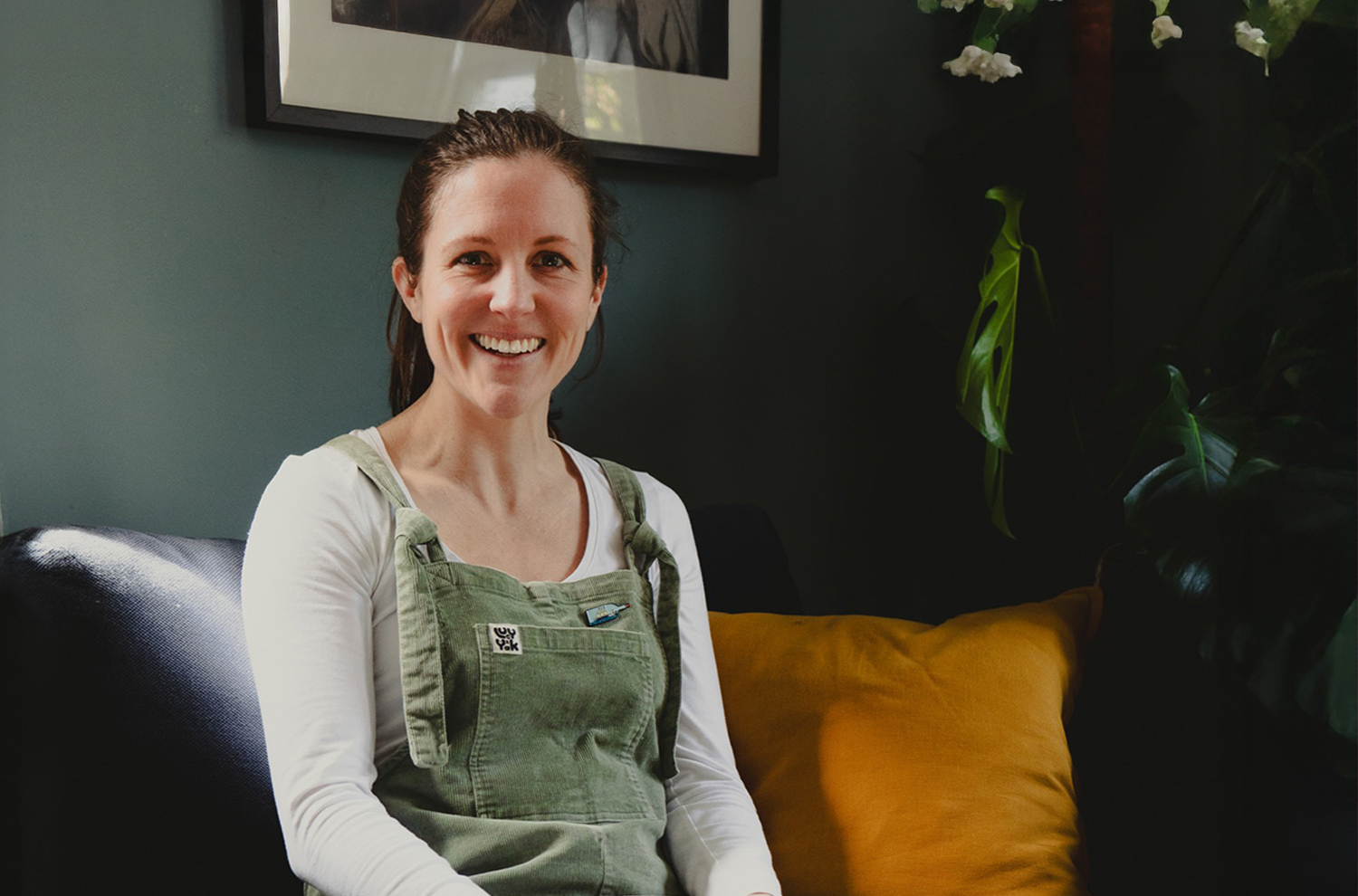
This week on Mum Means Business, I’m joined by Imogen Partridge – a painter, illustrator and creative workshop host whose mission is to make creativity both aspirational and accessible.
After a long career in interior design, Imogen took the leap to turn her side-hustle illustration business full-time in 2024. Today, her work blends bespoke commissions, brand collaborations and immersive workshops that invite people to reconnect with their creative instincts.
Through her art and teaching, both online and in-person, Imogen champions creativity as a powerful tool for connection, wellbeing and joy. She’s passionate about helping others rediscover their own creative spark – especially mothers who may have lost touch with that part of themselves through the busyness of everyday life.
In this episode, Imogen shares her personal journey from interior design to creative entrepreneurship and how motherhood reshaped her mindset, her confidence and her definition of success. We talk about creativity as self-care, overcoming creative blocks and the importance of nurturing creative expression in both children and adults.
She also reflects on how the rise of AI is changing the way we value originality and why imperfection – far from being a flaw – is the most human and beautiful part of the creative process.
Her message is a heartfelt reminder that creativity isn’t just for artists – it’s for all of us!
Conversation Highlights:
✨ How Imogen transitioned from a 13-year career in interior design to running her own illustration business
✨ The mindset shifts that came with motherhood and self-employment
✨ Why creativity is one of the most powerful forms of self-care
✨ The importance of nurturing creativity in education and within our homes
✨ How to overcome creative blocks and rediscover joy in making
✨ Why imperfection, not perfection, is where the magic lies
Listen If You’re:
✨ A mum craving more creativity in your everyday life
✨ Wondering how to balance art, business and motherhood
✨ Feeling stuck in your creative practice and needing a boost of inspiration
✨ Interested in how creative expression supports wellbeing and confidence
✨ Curious about how creativity fits into an AI-driven world
Favourite Quote for Mums in Business:
“Creativity isn’t a luxury or something to tick off your to-do list. It’s something that slots in to make you better at your to-do list.” – Imogen Partridge
About Imogen Partridge – Illustrator and Creative Workshop Host:
Imogen Partridge is a watercolour illustrator, creative workshop host and mother of two, based in the southeast of England. After over a decade in interior design, she turned her passion for painting into a thriving creative business in 2024.
Imogen’s work blends personal commissions, brand collaborations and in-person creative workshops that celebrate connection and self-expression. Her mission is to make creativity both aspirational and accessible while encouraging others to rediscover the joy of creating.
Connect with Imogen via her website or follow her on Instagram at @imogen.partridge for inspiration, behind-the-scenes glimpses of her artwork and upcoming workshops.
About the Host:
I’m Victoria Phipps – a Mum of two, analogue family photographer, charity co-founder, marketing person and now podcaster! My career has wandered all over the place and is becoming a bit of a complex tapestry as I head into this middle phase of life, but I can honestly say I’ve loved every minute of it so far.
I was raised by a nurturing Mother and an entrepreneurial Father and have inherited traits from both, so the tension between ambition and motherhood is one I grapple with on a daily basis! I’m fascinated to hear the stories of other women on a similar path, who are striving to build thriving businesses whilst being present for their children. It’s a tough juggle, but I hope the conversations shared on this podcast help Mums in business feel less alone and inspired to keep going in pursuit of their dreams!
If You Enjoyed This Episode:
- Please subscribe, rate and review the podcast – it helps other mums find us!
- Share in your Instagram stories, tag @mummeansbusinesspodcast and let us know your biggest takeaway.
- Share this episode with a fellow Mum in business who you feel would resonate with Imogen’s story.
Episode Transcript:
Hello and welcome to the Mum Means Business podcast, where we shine a light on inspiring women who have one thing in common. When they’re not managing tantrums, homework, P.E. kits and play dates, they are busting their gut to create something from nothing, to turn their passion into a thriving business and build a better life for themselves and their families. We dig into what motivates devoted mothers to pursue entrepreneurship and how they integrate their work and family life.
I’m Victoria Phipps, your host, and if you’re an ambitious mum in need of some solidarity whilst navigating the messy middle of making your big dream a reality, then stick around. This is for you.
NOTE: This is the transcript from the original recording, rather than the edited episode so timings may vary.
Victoria (00:01)
My guest today is an excellent human trying really hard to do all the things. She actually wrote this in jest in the title field on my podcast guest form and is likely mortified right now, but do you know what? I really believe it’s true. And so I’m leading with it. She is also an exceedingly talented watercolor illustrator, creative workshop host and mum of two.
After a 13 year career in interior design, Imogen Partridge made the leap to take her side hustle illustration business full time in 2024. Her work blends bespoke commissions, brand collaborations and immersive workshops, which are all rooted in her belief that creativity is a powerful tool for connection, wellbeing and joy. Through her art and teaching, both in the real world and online through her social media content.
Imogen is determined to make creativity both aspirational and accessible, all while juggling the realities of running a business alongside family life. Imogen, I love what you’re doing. Your messaging gives me all the permission I need to do something a little bit creative for myself every day. And I can’t wait to hear your story. So welcome to the Mummy’s Business Podcast.
Imogen Partridge (01:10)
Thank Victoria. I can’t resist filling those- I was really not too sarcastic on your form but I always think, maybe I should say something really funny here and then that must be really irritating for the person who fills out the form and then you just-
Victoria (01:21)
Yeah, I love it. No, not at all. Not at all. It’s a bit of personality, isn’t it? Because this is kind of like,
that’s the admin side of putting podcast episodes together. So it’s nice. It cheered me up to read it. So I appreciate it. I appreciate the humor. So tell me, you started in interior design.
Imogen Partridge (01:33)
for sure.
Victoria (01:43)
What made you pivot? How was that linked into your journey with motherhood? Starting your own business, what made you do it?
Imogen Partridge (01:53)
really interesting because earlier today I was listening to the beginning of your conversation with Frankie, I haven’t finished it yet, from doing it for the kids and she was talking about shoehorning her, what she loves doing, her creativity into her business and I was like I did that! I used to do that all the time in my interiors role. I was like let’s get some hand drawing in, we need hand drawing in this and we used to have a lot of it and then we had less and less as more was computer based. So I…
Victoria (01:58)
Okay.
Yeah.
Imogen Partridge (02:20)
started building my illustration business on the side. It wasn’t a business at first, it was quite an organic one of those classic sort of stories of started a little bit of something and then enjoyed it and kept doing it. I actually started out with calligraphy and then I did some illustration with that and then sort of now it’s the other way around I do illustration and a little bit of calligraphy and I started sharing online as a little bit of accountability and it
was one of those things where I was just trying to keep myself practicing because I really enjoyed it and I could see that it was being it was good for me and I wanted to keep going and then people kept asking me to do things you know classic friends and family and then sort of stemmed from there and so I’d been doing that on the side of my job for about six years when I had a baby had another baby and was due to go back
and it got to a point where I thought hang on I’m not really enjoying this interior’s job anymore and I think I would like to I either need to leave this job or I need to give my illustration business a go and I decided that I would go back I had to go back for a year after having my daughter my second child and so I went back for a year but with under the kind of understanding with myself I didn’t tell them
I would leave after a year and actually I was already not enjoying it that much and when I went back I was just really, I really didn’t like it and there was various situations that were not very nice. So after, like I left on the dot of that year because I was just a little bit fed up but I was so, I spent that year convincing myself to leave and saying, you know really literally saying to myself instead of me saying if I leave or if it’s a success
telling myself that I have to say when I leave, when it’s a success and really convincing myself of those things. think as well as some other small bits along the way it was the mindset thing that was the biggest thing that I had to work on. ⁓ Yeah so that was January 24th that I left.
Victoria (04:24)
Yeah, it’s.
It’s a massive leap. Do you have people in your family who are self-employed who have their own business that you could kind of model or was it all very new to you?
Imogen Partridge (04:36)
not a lot. My dad technically is. I’m not sure that he’s modelling. ⁓ So he has been self-employed, I think, all my life. And I’ve no disrespect to my dad at all because he runs his business and he obviously makes money so it’s fine. But I sort of associate it with a little bit of chaos and a lot of stacked up receipts and I don’t know, he’s not very organised, bless his heart.
Victoria (04:40)
What does that mean?
Okay.
Hahaha!
Imogen Partridge (05:06)
⁓ sorry, Dad, if you listen to this. But I… So, it’s interesting, because again, listening to other people talk about, you know, having parents who are self-employed and kind of having those conversations around the dinner table, I don’t feel like any of that was something I experienced. So, it did feel very new to me. So, I have him, but otherwise I don’t have anybody who’s in that situation. And it did feel like a bit of an alien thing to do. And I didn’t, at the time, have any friends in that situation either.
Victoria (05:06)
You
Imogen Partridge (05:35)
except all of the friends that I’ve made online. So honestly it’s so helpful. Social media is one of those things that I know a lot of people don’t like but it has completely transformed everything for me because I meet people and I learn things and I understand things and it’s just been a huge part of this I think without really realising that until I’ve literally just said it then.
Victoria (05:39)
You
Well, do you think that the, you you said you started the Instagram account for accountability. And I presume, I mean, you have a significant amount of followers on Instagram now. You post daily, if not by daily, you post a lot. You’re very consistent and your content is all really high quality. And I appreciate there will have been a journey there that you didn’t perhaps start out that way. But do you feel like you had a sense that there was momentum?
because of the social media growth and the reactions you were getting when you were putting your work out there that really helped you to feel more confident in taking the business full time.
Imogen Partridge (06:42)
That is a really, really interesting question because I actually think I have to detach a little bit from social media and any momentum that I feel on there because I feel it is not always reflective of what is going on in your day-to-day and how you’re earning your money and I know…
I mean, I’ve had mixed experiences myself, but I know lots of people who have, you know, huge followings and struggle to sell out a workshop or struggle to make any money or are making no money from that. It’s a completely, you know, a separate thing to how they, you know, earn money in their jobs. And on the flip side, I know people who have relatively small followings and make a really good amount of money. Some
of it which comes through social media and some of it becomes because they have a really good website, have great SEO and they market themselves in enough ways to their right ideal client and so I think I think the momentum sort of thing helps I think there is an element of putting your work out there and having people like it like quite literally which is weird but just generally respond to it and give you feedback people who are outside of your
Victoria (07:55)
Yeah. ⁓
Imogen Partridge (08:00)
you know, little bubble circle in your life that you’re used to. ⁓ And I think that is helpful and I think it, as you go with that, and obviously I started from scratch and it was very early on and it was very quiet and people didn’t, you know, but I just kept doing it and, you know, I haven’t gone viral and got millions of followers suddenly. I’ve got, I don’t know, about 12,000 or something at moment, but I’ve had that account for us seven years.
So it’s not something that’s happened quickly. It’s because, like you say, I post pretty much every day, occasionally twice if I get overexcited about something or I accidentally do it, or I have too much to say. ⁓ And sometimes not at all, but it has been an accumulation over time. And I think all of this for me has been an accumulation of the time, like building confidence, building clients, like all of this, which is why…
I think I’m glad that I did it in the way that I did. Sometimes I wish I’d left my job earlier, but I’m glad that I did it in the way that I did because it is making it more sustainable as I go.
Victoria (09:07)
We can pause, you’ve got another window open. I think someone else is trying to join that conversation. Right, we have to pause for 10 seconds, then I’m gonna clap, and that tells my audio guy to come and have a look at this bit.
Imogen Partridge (09:12)
Yes, it did.
Okay.
Victoria (09:29)
Okay, so tell me about how your thinking and that mindset shift moving towards this idea that you could bound yourself and you could take your business full time and actually do something that you really love. How did that fit in to you becoming a mum? How did the two go together?
Imogen Partridge (09:56)
Yes, I think it’s really interesting for me because I think a lot of people I speak to have started a business after becoming a mum or their business has changed after becoming a mum and for me I felt like becoming a mum shifted my priorities and my understanding of myself and my, I guess, interest in a bit of self-development and understanding more about
You know, of becoming the best version of yourself for yourself and for them. Initially for my son, but now for both of them. And I think that has been part of the journey with business as well. I think it’s all kind of intertwined for me and I feel like…
it’s actually, although it’s really intertwined, it’s also quite separate. I feel like I’ve done, I left my job because I wanted to leave my job, I didn’t leave my job because I wanted a flexible life around my children. That is a bonus, that being a blessing and a curse, think, because sometimes it’s not that helpful because I have to finish early. But on the whole, mean, they are things that happen at the same time, but not because of each other. And
I think this is something that I want to do and I really believe in and I feel as I am on the right path, whatever that looks like in the end. And I sometimes feel like this isn’t the best time because they were quite small when I started doing things and it’s really difficult. But I also think if I can do it now, then I will be fine as they get older because I will have more time and I will have more space and their needs will change. don’t…
underestimate that they will still need me and I probably won’t have much time because no one says they’ve got lots of time do they? But I think it’s just one of those things that I’m learning to balance, I don’t like, to kind of blend together and understand all of it along the way that we are not all separate, like that work and life are not so separate, that it comes together in a way that works for you. ⁓
where you can.
Victoria (12:13)
To what extent do you feel comfortable? This is a hard question to phrase. A lot of mums in business feel quite chaotic, especially like you, you you’re relatively speaking if you continue to do what you’re doing for the rest of your working life. You’re relatively speaking quite early on.
And there’s a lot to do in that kind of establishment phase when your children were really small. And a lot of moms feel like life is completely hectic. There’s no boundaries. You’re working, living, eating, sleeping all under one roof. You’re caring for your children and you want to absorb every moment of their babyhood and toddlerhood and childhood. And you also feel very driven to do this thing for you. Did you?
suffer from any sort of mum guilt during that time? Or do you feel, which I think is much healthier, feel quite comfortable that it’s important for you to have this outlet in order to be the best, like you said earlier, the best version of yourself so that you can be the mum that they need? How did you, well, how did you and how do you kind of reconcile all of that now?
Imogen Partridge (13:37)
I think with work, with my work stuff, I haven’t felt too much guilt because it’s work and I feel like it is easier for me to justify being away from them or dedicating time or saying no I can’t do that right now because I need to get this done when it’s a work thing. When it is something for me, looking after myself, that is different and as a result
a lot of my time that I have to myself ends up being work time and I have to, I’m learning to get better at actually doing things for myself because you know, say I’ve got extra work to do and my husband helps, you know, helps, my husband looks after his children at the weekend and, but helps me by, you know, agreeing that actually I’ve got some work to do now so you, anyway, and but then if I then say, okay well and then in the afternoon I want to do something for myself it’s like, well hang on, I’ve taken the morning already.
Victoria (14:19)
you
Imogen Partridge (14:34)
but actually that’s a separate thing, that’s work isn’t it? it’s, it’s, that’s been the more difficult thing rather than the work itself and I feel the work itself is definitely, and particularly in the early days when I was kind of painting and it was a little bit more low key, it was very much something that made me feel like me, it gave me my purpose, it was something from before that I already had but I could kind of build on and it felt like the act in itself, the painting,
Victoria (14:38)
Hard. Yeah.
Imogen Partridge (15:02)
is like a really relaxing thing that helps me, you know, reduce my anxiety, it helps me in so many ways. So that is beneficial anyway. And understanding that that is helping us because it is earning money is helpful. It’s the other stuff that I feel more guilt with saying, you know, I’m going to go out for a really long run. And I mean, again, even then, I don’t feel guilty if there’s a purpose at the end, if I’ve got something that I’m training for, it’s
Victoria (15:25)
you
Imogen Partridge (15:29)
you know, if I was like, I’m going to go for a bath or something that would, that would be perhaps where it came in, but I’m getting better. I’m learning. think this is a thing you can’t expect when you’re thrust into parenthood and you don’t know what any of these feelings are. And this mum guilt thing is something that’s talked about a lot. And I know a lot of people who do not buy into it at all. And I know a lot of people who really struggle with it. And I think it is a learning journey for ourselves to manage that relationship of how we feel and to practice.
Victoria (15:32)
Hahaha!
Imogen Partridge (15:58)
bit of self-advocacy to get to a point where we are balanced as humans and doing our best for ourselves and our children and I think that’s maybe the learning that I’m trying to work through.
Victoria (16:10)
Yeah, same. I think it’s so intuitive as well because the scales could be sort of tipped slightly in one direction or another for different people. You’ve got to find your kind of equilibrium where you’re comfortable, that you’re taking good enough care of yourself. You’re also managing your work. I mean, it’s a dream, isn’t it? You’re also getting in 30 minutes of exercise. You’re having a hot coffee. You’re perfectly modeling.
entrepreneurial life to your children and you’re caring for them and you’re doing the drop-off and the pick-up and all of that, but it’s, you’re sort of constantly trying to find where you feel most peaceful with it all. And I think you’re right, that will look different for everybody. So tell me about this thing of creativity as self-care, because it’s, I mean, it’s something that you…
Imogen Partridge (16:52)
Yeah.
Victoria (17:08)
You hear so much, you know, exercise is healthcare. Eating well is self-care. You know, going for a spa day, obviously, is self-care. Sleeping is self-care. You know, all of these basic kind of physical needs. But this idea of creativity is self-care. Again, it’s like, you know, we’re so time poor as mothers, business owners.
If you can get the other things ticked off, if you can get a little bit of exercise, if you can get outside and get some fresh air each day, go for a walk, have a hot drink, read a book, all of these things, then there isn’t much time left. But why is it that you think that creativity is actually so important?
Imogen Partridge (17:57)
so many things. think firstly all of those things that we just talked about are the obvious self-care, self-care, I don’t I’m not sure I love that as a term. No no no no I agree.
Victoria (18:11)
I didn’t know what else to say. I struggle so much with words. You’ll
hear about this in Frankie’s episode when you go back and finish listening to it. just, go on.
Imogen Partridge (18:18)
But I think I was about to say
I think it’s the right word because everybody understands what we’re talking about but I think it is something that needs work doesn’t it? I mean there’s various words that are in that situation but yes I just wanted to acknowledge that and then I’m gonna carry on saying self-care for the purpose of the conversation. So firstly I think that is something where we have almost got to a point where we are so obsessed with productivity
Victoria (18:25)
That’s it, yeah.
Imogen Partridge (18:48)
that self-care has become part of that. And I think ticking off your hot coffee, your reading a book, your doing an exercise, your doing some breathing practice, whatever you’re doing has become added to this list of productivity. And I think that is all where this problem stems from, that we feel we have to fit all of this stuff into our days and it has to be a regular thing. And I think with all of this,
Victoria (18:51)
Yeah, I agree. Yeah.
Your meditation, yeah, exactly.
Imogen Partridge (19:16)
the important thing is understanding yourself as a human and getting back to yourself and understanding what helps regulate you and listening to your body and seeing what you need. The other day I was like I really need to go out for a run I feel like I need to it was a sunny day and I felt like I wanted to move and I wanted to go outside so that and I could understand that because I know what running feels like after I’ve done it and I’ve got to a point where I know that sometimes I’ll go for a run because I want to go for a run.
sometimes because I’m training for something but sometimes it will be something like that where I think gosh this is what I feel like I really need and it’s getting to that level where you think you need something and sometimes for me it is I think I feel like I need to do some painting ideally outside that’s the best place for me but sometimes it’s that and again because I’m used to it and I know what that feeling brings me it is that I understand that if I sit down and do some drawing I understand how grounding it is and how much it will calm me down and
just take my mind off things a little bit. And I want that to be a tool that other people understand is also an option. And I think we have these obvious lists of stuff. And maybe if we’re somebody who doesn’t feel like they are a runner and you see other people doing it and you think, I need to do that. I’ll force myself to go out and do this thing.
It’s finding what’s right for you and it’s finding a balance with all of that. There are so many different forms of exercise. There are so many different things that you can eat and there are so many other ways that you can look after yourself and nourish yourself and ease your, you know, you, if you, if it’s anxiety, if it’s any kind of hormonal situation, whatever it is, it’s understanding your imbalances.
and where you feel you need to help yourself and what tools you’ve got available to you and I want creativity to be something that people consider and I don’t want them to be thinking I have to sit down for hours and create this huge piece I don’t want them to be thinking but I’m not very good at this I mean this is a whole conversation in itself isn’t it but I just want people to understand that it’s an option and maybe to try it and see how it makes you feel and I think for people with children it is particularly helpful because you can use it as a tool
in a stressful situation if you can actually just go and get some crayons or something like that and you can sit down, can do a colouring sheet you can join in, you don’t have to let them do it and you can go and do something else you can do it together and that sounds, I don’t know, sometimes I think it sounds a little bit like an idyllic sort of scene doesn’t it? but actually it’s just… I mean probably it can be but sometimes it’s just what everybody needs and sometimes I don’t think people think about it enough I mean it’s my job so I do think about it quite a lot
but I still find it hard to slot in. But I also think that adults, we let our children do these kinds of activities as a children’s activity. it’s them seeing you do it is really powerful and allowing yourself that space together is really powerful. And I know other people who do it a lot and I know that they understand the benefits. But I also have people that, you know, I might’ve shared a post or something.
then send me a thing and say, ⁓ you know, we did a little bit of painting outside and I didn’t think I could do it. And they did it together and they got so much out of doing it together with their children and trying something that they haven’t tried for ages. And it’s those kinds of things that just make me think, yes, this is exactly it. It feels nice. Your children love it. They love seeing what you create and they might tell you it’s rubbish and that’s totally fine. I mean, and then you can have a conversation about how we don’t do that. no, it doesn’t matter. It’s
Victoria (22:45)
Doesn’t matter, yeah.
Imogen Partridge (22:53)
You could just- you could draw dots, could draw squiggles, like it- you don’t have to be creating some kind of masterpiece. It’s- it’s the act itself and how that makes you all feel.
Victoria (23:03)
Yeah, and children, especially young children, they just want to be with you. And you know, so often, I’m so guilty of it. I’ve always got 10,000 things that I think I need to do that are more important than stuff like colouring with my children. And it’s this thing about play and adults having kind of lost a sense of it ⁓ and not prioritising it because, we know, we’re told all the time, you know, we have to work, we need money, we have to rest.
You must add that to your list, rest, sleep. But play is, you you can fall into the trap of thinking that that is something that’s reserved for your children and something you kind of distract your children with while you do all these other things. And actually to make that an interactive process whereby you actually just give them your full attention and do it. I mean, I’m saying this, I very rarely do it. I don’t consider myself good at childhood play. However,
I think it’s just because I don’t prioritize it. And I hate to say that and admit it out loud. And it’s because I think I have all these other things to do. And actually I can, I’m perfectly capable. And to do something like that, I’ve got canvases upstairs that I bought specifically, having seen someone on Instagram create fabulous art with their two year old. It’s like, we’re going to do this. And they’ve been there for what I think since last summer. So this conversation might be what it takes to kind of make me do that before it turns too cold.
But I’m really interested in this idea of adults and creativity and actually the impact that our schooling has on our sense of whether we are in inverted commas good at it. You know, we all remember art classes at school. And of course there’d be very prescriptive things and exercises that we go through doing art. And it can be for some quite a critical environment. And I think
particularly, I may have changed, but for millennials, you know, we will have come out of school with a sense that we either were good at it or weren’t good at it. And I think if you feel like you weren’t good at it, that’s you done for the rest of your adulthood. And you find it actually quite terrifying to re-engage. Is that something that you kind of find in your workshops and when you kind of, when you talk to people in real life or online, is that something that you feel like?
a lot of people struggle with when they think about creativity.
Imogen Partridge (25:33)
Yes, a lot. And it makes me really sad because I, this springs to mind, I had a lady in her 60s, I think, maybe late 60s, ⁓ at a workshop, it was a series of and we were about two or three in and she…
Victoria (25:39)
Mm.
Imogen Partridge (25:56)
said to me, this has really clicked for me, like I’m really enjoying this, I’ve been doing it at home and it’s been really helping my anxiety, she’s quite an anxious person, and she said but I’ve always hated art, I had a horrible art teacher at school and I was no good at it and he always just made it miserable and then she’s now in her 60s rediscovering this thing that she can do in her own way, understanding how it makes her feel.
and giving herself permission to do it as part of our workshops but also by herself and noticing how much of a change it has on her. And it just makes me so cross that people have that influence. I mean, you understand why and you understand how influential people can be on children. And it’s the negative stuff that often sticks with us, isn’t it? Because that’s how our brains are wired. But just the words of one person can have that much impact. And I think…
it’s really dangerous and I think because creativity isn’t something that is kind of championed that much through the rest of our lives it is one of those things that if you don’t have that drive and that interest when you come out of school it’s easy to just not do it ever again sorry I say creativity I don’t mean creativity in that sense I’m actually talking about art here aren’t I because creativity is creative thinking we’re talking about all sorts of different things but I’m talking about art in my
Victoria (27:14)
Yeah. Yeah.
Imogen Partridge (27:21)
obviously in my background, drawing and painting, but that could be art in whatever expressive way you use it, whether that’s creative writing, whether that’s pottery, you know, there’s all sorts of different ways that can be implied. throughout this conversation, you could just slot in whatever’s relevant. But I think, but I do think that is true, that creativity as a whole is not remotely seen as important enough in society. So the creative thinking and everything else that comes with the word of creativity is actually not
Victoria (27:35)
you
Imogen Partridge (27:52)
I don’t think it has the value that it should have and I think we don’t think about it enough as a result and I think, you know, going into an age of AI and everything like that, it is that creative thinking that we need as humans to be bringing to situations, that individuality and when we’re sort of crushing that from school age, I think it’s really damaging.
And I just, I see this so much with people coming through workshops and I see this thing of people worrying. It’s a huge amount of me guiding people and helping people with their confidence rather than the painting. I obviously can show them what I do with the painting, but the majority of it is me helping them through that uncomfortable…
situation of feeling like you don’t know what you’re doing and particularly when people haven’t painted since childhood it feels really scary like you just said and it’s difficult to put yourself in that position voluntarily and I think when you book yourself onto a workshop for a nice day out or something like that that is a very different situation to then taking a notebook out and just doing some scribbling yourself at home and I think it takes maybe sometimes one to influence the other.
because I think if you came to a workshop and you understood how it could make you feel, you might be more inclined to then have a little bit of a practice at home. Or it might be like we were saying about getting something out with your children, you might think, actually, this really did calm me down, and then being able to do it yourself. But I think sometimes it just takes that push. I’ve got somebody in a workshop at the moment. ⁓ Again, it’s like a longer series of workshops, and he was almost forced to go to the workshop.
Victoria (29:41)
hahahaha
Imogen Partridge (29:41)
Other people were like, you’re to love it. You’re going to love it.
And he was like, fine, I’ll go to one just to appease them. he, exactly. And he was so lovely and he, loved it so much and it had, he’s got PTSD and it had a huge impact on him and his week. And he has come every week since. And it’s just seeing these transformations, but sometimes people need a push because they don’t understand because we haven’t been told we haven’t.
Victoria (29:47)
But I’m going to be grumpy throughout.
good.
Imogen Partridge (30:11)
This isn’t a tool that, as I was saying earlier, this isn’t a tool that we have in our toolkit as an option to help us and people don’t understand so we’re not playing and we’re not really respecting it in the way that it should probably be respected.
Victoria (30:24)
Absolutely, I think it’s, you know, in terms of mental health benefits, that must be so rewarding for you, for one. Just what a great, you must have so many stories like that where people come in absolutely terrified. And I think there’s also the fear of making a mistake. I think that’s a misinterpretation that some people will leave school with, that there’s a right and a wrong way, because they were told that somehow they were doing it wrong. And actually that’s so destructive because by its nature, that’s not what art is about.
Imogen Partridge (30:38)
Mm.
Victoria (30:52)
But I think, like you were saying in the age of AI, what is it that makes us human? And I always think about the word creativity as just really simply creating something from nothing. You’re just creating something that wasn’t there before. So like you say, it could be a piece of music, it could be a piece of writing, a poem, it could be a garden, it could be a beautiful interior, in your case, earlier on in your career, it could be anything. But I think that is an urge.
and it is part of what makes us human. And the way that society is now structured, like you say, with this emphasis on productivity all the time, to be producing, to be making money, to be selling, it doesn’t leave much space for creativity. But I really hope that that does become more important.
as AI takes a lot of those other jobs away from us, would be a kind of a really positive externality of AI, if it created space for us to have time to actually pursue things like that and create something original and something unique and something that has soul, whatever it might be, you know, the drawings that you do, nobody else in the world can do it like that.
And that’s what’s going to, I hope, what’s going to become valuable. And I think that is you already seeing people kind of crave the human, you know, the flawed, you see it on social media. know, AI can create all sorts of polished stuff, but it doesn’t quite land because it’s, it’s not special in any way. It has no, and it’s really hard to qualify what it’s lacking, but it essentially is lacking that human.
touch. Do you feel that, I mean, now you have children at school yourself, when you sort of compare your experience of art at school, and we think about ⁓ your friend in her sixties, who’s now just kind of giving herself permission to have a go at it again, afresh, however many decades after she left school, do you feel like there is a kind of change of approach in school now, and there is greater value being put on it?
Or do you feel like that’s a big job as Imogen Partridge, the mum, to bring creativity into your children’s lives and make a really deliberate effort with it?
Imogen Partridge (33:29)
⁓ I mean my eldest is in year one so my experience of school is relatively limited but I would say
Victoria (33:36)
You’re still getting going. You’ve got more than me. Tell me what to expect.
Imogen Partridge (33:43)
I don’t know, I find this really hard. I don’t know whether it’s my perception of school or whether it’s our experience to date, or conversations with other people around this, like I know somebody at secondary school who was talking to me about her. Children have one hour of art a week, something like that. ⁓ And as far as I can tell, the importance is not being put on creativity still. And he does lots of creative stuff at school, my son.
that’s really lovely, but he is also in year one and they’ve done a lot of playing and reception he’s only just started year one so it’s all relatively new and I think because society doesn’t value the arts in the way that it should and so therefore jobs are not perhaps as lucrative they’re not careers that people feel are aspirational I mean obviously there are people that do but we’re talking society as a whole
And so therefore it’s not the jobs that people are pushing their children to go for. It’s not the career paths, it’s that thing of you could do that on the side. And I’m really really hoping that by the time my children are a little bit older that will continue to change and evolve and people will have a better understanding of the situation. But as far as I can tell it seems very similar to when I was at school. The school system doesn’t seem to have changed that much and we are still putting a lot of value on
Victoria (35:04)
Hmm.
Imogen Partridge (35:12)
the tests and exams and just measuring children in ways that I don’t think is really that relevant anymore. And I mean, it brings in the neurodiversity conversation because it is setting the schools up for people with different brains. And when I say people with different brains, I mean all people, not neurodiverse children, all children. Everybody has different brains. And I think
We need to… I fully appreciate that you can’t tailor lessons to every single person’s individual needs but I also appreciate that there are ways to make it more inclusive and to make the experience better for a lot of people and I think there are lots of studies out there and there are schools trialling things that are doing better and it makes me cross that this is not more mainstream already and it makes me quite cross that school doesn’t seem to have changed that much since I was little and I was fine, like I went through school and I was okay.
There was stuff that I had to work really hard in because I wasn’t very good at and you know, you come out and you manage, don’t you? But it just feels like surely we know more now and we should have done something about it and everybody that I speak to around this has similar thoughts and even things like getting outside more and again, some schools are better than others and it seems to be a little bit luck of the draw with where you live.
if you have enough money to afford to send your children to a private school that is a school of your choice which has particular amenities that you really value or if you have a really good teacher or if you have a difficult teacher and I think it is I don’t mean to put that on teachers at all because I fully appreciate they are almost all of them doing the best possible job ever in the most difficult circumstances there could be
Victoria (36:49)
Yeah.
Imogen Partridge (37:02)
And I’m so grateful for people advocating for children in circumstances like that that are really hard. But I just feel like as a society, like, couldn’t we not sort this out? It’s so important. Like, our children are the future and it just baffles me that it hasn’t changed more.
Victoria (37:20)
Yeah, I mean, my daughter started school this month, so I have nothing to base any kind of response on as yet. But I think the thing about creativity, and as you were saying, like everybody’s brain is different, you know, it’s all a spectrum. Of course, we have these kind of, it’s like words, isn’t it? know, words, they might be the only word we have to describe something, but there’s a lot of meanings in every word or every term, every title. And the thing about creativity.
is that it does allow each individual child, each individual adult to approach it in their own way that feels good for them. You you can give the same, it’s not like, you you do a chemistry test and everybody has to like work out something from the periodic table and there’s one right answer and one wrong answer. You sit people down with the same kind of exercise and you will get, you know, 30 kids, 30 different results and they will all do it at their own pace. And it’s just, it’s that sense of having space.
to figure it out for yourself and do it in a way that feels really good. And that’s actually quite a skill for them to learn something about themselves as well, as well as completing the exercise. They’re learning that they might like to do something differently to their friend. And there’s all sorts of subliminal messaging going on in there. But an hour a week is not gonna give them that, is it? It’s not enough. So yeah, no, I completely agree with you. Yeah.
Imogen Partridge (38:42)
It shows what the priorities are, doesn’t it?
How many hours of maths or English are you doing? It shows where the priorities are and it’s already funnelling people into options. The lady I was talking to whose daughter has art hour a week is in year 7, so it’s secondary school but it’s still relatively early. And I just think we’re just funnelled, aren’t we, into directions that society wants us to go in because of this productivity bias. And I just find it frustrating. I do think…
A lot of my perception of school is based on conversations I’ve had and people I’ve listened to speaking and things like that rather than my lived experience and so far the school seems great and that’s fine but there are just generally the school system I just have lots of issues with and I just think it’s hard because I speak to a lot of people in that same situation and yet we feel quite powerless.
Victoria (39:36)
Yeah, completely. And I think I’m rubbish at remembering data and stats. And so, but I also understand that women talk to each other very openly and regularly, mothers especially, and anecdotal evidence is still evidence. And I think, ⁓ I think if you’re having the same sort of conversations again and again and again, then there’s a trend and there’s a pattern.
perhaps it needs a little more formalizing. But I I hope that as you say, it will continue to evolve as our children are at school because inevitably there is a lot of play at the beginning and it’s learning by play. And so it’ll be interesting to see how that develops because you’re right. mean, when I went to school, my parents commented they didn’t feel like the school system had changed since they went. So really we’re dealing with a school system that was set up during the industrial revolution in a very different societal.
Imogen Partridge (40:29)
Yeah.
Victoria (40:34)
system and it’ll be very interesting to see how that does adapt and evolve. But I think what you’re doing to encourage parents to play and create opportunities for creativity at home and actually by parents engaging and doing it with them it shows value, it shows that you as a parent think that this is important and I think what I do where I give them colouring and go and put the washing on.
it shows them that I’m trying to get something done and they need to keep themselves busy, which is not at all the same message. So, of course, I know that everyone does. ⁓
Imogen Partridge (41:10)
Which I do too, don’t like, we’re not, it’s just the thing and sometimes it’s the TV.
No, you’re absolutely right. And it’s interesting because I read something about reading in front of your children being really important, like reading for yourself, sitting with a book, because you’re showing them it is a leisure activity that you’re choosing to do, rather than just expecting them to have an interest in reading. And it’s a similar thing, isn’t it? It’s joining in and you’re agreeing that this is something that you value as a family and you’re kind of just sharing.
Victoria (41:29)
Yeah, and it has value.
Imogen Partridge (41:39)
different interests and it might be the garden it might be you know whatever it is it’s and it’s not wanting to add something to parents plate as well i think is important it’s not saying you have to do this stuff because you’re not getting enough of it at school it’s just giving another tool and another perspective i think is what i’m trying to do
Victoria (41:57)
Yeah, no, definitely. And also it’s, it’s fun. You know, so many of the things, like you say, it’s all these tick boxes of things that we’re all supposed to be doing all the time. And it is exhausting because we’re also trying to do just get the ironing done, you know, all the boring stuff that they don’t include in the list and the mental load of motherhood, all of that. And in there, you can drown in that to-do list and weeks, months can go by and you haven’t prioritized fun. You know,
and play, and essentially this is adult play, if you do it with your children. And it’s the stuff that memories are made of. I feel quite strongly about that. You’re not gonna remember all those loads of washing. You’ll remember that you felt like you were doing it all the time, but it’s not gonna stick with you. Whereas these little moments that we can create in the pockets, and it’s in the pockets of time. It’s just literally thinking, okay, I could put that aside for 15 minutes even, and just sit and color with my child. And it’s something that I…
certainly could prioritize better. And I think what’s interesting about everything we’ve been talking about, about adults kind of losing that sense of creativity and it being innate as humans that we have this sort of compulsion. I don’t think I really recognized it in myself. Maybe even until I started following you. That’s a nice thing to say, isn’t it? But no, I’m being serious because like creativity.
Imogen Partridge (43:20)
Yes.
Victoria (43:24)
I don’t think I thought of myself as a creative person. And it’s this labeling, isn’t it? You you’re creative or you’re not. And it all comes from school and those messages that we were given. And I did art at school and I went on and did architecture at uni. And then I started a photography business and I am there at like nearly, you know, late thirties. And I don’t think that I’m a creative person because I feel like, again, you have to be good at being creative to call yourself a creative.
So silly when I actually think about it.
Imogen Partridge (43:56)
It’s so complicated
isn’t it? It’s really complicated and I think there is a lot of… I don’t know, I feel like there’s so much attachment to the word like we’ve said already and sometimes you feel because I’m not an artist creating a painting you know that people can see and hang on their wall and will spend a really large amount of money on that means I’m not creative and I think
Victoria (44:23)
Yeah.
Imogen Partridge (44:23)
all of the things that you’ve just mentioned are all really creative things. But… Yeah, exactly.
Victoria (44:27)
But that’s what I mean. if somebody, if somebody didn’t do all of those things there,
if I struggle, cause I think, I feel like I have massive imposter syndrome around artistry because I have this, I recognize now that I have this compulsion to do it and it’s creating everything, you know, creating this podcast, creating the brand for the one means business podcast to a certain extent, it’s creative and all of that, like every social media post you put out, you choose a font and you, that’s
that’s kind of a creative decision. But we don’t give ourselves credit for any of that if we have this idea in our head that unless you’re Michelangelo or Rothko, unless you are an artist and willing to put yourself out there as such, then you’re not creative. And so if somebody hadn’t gone into architecture and started a photography business, they just lived, perhaps they were really good at the maths and sciences.
or perhaps they weren’t, perhaps they never really found their thing and then they fell into a kind of corporate job or anything kind of a more institutionalized job. then, know, decades go by and they’ve done all the things they were supposed to do, but they’ve never really found their own creative outlet to come to it later in life. And I think interestingly, to come to it during motherhood, because having had some of these conversations.
it’s come up that actually becoming a mum is such a shock to the system. And for a lot of people, suddenly they’re off work for a long period of time, whatever that might be, staring at four walls, kind of wondering, you know, who am I, what am I, how do I look after this human, all of those big questions. And a lot of women seem to have this strong craving to create, partly to use their brain.
where otherwise it’s kind of on repeat with quite functional yet essential tasks of caring for a new baby. And also partly as a sense of rediscovery and finding identity in those long days. How do you, I mean, do you feel like that’s helpful? Do you feel like that’s, because it must be quite difficult for somebody who hasn’t been creative to suddenly have that kind of sense of loss.
of bewilderment as to where they are. Perhaps you weren’t quite so happy as you had been in your interior design career. It feels like you also, suppose, when you have a baby, it’s kind of a milestone and it’s an opportunity for assessment. You have a lot of time to think. And for some people, it’s been like social media. Suddenly they’ve just started a social media account and they’re just finding a creative outlet that way. For other people, they might take up a hobby.
that then like yours feels like it could become a business. What do you say to…
Mums in that early stage of motherhood who perhaps haven’t given themselves permission to pursue creativity in inverted commas but feel like they have this kind of pull but are uncertain about it and have pigeon themselves in a way that doesn’t really help them to know how to pursue that. That’s a very long-winded question.
Imogen Partridge (47:56)
Yeah, there’s a lot there. think it’s already a difficult position to be in because you are scrabbling around and not knowing… mean, motherhood becoming a parent is like holding a mirror up, isn’t it? And it’s kind of relearning yourself and there’s so much that’s intertwined with that. I think it can be quite a confusing and explorative time in…
good and bad ways and I think everybody navigates that in very different way and I think with all of this I think it is very important to make sure that you are on your own journey and you’re not looking at other people doing those things and thinking I’ve become a mum I feel like I’ve got something that I want to do maybe I should just do that thing like that I’ve seen somebody else doing and I think it’s remembering that it’s for you that sounded I don’t think I worded that quite right but I
What I mean is it’s a time to really take your time to understand what is right for you and I think exploring different things is perfect. think if you have the opportunity to explore some different creative outlets then you know whether that’s a series of workshops, whether you go to different things, you try things, you follow some… there’s loads of free stuff online whether you know during a nap time of your baby or like if your children are a little bit older like if they were at school or something if you’ve got a chance
in a lunch break or whatever to just try some different things out. I think that’s a really good way to just kind of dip a toe in. And even, like I said, if it’s online, if it’s free, if it’s at home, there’s kind of, it’s such low stakes, but you could just try things and see if any of them feel right for you. And I think that’s something that is really important as well, because I talk obviously a lot about painting and drawing and that isn’t right for everybody. But sometimes understanding that there is something that might be out there and you just haven’t found your thing yet.
is helpful but also can be quite frustrating because you’re thinking well hang on they’ve found like they know what their thing is I don’t know what mine is but there are so many things in the world that we have kind of with the internet available to us all the time and so I think there is a way that you can kind of research that and whether it is through writing or whatever it is whether it’s music however it comes out if you’re feeling a bit of a pull I would suggest trying
different things, maybe something that you liked as a child that is a really good place to start, it is something that you enjoyed when you were really little, before school or anything like that, or something at school, whatever it is, think maybe just those are often hints of things that are very innate. Innate? Yeah, in us, you know what I mean. Yeah, yeah, yeah, that’s it. And I think it’s those things that often come out.
Victoria (50:39)
Instinctive, yeah, I don’t know,
Imogen Partridge (50:48)
again and I hear lots of people who have come back to things they’ve done as a child I think that’s often a way that we can learn but also sometimes it isn’t because sometimes we’ve had different experiences and we haven’t had those opportunities as children and I think then it is that chance to just try things and play and sometimes you can do it by yourself and sometimes you might need to do it with somebody else sometimes it might be that you have a friend and you both say right let’s try these three different things this year
and you do it together because it’s scary to do it by yourself it’s scary to turn up to a workshop or even do something just by yourself at home like you don’t have that accountability and actually if you can find somebody to do it with sometimes that just gives you that little push to start and if you don’t feel safe doing it by yourself that is quite a good way to do it ⁓ but I just think exploring it and not putting too much pressure on it as well not putting pressure on thinking I want to find a thing that I want to make
my new job. Like, I think if you are a person who wants to become an entrepreneur, wants to start a business, that is absolutely fine. There are all sorts of ways that you can do that. But I think if we’re talking about something creative like this, you want it to be there for the right reasons. You want it to feel right for you. And first and foremost, you want it to be something that is for you, I think.
Victoria (52:04)
Yeah, I think it’s about shutting off the noise, isn’t it? I think if you’re kind of feeling like you have a kind of a need for a creative outlet, whether it’s something old that you’re revisiting or something new, and you want to carve out space for that, in order to explore it, you do kind of have to shut off the noise and take the pressure off and actually just really tune into yourself.
Like, and even just like, you know, sometimes I just close my eyes, I’m really stressed. I’m just like, if there was no pressure on me right now, what would I go and do? If everyone just disappeared for three hours and I didn’t have anything on my to-do list, what would I do? And often for me at the moment, and this is it as well, it can change in different seasons of life. For me, I’d just go out in the garden. I could happily, if someone left me alone, people left me alone for a week, I’d be out there and I’d just come in to eat.
and sleep and then I’d be back out again. And it’s kind of accepting that that might look different now to how it looks in 10 years time. And it might look different to how it looked as a child. But I think if you put pressure on yourself to kind of find something, or you do, it’s that comparison-itis thing, isn’t it, coming back to social media. And certainly, I mean, how do you kind of reconcile the fact that your creative outlet of drawing and painting is now your job?
Imogen Partridge (53:28)
Yes. ⁓
Victoria (53:29)
You still find
it fun or you’re sick to death? Because I certainly at times, I obviously went into photography in my mid-20s. And I feel like looking back on it now, it was ⁓ a kind of antidote to architecture because architecture, as brilliant as it is, takes a long time. You know, you can start a project and you might not see the fruits of your labor for 10 years sometimes. And I found that frustrating because I’m a very impatient person. And suddenly I picked up a camera.
And I was like, look, I’ve done something already. It’s right there. It’s on the back of the screen. This was digital. So for me, that was what got me into it, but I loved it. And then organically, a bit like your drawing and painting, it became a business because people back then asked me to take their photograph. But then there were certainly periods where I fell out of love with it because I was just doing it all the time for other people. And it wasn’t a creative outlet for me anymore in the same sense that it had been in those early days. So if you ever…
felt that way.
Imogen Partridge (54:31)
Yes, but also no. Like I haven’t fallen out of love with it, but I understand how that could definitely happen. And particularly when you’re trying to meet deadlines and you’re trying to earn enough money and things like that. It’s an extra, it’s a pressure that isn’t there when it’s for yourself. It’s a completely different thing. And I think for me at the moment, I mean really…
This has been my job for less than two years, so I think it’s really early stages. But I think the thing that excites me is that there are so many opportunities of where you could go with it. There are so many different fields of illustration. There’s so many different, you know, ways that you can explore it. And I think I already do quite a few of them. And that keeps it really interesting for me. And the combination of working on commissions.
which I really enjoy when I’m sitting down painting it, even if I procrastinate at beginning sometimes, because it takes brain power. But once I’m into it, yeah, I love it. And that, even though it’s working on a piece for work, the sitting down and painting still feels really good. And then the combination of workshops and the completely different takeaways that I get from that and the energy from people and the experiences, and I love it.
Victoria (55:32)
You
Imogen Partridge (55:55)
it’s really, really wonderful and bringing that to more people is really wonderful. And then, you know, even doing like live illustration events, like, and having people react to work like then and there is like a really different thing again. And I just think there’s so many avenues that you can go down that it’s, it’s exciting that I feel like there’s more to explore. And sometimes it’s heavier to one or to the other and, and I have control if I’m getting a bit fed up of doing one thing, I could put more emphasis on another one for a while. And I think that
is a good option for me but I also think I’m learning more that I also need to remember to do creating for myself and I’ve been really historically not very good at that and I’m getting better at it because I’m sort of trying to talk about it in my content like online and you know my email newsletter and things like that and also do it so not just tell other people you can make time for this say look I’m also doing it because I don’t have feel like I have lots of time either obviously we also have the same 24 hours don’t we but
it’s what you prioritize and I am trying to prioritize that and it isn’t a regular thing it’s not like every Monday I’m gonna go out and do this thing because that is not what my life looks like at the moment but it is I really feel like I want to go out and do some drawing I’m gonna go and do some drawing and I’m just gonna spend 20 minutes because I haven’t got much time because I need to do these other things but understanding a little bit I think we touched on something earlier that made me think of this and I didn’t say at the time understanding that
It is not, it doesn’t have to be a luxury. It isn’t something that you tick off your to-do list of all the ridiculously long things that we said earlier and then you allow yourself a little bit of time to do some drawing or something like that. It’s something that slots in to make you better at your to-do list. It is one of those things like you know going out for a walk would help you and actually if you went out and you sat on a bench and you did a bit of drawing that would also help you and it would make you more efficient for the day.
your brain would be in a better place and I know that from my work as well. There has been the odd day where I’ve gone out in the morning and I have done a bit of drawing and then I’ve come back to my desk and I’ve done my to-do list and so I’ve done a bit of a walk or a run and I’ve done some drawing and I just feel so much better about the day and I think it’s for me it’s trying to balance that in as well as the work and hopefully it’ll be alright. But I also one of the things that I also think is sorry that
If it changes and I get bored of it, it doesn’t matter. That’s okay. I think it’s okay to keep pivoting and to keep doing things. I think it’s important to do what you’re interested in and not to feel stuck. And I think where you’re passionate about something and you are interested in it, you feel that energy, but that will go if you don’t enjoy it anymore. And I think it is really important. Obviously we know this and your conversations have highlighted this, that people’s careers are so different and everybody’s…
journeys are really different and I think that’s okay to just acknowledge that. It might be the thing that I do for the rest of my life and it might not be and that’s fine. I think it’s just accepting isn’t it?
Victoria (58:47)
Yeah. Yeah.
Yeah, no, think you’ve been absolutely I think you’ve been really smart and kind of including this diversity in your job quite early on because it does keep things interesting. You know, you’re doing the live workshops, you’re doing in person workshops, you’re taking on commissions, you’ve got products, you know, there’s all of these different things that kind of as a whole make up your business. And that keeps things probably quite fresh for you. I think the only good
Imogen Partridge (59:13)
Which also, I was just going say, sometimes
it feels like I’m doing too many things. know, like everybody’s like, niche down, niche down. But it’s a balance, isn’t it? And I think it depends on your personality and what you need. And for me, that seems to work.
Victoria (59:18)
Of course. Yeah, absolutely.
Yeah, no, definitely. But also, like everyone’s advice is given because that works for them. And actually, if just having the diversity is helping you keep your mind fresh within and helping you to maintain that enthusiasm, then that’s just as important. And it’s,
Again, it kind of tags into art. know, so much of it is about the process. You know, you could go out and do a 20 minute drawing and it’s not a finished masterpiece, but you do it because there is value in the process and because you know that there will be benefits to your brain for the rest of the day, that that will set you in good stead and put you in a good mood. It will calm you down. It’s a flow state activity that you’re going to enjoy. And then you’re just sending messages to yourself. One, I’m important.
and I can do things that I want to do. I can make time for that. Two, everything is all right in the world because I have time to paint and I have time to move my body and run and get outdoors. And all of that is gonna leave you rested and settled, ready to get on with that to-do list, as you say. And so much of what stops us is feeling like we have to have this masterpiece at the end. And it’s the same with business, feeling like we have to have this kind of…
And it’s so many messages, like this perfect niche down offering to society. And actually, now just do what feels good and what is intuitive. And it will all unravel organically. I feel really strongly about that. Like you say, you’ll know if you want to move more in one direction or another. The only time I really was bored, fed up with my, with photography was after I’d been shooting weddings for 11 years. And it’s because it was rinse and repeat.
I could shoot a wedding not with my eyes closed, because that wouldn’t work. But I knew what I was doing and I was just tired of it. I wanted to do something else. And I think it’s recognizing that as well and giving yourself permission, as you say, to pivot and move in a different direction. ⁓
Imogen Partridge (1:01:26)
think sometimes
that’s scary as well, isn’t it? And I think you, particularly when you are so familiar with it and it comes so easily, I think it can be scary changing that. But I think, yeah.
Victoria (1:01:35)
Yeah, and you’re getting work. You know, if it’s
working from a business perspective, it’s scary to move away from it. And people would think, well, why are you doing that? You’re making money, it’s working. And then you’re kind of thinking, well, are they right? It just feels wrong to me, but they’re right, it’s working. Shouldn’t I just carry on with that? And it’s confidence.
Imogen Partridge (1:01:41)
Would it? Yeah.
And it can be slow, it doesn’t
have to be, okay so I’m gonna drop all of my wedding photography work and I’m gonna completely go… It can be like, I’ll take on one less wedding a year, or you know, and I’ll just allow myself a little bit more time, it can be slow, but I think it is that. I think there is so much advice out there, it is about listening to all of these different conversations of voices, which is why I love podcasts so much, and like listening to different people’s stories. Because it’s a proof that there are so many different ways of doing it, and you can listen to all of that, take it on board, and just…
Victoria (1:01:57)
Hahaha
Imogen Partridge (1:02:20)
filter what works for you and what feels right. think you’re right, it is listening to yourself a lot and trusting yourself isn’t it?
Victoria (1:02:26)
Yeah, having the confidence to do that. And I think that is hard in the early stages of business and we all need guidance and advice, but I think it’s knowing when to take advice and when to leave that on the table because that doesn’t quite feel right to you. And there’s so much noise. I think it’s a challenge in itself just to drown that out and listen to.
what feels aligned with what’s important to you at this particular moment in your life and knowing that it will all shift and it will all change. And that’s kind of the beauty, I think, of the time we’re living in now. You know, there’s so much opportunity and there’s so much to go at. And I’m excited to see where you go in your business. I just think your work is so beautiful. If you haven’t seen it, you absolutely need to go and check Imogen out. I’m going to ask her where you can find her in a minute, but I have a last question for you.
that I ask everybody else and you all know what it is because you’ve listened to the podcast. So what would you say now looking back to your eight year old self?
Imogen Partridge (1:03:29)
I think it’s one of those things isn’t it because whatever you say you can’t take it in when you’re that person because you’re not that person because you haven’t got all the experience and everything and I would just say I think I would just give her a massive hug and say you are brilliant just as you are just don’t forget that I think that would be it
Victoria (1:03:49)
No!
Imogen Partridge (1:03:59)
because I think sometimes you just need to hear that though, don’t you?
Victoria (1:04:02)
Yeah, at all ages, I think.
Imogen Partridge (1:04:04)
Yeah,
exactly.
Victoria (1:04:06)
That’s lovely. So nice. Okay, Imogen, where can people find you if they want to go and look at your work, if they’re not familiar with what you do, or perhaps book onto one of your workshops? Tell me all the places.
Imogen Partridge (1:04:18)
Yeah, my website is ImogenPartridge.com which has got all sorts of work stuff on there and then I am on social media, I’m on Instagram mainly at Imogen.Partridge also in other places but not as much.
Victoria (1:04:34)
Brilliant. Thank you so much for your time, Imogen. I’ve really enjoyed this conversation. I am going to get that canvas down from the spare room wardrobe, dig out the paints from the loft. No, it’s been really inspiring and I’ve really appreciated hearing your take on all things creativity. think it’s really helpful to kind of…
Imogen Partridge (1:04:42)
Use it as a Christmas present.
Victoria (1:04:59)
As you say, just make these things more accessible and start to dispel these myths that we’ve all been carrying around, whether it’s from something we’ve been told at school or any other early experience. Creativity is open to all and it’s a brilliant thing to try and incorporate into your life. So thank you so much.