
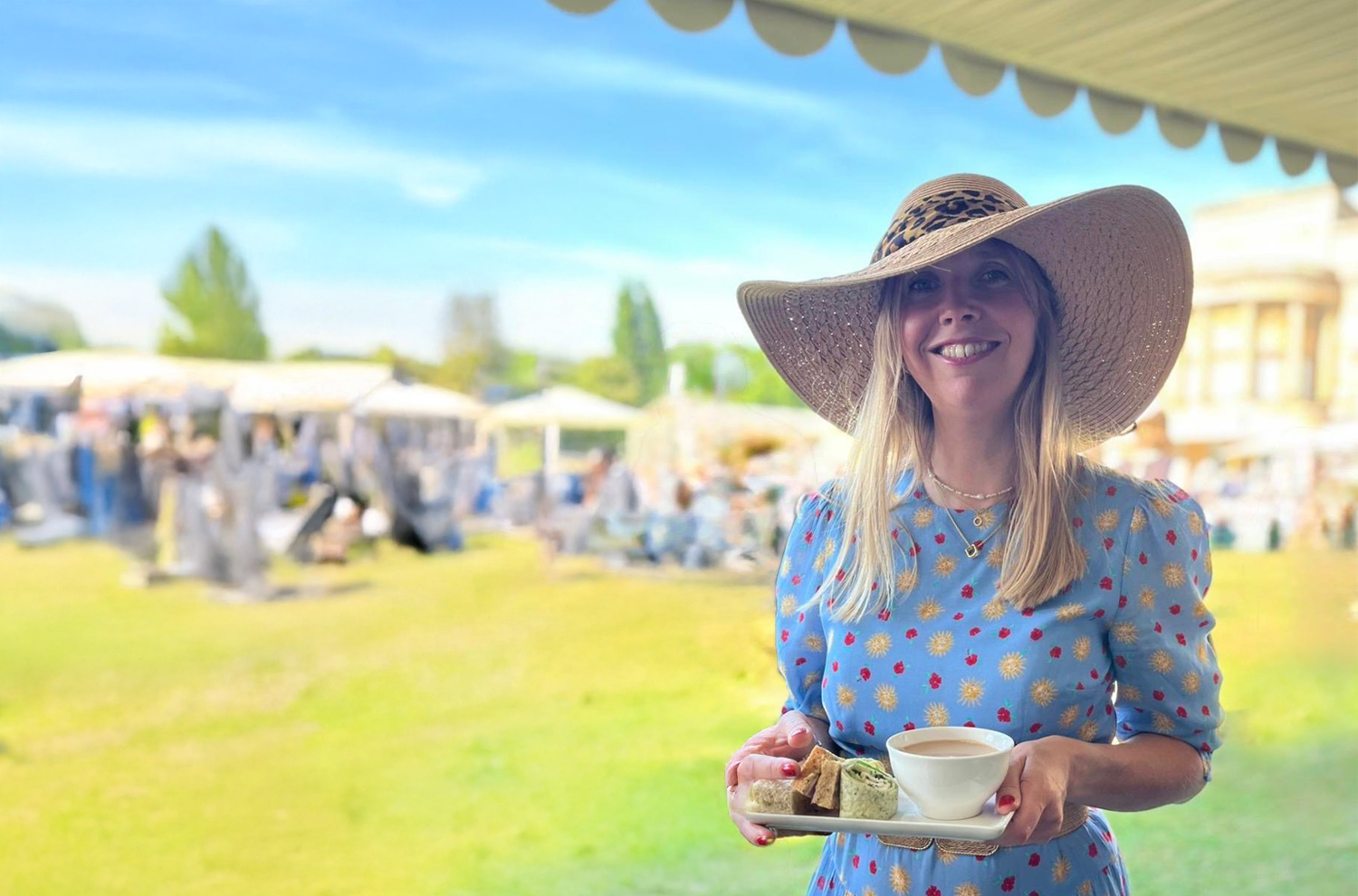
In this heartwarming and inspiring episode of Mum Means Business, I’m joined by Amanda Wrigley – former teacher, entrepreneur and founder of Live the Beat, a social enterprise dedicated to connecting generations through the power of music and play.
Amanda shares how motherhood sparked a major shift in her career, leading her from the classroom to the creation of a vibrant, community-driven business that bridges the gap between the very young and the very old. From delivering early years music classes to introducing the power of song to an intergenerational nursery inside a care village, Amanda has pioneered a powerful model of connection and purpose.
We talk about the health benefits of intergenerational practice, the challenges of balancing non-profit values with business sustainability and the personal growth Amanda experienced along the way – including overcoming imposter syndrome and learning to trust herself.
This is a story about compassion, creativity and how one woman’s vision is bringing joy and connection to hundreds of lives.
Conversation Highlights:
- Amanda’s shift from teaching to entrepreneurship
- How motherhood inspired the creation of Live the Beat
- The role of music in childhood development
- Intergenerational connection: babies and older adults learning side by side
- Establishing a nursery inside a care home
- The health and emotional benefits of intergenerational interaction
- Navigating the challenges of running a mission-led business
- Being invited to perform in Westminster Abbey by HRH The Princess of Wales (!)
- Pushing through imposter syndrome as a founder
- Amanda’s advice to her younger self
Favourite Quote For Mums in Business:
“It’s enough to be the person you are and just keep smiling!” – Amanda Wrigley
Connect With Amanda
Find Amanda on instagram, follow her on facebook or go straight to the Live The Beat website to hear all their latest news .
About The Host:
I’m Victoria Phipps – a Mum of two, analogue family photographer, charity co-founder, marketing person and now podcaster! My career has wandered all over the place and is becoming a bit of a complex tapestry as I head into this middle phase of life, but I can honestly say I’ve loved every minute of it so far.
I was raised by a nurturing Mother and an entrepreneurial Father and have inherited traits from both, so the tension between ambition and motherhood is one I grapple with on a daily basis! I’m fascinated to hear the stories of other women on a similar path, who are striving to build thriving businesses whilst being present for their children. It’s a tough juggle, but I hope the conversations shared on this podcast help Mums in business feel less alone and inspired to keep going in pursuit of their dreams!
If You Enjoyed This Episode:
- Please subscribe, rate and review the podcast – it helps other mums find us!
- Share in your Instagram stories, tag @mummeansbusinesspodcast and let us know your biggest takeaway.
- Share this episode with a fellow Mum in business who you feel would resonate with Amanda’s story.
Episode Transcript
Amanda Wrigley (00:07)
when we all sat around at Christmas and they were watching me on Christmas Eve on a platform on national TV, you know, I feel a bit emotional. It was a moment of like, you know, mommy had a dream, mommy wanted to do something. And, I didn’t know that was my dream, but you know, my dream is to have a…
Victoria (00:18)
Yeah,
Yeah.
Amanda Wrigley (00:24)
positive impact and try and bring people together for beneficial intergenerational practice and that makes people feel good and have a good day and that took me to that platform
Victoria (00:32)
Yeah.
Victoria (00:35)
Hello and welcome to the Mum Means Business podcast, where we shine a light on inspiring women who have one thing in common. When they’re not managing tantrums, homework, pee-kits and play dates, they are busting their gut to create something from nothing, to turn their passion into a thriving business and build a better life for themselves and their families. We dig into what motivates devoted mothers to pursue entrepreneurship and how they integrate their work and family life.
I’m Victoria, your host, and if you’re an ambitious mum in need of some solidarity whilst navigating the messy middle of making your big dream a reality, then stick around. This is for you.
Victoria (01:12)
My guest today is a former primary school teacher turned entrepreneur who took the plunge to go all in on a heart led business centered around bringing connection and joy through music. I first met her last year when I volunteered to photograph one of her wonderful intergenerational sing-along events for her community in Chester. And I was completely inspired to see the enormous smiles adorning every face in the room. Amanda Wrigley is a mum of two and founder of Live the Beat, which specializes in intergenerational experiences for care homes,
inclusive early years classes in nurseries and send support sessions in schools. so powerful that it’s come to the attention of some pretty notable people. And in December, 2024, members of the choir she founded, whose ages ranged from two to 100, were invited by her Royal Highness, the Princess of Wales, to perform in her Together at Christmas concert at Westminster Abbey. Amanda, I am so looking forward to hearing your story.
Welcome to the MomMes Business Podcast.
Amanda Wrigley (02:09)
Thank you so much for having me, Victoria. I’ve got goosebumps again when you just gave that introduction, because that moment just gets me every time when I think about that.
Victoria (02:16)
Hahaha
I mean, it’s an absolutely incredible achievement and I want to hear all about how that came about, but also just what that felt like because it must have just been amazing. But let’s start a bit earlier on in your story. So you were a teacher and I think were you an assistant head?
Amanda Wrigley (02:38)
That’s correct, yeah. Before I had my children, I was an assistant headteacher of a large primary school in Absolutely loved my job. lived it, breathed it, it was everything to Sometimes to the point where I was in it a little bit too much so and struggling really with work-life balance. But because I loved everything to me, so I didn’t.
didn’t really mind and it’s all I ever wanted to be. I can remember being six years old and saying I want to be a teacher one day and it happened and I never really wanted leadership. It wasn’t what I went in for when I first started teaching. I just wanted to be a really good teacher. But then I kind of realized over the years that actually you can have incredible impact on the children. higher up the leadership team you get and actually have a real impact on not just the children.
know, bettering their education, but obviously inspiring other younger teachers along the way. So it all happened really organically that time. And yeah, then I had my first child.
Victoria (03:41)
So how did motherhood impact your relationship with your job?
Amanda Wrigley (03:45)
probably in the same way it does every teacher when they think about going back and I was due to go back as an assistant head teacher. I thought I could juggle it. But sometime on my maternity leave, I just decided I don’t think I want to do this anymore.
know, my family has become everything to me, my new young family and my husband’s a teacher as well. So I just very quickly realized that our time would be very, very, would be very time poor. I ended up.
having a conversation with the head teacher and he said, well, how about still being on the senior leadership team, but in a different role? So I ended up still having a three day class teacher role, but becoming the school Senco. And that did work really well initially because I had two full days off with my first child and I had three full on days being the whole school Senco and also, you know, a part-time teacher.
Victoria (04:34)
You
Amanda Wrigley (04:37)
I mean, you learn so much about working with Zend children when you’re a primary school teacher anyway, but actually becoming the role where you’re advising other teachers and looking at best practice. That was amazing for me, my experience. So I did that for, I think it was two years but then I had my second child and then things changed again. And I just thought I’d…
I don’t know how I’m going to do that with a second one as well. And that was when I took the decision to just go down two days a week and have no senior leadership role at all. But that was difficult because when you’ve gone from being the sort of teacher that’s, there was the head teacher, there was the deputy, and then there was me in this large primary school to then becoming the two day a week part-time teacher. And it’s anyone that’s done part-time work.
It’s incredibly hard because you just don’t know what’s going on in the school. You can’t physically know. And from going from knowing everything to knowing a tiny little bit, that was incredibly difficult really.
Victoria (05:30)
that’s so wrapped up in your identity. You’d wanted to be a teacher since you were six years old and you’d achieved it and that was part of who Amanda was. And obviously you’d made those changes and tried to adjust to fit with also being Amanda the mum.
but when it gets to a point where it’s gone kind of not too far in one direction, because obviously your children are your priority, but it kind of is such a diminished version of a career to what you’d had just before you had children, where you were kind of at the top of your game. How did you feel about that in terms of what had happened to Amanda, the Amanda that you knew?
Amanda Wrigley (06:06)
Yeah, that’s such a good question. Because I, over the years I’ve always run on and off. And running has always been my time to just process what’s going on in my life and who I am and what I’m doing. And I remember being an assistant head teacher and running in the gym and having a gym membership because that’s what you could afford when you’ve got an assistant headship role.
And then I was running on the road and just, felt like I’d lost, not because I’d lost the gym membership, just the time in my life was so different. And I was absolutely loving being a mum. But there was a piece of me that had disappeared and that took a little while really to sort of process. And particularly when had my second, because being a mum then
It was everything that what I was and everything I’d always wanted as well. But it was a moment of like, what is going on right now in my life? Where am I and who am I?
Victoria (07:02)
hard to grapple with, I think, especially if you have always wanted to be a mum. Because, I mean, I became a mum a little bit later than I probably would have done had it all gone according to the vision I had when I was 15. But in that time, I’d really formed myself as an independent.
Amanda Wrigley (07:07)
Yes.
Victoria (07:20)
And I think then you finally get what you want. And it’s almost, you feel guilty or ungrateful to then reflect and be like, but there was that bit that I did before when I had the gym membership or whatever. You just have a bit more time and it’s time for self care, isn’t it? And, but that bit, did actually quite like that bit. And could I, no, you can’t have that bit back. It’s hard. And you feel…
Amanda Wrigley (07:41)
Mmm, yeah.
Victoria (07:43)
you feel torn, I think, a little bit, especially in those early years when you’re also completely exhausted with too little people. ⁓
Amanda Wrigley (07:46)
Mm.
Yeah, yeah, that’s the thing.
Yes, yeah, the exhaustion side of it. You don’t always think rationally when you’re exhausted either. That’s, but it’s a definite and I’ve reflected on that moment of running in the gym and there was always a mirror in front of us in the gym. And I remember looking at myself where I was like, I can’t believe I’ve got, cause I, I was the kind of child that had to work exceptionally hard at school. It hasn’t come naturally to me.
and to be stood running in front of a mirror and think, I’m an assistant headteacher of a large primary school and I’m incredibly proud of that and how have I got to this point? And running and being, yeah, this is me. then, lost that a bit, you regretting the choices I made, just as so many other mums, just questioning where they’re at. And that was the point where I didn’t realise, but that’s where…
Victoria (08:24)
Yeah.
Amanda Wrigley (08:39)
and it’s probably only now actually I’m reflecting on this, I’m realising this, that that’s when I started my business. And I hadn’t really, yeah, yeah. Because, my daughter, my second child responded so well to music. She was the sort of child that would
Victoria (08:45)
mentally.
Amanda Wrigley (08:55)
she could stand up in the sort of bouncer and she was dancing and that’s the way she responded to and there was nothing that I could take her to in the village and I was going all the way across to, I’m here in Tarpley and I would go all the way across to Chester or to Nantwich or to Northwich for music classes and I was just thinking why?
Victoria (08:56)
You
Amanda Wrigley (09:19)
why am I doing this and why are lots of other mums doing this? There’s nothing at the moment for us in the village for music. There was sensory things but there was no music class. So I started my own.
Victoria (09:29)
I was going to say,
so what made you do it and how did it all begin?
Amanda Wrigley (09:34)
Yeah, well, I suppose it was the fact that she was so into music, but at the time I was running the local play group, which isn’t in Tarpley, it was in Uckenton. So I was running a little Uckenton play group and again, that was great because that gave me something, not that I needed something beyond motherhood, but it gave me a sense of purpose and this is what I can do and I’m good at, I can organise people, I can…
You know, I can run a play group. Of course I can.
yeah,
I’d returned to work after my second child. And that’s when I started running the play group. And then I just really enjoyed that. And obviously, and then seeing how she responded to music, I just thought, let’s set up a group. But I wasn’t brave enough. And this sounds crazy, really, to set it up considering where it’s got to in my own village. I just thought…
What if it’s rubbish? What if nobody comes? What if I don’t know what I’m doing? And so I set it up in my parents’ village, which is in Tarvin. So I did it there for about eight months and people came, people came, people came regularly, people enjoyed it, people gave me great feedback. And then I thought, well, it is silly. I’m traveling to Tarvin and I do know people will come. So some of the people that were coming to the Tarvin one from all over the place would come to the Tarpley one.
And then I went from one class to two classes to three classes on the same morning because I was that busy. And that was when I started to feel this is a business. This is something. This is what I enjoy. I still am part time teaching and I still enjoy that.
But it was a definite turning point where I was thinking this could give me an income.
if I was doing this five days a week and I’d love it and I’d be there for my children at the start of the day, I’d be there for them at the end of the day to do pickups, drop-offs when it came to school. But then we had COVID and of course, has to be referred to, doesn’t it? Yeah. Yeah. But for me as a business owner,
Victoria (11:16)
Of course.
We remember it. yeah, we remember it well.
Amanda Wrigley (11:27)
of at that time, everything went to the point where all of my two year olds, three year olds and four year olds all went to school during that time. So when I started it back up again, I’d lost all of the customers that I’d got and I had to have a very serious thing because when I grew it the first time, it was very organic. It wasn’t me going out and selling and saying, I do this, I do this, come along. It was very, I maybe put a couple of adverts out on
some of the Chesticites for mums, but it was so natural. Word of mouth. But when all of that went and I ended up with a very small number because of the siblings, I just thought, I don’t know how I’m going to do that anymore. I don’t know how I’m going to do Because naturally, as you, so many teachers this, you know,
Victoria (11:57)
but it was word of mouth.
Amanda Wrigley (12:14)
We are not salespeople. I mean, there might be few exceptions out there, but teachers generally do not shout about what they do. And I’m starting to get better at that now because of things that have happened. And I realize how I need to be to be running a business well. But naturally it doesn’t come to teachers at all. In fact, so many of us are actually the opposite and you actually…
downplay what you do and sometimes embarrassed by your achievements.
Victoria (12:39)
in so many fields though, and I think it’s very common amongst, I’m generalizing, but British women. I think we don’t, and especially our generation,
sort of sing your own praises, it’s not, that wasn’t in my family’s dialogue. There was a lot of piss taking and teasing and it was very playful and, we didn’t lack confidence, it wasn’t that. And I’m sure that’s the way you felt as a teacher. You knew you were a damn good teacher and you knew you really cared.
Amanda Wrigley (12:57)
Mmm. Mmm.
Mm.
Victoria (13:09)
But to go out and tell everybody that seems, and as a teacher you don’t need to, you’re in the public sector, you’ve got your job, you’re doing your job, you don’t need to persuade people, no.
Amanda Wrigley (13:15)
Yep.
You don’t need to advertise it. No,
people come to your door. They come and sit in your classroom. The parents are there, but with the door at the end of the day, you don’t have to do any of that. So that is not one of the transferable skills that I have taken across because yeah, selling yourself and in terms of how good you are is not one of them. So
there was big choice to make, like what on earth do I do? And one of my really good friends, was going through a similar thing. She was a copywriter. She didn’t know where she was going to be with her business. She’d left a large company and started off on her own. And she’d noticed there was some COVID bounce back money available for small businesses.
So she told me about this and I thought this is too good to be true. It’s free. And, it was, based in Warrington and I just thought, well, I’ve got nothing to lose. I’m just going to go along. So I went with her and we went on this. mean, was, I think it was seven or eight weeks worth of in-person days, after COVID and
Yeah, it was the most incredible experience of my life because the two gentlemen who lead it, one of them is with MMU, the other one has worked with MMU, but they’re not your conventional sort of tutor type people that would be running a course They were brutal, but in the very best of ways for
me learning what I needed to learn really to be able to survive and not just survive, thrive actually. Meeting those two, ⁓ it was so funny actually because the first day I got there and I’m nervous as hell because going into it and saying I’ve got this little business which is actually a bit rubbish right now because it’s nothing because
I’ve got no people, I’ve got no money coming in and paying out rent. It’s just I’m showering in the morning and dreading going now because I don’t think there’ll be anyone there. Anyway, I walked in this room and there’s loads of people in suits and I thought, my God, I’ve got this so wrong. I’ve not gone suited and booted. And like, this is awful. I nearly turned around and then I saw Laura.
Victoria (15:13)
no.
Amanda Wrigley (15:18)
and she was the same as me, just casual, and we looked at each other and looked at all these other people. Anyway, turns out they weren’t even going to the same business course, they just happened to be hiring the room. So they were not the corporate people that…
Victoria (15:25)
Yeah.
But you were so ready to feel out of place and possibly abandon ship. would have been so intimidating for you. And even going into that, you’re saying this thing that you’re always, I hear so many women say, it’s already come up on this podcast and we’re only a couple of episodes in. And it’s this idea of this little business. I’ve got this little business and it’s a bit crap.
Amanda Wrigley (15:34)
Yeah. Yeah. Yeah.
Yeah, yeah, yeah,
Victoria (15:54)
You know, when you’re sort of apologizing
Amanda Wrigley (15:54)
yeah, yeah, yeah.
Victoria (15:57)
for it before you’ve even begun your conversation, you just feel you have to get that caveat in just in case you thought it might be good, it’s not, it’s only little, it’s not big. And it’s part of that kind of mindset that we have to just set really our expectations so we don’t disappoint anybody.
Amanda Wrigley (16:14)
Yeah, nobody
disappointed. Yeah.
Victoria (16:15)
But I’m so pleased they were all going to the wrong event. So you strode in in what, your leggings and your comfy’s? Just fresh out of COVID in your lounge wear. Right. And what happened? brilliant. Okay. Yeah.
Amanda Wrigley (16:18)
Yes. Yes. Yeah. Yeah. Dead chills. Yeah. And the guy had shorts on who was leading it. So we were like, my God, okay, these are our people. But they did ask
us in the afternoon, well, in the morning, they said that we’d like two people to share. And it’s kind of a little bit of hot seating. And over the eight weeks, each of you will get a chance to hot seat your business and we will coach you.
through and that’s the whole thing it was a real coaching process and they said we’re gonna need someone to do that this afternoon and I just thought right I’m here to do this and they did say we warn you there may be tears in fact there will be tears so who’s gonna go and we all yeah of course we want to go where’s the door
Victoria (17:06)
no.
Amanda Wrigley (17:10)
But I just put my hands up. don’t know what I did. I was just like, right, I’m here to do this. So let’s just go for it. And I hot-seated the first afternoon. I was the first one that went. And I’m so glad I did I’d done that really early on all of the other weeks. I kind of ⁓ outed myself with where I was at. So I was in the best place to learn so much more because I’d laid my cards on the table and they knew where I was at.
Victoria (17:18)
Good for you.
Amanda Wrigley (17:34)
And yeah, It was really emotional because I realised how much it meant to me and I realised how much I wanted this. And I’d sort reflected before that when everything was going well. And imagine this life where I was running a business and I was able to pick up my children and take them to school every
I realised how much that meant to me. But for me, they helped me realise because I sort of talking about what I do and, then I sort of threw in there, yeah, and I’m a teacher.
And they said, how, so how many other people do you tell that you’re a teacher and your parents, how often do you tell them? And I just went.
I don’t. I tell them I’m a mum. And they were just like, well, that’s a great secret to keep, isn’t it? When you’re running a business that’s actually supporting children with their development. Like, why the hell would you not? And I was just like, yeah, I don’t know. I don’t know. I don’t know why I wasn’t doing that.
Victoria (18:15)
Hahaha
Lead with it, yeah. But you need other people’s,
perspective sometimes. I think so many of us, you you had organically and kind of naturally fallen into the business that was prior COVID and it just worked and people came and it grew. But you weren’t really assessing it, you were enjoying it.
And then it’s when the challenges come. So, okay, COVID’s happened. We’ve got this sort of lost two or three years. All those children have grown up. Your children have grown up. So you’re not associating with preschool parents in the same way. And now you’ve got to think again. So you’ve got to go out and flog yourself, flog your service. And you don’t know how to do that because you’re a teacher. And really, you’re just thinking of yourself as mum.
and mums like other mums. If I tell people I’m a mum, they’ll know that I understand and they’ll come. But actually being a teacher, you have so much experience and knowledge, you are bringing a whole profession to your classes. You know how to get the most out of these children. You’re not just winging it and giving them a tambourine. You really understand how their mind works. And you didn’t even see it.
Amanda Wrigley (19:14)
Yeah.
No. And I read such a lot.
No, I didn’t see it. you know, it is my area of expertise. You know, I read so much about early childhood and the benefits of music and, you know, all of the seven areas of learning. You know, I know all this stuff.
And I just wasn’t, my biggest selling point, wasn’t actually sharing, it’s insane. So they really helped me realise that.
Victoria (19:49)
But
that’s it, you just need two guys from Manchester Metropolitan University to come into your life and just point out the obvious. And I think so many of us do, because when you’re working in your business, it’s really hard to work on it. And you just have to have that external overview of what you’re doing. And just to point out massive selling point that you hadn’t even clocked. Amazing.
Amanda Wrigley (19:57)
Yeah. Yeah.
Yeah.
No, and the other
thing that was the turning point with that as well said, okay, so you run all these parent sessions, is there anything else, what else are you doing? Is there anything else you wanna share? And I said, oh, well, I do some sessions for my daughter’s nursery, actually. And they said, okay, us about that. And I said,
go in and deliver the sessions yeah I love that because I do this and I do this and I get to see the same children every week and and I can really see them grow and I can support the staff with their development and they were just like so how many other nurseries did you do and I just said just that one
So I within week three, I’d stopped some of the parent sessions that parents weren’t coming to And yeah, and just decided to look at which other nurseries I could deliver my sessions in. And that was really, really powerful. And my technique is…
Yeah, just to talk to them and just share what I do. And I think the passion comes over and I ended up with just stopping all the parent sessions and delivering them only in nurseries. And that’s what I do now. So that’s a big part of my work. no matter where I get to in the business, I’ll always be delivering some sessions in some nurseries because I learned so much from doing it and I love it. I absolutely love it.
Victoria (21:33)
the nurseries love it because they have a lot of children to keep busy day in, day out, And to have somebody come in with a really specific agenda.
Amanda Wrigley (21:39)
It’s that and a day.
Victoria (21:45)
that’s all about music, who is a teacher, who understands, who is passionate and can take that responsibility from them for however long it might be, that sounds like a win. I can see why they would love that.
Amanda Wrigley (21:56)
Yeah.
Absolutely, because I come in fresh and, you know, energised because it’s a new setting for me and, you know, I’ve not been with their children all day. So the children do respond really well And the staff respond well. They feed off the energy.
And the best thing that so many of do as well is follow up on what I’m doing throughout the rest of the week. So it’s not just that short snippet of energy that I bring in and teachings for the children.
the business guys that I worked with sort of tried to say to me, what is it about what you do that is the value? How does that bring value to their setting and their children? And that’s when I really started to read a lot about the benefits of particularly music and what that does for an early years brain and how it connects. You know, there is no other.
one activity that you can do that encourage so much connectivity through a brain, the music. People used years ago that you had an area of the brain that was responsible for the music side of it and it was a part of the brain, but it just feeds through every single area of your brain and when you’re connecting all of those neurons,
Victoria (22:51)
That’s so fascinating.
Amanda Wrigley (23:06)
all that energy that’s happening in your brain, then it puts your brain in an amazing situation whatever comes next in the learning as well. So it’s so powerful.
It’s development. The wiring is exactly.
Victoria (23:18)
It’s about the wiring, really. And I
love that you have researched this so much. And I’m literally here smiling because just listening to you talk about this. And obviously I’ve got young children and they love music.
and certain things come on and just the dancing that they immediately go into and it’s like a priority for them. So we could be having dinner and she’s like, no mummy, I’ve got to dance now.
the very boring version of me is like, no, we’re having dinner. You sit down at the table and you eat dinner because dinner on our house, my God, it takes a very long time as it is. But then it’s just this primal urge. She’s like, no, why would you make me sit down? I’ve got a mouth for mommy and she’ll open her mouth and show me. I can chew and dance at the same time. But it’s like, this is the thing, I have to dance now.
Amanda Wrigley (23:47)
Yeah. Yeah.
Gorgeous.
This is what I feel.
Victoria (24:05)
And I
have, yeah, this is what I feel, I have to dance now. but actually to understand what you’re saying, that it’s vital for them at that stage in life. It’s probably vital for us too, but it’s particularly when they are developing and making sense of the world that actually music connects.
all that wiring in their brain and is a kind of foundational thing. And I just love how much you’ve explored it. And obviously then you’ve gone on to do research into the impact of music in older people as well.
Amanda Wrigley (24:24)
Yeah.
Yeah, and that happened quite organically as well because
when I started doing the sessions, my dad used to bring my daughter to the classes because obviously I was leading it and I thought I want her to be part of it but I can’t have her there just wandering around or what have you. So he used to be like her parent, know, her like one-to-one. Yeah, really nice. And my dad, it’s normally my mum that takes on the role that mum do this, mum do that.
Victoria (24:56)
which is lovely for them. That’s gorgeous.
Amanda Wrigley (25:04)
But this was a nice thing for me to ask dad to do that he’d really, really enjoy because music has been a massive part of our upbringing and that’s all come from dad. So, yeah, so I remember seeing that sort of connection that they had and their relationship through music and you know, if I’d have said to dad, ⁓ could you go along to this art sensory class or an art class with, you know, it just wouldn’t have been his thing because he was out of his comfort zone. But because music.
is so inclusive and you can join in at any level with it’s just watching and listening to fully taking part. I just thought, I’ll go to the care home and see what happens there. And that was before COVID actually as well. And then that stopped.
because those sessions were gorgeous and at the end, there used to be so many tears but in such a gorgeous way, not like tears of sadness, you know, having emotions about what everyone’s just experienced in that room, from like two-year-old up to a 92-year-old and I just was like, I’d love to do more of that but again, COVID and…
Victoria (25:51)
I love that.
Amanda Wrigley (26:08)
then I thought, well, I just need to focus on the because I’d Googled all the nurseries in Chester and one of them was called the nursery in Belong. And when I read about it, I was like, my word, that sounds like
incredible. I need to be part of that. And I remember it was about five o’clock one evening and I just went and knocked on their door, literally through a buzzer. And this was another massive point where things changed for me. And I remember this. I even made a video, a reel, just when I was stood outside of it after I’d had this conversation with the nursery manager, because it was such a big moment for me. And I love watching that video back.
I had no idea how my life would change because I did that buzzer. And the lady I spoke to was called Ruth and She’s the nursery manager. And we were talking through this intercom and I was like, blah, blah, blah, blah, blah. She was just like, right, can I hold you there? I’m going to come up and meet you. Just stop speaking through the intercom.
Victoria (27:00)
Hahaha
Hahaha!
Amanda Wrigley (27:05)
Because it’s so hard, isn’t it? to get, yeah. And I’d obviously like had verbal diarrhea down this intercom. And she was like, no, I’m going to come and meet you. She just, she was so gorgeous. She showed me around. She was like, I’m sure her day must’ve finished at like half five, but she showed me around for like an hour and, and you know, shared the vision, shared everything that they wanted to do with the
Victoria (27:07)
Yeah, of course. Say everything you want to say and you’re… Yeah.
Amanda Wrigley (27:28)
And also, you know, how she thought that I could be part of she just said, I’m too early. And I said, it’s OK. I’d rather be too early. I just don’t want to be too late. Because she said, we’ve only got two or three children on our books at the moment. And so I probably should explain what the nursery in is. Blong is a care home and they have care homes the UK. But one of them is in Chester.
And two people who have a charity called Ready Generations, that is Liz Ladan and Sue Eggersdorf, set up a nursery, which is called the Nursery in Belong, and they had this vision of creating an intergenerational community through a nursery that is on site.
and it’s actually in the lower floor of this care home in Chester. There are living spaces and places for the children in the nursery there are many shared spaces for older people from the care village and the children to come together with obviously the staff supervision and it just is the most incredible.
thing and I couldn’t see that on the day because they hadn’t got loads of children, hadn’t got loads of older friends living there at the time but I just absolutely bought into it and wanted to be part of it.
Victoria (28:47)
I think this is the most amazing idea and it takes me back. had a project in my third year at university studying architecture which had exactly this brief and it was designer space where elderly ⁓
and preschool people can come together. And I absolutely just buzzed off that idea at the time. And I chose that brief because I thought it was just so interesting. And there was loads of controversy about it at the end of the project because…
all sort of safeguarding stuff came in and it was deemed that the project was too difficult a task to give to student architects But I just thought the premise of it, of course the safeguarding issues, of course, but in principle that is how human beings have lived historically, intergenerationally. And
way that society is constructed, and I’m going to try and not get too political about it, but life used to be shared. know, doing life used to be a shared thing. So raising children was shared, cooking dinner was shared, everything was shared amongst everybody from the elderly to the middle age to the new mums. Everyone was doing it all together. And now what seems to have happened?
is that the heavy lifting of life is all put upon the people in the very middle. And so what you’re doing with this intergenerational idea is actually you’re taking two ends of the life spectrum that are the most time rich. So you’ve got little people who are just really are craving…
guidance, attention, play from their parents who are very, very busy because they’re in that middle piece of life. And then you’ve got these people towards the end of their life, who are time rich again, but who we have separated from those children. They could satisfy that where parents struggle to sometimes because of demands of work and life and paying mortgages and all of those things,
So by just cutting out that middle section, you give them back a little more time so they’re less overwhelmed and you actually give these two generations at the beginning and end of life an amazing opportunity to connect and play and just be together. And how much wisdom do those older people have that they can impart on these tiny little people at very beginning of their lives? I think it’s absolutely beautiful. I bloody love it, honestly.
Amanda Wrigley (31:01)
It’s incredible. Yeah, it
is incredible and
Yeah, it’s just, sometimes I just think, how have I got to this point where this is my day to get up and be part of this? Because it is the most, get it. It is the most magical thing. And neither of those two groups that we’re talking about are in a hurry. And that’s the biggest thing because everybody else, we’re all in a big hurry. But I realize…
Victoria (31:21)
Hmm.
Amanda Wrigley (31:26)
that bringing these two people who are groups together who are not in a hurry, incredible things can happen. So what happened after they had that conversation with the lovely I went away and thought, I don’t know if I’m gonna hear from her again or what have you. I think it was Monday the week after I’d gone into my normal teaching day, but I thought I’ll get back in touch with her at some point.
I’d finished a teaching day. I think I’d had a particularly bad day because there was just, you know, when just things just don’t happen how they’re to happen. And and had greasy hair. just, it was just one of those days where things had just happened badly. Came home.
I think at half six or something like that and had a message from Ruth on my phone. She’s actually got my number and she said, are you all right for a zoom in half an hour? And I was like, I don’t, so came in, I was like processing this. Yeah, well, yeah, truth is I didn’t. just, talked to the kids, sorted them out, got my husband. Yeah, he was like cracking on with dinner. We’re all good, right.
Victoria (32:11)
God.
How quickly can I wash my hair? ⁓
Good. Yeah.
Amanda Wrigley (32:27)
Matt, I’m going upstairs to do this Zoom. What Zoom? I can’t tell you now, I just need to get on the Zoom. Got on the Zoom and I was just expecting it be Ruth and all these other screens started popping up of all these other people and I realised now it was a bit of a job interview but I obviously didn’t think that at the time to see if I’m the person to do this role for them and they just said, so Amanda, could you tell us what you told Ruth and blah, And I did and they just said, right.
and were all like this on screen and like, and they obviously didn’t go away and have a conversation with each other. They’d obviously decided on screen by this nodding and then Sue Eggersdorf said, we’d like to offer you some work with us and we’ve got a little bit of funding to deliver this project. Would you like to be part of it? And I was like, yes, hell yes, I’m in, I’m in. So it was a small pot of money just to begin with to lead.
Victoria (33:12)
Yeah! Amazing.
Amanda Wrigley (33:18)
I think it was six sessions, six mornings work, but I rejigged a bit in my timetable and I made sure it was there. And during that period, working with the University of Central Lancashire. there is a lot of research out there, the benefits of music, and you can read loads about that. But at the time, there wasn’t a lot about the benefits practice.
where children and older people are living together and part of this set up. So I got to produce diaries that I fed to the University of Central Lancashire. So it was a lot of work, but it was incredible and I loved it. So I’d finish my session and come home in the evening and write my diaries of what I’d found. And that obviously made me so much better at leading the sessions because I have that time and force to reflect and
It was fantastic and yeah, I saw some incredible things.
Victoria (34:07)
must have felt that you were doing something really important. I’d like to say that it’s pioneering, but I don’t feel that’s the right word because as I said, I feel like this is how we all used to live. So it’s not the first time it’s been conceived.
Amanda Wrigley (34:16)
Yes, yeah. that’s no,
and that’s what, you know, people that are looking at what the nursery and belong are doing. And Ready Generations, their charity who run this, that’s what people so often say to them, my gosh, this is pioneering. And that is the first thing Sue says actually and Liz, they both say, this is not new. This is, this is, this has been in us since the age of, you know, time began, you know, shared experiences, shared.
connections together and they will always be the first to say that. are redeveloping that through our modern world and seeing how that can still continue. It’s no surprise that it is going to continue to bring value for everybody, but what does best practice look like now for intergenerational practice in this world where we have lived so separately?
that’s what we’re trying to sort of work out. And obviously, I mean, you know, I was worried that sessions were to come to an end, but it was amazing because Belong the Care Home themselves saw the benefits of my work, my Tuesday mornings are for many people in the care village and the children.
They often tell me that it’s one of the highlights of their week because it’s the time where they all come together in this room and have this shared experience and that is beyond any paycheck. I hear that, you know, that I might have been guessing as an assistant and teacher to me is the magic and that’s why I realize how I tick now because it’s moments and hearing feedback and what value I’m bringing.
Victoria (35:33)
Yeah, absolutely.
Yeah.
Amanda Wrigley (35:45)
you know, that’s the icing on the cake and that’s, yeah.
Victoria (35:48)
it sounds fluffy, but I think you can honestly extend somebody’s life with this stuff. So when I ran a veterans charity with my father for 11 years, it’s still ongoing, but sadly the veterans are no longer with us. But one of the things we used to do is take World War II veterans over to Normandy and we would visit a school. And it was the same school we visited
every year and we grew a really, well was a really beautiful relationship we had with all the teachers and staff and it’s kind of broken French and English and communicating with each other and the veterans would all march and these are veterans who you know they arrived at the coach in a wheelchair and when they saw all these school children waiting for us they got off the coach and they bloody walked up that hill and
Amanda Wrigley (36:28)
Hmm.
Victoria (36:29)
they just, the energy, again, it’s all energy, isn’t it? They would breathe, they’d say, I’m just breathing in all the youth. And it almost was literally like these, yeah, but I mean, he was, he was taking the mick out of himself, but it was literally like you’ve got all this energy and all this youth and you are revitalizing people who are at a different stage in life, literally.
Amanda Wrigley (36:36)
Beautiful expression.
Victoria (36:53)
and we would stay for lunch and it would all be, it was just gorgeous almost like they were 10 years younger.
Amanda Wrigley (36:58)
Hmm.
Victoria (36:58)
It
was so powerful and so I imagine if you’re doing that in a care home weekly the more often the better probably and the children are getting that attention because sometimes as a mum I think you probably feel the same way you’re so busy you’re running your own business and you’re about to go into the summer holidays and you’ve got all of it to juggle with your two children and sometimes it’s mum mum mum mum and you’re just doing something.
Amanda Wrigley (37:05)
it is, yeah.
Victoria (37:22)
and you’re answering, but yeah, yeah, yeah, yeah, yeah, yeah, yeah. But mommy, you’re not looking at me. And oh my god, you just feel like the worst mother in the world. And what you’re doing might actually be important. You do have to put food on the table. But you’re not looking at me, mommy. You’re not looking at me. And so you look at them, and that’s all they want. And actually it was just a quick question. You could have turned to them, you could have answered them, looked them in the eye.
Amanda Wrigley (37:40)
Yeah.
Victoria (37:44)
But here they have an opportunity to connect with people who have all the time in the world to look them direct in the eye. I think it’s amazing and there must be, I’m sure they’re at the early stages really of the research that you talked about, but I imagine there are massive health benefits to people at the end of their life.
Amanda Wrigley (37:51)
Yeah.
Oh, it’s incredible. Yeah, yeah.
I actually had a researcher contact me last week because she wants to get some quantitative data the sides of things like to do with medication and how maybe on an intergenerational day might see reduced medication intake. I hear
all the time that family members of the older people in the care village or the wider work as well, children of those older friends often say to me, my gosh, last week when you came in, my mum had the best night’s sleep. So people sleeping better, people drinking more as well. So intake of fluids.
and eating better. We just need to get the data on that because we know that’s happening because we all know that if you’re in a better mood in a better place you’re going to feel like having you look after yourself better. Yeah, yeah.
Victoria (38:51)
You take care of yourself.
Yeah, yeah,
yeah. I bet there’s some fascinating data to come out of that. I’m really interested as well. I think it’s an incredible project to be a part of and it must be hugely rewarding. it must really fill your cup and make you realise that from a sort of sense of purpose and fulfilment, I feel like you’ve got this nailed. You must just wake up in the morning and feel like I’m doing something important today that matters and I’m buzzing about it.
Amanda Wrigley (38:59)
Yeah, it’s gonna be great. Yeah.
Yeah, yeah.
Yeah, definitely. that’s in the, you know, with all the work I do really with the intergenerational work. So I’m now taking my send children from the primary schools into those care settings as well. So to see the benefits of intergenerational practice for those send children. yeah, and so now what happens now is that Belong have me there weekly. That’s an ongoing piece of work, but
Victoria (39:32)
brilliant.
Amanda Wrigley (39:44)
Myself, Live the Beat, Sue and Liz from Ready Generations. We are working with another charity, which is a Chester-based charity called Health Box CIC, led by Simon. and together
and with Cheshire Live as well, which is a charity, again, that works with adults with learning difficulties, all of us together, started this work around, ⁓ it’s called Living Lives Together.
and creative health that we are developing, so intergenerational creative health, because we’re very passionate, all of us, to make sure that this is not just something that the big guys, the big care homes can afford and have us in and deliver the work. It’s very much on this should be happening everywhere. And I went from one care home with the support of those guys.
to them work in six in Chester to then I’m in 15 care homes now and not every week, but you know, I’ve seen even the benefits for monthly sessions. I don’t tend to do anything less than monthly. because I’ve got to know those people. I’ve got to because I the best thing happens when I can walk in a room and I am really good with names.
Victoria (40:40)
well.
Amanda Wrigley (40:57)
But if I can walk in in a room and go, hi Joan, or, oh, just remind me. Oh, it’s David, isn’t it? Or, you know, Bernard. It’s just, you know, and you meet, yeah, and they know me, they know my face. And even if they don’t know me, a work with an awful lot of people that have dementia. They don’t know me, but as soon as I start my first song, which is always the same in my work, they know
Victoria (40:58)
You
Exactly.
and they know you.
Amanda Wrigley (41:20)
what they’re going to be part of And incredible
Victoria (41:23)
something lovely is about to happen and they probably feel safe in that moment. Nobody’s gonna take them somewhere they don’t know where they’re going. know, they don’t feel confused, they feel secure that they’re about to do a nice thing.
Amanda Wrigley (41:24)
Yeah. Yeah. Yeah.
No, because they’re going to see, yeah,
and they’re going to see the children. And that is a massive draw for people to come out of their rooms because I work with many people and the care staff often say, Samuel’s not, doesn’t come out of his room very much, I don’t know. And I’ll say, right, just let me go and try. Hello, Samuel, my name’s Amanda. We’ve got some children here today. Would you like to come? Children? Here.
Victoria (41:37)
Yeah. Yeah.
Amanda Wrigley (41:56)
You know, and then I’ll find out that Samuel might have come out of his room for different activity later on that week So, yeah.
Victoria (41:57)
Yeah.
love it.
I’m so on board with all of this. And I come back again, perhaps because I have that experience, because I did spend so much time in my 20s and early 30s with octanonogenarians, is quite unusual, I suppose, we are just today’s society. But again,
Amanda Wrigley (42:11)
Yes.
Victoria (42:24)
we would have the same sort of story whereby, you know, dad came home from Normandy and he was a different man and he was, and they were so celebrated over there. Everyone was pleased to see them and you’d have rounds of applause from just members of the public and again children interacting, give them a flower and it was very intergenerational.
Amanda Wrigley (42:40)
⁓ gorgeous.
Victoria (42:42)
but they’d come back and they’d be buzzing and they’d go back into their normal lives and I think for a lot of them feel quite forgotten and then actually they kind of they roll through the winter and they wonder if they’re going to see another year.
and they would call me and speak quite openly about it because I try and I would telephone just to sort of keep that contact and, are you excited about, you know, June next year? And, oh, I’m not sure, Lovie, I’m not sure I’ll make it. My knee’s doing this and my hip’s doing this and I’ve got this at the doctor next week. But then once it came into spring…
Amanda Wrigley (42:54)
⁓ yeah, yeah.
Victoria (43:13)
they literally start to think, okay, well I did make it through that winter, yeah, and now actually if I could just keep that hip and that leg and whatever going for another couple, I could make it to France again. And that’s just one week, and like you say, it might be one day in the month, and this is one week in the year, but those things can really inspire them.
Amanda Wrigley (43:28)
Yes, yeah.
Victoria (43:34)
that they’ve got something really great to look forward to and it is worth coming out of their room. And I think when they spend a lot of time, it happens to anybody, doesn’t it? You spend a lot of time by yourself and you just, it’s just a bit flat, isn’t it? And I think it’s actually, we do, and it’s absolutely a travesty, yeah.
Amanda Wrigley (43:38)
Hmm.
Yeah, we all need connections, don’t we? And we need to feel value.
Victoria (43:51)
Yeah, and appreciated and that we’ve got a purpose
and there’s something to get up for. know, people that have hobbies, you know, have got to get up or that plant will die or have got to get up and take the dog for a walk. But if they don’t have that and if they’re in a care home and what’s the point anyway, you know, it’s no good, is it?
Amanda Wrigley (44:00)
Yeah.
And I
think what some of the adults, the older friends are really realising is that when we work with the same children in a particular setting over a number of sessions, they are starting to now tell me, ooh, is it Charlotte coming out of herself now? And things like that. And I will say, yes.
Victoria (44:25)
⁓ Yeah, so it works both
ways.
Amanda Wrigley (44:30)
That’s because
the children are coming here and the children are developing, you know, because they’re in a new, new setting. They are out of their comfort zones and we all know what happens when children go out, well, we all go out comfort zones. That’s the sweet spot for the learning. So all these things happen and that, but the old friends are now saying to me, have you noticed this Amanda? And I’m saying, yes, that’s because they come, that’s because, yes.
Victoria (44:50)
Yeah, yes I’m a teacher!
Amanda Wrigley (44:53)
And that’s because yeah exactly and
that’s because of Doreen that’s because of meeting you and desperate to come and see you Doreen and you know she’s like what do you think? And I’m like yeah I know so yeah.
Victoria (44:59)
Yeah.
⁓ I love it. I love it.
I’ve got a bit of a tricky question for you because you are working in a sector which is largely dominated by charity and you’re running a business and so you’re, go on.
Amanda Wrigley (45:19)
However,
my business is a non-profit organization. I originally set up, I thought I was gonna set up as a limited company. because, I was thinking, obviously I wanna love what I do and I wanna be there for my children. They were the two things that mattered.
Victoria (45:26)
Okay, yeah.
Amanda Wrigley (45:38)
But the third thing is that I’ve got to find a way to make enough money to replace my salary at some point over the next few years. So I thought the only way to do that was to be a limited company. But I set up as a non-profit limited company. But I now realise that can still pay myself a salary and make enough money to support myself.
by becoming what’s known as a CIC, so a Community Interest Corporation. will, over the next couple of weeks, I’m going to be transferring over to a full CIC. Because that does suit and I fall in better with the other charities that I’m working with. Even though I’m non-profit at the moment, it takes a bit of explaining to funders.
Victoria (46:05)
Okay.
Okay.
Amanda Wrigley (46:25)
sometimes to be limited, but you’re non-profit. So it’s not quite the right set up for me. So if I just go fully into non-profit through a CIC, it’s just much clearer. And yeah, at the moment, it’s not giving me what I was, know, assistant or teacher or anything like that. So, you know, maybe I won’t get to that point and that’s okay.
But at the end of the got an idea of what I need to achieve to be able to support my family and not have that feeling of having to return to teaching and give earlier this up. And not because I don’t love teaching, but because this is giving me so much more as a mum. I’m a very different person now. Yeah. Yeah.
Victoria (46:58)
exactly, you’re at a different time in your life.
I can you are by what you do, which is incredible.
Amanda Wrigley (47:07)
And I’ve just
taken on my first member of staff actually. So, because this is the thing, I’m like, it’s massive. I’m so excited. She’s amazing. She’s Laura and she’s starting in September. And she’ll start by supporting me with the nurseries and we’ll do a bit of team teaching. And again, this is my thing. I trained as they were known as then newly qualified teachers. yeah, that’s what I love and to be able to grow a little bit of a team around.
Victoria (47:10)
⁓ that’s a big deal.
Amanda Wrigley (47:32)
the work will be amazing because that’ll just extend the reach as well.
Victoria (47:35)
Exactly, yeah,
so
I ran a charity and I think it’s easy to market a charity.
because you’re not pitching for yourself, you’re pitching for the good work that you do. It’s so easy in comparison to pitching for, say, your preschool music classes because that’s very personal, it’s a service that you’re delivering as a mum, in brackets, teacher. you’re just kind of selling yourself, whereas actually if you’re
Amanda Wrigley (47:43)
No. Yeah.
Yeah.
Yeah.
Victoria (48:00)
your charitable endeavors. It’s much easier. feel much more confident delivering that message? Yeah.
Amanda Wrigley (48:05)
Yeah, definitely. And that again,
you when I said I struggled as a teacher to sort of share the value of my work and know its value. And again, this through it being a charity is much easier because it just, it just fits right. And it also, I feel like they’re my people. Everyone I meet who’s, you know, charitable status.
Victoria (48:22)
Yeah.
Amanda Wrigley (48:26)
in whatever description it looked. They are my people, they’re the people I love to talk to. I feel like I’m not going to be stood in a room where we’re sort of shouting about prophets and that’s not me. No.
Victoria (48:37)
Yeah, but you’re not fighting. You’re not fighting
anybody. And I think I’ve had a few projects that I’ve worked on where you just bump into the right people at the right moment.
And you just naturally form and it sounds like it’s what’s happened to you. You just naturally form this sort of power team and you don’t have to explain anything to each other. You don’t have to sit across a table arguing with each other. And actually every time you do talk, you’re on the same level straight away. And that I imagine that’s how they felt in that zoom call, you know, and there’s no need to go away and have a discussion about it. You know, it’s just everyone’s nodding yes to Amanda. Yes, please come on board. You get it. And I think that is when the magic happens when you’re trying to.
Amanda Wrigley (48:48)
Mm.
Yeah.
Yeah.
Yeah.
Victoria (49:17)
the Pursuer Project when you’ve just got everybody, yes, exactly, sharing the same vision, the same goals, and you all feel really passionate about it. I think that’s the sweet spot. It sounds like you’ve nailed it.
Amanda Wrigley (49:19)
Yeah, that shared vision.
Yeah,
yeah, I’m really excited for what’s going to happen with our creative health work. you know, we’re going to together we’re stronger and we’re going to go for some higher bids, you know, because it’s it’s been small pots of money so far, but we have won a lot of awards as well for our work and so called pioneering work. But yeah, and then obviously, thank you.
Victoria (49:46)
Well deserved.
Amanda Wrigley (49:49)
But the highlight, one of the biggest moments was that phone call I had from a team. Right. So initially I had a phone call from a producer from the BBC.
Victoria (49:54)
Go on, tell me all about it. I want to hear how that sort of thing comes about.
Amanda Wrigley (50:05)
out of the blue to say around Christmas there’s gonna be a thing happening. We’re not allowed to tell you what the thing is, but are you interested in the thing? I was like, I don’t know, don’t know, yes, yes, it sounds good. And they were obviously able to tell me little bits that he obviously involved my intergenerational choir. And…
they had seen some footage online of a Christmas concert, because we often do a lot of concerts around Chester and in churches and in community halls and in theatres And that was one of the ones that you captured, wasn’t it, for us at the Hammond? So beautifully with the beautiful photography, So, yeah, I had this phone call and…
Victoria (50:36)
Yeah.
Amanda Wrigley (50:42)
said I was keen, obviously talked to the rest of the team and they said, well, yeah, we think we’re keen as well, because I obviously lead to the choir, but to make anything big happen, it needed to be a team decision. So shared what I thought I could share and then we set up another call with them and they told us a little bit more about what it was like and it was going to be a concert in London that they wanted us to sing at how feasible is it for us to get.
some of our older friends and the children down to London this event around Christmas time. And yeah, we just, said we’re going to make it work you know, because it’s going to be an incredible experience for people involved.
And they said that they were talking to other people at the time, but they kept calling And we all thought they’re really interested. And I had that many conversations with producers and directors. And it’s just mental, you know, for somebody to ring you up and say, hi, I’m so and so from the BBC team. And I was like, hi, ⁓ I’m Amanda.
Victoria (51:41)
I’m Amanda.
Amanda Wrigley (51:43)
bonkers. And and they said they were going to come and film our Christmas concert that we were doing. So they came up to us first and they said that you have been chosen, but we still didn’t know any details. They filmed our Christmas concert in Hull All Saints Church and the church were amazing as well at helping us out. they actually, filmed our dress rehearsal event.
Victoria (51:45)
It’s so
Amanda Wrigley (52:07)
That was gorgeous. There’s something about when you hear these voices together, you know, these younger voices and, and it was Hall C of E primary school. was the nursery and the Blom children and the residents from Belong. And,
The sound was, it was incredible, it was stunning. So I just stand at the front and wave my arms and smile. So they just, they make it happen. And again, it’s all the songs that they’d chosen. It’s very much led by the people. It’s not me saying we’re going to do this one. They lead it. That’s the important thing to say, you know, from the two year olds up to the 92. After they said, we’re just going to carry on filming. Just go with it, Amanda. And I said, I didn’t, I didn’t know what was going to happen.
and I had this tap on the shoulder and I had this letter in front of me it was from the Princess of Wales
who was inviting me to take a group of my ladies and gentlemen and children down to London to perform at Westminster Abbey for her service together at Christmas. So I read this letter to everybody live and I didn’t know what it said, but I was just reading, I was shaking. was just, and then everyone just cheered and I said, we’re going. And they said, yeah. So yeah.
Victoria (53:10)
⁓ Amanda.
⁓ I’m kind
of welling up what a moment that must have been. like the mood in that church must have been. Something else.
Amanda Wrigley (53:20)
⁓ it was
just and they obviously captured it all live, our response to that because, you know, they were hearing it there at that point and everyone was just cheering. then, and then two weeks later we were in in London in Westminster Abbey singing our hearts out.
Victoria (53:24)
Yeah.
Fantastic. What an amazing experience that must have been.
Amanda Wrigley (53:39)
So yeah, so there was Olivia Dean,
was Gregory Porter, was Richard E. read a poem and then there was us performing and she waved at us when we came off stage and she’d chosen us
Yeah, and people refer to it as one of the most poignant moments of the service because I think I went on the rain as well to talk about it. It’s just, Yeah. Yeah.
Victoria (54:02)
Very cool, very cool. We love Lorraine.
I think it’s incredible and a testament to the value that you deliver. And actually that it’s validation for the idea and the concept of bringing the old and the young together.
And what you’re doing is worthy of enormous celebration. Definitely. I’m not surprised. Yeah. Yeah.
Amanda Wrigley (54:22)
And there just needs to be so much more. There just needs to be so much more of it going on because, and
that’s what I hope, that’s what people have said to me afterwards, some of the social media things, you’ve inspired me to do this. And incredible.
Victoria (54:37)
going to ask you, Amanda, what change do you want to see in the world? But I think we’ve already covered it.
I think you’re already doing it as well. It’s happening, isn’t it? Yeah.
Amanda Wrigley (54:43)
Well, we’re a team. We’re a team together and
you know, these charities and myself together trying to, you know, whether it’s do more work ourselves or inspire other people or create some kind of change at some level where there is funding more readily available because actually the Scottish government fund a lot of work for intergenerational practice there and, you know, we need to see some
some changes here that make it more accessible and for me as well, I’ve learnt so much about not just how valuable it is, but I really do feel, and this is big thing for me to say because I started the conversation saying how I was lacking as a teacher of confidence, but I feel incredibly confident with my delivery and if I can…
impart some of that knowledge onto others as well. And I had a lady from America contacted me and say she’s doing her first intergenerational session in two weeks time. Can I give her some tips? And that’s just magical to have somebody asking, Amanda, how do you do this? Because I do know a lot now. I won’t say always goes exactly according to plan, but you know, sometimes when it doesn’t go according to plan, they’re the funniest and the best moments as well. But yeah, I
Victoria (55:42)
Yeah.
Yeah, no, definitely.
And you learn from them. And people used to say this, I keep going on and on about my own charity. People used to say this to us, you know, towards the end, when we were running these trips to Normandy with elderly people, say, oh gosh, it’s all so organized. know, sun shines and someone’s putting sun cream on my head and then it rains and someone’s passing me a poncho. And I just say, yes, because once it rained and everyone got very wet. And once it was sunny and everyone had a…
Amanda Wrigley (56:11)
Aww.
YES!
Victoria (56:18)
Berryburn across their forehead Yeah, and you learn from it. And this is the thing, and that does build confidence. And I think there’s very few people that start a new endeavor feeling fully confident. And I think just the fact of starting and seeing where it could go, that’s something a lot of…
Amanda Wrigley (56:34)
Yeah.
Victoria (56:36)
determination and gumption and drive and just I think a sense of adventure to say okay well you know this is not a preschool music class this is something different but actually I think that I really believe in it and I think I’m gonna try it and then once you start putting that out into the world you find your people and it becomes bigger and I honestly think the potential
Amanda Wrigley (56:53)
Mm.
Yeah.
Victoria (57:01)
for where this is all gonna go for you is enormous. And I think impact so many lives. I think it’s amazing. And what do your children think of it? How do they get involved? Do you drag them along? Are they happy participants?
Amanda Wrigley (57:04)
Thank you.
⁓
Yeah, like tomorrow.
I say I’m juggling kids and working life, but I’m doing a session. So they’re coming along to it and particularly my daughter, she says, when can I come with you again? know, and Edward is equally, you know, he’s really excited to go tomorrow as well and see some of the people that he knows from the care village. So,
in terms of the actual practice, it’s the dream job to have as a parent, in terms of the paperwork and the rest of it. It’s a tricky balance like everyone else. yeah, and I’ve heard you talk before as well know, as mums, we hope to inspire our children you know, if you put in the work and if you have a dream, you know, follow it and
Victoria (57:41)
You
Amanda Wrigley (57:55)
you never know where it’s gonna take you. I think they, know, when we all sat around at Christmas and they were watching me on Christmas Eve on a platform on national TV, that was a moment of like, I feel a bit emotional. It was a moment of like, you know, mommy had a dream, mommy wanted to do something. And, you know, I didn’t know that was my dream, but you know, my dream is to, you know, to have a…
Victoria (58:10)
Yeah, yeah.
Yeah.
Amanda Wrigley (58:17)
positive impact and try and bring people together for beneficial intergenerational practice and that makes people feel good and have a good day and that took me to that platform
Victoria (58:25)
Yeah.
Amanda Wrigley (58:27)
and that’s…
Victoria (58:28)
Exactly. I feel like your dream found you and it couldn’t have found you any sooner. I think it probably came at exactly the right moment.
Amanda Wrigley (58:36)
Yeah, I suppose that the other thing that I suppose I just wanted to say about as well, is the whole imposter syndrome as well that we all struggle with. And I don’t suppose I’ve had it an awful lot but I definitely had it on the lead up in Westminster Abbey because I’ve grown up.
singing in choirs all my life, but I wouldn’t say I’m a choir leader.
And I was like, but what if all these people are watching me thinking she doesn’t have a clue what she’s doing. and I really struggled with that for a while and sort of thought, what if I completely embarrassed then I started thinking, well, no, They’ve, seen what I do in the rehearsal. So it’s fine.
But I got over that and then we all led on to the stage and I remember this moment of thinking, this is so beautiful, this is so magical. And I put my arms out in front of them And I saw my hands like shaking and I remember that moment of like, my gosh, I can’t do it. can’t, I’m going to make a fool of myself.
then I looked at their faces, stood opposite me, and they looked like the most beautiful group of people with the age ranges, the fresh faces, the wrinkle faces, the, you know, all the variation
Victoria (59:32)
Yeah.
Amanda Wrigley (59:43)
I then realised at that moment, stood there, I brought those people together and they didn’t need me, because they were nervous, in front of all these thousands of people, they didn’t need me to be a professional conductor, and all I is sort of waved my finger around at them all and just went.
Victoria (59:52)
Yeah.
Yeah.
Amanda Wrigley (1:00:00)
you look amazing, you’re amazing guys, let’s do this. And I put my arms down, and then I put them up again, ready to bring them in, And I was fine, and I just waved my arms around in the way that I normally do, but not in a professional, conductory kind of way, and it was gorgeous.
Victoria (1:00:13)
Yeah,
well, two things on that. One, as a lay person, I think all conductors are just flailing their arms around. think I can totally, I’m sure there’s a whole thing around it. There’s a whole practice and there’s meaning behind but the lay people wouldn’t have known the difference anyway. And also in that moment you were the…
Amanda Wrigley (1:00:20)
Hahaha!
Victoria (1:00:35)
only person in the world who could have done it. Because they didn’t need a conductor, they just needed you, like you say. otherwise it wouldn’t have worked because you’d built that trust with them And that’s a testament to the relationships that you built.
Amanda Wrigley (1:00:44)
No, and I…
Yeah.
Victoria (1:00:49)
I didn’t mean to make you cry, but it’s true. And I
it’s just that you’re there that you’ve got them like you said I think it’s incredible I’m going to wrap up with question and that is
Amanda Wrigley (1:00:55)
Yeah, yeah, yeah,
Go for it.
Victoria (1:01:01)
with all of the experience you’ve had in your career as a teacher, with everything that you’ve been doing more recently, and as a mum, what would you tell your eight-year-old now?
Amanda Wrigley (1:01:10)
⁓ that’s such a good question. And I suppose it goes back to me saying that school wasn’t easy.
I felt like I had to battle through some things and I suppose it would be just to say, you’ll be all right. You’ll be all right because this is ridiculous, I feel so…
Victoria (1:01:30)
You
Amanda Wrigley (1:01:31)
Because of the person you are.
Yeah.
Victoria (1:01:33)
Amanda, that’s good one, glad.
Amanda Wrigley (1:01:34)
It’s happy tears, it’s happy tears.
yeah, no it really is because yeah, because it’s enough, it’s enough to be the person you are and just keep smiling and just be who you are and everything will be fine. Yeah.
Victoria (1:01:50)
and you will achieve amazing things and you will
bring so much joy to people. And inevitably as we grow especially you the anxious teenagers and your early twenties, I mean you had a path that you were on but in all sorts of areas of life we’re kind of floundering around trying to figure it out and there are struggles and challenges but there’s something about just being yourself and in the end the right path will find you if you keep an eye out for it.
Amanda Wrigley (1:02:06)
Yeah.
Yeah, definitely.
Victoria (1:02:15)
and everything has kind
of been leading you in this direction. And now you’re just doing the most phenomenal work. And so loved this conversation. think obviously have a natural talent. I’m gonna go out into the world and have a really lovely day now.
Amanda Wrigley (1:02:28)
thank you so much Victoria.
I feel like this has been a bit of therapy ⁓ well this is just yeah.
Victoria (1:02:32)
God, mean, I’m not a therapist. just,
I’ve loved hearing the story and it’s magical. I’m really just so fascinated by people who are willing to go out and put their energy into the world. I mean, business is important. We have to make things work for our families, for our mortgages, but with this ambition to just make somebody’s life a little bit better. And I think…
you’re doing that on a massive scale and it’s only gonna grow and develop and I’m really excited to see where you take Well, thank you for taking the time.
Amanda Wrigley (1:03:01)
Thank you, it’s been a joy. Take care, thank you.
Victoria (1:03:09)
I am literally buzzing after that conversation with Amanda. What she’s doing is truly incredible and I love that she found her calling by just leaning into what she enjoyed and trusting her intuition. Sometimes we fight so hard to find what’s for us. And actually, if we just give ourselves a little bit of space to reflect and notice the cues and opportunities around us, then the thing that’s meant will actually find us.
I was so deep in this conversation that I forgot to ask Amanda to share all the places to find her. So let me fill in the gaps. Check out her website. It’s livethebeat.co.uk. And be sure to go and follow her on Instagram at livethebeatuk and livethebeat on Facebook. I hope this episode has inspired you as much as it has me and left you feeling in a good mood to go on with the rest of your day.
Victoria (1:03:56)
Thank you so much for being here. I know your time is precious and I appreciate every single one of you for tuning in today. If you enjoyed this episode, please subscribe, rate and review the podcast because we want as many moms as possible to find us and join in the conversation.
If you have thoughts, questions, love letters, or even hate mail, please send them my way. I read every single message. For more resources and episode show notes, please visit our website at mummeansbusinesspodcast.com and find us on Instagram at mummeansbusinesspodcast for behind the scenes content and updates. Until next time, I’m wishing you only good things in life and business, and I will speak to you soon.