
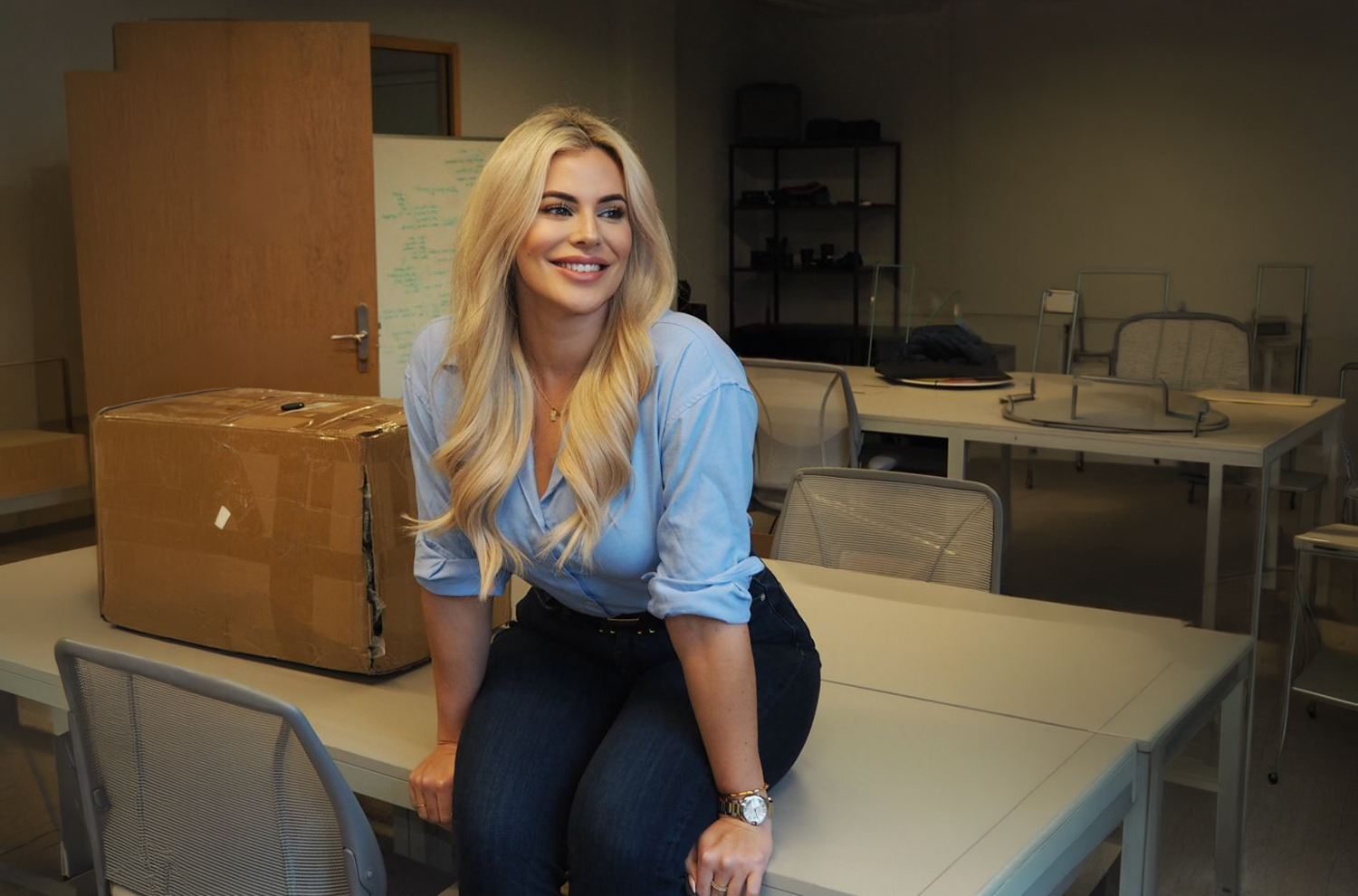
Amelia Sordell has been starting businesses since she was 13, when she began buying designer clothes from thrift stores and sample sales and selling them on eBay. At university she baked brownies, cupcakes and cookies for students on their way into lectures and at 21 she founded the fashion brand Eitherside, which grew to 15 international retailers before a series of decisions brought it to an end. She rebuilt in the recruitment industry, using personal branding to bring in quality leads, and in 2020 she launched Klowt from her bedroom while in lockdown with two children under four.
Klowt grew quickly into a team of 17 and an office on New Bond Street. More recently Amelia made the bold decision to descale, moving from delivery to consulting and building a business that fits her values rather than her ego.
In this conversation Amelia shares the story behind each of those chapters with characteristic honesty. She explains why she jumped off the cliff having already built the boat, how small uncomfortable moments build the confidence for the big ones and why embarrassment is simply the price of entry. We talk about why women hold themselves back, what money makes possible and why the best personal brands are really about the audience. It is a conversation about doing it messy and doing it anyway.
Conversation Highlights:
- Why Amelia describes herself as unemployable and how a lifelong appetite for opportunity led to businesses at 13, at university and at 21
- Launching Klowt in lockdown with £1,400 in the bank, a mortgage, two children in nursery and a plan she had already tested while employed
- Why she believes the usual advice about saving six months of runway is flawed, and why learning on someone else’s dime is the smarter foundation
- Big red button moments, and why confidence is built through small uncomfortable acts long before the big leap
- Why embarrassment is the price of entry, and what her daughter’s fall from a horse taught them both about getting back on
- The gap she sees between how men and women approach visibility, qualifications and talking about money, and why she believes so much of the holding back is self-imposed
- Growing a team of 17, taking an office on New Bond Street and the birthday morning that made her ask what the point of it all was
- Why she now calls it founder-led marketing, why the best personal brands put the spotlight on other people and what she would tell her eight-year-old self
Listen If You’re:
- A mum in business who is waiting to feel ready before sharing her story online
- Considering a launch and wondering how to test your idea before you leap
- Running a business that looks successful from the outside but no longer feels good on the inside
- Curious about how to build a personal brand that attracts commercial outcomes rather than just followers
- Weighing up whether to scale, stay small or change direction altogether
- Looking for a reminder that doing it messy is still doing it
Favourite Quote for Mums in Business:
“You quitting your job and starting a business or standing on stage or doing a podcast aren’t actually the moments that make you confident. It’s all the little moments of courage that you did before that moment.” – Amelia Sordell
About the Guest:
Amelia Sordell is the founder of Klowt, a personal branding agency that helps founders, executives and their teams build revenue-generating personal brands. A serial entrepreneur who started her first business at 13, she previously founded the fashion brand Eitherside before building a career in recruitment and launching Klowt in 2020. She has since descaled the business and moved from delivery to consulting, working with founders on brand, offer and positioning. Amelia is a mum of two.
Search for Amelia Sordell on any social media platform and you’ll find her! She is particularly active on LinkedIn.
About the Host:
I’m Victoria Phipps – a Mum of two, analogue family photographer, charity co-founder, photography business educator, marketer and now podcaster! My career has wandered all over the place and is becoming a bit of a complex tapestry as I head into this middle phase of life, but I can honestly say I’ve loved every minute of it so far.
I was raised by a nurturing Mother and an entrepreneurial Father and have inherited traits from both, so the tension between ambition and motherhood is one I grapple with on a daily basis! I’m fascinated to hear the stories of other women on a similar path, who are striving to build thriving businesses whilst being present for their children. It’s a tough juggle, but I hope the conversations shared on this podcast help Mums in business feel less alone and inspired to keep going in pursuit of their dreams!
If You Enjoyed This Episode:
Please subscribe, rate and review the podcast – it helps other mums find us!
Share in your Instagram stories, tag @mummeansbusinesspodcast and let us know your biggest takeaway.
Share this episode with a fellow Mum in business who you feel would resonate with Amelia’s story.
Episode Transcript:
Hello and welcome to the Mum Means Business podcast, where we shine a light on inspiring women who have one thing in common. When they’re not managing tantrums, homework, P.E. kits and play dates, they are busting their gut to build a thriving business that supports their family life. I’m your host Victoria Phipps and I’m figuring out how to play this game right alongside you. I’m a motherhood, family and personal brand photographer, I teach portrait photographers how to lead with print in the digital age, I’m marketing lead in the family business my Dad founded over 20 years ago and I’m “Mum” to two little girls.
If you’re a multi-passionate mum too, in need of some solidarity whilst navigating the messy middle of making your big dream a reality, then stick around. This is for you.
NOTE: This is the transcript from the original recording, rather than the edited episode so timings may vary.
Victoria (00:01)
My guest today is a relentless entrepreneur. When she was 13 years old, she started her first business buying designer clothes and accessories from thrift stores and sample sales and selling them on eBay for a profit. She went to uni, she says, to keep her parents happy and started a baking business selling brownies, cupcakes and cookies to students with the munchies on their way into lectures.
At 21, she got funding to evolve her early eBay activities and found Fashion Brand Either Side, which she grew quickly to 15 international retailers with ASOS knocking at the door. She talks openly about the series of decisions that led the business to eventually fail. She built herself back up in the recruitment industry, going against the traditional business model of picking up the phone 100 times a day and instead harnessing the power of personal branding to bring in quality leads for the businesses she worked for.
Having built a very substantial following on LinkedIn, talking about the power of personal branding, she soon recognized that what she was doing for her employers, she could very well do for herself. So in 2020, living in lockdown with two children under four, Amelia Sordell launched Clout from her bedroom. A personal branding agency designed to help founders, executives and their teams build revenue generating personal brands instead of traditional company profiles.
And the rest is history, or so you might think. But more recently, Amelia made the decision to significantly de-scale her business and pivot from delivery to consulting, realigning her mission with her values and proving that size isn’t everything. It’s quite a story and if Amelia is anything, she’s a bloody good storyteller. So I’m excited to dive into a few more of her stories today. Thank you so much for being here, Amelia, and welcome to the Mummy’s Business Podcast.
Amelia Sordell (01:48)
Thanks for having me, Victoria. That is the best intro anyone has ever done ever on a podcast I’ve ever been on. Like unreal. Thank you.
Victoria (01:53)
my God.
I’m so pleased. was like, I realized you probably have had a few intros. So I was like, I’ve got to nail this, but I think it’s,
Amelia Sordell (02:03)
No, that was spectacular.
Victoria (02:05)
I’m so pleased. I think it’s the personality piece, right? Like I really dislike adult intro. And if I can find some like juicy details that just make us human and just celebrate that journey, then I love that. I’m all about it. So.
Speaking of stories, I know I’ve kind of told yours in a summary version, but I always kind of start with the same question to every guest that I have on the podcast, which is what made you start a business? So I’m going to hand it over to you. Which stories you want to tell? Cause you’ve started a few.
Amelia Sordell (02:37)
My God.
They’re I mean they’re all they’ve to be honest, they’ve all started up the same thing, which is I’m unemployable.
Victoria (02:45)
Ditto, yeah.
Amelia Sordell (02:46)
Yeah, I just don’t
you know what? I’ve never I’ve I’ve I’ve always been an opportunist opportunist. I’ve always looked for additional ways to make money. I’ve always asked for additional work at work. I’ve I’ve just all I’ve just always been like a little hustler. And I wish I could say that all of my businesses have started from some deep-seated understanding that
starting them was a good t good thing to do at the time in which I did them and I had this kind of, you know, particularly with Clout, had this sort of for for being that I knew that personal branding was going to be such a thing. To be honest, Victoria, I’m just I just hate working for other people and I’ve seen opportunities as they’ve come and gone, why not? Like let’s just see what happens.
Victoria (03:31)
Yeah.
Amelia Sordell (03:32)
I have a very big fuck around and find out meter and it takes a lot for me to be scared off trying something.
Like to the point where like even this year there’s been some months where I’ve been like, ooh, it’s a bit squeaky bum time on the old finances. I don’t know if we’ve made a right decision here, but I just think life’s for living. So you may as well give it a go. So that’s why I’ve started them.
Victoria (03:56)
Well, exactly, and I’ve heard you say somewhere that you’re either gonna succeed or you’re gonna have a really good story. And I think actually, go on.
Amelia Sordell (04:03)
Yeah, you eat yeah. And both ways you win.
Victoria (04:06)
Exactly, so, and I think it speaks to that confidence piece because confidence is something that sometimes people can sort of talk about it like it’s a personality trait. And I don’t know about you, I’ve had people come to me and say, you’re so confident, where does that come from? But I think it is just doing scary things and being a bit shit.
and being willing to be a beginner and practice at that thing that you wanna be good at, whatever it is. And I think the fact that you’re starting a business at 13, because like you say, you see an opportunity and then you see another one when you’re kind of watching all the stoners wander around campus when you’re at uni and thinking, well, they look hungry.
Amelia Sordell (04:43)
Yeah.
Victoria (04:47)
And you can fill that gap. again, I think there’s something in that, it’s this kind of perpetual entrepreneurial spirit, you kind of can’t be stopped.
Do you feel like that?
Amelia Sordell (04:58)
I feel like, like I said, I I I think entrepreneurial spirit is such a it’s such a like glamorous word and it sort of I think in many ways overcomplicates like if you if you if you like even with yourself, right, you’ve had multiple businesses in multiple industries doing multiple different things. You’re creative but you also clearly are quite good at the commercials, like you just have probably I don’t wanna put words in anyone’s mouth, but most people who behave in that way are a little bit neurospicy, a little bit different, weren’t really understood at school.
kind of see the world as like one big like opportunity and a very like growth mindset, not fear mindset. And I think that summarizes me. Like I I I don’t walk around thinking, I’m an entrepreneur. I walk around thinking that’s a problem I can solve. Wonder how much money I could make solving it. And then if I feel like it’s a a good ROI of my time and effort, then I go, right, let’s let’s see if we can do it. Like I’m working on an idea at the minute for a sales CRM.
Which is basically a combination of like all the good features of all the CRMs, which are utter dog shit. Like, I’m sure like
Victoria (06:00)
Yeah, yeah.
Amelia Sordell (06:01)
may you know, many of the women listening to this will, if not all, will have had businesses. And there is not a single CRM that I have come across in the history of my life, let alone my career, that does what you need it to do. And so I’m
Victoria (06:16)
Mm.
Amelia Sordell (06:17)
kind of like fiddling around with but maybe building on in the background to use in our own business. And if it works, then roll it out.
as a product because I’m like, I can make this really good and I know what it needs to do. So again
Victoria (06:27)
Yeah. Yeah.
Yeah, I relate. found CRMs really overcomplicated sometimes and yeah.
Amelia Sordell (06:34)
my god. But also they never do what you want them to do. Like it’s pretty simple.
Make it easy for a customer to book a call, make it easier for them to be qualified or disqualified, make it easier for to push them through to a conversion and have as many automations as you can possibly have so that you can take out the manual labor from it. And reporting. Simple reporting. It’s not that hard. And yeah, all of them, all of them are like,
Victoria (06:55)
But that’s it. But that’s it.
Amelia Sordell (06:57)
Do you want a shiny golden egg as well? And you’re like, not really. So yeah.
Victoria (07:01)
No, but that’s the over complicated piece, I feel like,
and maybe it is a little bit of ADHD, but I’m like, I’m sure that it can do the thing that I want it to do, but I can’t figure that out very easily. So I’m immediately switched off. And actually it just needs to be simpler and
Amelia Sordell (07:10)
Yeah. Yeah, you lost me, Gord. Yeah.
Victoria (07:16)
perhaps a little bit less male and a little bit more intuitive, like take some of the shiny bells and whistles out of it and just give me
like the thing that makes my life easier. So that sounds like a good idea. Definitely pursue that. But I wanna talk about…
We talked about glamorize, or you mentioned glamorizing this entrepreneurial journey. And I think this is something that was perpetuated perhaps during COVID when you had all these service businesses like explode in this
Amelia Sordell (07:44)
Mm-hmm.
Victoria (07:44)
online world. We’re all forced onto our computers and Zoom and we’re just trying to find some connection online. And there were a lot of images of like, know, nomadic entrepreneurs like launching six figure sales.
fire their laptop on a beach in
Amelia Sordell (07:59)
Yeah.
Victoria (08:00)
Maui or whatever. And you’re right, there is that piece, but there is also the cost of entrepreneurship. And I really would like it if you don’t mind, if you could talk a little bit about what it was like when you were launching your business in COVID and you had these two small children
Amelia Sordell (08:17)
Mm.
Victoria (08:17)
and you’re in lockdown and you’re in your bedroom and you’re taking a punt, you you’re fucking about and finding out what was that actually like?
you know, behind the scenes.
Amelia Sordell (08:29)
So
I think it’s probably important that I’m like really transparent during the headspace of which I was in during this time. So everyone in the business I was working at had been, well not everyone, everyone in marketing by myself and intern, had been furloughed. So bit of context, I was headhunted for a head of marketing role with a PE firm. I interviewed for that role. I didn’t actually get that role, but they liked me so much they hired me and just made a job for me.
So essentially they hired two people in marketing and they they I didn’t even have a job title, Victoria. I had yeah, that was just called marketing. I just did loads of different stuff. Like, you
Victoria (09:02)
Right.
Amelia Sordell (09:05)
know, I on one t one time I’d be helping the brands with stuff, other times I’d be doing recruitment marketing. It was just like it was just absolute chaos. But I learned more in that sort of ten to twelve month period working at that company than I had in my entire rest of my career, I think. and that’s because I had close proximity to very successful entrepreneurs. I was working directly with the CEO.
And that proximity gave me the bollocks to try and do it myself because I I I learned so much about running a service-based business from someone who had, you know, at the time probably a hundred staff. So had done it quite successfully. So I was already in that mindset of like, I’m learning so much, like I’m pretty sure I could do this myself, maybe not quite at this scale, but blah blah blah blah blah. And in April that year, twenty twenty, so we didn’t quite know how bad it was going to get yet. I think we’d just gone into lockdown.
It’s like month into lockdown, four weeks in. I had a dream where I was basically running a what I was thinking about being a branding agency and I was like, I could definitely do this. And by that point, I was already getting inbound leads from people asking me how I’d built my brand and could I help them build theirs. And I’d I’d already delivered a c a bunch of workshops both internally and charged out workshops externally, none of which I was paid for. but I’m grateful that you know the company obviously benefited from that. But
I’m grateful for that experience because it taught me how to do them on someone else’s dime. And that’s a big mistake I think a lot of people make is they go, I have this business idea, I’m gonna go out and just try it, not knowing whether or not the market receives the idea. And the reason I’m telling you this is I’m teeing you up to this point of like I jumped off the cliff, but actually I’d already built the boat because I already knew how to run the business. I already knew what product and service I was selling, I’d already tested the market that they wanted that product and service.
And the price point in which people were willing to pay for it and worked out how to get leads and close them because I was doing that all myself already. So when it came to April, and I I’m sorry, when it came to August that year, so that was April, I had that dream, and I’d I kind of finally got the bollocks to be like, I’m going, all it took was one post of saying I’m doing this. And I got like 10 people messaging me saying, my God, I want to work with you, two of which then converted into my first two clients within three days.
So
Victoria (11:23)
amazing.
Amelia Sordell (11:24)
the mindset of fuck around and find out is like a really fun phrase, right? It’s kind of very like, like airy fairy, like, you know, I’m a Virgo with like Libra rising. So I’m a like, let’s see what happened like, you know, I’m I’m very like control freak, as you can probably see by the way that my background is like organized in like rainbow
Victoria (11:40)
Hahahaha
Amelia Sordell (11:41)
colours. And if everything is so much moved as an inch, I freak out. but I’m also
Victoria (11:46)
You
Amelia Sordell (11:46)
very like, you know, airy fairy and kind of like, let’s see what happens, you know, it’s nothing’s that bad, like, you know.
very much a Libra energy, if you like. My mum’s the same. She’s definitely a Libra. but I absolutely had a strategy behind launching that business. So although I I definitely, you know, tell the story of I took a punt on myself, I was brave enough to try, and I worked really hard and made it work, I already knew it was gonna work. And so although I had only 1400 pounds in my bank account and two little babies at home.
And my mortgage payment due a two weeks later. And also at that time, as you will well know, like two children in nursery full-time was like two and a half grand a month. So I had no income and I had like outgoings of like 5k basically because I had mortgage, I had two children in childcare, and all the other bills, and I was the sole breadwinner. So I had to put all that on my shoulders, but I knew I was gonna make it work. And I I almost want to say I was really stressed because I feel like it would make other people in
similar situations feel maybe better about theirs, but I wasn’t. There was not there was not a single part of me that was like, this is really stressful. Every single inch of me was excited to try. And I also knew acutely that given the circumstances we were in in COVID, which obviously are different now, but I had a safety net. No, no bank was going to be allowed to take my house during COVID. No credit card company was going to be allowed to pursue me for debts if I had to accrue them. So I had this like if not now when
moment. And so I just jumped
Victoria (13:19)
Yeah.
Amelia Sordell (13:20)
and it was the best thing I ever did. It was the best thing I ever did.
Victoria (13:24)
Yeah, and that’s very savvy to sort of assess your economic environment and be like, actually, this is a really good time. Nobody is going to come and challenge my security. Like we live in extraordinary times, but I think it just speaks to the foundations that you laid. And often we talk about like, before you launch a business, you should have X amount of month salary in the bank and blah, blah. And we talk about like the financial foundation and that security. Whereas actually what you’re talking about is your knowledge.
and your experience and the fact that you had tested that whilst being paid by somebody else. So you had that confidence.
Amelia Sordell (14:01)
Yeah, I also think
Yeah, I think the runway thing is also like not great advice because even if you have three to six months runway of your salary, if you spend three to six months building your idea and fucking around, like it’s a waste of money. You’re much better off building the foundations of your business and learning everything that you need to learn while you’re employed and then be able to dedicate like the first month of your four weeks, you know, severance just going for it. And like
making a hundred calls a day and messaging a hundred people a day and just finding that first client. Like that’s a much better use of your time. And it’s certainly a much better use of your money as well. Cause again, like it’s a it’s an off putting thing. You have to have three to six months salary. Okay, so how you gonna save for that? Like if you’re living paycheck to paycheck, how’s that happening? I I wouldn’t have been able to afford to do that. So I think it’s to your point initially about confidence, I talk a lot about big red button moments. And that was a big red button moment for me.
So,
big red button moment for me are like these life defining moments that will present themselves to you, and you have the option, because we all have free will, to press yes or ignore it and carry on with your life. And I believe these big red button moments come in the form of lessons. So the analogy I used recently on a podcast was like your husband cheats on you. You have an opportunity to leave them, but you stay. So then he cheats on you again, or something else happens. Or perhaps you have a friend who has shown behavior that
Isn’t necessarily congruent with the kind of person that you would like to be friends with. But because you’ve been friends with them for 20 years, you let it go. But then it happens again. And so your lessons will in the form of these big red button moments will keep being given to you until you, as my therapist says, get bored of your own bullshit and press the big red button. And
Victoria (15:46)
Yeah.
Amelia Sordell (15:48)
the big red button moments are big scary moments because when you press, like I’d quit my job, right? As I said, I had fifth fourteen hundred pounds in my bank account.
what if it had all gone wrong, I would have been absolutely up shit creek with no paddle, right? But I had the confidence to press that button when I did, and I did so also with my ex marriage, my previous marriage as well. Like I had the same thing, had a big red button moment. I was like, fuck this. And I’m sure he felt the same way. We’re great friends, by the way, now and we co-parent really well. So there’s no no skin off anyone’s nose. It’s all happened for for
Victoria (16:19)
You
Amelia Sordell (16:19)
good reason.
But in order to get the confidence to press the button when the button presents itself, whether it’s the first time, second time, fourth time, a hundredth time, you have to constantly do little things in your life that feel quite uncomfortable. Because no one gets the confidence to do dramatic things in their life without first having confidence in the smaller areas of their life. And I think that is the thing that so many people get wrong about confidence. You spoke about it being a personality trait or a characteristic.
It’s actually muscle memory. Like when you go to the gym and you you lift heavy weights, like I I do this this app called Evolve You. It’s Christy Cheller’s app. It’s great, I’m obsessed with it, you know, fantastic. But every sort of four weeks or so it goes, we’ve noticed you’ve been lifting it this weight for a few weeks. We reckon you should try another weight weight. And then you go up a weight and you’re like, my god, this is awful. Like, I just got really good at the last weight.
Victoria (17:13)
Hehehehehe
Amelia Sordell (17:17)
But it’s like making you stronger and stronger and stronger and stronger and stronger. And I believe the same to be true of when we do small, courageous things or small things that make us uncomfortable. Like, you know, did you challenge someone in a meeting that maybe said something that wasn’t quite right? Or, you know, did you ask that person out on a date who you’ve been putting off for ages? Or did you finally tell, you know, the waiter at the restaurant that keeps giving you cold chicken that actually the chicken’s cold and you’d like it hot? Like
All of these little tiny moments which seem insignificant in the face of life are actually all the moments in which you build confidence. You quitting your job and starting a business or standing on stage or doing a podcast aren’t actually the moments that make you confident. It’s all the things that you did before, all the little moments of courage that you did before that moment that actually makes you confident.
Victoria (18:07)
Yeah, and this really segues in to the whole thing of personal branding because it sounds like, and I completely can feel your excitement. It sounds like this moment when you launched Clout didn’t feel scary because it was the culmination of everything that you had done before and you were ready for it and you were excited by it. But then we can look back at the everything that you did before, know, the failed business in your early 20s.
picking yourself back up and dusting yourself off and going into recruitment, going into employment when you claim to be unemployable, learning from other entrepreneurs and founders how to actually do service led business and building a personal brand. And there are so many moments when you start building a personal brand and let’s, like we can take the word personal brand out of it because it feels like a lot, right? Just posting content.
that you come up against resistance and you’re worried about like what your cousin’s gonna think when they see you doing this real online and like who the hell does she think she is? So talk me through your experience of that in the very early days. What was that like?
Amelia Sordell (19:22)
So
I’m gonna start by saying I believe that embarrassment is the price of entry. Like if you
Victoria (19:27)
Mm-hmm.
Amelia Sordell (19:28)
wanna be good at anything, you’re gonna have to be embarrassed. My daughter is nine years old. And
I started riding horses when I was about three. Like my dad grew up on a farm and so his little sort of bonding moment with me when I was a kid was like he’s he’s gonna put me on a horse as soon as I can basically walk strongly enough to to grip a saddle, right? And I remember when I was a child him putting me, I’ve got some photos in in the house. I remember when I was a child, my dad putting me on this on this saddle, and my legs were so tiny that the stirrups couldn’t get high enough for my legs to sit in. So I was just like this really tiny little thing. so I’ve been riding horses my whole life.
And when my daughter was about four years old, I took her to s you know, one of these country farms and you know, she said, mummy, I’d love to go and do one of those, you know, pony riding pony riding things. So I was like, okay, great, like let’s go put it on a horse. And
We put I put her on a horse and she was like, my god, this is amazing. Her brother thought it was absolutely the worst thing in the world and was like, Get me off this
Victoria (20:31)
You
Amelia Sordell (20:32)
giant dog, he’s terrifying. But that sparked this little this little thing in her. And now she
Is riding every single week. She goes to a stable just down the you know, we live out in Hertfordshire, so we’re fortunate enough to ten minutes away is like a fantastic school that’s led by a guy called Chris who’s at a you know, a a show jumper and has at, you know, G B teen G B level. And she rides every single week. And she’s just started doing show jumping.
Because she she wants to do something to do with horses, but she doesn’t know what she wants to do. She’s already a better rider than me, Victoria. You know, I learned to ride on a farm, she’s learning with an anonymic show jump. Slightly slightly different
Victoria (21:10)
Yeah, yeah.
Amelia Sordell (21:12)
from a slightly different technique level. And I was watching her the other day and they were doing out of stirrups, which for anyone that knows riding horses, you know, when you first start doing this quite scary. So out of stirrups trotting.
and then also into counter, which is when the horse kind of slow run. And her crop had got caught in the the back of the horse’s tail, and the horse that she was riding, as as all horses are, got is a bit skitty. And he went absolutely ballistic and threw her off. So she had no way of holding on because she had no stirrups on. And
Sh when she first got up, I could see she was okay. So she was fine. But when she first got up, she came up to you, she like, I’m so embarrassed. I’m so embarrassed that that I fell off and I didn’t you know, I I like what if everyone you know
thinks that I can’t ride and because she’s in a group of kind of six other girls. And I said, darling, just get straight back on the horse. I was like, that’s the first time you’ve been thrown off. It’s probably not going to be your last. So you better get used to you better get used to it, basically. I was like, you’re lucky you fell with Jesse’s about this big. So it’s like half Shetland pony. So I was like, you’re lucky it was from only a very small.
Victoria (22:16)
Yeah.
Amelia Sordell (22:20)
And the reason I’m telling that story is every time you start something new and it doesn’t go to plan, which will be every single time you start something new.
It’s gonna feel humiliating. You’re gonna feel like everyone’s looking at you and is thinking, god, who does she think she is to do that? And maybe they are, but who fucking cares? No one starts anything and gets amazing at it by not sucking first.
Like if you look at Usain Bolt when he was running as a kid, videos of him running as a kid, he wasn’t that great. If you listen to videos of you know, Beyoncé reho rehearsing when she was much, much younger in Destiny’s Child, like there’s moments her voice cracked. If you like everything you do in life, to be great at it, you have to suck first at it. And the biggest blocker to people being successful, whether it’s being telling their story online, I love that you call me a storyteller, because that’s really what I believe I am.
Well, like, you know, personal branding has got a icky word. Like storyteller and helping people tell their stories is r and you do too, you know, visually you help people tell their stories. And on on the podcast too. but everything you do starting the business, p sharing your story online with the world, it’s gonna feel humiliating. But I would rather feel humiliated and start something that I know I can get incrementally better at over time.
than be broke and, you know, hiding behind the shadows. So yeah, and that’s a lesson I wanna leave particularly women with, because we
We hold ourselves back. Like we we feel like we need to be packaged in this perfect little bow before we can tell the world that we exist. Like even before you leave the house, you’re like, is my makeup right? Like it’s my like I’m looking in the in the thing here and I’m like, my hair’s
Victoria (24:06)
you
Amelia Sordell (24:07)
puffy in the back. That’s really annoying. Like, why has my hair gone so frizzy between the walk from my back and into my kitchen? Like, you know, like we all think about how am I gonna be perceived? And if I’m if I’m perceived any less than perfect, then I’m not good enough.
And if I’m not good enough, then I’m gonna feel embarrassed and if I feel embarrassed then the world’s gonna end. Newsflash, it’s not gonna end. And actually most people don’t give a shit about all the stuff that you’ve got going on because they care too much about their own stuff.
Victoria (24:35)
Yeah, yeah, and it’s such good advice. But did you feel that in the beginning or did you have to learn that?
Amelia Sordell (24:45)
Of course, of course I felt embarrassed. Everyone feels embarrassed. Like like there is not a single thing in that I have done that I wasn’t humiliated. Like even you know, to your point earlier, I descaled my business. Telling the world that I had gone from a team of 17 to a team of four was like, fuck, do I really want to tell people that? Is that gonna make me look like I’m broke and like I’m not successful because I I decided to do what I wanted to do, which was to run a consulting business, not a delivery firm.
But that’s embarrassing, isn’t it? Because then people are gonna be like, why descale when she had a successful business? It’s like every single thing I’ve done has been mortifying at the time in which I’ve started doing it. But the more you do the stuff that feels mortifying, the less mortifying it feels. So like, you know, I’ve done some really fucking embarrassing shit. And at the time I was like, my god, the world’s gonna end. And now I’m just like, it’s not a big deal. So yes.
Victoria (25:41)
Yeah. Yeah, and
we hold ourselves, I think, as women to such higher standards and society holds us to a higher standard and let you work with men and women. So you must see this pop up with your clients, you know, over the years since you started Clow and even before then. Do you feel like there is a gender disparity where this stuff is concerned? That we are, we have far much more resistance to move?
because we feel like it’s a lot to step out of that perfect box in comparison to a man who’s had a different experience growing up and perhaps can move more freely.
Amelia Sordell (26:19)
Controversially,
I think a lot of the issues, and I’m I’m gonna say this with a disclaimer, obviously there are different countries but also different areas of of life that women are definitely discriminated against, right? Like if you look at sexual violence, for example, like off the charts is is women have facing that at as the result of male perpetrators, right? So it’s really important that I say that. However,
I think in the Western world where you can choose where you want to work, you can choose, you know, what you want to do, you can really become particularly in today’s world, like it’s free to start a business now. You could pa we we’re a team of like, I say two and a half, because we’ve got two full time and two part time.
We’re running a business that’s doing the kind of revenue that a team of five or six should be doing. And that’s because we’ve built AI, like all of these amazing agents in the background that we should have previously paid people for, right? So there is never been a better time for you to start and build a business or or anything to of that matter, because it’s so cheap and so free. where was I going with that thought? Sorry. What was the question again?
Victoria (27:28)
You what, I can’t even remember. gender disparity, gender disparity.
Amelia Sordell (27:29)
Where was I going with that thought? Well I to edit this up. yeah, sorry. It’s
a very important point as well. It’s like classic. I go on a big tangent and then I forget to come back to the point. you’re more than welcome to leave that in. That’s classic classic ameliorisms.
Victoria (27:41)
You
Amelia Sordell (27:42)
no, so there’s never been a time in the world you as a woman can’t not just succeed but beat all of your male competition if you wanted to. If that was so your desire, you could fucking smash it, right? So
The reason I’m saying that is I believe a lot of women that I know and that I’ve met and I’ve had exposure to are the reason for their own holding back. Like it is not because we are discriminated against, it’s not because we earn less, it’s not because some man with a white beard has sat there and gone, we’re gonna hold them down. It’s because we believe that in order for us to have something to say, have an opinion worth listening to.
Have a business idea worth paying for. Like, we feel like we need to be have the answer to everything. We have to know it inside out. And the difference between men and women in that way is men don’t give a fuck whether they don’t have it all out figured out. They’ll just try. Like I remember a girlfriend of mine once said, Have the unearned confidence of a public school educated white boy. And I was like, Yeah, too right. Like they are so confident, and as they should be.
Why
like and th obviously it was said as an insult, but I don’t believe it should be an insult at all. I would love to be as confident as that guy because that guy should be confident. He’s got all of the things in place to have a really successful, beautiful life. But why not you? Why not you? And I think that a lot of women, particularly mothers, hold themselves back unintentionally because it’s much easier to say it’s really hard than it is to say it’s really hard and I’m gonna just fucking go for it anyway.
Because it’s hard for everyone. It’s hard for
Victoria (29:23)
Yeah. Yeah.
Amelia Sordell (29:25)
everyone. There is no easy way to build the life that you want. You’ve got to do it through blood, sweat, and tears. And actually, even when, you know, to your point about my clients, like even to the point we’re sharing stories, right? Like if I’m speaking to one of my and this re it really is this stark, I’ll be speaking to one of my male clients and I’ll be like, Right, this is the story we need to tell for this reason. They’ll go, Yeah, cool.
There’s no like, are we sure we’re gonna word it that way? Because if we do word it that way, then someone might think this and someone might say that. What if there’s this? What if that? They yeah, fine. Let’s see. When I work with some of my female clients, they’re like, I’m not really sure. If I say that, is that gonna make me sound really arrogant? Because if I say that, people like if I talk about money, people are gonna think I’m really like ostentatious, ruh. And I get it all the time. I talk about money all the time. And I get a lot of shit for it. And I don’t give a shit. Like, it’s
Victoria (30:09)
Yeah, yeah.
Amelia Sordell (30:09)
it’s fact. You can go and check it. So it’s like,
Victoria (30:11)
Yeah.
Amelia Sordell (30:12)
it’s this whole mindset of
Women believe they need to be overqualified in order to do a basic job. Men need men believe that they can have no qualifications and doing the job gives them the qualifications. And that is why they’re able to call climb so much quicker and so much further up that ladder than so many women are. because of that mindset.
Victoria (30:32)
Yeah,
it’s that piece, isn’t it, that a man will apply for a job if he believes he’s like 25, 30 % qualified, whereas a woman will just not apply unless she’s like up in the 70s, 80s, 90s. And I think we do get in our own way. And there’s something about having just done the work, I think, and actually just accepting that it’s really important that we talk about money.
because just the fact that we haven’t talked about it because actually it hasn’t really been accessible to us in history until fairly recently.
Amelia Sordell (31:06)
Yeah. Yeah.
Victoria (31:09)
If we don’t empower ourselves with that knowledge about how money works, about how to make it, then we can’t break that cycle. And actually there’s the whole thing about, know, if we can get money into the hands of more women, it’s only a good thing for absolutely
everybody. Yeah.
Amelia Sordell (31:24)
Money gives you options. Yeah, money gives
you options. Money means that you don’t have to settle for anything. You don’t have to worry about like leaving that guy because you both share a house. You’re like, I’ve got money, I don’t care, I can go buy another one. Like money means that you don’t have to choose a relationship, a job, a housing situation for safety and stability. It means you can make choices based on what you really want. Like I am such a traditional woman. Like I am, you know, like
My partner and I, my fiance and I have very traditional roles in our relationship. I’m very much the the cook, the clean, the all that kind of stuff. And he’s the take the bins out, like, you know, here’s a beer, deer kind of guy, right? but when it comes to our joint belief system around women, particularly having financial independence, he is such a massive supporter of that. And I think another reason why I’m managed to be
who I am so freely and so openly is also because of him. Because if I didn’t have him at home knowing me in in the most intimate way that anyone could possibly know another person, being like, go get it, babe. Like he is my biggest supporter. And again, because I’ve had some success in my career, I was able to make the choice to to wait to be with that person, to meet that person. I didn’t have to settle for anyone that wasn’t the person that I really wanted to be with.
So I think it I financial independence. Like I have two rules. Be financially independent and don’t be a bitch. Like that’s it. For women, if you
Victoria (32:57)
Plain and simple.
Amelia Sordell (32:58)
get those two right, have a good group of friends, be financially independent and don’t be a bitch. You’ll be you’ll be okay.
Victoria (33:04)
There you go. could end it there, but I have a few more questions.
Amelia Sordell (33:06)
Yeah.
Victoria (33:08)
So, you know, going after the, your financial independence, you scaled clout pretty quickly. You know, you had no issue with lead generation. You had that nailed down. You proven the theory. You knew it would fly. And suddenly, you know, it’s not long before you’ve got a big team, relatively speaking. It’s not just you and your bedroom.
and you’re turning over a very significant revenue each year. Tell me about how that felt to build a business that scaled so quickly and what led you to begin to question it and decide to de-scale and bring things down a notch.
Amelia Sordell (33:50)
So when I started Clow, I just wanted to get paid to do something I really loved doing. And that was kind of my and and I when I say paid, I mean I wanted to get paid a lot of money, but I I wanted to just get paid. I had no aspirations of like scaling a big business and whatever. I just wanted to do something that was really fun. And I hit that six weeks in. You know, we would I was I was turning over, I think, double what my salary was by six weeks, like in a monthly basis, from starting the business. So I was like, great.
Great, getting paid to do something I love, like should have done this sooner.
Victoria (34:19)
Hehehehehe
Amelia Sordell (34:22)
And then inevitably, because the lead gen worked so strong so well, I had more business than I could possibly serve. So at that time I to be honest didn’t have the the understanding of business and also understands of ratio conversions, etcetera, to like actually go, Well maybe I should just in double my price. Because if I double my price then I’ll probably half my leads, but I’ll still close twenty to thirty five percent of them. So I’ll be making like, you know
double the money I was already making. So instead I was like, right, I need more people. So I hired, I rehired the girl, woman who worked for me as an intern at the P firm, Danielle. Shout out Danielle, I had dinner with her last week. I’ve still to this day, she’s one of my favourite humans. And I said, look, I’m starting this business. I know you’ve just finished your degree. Do you want to come and work part time for me? And she was like, yeah, cool.
No, like, let’s go for it. And I know her parents at the time were like, Are you sure you want to come work for this woman?
Victoria (35:17)
Yeah.
Amelia Sordell (35:18)
Like, it’s the middle of COVID, like there’s no real
Victoria (35:21)
Hehehehehe
Amelia Sordell (35:22)
like stability, like it’s a startup, you know, ninety percent
Victoria (35:25)
you
Amelia Sordell (35:26)
of businesses failed. And she was like, Yeah, I still wanna do it. And so, okay. so she came and worked for me, and then that was in October. And then by the following March, so March twenty twenty one, we hired another three people, I think, around in and around that time. So I’d basically gone from just myself
Within a year to about seven or eight people, I think. I think it was seven or eight. I’m just trying to think.
about six or seven within a year. So we grew pretty quickly. And then it was like a hundred percent growth year on year after that, both in headcount and, you know, the rest of it. And at some point, and I remember like I loved the highs of it, right? I loved the highs of delivering an incredible strategy, the team smashing the content out and us doing an unreal job for a client. I loved selling what we were doing as well. Like I’m very good at sales, Victoria. Like I I probably should have I probably
Victoria (36:17)
You
Amelia Sordell (36:18)
should have run
some kind of sales business because I’m very, very good at sales. And I’m very good at funnels
Victoria (36:22)
you
Amelia Sordell (36:23)
as well and like working out what that I really believe in going above and beyond for people and making everyone’s experience feel really personal. And that’s something that I really incorporate into all of our sales. So whether you work with us or not, you always feel like you’ve had like a really a really good chat and like I understood you and you understood like, you know, it’s just little things make a big difference. And then we got to like seventeen people had just taken on an office in New Bond Street.
Massive ego play. We can talk about that in a minute. Spending a fucking fortune on this 45 person office with a boardroom, a podcast studio, our own toilets and shower, kitchen, concierge downstairs opposite Fendi. Upstairs from Fendi. Yeah, it was stunning. It’s great.
Victoria (37:06)
Sounds delightful.
Amelia Sordell (37:10)
I had this moment where I like, what the fuck am I doing? Like this is my w my there was two months that year my wage bill was 110 grand.
My overheads was 110 grand. And I was just like, I’m working this hard to make 300k, 400k profit at the end of the year. And then I like I’m like I could have three people and be doing that. Like I don’t need to be doing this. And I think the catalyst for me was I’ve I’ve spoken about it before, but I very much remember I talk about big red button moments.
I was on ho my parents live in Italy, so I’m very fortunate that I can go and see them free holiday, as much as I like. And so we take two weeks every summer, back end of August, we always go to my parents. My brother always comes, his wife comes. It’s just like the Brady bunch, but chaotic and drunk. Like great. Because there’s so many adults, like the kids are pretty well taken care of, and they just have a great time swimming in the pool while we drink Aparol spritz at twelve o’clock in the afternoon. Fantastic. Brilliant. Absolutely
Victoria (38:11)
Yeah, that sounds ideal, yeah.
Amelia Sordell (38:14)
love it. we just eat too much, drink too much, you know.
It’s good times. and it was my birthday and I there’d been an incident i in in which was building up already, but there’d been an incident with a member of staff who’d been bullying’s the wrong word, but close to that of another member of staff. Like they’d been talking about that member sta member of staff who was their superior behind their back to lots of other members of staff and tried to influence heavily influence the way that person was perceived, which
was is not a w against all of our code and conduct conduct and and the behaviour was kind of unacceptable. And we’d there’d been a few warnings and there’d been a few like formal disciplinaries and it come to this final thing that this could no longer continue. So we had to let her go. And my team should have been able to do that on their own, but instead I had to do it on my birthday. The morning of my birthday I had to let this person go via Zoom. And
I remember coming back from that meeting and looking at my dad and thinking well he was looking after my two children that I should have been playing with on my birthday for the two week holiday that I’d, you know, spent all year working towards. Thinking like, what is the fucking point of this? Like what is I don’t even enjoy it anymore. Like, I’m managing people, I’m I’m doing management accounts, I’m I’m
it’s
working with suppliers, like this is all the boring stuff that I hate doing that is now my full-time job. And the worst part is Victoria. It’s a full-time job that I had built and I couldn’t quit because it was my company. and
Victoria (39:56)
Yeah.
Amelia Sordell (39:58)
you know there’s a couple of reasons for that. Number one, I ’cause I scaled so quickly back to your original question, I didn’t have the knowledge, capacity, framework to be able to train my team.
And develop them at the speed they needed to be developed at, and more importantly, hire people above them to be able to manage that in my absence. Like I built a business that was exclusively reliant on me. Again, ego play massively. It was a hundred percent an ego play. I I didn’t want to lit relinquish control to someone else. by the time I realized that, it was kind of too late. And so, although my team tried hard to fill in gaps, if you like, there was no way they they had the the skill or
the capacity even to operate without me in the room. And that felt like a prison. Like every day I woke up being like, this is awful. I hate this. And like it just it just was not an enjoyable time. And I did I didn’t I I didn’t enjoy running the business for like two and a half years, maybe after that. And it’s only recently, like really recently this year, that I’m like back in it and I’m like, right, I can see where this is gonna go.
And it’s this ever-evolving thing where we’re like, well, you know, do we stay just doing personal branding? Because actually, personal branding as a concept gives me the ick now. Like, you know, like what does this
Victoria (41:14)
Hehehehehe
Amelia Sordell (41:15)
evolve into? You know, because I’m to my point, like I said earlier, I’m a storyteller, but actually I’m I when we go and do strategy sessions with our clients, it’s very rarely about the founder’s brand. It’s almost always about,
Well,
this is why this isn’t working. It’s because your sales funnels shit, or because your offer doesn’t make sense. Or have you ever thought about this as an a concept? You know, I worked with a a business recently and we changed their entire company strategy basically off the back of a personal branding strategy day with me. Because I looked at it from a complete I was like, You’re you’re saying you want to speak to these people, but this is what your company does. You’re saying you want to do but and I was like, nothing links up. And we spent the whole day like remapping everything.
And so that and I love doing that. And I I really deeply enjoy helping other founders like just take everything up a notch and like really get clarity on what their brand is, what their offer is, how to attract customers, and how to make those customers feel like they’re the only option, not just an option. So that’s what I’m doing now.
Victoria (42:23)
Yeah, and I think it speaks to the evolution of business. Like it’s never done. You’re never like, and this is the thing, you you’ve got all this revenue.
Amelia Sordell (42:30)
Like golf.
Victoria (42:31)
Yeah. God. Yeah. You’ve got all this revenue, you’re scaling, you’ve scaled so quickly, it’s super successful from an outward perspective, it looks like you’re just winning. And yet it
Amelia Sordell (42:44)
it was hell.
Victoria (42:44)
feels, it feels awful to you. And you’re
Amelia Sordell (42:47)
hated it.
Victoria (42:48)
no longer doing the thing that you actually wanted to do.
which was the point of starting the business in the first place. And actually, what is interesting there, you you go into other people’s businesses and you’re there to talk about their personal brand and help them communicate their message, who’s their target audience, you know, you wanna hone in, you want to like humanize this company and sell it. And actually what you end up doing, sometimes it’s recalibrating the whole damn thing and that lights you up because you can see things that other people can’t see.
Amelia Sordell (43:17)
Completely and completely.
Completely. And you know, before we got on this call and I will after this as well, I’ve got a strategy day tomorrow with a client who who kind of works on the HR side of things for for companies and they’ve got a tech stack and whatever. And I was going through we I always build the strategies before I have strategies days with them. I kind of send clients kind of onboarding stuff and I walk into the room with something. So I’m not spending the full day basically like building something with more of an o a execution plan.
And I was building the strategy earlier and I started looking at all of her profiles and like what she was doing. And then I started looking at the company, and I was like, we need to undo the whole company, and we need to unpick the whole offer because everything was so confused, and there was just there’s too there was no clear pathway forward for a customer. And I think that if I can impart any knowledge on anyone around brand as a whole, whether it be with a a person or a or a company, your
content and your messaging and your offer and the way you position your landing page, the way you position your socials, it needs to be very clear what it is that you do, but more importantly, who you get that result for, and then a very clear way for them to move forward. Because if you can’t hit those three things, you’re never gonna get any leads. And that’s 99% of the reason why people come to us in the first place. Is they want commercial outcomes, whether it be leads or
talent acquisition or investment or whatever it might be for their business. And oftentimes it’s not their personal brand that actually needs a huge amount of work. It’s the offer and the positioning of the actual company.
Victoria (44:55)
Yeah, and it’s interesting that you went into clout with this kind of serious niche that you need to sort out, help people sort out their personal brand. And actually now you can see that it’s all intertwined. These are just threads that run through everything. You can have a banging personal brand and everyone loves you and you’ve got a million followers everywhere, but actually you’re not making any money. And
then what’s the point? Yeah.
Amelia Sordell (45:17)
Yeah. and that happens often, by the way. Often. Like I
there’s a lot of creators particularly who amass these massive followings but don’t make any money. Because they
Victoria (45:26)
Yeah.
Amelia Sordell (45:26)
haven’t worked out what their offer is.
Victoria (45:29)
And also, I suppose
they have not trained their audience to actually receive an offer from them. They are in the position of like entertainer or inspirer,
Amelia Sordell (45:39)
Exactly.
Victoria (45:41)
and actually they’re not placing themselves as an expert in anything in particular that they can offer. So when they do, it kind of falls flat. And I think it’s
Amelia Sordell (45:49)
Like this.
Victoria (45:49)
interesting for mums who are like at the earlier stages of this and trying to build their following to appreciate that it’s not just about those numbers.
Amelia Sordell (45:57)
No, it’s absolutely not. Like I’ve I’ve got a a client who’s got less than six thousand followers who does over a million a year from inbound on LinkedIn. So it’s like it’s it’s just being known to the right people for the right things. And and also like I hate the word one of the reasons I hate there’s two reasons I hate the concept of personal branding. The the term I should say. I refer to it as we’ve really segued away from it. I refer to it as founder-led marketing now or employee-led marketing or human-led marketing.
And the reason why I don’t like it is number one, I feel like the w the concept of personal branding has been absolutely hacked to death by coaches and, you know, people who are just like icky, who haven’t even got their own personal brand sorted. Least of all should be advising other people, right? There’s there’s someone who’s very, very famous, and I’m not gonna name names, but he has got an entire programme dedicated to building people’s brands and he didn’t build his himself. He had an agency do it. So it’s like it’s it’s it’s stra anyway.
Strange to me that people
Victoria (46:52)
Smoker mirrors.
Amelia Sordell (46:53)
yeah, strange to me that people operate that way. But the second reason I don’t like the concept of personal branding is it implies that it’s all about you. And actually it’s not. The best personal brands put the spotlight on other people. Like you, Victoria, have got this podcast, you’re spotlighting me today, but you’ve you’ve spotlit many, many, many other women perform me, and that’s gonna become part of your brand. You’re the person that has made other women feel seen by the content that you’ve put out there, even though you haven’t had to say anything.
With my stories, I intentionally tell stories that I know people will relate to. Like I dev I never tell you a story that is really explicitly specific to me. Like they always are rooted in like failure or overcoming something or inspiration or motivation or something that I know someone will read and be like, I have a version of that story. And that’s why I tell those stories. It’s not about me. It’s about you, the audience, looking at it and thinking, wow, she understands me.
That is what personal branding is. It’s not really about you at all. It’s about how other people perceive you and how they feel about themselves when they engage with your content.
Victoria (47:53)
Yeah, and that’s a really important reframe, like going back to what we were saying earlier about all the resistance that women, suppose, especially can feel thinking about what other people are gonna perceive when they read their content or see their reels and the judgment that may come their way. And actually, if you can decenter yourself and just think, I’m not doing this for my own ego, I am doing this because I have something that can help X, Y, Z person.
then you can kind of, do you feel like detach yourself from that embarrassment factor and kind of elevate yourself above it a little bit.
Amelia Sordell (48:32)
Think you have to go through it. I don’t think you can go above it. Like you you you are going to feel embarrassed. Like that’s just a matter of fact. But I’m sorry. but what
Victoria (48:35)
Yeah, that’s a shame.
Amelia Sordell (48:41)
I will say is like my strategy towards my past about has completely changed in the last six weeks. Like, I am now not making content at all. I am just doing stuff like this and I’m redistributing up my socials. Like I have got an anti-social media social strategy now. I don’t I I have got
Victoria (48:56)
Okay, so.
Amelia Sordell (48:57)
zero interest in hacking Instagram or
working out that carousels work over reels or what kind of real frame how do you script a real don’t give a shit. I’m just working. I’m doing work, which which luckily for me this is work. And I’m chopping up what I’m doing and I just distribute it now on other channels. And that to me has been game changing. Cause I’m like, wow, now pe even if only a third of the people see that, like I’m, you know, our views have dropped and all this kind of stuff. And I’m like, but it’s so much more authentic and it’s so much more me and it’s so much more
About leading with my stories and leading with the actual stuff I want to talk about instead of spending and wasting, in my opinion, all this time thinking about how should I present that story I’m trying to tell. Like it goes back completely back to basics, which is when I used to sit with clients and I’d interview them on Riverside, funnily enough, and I would record what their answers were, and then I’d take those transcriptions and we’d write the content for them. Best the best
Victoria (49:55)
Yeah. Yeah.
Amelia Sordell (49:56)
content comes from you.
Victoria (49:59)
Well, it comes from conversation as well and this bouncing back and forth. I think when you’re in conversation with somebody, whether it’s a client that you’re trying to connect with and you’re trying to tease out their stories and their whys and their motivation, or whether it’s something like this, where you’re just trying to learn more about someone’s story and what they’re up to, basically. You get…
real gems of wisdom and so much value comes out of it, but it’s really organic. And like you say, you can’t fake this conversation. It is authentic. And that authenticity piece, I think as well, can feel so challenging when you’ve kind of been brought up to be, you know, you might’ve been told, I was certainly told, you know, you’re too much piped down. You’re a bit full on, quiet now. That’s a very long story. Should we wrap this story up? You know, if you’ve kind of had all of that growing up, then you learn that actually maybe that’s.
not what people want and you kind of dim yourself a little bit. And actually then it can be challenging to be authentic because you kind of had internalized this idea that your authentic self wasn’t necessarily what people wanted. And there’s so much unpicking I think to do for millennial women. But actually
Amelia Sordell (51:09)
Mm.
Victoria (51:09)
the podcast platform is such a good way to do it because you have to show up as yourself. These are human to human conversations
and there’s so much value in them.
Amelia Sordell (51:18)
Yeah, I I completely agree.
I completely agree. And you know, you should never, ever, ever water yourself down to fit in. Like no one you admire has watered themselves down to fit in. No one.
Victoria (51:33)
Yeah. Amelia, I have one last question I’m gonna ask you, which I ask every guest. What would you say now if you could have a conversation with your eight-year-old self on the back of a horse? In your case.
Amelia Sordell (51:47)
Yeah, I probably was.
Well, eight is an interesting year for you to have picked because when I was seven I moved to the UK from Australia and I had a funny accent and I was bullied quite heavily at primary school as as a result of it. I was also like a foot taller than everyone else and started developing boobs and just got my period. So I was like I was like, I could not have been yeah, I could
Victoria (52:06)
At eight! my god.
Amelia Sordell (52:09)
not have been well, I know I would have that’s not true. I would have been nine. So yeah, cl close close enough.
Victoria (52:11)
Still. Still.
Amelia Sordell (52:15)
But it was it was a wild time for me to be alive, a a at eight years old. And I think the thing that I would say to myself is like,
I it’s gonna be okay is probably the wrong thing because I understand what you’re saying about watering your watering yourself down, but I just never did. I was just like a crazy, you know, doing cartwheels in the garden all day, like loud, obnoxious, you know, in your face.
Victoria (52:42)
you
Amelia Sordell (52:43)
Told I talk too much, stop bossing your brother around. I once made my brother dress up as Princess Jasmine, including the bra from Aladdin, while I pretended to be like Sailor Moon or something, which I don’t think was in the UK, but yeah. So I’ve always
Victoria (52:56)
No.
Amelia Sordell (52:57)
I always had this like fu let’s fuck around, find out attitude. But I think I would say to her, like, don’t rush it. Like don’t don’t wish don’t wish everything away.
Enjoy it. Like I I when I started Cloud, I desperately wanted to get to getting pa paid to do something I love. I hid it. And then I desperately wanted to get to half a million and then I hid it. And then I desperately wanted to have a team of, you know, whatever and we were gonna sell for all this money and it was gonna be amazing. And I think we spend a huge amount of time, both as children and as grown-ups, wishing time away.
You know, when you’re a kid you go, I can’t wait to get my ID so I can drink. I can’t wait to get my driver’s licence so I can drive. I can’t wait till I finish school because I hate everyone here. And then when you’re an adult, you
Victoria (53:41)
You
Amelia Sordell (53:41)
go And then when you’re an adult you go, Well when I just make enough money, I can. When I just meet that person, I can. When I just, when I just, when I just And it’s like we are just wasting our lives, childhoods and adulthoods on wishing away the time that we have right now.
So that is what I tell my eight-year-old self and my eighteen-year-old self and my today self and probably my eighteen self as well.
Victoria (54:07)
love that and it sounds like actually that’s really timely for you with everything that’s going on in your business. That you’re trying to make sure that actually you are doing the things that you love in the present. You you’ve hit so many of your own goals, know, vision board tick, but now it’s like, right, but am I having fun? Am I enjoying my day today? Do I like waking up in the morning and thinking ahead to what I’ve got ahead of me that day? Like, does that look good to me?
And that whole thing about like, I present with my kids? Am I present at work? It’s something that I think we all fall victim to. You know, just the rush, the hustle, the next thing, the next thing, the next thing. So I think that that is gorgeous advice. Lovely. Where can people find you?
Amelia Sordell (54:55)
Thank you. Thank you. Thanks for having me.
Victoria (54:58)
God, it’s such a pleasure. Where can people find you? I probably don’t need to do this question. I’m sure that they can track you down. There’s lots of places.
Amelia Sordell (55:03)
Well, I’m very fortunate
enough to be the only Amelia Slaudell in the world. So as far as I can see anyway, yeah, thank you. It’s it’s a it’s a it’s a good
Victoria (55:09)
Congrats.
Amelia Sordell (55:12)
name to have. So anywhere on any social media you can find me there.
Victoria (55:17)
Amazing. I think there’s an actress somewhere in America that used to work for Disney that’s called Victoria Vips. So yeah, yeah, really Nish.
Amelia Sordell (55:24)
my god, that’s so niche. But your name’s very unique as well.
Victoria (55:27)
Well, I thought so, but apparently not, no. But yeah, it’s been so nice. It’s been gorgeous. I’ve loved this conversation. Thank you for taking the time. We hardly talked about personal branding at all really, but I think that’s cool. That’s good. Yeah.
Amelia Sordell (55:38)
I know. But that’s the way it should be. Like who wants to talk about personal
branding when you can hear people’s stories?
Victoria (55:43)
Yeah,
exactly. Thank you so much.