
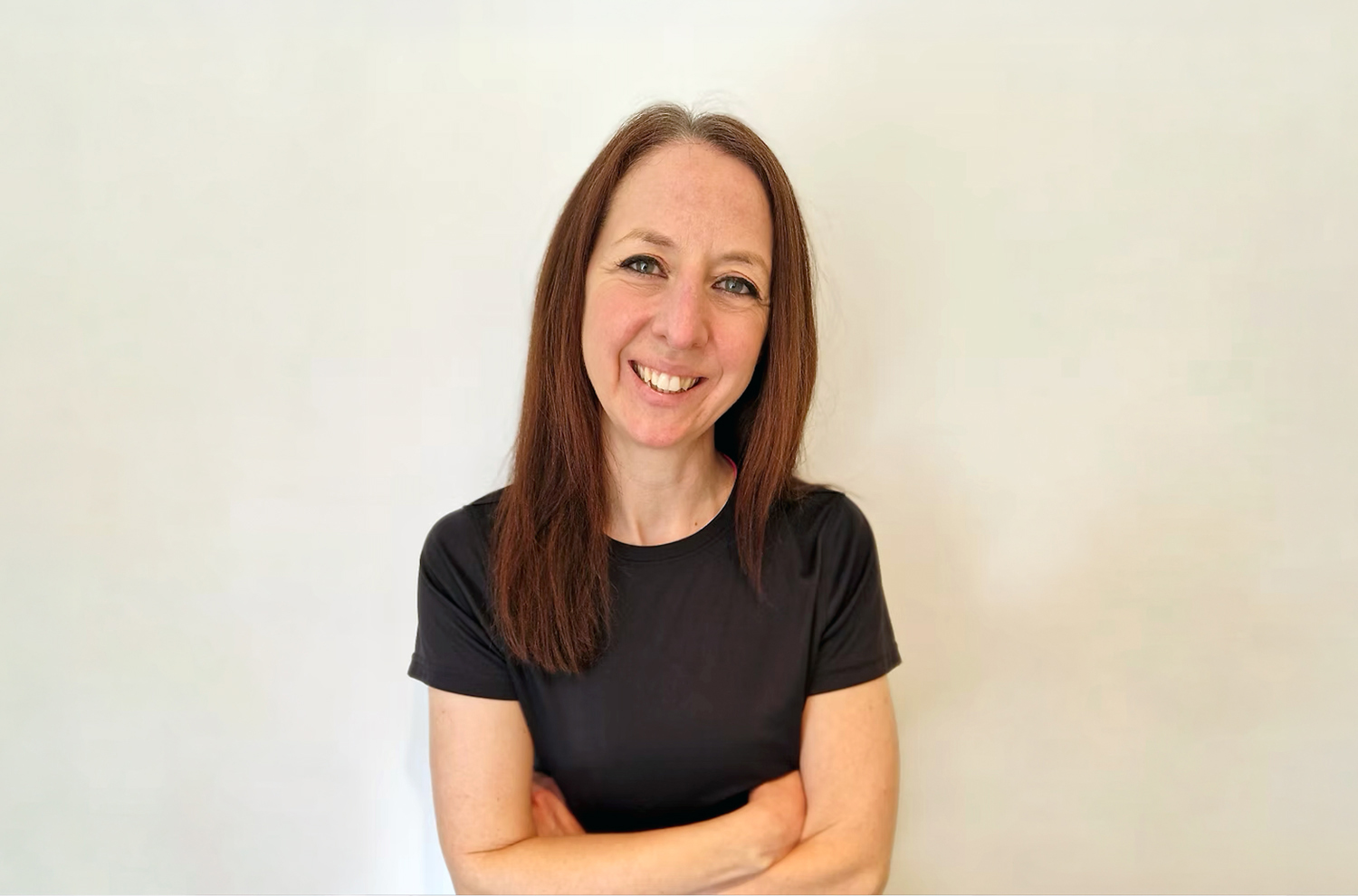
Amanda Reidy is a PE teacher, women’s fitness, lifestyle and wellbeing coach, founder of Radiate Fitness, host of the Perimenopause & Motherhood podcast (formerly Happy Thriving Mums) and a passionate advocate for helping women thrive through midlife. A mum of two energetic children and a dog she describes as completely mad, she understands firsthand the realities of juggling family, work, wellbeing and the ever-evolving demands of modern life. But she also believes that when women feel good in themselves, everything else gets easier.
Combining movement, mindset and nourishment, Amanda specialises in supporting working mums over 40 through what she calls the years when hormones collide, a unique stage of life where perimenopause often intersects with the demands of parenting, careers, caring responsibilities and shifting identities. At a time when many women feel exhausted, overwhelmed and disconnected from themselves, Amanda encourages women to give themselves permission to prioritise themselves. Through her retreats, workshops and corporate wellbeing programmes, she helps them understand that, contrary to traditional belief, midlife is an opportunity to thrive.
In this episode, Amanda unpacks the huge and often confusing overlap between matrescence and perimenopause, why the menopause is actually just one single day rather than the years-long experience so many of us assume, and the practical, sustainable changes that can genuinely help. It is a conversation that will leave you feeling far more informed and perhaps even a little bit angry about how much of this we were never told.
Conversation Highlights:
- Amanda’s journey from twenty years as a PE teacher to founding Radiate Fitness, and why her underlying philosophy has always been about helping people find joy in movement rather than performance
- The reality of trying to build a flexible business around school term times, after-school clubs and the childcare gaps that come with being a teacher herself
- Why Amanda’s early business focus on postnatal fitness and pelvic floor health shifted towards perimenopause, and the personal experiences, including a premature baby during lockdown, that shaped that pivot
- The genuinely surprising clarification that menopause is a single moment in time, twelve months after your last period, and that everything before it is perimenopause, which can last for a decade or more
- The huge and confusing overlap between matrescence and perimenopause for women having children later in life, and why symptoms like brain fog, anxiety and exhaustion can so easily be misattributed to one or the other
- Why up to seven years can pass before women seek help for pelvic floor issues, and the shame and stigma that keeps so many suffering in silence
- The three pillars Amanda works with her clients on, nourishment, movement and mindset, and how small, sustainable changes compound into meaningful results
- Why sleep and stress reduction matter more than almost anything else during perimenopause, and the reframe of treating rest itself as something productive rather than something to feel guilty about
- The importance of strength training and regular movement for bone density and muscle mass as women move through midlife, and why it does not need to mean joining a gym
- Why identity work and permission to dream matter just as much as the physical symptoms, and what it means to model a joyful, thriving midlife for the next generation of daughters
Listen If You’re:
- Confused about the difference between perimenopause and menopause and ready to finally understand it properly
- Noticing changes in your mood, sleep, energy or body and wondering whether perimenopause could be the explanation
- A mother having children later in life and wondering whether what you are experiencing is matrescence, perimenopause, or both at once
- Struggling with pelvic floor issues and have been putting off doing anything about it out of embarrassment
- Looking for genuinely sustainable, small changes rather than a total life overhaul
- Ready to prioritise your own wellbeing without feeling guilty about it
Favourite Quote for Mums in Business:
“This will happen to one hundred percent of the women that you know. It’s not a case of maybe. Women need to be informed about it, and so do the men who love them.” – Amanda Reidy
About the Guest:
Amanda Reidy is a PE teacher, women’s fitness, lifestyle and wellbeing coach and founder of Radiate Fitness. She hosts the Perimenopause & Motherhood podcast and specialises in supporting working mothers over 40 through perimenopause, combining movement, mindset and nourishment to help women feel informed, supported and genuinely excited about this next chapter of life. A mum of two, Amanda is currently developing a new programme launching in September to help more women navigate the years when hormones collide.
You can connect with Amanda Reidy at radiatefitness.co.uk, on Instagram and on LinkedIn.
About the Host:
I’m Victoria Phipps – a Mum of two, analogue family photographer, charity co-founder, photography business educator, marketer and now podcaster! My career has wandered all over the place and is becoming a bit of a complex tapestry as I head into this middle phase of life, but I can honestly say I’ve loved every minute of it so far.
I was raised by a nurturing Mother and an entrepreneurial Father and have inherited traits from both, so the tension between ambition and motherhood is one I grapple with on a daily basis! I’m fascinated to hear the stories of other women on a similar path, who are striving to build thriving businesses whilst being present for their children. It’s a tough juggle, but I hope the conversations shared on this podcast help Mums in business feel less alone and inspired to keep going in pursuit of their dreams!
If You Enjoyed This Episode:
Please subscribe, rate and review the podcast – it helps other mums find us!
Share in your Instagram stories, tag @mummeansbusinesspodcast and let me know your biggest takeaway!
Share this episode with a fellow Mum in business who you feel would resonate with my ramblings
Episode Transcript:
Hello and welcome to the Mum Means Business podcast, where we shine a light on inspiring women who have one thing in common. When they’re not managing tantrums, homework, P.E. kits and play dates, they are busting their gut to build a thriving business that supports their family life. I’m your host Victoria Phipps and I’m figuring out how to play this game right alongside you. I’m a motherhood, family and personal brand photographer, I teach portrait photographers how to lead with print in the digital age, I’m marketing lead in the family business my Dad founded over 20 years ago and I’m “Mum” to two little girls.
If you’re a multi-passionate mum too, in need of some solidarity whilst navigating the messy middle of making your big dream a reality, then stick around. This is for you.
NOTE: This is the transcript from the original recording, rather than the edited episode so timings may vary.
Victoria (00:01)
My guest today is a PE teacher, women’s fitness, lifestyle and wellbeing coach, founder of Radiant, Radiate, Radiate? Radiate.
Amanda Reidy-Radiate Fitness (00:11)
radiate.
Victoria (00:11)
Yeah, why can’t I say that? Okay.
founder of Radiate Fitness, host of the Happy Thriving Mums podcast and a passionate advocate for helping women through midlife. A mum of two energetic children and a dog she describes as completely mad, she understands firsthand the realities of juggling family, work, wellbeing and the ever evolving demands of modern life. But she also believes that when women feel good in themselves, everything else gets easier.
Combining movement, mindset, and nourishment, Amanda Reedy specializes in supporting working moms over 40 through what she calls the years when the hormones collide. A unique stage of life where perimonopause often intersects with the demands of parenting, careers, caring responsibilities, and shifting identities. At a time when women feel exhausted, overwhelmed, and disconnected from themselves,
Amanda encourages them to give themselves permission to prioritize themselves. Through her retreats, workshops, and corporate wellbeing programs, she helps them understand that contrary to traditional belief, midlife is an opportunity to thrive. Her mission is to help women reignite the fire within and realize that this next chapter of life may be their most exciting yet. It sounds good to me, Amanda. Welcome to the Mom Means Business podcast.
Amanda Reidy-Radiate Fitness (01:40)
Thank you Victoria, I’m so pleased that we are here together today, it’s so great, thank you.
Victoria (01:47)
Oh, I’m looking forward to this conversation. I’m always happy to talk about midlife because I feel like there’s something about going from 40 to 41. It’s like 40 is this sort of big milestone and then 41 is like, and we’re in it now. We’re actually in it.
Amanda Reidy-Radiate Fitness (02:02)
Yeah, it does feel different, doesn’t it? Numbers are a big thing, actually, aren’t they? Like, when you think about
Victoria (02:06)
Yeah.
Amanda Reidy-Radiate Fitness (02:07)
the difference of a day, say you’re 39 one day, then the next day you’re 40, you’re just like, hmm, that’s a big leap that I’ve just made. But yeah, think 40 is something when you feel like, I don’t know, for me, it was like a doorway. And I was like, right, I’m in my 40s now. And I had, think, in my head, really big, visual connotations. Because I think that’s like one of
Victoria (02:27)
Hmm.
Amanda Reidy-Radiate Fitness (02:27)
the big birthdays that I remember my parents having from when I was a child.
Victoria (02:31)
Yeah, yeah, yeah,
yeah.
Amanda Reidy-Radiate Fitness (02:32)
And
I just remember it being like a big deal. So when it kind of like happened to me, I was like, that’s interesting. Now we’re here. And it just felt like, I don’t know,
Victoria (02:39)
Hmm.
Amanda Reidy-Radiate Fitness (02:41)
this kind of evocative memory. But yeah, I’m 43 now. And actually, I think as the numbers go up, it almost gets a little bit easier. I think you kind of
Victoria (02:51)
Hmm.
Amanda Reidy-Radiate Fitness (02:51)
maybe just ease into it bit more. I’m not sure. But yeah, I guess it is midlife, even though I’m still not.
sure that I actually really like that term or not. Maybe I’m just still in denial and I don’t believe it. I’m not sure.
Victoria (03:03)
I think
words are so hard. Words are so hard because you have to have them.
Amanda Reidy-Radiate Fitness (03:10)
I’m huge fan.
Victoria (03:11)
Otherwise we can’t understand each other. But then they just become burdened with so many different connotations and can weigh so heavily and mean different things to different people. And some people can get terribly offended by a word and others can really own it and move forward with it and feel empowered by it. There’s so many words around like motherhood and entrepreneurship that are
are quite tarnished now because of all these different kind of stories that have evolved around them and I find it an absolute nightmare because I really feel like we should have words to describe for example that you know what we’re doing as mothers who are also building businesses we should have a word but no one likes any of the words so it’s
Amanda Reidy-Radiate Fitness (03:56)
Bye.
Victoria (03:56)
like what do you do and same with midlife like I actually think midlife is quite effective it’s just describing the middle
of our lives, this sort of 40 to 60 section, this chunk, this quarter, and yeah, like what else should we call it? It’s so hard.
Amanda Reidy-Radiate Fitness (04:13)
I think it’s better than middle-aged. don’t know why middle-aged to me sounds old but midlife
Victoria (04:16)
Yes. Yeah,
Amanda Reidy-Radiate Fitness (04:20)
it’s kind of like I guess it’s a it can be a turning point which I think we’ll probably talk about in a little bit anyway but it’s like
Victoria (04:27)
Yeah, yeah, yeah.
Amanda Reidy-Radiate Fitness (04:28)
I think it sounds better because it’s like you are in the middle of something you’ve had an early phase
Victoria (04:35)
Mm-hmm.
Amanda Reidy-Radiate Fitness (04:35)
you’re hopefully
looking forward to a later phase and actually you’re in the middle, which is,
Victoria (04:39)
Yeah.
Amanda Reidy-Radiate Fitness (04:40)
I mean, sometimes the middle can be a really nice place to be, it can be quite comfortable, but other times you get that messy middle, don’t you? And you could be in the messy middle
Victoria (04:47)
Mm-hmm.
Amanda Reidy-Radiate Fitness (04:48)
of all kinds of things, whether you’re in the messy middle of just having your first child and that is a very messy place to be, or you could just be in the messy
Victoria (04:55)
I’m
Amanda Reidy-Radiate Fitness (04:57)
middle of just like your day or whatever. But I do think that kind of like…
midlife point can actually be really, really exciting. And I think, I know from my experience, it has been a time where I’ve really come to think more about myself, not necessarily in a selfish way, but just because…
I get little pockets of glimmers of like space kind of starting to open up with my children being slightly older now, not so kind of like reliant on me for absolutely everything. It kind of makes you think, actually, I can reacquaint myself with myself and my needs and actually.
maybe make some exciting plans for myself because I do have a little bit more mental space, physical space
Victoria (05:50)
Yeah.
Amanda Reidy-Radiate Fitness (05:51)
and things change. So yeah, I think it can
Victoria (05:54)
Yeah.
Amanda Reidy-Radiate Fitness (05:54)
be really exciting.
Victoria (05:56)
Yeah, yeah, no, I totally get that. I think it’s that bit where you’re coming out of the very early chapter of motherhood because I mean, and we can touch on it briefly, that is all consuming and so many women lose themselves in it. And I think
Amanda Reidy-Radiate Fitness (06:13)
Yeah.
Victoria (06:14)
having had this experience yourself and then kind of moving forward with it, understanding that
all women who become mothers go through that identity shift, that matressence. And then we shift into this midlife, if we’re going to call it that phase. And then we’re coming up to this point where our hormones are about to go wild on us all over again. And at
Amanda Reidy-Radiate Fitness (06:39)
Yep.
Victoria (06:40)
some point we have to kind of keep tuning in with ourselves and holding onto ourselves in a little bit. Does that make sense? Like it just feels like such a roller coaster and like,
you said, you’re just starting to see these pockets of time and space where you can just be and kind of get back to Amanda. And then I think it’s about holding onto that. And this is presumably what prompted you.
to kind of start your business, recognising that this is a rollercoaster, it’s a wild ride that we’re on at this stage of life. When you compare it to kind of our 20s, when we were doing exactly what we wanted and pleasing ourselves and we had no responsibility, no nothing, and it was all about fun and selfishness in the best possible way. And now this feels like…
Amanda Reidy-Radiate Fitness (07:26)
Yeah, it’s different kind of rollercoaster.
Victoria (07:29)
Yeah, yeah, yeah, exactly, yeah.
But now this feels like quite a pressurized time of life. So tell me, if you can go back a little bit, what made you start Radi8 Fitness? What’s the story behind
Amanda Reidy-Radiate Fitness (07:41)
Well,
Victoria (07:42)
it?
Amanda Reidy-Radiate Fitness (07:42)
to be honest, the story between, or the story for me to start my business was slightly different to kind of what you explained. So I
Victoria (07:52)
Okay.
Amanda Reidy-Radiate Fitness (07:53)
have been a teacher for 20 years. I still teach now. So at the moment I teach part-time and then I my business part-time. I’m in that messy middle phase where
the dream
Victoria (08:03)
Yeah, yeah.
Amanda Reidy-Radiate Fitness (08:04)
is hopefully at some point.
have my business as my whole working life. So yeah, so I started teaching. I’ve been a PE teacher for 20 years, 20 plus years now. And whilst it’s a great job and it makes such a difference, and I’m still really passionate about it. And I think in a way,
what I do now for my own business has hugely been shaped by my experience as a teacher because my goal as a teacher was always, and I know that for some PE teachers are very, very divisive topics. Some people love PE, some
Victoria (08:40)
You
Amanda Reidy-Radiate Fitness (08:41)
people hate PE, but everybody has got opinion on PE without doubt.
Victoria (08:45)
And everyone
remembers their PE teachers. I just feel like that’s a teacher you don’t forget.
Amanda Reidy-Radiate Fitness (08:48)
Everyone remembers the PE teachers. Yeah,
they remember everything. They remember cross-country, they remember sports day. There
Victoria (08:53)
Hahaha
Amanda Reidy-Radiate Fitness (08:55)
is like these, whether it’s traumatic or whether it was brilliant, everybody remembers it.
But for me, as a PE teacher, my one goal was to, I mainly taught girls, I did teach boys as well, but it was mainly for the girls to infuse them and inspire them so that they found at least one activity that they loved that they would continue throughout their whole life. So the way that I’ve always taught, I would say I…
was never one of those teachers, I’m not particularly one of those teachers that cater, well I cater for all abilities, but I was never like the one that would be catering just for the elite children or the best children, the ones in all the teams. I have always really loved teaching the kids which are maybe not so able in sport or not so able in PE and just showing them that actually they can enjoy sport, they can enjoy being physically active, they can enjoy moving their body because there is
is so much joy in movement. mean, if you look at toddlers, if you look at babies, even from a young age, the way that they respond to music, their desire to walk, to run, to move, to hold things, there is joy in movement. just think that’s…
you can’t deny that fact. So my goal was always for every kid that I taught to try and infuse them to find something that they loved that they would carry on throughout their lives. Because we all know the stats, we all know the facts. If you are sedentary, if you’re inactive, it affects your general health, your heart, your lungs. But the other thing that I feel really passionately about is moving, moving for your brain, for your mental health. Because
Being physically active releases endorphins, it makes you feel good, it’s a time to connect with others, it’s a time to test yourself, to see how you can push yourself. Or it can just be a break or a rest. So for me, that has always been my goal as a PE teacher, which I know some people are being like, I don’t believe her, but I promise you that’s the truth, that’s the perspective that I’ve always tried
Victoria (11:00)
Hehehehehe
Amanda Reidy-Radiate Fitness (11:03)
to come from. And I think that my work, starting my business,
that is still kind of like underlying values which I have within because I still believe that at any age we should be able to move, we should be able to dance, we should be able to get ourselves out of a chair without being like, like moaning and groaning. We should, we want to be independent. Like if you think about yourself.
when you’re 80 years old, example, hopefully we’ll all live to that age. But I still want to be like running around after grandchildren. I don’t want to be like asking somebody to carry my shopping for me. I want to be physically independent. So I think if you can develop a love for movement, a love for being physically active in regards to whether it’s walking, whether it’s dancing, whether it’s yoga, Pilates, running, going to the gym, whatever it is, if you can find one thing, and there’s so many different things that I just think everyone must be able to find one thing.
That’s a game changer. So that’s kind of like the values that I’ve always underpinned. But back to why I’ve started my business. As a teacher with kids, it can actually be really challenging because I don’t teach at the same school as when my children go to school. So I can’t drop my kids off at school. I can’t pick my kids up from school on the days that I’m teaching because…
As a teacher, you don’t start at 8.45 and then finish at 10 past three or whatever. You’re there
Victoria (12:30)
Mm-hmm.
Amanda Reidy-Radiate Fitness (12:30)
and you’re teaching and you’re there late because you’re doing clubs. So for 39 weeks of the year, you’ve got different issues. You’ve got childcare issues, you’ve got pick-up issues, you’ve got after-school clubs that don’t allow you to have your children there till the time that you can leave school. So it is flexible because obviously I know the other problem that so many parents have and I genuinely don’t.
know how they deal with this is the time off for the holidays like the amount of holiday
Victoria (12:58)
Mmm.
Amanda Reidy-Radiate Fitness (12:59)
days that you have to look after your children compared
Victoria (13:02)
Yeah.
Amanda Reidy-Radiate Fitness (13:02)
to the allocated days off that people get for holiday I just I don’t know how people manage that that’s unreal but for the rest of the year
That was not how I wanted to live my life with my children. I didn’t want to be putting them into childcare. I didn’t want them to have to do after school clubs. But also, I wanted to be available to take them to all the other activities that they do outside of school, whether it’s swimming, whether it’s dancing. My son is addicted to football. Whatever it is, you know what I mean? I want to be that present mum. So my…
first kind of like underlying principle was that I wanted to have my own business which allowed me the flexibility to be there
Victoria (13:44)
Yeah.
Amanda Reidy-Radiate Fitness (13:44)
for my children and then I was like well what would I actually do and I thought well I’ve taught for pretty much my whole life it’s got to be more teaching and I’ve always been interested in fitness and allowing
like trying to be as fit as I possibly can. So it just seemed that it was a niggle in the back of my head for years and years before I did it. I was like, well, maybe I’ll just get my personal training qualification. And so originally I started off, I was like, I’ll just have a personal training business and then I can just work that around and I can do a few hours here and there just to kind of like get the ball rolling. But since I made that decision,
things have escalated and changed and now I have kind of like dreams of so much more. So I’m in the process of kind of like putting those into place. But it has, I mean, this was, how many years ago is this now? Some years ago, can’t, I’m terrible with dates.
Victoria (14:48)
Hahahaha
Amanda Reidy-Radiate Fitness (14:50)
I literally haven’t got a clue. Like I’m just like that was some years ago. could be anything.
Victoria (14:54)
You
Amanda Reidy-Radiate Fitness (14:56)
But yeah, so a few years ago.
Victoria (14:58)
Yeah.
Amanda Reidy-Radiate Fitness (14:59)
But then within that time, I’ve also kind of like changed tact. I started off, as I said, I was just thinking, I’ll just do some personal training sessions. So I did personal training, a few personal training sessions. And then I was like, actually, I really want to work with mums. I want to help mums. So then I was like, maybe I’ll do some like fitness classes for new mums. I did my like postnatal and prenatal qualifications. So I’m qualified in training that.
client group and then I did some classes for them and then I was like, this is quite nice, it just kind of wasn’t feeling right and then I’ve also for the past couple of years or year or so I had like a niggle about perimenopause and I just kind of like I felt like things were changing within me and I was like I want to know more about that and so I then kind of did a bit of extra training because I love a course, I love learning and I did
this,
I can’t remember the way, but basically it’s kind of like a women’s fitness and wellness coaching course which focuses on perimenopause and beyond. And I did that
Victoria (16:11)
Okay.
Amanda Reidy-Radiate Fitness (16:11)
course and I absolutely loved it so much and found it so fascinating. And I think it’s just because I could relate to so much of it at this present stage in my life. And…
I really believe that when things feel right, they’re gonna work. And a lot of the other stuff that I did previously up until now, there was something I was like, it’s fine, but it just didn’t feel right. But this just kind of feels that this is the right thing. This is the path where I think I’m gonna be able to make the most difference, have the biggest impact. And also, I just think it is such a, it’s much better now, but it’s a completely under…
spoken about, what’s the word? See, I’ve got it. Brain fog, words, they escaped my brain.
Victoria (16:57)
Hahaha
Amanda Reidy-Radiate Fitness (17:00)
Like term that I think still gets banded around is much better, but people still don’t really truly understand what’s happening. think.
Everybody knows about puberty when hormones go wild as you’re a teenager, but it happens again when you’re in your 40s and that is something that people don’t talk about so much and actually knowing about it is empowering because you don’t think I’m just going crazy or I feel awful or I just don’t know what’s going on anymore. You think there is actually an explanation for this and there are so many things that you can do to try and like navigate through it.
So yeah, that’s a kind of long way of saying that’s why I started my business.
Victoria (17:42)
I love it though
and it speaks to like the seasons that you’ve been in as well and that piece about just craving more flexibility. So many women will relate to that when you become a mum. I think the first time you just sort of imagine that life will carry on and this baby will sort of slide into your life and it will all just…
sort itself out and it is not like that. And it just changes everything. And the way you think about your work and what you did before doesn’t necessarily work anymore. And it’s like a sledgehammer, it’s a frying pan to the face that you suddenly have this baby and you want to be with them and everything shifts.
Amanda Reidy-Radiate Fitness (18:22)
Hmm.
Victoria (18:23)
And that’s before you even get into your own identity shift as a woman. So.
I think a lot of people will relate to that freedom piece and I know that I’ve got friends who are teachers that the hours are long and that holiday piece is why a lot of women stay in teaching while they have young children because they know they get those big chunks of just unencumbered uninterrupted quality time but there is this sort of other side to it where your evenings and your mornings are compromised for all the term time stuff.
So it makes complete sense that that’s why you started it and it makes complete sense that you went in to serve new mums because given that this was some years ago, you had recently been a new mum and you
Amanda Reidy-Radiate Fitness (19:10)
Mmm.
Victoria (19:11)
could relate in that sense but actually perhaps you had already moved on and now you find yourself in this spot which really excites you and I love that.
Amanda Reidy-Radiate Fitness (19:23)
Yeah, I think you’re totally right. think quite often you try and build one of a better term, for situations that you were in. So again, I think.
A lot of the things that I’ve become interested in are things that people don’t talk about so much. So after having both of my children, I had issues with my pelvic floor muscles. And for me, it was just like, I don’t want to live like this anymore. And I think this is really common for so many women. And you might only talk about it like once and once or never, or you’d be embarrassed to talk about it with a close friend or something.
really, really common after having children, obviously the pressure which is put on your abdomen and the pressure which is put on those muscles when you are carrying a baby, let alone pushing out a baby, means so many women do suffer.
disruption to how those muscles should be functioning. So for me, I had that and I was like, I don’t want to deal with this anymore. So I think one of the key things that I looked at was regaining a strong core and allowing your core to basically be restored. So you don’t have to sneeze or laugh or let alone jump or, you know, sometimes you can
Victoria (20:43)
Yeah, yeah, yeah.
Amanda Reidy-Radiate Fitness (20:44)
walk in without fear of like wetting yourself. It’s just like,
Victoria (20:48)
Yeah.
Amanda Reidy-Radiate Fitness (20:48)
I don’t want to, I don’t want
to be like that anymore. So when I was doing the classes with the new mums, I did spend a lot of time focusing on engaging the core and retraining the core. And it’s really interesting because I think…
From a slightly different perspective, I think when you’re a new mum, that actually isn’t important to you at that time. What is important to you when you are a new mum, especially a first time mum, is the changes that you have in the experience with your body confidence and how your body completely changes. Like nobody has their child and then all of a sudden it’s like, pre-baby body, here I am. It’s all changed. And so for many people, the core situation, they don’t really
think
about, they think about, my tummy isn’t how it used to be or, my boobs are really… No, I don’t fit into my clothes. I can’t do up my jeans. And so they
Victoria (21:36)
They don’t fit into their clothes. Yeah. Yeah.
Amanda Reidy-Radiate Fitness (21:41)
think, I just want to exercise to lose the weight. But actually, when you build a house, you can’t build a house without your foundations in place, right? And
Victoria (21:50)
Mm-hmm.
Amanda Reidy-Radiate Fitness (21:50)
for me, the core is everything. If you haven’t got a strong core, then doing everything else…
whilst you can get results and it can change it, but ultimately down the line, you’re still going to have issues. And there is, I think it’s something like, for women who do have pelvic floor issues, it can take them up to seven years to even decide to do something about it. It’s something
Victoria (22:12)
Yeah.
Amanda Reidy-Radiate Fitness (22:12)
ridiculous like that. It’s such a long amount of time because either you don’t want to recognize it or you think you’re weird or you think you don’t want to talk about it or it’s embarrassing, but actually…
it can be really debilitating and it can be a massive knock on to your confidence. I always kind of like…
Victoria (22:28)
Th-
Amanda Reidy-Radiate Fitness (22:31)
Go on.
Victoria (22:31)
There’s also the
piece where we joke about it. And it’s like we excuse
Amanda Reidy-Radiate Fitness (22:35)
I know, it’s hilarious, isn’t it?
Victoria (22:37)
ourselves, like, God, you won’t get me on a trampoline, not since I pushed those babies. Do you know what I mean?
Amanda Reidy-Radiate Fitness (22:41)
Yeah? Yeah,
Victoria (22:44)
And we’ll all have a laugh and everyone feels a bit of solidarity, but actually.
Amanda Reidy-Radiate Fitness (22:50)
Yeah.
Victoria (22:52)
It’s quite serious and it’s one thing, of course, everyone, like you say, it happens to every woman who has had a child. Your
Amanda Reidy-Radiate Fitness (22:57)
Mm.
Victoria (22:58)
pelvic floor is not what it was. But there are massive, you know, there’s a scale of how much that is actually impacting and disrupting your life. Everyone is gonna feel some effects, but for some people, it could be really debilitating in that they just feel anxious about doing all sorts of things.
Amanda Reidy-Radiate Fitness (23:18)
Yeah.
Victoria (23:20)
And I think the fact that we make light of it, in some ways it gives people an excuse or like a get out of jail card, like, well, we’ve all got it, that’s just it now. And also people
Amanda Reidy-Radiate Fitness (23:31)
you.
Victoria (23:31)
don’t necessarily have the information to know that they can do anything about it. It’s like, that’s
our
Amanda Reidy-Radiate Fitness (23:37)
I don’t know.
Victoria (23:37)
lot and we carry that forward, but at least we’re all in it together,
Amanda Reidy-Radiate Fitness (23:40)
Yes.
Victoria (23:41)
lol. Do you know what I mean? Does that make sense?
Amanda Reidy-Radiate Fitness (23:42)
Definitely.
No, it doesn’t make complete sense. And I think it is that, that, can’t do anything about it. This is just the way it
Victoria (23:48)
Hmm.
Amanda Reidy-Radiate Fitness (23:49)
is. And it doesn’t have to be the way it is. But also the other interesting thing is there’s a whole industry built around it. Like if you think of Tenner Lady, for example, there’s a whole
Victoria (23:58)
Yeah, yeah, yeah, yeah.
Amanda Reidy-Radiate Fitness (23:59)
industry of like, don’t worry, just do this, use one of these. You can go and have the best time in your life. Great. And obviously that works. However,
Is that actually what you want to be doing? Is that what you want to be relying on? But I think a lot of it then does also come down to time, brain space, ability to cope. You’ve got to cope with so many other things as a mum. Like it’s bad enough trying to like, if you’ve got a tiny baby and you’re changing nappies all the time, you don’t want to think about doing something similar. Do you know what mean? I that’s probably not the best example, but you know, because it’s quite, you
Victoria (24:33)
Hahaha!
Amanda Reidy-Radiate Fitness (24:34)
know, linking, but you know what I mean? It’s kind of like.
Victoria (24:37)
Yeah.
Amanda Reidy-Radiate Fitness (24:37)
There’s
so many other things to think about to actually give yourself that like, well, firstly, I’ve got to go and talk to a doctor. That could be really embarrassing. And then I’ve got to see if I can actually get any help at all. And I don’t even know what to say. There’s a whole thing around all of that. I mean, there’s so much stigma attached to it that we do just might do, but you shouldn’t have to.
Victoria (24:55)
Yeah, yeah.
Amanda Reidy-Radiate Fitness (24:57)
And there are ways out. Also, it’s not easy because you do have to work
Victoria (25:01)
Yeah.
Amanda Reidy-Radiate Fitness (25:01)
at it. It’s not like you can just…
flip a switch and they’re sorted again, you have to actually, with the muscle, you have to work it.
Victoria (25:07)
Yeah. Oh,
I know for a fact that anyone listening to this is now doing their pelvic floor exercises because I have been listening to you. And that’s like…
Amanda Reidy-Radiate Fitness (25:14)
Squeeze, good. Don’t squeeze it, don’t shoot squeezes
everybody, let’s go.
Victoria (25:21)
But yeah, no it is and it’s probably that, that’s why. Yeah, and that’s why it’s seven years on average to a peak because that’s when like you say, you get a little bit of space back and you start to actually come back into your own body having kind of been serving everybody else for so long and just sort of on that conveyor belt of early parenthood. And then you realize that actually this is still happening.
And do you want to project forward and think of yourself in that final chapter that this is something you carry then for the rest of your life? And then you’re starting to get curious, like, is there another option, which is presumably when those women came and spoke to you, or actually that you’re helping them before they get to that stage and you’re helping them to realize that it doesn’t have to be that way and there are things they can do about it, but so much of it is just the information. And then…
Obviously, we’re talking about perimenopause now. What’s that shift been like for you in your business to kind of, because you’re moving audiences almost, aren’t you? That you’re kind of serving
Amanda Reidy-Radiate Fitness (26:29)
No.
Victoria (26:29)
new mums and then now you’re shifting to kind of serve the frantic woman who’s sandwiched between generations in her 40s and coming into perimenopause and then menopause. What’s that been like in terms of how have you changed your message?
to be able to do that.
Amanda Reidy-Radiate Fitness (26:50)
I think it’s interesting really because I think because perimenopause is still something which isn’t as widely acceptably spoken about you can sometimes feel a little bit like talking into the void because people don’t necessarily want to put their hands up and be like yes that’s me I’m having the third hot flush of the day I’ve lost ten things I don’t know my own name I mean I’m wild
stereotyping here in generalizing, but you know what I mean.
Victoria (27:20)
But it’s that
stuff, it’s that, and this is the thing, like, you’re right, I know about perimenopause because the term is now very much in circulation, but the detail
Amanda Reidy-Radiate Fitness (27:29)
and
Victoria (27:30)
of what those symptoms might be, I still feel quite clueless, and it’s that thing of walking into a room and just standing there and being like, why am I here?
Amanda Reidy-Radiate Fitness (27:39)
Yes,
it’s exactly that. People say they find their mobile phone in their fridge and they’re like, I actually have no idea how that got there. Like what happened? Like why is that
Victoria (27:47)
Mm-hmm. Yeah.
Amanda Reidy-Radiate Fitness (27:49)
there? But I think there’s kind of like two sides to it in perimenopause. I think there’s kind of the physical symptoms. So it could be things like hot flashes, night sweats. It could be being just more achy and more pains, joint stiffness.
all the kind of physical sides, but there is also a massive identity piece to it. And for me, I think there’s lots, there’s lots out there about the more physical symptoms and how you feel and just like being hot all the time and all of that. But I think…
What I firstly started to notice was more the identity piece and I think this is actually as well where the nuances between it all can be really difficult because…
Perimenopause is a time, so it’s the lead up to the menopause. The menopause is actually just like literally one moment in time where you have not had a period for 12 months. That is considered like the menopause and when that has happened, you are post menopause. So the perimenopause, in case you didn’t know, is like this period leading up to that final 12 months.
Victoria (29:00)
It’s the advent before Christmas.
Wow, okay.
Amanda Reidy-Radiate Fitness (29:03)
It is the advent for
Christmas, but you don’t necessarily get the doors with the chocolates. You get other surprises along the way. YouTube told me that would make it easier.
Victoria (29:07)
You should do. Other surprises.
Amanda Reidy-Radiate Fitness (29:13)
You know what I mean? I’m going to use that. There’s going to be an Instagram post
Victoria (29:14)
Yeah, yeah, yeah, Yeah.
Amanda Reidy-Radiate Fitness (29:18)
going about that. It’s just a way. Yeah, I’ll name drop you too. I’ll give you credit.
Victoria (29:20)
take it, yeah.
Amanda Reidy-Radiate Fitness (29:26)
But yeah, so it’s that leader. But I think what can be difficult, especially when you’re a mother,
is there’s a real overlap in that identity piece because I think when you become a mum and actually yesterday I was talking to somebody about the idea of make-trust-ence and how when you’re pregnant and you’ve had your baby you might do your NCT classes and you might go and talk to other mums and the focus is like
have the baby, having the birth, doing all of those things, changing nappies, feeding your child, breastfeeding, which is obviously really, really important. But there is not particularly a lot of talk about how you feel in that transition between being just you and then being a mother. And so I think it’s huge.
Victoria (30:11)
Yeah, and it’s massive, yeah.
Amanda Reidy-Radiate Fitness (30:13)
And once you go through that,
things can be very different and it can last for a really long time. And there is, think, now women generally, generalizing again, are having children older, there is actually a bit of a blur between becoming a parent, having maybe a second, third child, if that’s what people are able to do, but then starting these perimenopausal symptoms. So at times you might think, it’s just baby brain, but actually maybe it’s not baby brain.
Maybe it’s actually perimenopausal baby brain, which is like a
Victoria (30:49)
Yeah.
Amanda Reidy-Radiate Fitness (30:50)
kind of real extension of it because I think when you are going through perimenopause as well, you have a lack of confidence or you can have a lack of confidence. Your energy levels go, your fatigue is you’re like constantly tired. You can feel just like waves of anxiety for no reason. And as I’m explaining this, anyone who’s maybe in like their thirties with a new baby, you can feel all of those things.
Victoria (31:14)
Yeah,
tick, tick, tick, yeah, yeah, yeah, yeah.
Amanda Reidy-Radiate Fitness (31:16)
Exactly.
You can really like, so I think there is a real blur, but I don’t, but that’s why I think that the difference of when you are not a new mum anymore and your children are a little bit older and you can focus more on or have a little bit more time, because there’s no, not loads, there’s no extra hours in the day. No.
Victoria (31:33)
No. No mum is like, I wish I had less time.
Amanda Reidy-Radiate Fitness (31:39)
that you have those pockets, you can start to actually address these things, which actually may have started when you had your children, but are now being really ramped up when you’re that little bit older. So I think it’s a really interesting time. And for me, I know that the identity piece was huge. it was my, I had my…
My second child was a lockdown baby. So he was born in 2019 and then obviously we went into lockdown the following year.
And my experience with my second child was completely different to my first child as well because he was born seven weeks early with no rhyme nor reason. So I
Victoria (32:26)
gosh.
Amanda Reidy-Radiate Fitness (32:27)
had a premature baby, which nobody warned me about, nobody knew it was gonna happen, it was just a massive surprise. We had like three weeks in scaboo in the special care baby unit because, I don’t know if you know this, but until babies reach…
What is it? I think it’s 37 weeks. They physically, I might be wrong because my brain doesn’t remember everything now, they physically cannot breathe and like suckle, drink at the same time. So we had to stay in
Victoria (32:52)
And drink. Yeah. I didn’t know that.
Amanda Reidy-Radiate Fitness (32:56)
hospital.
Yeah, we had to stay in hospital until he was big enough to be able to feed properly and learn how to feed properly. And so he was being tube fed and all of these things. So I had that. And then we had a lockdown baby. And so for me, my mental health, my identity, my connection with my children, that all started to happen then. And then as we were going through COVID and all of that, there was a whole lot of stuff, I think, going on in my brain, which
which could have been just kind of like the PTSD situation of having a…
premature baby, or it could be lockdown and everything that was going on with COVID, or it could have been the start of my perimenopause. You just don’t know. So I think, whilst we can, and actually a lot of the time it makes it lot easier to compartmentalise things or say, this is from being a new mum, this was from COVID, this is from perimenopause, this is from XYZ, looking after parents, whatever it is.
In reality, life is a mixture of all of these things put together.
Victoria (34:02)
Hmm.
Amanda Reidy-Radiate Fitness (34:04)
But I think from what I’ve learned and what I try to teach and how I try and approach things, there are so many things that we can do just to make things a little bit easier. And I always believe it’s not about life overhaul. It’s about choosing little things.
which can really, really help you. And it’s those small changes which compound and compound together, which can create a huge change to your life.
And it doesn’t have to be hard, but you do have to be mindful of what you’re doing, and it is completely possible. And that’s the kind of tap that I try and take, I try to take with my clients because like, I don’t want someone to tell me that I need to change everything about my entire life. I would just like shut down and tell them to go away.
Victoria (34:51)
Hmm. Yeah, of course.
Amanda Reidy-Radiate Fitness (34:54)
It doesn’t work. You can’t do that. It has to fit in with all of this crazy different aspects of life because
We can’t just be like, right, now I will focus on this. It doesn’t work.
Victoria (35:07)
Well, no, it doesn’t work, especially when you’re a mother and you have all these responsibilities that
Amanda Reidy-Radiate Fitness (35:12)
Mmm.
Victoria (35:13)
you absolutely have to deal with. There’s no option there and you’re time poor. And really these kind of small actions that you can implement are about as much as you can manage in that season of life. And I’m so interested in this overlap that you talk about because I’ve never really clocked it before.
Because I suppose traditionally in the olden days, we would have been having children, like late teens and twenties, early
Amanda Reidy-Radiate Fitness (35:43)
Yeah.
Victoria (35:43)
teens and twenties in some cases, but there would have been this big gap. You know, kind of have your matressens in your twenties and then you’ve got perhaps 10, 15 years before you’re feeling any perimenopausal effects,
Amanda Reidy-Radiate Fitness (35:58)
Mmm.
Victoria (35:59)
perimenopausal effects. And you can distinguish
And you are at the stage then that you’re getting some space back. And even when there was such little information about the change, you probably had a much more helpful female community around you, a village.
and older women who could support you through that, but you would be able to distinguish this is this, this is me becoming a mother, this is me going from the maiden to the mother, and this
Amanda Reidy-Radiate Fitness (36:30)
No.
Victoria (36:31)
is me becoming the wise woman, going through this like additional identity shift, and…
you’d have this distinct separation. Whereas now you’re right. I mean, I was 35 when I had my first, 37 when I had my second, but there are women obviously having children well into their forties and you could be changing nappies and having hot flashes. And how
Amanda Reidy-Radiate Fitness (36:57)
Definitely.
Victoria (36:58)
the hell are you supposed to understand what’s going on? And, you know, it could be a double, triple whammy. And like you said, with COVID, mean, my eldest was born December.
- So I was pregnant through the first lockdown and then she was a day old when we went into the third lockdown that would be. And so I was very isolated during the first four or five months of her life. And there’s loads of anxiety around that. So you then bring in whatever is going on in your wider world. I that was an extreme example.
But we have so much access now to all the worries and woes of the entire globe. And there’s anxiety where there traditionally wouldn’t have been any just because we are living in 2026. You would only have had to carry the worries of your immediate community. And now you’re carrying so much without that village.
And you have perhaps even, I mean, do you think less information in some ways, it’s more scientific and more medicalized, but do you think there’s something about having had a close community of women hold your hand through all of these things and just share their own experience, perhaps quietly in a room where you’re alone and you’re all together, but that you would have had more expectation, whereas we’ve kind of gone through this societal
phase of everything being kind of hush-hush. And it’s only recently that, you know, women like Davina McCall are just coming out and just like, can we please for God’s sake talk about the menopause? And then you kind of got the perimenopause creeping in. And I didn’t even know that it was the advent to the Christmas. I thought the perimenopause
Amanda Reidy-Radiate Fitness (38:48)
Mm.
Victoria (38:48)
was a phase before the menopause. You’ve literally just taught me something. And
Amanda Reidy-Radiate Fitness (38:53)
Yeah.
Victoria (38:53)
I didn’t realize that was a moment in time.
And I have a mother, she’s done all this, but do know what I mean? We’ve
Amanda Reidy-Radiate Fitness (38:59)
Yeah, yeah.
Victoria (39:00)
gone through this period where it’s like this unspoken hush-hush thing. Same with periods, same with
Amanda Reidy-Radiate Fitness (39:06)
Yeah.
Victoria (39:06)
all the kind of postpartum stuff. Like you just deal with it quietly. No,
Amanda Reidy-Radiate Fitness (39:10)
That one particularly. Yeah. No one’s ever had that.
Victoria (39:14)
and I was absolutely traumatized by some of the repercussions of birth. I was just like, what
Amanda Reidy-Radiate Fitness (39:19)
Yeah.
Victoria (39:19)
is happening? And again, you feel like, is this just me?
And so opening up the conversation is so important, but you feel like in some ways, because of that kind of taboo that has existed in recent history.
There’s
all this shit, I mean, I don’t know if it’s recent history or far flung history, I don’t know, but there’s a lot of shame around this stuff. Like you were saying about the incontinence piece and the pelvic floor and that
Amanda Reidy-Radiate Fitness (39:45)
Yeah.
Victoria (39:45)
we, you do you find in your messaging, it’s like you say, people aren’t gonna hold their hands up and say, yes, actually, I have the incontinence. I had a hot flash yesterday, but I’m also breastfeeding. Like, do you have people kind of feeling able to be that open? Oh, that sounds like the worst day
Amanda Reidy-Radiate Fitness (39:59)
Can you imagine if you put that in Yeah.
Victoria (40:02)
ever.
Amanda Reidy-Radiate Fitness (40:02)
No, I know. But you know what I mean, you’re not going to put on your Instagram comment if this is you. Like, say hi. You’re just like, yeah. But I think
Victoria (40:09)
That’s what I mean, it’s hard, isn’t it? Yeah. Yeah.
Amanda Reidy-Radiate Fitness (40:12)
going back to what you were saying about the communities around you, actually like thinking back to my mum.
Because I’ve talked to again, funny enough, I’ve had few conversations with her about menopause, because obviously, perimenopause is a fairly newish term. But I actually don’t think that that generation did speak about it. I don’t think
Victoria (40:38)
No.
Amanda Reidy-Radiate Fitness (40:38)
that they had any conversations, not even particularly hushed ones, about this
Victoria (40:43)
Yeah.
Amanda Reidy-Radiate Fitness (40:44)
is what’s going to happen. But also, I think it was very, very different as well, because…
the generation of my parents was, most women still didn’t go back to work when they had their children. They were at home, they didn’t stay at home mums.
Victoria (40:57)
Yeah, yeah, Yeah.
Amanda Reidy-Radiate Fitness (41:00)
So whilst society was geared up for like, I remember my mum always saying about kind of like going to mother and toddler groups and that there was, that’s where she made loads of friends and she was like at the school gate, that’s where I made loads of friends and that’s where she found her community. I think society is geared up for that.
phase of life to help women is that whole, what is it, it takes a village to raise a child. Like you’ve
Victoria (41:26)
to raise a child, yeah.
Amanda Reidy-Radiate Fitness (41:27)
got that tribe around you, which actually for me again, I found really hard to make my tribe when I had my children. I don’t know why, I just did, but that’s another story. But I think that’s all built up generational wise. But there isn’t the community, the tribe, and there wasn’t for that phase of life.
And I do think it’s
Victoria (41:48)
Hmm.
Amanda Reidy-Radiate Fitness (41:48)
getting better. And as you said, Davina McCall is a massive advocate for it. And then there’s the menopause mandate, which is a big collective where I think it’s, is it Mariela Frostrop? that her name? I know if you know her,
Victoria (42:02)
Mm-hmm, yeah, yeah.
Amanda Reidy-Radiate Fitness (42:04)
but she fronts that with Davina McCall. And there’s a big thing about kind of getting menopause out there and changing. And I think there’s, I can’t remember who it is, but anyhow, I think now menopause is on the national curriculum.
which it never was before. So children are actually going
Victoria (42:17)
Yeah. Yeah, why?
Amanda Reidy-Radiate Fitness (42:20)
to talk about this, whereas I didn’t get to talk about that.
Victoria (42:22)
No,
not at all, no, not at all, barely got, we had one day on periods. Like
Amanda Reidy-Radiate Fitness (42:26)
Yeah.
Victoria (42:26)
it was so basic. And I suppose when I talk about kind of the community and the village and history, in my head, I’m referring to like, you know.
the Elizabethans, where they’d all be there with their herbal remedies. Like, come on, you need a little bit of Clary Sage for this, you need a little bit of that for
Amanda Reidy-Radiate Fitness (42:39)
Yeah. Yeah.
Victoria (42:45)
that, and here’s some essential oils. I’m thinking of kind of that foreign history where actually
Amanda Reidy-Radiate Fitness (42:49)
Right.
Victoria (42:50)
you might have had closer community because I have the same experience as you. My mom, I don’t think, had that conversation. She lost her mom at 18, so she wouldn’t have, but she, I don’t think it would have happened anyway because this is like, this is the stoic,
World War II generation
Amanda Reidy-Radiate Fitness (43:07)
Yeah. Yeah.
Victoria (43:09)
and they were raised by the Edwardians and before that the Victorians and I think probably it’s the Victorian age that kind of put shame firmly in the societal construct in a way. I know it always existed but around this thing of yeah just polite society and things you do and don’t talk about and you know.
actually that has filtered down generation and generation and generation and we’re kind of the ones who are trying to open these conversations back up again for the first time in hundreds of years. And I think it’s so needed. And even though the messaging, I imagine it’s tricky at times. I think…
There’s so much ignorance. You know, I consider myself a fairly well-informed person and you’ve literally taught me something in two minutes about the way that perimenopause and menopause sit together. And I think perhaps because this perimenopause word is so recent, it would have just all been lumped together under the greater term of menopause, which actually could be describing 10 years of your life. Plus, it’s crazy.
Amanda Reidy-Radiate Fitness (44:25)
Yeah, exactly.
Yeah, because it generally starts around your early 40s, but you can start
Victoria (44:32)
Yeah.
Amanda Reidy-Radiate Fitness (44:32)
seeing symptoms as young as 35. And like the average age of menopause is 51. So if you started at 35, but you’ve got 15, 16 years of just experiencing all of these, I mean, I think, actually, I’m not 100 % sure on this, but I would imagine that if you did start seeing symptoms earlier, you would probably have an earlier menopause, but…
I can’t, I’m not 100 % on that one. But it’s crazy and one of the things that I do say is this will happen to 100 % of the women that you know. Do you know what I mean? It’s not like that, oh it might happen, you never know, you might be one of the lucky ones and it just passes by,
Victoria (45:03)
Yeah, exactly. Yeah, yeah, yeah, yeah.
Amanda Reidy-Radiate Fitness (45:10)
don’t worry about that. It’s not, this will happen to 100 % of the women that you know. And therefore, women need to be informed about it in the first place. Secondly,
Victoria (45:20)
Yeah. And men. And,
Amanda Reidy-Radiate Fitness (45:23)
Men need to be informed about it because
Victoria (45:24)
yeah. Yeah.
Amanda Reidy-Radiate Fitness (45:26)
every man will have a mother or a sister or a wife or a friend who is a woman. So
Victoria (45:33)
Mm.
Amanda Reidy-Radiate Fitness (45:34)
it should be something that we know about. And also like, I know that I can be snappy at times. I know,
just don’t like to admit it. makes me feel a bit, I know. I know I can
Victoria (45:40)
No way. I’m never snappy.
Amanda Reidy-Radiate Fitness (45:45)
be. And the chances are maybe someone has done something and it’s wound me up, but also the chances are.
there could be something going on internally at a set period of time because the changes
Victoria (45:55)
Yeah.
Amanda Reidy-Radiate Fitness (45:56)
in your hormones, it’s quite interesting as well because it’s not just a gradual decline. Like with your hormones, you’ve got your progesterone and your estrogen, which is like the two main hormones involved in this. And the progesterone does generally decrease kind of like nicely over time. But your estrogen can do this.
as you’re going along. eventually it will decrease to a kind of much lower level, but it can also raise and go down and up and down and up in that process. And therefore you can be all over the place without knowing. And we all know as women from like menstrual cycles, we are affected by hormones. Everybody, everything in your body, take periods out of the conversation, take perimenopause out of the conversation. Hormones drive your body, right? If your hormones are out of balance,
things don’t work properly. The body would love everything to just be like nice and steady and then everything works beautifully, but that doesn’t happen. And if your hormones are out of kilter, something’s not right somewhere. So you then go through 10 years, approximately thereabouts give or take, of your hormones being all over the place, you’re gonna have a bit of a rocky ride at some point. the thing is it’s so individual, some people have severe symptoms, other people aren’t particularly affected by it.
I think there is probably a middle ground where everybody will feel something at some point. And just to be aware of that, even that your kids are aware of that, that you know, sometimes
Victoria (47:20)
Yeah.
Amanda Reidy-Radiate Fitness (47:21)
mommy might have snapped at you today and it’s not particularly as you did anything wrong. You just didn’t put your shoes away, which is basically every day in my life. But most days that’s fine. But that one day it’s not fine and you absolutely lose your shit. You’re just like,
Victoria (47:35)
Hahaha
Amanda Reidy-Radiate Fitness (47:36)
that wasn’t, that is me talking, but there’s stuff going on. Do you know what I mean? And I don’t mean it’s an excuse.
Victoria (47:40)
Yeah.
Amanda Reidy-Radiate Fitness (47:42)
because it’s not an excuse but it’s understanding. Yeah.
Victoria (47:43)
No, it’s an understanding. It’s just an understanding, a recognition. Yeah, yeah, definitely.
So tell me how, practically speaking then, how can people, start to be aware of changes that might be happening?
and
what do you then practically do to support them during that shift? And this is kind of from a psychological point of view and also, you know, what’s going on in your body.
Amanda Reidy-Radiate Fitness (48:15)
I’ll address the kind of like the first thing you mentioned about what we can do to kind of like realize
Victoria (48:21)
Yeah.
Amanda Reidy-Radiate Fitness (48:22)
what’s going on. I think it’s just about, and again, this isn’t scientific particularly, and this is my opinion because I’m sure other people might think differently. You just get a feeling. I think there’s something where you just feel a bit out of kilter. It could be that you have been more snappy than you realize. It could be that…
All of a sudden that you notice that maybe you’ve put on a bit of weight, but you’ve been eating the same, you’ve been exercising the same, you’re basically living the life as you would, but like things are changing and you don’t know why. It could be, again, you’re doing everything the same, but you’re just like exhausted. It could be you’re having disruptions in your sleep. It could be that for whatever reason, you’re feeling really hot at different points during the day and you’ve never experienced it.
It’s just kind of like noticing these things and actually genuinely noticing them, not just being like, that’s a bit weird, but thinking, that’s interesting. Because I mean, all of those things can happen at different points in time, regardless, as a new mom, as a 20s, whatever. But if they become more common or you’re noticing them, you forget words. Like for me, that’s been a big one. I just like, come on, you know.
You know that thing, that one thing, and it’s like, I know, I can see
Victoria (49:36)
Hahaha
Amanda Reidy-Radiate Fitness (49:38)
it in my brain and I just can’t get it out of my mouth. Like, it’s just starting to notice these things that if those things are starting to happen, it doesn’t mean there’s anything wrong with you. You’re not broken. It’s just the likelihood. And if you are over 35 going into your 40s, it’s very likely that you are either entering your perimenopause or you are there. So I would say that’s kind of the first bit. And I don’t know, some people love it, some people don’t, but just like…
writing stuff down and it doesn’t have to be like big journal entries or anything like that. But just even putting it in notes on your phone and saying, today, put a date and be like, today I felt a bit whatever. And then over time you can look at it and if it’s getting more and more or if you find it affecting yourself a bit more, then you can start thinking actually maybe I need to make a few little changes here and there. Or if it is affecting you massively and you are feeling like,
you are just exhausted all the time or that you’re putting on weight exponentially and it’s just, it’s no good. Or you are so angry because sometimes anger is a real thing. Not just like nappiness, but like just feeling furious. That’s worth a conversation with a GP. And again, it’s not, I’ve got a friend who has had various symptoms for years and years and years. Every time I see her was like, have you been to GP yet? She’s like, no, can’t get to this appointment. Have you tried?
No, well, you know what I mean? It’s that, it’s common, it’s so common. Again, we love.
Victoria (51:10)
And it’s that thing about,
yeah, we laugh, but it is that piece about prioritizing yourself and having the
Amanda Reidy-Radiate Fitness (51:15)
Yeah.
Victoria (51:16)
head space to make that a priority, because there’s always a thousand
Amanda Reidy-Radiate Fitness (51:20)
That’s it.
Victoria (51:20)
other things to do for other people. And we’re not always very good at that, we?
Amanda Reidy-Radiate Fitness (51:26)
No, we’re terrible at it to be quite honest. You’d much rather
Victoria (51:28)
Hmm.
Amanda Reidy-Radiate Fitness (51:29)
get yourself, get your kids a doctor’s appointment for something than actually
Victoria (51:33)
Yeah.
Amanda Reidy-Radiate Fitness (51:33)
try and get one for yourself. But yeah, so sometimes if you do feel that it’s all a bit much, please go and talk to a GP because they can help and they will probably start just by giving you maybe like lifestyle changes. But the HRT conversation, and I’m not an expert in this by any means, but that is there for a reason. So it’s always worth.
especially if you’re feeling these severe symptoms going out, she’s speaking to a GP about it. But then the answer to the second part of your question about kind of what you can do, for me there’s three key pillars which I work with and I’m really excited because at the moment I am putting together a program which I’m going to be launching in September which I’m really excited about and
Victoria (52:18)
Amazing.
Amanda Reidy-Radiate Fitness (52:19)
it’s based on all different things but as I said I’m
I’m still finalizing it. I know in my head I’ve got plans and what I’m gonna make, but the three pillars which underline it all are movement, mindset, and nourishment. So the first thing that you need to kind of sort out is a bit, as I said, I don’t believe in a massive overhaul, but slight changes can make a big difference. nourishment, how you nourish yourself, what you eat, and what you…
put into your brain as well. the kind of nutrition, the eating piece, sugar, how your body copes with sugar completely changes in perimenopause
Victoria (53:04)
Hmm.
Amanda Reidy-Radiate Fitness (53:05)
because estrogen has got a big job in metabolism and metabolizing sugar. All these words today, they’re all tricky aren’t they? So
Victoria (53:14)
Mm-hmm.
Amanda Reidy-Radiate Fitness (53:17)
cutting down on sugar or cutting back on sugar is a good starting point.
But also just eating, one of the best things you can do is eat the Mediterranean diet. Like,
Victoria (53:28)
Hmm.
Amanda Reidy-Radiate Fitness (53:29)
so many health benefits for it, regardless of what stage of life you’re in. Just making loads of fresh fruit and vegetables, really good sources of protein. Protein is massive because when you do go into perimenopause and beyond, your bone density can decrease, your muscle mass can decrease.
And if you don’t have a strong structure and you don’t have the muscles on top to allow you to do all of the things, you can get into all kinds of trouble. So if you can support that with your nutrition, that is an amazing starting point. The other thing about nourishment for me is what you put into your brain. So I know there’s a lot about scrolling, sitting on social media, even, and maybe this is really ignorant, but like watching the news, there is so much, like,
Victoria (54:12)
no, I’m… I get it, yeah.
Amanda Reidy-Radiate Fitness (54:14)
there’s so much…
that you are trying to process internally, that having all of this around you, try and nourishing yourself with good food, but also good thoughts, good people, what you put in, you get out. So if you try and actually just like read a lovely book instead of looking at Instagram for three hours, or go for a walk outside and just like look at the trees or look at the beautiful sunset, like the colors of the clouds last night were amazing.
Victoria (54:42)
Hmm.
Amanda Reidy-Radiate Fitness (54:42)
Just giving
yourself time to do stuff like that, I feel is so important. And the people around you, it’s easier said than done sometimes, but if you can surround yourself with people that are nourishing for you and look after you and connect, that can have a massive input. So for me, nourishment is kind of like the first one. And within that, I would also put two key things, and again, easier said than done, is trying to really…
reduce the level of stress that you have in your life, which is so hard because there’s so much going on as a mum, just in general life, at work, all of these things. But if you can try and dial down the stress and remove stresses, that can be massively helpful. And sleep. Sleep is crucial. And I think we forget that because when you have a baby, for example, your sleep goes out the window. I mean…
Victoria (55:35)
Hmm.
Amanda Reidy-Radiate Fitness (55:36)
I don’t actually know many women who have had a really decent night’s sleep since having children. It’s so unusual because
Victoria (55:42)
Yeah. Yeah.
Amanda Reidy-Radiate Fitness (55:44)
I don’t know. I know that one of the things that I am for me with sleep is I will just stay up that little bit later just so I have a little bit of time on my own. Because, yeah, instead of going to bed and trying to get more sleep, yeah.
Victoria (55:54)
Yeah, I’m terrible for that. Yeah. Yeah, it’s decompression. But if you go to
bed, then the next day is like gonna happen straight away. Sometimes you need a bit of quiet. And also
Amanda Reidy-Radiate Fitness (56:04)
Yeah, exactly.
Victoria (56:07)
it’s such a hard one, I think, for moms, because for me, that quiet at the end of the day is nourishing. Like just
Amanda Reidy-Radiate Fitness (56:13)
Yeah.
Victoria (56:14)
to be unwanted by anybody, not in demand. And so
Amanda Reidy-Radiate Fitness (56:17)
Yeah. Yeah.
Victoria (56:19)
it’s a balance, isn’t it? And I think it’s probably just like watching the…
watching where that’s going,
Amanda Reidy-Radiate Fitness (56:24)
something.
Victoria (56:25)
like you’re watching, you know, are you staying up and having that quiet time for three hours when one hour would do? You know, and what does your sleep
Amanda Reidy-Radiate Fitness (56:31)
Yeah.
Victoria (56:33)
actually look like? And I worry about sleep a lot because my mum…
particularly has talked about struggling with sleep in menopause and post menopause in a way that she never did before. And it’s kind
Amanda Reidy-Radiate Fitness (56:46)
Yeah.
Victoria (56:46)
of linked to anxiety that, you know, we all have it. think once you become a mum, you wake up in the night and these thoughts, these dark, dark thoughts of all the things that could go wrong in your life or with your children kind of creep in there. And it can sometimes be hard to quiet them. And I think she has described having been an amazing sleeper.
life, sort person that could lie down on the pavement and just conk out. And now she really struggles with it. And you can see that she is tired, like it impacts her because it compounds over time. It’s not like you’ve had a bad week of sleep. It’s like you’ve had a bad decade of sleep. And so I think the more we can kind of…
train ourselves to have that sleep pattern before you kind of get into the depths of perimenopause the better so your body kind of knows if it’s sort of is settled in it and obviously there’s going to be disruptions but that is one thing that I that I do think shifts for some women just the ability to be able to sleep well which is quite
Amanda Reidy-Radiate Fitness (57:48)
Yeah,
Victoria (57:49)
terrifying.
Amanda Reidy-Radiate Fitness (57:50)
it is huge. And there is so many things that you can do to help it. yeah, think I can’t remember who one of, I can’t remember who it was. I want to say Dr. Vonda, right, but that might not be the right person. But I think there’s something like it’s like 3.20 in the morning is quite often the key time that
Victoria (58:09)
Hmm. really?
Amanda Reidy-Radiate Fitness (58:12)
menopausal, perimenopausal women wake up. I don’t know why it is, but she was like, yeah.
it will be around that time. I think it’s all to do with sleep cycles and that kind of thing, but apparently 320 is the time. Sorry, anybody, if you’re gonna wake up and you’re like, no. You’re like, oh, you just know then, you’re like, oh, I must be at three, I’ll try and roll over. But yeah, it
Victoria (58:26)
Look at the clock be like…
Amanda Reidy-Radiate Fitness (58:34)
is really hard. But yeah, so for me, nourishment is
Victoria (58:37)
Yeah.
Amanda Reidy-Radiate Fitness (58:38)
huge, really, and there’s just so many ways that you can nourish your body, but making choices which are really nourishing.
can be really helpful. And it made me, when you’re saying about the kind of like taking that extra time just in the evening to decompress, sometimes I think for many of us as well, that decompression time is like, I’ll just go and tidy this or I’ll just go and put the washing away or even though, yeah, you try and fit something into that time, but
Victoria (59:01)
Just go and send that email.
Amanda Reidy-Radiate Fitness (59:07)
that I’ve always been terrible at sitting still and not doing very much. And it wasn’t until I read somewhere about thinking about the idea of resting as doing.
So when you are resting, you are actually doing something which is proactive for yourself. So I was like, okay, maybe I can just sit and not do anything because it is doing something. Yeah, exactly.
Victoria (59:27)
Resting is productive. Yeah, yeah, yeah, yeah.
Amanda Reidy-Radiate Fitness (59:30)
So taking that idea, I’ve actually found quite a game changer because otherwise I’d be like, I should be doing X, Y, Z, but actually I am doing something which is really, really good for me. So
Victoria (59:39)
Yeah, I like that reframe.
Amanda Reidy-Radiate Fitness (59:41)
yeah, it’s a good one.
So the second one is movement. I’ve already talked about movement before when we were talking about PE teaching, but if you can move your body, and there are things that are more beneficial if you’re going through perimenopause or less beneficial, but generally speaking, everybody should move more than we actually do. I think based on how people work in front of computers and offices all day, there is a lot of us which are so still.
And actually,
Victoria (1:00:11)
Yeah.
Amanda Reidy-Radiate Fitness (1:00:12)
our bodies need movement. And movement feels really, really good. So if you want the answer of what you should, and the word should is banded around, and a lot of should, should, should isn’t healthy, I don’t think, all the time. But something which is massively beneficial is strength training, because of the help that it gives to the lowering of muscle density and the muscle, sorry, the muscle mass decrease, as well as the bone density decrease.
doing some kind of strength training is massively important because it helps to offset that. However, for some people that can feel really scary and the thought of doing that or going to a gym is awful. And personally, I don’t actually like the gym. I much prefer doing stuff at home. I’m not a member of a gym. I don’t go to the gym, but I have got weights which I use at home and I do all my workouts at home. But doing something like that is massively important. But if you can’t bear the thought of that, doing Pilates, doing yoga.
dancing, something which is going to put a little bit of impact on your body and I’m not saying go crazy and do like hip classes every day because that is a terrible thing to do because your body isn’t meant to go through that and that can actually have worse connotations but going for a walk, going on your bike, cycling, going out with kids, playing in the garden, the more you can move the better and actually it can be really enjoyable just to move your body.
So I know some people hate it. Some people hate the thought of exercise or because of awful PE experiences at school, just the thought of doing anything like that
Victoria (1:01:48)
You
Amanda Reidy-Radiate Fitness (1:01:50)
can be really scary or terrifying or something that they don’t want to do. But it is important. We are built to move. Our bodies want to move. So the more you can move, even if you just start with 10 minutes a day of doing something, a walk around the block, doing like a game with the kids in the garden, it doesn’t have to be a
full workout, but then gradually increase your confidence and your ability and get to a point where you’re actually doing stuff which is gonna nourish your body and feel good and be proactive for your future self. And then the final thing that I always talk about is the mindset piece, the identity piece, the thinking about, say in 20 years time, 20 years time I’ll be 63, how do I want to feel? What do I want to be able to do?
How can I improve my confidence? How can I talk to my future self or allow my future self to talk to me to be like, actually, I want to live this life. I want to live my life in this way. I want to live a life that absolutely lights me up. And the fact that you deserve to because we spend so much time doing stuff for everybody else. I think we mentioned earlier on that mostly us prioritizing ourselves is like the very thing at the bottom rung of our list of things to do.
But can you imagine if you actually gave yourself the time to think about how you want to live this next phase of your life or to actually dream, dream about something you’d like to do or allow yourself to kind of be like, actually, I want to try this new hobby and kind of build that in. I really believe that we should be doing this. This is the thing that fills you up. This is the thing that makes you feel like,
life can be really, really fun because there is a lot of sadness in life. There’s a lot of challenges. And if you spend all your time thinking of that, and I’m not diminishing things that happen. I’m not saying, that’s a terrible thing. Let’s not think about that because obviously you have to deal with it. You have to cope with it. But even in some of darkest situations, there is still light that comes in. So by gently encouraging women to dream.
to believe that they are worthy and deserving of really kind of stepping into this new phase of life, for me is a really big piece because I think it’s really central to how you want to show up and how you actually genuinely want to live in life. And also show your children that you can do it. Show your daughters that when you get to this age,
it’s not all like doom and gloom or like miserable and all these things. We need to start talking to our children and their generation so that they know what to do when they get to this point in time. So yes, they’re my
Victoria (1:04:46)
Hmm. Yeah.
Amanda Reidy-Radiate Fitness (1:04:49)
three pillars that I kind of under, under, put, that’s the one.
Victoria (1:04:53)
underpin your…
I love it. Such… It makes so much sense.
And it’s always kind of helpful to just simplify these things in your mind to something that feels actionable as opposed
Amanda Reidy-Radiate Fitness (1:05:10)
Mm.
Victoria (1:05:11)
to this sort of sense of overwhelm that you’re kind of cruising into the unknown and you don’t necessarily feel like you have any tools to play with. It’s hard to know where to start and something like that that is just sort of…
Compartmentalizing these different areas of your life that you can just take small action in to incrementally build up a bit more resource and a bit more resilience to navigate that stuff. Just like keep your cup topped up. And I think every woman in this season of life needs to keep their cup topped up because…
it’s like a tidal wave of hormones that we’re all kind of cruising into. until, it’s one of those things as well, I think like, you know, can you prepare a woman for matressence?
for what that’s gonna feel like when they bring their baby home. These things are massive shifts and to a certain extent, you can’t be fully prepared because you haven’t experienced it yet. It’s only with hindsight that you’ll look back and it’s only with hindsight that you’ll fully understand what was going on because when you’re in it and you’re also doing the school run and you’re also doing all these other things and looking after your parents or managing things in your work, you’re just kind of on adrenaline.
I think, it’s that,
Amanda Reidy-Radiate Fitness (1:06:33)
Yeah, always.
Victoria (1:06:35)
exactly, and it’s that kind of pause and giving yourself permission to prioritize yourself, I think is so important. I love what you’re doing.
Amanda Reidy-Radiate Fitness (1:06:42)
Yeah, and it doesn’t have
to be hours. Like,
Victoria (1:06:47)
Mmm.
Amanda Reidy-Radiate Fitness (1:06:48)
you hear about, know it’s really popular on social media, this is my 10-step morning routine. No thanks. Yeah.
Victoria (1:06:52)
Oh, I can’t bear them, yeah. I can’t bear a one-step morning routine. I just want to get my kids out of the house and have a cup of tea.
Amanda Reidy-Radiate Fitness (1:07:02)
Don’t talk to me about mornings, they’re awful. Anyhow, I just don’t think it works. So what I also try and do is…
I want every woman to feel like they are equipped for themselves because what works for me won’t work for you and won’t work for the
Victoria (1:07:17)
Exactly. Yeah.
Amanda Reidy-Radiate Fitness (1:07:18)
next person. So it’s about options and there are so many options and there are so many different things you can do but it has to fit into your life. It has to be practical and it just has to be something that is sustainable because I think a lot of like diet culture is a big example of this. I think lots of diets out there.
can work really well, but they’re not really sustainable. So it’s about starting to think about what you were saying about what can you do which can fill your cup so that you are in overflow that you can give to everybody else, but is then sustainable. Because it is good obviously to fill up your cup and if it gets low, it up, fill it up. But actually we want to be like there all the time.
or as close
Victoria (1:08:04)
Yeah.
Amanda Reidy-Radiate Fitness (1:08:05)
as, and I’m not saying it’s perfect. I don’t have a magic wand. I wish I did and say, do this. This is the magic ingredients. This is the magic formula. But I just feel that there are things that we need that we need to be doing sustainably over time as a preventative. But we also need those tools that in the moment when something happens, we can be like, what can I do right now? I feel like this. Okay, I can try this and I know that works for me. So it’s kind of like those, there’s like a two pronged attack to it. So what can you do, which.
is good underlying those foundations which if you stick to you know generally speaking you’re going to be alright but also knowing that in the moment I can do this and actually it’s not going to take away the rubbish that’s going on or the challenge that has just come up but I know that this is within my my armour within my toolbox that I can just be like
Victoria (1:08:53)
Hmm.
Amanda Reidy-Radiate Fitness (1:08:53)
right let’s go
Victoria (1:08:56)
Amazing. I have one last question to ask you that I ask
Amanda Reidy-Radiate Fitness (1:08:59)
Okay.
Victoria (1:09:00)
everybody. So what would you say, Amanda, if you could go back and have a conversation with your eight year old self?
Amanda Reidy-Radiate Fitness (1:09:08)
This is a good question. It’s quite interesting, my daughter is just turned nine, so it makes me think more about my eight-year-old daughter than eight-year-old me.
Victoria (1:09:18)
Mm.
Amanda Reidy-Radiate Fitness (1:09:18)
Because eight-year-old me was quite a long time ago. I think what I would say to my eight-year-old self is just to…
just to really believe in yourself and to really just allow yourself to dream. Because I think, when you are eight years old, that’s that turning point where you go from being a child and children are completely focused on themselves. They’re all within and they don’t really, they know that there’s stuff going on, there’s a world around them.
But I think it’s when you become eight, nine, 10, especially that’s when they start seeing the outer world and they start to learn that like this is appropriate and this isn’t appropriate. And I’m not saying like, would want a lawless society for children where they just do whatever they want.
Victoria (1:10:17)
Yeah.
Amanda Reidy-Radiate Fitness (1:10:19)
We can’t live like that, but you know what I mean. But I think that’s when, and I know that there’s a term for it, which I just can’t remember, funny enough. But I just think that from that point onwards, I kind of…
My inner world became one of, I wasn’t very brave as a child and I wasn’t willing to try different things and I was a little bit scared. So I think I would say to my eight-year-old self, just be braver. Don’t be afraid to dream up what is possible and don’t be afraid to really just go for your dreams. And also, I think I would say…
You will find your tribe, you will find people around you which love you just for yourself and allow you to be you and if you find or if you come into contact with people who are not those people, try not to dwell on it, try just to be like, okay, let them be and move on because by being brave, by showing up as who you truly are and by…
fully trusting that actually there is a place in the world for everybody, then you can really live a beautiful life and just dream big. That’s what I think I would say to her.
Victoria (1:11:45)
Gorgeous. Where can everyone find you, Amanda? Where should they track you down? If they’d like to know more about your work or your programme that’s launching in September, where should they go?
Amanda Reidy-Radiate Fitness (1:11:55)
Well, I
do have a website which is radiatefitness.co.uk. I am also on Instagram at radiatefitnessuk, one word, and I’m on LinkedIn as well, which you can find, I think it’s radiatefitness2. But yeah, say hi.
Victoria (1:12:10)
Brilliant.
Amazing. Amanda, this has been such a great conversation. I feel like I’ve learned some stuff and I’m so grateful to you for taking the time to talk to me today. Thank you so much.
Amanda Reidy-Radiate Fitness (1:12:22)
And thank you, Victoria. I’ve loved it and I’m really grateful for you reaching out as well. So thank you. This has been wonderful. Thank you.