
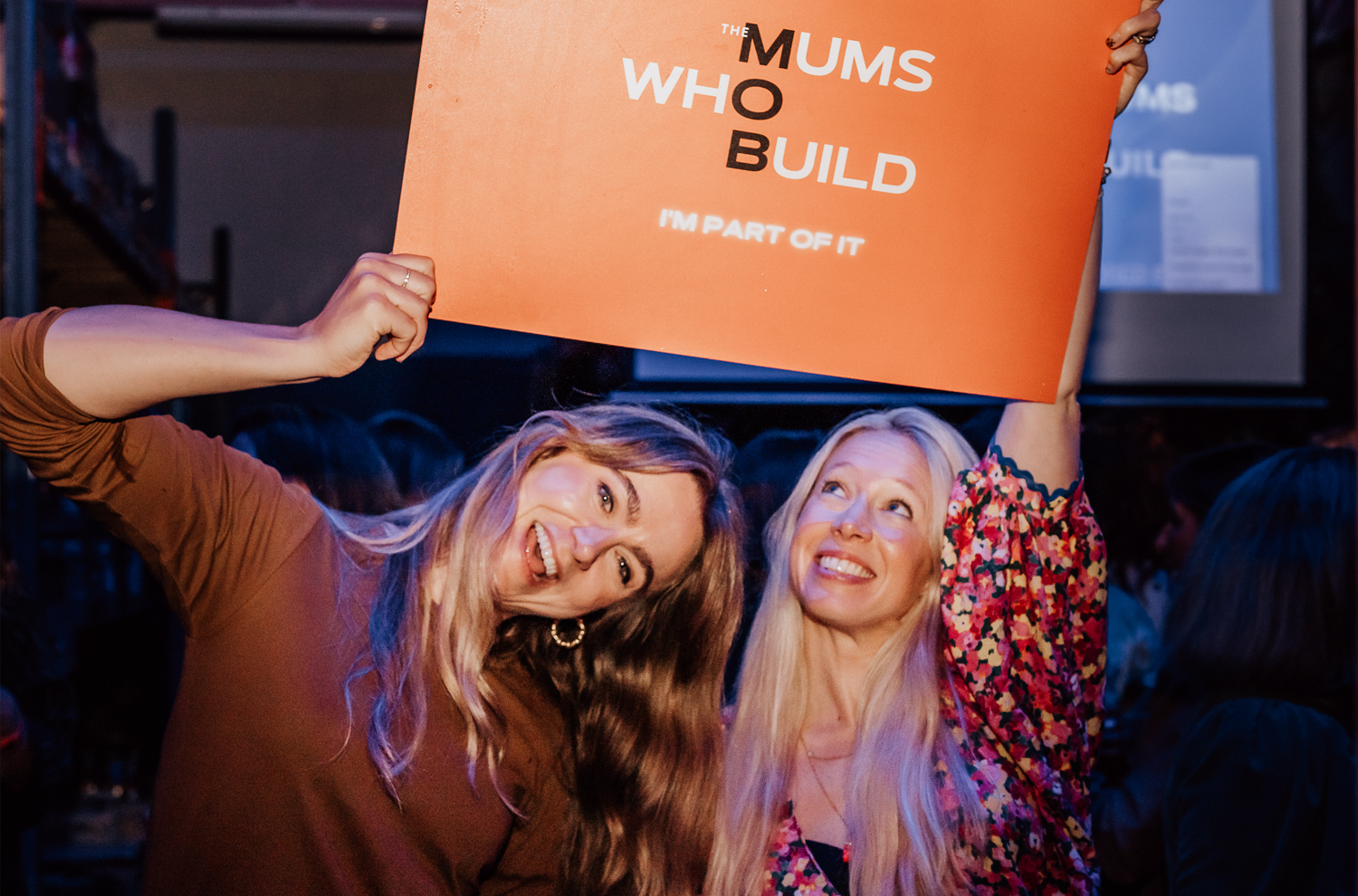
Rebecca Taylor is the co-founder of Mums Who Build, a growing community on a mission to close the gender wealth gap that widens even further in motherhood. Known affectionately as the MOB, the community helps ambitious mothers take charge of their finances, grow their wealth and design a life that allows them to mother exactly as they choose.
Together with her co-founder Georgie, Bex brings her own story to the movement they are building; one shaped by the moments that made clear just how important financial independence is for women and for mothers in particular.
Through regular online and in-person connection, the MOB gives members the tools to align their work, their wellbeing and their money to the season of life they are in. Earlier this year they launched the MOB App, putting information, resources and community directly into the hands of the women who need them most.
In this episode, we explore what motivated Bex to co-found the MOB, the reality of navigating identity, ambition and money anxiety in motherhood and why shifting from trading time for money to building sustainable income is one of the most powerful moves a mother in business can make. It is a wide-ranging, honest and genuinely healing Mum to Mum conversation about community, financial confidence and what it means to get in the arena.
Conversation Highlights:
- The story behind Mums Who Build, what motivated Bex and Georgie to create the MOB and the gap in the market they were determined to fill
- How motherhood reshapes identity, ambition and relationship with work, and why navigating those shifts in isolation makes them so much harder
- Why community and peer support are not nice-to-haves but genuine accelerators for mothers figuring out their next move in business and in life
- The gender wealth gap and why it widens specifically in motherhood, and what women can do to start closing it for themselves
- Moving from a time for money model to building sustainable income and the mindset shifts required to make that transition
- The gender investment gap, the barriers that keep women on the sidelines of investing and why starting small, even just five pounds a week, is enough to begin building financial confidence
- How societal expectations and the politics of parenting quietly shape the financial decisions mothers make and the ambitions they allow themselves to hold
- Why financial independence matters more than ever when you are a mother and what it makes possible beyond the bank balance
- Rediscovering self-worth after the identity upheaval of motherhood and how the MOB creates space for that process to unfold in community
- The advice Bex would give her younger self and what it reveals about money, ambition and the importance of getting in the arena sooner
Listen If You’re:
- Feeling financially anxious or out of your depth when it comes to investing and growing your wealth
- Ready to move beyond trading time for money but unsure where to start
- Navigating the identity shifts of motherhood and searching for a community that truly understands
- Curious about the gender wealth gap and what you can do to close it in your own life
- A mother who wants to model financial confidence and ambition to her children
- Looking for a community of mothers in business who will hold your hand and raise you up
Favourite Quote for Mums in Business:
“Motherhood is the time to own your ambition, invest in your growth, thrive in your business and design a life that means you can parent as you want to.” – Rebecca Taylor
About the Guest:
Rebecca Taylor is the co-founder of Mums Who Build, a community and movement dedicated to closing the gender wealth gap in motherhood. Known as the MOB, the community connects ambitious mothers with the tools, resources and peer support they need to take charge of their finances and grow their wealth. Alongside her co-founder Georgie, Bex is building a space where mothers can align their work, their wellbeing and their money in a way that truly supports the life they want to live. The MOB App launched earlier this year, bringing that mission directly to the women who need it most.
You can connect with Rebecca Taylor via The Mums Who Build website, Instagram or Linkedin.
About The Host:
I’m Victoria Phipps – a Mum of two, analogue family photographer, charity co-founder, marketing person and now podcaster! My career has wandered all over the place and is becoming a bit of a complex tapestry as I head into this middle phase of life, but I can honestly say I’ve loved every minute of it so far.
I was raised by a nurturing Mother and an entrepreneurial Father and have inherited traits from both, so the tension between ambition and motherhood is one I grapple with on a daily basis! I’m fascinated to hear the stories of other women on a similar path, who are striving to build thriving businesses whilst being present for their children. It’s a tough juggle, but I hope the conversations shared on this podcast help Mums in business feel less alone and inspired to keep going in pursuit of their dreams!
If You Enjoyed This Episode:
Please subscribe, rate and review the podcast – it helps other mums find us!
Share in your Instagram stories, tag @mummeansbusinesspodcast and let us know your biggest takeaway.
Share this episode with a fellow Mum in business who you feel would resonate with Bex’s story.
Episode Transcript:
Hello and welcome to the Mum Means Business podcast, where we shine a light on inspiring women who have one thing in common. When they’re not managing tantrums, homework, P.E. kits and play dates, they are busting their gut to create something from nothing, to turn their passion into a thriving business and build a better life for themselves and their families. We dig into what motivates devoted mothers to pursue entrepreneurship and how they integrate their work and family life.
I’m Victoria Phipps, your host, and if you’re an ambitious mum in need of some solidarity whilst navigating the messy middle of making your big dream a reality, then stick around. This is for you.
NOTE: This is the transcript from the original recording, rather than the edited episode so timings may vary.
Victoria (00:03)
My guest today is a co-founder of Mums Who Build, a growing community on a mission to close the gender wealth gap that grows even wider in motherhood. This community, affectionately known as the Mob, helps ambitious mothers who want to take charge of their finances and grow their wealth. Mums of two.
should say mum of two, Rebecca Taylor believes that motherhood is the time to own your ambition, invest in your growth, thrive in your business and design a life that means you can mother as you want to. Connecting regularly both online and in person, Bex and her partner in crime, Georgie, are giving members the tools they need to align their work, their wellbeing and their money to support the season of life they’re in and beyond. Earlier this year, they launched the Mob app.
to further empower women with the information, resources and community they need to say yes to the things that really matter in life. Georgie and Bex bring their own unique stories to the movement they’re building. Moments in their lives that highlighted how important it is for women and mothers especially to be financially independent. Bex, I’m so interested to learn more about what motivated you to start the mob.
and the ambitions you have for it going forward. So a very warm welcome to the Mummy’s Business Podcast.
Bex (01:24)
Yay, thank you. Thank you very much for having me. Georgie sends her large crisp white apologies because she’s actually managed to go into the mountains with her family and her son. So she’s got two little boys and Freddie, who is severely autistic, they went skiing for the first time last year and Freddie loved it.
So her being able to go out there with her family is incredible for her. So she sends her apologies, but she is having a really good time. Yes. Yeah. Yeah. ⁓ yeah.
Victoria (01:48)
that’s cool.
Yeah, she’s found something more fun to do and I totally get that. I can’t compete with a snow slope, so that’s fine.
No, but I’m really looking forward to talking to you and in some ways I have to admit I was like, my gosh, I never like interviewed two people at once and I am terrible for overrunning. It’s, I really struggle because I just feel like as we come towards the kind of middle end of a conversation is where it’s getting really good and, and I am.
Bex (02:14)
right.
Victoria (02:23)
have to be more strict with myself because my audio editor is just like can we please? So I was like how am I going to do this with two? I’m going to want to hear both of their stories in full so actually you’ve taken the pressure off me a little bit or Georgie has. So let’s start at the beginning you can answer on Georgie’s behalf now you see so what made what made you start Mums Who Build?
Bex (02:33)
Yeah.
Yeah, yeah, I will.
Right, so maybe if I go back a little bit further, so I have a fierce independent streak because I grew up, my parents got divorced when I was six and it was a very emotional divorce. So I saw firsthand what motherhood or what I believed motherhood did to your sense of financial security because
You know, my dad kept going up and he lives a very comfortable life and that’s wonderful. And then my mum has always had to make the numbers work, not because she’s bad with money, but because she’s always been fearful of losing it. You know, kind of thing. She had eight years out to raise me and my brother, and then she needed to go back to work full time when we, when my parents separated. So I grew up, you know, really with that internalizing, I internalized the belief that
motherhood meant your relationship broke down. So you have to look after your money. Like that was my MO. But ⁓ so I went into finance and became an accountant because yeah, I love finance. And then I realized that I didn’t love finance whatsoever. It made me really unhappy, but it did make me very confident with money, which is a good thing. I love it and I hated it at the same time.
Victoria (03:50)
Mm-hmm. Yeah.
Bex (04:14)
⁓ But then when I had my son, so Sevi was born in, actually cut his name out, I’ll say, my son was born in 2022. And I, at that point was quite unhappy because I’d always wanted to leave finance and I’d been moving away from the finance role, but I needed to jump. And so when I was
pregnant, I was working as a head of finance supply chain, people operations in a startup. And it was wonderful, but I still had this finance role attached to me. And then I thought, I actually want a career change. But when you have a child and you want flexible work and you want a career change, there aren’t many options for you. So I went down the lonely path of setting up my own business and
When I did that, I realized there were lots of other people doing that because they wanted to make it work around their family. But obviously, when you leave the security of having a job, you inherit a lot of other risk if you go and start a business. And you also leave a team and you have no team. So I’m like, I miss people, you know, I have skills, yes, but I
Victoria (05:35)
Mm-hmm, yeah.
Bex (05:40)
also want other people around me to learn from and, you know, be a team with them, if you notice me. So tried to set up like a skills sharing swapping thing for mums in the area and got nowhere with it. And then I also kept hearing stories about how lots of women were either passed over for promotion on because of maternity leave or they were made redundant in a lot of
instances which is rubbish and you know their confidence was being knocked and then you hear the statistics which is 74,000 mothers every year are pushed out of the workforce because of this lack of flexibility. So what I experienced when my world evaporated I realised everybody else or lots of people were experiencing when they became a mum and all of it was hitting our money.
everything, our money was being hit completely, because that is then what contributes to what they call the wealth gap. So the wealth gap is, you know, your remuneration, your pension, your investments, that mean at retirement, a woman retires with 70 P for every pound that a man has, because you have this gap, and then you lose all of the compounding and the increases that you would get if you continued on the same trajectory. So when I met Georgie, and I heard her,
heard her story and I met a woman who had, know, so Georgie, she had to come out of work when she, I say had to, Georgie made the choice to leave work because it could not work for her in the situation she was in. So she was, that choice was forced, but she found out when she was pregnant with Freddie, when she was pregnant with her first son, she found out in utero that he had a rare genetic condition.
And then he was later diagnosed with severe autism. And that just meant that her, you know, thriving, loved PR career that she was doing in Burberry, it had to stop because the two worlds couldn’t fit. As Freddie grew, she needed to understand what care he needed, but also he can’t go to afterschool clubs because, and so her work day is completely different. She doesn’t have a work day. She has a work few hours if she can, because if Freddie’s at school.
Victoria (07:55)
Hmm.
Bex (08:05)
And so she’d stopped working to learn to be in that in the Sen world, and then also lost that part of her. So she’d lost her income, lost her identity, she loved her career as well. And so when I met her, I was like, you’ve got a lot of skills that I do not have, because PR marketing, that is a beast to me. But I’ve got all of these other skills. Why don’t we do this together and create this into a network into something where we can all lean on one another.
And it’s grown arms and legs. And now we have, yeah, this thriving community of women building businesses or building careers and wanting to, you know, look after their wellbeing, which is impacted by their money. So making sure money is high on the priority list for everybody, because it influences everywhere and it is influenced by everywhere. So yeah, we’re now building this app.
which is wild to say. And yeah, a bigger community and just lots and lots of resources and lots of connections that actually help women move forward on whatever journey they’re on with their work and money and motherhood and wellbeing through the whole thing. Yeah.
Victoria (09:24)
Yeah, it’s quite an adventure. I think I first sort of stumbled upon you probably about five, six months ago, but I feel like it’s accelerated even since then. But these things take off, and it can feel kind of slow and tentative when you’re kind of forming your idea, but then it’s like a snowball, isn’t it? And you realize how many women are experiencing the same pain points that you’re experiencing.
Bex (09:35)
Yeah.
Mm-mm.
Victoria (09:54)
And so I wanna ask, what was the business that you were setting up when you decided to leave your previous job? So when you became a mum and how did that?
Bex (10:01)
Yeah, so I
have always loved leadership and development and creating company culture that empowers people to advance their careers. So I was an accountant and I moved into big brands. So I worked at Apple for five years and then left Apple to go to Red Bull. And when I was at Red Bull, their leadership and development program and their culture, unbelievable. I was in the finance department.
but you realize how when you put people in the right roles, you put the right people in the right roles, the energy they bring to the workforce and also the money they make because they’re doing their best work, it translates through the whole business. And so I learned there and then just fell in love with that world of like company culture and people development. So left there to join MoJu and I was part of the leadership team where we set up the company.
So was me and the two co-founders at the time. And I helped them put in their like people development practices, how they hire, how they train, how they develop. And we created, you know, the culture that they’ve now grown. And it meant that I could take away those learnings and start up my own consultancy in company culture, because when you put people in the right seats, they do their best work and they earn the money because…
They love doing what they’re doing and they’re solving the right problems and they spend their money in the right way and the business wins from that. So yeah, I went to set up a consultancy for company culture and I worked with, strangely I was thinking about this, I worked with quite a lot of drinks brands and I’m not a big drinker, but yeah, like helping them really make sure that their internal brand represented their external brand as well and how they were developing.
teams and putting people in the right roles so they can do their best work.
Victoria (12:00)
And do you still do that now or are you all in, in the mob?
Bex (12:04)
So
as of October, so I had my second child last year, God, I can’t even work this out. And I came back from maternity leave in October. So what was that? Five months ago. And as of October, Georgie and I made the decision to go all in on the mob. So basically everything has happened in the last five months because we’re working all in on it.
Victoria (12:14)
It’s all a blur. You’ve got some children.
Okay.
Bex (12:32)
That being said, neither of us work the traditional hours. I have childcare three days a week and Georgie works term time only 10 till two because we have to work flexibly around our family. And we also want to prove that it can be done. You can build a business that is an effective business that helps people, that provides a financial future, sustainable financial future for us by doing it differently. And so we are quite
disciplined with that. That being said, boundaries and running your own business. I’m not really sure that happens. Yeah.
Victoria (13:09)
Not so much.
I mean, we can give ourselves a hard time about this. I’ve been thinking about boundaries a lot recently. And I think when something is new, it is really hard to hold tight to those boundaries. And actually there is a sort of truth that a startup demands time. And it’s a universal truth that we cannot escape.
And there is definitely a piece about like accepting that things are gonna take longer because you have less time to put into it. But there’s also this whole patience question and actually you don’t want it to take too much longer. If nothing else, because you need it to be financially sustainable and support you. And especially now you’ve gone all in, which makes complete sense with my sort of like, I found you six months ago trajectory I in my mind because that’s when you made that call.
Bex (14:07)
Yeah.
Victoria (14:11)
And I love that you had this background with the leadership piece, the culture. Like I’m really into gardening, side note, but it’s right plants. Okay, good. Millennial mothers into gardening. But it’s right plant, right place, right? It’s just, it makes complete sense. This is something that mother nature knows, you know.
Bex (14:20)
Me too. Yes.
Victoria (14:34)
There are so many people who are struggling and feeling challenged in a role that doesn’t quite fit them. And often they can’t really see that for themselves. And to have had that opportunity to really dig into that in a previous job and then take that and run with it yourself is quite something. But then also to have experienced the isolation that a lot of mothers feel when they take this really brave leap because…
Like you said with Georgie, you look at your career and even if you love it, it doesn’t work. Like logistically, practically, it cannot work. Someone is gonna get pissed off. It’s probably your employer because actually at the end of the day, when you’re a mum, your child comes first and everything else has to fall by the wayside if your child needs you. And that’s a hard decision to make to walk away from a job that you love.
Bex (15:12)
Yeah.
Victoria (15:30)
And it might be that you’re leaving because actually you’re seeing it as an opportunity and that circumstance isn’t there. It’s not a necessity. It’s actually like, well, now’s my chance. This isn’t working. I can do X, Y, Z that I always had this niggle that I might like to do. But it is scary. Really, really terrifying, especially if you don’t have anybody modeling entrepreneurship in your world. So you take this big brave leap and then you find yourself just spending a lot of time by yourself.
You don’t necessarily know where to find your people. You haven’t, you know, found your online community. You haven’t felt able to invest in a mentor or a coach. You have this sort of internalized idea that you should be able to figure it all out by yourself. And really that can be very challenging to sort of maintain the energy that you need day after day after day to do that alone, to create this sustainable business.
Bex (16:29)
You have perfectly articulated why we do what we do. And it’s, think it’s you’re, you’re in this, you feel like you’ve chosen freedom. If it is your choice, if you’ve gone into starting your own thing, you’re like, my God, I’m going to be free. I’m going to do this. I’m going to like, it’s going to be so good. I’m going to be able to pick the kids up. I’m going to do this. No, you choose your heart. People who are employed.
Victoria (16:33)
Yeah, yeah.
Mm-hmm.
I can work when I want.
Bex (16:58)
And if they have families and they’re employed, they have hard stuff to deal with. And people who have their own business and they have families, they have hard stuff to deal with. So you just need to choose your heart. There is no easy way, I’m sorry to say, even though all of the hooks on Instagram will tell you, earn a billion pounds in a week by closing your eyes. Do you know what mean? Like that type of thing.
Victoria (17:19)
You ⁓
I’d love that.
Bex (17:28)
But I’m like, the reality is, it’s hard either way. So you need to find your trusted people to be able to say, this is really hard. Who’s a couple of steps ahead of me that can give me some advice? Because you don’t want the person that’s over, you know, that’s 10 years ahead of you because they’ve done it. They are aspirational. They’re who you want to be in 10 years time. You want the people who are in the trenches with you now, but who are
couple of months ahead that can say, it’s all right, babe, it’s gonna get good, don’t worry. But these are the why don’t you try these things? Because otherwise you’re just on your own and you’re in an echo chamber of anxiety and focusing on the negatives and just saying, I can’t do this anymore. I’m gonna, I’m gonna quit, I’m gonna go back. And what we don’t want to do as individuals is go back, you want to like navigate sideways and through like, when a toddler is learning to walk,
they don’t go straight, do they? You have to accept that you’re gonna smash your knee and bump your head and like, you know, maybe go to the A &E a couple of times. But it’s like, you’ve got to be okay with that. And so I just think in the mob, what we we try to do is just make sure people feel like they can put their hand up and go, this is really hard. And like foster that conversation to be like, okay, who’s done this? Who’s X, Y, Z? And definitely, Georgie and I
she’s the person I do it to and she does it to me you know when things when we’ve had these lofty ideas and expectations for things and they don’t come off suddenly it’s tumbleweed through like oh my god I press send nothing you know I mean um and then we call each other and we’re like oh yes okay next one you just have to like dust yourself off and go again but you you need people to do that with in whatever situation you’re in so
Victoria (19:11)
Hahaha
Yeah. Yeah.
Bex (19:24)
If you’re employed and you’ve got no other people who are parents in your team, that’s horrendous. You need people to talk to. Like that’s why we have Slack so we can plug into your workforce. And if someone’s like, my God, I’ve got to go home again. It’s like, talk to us, talk to us on Slack because we’re here. We get it. ⁓ Similarly, if you’re building a business and stuff is you’re on your own and stuff’s really hard and you’ve spent ages doing some kind of like email sequence or wrestling with the backend of Facebook ads. don’t know.
Victoria (19:30)
Yeah.
Bex (19:53)
and just like this is relentless and crap and I’m not getting anything you need a place to say can anyone help and that’s what we do as well yeah
Victoria (20:01)
Yeah.
Yeah, absolutely. And there’s something just so valuable about the solidarity in itself. Like you don’t always need to have the exact answer to that problem. You just need to be able to say, yeah, it’s shit. And I’ve been there. And that’s it. Sometimes that’s enough. It’s just this feeling, I think, when you’re doing it by yourself, that you can so easily spiral.
Bex (20:21)
Yeah, yeah, yeah.
Victoria (20:30)
And then you start to tell yourself stories that you’re not cut out for it. And that’s when you start going backwards. And it’s really hard, I think, I was having a conversation with another mum the other day, it’s sometimes really hard when you move into that kind of entrepreneurial mindset yourself, and actually everyone else in the real world around you is just deeply concerned about you. It’s like you’ve literally like lost your mind. You had this really good job, and now you’re doing this bonkers thing that
Bex (20:34)
Yep.
Yes. Yeah.
Victoria (20:59)
that may or may not work. And actually, the people that you rely on for support in your real life, for everything else, are amazing. You know, if you have to take your kid to A &E, they’re there, they’re looking after the other one whilst you’re at the hospital. You know, any other problem you have, you’ve got a problem in your relationship, you’ve got a problem in your wider family life, they’re there, but you do this stuff.
Bex (21:01)
Yeah.
Mm-mm-mm.
Victoria (21:26)
And there are a lot of people that because they haven’t experienced it themselves, they don’t get it. And they’re just deeply concerned for you. And actually, if you don’t find people who are in the same arena battling the same challenges, often, mean, I have found, I know a lot of other mums have found, like you try and have those conversations with people who aren’t in that space. And it can be actually,
bit of a bummer because you’re having conversations with people like well maybe do you think this is the right thing and it’s not really what you want to hear.
Bex (22:02)
Yeah, yes. Exactly.
Yeah, it’s like, don’t open the exit, because I’m not going through it. That isn’t a thing. It’s just I want to say it to someone who’s like, okay, cool. Yeah, I’ve been there. Like that’s it’s crap. And then, you know, 24 hours later, you’re like, how do I change this? Okay, I’m gonna try this and you start iterating and find finding something else because there isn’t an off ramp.
Victoria (22:10)
Yeah.
Exactly, yeah.
Bex (22:29)
or certainly when you commit to it, there isn’t one. I’ve gone through that in the last 12 months because being completely honest, when I was on maternity leave with my second, I almost quit. was like, this isn’t for me because I was looking in seeing how Georgie was doing it by herself. I was like, she doesn’t need me. She’s fine. She doesn’t need me. And I was like, yeah, I think…
Victoria (22:54)
Yeah.
Bex (22:55)
I’m just gonna like hand it over to Georgie, you know, she can do what she wants with it. And I didn’t tell Georgie at the time because I know when I feel like that, I don’t make a like split decision. like, I need it to sit on me for a while. And then when I came back, so I had imposter syndrome of my own business, which is bonkers. I’m like, And then the week I came back, Georgie got on the phone.
Victoria (23:14)
Yeah.
Yeah.
Bex (23:21)
and I was like, oh yeah, hi, nice, and she went, hey, nice to have you back. So we’re go and pitch to Simon Squibb, Amelia Sordell, Nick Pritchard and Daniel Priestley next week. Are you in? And I was like, And basically from that moment, I just went, okay, this is it now, we’re in. So I really did do a 180 and then up until that point, I was like, okay, I can go back and get a job, I can do something like this and then now I’m like, no, this is it, I’m in and I think you have that.
you have that switch that happens at some point because you forget what the old life was and you just see different routes to get to where you want to get to. And there is then this like acceptance of, okay, no, this is me now. This is my identity. But it’s taken me four years to get there because obviously you go from one really strong identity of who you were in corporate world and you’ve really, you know, spent so much time and investment into your education and your
you know, career and stuff, and to then shed all of that and become somebody else. It takes a long time like reprogramming yourself and the bit where you were saying about like talking to your friends. I was so scared of telling them I’m doing something different because you’re, you put yourself up for saying, ⁓ that’s weird. Is that, is that you? That’s not you. And I’m like, well, it is me. I just actually haven’t been me for me.
for a longer time, you know, I’ve been playing this role over here, but I actually want to do this. And so it takes a lot of time to strengthen that identity and find it as well. You know, I tried consulting in my earlier career. I was like, shall I shift to be an interior designer? Should I start a Leisure brand? Like all of these things have led me here. And now I’m doing this. I’m like, this is it. I am so happy.
Victoria (24:51)
Hmm.
Yeah.
Bex (25:19)
It’s so hard, but I am so happy to put all of my energy into this. And so I’m happy to sit down and try and figure out the back of Facebook ads. But ⁓ yeah, it’s just, it’s mad. Yeah.
Victoria (25:29)
Yeah,
it takes a really long time sometimes. And I think as well, when you put like the massive seismic identity shift that is becoming a mum in there as well, it just further rocks the boat. Like if you have sort of been toying with, know, what is the next step for you anyway? Is there something else that I’m supposed to be doing? And then you become a mum, the whole thing just…
becomes a hot mess. I mean, that was my experience. And like at one point I was gonna be a gardening influencer. Like if you’d have asked me two years ago, I was like, no, this is what I’m gonna do. I haven’t started yet, but this is definitely it. It’s just like, no, it wasn’t it. And it’s, I think it’s important to have that conversation really openly because there will be women who are navigating that early phase of motherhood. Just like, it’s fine. Like whatever you think you might do, that might not be it.
Bex (25:59)
Mm-hmm.
Yeah.
Victoria (26:26)
and you are flooded with hormones, you are adjusting to this whole different role that you cannot really prepare for, you’ll probably just bog down in really like menial, repetitive tasks. Your day is like at the mercy of your baby’s routine. You’re probably not gonna make the final decision on where your career is going at that point.
Bex (26:26)
Yeah. Yeah.
Mm.
Yeah. Yeah.
Victoria (26:55)
you’re probably gonna have some mad ideas and a lot of women I was talking to feel like intensely creative at that point, firing all these ideas. But just to be like, enjoy that for what it is. One of those ideas might be a winner, but don’t like, I felt a lot of panic and urgency like I need to know, like I need to know what it is. And it caused that time to be very stressful when actually,
Bex (27:00)
Yeah.
Yeah.
Victoria (27:22)
Like I know that you’ve still got a toddler, but kind of as you come out of that baby toddler fog, you look back on it and you think, okay, I made that harder perhaps than it needed to be. If I could have just given myself a little bit more grace and trusted that the right thing would come to me, I might have been less mental. Yeah, exactly. You probably can’t feel it. Yeah, yeah.
Bex (27:44)
But I think you can say that with hindsight, but when you’re in it, no chance. Yeah. Because the
reason, like I can speak really confidently about that because when I was on second map leave, I could see the numbers running down because I’m so programmed to think about money because I’ve run businesses. I’ve always looked at margin. I’ve always looked at…
how we can reinvest the money that’s coming through the P &L back into the business to grow top and bottom lines. That’s my MO. And so my brain is programmed on what’s coming through the house. You know what I mean? I’m like, how are we, what’s our runway? Yeah, definitely. And so when I was on mat leave, and obviously at that point I’m self-employed, all I have is my business savings that I’m paying myself a salary to pay for.
Victoria (28:22)
Yeah, yeah, yeah, yeah. So you do it domestically as well. Yeah.
Bex (28:38)
childcare and I’m like the numbers are dropping the numbers and all I can feel is this weight of like we’re running out of money we’re running out of money I need to work I need to work so I put so much pressure on myself to always be thinking always be like okay I’ve got to do this gonna do this got to set this up so can automate XYZ because I didn’t really have a maternity leave because every time she was asleep I was like okay I’ve got to work do you know what mean and now I look back I’m like
And I certainly missed out on loads of social stuff. There’s an amazing WhatsApp group around here that’s second time months. It’s like 250 people on it. Every week they went for drinks and I never went, I never went once because every time she was asleep, I was working and I, you know, I look back and I’m like, did I waste that? And I’m like, I don’t think I wasted it because I was working doing stuff I love, but I certainly didn’t give myself any permission to slow down.
or be calm because I had so much pressure of this number running out. And I think that’s something that you have to weigh up whether you like handling that stress compared to the stress of handling maybe a bad boss. Do know what mean? Like it’s like, you have to be really clear on how you feel about money and why you feel like you do to be able to navigate the pressure that
Victoria (29:53)
Yeah, yeah,
Bex (30:05)
that brings because I absolutely hate asking my husband for money. We don’t, you know, we have a shared account, but I’ve grown up always having my own income. And now to go to an income of zero with the business at the moment, I do the cashflow for the house as well. So I see everything, but I, I’m like, I mean, it’s, such an uncomfortable feeling.
And that’s part of my identity as well. So I’m like, you know, I’m so motivated to get there. And he is the most supportive, wonderful husband ever never, like, never says anything about money. But at the same time, I’m very pragmatic. I’m like, No, if I’m doing this, it’s taking away from our ability to do other things. So I want to get back up to a, you know, really good level of income. So we can enable our family to do things that we want to do and have the choices we want to have. Yeah.
Victoria (31:01)
This plays really nicely into the money conversation because now that you’re reframing this, I think I had kind of, I had acknowledged the identity piece, like the struggle of finding your next step in terms of like your purpose, your career, your work, your fulfillment. And actually a really important part of that for me as well was money because we had built this house during COVID. And you know, when you,
build a house or like rebuild mostly about a house. You you have a point where you’ve got your money and you’re sending out like massive payments like roof invoice, 50,000 pounds. You’re like, yeah, go paid. And then you move in and the whole world slows down and you have some babies and like then nothing is happening. And you’re like, right, this is 10 pounds. Should we save this for next month? Or it’s just a whole different world. And I definitely had that pressure as well because I’m like, we’re now servicing.
Bex (31:40)
Yeah, yeah, yeah.
Victoria (31:57)
You know, it’s a forever home. This shit happens. Like it’s, part of process. We’re servicing an enormous mortgage. I don’t know what I’m doing next work wise. I need to earn. And that definitely played into the sort of panicked urgency. And I suppose one of the things, the main objectives, as I understand it of the mob is to help women get to a point where they are relinquished from that panic. Like where they have built a wealth that means that they
can take a day off from their business or their job unpaid without, you because their child needs them or because just because it’s half term and they want to do something nice with their kids. And they’re not thinking, but if I take that day off, that means I’m losing 200 quid and I can’t afford to. It’s the freedom piece that we’re all kind of aiming for. So tell me about your experience.
Bex (32:37)
Yeah. Yeah.
Exactly. Yeah.
Victoria (32:53)
in supporting women to get to that point where really it’s like peace of mind and taking the panic like taking the panic out of their day to day that anxiety about money.
Bex (32:58)
Yeah.
Yeah. So I’m going to say them out loud to make sure I cover these points off because as you were talking, I was like, yes, that that that so one is bringing the beast into the light. Two is cash flow and three is time for money. Because so bring the beast into the light, right? A lot of women are afraid of money because of their inherited beliefs of money. What it was like growing up, you know, we are the generation where our
lot of our mums did stay at home. It’s rarer that mums were working but mine was working because she had a divorce, you know what mean? But some people grow up with like, my dad did everything. So like mum, you know, whatever. And because there was no need for mum to learn, they weren’t talking about it in the home or da da. You obviously have the horror stories, which I wouldn’t say mine is a little tea trauma, in the sense of dad left and I learned a lot from it.
But there are obviously like a lot of traumatic stories around money, you know, where, know, if someone’s died and there’s actually no money there and things like that, it’s, you know, really impacts people. But are this millennial generation I’m a new part of, if we’re not like actually going, what am I doing with my money? And it’s, it’s okay to want money because money being wealthy means having choices.
And women, when they have money, make really good choices because you are somebody who cares, who knows that good things happen when you share your wealth with people. Whether that’s your family, your community, know, the wider world or whatever. But us actually like bringing it out into the light is something that’s really important because if you have money anxiety, just like watching the Blair Witch project, you never see the witch, do you?
If you have money anxiety, it’s because it’s hidden. It’s because you are not bringing it out into the light and you’re not looking at your numbers and it’s making you think that they’re worse or better than they are. So you’re going, it’s fine. And then you’re like, actually, no, I can’t do this. Or you take on, keep spending on the credit card as I used to do. Cause I had before being a mum, I had 10 grand across four credit cards. I was like, what am I doing? Like this is mental. I cannot go into motherhood with this. So I paid them off.
If you need to bring the beast into the light, first of all, so acknowledge it’s there and say, okay, what’s the small things I can do to actually make this part of my routine? know, the only way you get fit and strong is by doing the reps, going for the run or keeping doing the weight lifting, know, increasing resistance. It’s the same with money. You’ve got to keep doing the reps because money is the thing that consistently follows you in your life like your health does.
So if you get used to doing these consistent views and touch points with your money, it removes anxiety and it actually means that you’re building properly, but it becomes part of your normal weekly monthly routine as well. So bring it into the light and then cashflow is a big one for me because I think a lot of people are in this or I used to be, it’s like binge purge. The, I’ve got loads of money. I’m going to spend it all. And then you’re like, we haven’t got anything.
left. So getting into the habit of always thinking about, and I’ve come back to this term runway, like how much savings have you got for how many months? How can that cover you for how many months? So in the startup world, you’re burning cash, you’re on this runway, and you usually got about 18 months worth of cash before you need to raise again. In your household,
you ideally should have a runway of about six months, like three to six months. So if either of you lost your job, if you’re in a two parent household, you need to be able to sustain your needs for three to six months. And that needs to be accessible. Like, do you have that? Do you know what those numbers are? And if you don’t, make sure that you’re every month allocating X amount of money into that pot so it grows gradually over time. And then once you hit that threshold,
you can then allocate a bit more money into investments, which are for the long run kind of thing. So it’s all like small things that you can improve your cash flow or improve your wealth position by doing the same thing over and over again, which is really boring. But I think a lot of people think money is like scary and sexy. And I’m like, it’s neither. It’s just, it’s just really boring. Because if you get money right, all you do is the same thing over and over again with it.
Victoria (37:41)
It’s just money.
Bex (37:50)
It’s just put money away, spend it on stuff that you need, invest in the rest, put money, do you know what mean? It’s like the same things that actually build over the long run. But again, we’re in the attention economy and people want money to be sexy and, you know, scary. So it’s like, oh, I can’t do that because I’m going to lose everything. No, not if you don’t invest everything. You’ll only if you only invest if you learn to invest with five pounds over three years.
by those three years, you’ll be by the end of those three or five years, for example, you’ll be so confident with getting used to the volatility of the markets, when your money actually does come back up, say if we’re talking about mum, when your money comes back up, because your kids going to school, and you don’t have to pay for nursery anymore, you can actually invest that money with confidence, because you’ve learned how to do it with five pounds, you don’t have to start from zero at that point. And so yeah, like this slow and steady
Victoria (38:37)
Mm.
Bex (38:48)
small boring habits is the main thing that we do get it into the light. And then what was the third thing I this is why my brain time for money there we go. So this is a big learning for me is you know, I set up a consultancy I was selling my time for money I had a day rate it was a good day rate but every time one of my kids was ill I lost that whole day rate. And you need to move away from time for money and move into
Victoria (38:56)
Time for money.
Bex (39:19)
consistency or evergreen products. So yes, you can do time for money, but you need to have that as one revenue stream. You need to have other revenue streams that sit in your portfolio that mean if you do need to take time out, or if you want to take time out, you’ve still got that ability to bring income in and it’s not, you’re not in this like, ⁓ I’m never gonna lose all these days. Cause I felt that I was like, if I, you know,
they start nursery and you have like three months of just obliteration of your day. I didn’t have any sick pay every time I didn’t go to work. I lost however many hundreds of pounds because I was I wasn’t being paid for that. So yeah, trying to show people how to move away from time for money as well is is is key and we’re on that journey ourselves. You know, we’re we’re a subscription model.
which is brilliant. So we need to make sure that we’re always having new things come in. But we also need to hit critical mass, like we need X amount of people in the community before it actually pays for itself. So we’re on that like, you know, growth path now of understanding how to move people through the sales and marketing funnel, which is a beast. But I do enjoy that thinking. Yeah.
Victoria (40:35)
Yeah, I think the time for money thing is really interesting. Like I had a photography business, well, I still do, but it was weddings predominantly for like just over a decade and it’s completely time for money. And it’s literally like it relies on you being there. There’s no give in it whatsoever. You can’t, I mean, it’s a wedding. You can’t not turn up anyway, bit rude. ⁓ But yeah, just to kind of diversify because actually a lot of…
women that I’ve spoken to say actually the time for money is where they get a lot of job satisfaction, a lot of reward and a lot of enjoyment and fulfillment, that human connection. And so it’s not that we wanna give that up, but it’s just being really strategical and acknowledging that we are mothers and that sometimes shit happens and we can’t be there, we just can’t.
Bex (41:12)
Yeah.
Mm.
Yeah.
Victoria (41:27)
and
so that there is something else and we’re not, because actually that model, if you’re going all in on time for money, that breeds anxiety in those moments as a mum, because it’s inevitable you’re not gonna be able to make every commitment that you put in your diary when you’ve got small children. And so I think what I love about all of this is it is kind of under the umbrella of reducing anxiety, financial anxiety, which is such.
Bex (41:51)
Definitely. Yeah, yeah.
Victoria (41:54)
I mean, I’m not there, so I don’t know, but I imagine it’s amazing when you don’t have any money anxiety. And so much of it, the confidence piece is really interesting because I think we do, particularly, I suppose, around investing, it does seem even now like this big mysterious thing that actually, you know, if we look back in time, has been quite closely guarded by like men in a financial sector or people who’ve inherited wealth.
Bex (42:22)
Yeah, yeah.
Victoria (42:23)
that understand that you can actually make money from money. And that can be very passive. All you have to do is set up an automated transaction, but it feels like a brand new world that women are sort of tentatively stepping into. And it is quite intimidating. And I think your five pounds a day idea is really, it makes it feel accessible. What’s been the reaction to that?
Bex (42:49)
It’s,
it’s well, very, very, the appetite is there, but overcoming people’s fears is big. It’s, it’s still, people are still holding back and I am in no way saying you should spend your money on this. What I’m trying to do is give people perspective and say, five pounds. How many times have you wasted five pounds in your day? How many bougie flat whites have you bought this week?
that costs four pound 90 or whatever now. I’m like, if you just took one of those and put it in a platform, you’ve got to do it with money that you don’t mind losing, but a fiver, you know, everyone who can afford coffee can afford to start investing. so put that in and learn to do it. Just look at it, get used to the volatility. So I have, I use a couple of platforms and I have this really cool, I now use widgets. Do you use widgets on your phone?
Victoria (43:21)
Yeah.
Bex (43:49)
It’s like they’re like big apps. So basically it takes one of your apps and expands it a bit. Yeah, so I have my widgets on my calendar. ⁓ What is a widget? My I have my calendar at the top and then I have my workout one and then I have my money one that shows me what my play investing account is. So basically on the screen, I can see the ticker of what my accounts are doing going up and down. So
Victoria (43:54)
Makes it bigger. Okay. I feel like a grandma right now. Go on. What is this widget of which you speak? Go on.
Bex (44:19)
As of yesterday, I had lost like 4%. Today, I’m up 0.6%. So even just by me having this on my screen and me looking at it, I’m getting used to the volatility because I’m not going to take this money out. I’m going to leave it there for over five years. But when you when you see it and you actually see like, it’s okay, like up and downs are fine. They’re going to happen because it’s based on a marketplace, you get used to it. And so you become calm. Whereas if you
put a thousand pounds in immediately and tomorrow it drops down 4%. You’re going to be like, get it out, get it out because your brain’s going to go, it’s going to drop to the bottom. So I’m just very much like, try it, you know, up to you. You choose what you put it into, but I’d rather learn and lose five pounds that actually could turn out to be a lot more over the long run than not play because if you, you’ve got to be in the arena. Otherwise you could just sitting outside.
Victoria (44:55)
Yeah.
Bex (45:18)
not actually doing anything. But yeah, it’s a psychological thing. Like you what you said about, you know, the gatekeepers of finance stuff. It was like 900 years ago that the financial markets were invented where people would like sharing, you know, lending money. But it was only 100 years ago that women are allowed were allowed to start getting loans for things like mortgages and stuff like that. So, you know,
This is weird, a tiny slice when we’ve been allowed to go into it. But ⁓ I’m just one of those people that like, well, the doors there just go through it. Like, I’m just one of those people like, I can’t, I can’t not go through the door. If I think it’s interesting. I’m like, I’m just gonna go in, I just want to see I want to do. Because if you stand on the outside, you’ve got no you are not allowed to have an opinion. You can have an opinion when you’re inside. I just think
If you stand on the outside, like that’s fine. You can be, anyone can be on the outside, but don’t share your opinion about those indoors because those people indoors are the ones that are trying and that, you know, are just having a go. The The most annoying part in all of this is when it comes to money is the belief that
I don’t want to say belief. It’s the statistics show that when you invest in female led businesses, you get higher returns, but still money doesn’t flow through to female led businesses the way that it does for male led businesses. And so that’s the sticking point for me. It’s like, how do we understand why when the data shows you get better returns, why are people still not doing it? ⁓
just feel stupid because that is the data showing you that it doesn’t that you actually get better returns. Yeah.
Victoria (47:17)
But that’s when it gets a bit dark, because the societal attitude is enough to make people ignore the data. So the prevailing attitude is that it’s safer to invest in a man than a woman, and that it’s better if everyone’s in the office than if they’re working from home. These are the prevailing attitudes and actually it doesn’t…
Bex (47:19)
Mm.
Yep, yep.
Victoria (47:43)
At this point, it feels like the data is starting to come out to expose the truths in this. And unlike you were saying, you’re so passionate about showing that it is possible to build a sustainable business within school hours and the data will come, but the job is not just gathering the data. The job is then communicating the data effectively to such an extent that it cannot be ignored.
Bex (47:50)
Mm-hmm.
Yeah, yeah.
Victoria (48:12)
and that it doesn’t
matter what sort of outdated ideas are prevailing, that the noise is so loud that actually from probably, and it’ll probably be a financial decision in the end that moves the needle, that it’s enough to change attitudes culturally. And it’s a big mountain to climb and I feel like we’re in the thick of it. But you know, change does take time and it’s…
Bex (48:18)
Mm.
Mm.
Victoria (48:41)
It’s interesting what you said before about being in the arena, because with investing, you know, you’ve got to be in the arena in order to understand it, in order to have an opinion. And actually it plays into what we said earlier about entrepreneurship. Like there are, there are a lot of people who have very particular ideas about it and the risk level and, that feel concerned about people that they love going into it because they don’t know anything about it. And actually it’s when you find people that
Bex (48:51)
Mm-mm.
Victoria (49:09)
do know something about it, that have experienced it or are experiencing it right now, and that are willing to open the doors and give you advice. And they’re not gatekeeping because they have knowledge to share and they know they can help you. that’s same with investing, same with entrepreneurship, same with motherhood, same with all sorts of things. Like it’s about breaking down these boundaries and being like, look, how can I help you? Or conversely asking for help and finding a community like yours, which is full of people who are
Bex (49:17)
Mm-hmm.
Yeah, yeah, yeah.
Mm. Yeah.
Victoria (49:39)
because they are in the arena and because they know how hard it is, really keen to help anybody who is making that call, putting their hand up and being like, I would like to do this, but I don’t know where to start.
Bex (49:46)
Mm.
Yeah, yeah, definitely. Definitely. I just want to touch on the schools piece, right? Because in all of this, know, women, when we become mums, we are being forced to operate in systems that were never designed for us. It’s the
work week that was designed for manufacturing of cars and yes everyone is in that right everyone has to do that now so obviously with the revolutions that have happened since the industrial one we still haven’t changed the work week we’ve tried and covid was a really good example for work but we’ve gone back and then everybody loves a disruptor but no one wants to disrupt the work week
You obviously have the school system which was set up to allow the children of agricultural families to go and work in the fields where I think 3 % of families in the UK work in agriculture now. So we don’t need the kids in the fields. Why is our school term still based on that method?
Victoria (51:05)
based on harvest. Yeah, yeah, completely.
Bex (51:06)
Yeah, and also the Anglican
or the church calendar was the other one. I’m like, why? Again, we all love a disruptor, but no one’s disrupting this. But the question I land on sometimes is if someone did put a school out there where they had children in a different time frame. So maybe it’s they have you go to school every week, like you go to work every week.
Victoria (51:11)
Yeah.
Yeah. Yeah.
Bex (51:36)
and you can choose when you have holidays, but the child works, you know, does education in the morning from nine till 12 and then the afternoon is play up until certain years or whatever. Would I be the person that went, yeah, I’ll send my kid there. Would I be that willing to go against the norm? Yeah, okay. But it is mad. Yeah.
Victoria (51:54)
think you would. You love stepping through doors. If you see a door, you’ve got to step through it. It’d you first. No, but I completely agree with you. It’s about
with the school stuff. I’m really interested in this because my eldest just started in September. And even though I went to school and I am fully aware of the school system, it still felt like a big shock. And so I was like, right, can we go back to first principles? Because obviously this doesn’t work. And why isn’t there more of an uprising about it generally because
Bex (52:14)
Yeah.
Victoria (52:22)
And I’ve had so many conversations. had a Amy Grilly from the Five Hour Club on the podcast. So so gorgeous. And we we sort of dissected this and she came from a teaching background. So she’s like, don’t feel like the answer is to make the school day longer for kids and have fewer days because it’s saturating as it is. And I totally get that because when my daughter comes home, she’s exhausted and can’t speak for like an hour. And so I understand that. But it’s like, can we just reflect because the holidays like
Bex (52:26)
love Amy. Yeah. Yeah.
Mm.
Mm. Mm.
Victoria (52:50)
And there are entire industries that have grown up to support this problem, you know, that we as parents have to pay for the wraparound care. And there are people making money out of parents who are stuck because they’re in this nine to five and their kids are in nine to three. And then the holidays are such a stress. And again, anxiety, you know, right, we need to get the kids club sorted. And it’s like getting Glastonbury tickets for some of these things. It’s so stressful.
Bex (53:04)
I mean the holidays.
But also the other thing
is the actual cost of going away on holiday with your family in that time, how holiday providers can double their rates, know, flight, how that is okay, it’s just not a thing. I’m like, no, no, no, you should have like flat fees or whatever through the year or season. It’s just, I just, yeah. Yeah, I know, I know. But if you change the supply, you know, if you,
Victoria (53:18)
Yeah. Yeah.
Yeah, but I mean, it’s demand and supply. It may not be ethical, but it’s demand and supply. But actually, yeah, if we could change, yes.
Bex (53:42)
then
it would neutralize, you know what mean? You would get seasonality rates kind of thing. But yeah, it drives me wild.
Victoria (53:50)
But that is, it like, do you change the demand or do you change the supply? It would be so nice if parents had more autonomy and could fit this all around their lives. And you could say, right, kids get however many weeks you choose. And again, if there was more flexibility in the week, you know, as every week goes by, because people can work flexibly in a lot of jobs, but not every day.
And things happen in life as well. And I also, going off on a tangent here, I also think about circadian rhythm. And I’m like these poor teenagers who like biologically are supposed to stay up late and sleep in late. And they are subject to the same schedule as, you know, children who are tiny and wake up at 6 a.m. And I think really, you know, we should be just like re-evaluating the whole thing.
Bex (54:15)
Mm-mm.
Mm. Yeah. Need to sleep. Mm. Mm.
Victoria (54:41)
you know, maybe teenagers go to school like 11 till six or something. Like, it just feels like we are sort of stuck a little bit and it’s not really working for anybody. But as you say, as far as like legislation goes, nobody wants to put their neck on the line there. And so you’ve got mums like Amy, who are just like, hello, shouting into the ether. And you’ve got communities that are all having these conversations, but whether that will play out in law.
Bex (54:58)
No, yeah.
Mm. Mm.
Victoria (55:10)
whilst our kids are at school, I do not know.
Bex (55:12)
No,
yeah. What was it? Yeah, politicians. The media have done such a good job of making politicians look stupid that no sane person wants to be a politician now. So I’m like, who, yeah, who we’ve got in there doing, and I know people will be very intelligent, working very hard on things, but I’m like, you’re not connecting the dots.
Victoria (55:26)
which is terrifying, yeah.
Bex (55:40)
You’re working in silos and you’re not connecting the dots. Like to give a woman six weeks maternity leave and a dad two weeks when over 50 % of people are having caesareans now and the caesarean recovery is over six weeks. So who’s doing what there? I’m like, the NHS are not talking to these guys. then, but it’s like, no one’s talking.
Victoria (56:07)
No, no one’s talking to each other, Yeah.
Bex (56:09)
I’m like, no one’s
this, even the policy of, you know, if one parent earns over 100 grand, you get no childcare. So you’ve got two people earning 99,000 and nine, do you know what mean? And they can have all of it, but you’ve got one. And so again, you’ve pushed the woman if she is earning less into not working. But it’s like, just, these policies and the most baffling thing in all this, right, is like.
Victoria (56:16)
Ciao, K. Yeah, Yeah.
Bex (56:37)
Intelligence is completely democratized now with AI, completely democratized. I guarantee if you took every one of the policies, ran them through AI for tax, for policing, for school, they would come up with a comprehensive, you know, new world, yeah, that would work, that would make everything simpler, like simpler tax rates, simpler ways of working, simpler access to support, done.
Victoria (56:55)
yeah, integrated solution. Yeah.
Bex (57:07)
Why are we not doing that? Why? ⁓
Victoria (57:13)
Because
there’s this like a version to change, I think, and it’s the boldness of politicians. feel like there’s this thing, know, do you ever watch, what was that like 70s politics thing? I can’t remember, but anyway, it was like, no, that’s more like in 80s, 90s. Now this is going way back. I am gonna remember that. Prime Minister. I think it was called Yes Prime Minister? Yes Minister. Anyway, my dad’s a big fan of it, it might be, it’s before my time, but he loved it.
Bex (57:17)
Yeah.
splitting image. ⁓ all right.
Okay, right, yeah. Okay, yeah.
Victoria (57:41)
And there was this thing where you’ve got the MP or the prime minister, whichever series it was, and he’d suggest a new policy and his advisor. So that’s very courageous, prime minister. And then the prime minister would freak out, be like, what do mean? Because that is the last thing that he wants to do is be courageous because, really, again, that system is such that in order to maintain their position, they have to be amicable. Like they have to tread a fine line. Whereas a disruptor,
Bex (57:54)
⁓ Yeah.
Victoria (58:11)
is going to alienate voters and that whole system, you know, I mean, maybe it’s you, Bex, go and disrupt.
Bex (58:13)
Yeah, yeah.
50 % fit no I
think this is this is the key metric that I keep landing on right and I think it’s really helped me just even putting myself out there online as well is 50 % of people are not going to like you that’s why you have two party systems because on average 50 % of people in the world agree with one person and 50 % of the world agree with the other
And we’re always in this like slight shifting of 50%. So in politics, if a disruptor did come in, 50 % of the people just wouldn’t agree with them, but 50 % would. And it would be like 1 % off or whatever. And so with me, when I’m posting anything, I’m like, fuck it, 50 % of people aren’t gonna like this. But do you know what? There’s a lot of people that will, so I’m gonna do it. And so I think once you, yeah.
Victoria (59:09)
You don’t need everyone
Bex (59:12)
once you get used to
Victoria (59:12)
to like it.
Bex (59:12)
that. No, and I don’t like everybody. So it’s fine. Yeah. ⁓
Victoria (59:15)
No, yeah, yeah, yeah. And in terms
of, think that’s really valuable from a business perspective because if you are going to attract 50 % of people who see that, if all those 50 % were to invest in your service or your products, you’re winning. Like, wow, that’s amazing. don’t even, you don’t need 50 % to be making a really good living. So if you alienate 50%, you’re fine. And isn’t that the point of what we’re doing?
Bex (59:31)
Yeah, exactly.
Yep. Yeah, yeah, exactly. This is fine. Yeah, exactly.
Victoria (59:44)
is to spread awareness about what we’re offering at the end of the day. Okay, speaking of what you’re offering, where do you see it going? Tell me your like biggest, boldest, craziest, wildest ambition for the mob.
Bex (59:48)
Yep.
So our North, whatever that place is, North Star, I don’t know, we would love to be the basically accelerator for women. if you, when you become a mum, everything changes and you can plug into the mob knowing that there is a path that you can take to get there. So
But you can figure it out. Like if you want to change roles, you come into the mob and we give you a transition path to get into that role. Or if you want to start a business, you come into the mob and you use all of our tools to get you going. And we, we accelerate you through that path. So yes, if you’re coming out of work to raise a human for however long, you can make that choice knowing that you can come back in and accelerate back up. That’s our, that’s our dream, you know, so
whatever gap has existed, you can move that, you can close the gap very quickly. Say it’s three, five years or whatever, you know it’s closed because you’re like, there’s a path for me going through. So whether you call that an accelerator or a university, that’s what I would love. And then our more fun version of that is we do, I’d love, and it’s kind of like harking back to what we used to watch on television. know, Trini and Susanna, when they used to do the makeovers.
Victoria (1:01:25)
Yeah.
Bex (1:01:29)
If you take Trini and Susanna and you mash it up with the Fab Five with Queer Eye, I would love to do that for mums. like, you know, because motherhood is really hard. And if someone completely loses themselves in it, we want to help them with, you know, with their work, with their mindset, with their money, with their like relationships to say, well, hold on a minute, let’s strip you back and show you how amazing you are and, you know, move off.
on that path that would georgia and i have spoken about it we’d be like oh my god that would be sick like just be able to like help mums really see how magical they are because when you meet a mum who can’t see that but you see it it breaks our heart it really does because it’s like you’ve given everything to your family your body is incredible but you want to hide
Victoria (1:02:04)
I love it.
Bex (1:02:24)
And it’s heartbreaking because you just think, no, like you need to know how fabulous you are and how incredible as a human you are. But a lot of people lose that and it’s really heartbreaking. I don’t want them to do that.
Victoria (1:02:39)
Yeah, but
I think it’s important to make them aware that there’s a runway there. They just need to step onto the runway and that they can get all that back because, I think there’s this thing of if we’re out of the game and the game being, you know, work as a kind of broad term, that our worlds become very small when we have small children to raise. And there’s definitely an element of agoraphobia. Like I had my kids in COVID.
Bex (1:02:47)
Yeah.
Victoria (1:03:10)
Like that you’re in this little bubble and everything is carrying on without you and your self-worth can be compromised pretty quickly in that situation. And that happens to like the most ambitious driven, intelligent, funny women. And you you start just getting up in the morning and you whack your leggings on the big old jumper and you, you know, drag yourself to a soft play and you just sort of like hide and get live on coffee and cake. I do as well.
Bex (1:03:36)
I hate soft place. Yeah.
Victoria (1:03:38)
Get a coffee, eat a piece of cake,
Bex (1:03:39)
Yeah. Yeah.
Victoria (1:03:41)
go home and just like get ready for dinner, bath and bed. And it can feel like Groundhog Day and you can almost erase everything that you learned before you became a mum. And those skills actually are all still there and you still have enormous value to offer, whether that be in a business of your own or in a workplace.
Bex (1:03:53)
Yeah.
Victoria (1:04:03)
It’s all there. You just need to find a way to tap into it. But I think the mindset piece becomes so important. And that sounds amazing. I think you should definitely like head for the North Star. Definitely, definitely. Because you know, the world will be a better place if we could all acknowledge our potential and feel, give ourselves permission, which is daft, but don’t wait. Like give yourself permission to just go for it because life can be so rich.
Bex (1:04:05)
And yeah.
You
Yeah.
Victoria (1:04:32)
And I think we settle because we’ve been told to for generations. So love it.
Bex (1:04:36)
Yeah. And yeah, so
you know, we feel safe, definitely. It’s like, I think, okay, this is a point that I’m gonna raise, right? You know, this diary of a CEO chat recently, where he’s been, you know, put up for being the leader of the incel, you know, that type of thing. But I don’t agree with the way he asked questions at all. I think he could have asked some much better questions in this.
Victoria (1:04:40)
Yeah, yeah,
Bex (1:05:04)
But the person that he was talking to, I think it’s Chris Williamson, he’s got this theory about why women don’t date socioeconomically downwards. And I think he calls it the high heels effect or something like this, which is like, know, women are now out educating men in the US. And so they are moving up in the world, rightly so. But they have
they make the decision that they don’t want to sideways and down socioeconomically, whereas men do date sideways and down, i.e. inevitably the man is earning more than the woman. Whereas a woman, you don’t get too many women that want to earn more than the men or feel comfortable with that because I’m sure they do want to, but women want to earn statistically the same as men or more. Do know what mean? But they won’t date someone who’s earning less than them.
And he was talking about this and it’s like, the reason why women don’t want to date men who are not earning as much money as they are, for example, is because they look down the track and go, well, I have to come out of work if I have a kid and I need some stability because they need stability at that point. You know what I mean? Because all of the, all of the way, all of the learned stuff that we’ve had growing up tells us
that our money is going to disappear when we have a kid and we’re going to get hit. So what do we do? We start looking for protection in other ways and looking for safety through having a stable partner. Now, I’m not saying everybody does that at all. I’m saying our programming in the way that we’ve grown up has shown us that you have to find stability somehow. And stability comes from either staying where you are or finding someone to keep you where you are. Do you know what mean? So it’s like
You either don’t leave your comfort zone or you find somebody else to provide a comfort zone and you stay within that. So I actually think it’s all about safety. It’s like women just want safety. We want to feel safe so we can operate in a world which is full of choices and safety is physical and mental. So until we can find partners who support everybody and my partner does, and I know
a huge proportion of men, I’m going to say probably 80 % of men are fabulous people, but it’s the 20 % that are shit that get the headlines that get the driving statistics and that also drive women to feel unsafe. So I’m like, we just want safety guys like
Victoria (1:07:45)
Do you know what?
Yeah, I totally get that. The safety element’s really important. And do you know what? And safety in romance for women is like right up there. But this is where everything gets so gray and so nuanced because I would say that that whole line of thinking is very simplistic. I, I don’t think he would mind me saying, I dated and mated socioeconomically down.
Bex (1:08:06)
Mm-hmm.
Victoria (1:08:13)
And I was single for a long time in my thirties. And actually what I found is that I didn’t really care about that stuff too much. Like I wouldn’t want to date a deadbeat who had no money and lived with his mom and wanted me to pay for everything. Like fine, cause that’s just a bit rude. But I didn’t care about any of that. I found personally that the fact that I had done a lot of stuff
Bex (1:08:17)
Mm-hmm.
Mm-hmm. Yeah, yeah.
Victoria (1:08:36)
in my life, the fact that I had started a business and that it was sustainable and it made money, the fact that I had my own house, the fact that I was self-sufficient in my 30s and I had my shit together in inverted commas, intimidated a lot of men. I don’t think the problem was with me seeking a particular type of man. I think the problem was lots of men felt uncomfortable with that. And I’m not saying I hadn’t made multi-millions. I wasn’t like winning. I hadn’t made it, but I was stable.
Bex (1:08:51)
Yep. Yep.
Exactly.
Yeah, that’s.
Victoria (1:09:05)
And a lot of men felt like they didn’t present the version that they wanted to to meet me there. So it made them uncomfortable and it didn’t work. And so I think it’s far more nuanced and every time these things come out where men are speculating on women’s behavior, I’m just like, are you a woman? Like, it’s far more complicated. And…
Bex (1:09:05)
Mm.
Mm.
Yeah.
Yeah. And women,
they, the, the difficult thing in this is they aren’t then having that conversation, which is just then driving more people to be more upset. It’s like, if you, if you bring that to the table, have the conversation on the other side, you know, he, when, when people have these podcasts, just like we’re doing this now, people don’t know where the conversation is going to go. And then you have this massive reaction to stuff online.
But if you then don’t have the secondary conversation, you’re confirming it. So it’s like, look, be part of it. Yes, you didn’t mean, you know, I’m sure a lot of people didn’t mean that to say X, Y, Z on X podcast, but it’s like, let’s have the secondary conversation to actually exactly. Yeah. Yeah. Yeah.
Victoria (1:10:09)
Yeah, carry on. Yeah, yeah, yeah. Let’s dig into that nuance, but then it becomes
like, is this clickbaity then? Is this just saying controversial things just because you’re gonna get more views and then you’re gonna get more listens and you’re gonna make more money out of it? Because these conversations are so nuanced and I’ve fallen victim to it. Like I’ve definitely said, like throw away things in the context of a broader conversation that could be misconstrued by somebody as, she thinks this. And actually if you listen to the whole thing,
Bex (1:10:16)
Yeah, Just to get the swing. Yeah, yeah.
Mm-hmm.
Yeah. Yeah.
Mm.
Victoria (1:10:38)
We talked about this earlier. If you listen to the whole thing, you understand the context, you would get that that’s not the point. But, you know, these sort of short bits of conversation do the rounds on Instagram and TikTok. And actually, yeah, it’s acknowledging that there’s so much gray in all of this. And I just really wish, and this is, suppose, why I’ve started the podcast. I just want there to be some sort of platform to like normalize the general…
Bex (1:10:40)
Yeah. Yeah. Yeah.
Victoria (1:11:08)
experience of real mothers who are doing these school runs, trying to fit everything in between, navigating their own identity, trying to find their purpose within this new role of motherhood, the messy middle of it all, you know, all the money stuff, which is huge. We’re trying to unpack like generations of like misinformation about money and actually being denied access to it. Like there’s a lot to grapple with and just to have real honest conversations and yeah, explore.
Bex (1:11:28)
Yeah, yeah, yeah.
Victoria (1:11:38)
all of these different experiences because this path is not linear for any mother who sets out to start a business or even if she’s, you know, pivoting in her career. It’s so, so nuanced. You know, you can have what Georgie experienced where she’s having this first pregnancy and she’s got this idea of how it’s going to be and she loves her job. She’s in PR, she’s winning. It’s great. And then, you know, her son has this diagnosis and the whole thing shifts. And as mothers, we have to respond to this stuff, whether it’s on
Bex (1:12:02)
Yep. Yep.
Victoria (1:12:07)
a really big scale like that, that is kind of life changing, or whether it’s just that actually I can’t make that meeting because I’ve got to go and pick my daughter up from nursery, whatever it might be. And it’s complicated. And I think the more complex the conversations, the more normalized we make it and the more human we present without kind of having this this assertiveness. Like this is how it is. Women are doing this because of this. And I’m like, you’re a man, stop it. Just…
Bex (1:12:14)
Yeah. Yeah.
Yeah,
Mm.
Yeah, exactly. Yeah. No, no. Definitely not.
Victoria (1:12:33)
I don’t speculate on why men do stuff. I can’t figure it out. Georgie, this
has been so good and I’ve gone way over because I always do, but also I’ve just really enjoyed this conversation. I have one last question before I let you go, one last question. So what would you now say? I know that you touched on your childhood and so this might kind of play into the experience that you talked about ⁓ with your parents’ divorce, but what would you say if you
Bex (1:12:45)
Yeah, it’s been fab.
Victoria (1:13:03)
could go back now and have a conversation with eight-year-old Bex.
Bex (1:13:11)
Eight, eight, okay. Okay, I was in a new school. What would I say? ⁓
I would say.
I don’t want to say it. It’s don’t follow. That would be it. Like don’t follow people. Because I changed who I was to follow people for a really significant proportion of my like adolescence. I became the sheep, like just looking for acceptance. And I am not that person.
I wasn’t that person to my real friends, you know, I was always bold. I was always like, let’s have a go. But I followed and the people I followed are incredible people. You know, I got into one of the UK’s best grammar schools and then went through university and you know, found myself in finance and had this incredible career. And it’s taught me loads. But I can remember the day I pivoted, I kind of let go of who I wanted to be and became the
person I thought people wanted me to be. And so I would say, don’t follow, like stay doing the things you like, like stay being, you know, creative and reading and don’t get concerned with money just because you think it will lead you to security because it won’t. What if you stay authentically to yourself, it will find you because you will work really hard in that world and trust that.
So yeah, the main thing I’d say is don’t follow. Do what you want to do. But when you’re eight going through to secondary school and you want to be in with the, you know, what you deem popular people, because you just want to be accepted, it’s really hard to stay outside of that. Yeah.
Victoria (1:15:14)
Yeah, I don’t pretend that any eight year old is gonna take this advice. I ask every guest, but, it’s like, to what extent would they have paid any attention? Probably not at all, but I think it’s interesting because there’s definitely like a pattern, like an arc that I’m kind of seeing. Cause I asked this question over and over again of it’s, you know, the millennial woman where we’re all kind of coming home to ourselves in our own way. And actually that is a lot of work. You know, the inner work is.
Bex (1:15:17)
Done.
Yep. Yep.
Victoria (1:15:44)
I think what it’s called,
but there’s a lot of peace that comes with that. And some of it is just, as you say, natural aging, because as we get older, we just give fewer shits about stuff and what other people think. And that adolescent awkwardness is inevitable in everybody. But I think starting a business and becoming a mum are two things that if you allow them to.
Bex (1:15:59)
Mm-hmm.
Victoria (1:16:13)
will accelerate, to use your word, accelerate that process of kind of coming back to all, am I? Like, what did I love to do when I was eight? And maybe that’s something that I might love to do now and wouldn’t, maybe I should make some space for that. So yeah, awesome. Okay, tell me where everybody can find the mob and come and subscribe and join and give you their money so you can invest it, five pounds a month.
Bex (1:16:22)
Yeah, yeah, yeah.
Yeah. Love that.
Yes, yeah, do we. Yes.
So we are predominant, our social, the one that gets the most information is Instagram. So Mums Who Build on Instagram, but we’re also on LinkedIn, TikTok, you know, all of those places. And then if you head to our website, you can, which is www.mumswhobuild.com, you will be able to jump straight through to the app.
With regard to the app, the app is not in the app store. It’s a different type of app because we couldn’t afford to do the developer fees that you have to do when you’re in the app store. So best way to find us is go to our website and you can download it immediately there. Yeah.
Victoria (1:17:20)
fine though. Everyone gets that. We’re all in this together aren’t we? Like one day. Yeah it’s fine. Thank you so much Bex, this has been amazing. I’ve loved it.
Bex (1:17:21)
Yeah, yeah, exactly.
Yeah, I’ve loved it. Thank you very much, Victoria. I’m very excited to see what the future holds for you, for us, for everything differently.
Victoria (1:17:38)
Yeah, it’s gonna be interesting. We’ll check back in in five years time. North Star.
Bex (1:17:41)
Mm, yeah. Oh, God, yeah, definitely.
Fab five.