
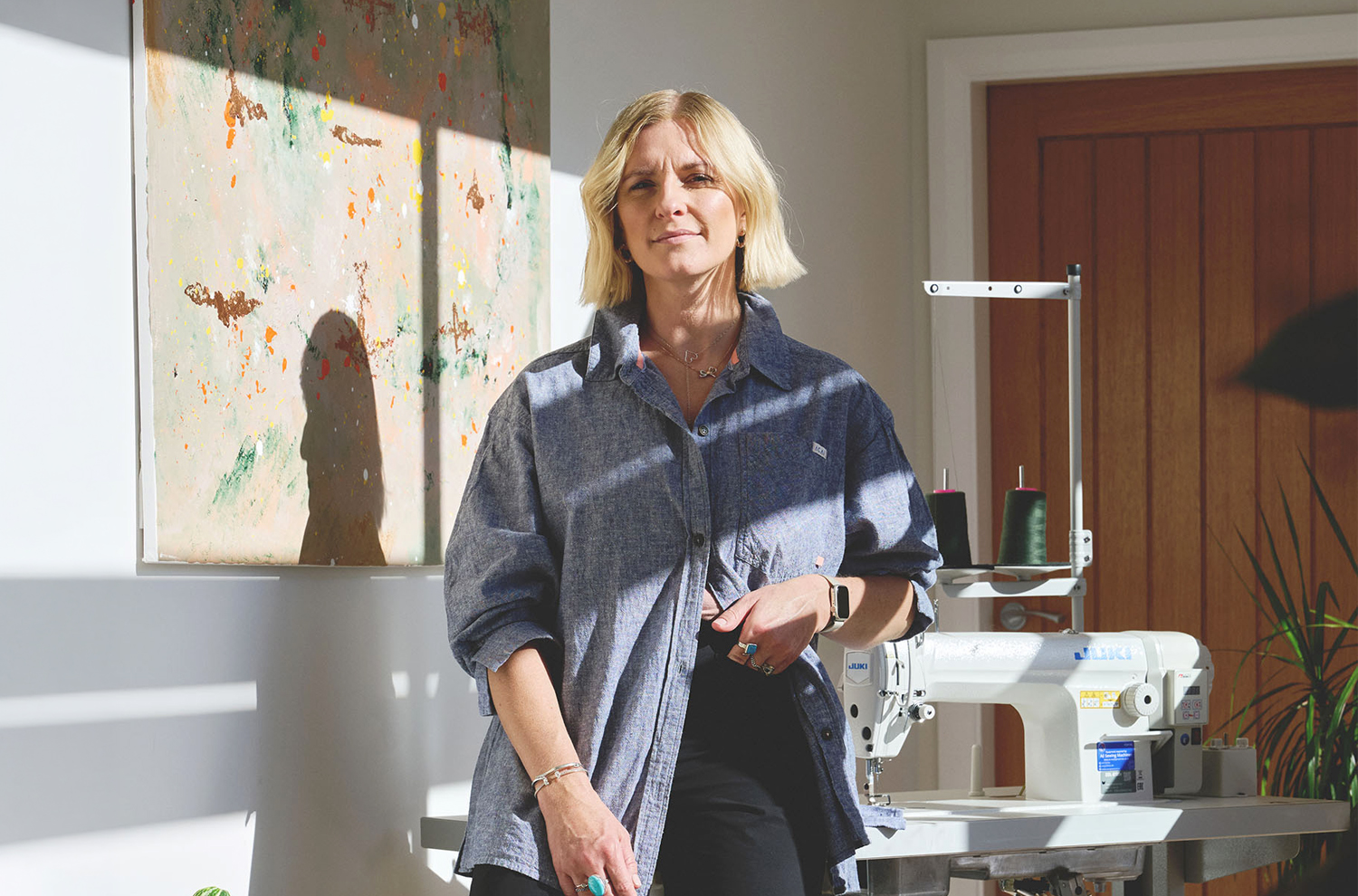
Kasia Bromley is the co-founder and brand director of ACAI Outdoorwear, a performance-led, style-driven brand redefining the outdoor experience for women. Her path to building a multi-million pound global brand began in the rarefied world of high fashion, where she hand-crafted the iconic Butterfly Dress at Alexander McQueen, a garment later worn by Effie in The Hunger Games.
But it was designing for real women, not runways, that truly captured her imagination. Frustrated by the male-dominated outdoor industry and its habit of simply shrinking and pinking women’s gear, Kasia set out to change the game. In 2016, five months pregnant and facing financial uncertainty, she and her husband Joe invested their house deposit to co-found ACAI. Their first product, the Skinny Outdoor Trouser, sparked a movement. Women finally felt seen, empowered and stylish in nature.
ACAI has since grown into a brand worn by hikers, dog walkers, climbers, school-run mums and everyday adventurers across the globe. In this episode, Kasia shares the story behind that leap, what it has taken to scale a business while raising three children and why finding a purpose that fuels you is the most important foundation any business can be built on.
Conversation Highlights:
- Kasia’s journey from hand-crafting couture at Alexander McQueen to co-founding a brand built by women, for women, and the realisation that ignited the shift
- The frustration with the outdoor industry’s approach to women’s clothing and how that frustration became the creative and commercial foundation of ACAI
- How Kasia and her husband Joe launched the brand five months into her pregnancy, investing their house deposit and backing themselves when the stakes could not have been higher
- The story of the Skinny Outdoor Trouser, why it resonated so deeply with women and what its success revealed about a gap the industry had long ignored
- The reality of navigating early motherhood alongside the demands of a rapidly scaling business and the honest cost that places on sleep, rest and the nervous system
- Why Kasia chose to view entrepreneurship not as a sacrifice but as a necessity, and how that reframe sustained her through the hardest seasons of growth
- The impact of building a business on her children and why modelling purpose, passion and resilience is one of the most valuable gifts a mother can give
- How she approaches building confidence in her children through the same values that have shaped her business: curiosity, persistence and a willingness to learn from mistakes
- The question she returns to again and again when the hours are long and progress feels slow: am I enjoying this, is this still fun?
Listen If You’re:
- Dreaming of building something bold but feeling held back by fear of financial risk or imperfect timing
- Frustrated by an industry that doesn’t design for or speak to women like you
- In the thick of early motherhood and business building and wondering how other women are holding it all together
- Searching for permission to build a business rooted in genuine passion rather than simply commercial logic
- Interested in the behind the scenes reality of scaling a product-based business to multi-million pound success
- A mother who wants to model ambition, creativity and resilience to her children
Favourite Quote for Mums in Business:
“Find a purpose that fuels you and build a business that you love living in. If you love it you’ll never struggle with motivation.” – Kasia Bromley
About the Guest:
Kasia Bromley is the co-founder and brand director of ACAI Outdoorwear, a multi-million pound global brand making the outdoors more inclusive, representative and boldly female. With a background in high fashion and a career that began at Alexander McQueen, she brings a rare combination of creative vision and commercial drive to everything she builds. A mother of three, Kasia is as passionate about reshaping outdoor culture as she is about raising children who are curious, confident and unafraid to take up space.
You can find Kasia @kasiabromley on Instagram and explore the full collection on the ACAI website.
About The Host:
I’m Victoria Phipps – a Mum of two, analogue family photographer, charity co-founder, marketing person and now podcaster! My career has wandered all over the place and is becoming a bit of a complex tapestry as I head into this middle phase of life, but I can honestly say I’ve loved every minute of it so far.
I was raised by a nurturing Mother and an entrepreneurial Father and have inherited traits from both, so the tension between ambition and motherhood is one I grapple with on a daily basis! I’m fascinated to hear the stories of other women on a similar path, who are striving to build thriving businesses whilst being present for their children. It’s a tough juggle, but I hope the conversations shared on this podcast help Mums in business feel less alone and inspired to keep going in pursuit of their dreams!
If You Enjoyed This Episode:
Please subscribe, rate and review the podcast – it helps other mums find us!
Share in your Instagram stories, tag @mummeansbusinesspodcast and let us know your biggest takeaway.
Share this episode with a fellow Mum in business who you feel would resonate with Kasia’s story.
Episode Transcript:
Hello and welcome to the Mum Means Business podcast, where we shine a light on inspiring women who have one thing in common. When they’re not managing tantrums, homework, P.E. kits and play dates, they are busting their gut to create something from nothing, to turn their passion into a thriving business and build a better life for themselves and their families. We dig into what motivates devoted mothers to pursue entrepreneurship and how they integrate their work and family life.
I’m Victoria Phipps, your host, and if you’re an ambitious mum in need of some solidarity whilst navigating the messy middle of making your big dream a reality, then stick around. This is for you.
NOTE: This is the transcript from the original recording, rather than the edited episode so timings may vary.
Victoria (00:01)
My guest today is the co-founder and brand director of Akai Outdoorwear, a performance-led, style-driven brand redefining the outdoor experience for women. Beginning her career in high fashion, Kasia Bromley handcrafted the iconic butterfly dress at Alexander McQueen, later worn by Effie in The Hunger Games. But she soon realized her true passion was designing for real women, not runways.
Frustrated by the male-dominated outdoor industry and the shrink it and pink it mentality in the women’s gear, she set out to change the game. In 2016, while five months pregnant and facing financial uncertainty, Casher co-founded Akai with her husband Joe, investing their house deposit to launch a brand built by women for women. The skinny outdoor trouser was their first product and it sparked a movement.
women finally felt seen, empowered and stylish when out and about in nature. Since then, Akai has grown into multi-million pound global brand, worn by hikers, dog walkers, school run moms, climbers and everyday adventurers. Now raising three children, Kasha is as driven as ever in her mission to reshape outdoor culture, making it more inclusive, representative and boldly female. Kasha.
I’m so interested to hear more about your story and how you navigate these two big roles of motherhood and business. So let’s dive in. Welcome to the Mom Means Business podcast.
Kasia Bromley (01:24)
You
Hello, thank you so much for having me.
Victoria (01:38)
It’s a pleasure. I’ve been looking forward to this conversation. I have to admit, full transparency, I have not tried any of your clothes, but we have a mutual acquaintance in Sarah who insisted that I talk with you because I know that she’s done some copywriting work for Akai and she swears by it and she is a thorough enthusiast. And so when I come out of my early motherhood era and get back
Kasia Bromley (01:51)
Yes.
Thank you.
Victoria (02:04)
outside because I feel like I’ve been sort of hibernating with my children for five years. I will definitely be investing and taking her advice. So let’s go back to the beginning of your story. 2016, you founded this business with your house deposit. What made you do it?
Kasia Bromley (02:22)
Yes.
So, well, shall I just take you through the story from the beginning? Because I guess it has its roots from my background. I studied fashion at Edinburgh College of Art. I used to think I’m going to be one of those ambitious designers working in high fashion. I’ve always been ambitious and I thought that is the pinnacle of the fashion industry.
Victoria (02:31)
Yeah.
Kasia Bromley (02:52)
So, you know, like you said earlier, I worked for Alexander McQueen, ⁓ but then realized actually that that career path ⁓ isn’t for me. ⁓ I did an extended internship for them down in London, but then I felt really quite drained and quite sort of, I mean, it’s a really cutthroat industry. It’s, you know.
I am hardworking but that was on another level and really it wasn’t the hard work it was the disconnection with the world around me that bothered me the most. I’m really active and it’s really important for me to be outside, be active. So I returned up to Scotland and started spending quite a lot of time up in the Highlands hiking. At the time I…
had a boyfriend who was a mountain leader and I often found myself in a company of other male hikers and one day one of them sort of ridiculed what I was wearing and by the way it was pair of leggings and a t-shirt it was nothing out of the ordinary but it was the comments and how it made me feel that triggered something in me that really changed my career path, my purpose and what I want to ⁓ achieve really. ⁓
fast forward a year later, I met my now husband and by then I’d had that business idea of ⁓ an outdoor wear brand for women. I told him about it ⁓ on our first date and ⁓ in the background I’d been working on it ⁓ and it wasn’t until ⁓
Victoria (04:30)
Yeah.
Kasia Bromley (04:38)
his redundancy. we went traveling for a year with his job ⁓ and I was working on the samples, the business that one day I would create. I didn’t really know how or when it would happen. I knew that it would happen. ⁓ He was made redundant and we returned ⁓ to Europe and by then it was that takes you to that house deposit.
where during our time overseas, we were saving for a house deposit. I became pregnant, we were engaged at the time and he, yeah, I was like, why don’t, now is a good time. like, you’re about to have a baby. Yeah, but now is a good time. So yeah, that’s exactly what happened. I was quite lucky that he’s quite an open-minded person.
Victoria (05:20)
Hahaha
You
Kasia Bromley (05:32)
and not very risk averse. In fact, we’re both sort of are driven by a bit of risk and a bit of excitement, a bit of sort of, we like the unknown. So we decided to take the plunge. We registered the business and he became sort of, had the, he run the operational, the finance side of things. And, you know, I was the creative and ⁓ yeah, we started it together.
Victoria (06:01)
This sounds like a really great kind of love story entangled with a kind of origin story. Because, I mean, what a big adventure to go on together. Pre-Kids, you know, to have his job give you this opportunity to just get out and see the world and have all those experiences. And you have a bit of head space in that time to sort of tumble this business idea that you have and kind of
Kasia Bromley (06:07)
They do!
Victoria (06:30)
Think about it, I suppose, creatively. At that point, had you left Alexander McQueen?
Kasia Bromley (06:30)
Yeah.
Yeah.
Yes, so I left Alexander McQueen and then I got a job as a product developer for ⁓ Cycling Brand and that was another trigger. It was an amazing business, great experience, but very, very much male dominated and the women’s collections were
adaptations of the men’s bestsellers. And that’s where your pink and shrink mentality comes in. And it wasn’t just that business. Like I said, it was a great company to work for and I learned a lot. I saw that around me in the industry. But I went and got that job to learn about performance fabrics. wanted, I knew how to design for women. You know, I studied women’s wear. I understood the female body.
but I needed to up my knowledge in the performance fabrics and I was interested in that. I did my dissertation on performance textiles. I was always interested in that. So working for a performance cycling brand was a really good ⁓ experience and learning curve. And for me, the brand Akai was the combination of the two. So you’ve got the high fashion end of the spectrum and the performance.
end of the spectrum and that became the DNA of the brand. Style, performance, is to this day our three pillars on how we design every single product.
Victoria (08:09)
So interesting because yeah, I suppose when you kind of go into this with this ambition to be in high fashion, performance fabric, it’s a whole different world, I imagine. I know nothing about it. just, just hearing you speak, I’m thinking, I don’t even, you know, obviously I wear leggings and I don’t, but it is a completely different knowledge set. And obviously it’s interesting that you had that interest in it, even when you were studying.
Kasia Bromley (08:22)
yeah, very much so.
Victoria (08:39)
But then I suppose you get carried along with this kind of funneling that the success is on the runway, basically. And you have to then kind of come back to yourself and think having had that experience and kind of been in that world, the reality isn’t quite what you thought it would be for your day-to-day life. And again, I suppose it’s that hustle experience.
Kasia Bromley (08:39)
Yeah.
Yeah. Yeah.
Victoria (09:03)
It’s the hours that you’re putting in. Like you said, you are hardworking, but there are certain jobs that we can go into where you feel like it’s kind of making you feel like you’re not hardworking because it’s demanding even more of you than you thought was already quite a lot to give. And so was that sort of part of your motivation for wanting to do something for yourself is to kind of find a better balance there as well.
Kasia Bromley (09:16)
Yeah.
Yeah, yeah.
think the balance was in the background, it wasn’t the driving force. I think the driving force was the realisation that I actually am really passionate about designing clothes that serve a real purpose in our lives, that have function in your life, and clothes that actually evoke a feeling of confidence. If you’re outside and you’re wearing clothes that, you know,
make you feel good, feminine, that fit you well. That helps with confidence, that helps with feeling feminine. And I believe that we should feel that, or we should expect to feel that on a daily basis, not just when we go out in the evening or when we go out on special occasions, is elevating the everyday. That was the driving force that actually
Seeing it on a cart walk was amazing. Seeing it in a movie was amazing. It’s now displayed in a Met Museum in New York. That’s amazing. One day I might go and see it. I painted it with those two hands, but you cannot beat the feeling of thousands and thousands of women feeling amazing in your clothes. I think that’s way better. So it was that purpose that was the driving force behind that decision.
Victoria (10:35)
Hmm.
Yeah, and it sounds like it was also an impact decision because you can create this one-off masterpiece and it is amazing and I’ve seen photographs of it, it looks absolutely exquisite and something obviously that you can always be proud of and you should absolutely go and see it and take your children but that doesn’t have large-scale mass impact. It’s a…
it’s a piece of art, it’s not going to, like you say, impact thousands of women. And I definitely do have memories, I suppose, particularly I think back to, you know, doing D.O.V. in school and all that. So when you’re like really, really hiking and you get all new kit, and I definitely remember like putting on, you know, waterproof trousers and just feeling like these are basically just a piece of elastic with.
like material hanging off it. Do you know what I mean? Why do you think it is, let’s go back to like first principles, that this hadn’t happened before? Why do you think that nobody had stepped into this marketplace and recognize this problem that actually women are, women who want to be out in the wild, in the great outdoors, adventuring, hiking, exploring, have not been afforded clothes that fit them properly?
Kasia Bromley (11:49)
Yeah.
Yeah.
Victoria (12:17)
And like style comes into it, but even just from a comfort point of view, you actually have, I remember certainly feeling when I was much younger, like I was just wearing boys clothes that just were smaller somehow. And yes, luminous pink sometimes, which is not my favorite color. Why do you think that hadn’t happened?
Kasia Bromley (12:30)
Yeah.
Yeah, yeah, I do think that it comes down.
I do think that comes down to the overall journey for women in this society. think, you know, 10 years ago, ⁓ it just was male dominated. wasn’t many female founders. wasn’t many female CEOs. There wasn’t many female
adventurous either and if there was one it was big news it was a normal it wasn’t and I think there was a notion of sort of pigeonholing pigeonholing yourself into I’m outdoorsy or I’m not outdoorsy if I’m outdoorsy I’m hardcore and I’ll go up to the top of the mountain you know you know hardcore hiking or I’m not and I just don’t do it but knowing and experiencing it for myself
Victoria (13:12)
Yeah.
Kasia Bromley (13:27)
the mental health benefits, the physical wellbeing benefits of being outside nature. mean, this is, we come from nature. It’s obviously natural for us to crave it. So why should women not be encouraged or not see that as ⁓ something that’s for them? And I think it’s allowing or showing that outdoors is a lot more accessible because ⁓
the whole premise of the brand and the whole premise of my purpose is that it’s not, you know, if you don’t like, if you’re not the type of person who would want to be up at the top of the mountain, you know, you can go to local park, you are still reaping the benefits of being in nature, you know, anywhere in green spaces is good enough for me and it’s good enough, you know, for anyone. And it’s so beneficial. I mean, we’ve done research on that and it’s like,
It’s been scientifically proven that as little as 120 minutes a week, which is under 20 minutes a day, significantly improves our overall happiness and well-being. it’s that was the message that I wanted to get out there. And I think back then it just wasn’t spoken about. And women didn’t… I mean, we still have that problem. It’s still not where it should be.
the participation of women in sports and outdoor is still lower, ⁓ not as high as it should be, but 10 years ago, it just wasn’t spoken about. And I happened to have that experience which got me thinking and got me realize the gap. And that’s why I created the brand. That’s why it happened.
Victoria (15:23)
Well, let’s talk about what that looked like then. So you’re five months pregnant, you were going to buy a house, but instead you launched this brand. And did you launch it with a product range with, you said that the skinny trouser was like the main thing that you were launching with. How did it go? What was that experience? What did it feel like?
Kasia Bromley (15:30)
Yeah.
Yeah.
Yeah.
Victoria (15:51)
How was it received? And, you know, four months later you had a baby. What did that look like?
Kasia Bromley (15:59)
So we registered the business in February of 2016. Our son was born in April of that year. And the collection, we didn’t actually go to market selling until 2017. So the first year was like the background work that you do in order to launch the brand. So you develop your product, you work with your suppliers. I mean, we…
smuggled our four-week-old baby into Portugal to see factories. I say smuggled because he didn’t have a passport at the time. At the time, we spent a period of time, which was about six months in Spain, in between the transition from living overseas on another continent.
Victoria (16:32)
Okay.
You
Kasia Bromley (16:53)
That’s why we drove from where we lived in Spain over to Portugal because there was factories there that could make our product. So that first year was about, you know, finding, reaching out to potential stockists, developing the brand, the product, and essentially everything that you need to do in order to bring it to market. We…
started with 14 products and the Skinny Out of Trousers was the first sample I ever made. I made all of my samples on the sewing machine and then took them to factories to sort of develop further. But it was the first product that I did. ⁓ And I think that was probably one of our biggest mistakes is with that one product that at the time we didn’t know that it would land so well.
We had some other, we had a full collection. And I think we distracted ourselves with too many products. I think if I did it again, I would start with one or one really, really good product and then build on that. What happened was we had those 15 styles that we then took to market. So we went to shows, wholesale consumer shows, and everyone was drawn to that one product.
that would like skip through everything, all the other pieces, which was sort of, know, leggings and sports bras and t-shirts and some jackets. And that was the sort of the golden nugget, I call it. ⁓ And what happened then, we took that as a feedback that we very much, we took it very seriously. And actually, ⁓
I said, I remember saying to my husband, said, can you imagine if we like we’d brought out all these products, but actually we ended up with just one that we focus on. And that’s exactly what happened. We decided to sort of move that off, sell it off and actually focus our brand around that one pair of trousers. So we have grown as a legwear brand and that’s what we’re mostly known for. We’re now expanding into other ranges, but
generally people know as for our trousers. And I believe that that was a really key decision. But also the initial collection was first launched and presented at one of the big trade shows in London and then Birmingham. One of them was Pure London. ⁓ The other one was Moda. And there were like key trade shows where all your buyers would go.
like retailers and brands would exhibit. ⁓ That’s how you would get into retailers. And we got ⁓ our first collection into House of Fraser, like the first season. were like, whoa, we’ve made it. We have made it. This is amazing. But ⁓ little did we know how difficult it was to actually deliver with no experience how difficult it was to deliver to a national
Victoria (19:58)
Yeah.
Kasia Bromley (20:13)
⁓ retailer, which is massive retailer. We were just small little brand, was just the two of us. ⁓ And eventually House of Fraser went into administration. So actually that wasn’t a long term, ⁓ long term game for us. What that did do is help us clear the stock and then help us pivot and focus on that one product, the Skinny Aldo trouser, and then build from that.
And we actually then stopped doing wholesale and we focused on e-com only. And we did e-com only up until about a year ago.
Victoria (20:53)
Okay, interesting. And it’s, it’s a really, there’s a really valuable lesson in there about kind of listening and that market response factor, because, you know, I’ve never, I don’t have any experience of product businesses personally, but I know that there is a big investment to make in stock and then
you know, and that’s a huge commitment, isn’t it? And especially when you’re launching for the first time, you don’t know yet what the market response is going to be. And I imagine that can feel quite scary, but then to quickly pivot and or just decide, right, this is it like, and to listen and immediately adjust your strategy based on that response. I imagine that was
Kasia Bromley (21:37)
Yeah.
Victoria (21:53)
really, really important in that moment. And you didn’t necessarily go into launching a business thinking I want to launch a legwear brand. You you’re thinking of outdoor wear more broadly, but to actually respond to market in that way quite quickly. you feel like things could have been quite different if you hadn’t done that for your business? Yeah.
Kasia Bromley (22:16)
100 % that was a make or
break. We wouldn’t be here if we didn’t make that decision because the other products were very much more kind of veering into the active West base, which was booming at the time. And yes, it was booming, but it was very saturated with the skinny outer trousers. We had something very unique that no one else had. And we were serving a market that was underserved at the time, outdoor wear for women. it was.
Victoria (22:44)
Yeah.
Kasia Bromley (22:46)
It was the decision that ultimately saved the business and pushed us forward. It’s really important to do that in early days, to be really agile. And I think that’s your competitive advantage against established brands, because established brands are big ships. It takes a long time to turn. You’re in a boat, you can very quickly turn and pivot and go a different direction.
Victoria (22:56)
Mm.
Yeah, yeah, you’re right. And I think there are so many, you when you’re just starting out and you’re small, you can feel so intimidated by these established brands that working in your space. But actually it’s important to remember that, that you are nimble and you have a flexibility that they just do not have. You can make decisions so quickly to change things or shift direction, pivot or concentrate in a different area.
Whereas actually for those big brands to make those decisions, it can take them months because there’s so many procedures that they have to go through. They have to wait until all these people are available for a meeting and that might not be for three months time. And so actually that is an advantage. When often you can feel like you’re at a disadvantage, there are ways that you have strengths that those established brands don’t.
Kasia Bromley (23:42)
yeah.
Yeah.
Yeah. Yeah.
Oh yeah, a hundred percent. I think, you know, you’re up against, you know, you’ll never win as a, a new startup. Well, unless you have big budgets, but generally speaking startups don’t and then you’re up against established brands in your space that do. So I think leaning into those, the competitive advantages that is really important because that’s how you can win. And I think also leaning into what’s unique.
about you and why someone would buy from you, not from the brand that they’ve known and trusted. ⁓ So yeah, I think we did the two. We leaned into their USB and something that our brands didn’t have. ⁓ And then we leaned into the agility and the speed.
and response, speed of response, feedback, really important. But it’s also important to have filter because I also would say that I’ve listened to too much feedback and got myself really spread out because someone said, you know, that you always have as many people as you’ll speak to, you’ll have that many opinions. And it’s about having that filter and deciding what you’ll take or what you’ll park or maybe use for later.
Victoria (25:03)
Yeah, yeah.
Kasia Bromley (25:28)
It’s like putting it in those different drawers. I learned that along the way. Initially I absorbed everything and I took everything and then I lost myself. So now I know to put it in the drawers. Separating.
Victoria (25:42)
Yeah, and I think that’s
something that a lot of people relate to because when you’re going into this, you feel, you know, you’re brand new and all these people around you have been in this game for a long time, perhaps, and that you should absorb all of the advice and you’re there to learn and it’s important to be open-minded. But I think a lot of people will recognise that journey. You you obviously went into this with such…
a sense of purpose for the impact you wanted to make. And you were so passionate about solving this problem for women. And you were really clear on why you were doing it. And I imagine that as you absorb more and more information, it’s easy to feel pulled a little bit off track one way or the other at times. And actually learning that skill, like you say, you learn it inside as you’re going and as your business is building and growing.
Kasia Bromley (26:31)
100 percent.
Victoria (26:41)
you’re learning how to filter. And it’s kind of, this is the personal journey that we go on in business because it’s not just a professional journey. We kind of have to relearn how to tune into ourselves as well. And what is the kind of core reason that we started this in the first place and come back to it and kind of recenter. I think that’s really relatable. Okay, so.
Kasia Bromley (27:02)
Yeah, yeah, yeah, definitely. Yeah, definitely.
Victoria (27:10)
Tell me about what this looked like for you and your husband and your baby, because was your husband still working at that time in his previous job or were you both all in on Akai? And how, apart from smuggling him? really, okay. Okay, this is so cool though, because I mean, like you say, you’re both risk averse and I think this is really fun. I’m really risk averse, but.
Kasia Bromley (27:25)
We were both all in.
Victoria (27:39)
My partner’s not. And I think most often you find that people who are really risk averse, they’ll kind of be attracted to someone who is less so and there’s a blend there and they kind of balance each other out. But actually to both be all in and to just believe in it together and to collaborate is kind of amazing and fun. You’re on this adventure together. But I imagine also it’s a lot.
Kasia Bromley (28:05)
Yeah.
Victoria (28:08)
for your relationship because you have this new baby and you have this new business. I imagine you didn’t talk about anything else but those two things for a while. Okay.
Kasia Bromley (28:17)
We only just stopped recently. We’ve only just put the boundaries recently.
Yeah, that is true. You don’t talk about anything else. That’s it. initially what it looked like is Oliver came with us everywhere. He was at trade shows.
And it was really sweet because I used to always get, they would give me like a room so I can go and breastfeed him. breastfed him for a year. So I sort of stuck with as much as I could with what I wanted to do as a mom in a way that what was important to me. So for example, I could and I wanted to breastfeed, so I did. And
He went to meetings with us. If I had supplier meetings, I’ll just take him. I was really quite lucky because he was really good. He would actually sit at the table. He was really kind of quite chilled baby. Different story with the other two. So I’m lucky that the first one was, you know, he would just go along and be quite happy. ⁓ So I remember doing supplier meetings at, know, coffee shops with him there.
I mean, I’ve got a photo of him in like a sort of meeting room with our agent, our distributors. He was there in his high chair, you know, just eating snacks and that’s what it looks like. You know, I worked, I’ve become really quite strict with my time. I went all in on routine. It was really important to have a routine. I think it’s, I know it’s important to many parents. For me,
Victoria (29:55)
Yeah.
Kasia Bromley (30:11)
it was doubly important because I needed to know that I would have the sort of two hours. He was a good daytime sleeper, luckily. So I had like, you know, initially, obviously when he had two naps, would be like morning naps and I would drop everything. Even if I was midway through, you know, washing plates, if he fell asleep, I would drop everything and sit down on my laptop. And I was really, really regimented with it that as soon as he was down, I’m at my laptop working and finished.
as soon as I hear him cry and then he needs me. And then I’ll do that in the afternoon and then obviously would go down to one nap. Often ⁓ I would get up at five and have a few hours in the morning, ⁓ always in the evening when he went to sleep. So from seven o’clock I would work. So kind of added up, but I’ve become so efficient that I’ve developed this habit of in my work time, like I don’t check
Whatsapp or whatever messages that were coming at the time. I don’t check anything else that is related to what I need to do to make this business work. I was very laser focused and very strict with my time and to this day if I get a Whatsapp during my work hours, I find it extremely distracting. only reply if I absolutely have to otherwise it’s like that’s in that drawer for later because I’ve
you know, any kind of, I’ve become, yeah, really regimented. What I didn’t have is that baby bubble because I went straight from, you know, the hospital, really. I had that sort of, right, you know, that has to continue. I probably was too hard on myself and too, like, you know, can’t take time off. gotta, that’s just that work ethic in me that I’ve got built in that
Victoria (31:40)
Hmm.
Kasia Bromley (32:10)
It’s like work, work, work, come from a very hard working, grafting background. So it sort of instilled in me. My mum was staying with us when he was born. So she sort of understood it. So she would be doing all the, you know, all the housework and just bring him to me for breastfeeding and then take him away. But I think that, you know, I didn’t do that with the other two because I learned that actually that didn’t, that didn’t.
that particular thing wasn’t very good. I probably should have taken a bit of time, even if it’s just a week or two. But yeah, no, that’s what it looked like in the early days. It wasn’t easy. That was our lives. That was our free time. That was our work time. was everything.
Victoria (32:42)
Hmm.
It’s such an interesting one because I think that first baby is so like life-changing in ways that you can’t plan for. No one can really prepare you for it. You have your own assumptions in your head about how it’s going to be. And I think my mindset was a little bit like yours in that somehow I will just carry on.
and this baby will be with me, but life will continue. And like you, I’ve always, I mean, not like you in that I’ve built a multi-million pound business, because that is not like you, but I’ve always, like, work’s been an important thing for me, and I’ve always been ambitious, and I’ve always had a project or something going on. And that’s part of my identity. And so I kind of just imagined that my first baby would fit into that. And to a certain extent, that’s how I behaved.
And like you say, I I took, I did have a maternity, but I busied myself with, you know, keeping my business on tick over and we were renovating this house. So I was constantly working on that. And yeah, I mean, well, yeah, I mean, different story, but I, that’s, that’s kind of part of who I am. And I’ve been like that since I was a child, you know, just busy and doing things and projects and whatever.
Kasia Bromley (34:10)
Wow, that’s a lot.
Victoria (34:27)
And actually when I had my second, I felt differently that I had missed something, even though I was technically on maternity and it was COVID, so we were all locked down anyway, that I had missed something in connecting with her or just being more present. And with my second, I was easier on myself. Did you feel that? you had two more children.
Kasia Bromley (34:42)
Hmm.
Yeah.
Yeah. Yeah. It’s sort of, I was, I always learned from the mistakes. Like exactly, like I said, first one, you just have no idea. But I had this, mean, when I went into labor, I was connected to this heart monitor and I was still emailing suppliers. Not like I’m, need to finish now because I’m having a baby.
business as usual. It was like, okay, so that same needs to move there and we need to change the fabric and we need to change the fit that needs to go to CM’s back and that kind of stuff. Not that I’m, you know, in basically in labor. And then, then with the second, it was, you know, I learned from how I paid the price for that, you know, mentally. The second one,
Victoria (35:20)
Yeah, yeah.
and then have a contraction. Yeah, yeah, yeah.
Kasia Bromley (35:47)
And, you know, my husband was very, very much on it and insistent that I take the time because obviously he saw how much I struggled ⁓ with, you know, having done that first time round. So I was better ⁓ with the second, ⁓ but even better with the third.
So with the third, at that point we had a bigger team and people actually in place to do my job. So it was different. But in the early days, you have no one. We couldn’t hire someone. We only just started. It was just us. So I think it got easier naturally because we had more people around us to do the work.
Victoria (36:12)
Yeah.
Yeah, and I think there’s a really important point to notice here because like you say, at the time when you had your first child, if you didn’t work, it didn’t work. There was nothing else. There was no support network. So if you stop, the business stops and you’ve already invested so much energy into it.
You’ve thought about it before you even launched it. You know, this has become so important to you and it is in startup phase. It is not established and it demands energy. It just does. If it’s going to work, it demands energy. And I think there’s a lot of, you know, conversation about setting boundaries, about healthy work-life harmony.
Kasia Bromley (37:17)
Yeah.
Victoria (37:37)
and about your priorities as a mom. And I think it’s really, really great because actually if your business is in its early stage and if you care deeply about it, it does demand energy. And if it coincides with your children coming into this world, that demand doesn’t go away.
it’s not as simple as set your boundary. If you, of course you did everything that you possibly could by the sounds of it, you know, you are so controlled in and disciplined in where you work. You know, the moment that you look over and your son’s eyes are going, you get him settled on your laptop. Everything else around the house that can be done when he is awake stops. Cause I think children have a…
have a sort of sixth sense for laptops. Like when you try and work, they’re not okay with it. When you try and wash dishes, it’s like fine. So that is when you get your work done. It’s so weird. Yeah, I don’t know what that is, but it’s definitely something I’ve experienced too. They don’t like you working. They don’t mind you doing housework. So I can do housework when they’re… Yes, yes. Exactly, yeah.
Kasia Bromley (38:39)
Yeah.
Yeah, sounds about right. Yeah. ⁓
No, they’ll come and like try and type up… Yeah.
Victoria (39:03)
Can I help you with your work? And suddenly they press the delete button on the Word document that you had open or whatever it might be. So you’re being super disciplined and you’re really trying to set boundaries in whatever way you can so that you are all in as a mum when your baby’s awake, but when they’re asleep. And it’s literally like when they’re conscious, I’m mum, when they’re asleep, I am working on the business and you are taking such a hit on your
Kasia Bromley (39:09)
yeah.
Victoria (39:33)
personal time and in this sense, I think it probably helped you in your relationship that your husband is in it with you because otherwise I imagine because I’ve experienced myself that that has an impact on the relationship if you’re spending all your evenings and your spare time on a business that the other person isn’t in that loop with you and doesn’t fully grasp where you’re going and why Then they just see it as a sort of rejection, which is completely understandable
Kasia Bromley (40:03)
Yep.
Victoria (40:03)
but
you are spending all of that spare time and you’re absolutely frazzled, I imagine, but it’s because you care deeply about both of those things. You care about your child and you care about your business. And it’s really important to just say that out loud that actually in the early stages of a business, it does require energy. There’s no getting away from it. And…
Kasia Bromley (40:09)
Yeah.
Yeah. Yeah. Yeah.
Victoria (40:30)
There’s a lot of talk about speed, like your business can grow more slowly when your children are little, and we accept that. But then if you’re both in it, it’s both of your livelihoods. You need to feed this baby that you brought into the world. You need to keep a roop over your head. So it’s not always as simple. Where does all that messaging kind of sit with you?
Kasia Bromley (40:55)
I think you’re absolutely right. think the situation that we found ourselves in is that he was made redundant and I obviously, like I didn’t have a job. So for me, it was that natural, you know, when you’re pregnant, you’re, you know, you’re nesting, you crave stability and knowing like that you feel safe and your baby is safe. And that’s exactly what I craved. And I didn’t have that. I didn’t have stability. We didn’t have.
You know, we were living in temporary houses. We moved a lot. You know, we still traveled. And there was no nesting for me. There was no decorating a nursery that I’ve always wanted to desperately do. I’d never got to do that really, because every time I’ve had children, were sort of, you know, it was business. It was hard. And I just didn’t have the capacity or the space to ever do that.
So I had a very different, I guess, ⁓ situation and that informed how I felt it was a serious, that’s our job. That’s a job that needs to bring in income for the family. It’s not just, let’s see how it goes. It’s like failure is not an option that has got to work. And it’s kind of, I guess.
maybe both of us worked well under pressure and knowing that we have to make it work. Whatever we do, we have to make it work because I guess in our minds there was no other option. So I think, you know, there was different, you know, different ways that you can do it. My situation dictated how we approached it, which was this is serious and this, you know, has to work and we can’t really afford to take it easy or see how it goes.
So we were like, you know, full throttle from the word go. and also in addition to the situation, it’s my personality. I think I’m just, once I commit, there is no going back. There’s just, that’s just, I’m like this super loyal. Once I say something, it’s like, it’s got to happen. So I said, I’m starting a business, so I am starting a business. There is no.
Victoria (43:03)
Hehehehehe
Kasia Bromley (43:20)
I’m very much kind of like that. So I think the two and two together just made it me who, made, I guess defined how things unfolded and what happened after.
Victoria (43:38)
Yeah, it’s those two things. It’s the necessity aspect. You know, this isn’t a nice to have this business. This is essential for our survival really as a family. And then it’s that accountability and self-motivation that you hold yourself accountable. You do what you say you’re going to do and you are able to motivate yourself to muster the energy.
Kasia Bromley (43:42)
Yeah.
Yeah.
Yeah. Yeah.
Victoria (44:04)
on those days where perhaps you don’t feel like it and it would be nice to have a nap on the sofa with your baby, you turn up, you’re on your laptop and you’re getting the work done and importantly, it worked.
Kasia Bromley (44:07)
Yeah.
Yeah, yeah, I think… ⁓
Victoria (44:19)
hahahaha
Kasia Bromley (44:23)
I think the key is to enjoy it. And I think that self-motivation that you talk about comes from genuinely loving it and genuinely wanting it. Because if we were doing it just out of necessity and because we had to but I didn’t really fully feel the passion for it, it wouldn’t have worked. And I don’t think I would have found that motivation. So I think it’s important.
I think I just genuinely just really wanted to make it happen. I knew that I am the person to create a brand for women in the outdoors because I knew both worlds and no one else did it.
Victoria (45:06)
Yeah. Yeah. I love that because as well, it’s just self-trust and owning it. Like, no, I am the person because I asked you earlier, why had no one else done this? And maybe the reason is because you were the person to do it and the world was just waiting for you to step into that space. So how does it feel like now? how do you, you know, we’re fast forwarding. It’s gonna be 10 years now since you registered the company.
Kasia Bromley (45:23)
Yeah.
Yeah.
Yeah, this month.
Victoria (45:37)
And you have, yeah, it’s exciting actually, it’s your 10 year anniversary. Congratulations. How does it feel now? You have three children and they have been born into this world. Their mom and dad are entrepreneurs. They are a team, both at home and in the business. How do you think that’s impacted them?
Kasia Bromley (45:41)
Yeah, yeah, thank you.
Victoria (46:05)
and their outlook on the world of work. And also what does it feel like to you now, 10 years in?
Kasia Bromley (46:14)
I have a very positive answer to it. think I’m very proud to see how I’m starting to see, particularly in our eldest, Oliver, see how it’s impacted him. They’re so interested. They want to know they’re interested. ⁓ Like I recorded a podcast recently and Oliver keeps asking, so when is it out? And he checks and says, mommy, I’ve been looking on Spotify. it out? He was like, it’s not out yet. I’ll tell you when it’s out.
⁓ their interesting product. One day he was at playdate at his friend’s and they were drawing mugs for Mother’s Day. My friend’s mum, was really sweet and she got them to draw, to do something for ⁓ their mums. And everyone drew Spider-Man and Oliver drew an Akai mug. it’s… I think it’s… ⁓
I think it’s, at the time there was plenty of moments where there was that mum guilt creeping in and I think that’s very natural, very common. And I didn’t know, sometimes you do feel like, no great mum because they’re really little and I’m dropping them off at nursery and things like that. But actually seeing that really blossom.
in your child is just incredible. So I would say for anyone who is, you know, in that unknown how it’s going to impact your child. I would probably say that nine times out of 10, at least it will impact them in a positive way. ⁓ And I’ve spoken to other like people in their adulthood who were children of
parents who started their businesses and hearing from them, know, the 20 year old girl who is now working in that business and really proud and, and, you know, talking about spending time in the office whilst their parents were working fondly. I think it’s a really positive message. I think it’s not harming them. It’s quite the opposite. Obviously doing within.
Victoria (48:26)
Mm.
Kasia Bromley (48:37)
within reason, you still give them time that they crave, the play time. It’s not just about work. But I think, and to be honest, I was one of them. I think maybe that’s where the influence comes from. I grew up watching the only time that I ever spent with my parents was when I worked with them. And, you know, that was my upbringing because
That was the situation. was survival. My parents weren’t wealthy, but they were just working, working, working. They had their own business. you know, we didn’t go on holidays. We were working with them. So I guess my work ethic and my sort of attitude towards it is very much shaped by my upbringing. And I think it’s positive. mean, does come with negativity.
anxiety does come with if I’m resting I feel like I’m being lazy or I’m not doing good enough so there are that things that you carry but you know nothing is perfect but I’ve seen a real positive ⁓ a lot of positive influence in in our children are to eldest because the little one doesn’t she’s only two so she doesn’t understand it yet
Victoria (49:57)
You
Kasia Bromley (49:57)
My husband is now starting a new business and they’re so interested. They want to be there. They want to be involved. And it’s really sweet. Really sweet.
Victoria (50:08)
I love this and I really relate to what you were saying about growing up in a kind of entrepreneurial family because I had that experience too. And I definitely have fond memories of my dad was a builder. So we go to building sites at the weekend and play there, but just having that awareness of what it was all about, you that, you you start something from nothing.
You create something, you sell something, whether it’s a house or a pair of trousers, and you put a lot of love into it. And it’s adding value to this world in one way or another. And it’s something you can be proud of. And you’re not doing it because somebody else told you to. You’re doing it obviously to put food on the table, but also because you feel called to do it, which sounds like your experience. And I think…
Kasia Bromley (51:05)
100
%
Victoria (51:08)
Yeah, that’s something that’s really beautiful to show our children actually. And it gives them that sense of self-trust that this is possible and I wonder what I could do. And not necessarily that they have to follow that path, but it’s not closed to them. They’ve seen it modeled and they will go into their adult life feeling that sense of autonomy, like I am capable. That’s what I have always known. I could build something from nothing.
Kasia Bromley (51:35)
Yeah.
Yeah. 100%. Yeah. I mean, I’ve only said to me a few times, ⁓ mommy, want to start a business. want to have business. And, know, and he needs, he wants me to help him set up a, you know, a website. I mean, he’s only, he’s only a, sorry, nine, but, ⁓ but it’s that kind of exactly to your point.
Victoria (51:36)
and there’s something really human about it.
Yeah.
I’m
Kasia Bromley (52:01)
The world is your oyster, like everything is possible. You become the role model in showing them that it’s possible firsthand. ⁓ It’s really powerful.
Victoria (52:13)
Definitely. So your son is now nine and I have one last question. is it going to be 10 double figures?
Kasia Bromley (52:16)
Yeah, well, ten.
He’s gonna be 10 in April,
yeah. ⁓
Victoria (52:23)
The business is 10 and the baby is 10. ⁓
Kasia Bromley (52:25)
Yeah,
yeah.
Victoria (52:29)
Okay, so you have experienced Oli as an eight-year-old. If you cast your mind back to Kashia at eight years old, if you could have a conversation with her, what would you tell her?
Kasia Bromley (52:43)
I think my main conversation would be about confidence and feeling like you are good enough and you are more than good enough and you are worth it. I think I lacked confidence and ⁓ we can see that in our eldest son a lot.
kind of, yeah, lack of confidence and feeling like they have to work hard to fit in rather than being comfortable with who you are as a person and the world fitting around you kind of thing that if someone in your friendship group doesn’t quite fit around your mold, that’s okay. You know, there’s…
Victoria (53:34)
Mm.
Kasia Bromley (53:43)
other people rather than trying to fit in around them, which is what I did at his age and I see him do that. these are the conversations that we have and we also talk about what I call protective bubble. We’re all as a family, both my husband and I, and I can see that in our children, very sensitive, very emotional and can take things very personally.
So I’ve been talking about having that protective bubble, which is like the shield against things which are out of our control. Things that other people say or do that can affect us. And, you know, we can be easily affected, he can be easily affected. But it’s out with, like it’s out with his control with how a person would act on a given day.
So we talk about that protective bubble as protecting yourself because if you feel strong in your core and we talk about that heart, that core of your body to be strong in that protective bubble, then no matter what’s happening externally that you cannot control, you have that bubble.
That’s what we talk about.
Victoria (55:04)
Yeah, but
it’s so powerful because and it’s interesting as well. It’s hard, isn’t it, when we see our children behaving in a way that we remember behaving in ourselves and we can sort of fast forward and see how that impacted us, you know, as we went through our adolescence, everything we do want to just help, basically help our kids to kind of
buffer that a little bit more than we were able to. And of course we all have to go on our own journey, but it’s such a natural instinct as a parent to want to offer that guidance. And it sounds like you are doing such a great job with that because it is all just about having a kind of steady core that you trust in yourself and you can, yeah, the protective bubble is a really nice analogy.
Kasia Bromley (55:46)
Yeah.
Victoria (56:03)
that you’ve got this kind of force field around you. You can only control how you react. You can’t control how other people do. And I think that’s really good advice.
Kasia Bromley (56:11)
No.
And I think if you’re someone who is deeply, who feels deeply, ⁓ so those who are more in touch with their emotions, know, some people are more emotional, some people are less emotional. If you’re that person who’s, you know, a lot more affected and feels deeply, ⁓ it can be really hard to not be affected by other people who are maybe not kind or who are maybe…
Behave in a way that doesn’t agree with you. ⁓ So yeah, ⁓ ability to control that, to control the controllables is really important. And something that I learned in my adult life, I didn’t learn that as a child. ⁓ So that’s what we’re trying to teach him to help him with that earlier on in a gin. I think we all see.
something in our children that we experience that’s part of us naturally. ⁓ And you sort of want to give them that, ⁓ I guess, time being ahead and being able to capture that or teach them that sooner than you did so that they don’t have to struggle with that in their forties because they will have learned it, been aware of it for long enough. So by the time they’re
Victoria (57:12)
Hmm.
Kasia Bromley (57:36)
you know, teenagers, they’re well equipped and it’s never going to be perfect. We’re never going to pass everything and, you know, I make plenty of mistakes. But, you know, we’re only human. And I think that’s the other thing is not to, it’s trying to be perfect. I don’t believe that that’s even good for them because nobody is. And I think showing our children that we are only human. So yes, I teach him certain things that I see.
Victoria (58:01)
Mm.
Kasia Bromley (58:06)
and we all try and help them, but there’ll be things that we do wrong and they’ll learn from it. it’s just about controlling the controllables and knowing that we’re not perfect and letting the children know that things can happen and sometimes we have wobbles, we all do.
Victoria (58:33)
Yeah, yeah, and that that’s not a failure, you know, that it’s kind of inevitable as part of being human. And I think that’s kind of that’s what’s beautiful about the synergy of building a business and a family at the same time is that they do just both for such personal growth as well in us. You know, these things that you’re saying you you’re learning in your 40s, you know, I feel exactly the same way. And it’s it’s kind of reparenting ourselves.
Kasia Bromley (58:52)
Yeah. Yeah.
Victoria (59:02)
and learning about ourselves and responding to our own failures and mistakes in business. At the same time, responding to our failures and mistakes as parents, because we all make them, and bringing our kids along for the ride, you know. And I think that is the beautiful thing about being a parent now is that we feel able to say, you know, mommy made a mistake and I’m really sorry, or mommy did this in the business and it didn’t quite work out how I thought.
Kasia Bromley (59:13)
Yeah.
Victoria (59:29)
So instead what we’re gonna do is this and we’ll see how that goes. And it’s all trial and error and just like showing that to our children. Like everything is a test. It’s okay to fall on your ass as long as you get back up again. know? Kasia, I have loved this conversation. It’s been so interesting to hear your story and I relate to so much of the experience that you’ve described.
Kasia Bromley (59:29)
Yep.
haha
100 % yeah, 100%.
Victoria (59:56)
And I really appreciate you taking the time to talk with me today.
Kasia Bromley (1:00:00)
thank you for having me. I, yeah, likewise, I’ve really enjoyed ⁓ having a chat with you. It was just lovely to kind of talk to another mumpreneur and, you know, exchange the highs and the lows, because certainly there’s plenty, but thank you so much for having me. Really enjoyed it.
Victoria (1:00:19)
It’s a pleasure.