
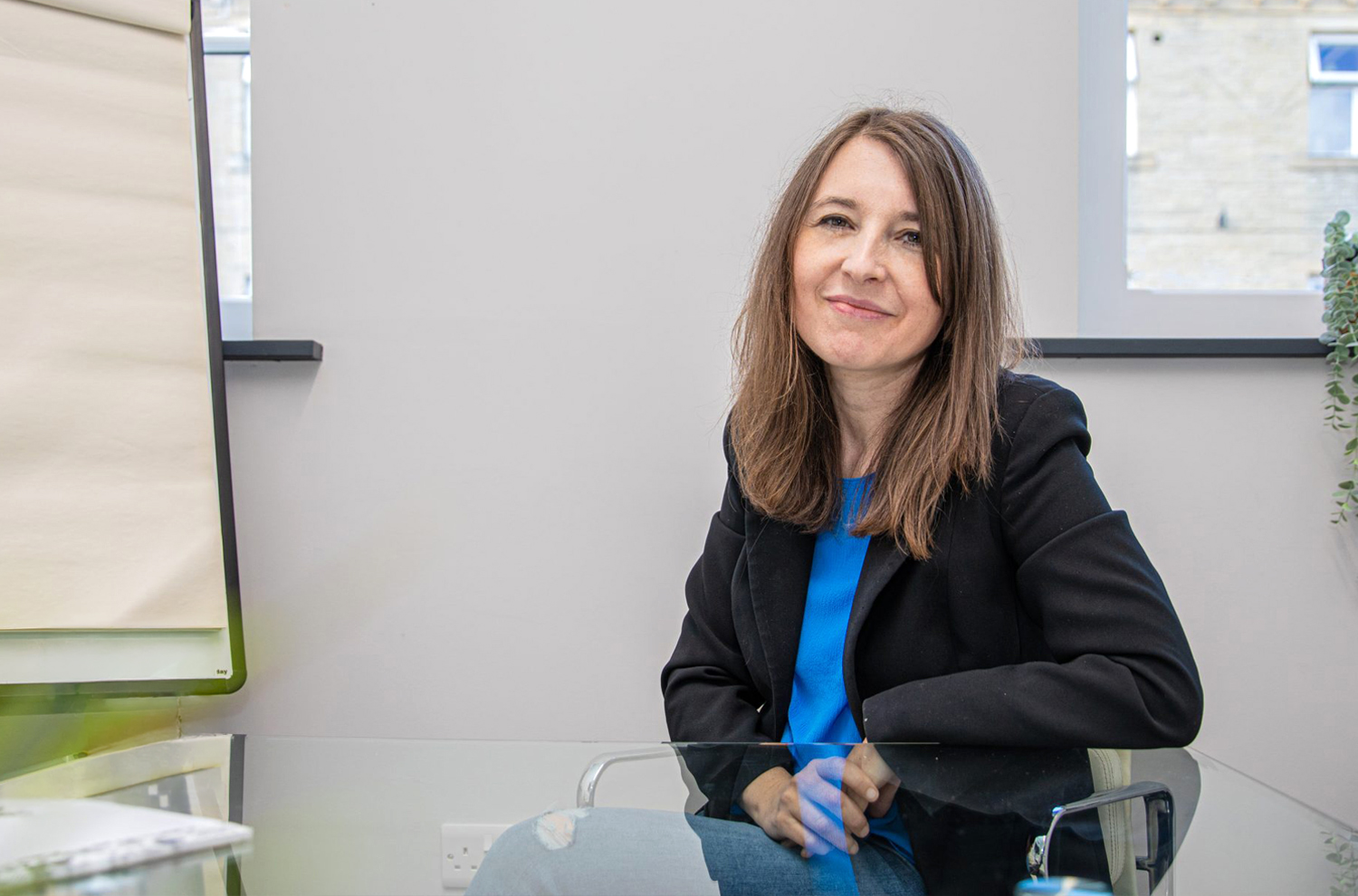
Barbara Nixon is a success coach, award-winning speaker, author, leadership consultant and host of the ‘Smash Your Own Ceiling‘ podcast. With over 30 years in the people development and leadership space, she has spent her career helping ambitious business owners identify and remove the blocks that are holding them back, whether that is self-doubt, fear of failure, imposter syndrome or the habit of saying yes when every instinct is telling them to say no.
Barbara’s approach to leadership is refreshingly human. Compassionate, intuitive and firmly rooted in the belief that deep down we already know what we need, she guides her clients towards a quieter, gentler kind of success. One that begins with putting yourself at the top of the list rather than the bottom.
In this episode, we explore Barbara’s own journey from employee to entrepreneur, the unlearning that came with it and the powerful practice of pausing and playing your way through uncertainty. It is a conversation about intuition, self-leadership, the year of yes and what it truly means to create space for yourself as a leader, a mother and a woman in business.
Conversation Highlights:
- Barbara’s journey into entrepreneurship and the pivotal moments that shaped her understanding of what it means to lead with authenticity and purpose
- The transition from employee to business owner and the professional norms she had to unlearn before she could truly find her way
- How she navigated the tension between building a business and being present as a parent and what she discovered along the way
- Why pausing is not a sign of weakness but one of the most powerful and strategic things a business owner can do
- The year of yes; how saying yes to joy, exploration and curiosity became the unexpected path back to clarity and direction
- How trusting your intuition and following what lights you up can quietly realign you with your purpose when logic alone cannot
- The concept of creating a pocket of air and why carving out genuine space for yourself is not a luxury but a leadership essential
- Why Barbara believes that putting yourself at the top of the list as a leader is not selfish but sensible, strategic and deeply necessary
- How play and experimentation can dissolve the paralysis of not knowing what comes next and open unexpected doors
- What redefining leadership looks like for women and why the most powerful version of it is rooted in compassion, presence and self-knowledge
Listen If You’re:
- Stuck in a cycle of self-doubt, imposter syndrome or saying yes when you desperately need to say no
- In a season of uncertainty in your business and searching for a gentler way through it
- Punishing yourself for not having all the answers and denying yourself joy until you figure it all out
- Ready to explore what leadership looks like when it is led by intuition rather than expectation
- A mother and business owner who wants to model self-care and self-leadership to the people around you
- Curious about how pausing and playing could be the most productive thing you do this year
Favourite Quote for Mums in Business:
“When we feel out of alignment it can be tempting to do more, when in actual fact doing less and reconnecting with our joy often leads to the answers.” – Barbara Nixon
Barbara Nixon is a success coach, award-winning speaker, author and leadership consultant with over 30 years of experience in people development. As the founder of Smash Your Own Ceiling, she works with ambitious business owners to help them remove the internal blocks holding them back and step into the leaders they are meant to be. She is also co-owner of a Yorkshire coffee roastery, a wife, a mum and stepmum to four grown up children and proud owner of a dog called Nellie.
About the Guest:
You can connect with Barbara Nixon via her website, LinkedIn or Instagram.
About The Host:
I’m Victoria Phipps – a Mum of two, analogue family photographer, charity co-founder, marketing person and now podcaster! My career has wandered all over the place and is becoming a bit of a complex tapestry as I head into this middle phase of life, but I can honestly say I’ve loved every minute of it so far.
I was raised by a nurturing Mother and an entrepreneurial Father and have inherited traits from both, so the tension between ambition and motherhood is one I grapple with on a daily basis! I’m fascinated to hear the stories of other women on a similar path, who are striving to build thriving businesses whilst being present for their children. It’s a tough juggle, but I hope the conversations shared on this podcast help Mums in business feel less alone and inspired to keep going in pursuit of their dreams!
If You Enjoyed This Episode:
Please subscribe, rate and review the podcast – it helps other mums find us!
Share in your Instagram stories, tag @mummeansbusinesspodcast and let us know your biggest takeaway.
Share this episode with a fellow Mum in business who you feel would resonate with Barbara’s story.
Episode Transcript:
Hello and welcome to the Mum Means Business podcast, where we shine a light on inspiring women who have one thing in common. When they’re not managing tantrums, homework, P.E. kits and play dates, they are busting their gut to create something from nothing, to turn their passion into a thriving business and build a better life for themselves and their families. We dig into what motivates devoted mothers to pursue entrepreneurship and how they integrate their work and family life.
I’m Victoria Phipps, your host, and if you’re an ambitious mum in need of some solidarity whilst navigating the messy middle of making your big dream a reality, then stick around. This is for you.
NOTE: This is the transcript from the original recording, rather than the edited episode so timings may vary.
Victoria (00:01)
My guest today is a success coach, award-winning speaker, author, leadership consultant, and founder of Smash Your Own Ceiling. With over 30 years in the people development and leadership space, she understands only too well that even though we might have big goals, we can often get stuck doing small things that don’t necessarily move the needle in our business. Saying yes when we need to say no and struggling with self-doubt, fear of failure, and imposter syndrome.
Barbara Nixon is on a mission to help ambitious business owners move the blocks that are holding them back, become the leaders they are meant to be, live in their fullest potential and create the success that they desire. As well as consulting on all things leadership, Barbara is also co-owner of Yorkshire coffee roastery, but ironically delights in a decaf tea. She’s a wife and mom and stepmom to four grownup children and a dog called Nellie.
Suffice it to say she has her hands full. Barbara, I am well versed in self-sabotage and so very much looking forward to talking with you today. Welcome to the Mum Meets Business podcast.
Barbara (01:07)
Thank
Thank for having me, I’m really pleased to be here.
Victoria (01:14)
I’m so pleased to talk to you. ⁓ It was our mutual audio editor who recommended that we chat and he obviously knows us both intimately, having listened to hours and hours of our conversations. Yeah, not that intimately, but he knows us very well. So that was really lovely. And I can’t wait to hear your story because…
Barbara (01:26)
Just by listening to ⁓ our voices.
Victoria (01:41)
If I’m right, you started your business when your children were quite small and now they are all grown up and adulting out in the big wide world. So tell me what made you start a business.
Barbara (01:53)
Oh crikey, so you’re right, I started when they were only little. My youngest, I think was 14 at the time. So no, my youngest was two at the time. My eldest was 14. So quite a big gap. And I’d been in the corporate world for about 14 years, all of my daughter’s life. So I had my eldest daughter quite young. So I was 19. I was only at university at the time. So when I was in the world of work,
I didn’t know any different so I worked full time in retail head offices. So often I was at my desk from 8, 9 o’clock in the morning through to leaving my desk at 6 o’clock in the evening and not getting home till maybe 7 o’clock after you’ve battled the traffic and then you met with what’s for tea, you know, so you’re having to constantly be on the go. And I was very, very lucky and fortunate that my mum helped me out. So I didn’t have to do…
nurseries or childminders and I’m incredibly fortunate that my mum used to come to our home every morning and help go do the school run and she’d do the pick up and all of those things and then when I had my youngest she I went on maternity leave so I had two children at that point so my daughter and my son and I had a stepson as well who was flitting between us and his mum and
We had a daughter and I went on maternity leave for a good, I think it was about a year. It must have been about nine months to a year. I’d never had that much time off work. So when I was obviously my eldest daughter, was at university. So I didn’t have that much time off work or off anything. I didn’t have maternity leave. When I had my son, I think it was only something like 12, 13, 14 weeks or something, maybe 16 weeks, something like that. wasn’t,
in no time at all. So as soon as you’re off work, you’re back there again. So no maternity leave to write home about. So all of a sudden I had this big gap off work and I found myself in a mum’s group. Now this mum’s group was a new mum’s group and I remember saying to the health visitor, let me in it. When you’re not a new mum, I says please just let me in it. I didn’t have…
access to any other mums around me, know, who were going through anything. All of the other mums that I knew had older children. So I didn’t have anyone with a baby. I was just let me in. I want somebody to hang out with, know, for this time off. So I fell into a group. She was very lovely, helpless, swinging off. You go, go and join in. So I fell in with this fantastic group of local ladies and there was probably about six of us at the time and we just hung out for nine months.
Victoria (04:32)
you
Barbara (04:41)
You know, we did the cake, we did the parks, we did the parties at kids houses, we did all of it. It was just fabulous and I’d never ever had that. And whilst that was going on, I started to realise that I… There was a whole world out there. And I thought, ⁓ look at that. didn’t… started… I did the school run and I thought, wow, this is what happens at the school. I very rarely… I could count on one hand how many times I’ve been to the school.
Apart from Nativity Plays and know parents evenings and things but never to do school pick up and drop off and although I never felt guilty about it because it was I went to work you know that was I needed to go to work so I just realized that there was a whole part of life that I’d not had access to and I thought okay what’s going on here what do I do you know how can I it just didn’t feel I felt like I was missing
I was missing out on something. So I went back to work anyway after my maternity leave ended and I… Although I slipped back in just like you do, everything was fine, but it wasn’t fine. Behind the scenes in the back of my mind, I was going, there’s more to life than this. I don’t want this to be my life. And around that time as well, the…
You know when you get your pension statement every year? know, get your pension statement. Now I’d never signed up for the pension. And I was sat with other managers and senior leaders around just in the canteen and they’d all got their pension statements and they started going, only 12 more years to go, only whatever, 15 more years to go. And honestly, I had this feeling in the pit of my stomach listening to them thinking.
I’m not going to swear on your podcast, Victoria, but holy, holy. This is not a joke. This is my life. This is my life. What am I going to do? I started to get very claustrophobic. And even though I absolutely love my job, I love the companies, there was nothing wrong on paper. It was all great. It was all it was a massive internal shift. I didn’t fit anymore. I’d outgrown it or out whether grown is the right word, but I’d shifted.
Victoria (06:36)
it’s all right. Yeah, no, it’s fine.
Yeah.
Barbara (07:03)
And I started having this, I had this conversation, it was maybe an appraisal or something, where my boss at the time was going, oh, do you want to get involved in this project? And I’m going, no. And she went, so what do you fancy? Do you fancy working over here? And I’m like, no. And she went, okay. And that kept going on. And she said, right, what’s going on? And I said, I think I’m leaving. I think I’m going now. I think I’m resigning. And she went, okay.
So I had to go home and this was in 2010 when I don’t know whether you remember, but the economic climate wasn’t that great. It wasn’t that great. And yeah, and I worked in food that everybody needed, you know, and I had a safe job, a safe as jobs can get. And I went home and I said to Dave, my other half, you know, that job that I had, you know, I’ve kind of resigned. What do you think? And he’s like, okay, fine.
Victoria (07:40)
I was gonna say, yeah, yeah, credit crunch.
Barbara (08:03)
Right, fine, fair enough. So that was the start of it really. was me finding myself. It was me ticking a box of something that I knew that I needed to do and scratching my own itch. And I wanted to go and do the school run and I wanted to do those things and I wanted to be around the kids more. ⁓ And it was so important for me. not just to be, I just wanted to be different.
I wanted things to be different. So I started my own business. And back then I started a training consultancy. I started with a business partner and we had an absolute ball. we worked all over the world and we just got busy. And for the next five years, things got busy and the business grew. And I remember about five years in, I thought I started to get that feeling again.
of, my god, I’ve created another job for myself. What has happened? And it’s no surprise really considering that I’d had such a long time working in a certain way, I didn’t know any other way to work. That was just my MO. That was how I worked. That was what work looked like for me. So I just continued. And although there was some flexibility and you know, I was working from home now, you know, we even got an office, you know, so I even found a place to go. So.
It was still the same and I looked up five years on and thought, on a minute. I’ve created another job for myself. I need to get out. And so I walked away. We closed the business and I walked away. And that’s where and this was probably about 2015 at the time. ⁓ And that’s when thing. I really kind of start use that as the start of my this phase of my business. That’s when.
this iteration of me started. But the whole purpose was I needed to find myself. So at the beginning of 2015, I decided that I was going to take a year off. I was going to have a year and just hang out with the kids and just do stuff and just be, be, be. It was very much such an important thing for me. And
During that year, I named it the year of yes, I just allow myself to see what would come up. And before long, it didn’t actually take very long for people started to come and ask me to work with them, which was lovely, you know, so I can’t fault that at all, you know, was brilliant. But because I’d had those two experiences,
I started to put some boundaries in place and I started to decide what that looked like and what success looked like for me now. And that’s still evolutionary or that still changes and you know, especially now that the kids are older, you know, just to jump forward in time a little bit for you. It’s only recently that I didn’t have to worry about school holidays. I’d always had taken school holidays off. That was one of my rules. And now I don’t have to worry about school holidays. And I thought, huh.
Victoria (11:15)
Mmm.
Barbara (11:21)
What does that look like for me now? Why do I want to play out now? So it’s tackling things like emptiness syndrome now, which is again another massive part of being a mum. it’s accepting that my business can evolve depending on where I’m at and allowing it to evolve and change shape and suit me rather than the other way round. That was a big lesson for me.
Victoria (11:30)
Mm-hmm.
Barbara (11:48)
and I can work in very different ways and I can work wherever I want and do whatever I want and create a business that suits me and my family rather than the other way around. But yeah, that’s where I started.
Victoria (12:02)
Yeah, it sounds like that was a massive learning curve. And it’s, I love first and foremost that you kind of are just trusting your gut. Did you have a plan when you resigned your J-O-B that you were going to start a business or did you just respond to this feeling of claustrophobia? How did that feel? Did you feel like you had to have something to go on to?
or were you throwing caution to the wind?
Barbara (12:32)
No, ⁓ well yes and no. Yes, I wanted to start my own business, that was always the plan. So as I was working my notice, knew I was resigning to, I had to have some level of income. I wasn’t ⁓ able to not work at all. So I knew I didn’t want to go into another job. It was gonna be on my terms now. And if I’m really honest with myself, having my own business was always somewhere in my to-do list. It was always somewhere that I was gonna do at some point.
So I kind of just fast track time a little bit. But I remember going, but I didn’t have any clients. I didn’t know what that looked like. I knew it was going to be in the people development space because that’s what I’m here to do. So I knew my calling, I knew my purpose. So I knew what that was going to be, but I didn’t know what that was going to look like. So we went on holiday quite soon after I’d left work and we went to a cottage in Wales, all of us, and we took my mum as well.
and it was kind of like a bookend, know, we’ll go on holiday and then we’ll get started. And I remember waking up at like early hours in morning, maybe two or three o’clock going, you know, waking up and then waking Dave up and going, oh my God, I’m like, I’ve had a really bad dream. And he’s like, what have you dreamt? And I says, I’ve dreamt that I’ve left my job and I don’t have anything to do. And he’s going, yeah, you have, but we’re okay. You just go back to sleep. Just enjoy your holiday.
And it got to, it kept happening every night to the point where we were on Thursday or something. Anyway, how about we just go home because you need to get started. You just need to get started. And I went, yeah, okay, let’s do that. You know, so we, I’m not, I’m relaxing. I’m actually going home. During the day it was fine, but there obviously was something going on behind the scenes where I just needed to get started. And as soon as I got,
Victoria (14:15)
Yeah, you’re not relaxing really. I sense that you’re not having a nice time.
Barbara (14:30)
started and I found my business partner at that point she was somebody who I’d worked with previously and she was ⁓ in between things and I just walked into a home one day and said do you fancy doing this and she was such a gift and I needed her and I needed us to work together for a while and we’re still really really good friends but it was it was a container it was it started me off and my next
Victoria (14:58)
Yeah,
and this is the thing, it’s unlearning all the rules that you have in your head from everything you’ve experienced as an adult in working life about what it means to work and what work looks like. And the fact is you can actually extract yourself from the system, yet implement those exact same rules in your own business and still kind of hold yourself.
accountable to these old systems that really you’re trying to escape from. And obviously that’s a mindset issue and there is work to do there. But sometimes I think actually it can be comforting to kind of evolve gently through that rather than kind of take everything you understand about what it means to work.
whether that’s in your own business or working for somebody else and just throw it all in the bin and have this sort of brand new slate where you are completely autonomous and you feel like you can make it all up as you go along in your own way. It’s quite a drastic shift to do that. Like one week you have a job and you’re working within this system, the next week you are thought loose and fancy free and can do whatever you want. It’s a lot to ask really. And so it seems like you actually transition.
in a way that perhaps for a while felt comfortable, like you were stretching yourself and you were doing something for yourself, but you understood it and it was only five years in when you actually started to realise what you were doing and have that second moment of reflection.
Barbara (16:44)
Yeah, yeah, you’re absolutely right. It takes a lot to untangle yourself. There’s a lot of rules that we have. Society gives you lot of rules. I remember… So I had this kind of push-pull between those rules because I was very aware of them ⁓ at times. So I remember one time when my youngest was quite little and I was obviously working from home and being a mum and doing all the things and a client phoned.
Victoria (16:49)
Yeah.
Barbara (17:12)
and I found myself and she was quite loud, my daughter was quite loud singing or doing whatever playing and I found myself hiding in a cupboard, right? So, and then I was in the cupboard, like the under stairs cupboard, it was you know, had space in there, but I’m thinking just so that it didn’t look like I was being mum at that time and then I found myself, caught myself in the moment and I walked out of the cupboard, because obviously they’re just on floor, and I went…
Victoria (17:37)
Hahaha
Barbara (17:40)
I’m just, can I phone you back? I’m just hanging out with my daughter at minute. You know, I’m just hanging out with Rosie. And I caught myself and they went, yeah, fine, don’t worry. Just catch me when you’re ready, when you’ve got time and we can have a proper chat. And there was nothing happened. Nobody died. There was no pushback from that. But in my head, sorry. Yeah, in my head I was thinking, they’ll think.
Victoria (17:46)
Well, good for you. Yeah.
Yeah, yeah, but I think, go on.
Barbara (18:06)
you know, that I’m not professional enough or I’m not, I haven’t got time for them or I’m gonna lose them as a client or whatever and they didn’t care because they’re human, yeah?
Victoria (18:15)
Yes, but this is the thing. And I think actually pre-COVID, we forget that it was still, there was this professional expectation. We were still in the era of one man bands having we and us written all over the website. And there was this thing that if you’re a solopreneur or if you’re new and you’re still establishing yourself, you have to make yourself look bigger. You have to hide certain elements of your life.
you know, bringing your role as mum into your work life is not okay because that makes you less professional. You have to separate the two and they do not overlap in any way. And I think actually one of the gifts of COVID, although for obvious reasons, it was not a good time for a lot of people, is that we kind of broke down those barriers and we saw these, you know,
Gentlemen who had been going into the city every day and were terribly important on their Zoom call with their baby on their knee and someone screaming in the background of the dogs barking and actually just stripping back that facade of professionalism and saying this is real life and actually yes we are all human and can we please give each other a bit more grace so that we can fulfill all of our roles.
better without feeling like we have to hide one from the other? Does that make sense? So I think actually for you to say, for you to say to that client, I’m just hanging out with my daughter right now, in its time, was quite radical and brave.
Barbara (19:46)
Absolutely.
and it felt it it really did feel it because I just caught myself you know and I thought this is ridiculous you know this is silly so I’m not gonna do that anymore I just refuse the opposite of that also happened though so I also had to learn how to work when I was being mum
Victoria (19:57)
Yeah.
Yeah, great.
Barbara (20:19)
So because I didn’t have the formal structure of being at my desk or having a company or all of that, you know, going to a job, I found myself also going the other way as well and doing things like, ⁓ don’t worry, I can pick that parcel up for you because I, you know, I’ve got all the time in the world or I I can volunteer. at one time, honestly, Victoria, I was volunteering for all the things, all the things, because I was available. I had time, you know, I didn’t have any.
Victoria (20:37)
Yes.
Barbara (20:49)
and I was like sticking raffle tickets on at the school PTA and doing the Christmas fair and doing the summer fair and I was doing, I was a judge for an ice skating competition for my daughter. I don’t know how to ice skate. There was all sorts of things, all sorts of random things. I remember a client phoned me and said, can we have a meeting? And I looked in my diary and there was all these things and I thought, huh, I’ve overcorrected. No, because I’m busy volunteering for everybody right now.
Victoria (21:12)
No, we can’t have a meeting. Yeah.
Barbara (21:18)
So it’s this, I had to learn how to lead myself, lead myself, because I still wanted to grow my business. I still wanted to, I started a business because I wanted to do it. I wanted to grow my business. It was really important to me. It was important to us as a family for our income. It wasn’t just for me, it was a thing that I needed to do. So also I needed to learn how to be a business owner.
and ⁓ a parent at the same time and wear all the other hats that we all have to wear.
Victoria (21:53)
Yeah,
and do you feel like that was a bit of an antidote perhaps to the fact that for such a long time you hadn’t been able to engage with your kids’ lives in that way and suddenly you feel like, well, I’m working flexibly. I can have those times at the school. I can be present with the kids and be the mum on the cake store judging the bloody ice skating competition, whatever it is you were doing.
Barbara (22:18)
I did that. Yeah.
Victoria (22:20)
And you know, your kids will know you’re present and that you wanted to sort of compensate for the fact and see what you’ve been missing. And you just went completely too far in that direction. Yeah.
Barbara (22:29)
Yeah, I overcorrected definitely. Yes, answer to your
question is yes, definitely. It was, I want to do all of it now and I’m not somebody that does things by halves. So if I’m kind of an all-in person, so if I’m going to do it, I’m going all in and because I had this extra time, I thought I’m going to go and judge competitions and I’m going to go and stick raffle tickets and I had this…
Victoria (22:39)
Yeah.
Barbara (22:59)
with this voice in my head that kept saying, if I don’t do it, who will? You know, which is a nonsense thought, right? Because people have done it, people did it before, right? When I was working, somebody did it. But it was, I needed it to be me for a while. I think I needed to just get it out of my system. So it just had to be, yeah, I needed to get it out of my system. And once I’d done that,
Victoria (23:08)
Someone, yeah.
Yeah.
Yeah.
Yeah, that’s understandable.
Barbara (23:25)
I was like, I’ve done that, okay, I’ve the school governor. I’ve done all the things, you name it, I’ve done all the things and I don’t need to do them anymore, you know? I was gonna say my youngest laughs about it now, I she’s nearly 18 and she goes, yeah, you just got bored with being a mum when I came along, didn’t you? Yeah.
Victoria (23:36)
Yeah, it’s kind of gathering, go on.
Hahaha
Yeah, but I think it’s just gathering all the information because as you described it, you had been going to work and no guilt attached and your mum was helping out and she was doing all the school stuff. And so it felt like an alien world to you. And you really, as you kind of come out of your job and you’re starting this business, you have a little bit of time to play with. You want to know what you’ve been missing and whether you enjoy it and see what’s going on. There’s a whole mystery around your kids’ lives at school.
And I totally understand why you would want to dive into that. And then actually you find that you’re okay dabbling, but you don’t want to make that your full-time job either. Yeah.
Barbara (24:25)
Yeah and that’s totally okay and I think also
because my mum was doing everything I felt okay because they were they my mum also was when we were little her mum used to live with us so she did a lot of the school pickups so it was kind of following the cycle of events you know so my mum was enjoying being a grandma and doing the school pickups because she’d not always been able to do that when we were little.
Victoria (24:46)
Yeah.
Barbara (24:54)
So was in the box for her, I loved that that was a gift to her and that my kids have an amazing relationship with her. ⁓ But it did get to a point where I was like, I want that too. Can I just have a play please and just see what that’s like? ⁓ And yeah, I enjoyed it, but yeah, I didn’t want it to be a forever thing. Yeah, definitely.
Victoria (24:54)
Yeah.
Yeah, you just wanted to scratch the itch. And
actually, I love that, that you have this kind of, I don’t know, this female solidarity in your family where you’ve got one generation supporting the next, and it’s kind of become, do you have daughters? You do, your eldest is a daughter. Does she know that this is what’s gonna happen? Is she like, that you’re moving in with her when she has children? Okay.
Barbara (25:32)
Thank
I’ve got two, yeah, I’ve got two daughters, yeah.
⁓ My eldest doesn’t want any children at all. She’s like,
no, it’s not for her. My youngest, yeah, she’s saying, ⁓ you’ll definitely, it’s my son actually that says that more because he really wants children. So he’s what, 25? And he says, you know, you’ll be looking after my kids. That’s just what you’re gonna have to do. You’ll have to look after my kids. And I’m like, that’s all right, but not.
Victoria (25:55)
Aww.
Barbara (26:05)
seven days a week, please. I think he’s got this idea that he’s just gonna drop them off and, you know, go off somewhere. But yeah, it’s…
Victoria (26:07)
Ha ha.
Well, no, you’ve learned
how to set boundaries, so that’s obviously not gonna happen now. ⁓
Barbara (26:19)
That is true. Yeah, he does have to do the school run at times. But yeah, it’s lovely seeing that play out. But also on that learning some of the lessons from my mum in terms of what not to do. And I think we spoke about on my podcast that my mum was very good at ⁓ very early on when I had my eldest, she said to me, don’t lose yourself, you know, that you’ve got to you’re in this too. Don’t forget yourself.
Victoria (26:26)
Mm.
Barbara (26:45)
So I’ve always had hobbies and I’ve always had, I’ve always put myself very quite close to the top of my own pecking order, ⁓ in a very unselfish, very strategic way so that I can give back and I’ve got the energy and I’m able to serve all of the family and the business and things that I wanna do and just be my best. But understanding that that’s a role model.
something that I’m role modelling for my children as well, that it’s okay to do that, it’s okay to just kind of serve yourself.
Victoria (27:20)
Yeah, and I said in your podcast, like that is such a gift to say that to your daughter when she has her own children. Because I do think that instinctively we are always going to put our children first, but actually to be told all the time by society as well and checked on, are you putting your children first? What about today? You’re putting your children first today?
Are you feeding them before you feed yourself? Are you prioritizing their needs over yours? Can just sort of reinforce this and make it actually quite difficult for us to nevermind be on the top of our list, just stay on our list. And so I think for your mom, who is in that moment, probably the closest person to you to give you the gift and say, don’t lose yourself, I think is gorgeous. And yeah, we have a responsibility to do that then for our kids so that they understand that
Barbara (28:04)
you
Victoria (28:20)
They are a priority too. And actually it’s the oxygen mask thing, isn’t it? You’ve got to put your own oxygen mask on before you can deal with anybody else. And I love that. And the energy factor is so important, you know, that you have energy to give and to serve and to care. You’re bringing your best game and that feeds into everybody else’s energy as well. And I love it. But I want to come back to this idea of a pause. So you had a natural pause when you had that
Barbara (28:46)
you
Victoria (28:50)
last maternity leave. And you had your nine months to a year of coffee and cake, which I had to with my first and honestly best one of the best years of my life. ⁓ Just a lot of female companionship, a lot of shared trials and tribulations, a lot of caffeine and a lot of sugar, just honestly, one of my favorite times. Although it’s challenging, I think the bond between women and early motherhood, whether it’s your first or your third or your fifth.
Barbara (28:52)
Yes.
Victoria (29:19)
is so life-giving and important and I feel so lucky to have had that too. But it gave you time to reflect away from your job. And then when you found yourself yet again feeling claustrophobic in the business that you had built for yourself and contained by the rules and regulations that perhaps you had brought with you from your old job, you again knew inherently that you needed a pause.
So what do you think is the power in the pause?
Barbara (29:54)
We don’t ever give ourselves time. We just don’t, especially nowadays. We’ve got ⁓ this… If you listen to this and you look at your phone from the second you get up and then you’re on the go and then you might scroll before you go to bed or whatever it might be, we fill our day with things. We don’t ever allow ourselves to just sit back and look around and check in and give our brains some time to just take that deep breath and sigh.
And I really, really felt that. And I think I was very lucky that I’d worked, I’d been in the personal development space. So I knew some of the tools. I might not have always used the tools, but I certainly knew the tools and I was teaching the tools and supporting other people. And so I knew the value that just stopping and looking around and listening in and what I also found, just reflecting back, it’s always interesting when you reflect back and somebody asks you a question, isn’t it?
I, One of the driving factors of that pause back at the beginning of 2015 was that I’ve always been quite an intuitive person. I trust my gut. I trust my own sense of what’s right and wrong and what’s right and wrong for me. And I felt as though I’d lost it and I couldn’t find it anymore. And it’s, it got lost in the busyness and
I needed to get it back and I remember vividly one of my non-negotiables every day is going for a walk with the dog. I’ve always had dogs and I was walking the dog and I was in nature and it’s being nature and I was in nature going, something’s missing and I realised that I disconnected from my intuition and I thought, I don’t like that. I don’t know how to get it back. I don’t know what’s going on.
and I knew that I needed to just give myself a reset to just find what that would be. And so I set myself a rule. decided that 2015 was going to be my year of yes. And the yes was anything that came along that filled me with joy. That was the rule. And it would be ⁓ there was been no that was it was the only rule. So whatever I if something came along. So.
you saying, would you want to be on my podcast? And if it filled me with any kind of excitement or joy, it’d be a yes. If I felt a bit weird about it, it’d be a no. That was the rule. So as 2015 started and I told everybody, all the people that needed to know around my family and friends and you know, that would have any kind of influence over me that this was what I was going to do. That was it. And as 2020, 2015 unfolded, things started showing up like things that I’d never
done before that like I went on a yoga course. I’d never done yoga. I was always a Pilates person. went on a yoga course and thought, I’ll do that. That sounds joyful. I’ll go and do it. And I tried it and I went on and I did some spiritual things, you know, like I got my, I learned about chakras and I went and did, you know, I went on a little mini retreat and anything that kind of filled me up. I took, I created a
Fridays were going to be Date Barbara Day where I’d take myself on a date every Friday and we went, we, me and myself, went to an art gallery. We did art galleries. I’m still saying we, I went on a art gallery. I’d take myself off every Friday to anything that popped into my head in the morning that I’d go off and do. So I might have gone to the seaside or I’d go to you know, round a museum or take myself for lunch.
Victoria (33:15)
Nice.
Yeah.
Barbara (33:40)
You know, things like small, tiny things. And I found my joy creeping back in. And when that happened and it was it was no judgment at all, it was just ⁓ I just liked it. You know, I just wanted to explore. And as as the year progressed and it wasn’t even that far in, it was probably March, April time, which is quite a long time to be doing things for yourself amongst doing all the day to day stuff. ⁓
Victoria (34:07)
Yeah, yeah, yeah.
Barbara (34:09)
I started getting, people started to come to me and saying, would you like to work with me? know, somebody’s recommended you, can you work with us? Can you do this? Can you do that? And so I continued the same practice. Do I want to do this? Is this going to fill me with joy? And so I said yes to the sets of things that would, which then led to other things, which then led to other things. And so it started to build momentum. And before I knew it, by the end of 2015,
I’d inadvertently created a business, the next iteration of our business that was just joyful. I was working with the best people. was, you know, enjoying my time every day. I still had my Fridays to myself. ⁓ And yeah, it was just, it filled my cup. The whole thing filled my cup, but I needed that time off, that pause to do that.
Victoria (35:07)
Yeah, I think that is a beautiful lesson in letting go. know, I definitely have struggled with this in that you feel like if you’re unsure of your next step or of which direction you’re meant to travel next, particularly I suppose in your professional life because we all have.
to most of us have to work in some capacity because we have mortgages to pay and children to feed and all of that. So there has to be something. And if you are minded to do the work to make that something joyful and to not accept something that feels mediocre or isn’t aligned or something that doesn’t stretch you, doesn’t challenge you, feels mundane, then
actually finding that thing can feel quite urgent. And there can be, or certainly I have felt at times that there is this big sort of forcing and control, know, what is it, what is it? And trying and testing and just really being quite aggressive with yourself and putting a lot of pressure on to find what that next step is. And actually it doesn’t, or even work doing it like that, I would say.
It can feel awful and painful and you can get quite down on yourself that it’s not coming to you in some sort of magical sense. But what you did is kind of take your foot off the pedal, the opposite of what I’m describing and just allow yourself to be instead of to do and just allow yourself to indulge what gives you pleasure and say it’s okay.
If I don’t have a glistening business right now, I am still deserving of joy. And that’s really powerful because I think what I have done is said to myself at times fairly regularly, you are allowed joy and pleasure and rest when you have a glistening business. And what your story teaches us all.
is that actually that glistening business, and by glistening I don’t necessarily mean, you know, 100K months, I mean fulfilling, aligned, purposeful, joyful, something that you care about deeply and that you feel is exactly what you should be doing in the moment. That glistening business is probably more likely to reveal itself sooner if you allow yourself a bit of grace and it…
it can reveal itself and it’s this trust versus control factor. And I think there’s a massive lesson in there for so many women who kind of feel the pressure of, especially in this world where like, you know, social media will bombard us with success stories and these people are getting 10K months and they’re doing this. And if you follow this and comment this, I’ll send you my lead magnet, which will tell you exactly how you can do it, just like I have. There’s a lot of noise.
And actually what you did, sounds like it’s just shut off that noise and really tune into yourself.
Barbara (38:30)
Yeah, absolutely. And I have this.
this firm belief that we all secretly know what we need and what we want. We just don’t allow ourselves to think about it. And it’s actually an exercise that I did. I’ve done with my kids. You know, it’s what does bring you joy? Actually ask yourself, what is it? What brings you joy? Whether it’s a daily or weekly, monthly, what in your life, what brings you joy? What are you curious about? What would you like to play with? You know, and just have a go at without any expectation and without any
pressure and without anything there’s no no attachment to it at all it’s just I’m just curious just be curious about it and and I think once you come from that angle it becomes so much easier because you’re right especially as business owners we do get we do get bombarded with yeah you you can do this and you can do this and follow it follow my way and and all the pressure and that’s exhausting
You know, it’s just exhausting. And also it’s just the realisation that your way might not be right for me. You know, it’s just not going to, might not work for me. And I don’t want to follow somebody else’s route when finding my own is pretty cool, you know, that’s something that’s awesome for me. And I think, ⁓ but it is giving yourself permission to do that without any expectation and without any attachment. And what if it…
Victoria (39:47)
Yeah.
Barbara (39:59)
It doesn’t have to lead anywhere. So for me, knew that at some point I’d obviously it’d start again, things would happen again. I was just searching for what that would look like. Actually, I was searching for my intuition. If I’m if I’m really honest, I wanted to find myself and reconnect with myself again. So I knew that it would happen again. It would all, you know, I had no worry about that because it had to, you know, I I needed the money. It had to happen. I couldn’t just sit down doing nothing. So that
was that expectation it wasn’t an expectation it was just a knowing it’ll all be okay it’ll all work itself out but if I don’t do this then I’m gonna be doing it again again I’ll be doing it again I’ll be in the same place again in a few years time I’ll be doing again and I don’t want to I’m bored of that I’ve tried it I want to do something different again I want to find me and and this knowledge that
We are here for a reason, you know, I do firmly believe that we’re here to do something, so why not just give myself the privilege of exploring it?
Victoria (41:06)
you
Barbara (41:07)
even
in a low-key way because it was all low-key everything I did was local I didn’t go off and do anything massive you know what we might say massive I didn’t run off and you know pack my bags and go off to Bali for six months nothing it was all just I’m gonna just take myself a lunch at the local coffee shop and just people what
Victoria (41:19)
Yeah, yeah,
Yeah,
but when you’re a mom and you had four kids around at the time, like taking yourself to a local coffee shop by yourself is a treat in itself. I’d rather do that than climb Machu Picchu.
Barbara (41:30)
I know,
it’s true right? Absolutely true. And it was nice just sharing that as well when I’d get home I’d be like I’ve done this today. was a and even my youngest like she’s coming up to 18 in a couple of months and it was only a few not long ago where she she had a bit of a
She realigned herself, she was on a course that she didn’t enjoy and she says, no, I want to follow my joy. I want to go over here and do this thing. I says, go and have a go. And she constantly, well, regularly draws picture, you know, and does a bit of a mind map of what is my joy now? What does that look like now? And I like the fact that that’s a conversation that we have in the house. You know, what is it that brings us joy? I’m not saying it’s all roses all the time, but yeah, we do talk about it.
Victoria (42:17)
Yeah. Yeah, but because of you.
but
nothing is, know, nothing is it’s life, isn’t it? And there’s always ebbs and flows. But I think to give your children the tools to understand that if they feel a bit stuck, or if they feel a bit claustrophobic, or just a bit sort of out of sorts with their direction, that actually that pause and just like sticking your head above the parapet and having a look around, and then letting your joy guide you.
rather than letting societal expectation or external pressure or the shoulds and the ought tos guide you is an enormous gift. And I think it’s quite revolutionary. I don’t think that could have been attempted 20 years ago. And in the whole of history before that, I think actually what we’re doing now is brand new, just unburdening our kids.
from this massive expectation that we all grew up with to a certain extent. And of course, there’s always gonna be a sense of, want to fit in, I want to kind of belong in a community. And in that sense, there are always gonna be rules here and there, but to just teach our kids to just shut off the noise, especially in this digital world and just tune inwards is a real gift.
And the fact that you’ve gone through that and you’ve actually lived it, you’re not just telling them to do this. You can reflect back and share those stories and they will remember elements of that from their childhood because I mean, your eldest kind of was going through it all with you.
Barbara (43:59)
Yeah,
yeah, absolutely. I think it’s also ingrained in the work that I do. So one of the things that I talk about and teach is find your pocket of air. ⁓ with life is busy, right? My life is busy. You’re life everybody’s life is so busy that it’s so easy to just go, I can’t, that’s nice for her. Somebody will be listening going, that’s nice for her. And I would do that too. Though that’s great. That’s a lovely story. I’m good.
But what can I do? But there’s even 15, 20 minutes during your day and we can all find 15, 20 minutes to just carve out some time. the rules of the pocket of air are you can’t include anybody else. So it doesn’t include your kids or your partner or anybody else. It’s a solo thing and it’s got to fill you up.
So it could be a walk in nature, it could be going for a run, it could be doing a yoga or Pilates or just reading a few pages of your book or practicing piano or doing a jigsaw or whatever, you know, just a thing for 15, 20 minutes to allow your brain to just go. And so many people say to me, you know, that one thing has given me head space. It’s allowed me to think clearly. It’s allowed me to just have a breather for, you know, just a minute.
And that’s an easy way to fit it in and to just be curious about things. Because the way that our brain works as well, which I love, is when we do allow it to just switch off and give it some time and we’re not bombarding it with information all the time, it’ll tell you what you need to do. You’ll get the idea. You’ll get that spark or you’ll get that bit of energy or you’ll get that thought that came from nowhere, that aha moment, that light bulb moment. You’ll go, that’s interesting.
And our job is to not dismiss it. And we might not be able to have time to do it straight away, but just scribble it down or, you know, think about it some more or imagine it. know, my again, my youngest is all about romanticize your life, you know, romanticize it or just before you go to sleep at night, just imagine what it would be like if it played out and just give yourself permission to be curious about it.
and see what, and it might lead to something or it might have just been fun and an idea that you know you may or may not do but it shows that your brain will give you what you need if you just allow yourself to switch off.
Victoria (46:27)
Yeah, I love that. It’s always sort of, you’re right, it’s always in the shower or it’s, you know, it’s when you’re on the dog walk or it’s when you’re just driving and there’s no noise that actually, and it could be something simple like, you know, content creation is quite a beast, isn’t it? It might just be like, actually you should talk about that. That’s a really good idea for some, and it’s just, it could be as small as that or it could be as big as actually you should design your whole business around this.
Barbara (46:44)
you can.
Yes.
Victoria (46:56)
And it is just that switch off, but it says something about society that we have to schedule that in. mean, you’re right, there are so many demands and we can deny ourselves that privilege, but I imagine, I mean, I don’t do that every day. I’m going to take that with me from this conversation and a pocket of air. It’s just so, it’s such a nice phrase. just feels spacious and expansive. It’s just room to breathe literally, isn’t it? I really love that.
Barbara (47:03)
you
Absolutely.
Victoria (47:26)
I wanna talk to you briefly before we round up this conversation about leadership, because I feel like this is a really big word that if any women listening or anything like me feels quite intimidating in terms of something that you might call yourself, that you might call yourself a leader, and actually it feels gendered.
and we can come back to kind of our conditioning that so many leaders as we look around the world are men, that we’re kind of still coming out of a very gendered workplace and leaning into that role and claiming that title as a woman feels big, feels powerful but it feels really big.
What do you find when you talk with your clients? What are the trends and patterns that come up around becoming a leader? Because to a large extent, if you’re running a business and you have any sort of team, you are a leader, or at least you should try to be. What are the kind of blocks that we put in our way around that word and what it means?
Barbara (48:50)
So just to go back to something you’ve said, I kind of want to just put my own slant on it for a second. You just said if you’ve got any kind of team that you’re a leader. I’d say if you’ve got any kind of influence, you’re a leader. So you’re a leader. You’ve got a podcast, you’ve got a voice, you’ve got an audience, you’re leading your space. So I think it’s understanding what the impact and the influence that you’re having in your space and being okay with that.
Victoria (48:57)
Please do. Yeah.
Okay, yeah.
Barbara (49:20)
Right? Being okay. And re- it’s acclimatizing to that word. So you might have to redefine it. You might have to redefine what that word looks like for you. Because immediately you went to, it’s ⁓ more men, you know, if you look at the leaders around the world. But there’s also some phenomenal female leaders. Right? Phenomenal female. But we automatically went over to the other side, you know, to men. And not to say that all male leaders are…
Victoria (49:40)
Absolutely, yeah.
Barbara (49:51)
good, indifferent, you know, it’s just that’s a whole podcast episode over there, ⁓ isn’t it? So we’ll leave that for a second. But just to go back to your question was what are some of the blocks? And we spoke about this on my podcast when you were a guest, is the identity shift. It’s am I allowed to be a leader? And so many people say things like, well, I’m just a girl from Leeds. Who am I to do this?
Victoria (49:56)
Yeah, it really is.
You
Yeah.
Barbara (50:20)
Who am I to do this? I’m not qualified or I don’t know what I’m doing or I just fell into this role or I’ve you know, I’ve only done this for a few years. Just, yeah. And we compare ourselves to other people around the room and go, well, they went to this kind of school or they had this kind of degree or this education or they’ve had this, you know, experience. And what happens when we compare ourselves is we automatically put other people above ourselves.
Victoria (50:28)
It’s that word just, that word just, yeah.
Barbara (50:47)
We discount all the amazing things that we’ve done and it’s all, it all comes down to redefining that word. Right? What does leadership look like for you? And so in my world, I talk about self leadership first, because I’m a huge believer in that when we put ourselves first, that ripple effect is huge. Right? So when we start to lead ourselves, we can start to lead other people or our, our space easier. You know, it just becomes more natural.
So what does leadership actually look like for you? How does it define it? Make it your own. All the things that we’ve already talked about in terms of being a mom and all, you know, in terms of my story and all the things that you picked up on. What does leadership look like? How can I be a leader in my space and be comfortable with it? How can I acclimatize to that? What kind of influence do I want to have? And it doesn’t have to be, you know, what you might think is huge. We can just start where we’re at.
What influence do I want now, today? And how do I want to kind of express myself? And what do I want the ripple effect to be like? how do I want people to feel when they’re in my presence? What does that look like for me? And start from there. But so often, we put the blocks on ourselves just because we… It’s somebody else’s definition of leadership. And this is one of the things that’s such a…
bone of contention for me because I was actually scrolling on LinkedIn the other day and I typed in leadership and a lot of the posts were coming up or a manager’s this and a leader’s this and leaders of this and we’re bombarded by this is what a leader should be. Actually there’s so many different variables you know you can be any kind of leader you want and that’s not only attractive but also it’s it’s refreshing.
You know, we all love to be around somebody who’s comfortable in their space, who’s… And you did it, you did it with your work as a veteran, you when you were doing your veteran work. You were a leader in that space, you owned that space, it was completely aligned with who you were. And you didn’t think, am I a leader? You were just doing it, you were just being it. So it’s about not making a thing as well.
Victoria (52:52)
Mm, yeah.
Yeah.
Yeah,
and actually, as you were talking, I was thinking, for the most part, every family dynamic is different. We’re leading our families, I would say. And we are, when you talk about influence and how you want the people around you to feel in your presence, how you want them to respect you, to communicate with you, to absorb your teachings, if you like. This is kind of…
these are the things that we think about when we think about raising our children. And when we think about the atmosphere and the environment that we want them to grow up within. So for a lot of us, if we can be, again, to use that word like expansive about what that word means, because for a lot of us, it does have that LinkedIn terminology attached, but we’re doing it in our families. So why can’t we?
Barbara (53:58)
Yeah, it does.
Victoria (54:03)
take that softer definition and actually apply it in our businesses.
Barbara (54:09)
Yeah, exactly. And just catching the thoughts that you have about yourself in terms of…
If you’re thinking, who am I to be a leader? Who are you not to be? Why would we give that role to somebody else? Why would you hand it to somebody else? I think that’s quite a selfish thing for us to hold back and not step up and go, actually, this is my space. I’m going to own it. And I want to lead from a place that’s really genuine.
Victoria (54:42)
Yeah, and again, it’s interesting because you wouldn’t hand that leadership role over to somebody else when it came to your family. You wouldn’t outsource that bit.
Barbara (54:47)
Exactly, I was just about to say the same.
We wouldn’t do that, would we? No. So when it comes to the kids, yeah, and as a mum as well, we are strong, we’re forces to be reckoned with. If something happens, if somebody messes with our kids, by God, know, they know about it. And we will be, we will hold people to account. We will be the voice. We will speak for them. We will, you know, we will…
Victoria (54:53)
Yeah, it’s so interesting.
Barbara (55:15)
We are mum-a-bear, right, you know, for our children. So why is it just in that area of our lives that we can be that person? We’ve got those skills in abundance. We have got those skills. Yeah, it’s about us using it and we need to be stepping up and using it. Yeah. Yeah.
Victoria (55:17)
Mmm. Yeah.
Yeah, yeah, and there’s a confidence piece in there that
we feel very confident leading our families. And we don’t doubt ourselves. You know, we follow our intuition. It comes back to trusting your gut and your instincts. We follow our intuition. We don’t second guess ourselves. We don’t doubt ourselves. We absolutely trust that we know what’s best for our family to the point where we will exclude dad or our partner. So, you know, actually I know best.
Barbara (55:41)
don’t know can say it exactly, really but…
Exactly, we’ll just go, watch
me, follow me, I know what’s going on. I it just reminds me of, think it was, is it Reese Witherspoon? And she was, I don’t know whether you’ve seen that she was doing a speech and she was saying in every movie, I’ll find it.
Victoria (56:11)
No, I haven’t seen it. ⁓ about the women
saying, what should we do now?
Barbara (56:16)
What should we do now? And it’s exactly the same. I don’t know
any mum on the planet that in that situation would go, what should we do now? We’d go, just follow me, know, hold my cup of tea because I’m off. just, this is what we’re doing. And that doesn’t go anywhere. And I also think that we owe it. One of the things that I firmly believe is that I owe it to all the people that have gone before me and all the people that have gone after me in order to do my bit in my own way.
Victoria (56:22)
Yeah. Yeah.
Yeah.
Barbara (56:45)
Yeah, to do my bit. So my mum, and she’s 86 now, she was, she’s Polish, she was brought up in Wartorn, Poland, and there was so much that she couldn’t do, right? Because she wasn’t allowed to speak her own native language. There was so much that she wasn’t able to do as a woman. And when we have those conversations, she’s like, you’ve got, you’ve got to, you know, if I was you now, you know, nobody had stopped me. And then I think about the people that are coming after me.
Victoria (56:54)
Wow. Yeah.
Barbara (57:13)
And I think we’ve got to do our bit to step up. So we’ve got to be a role model. And if that just comes from, and I am talking to women now, ⁓ but if that comes to just redefining, sitting down and redefining leadership, or just forgetting the word altogether and not getting tangled up in that, but knowing that you’ll do it your way, then that’s brilliant. That’s great. That’s how we should behave.
Victoria (57:39)
Yeah,
I love that kind of intergenerational connection that you have and that sort of responsibility from one generation to another that you’re kind of carrying these stories on. And it’s very respectful of each other and it works both ways. It works going back in time and going forward. And I think that’s really beautiful. And that’s probably shaped quite a lot of these.
Barbara (58:00)
you
Victoria (58:07)
kind of processes and these ideas that you have that you’re implementing with your own kids. I think it’s really gorgeous. Okay, well with that, speaking of intergenerational, what would you now say if you could give a piece of advice to eight-year-old Barbara?
Barbara (58:25)
crikey, eight year old Barbara. She had it all sorted. was, she had it all sorted. Eight year old Barbara knew what she doing. But the thing is, it’s a good question, is eight year old Barbara was very intuitive. So she was very ambitious. She knew what she was doing. She was, she was just playful. She was in things like school plays and auditioning and just having fun. She was like, and I think what
Victoria (58:29)
did she? Don’t worry then.
Barbara (58:52)
I’d say to eight-year-old Barbara the other way is don’t lose that because I think somewhere along the way that was chipped out of me and I had to get it back and I often look to my childhood and my eight-year-old and think, ⁓ where did I chipped away but how can I latch on to some of the good stuff that I actually had already and I think a lot of us do, yeah, we’ve already got it.
We just need to keep it.
Victoria (59:25)
I love that though, because it’s this idea of play. And actually it feels like whenever you felt stuck or stifled, you kind of have gone back to your roots in that sense. And you have been like, right, it’s time to play. And that’s really powerful to just sort of let go of all the noise and all the responsibility and the duty and the shoulds and the ought tos that society kind of starts bombarding us with from about that age and just be like, no, reject all of that. It’s time to play. And that will…
guide me to where I’m supposed to be and just following the joy. It’s so, so powerful and also fun.
Barbara (1:00:01)
⁓
so much fun! Yeah, so much fun. ⁓ And I like to play. I like to mess about and just, you know, see what happens and just… It comes back to being joyful, you know, it makes everything so much happier and it takes away the pressure. There’s no pressure. I’m a big fan of, you know, living like an experiment. I do experiment a lot in my business where…
Victoria (1:00:05)
Yeah.
Barbara (1:00:31)
There’s no success and there’s no failure, it’s all just having a go and seeing what happens. And I think once you do that, it takes away the pressure and we’ve got enough pressure. Get rid of the perfection.
Victoria (1:00:36)
Yeah, just testing.
Yeah, absolutely.
So good. Barbara, tell me where everybody can find you. Where should they track you down online to find out more about what you do?
Barbara (1:00:51)
Thank
you. The best place is my website so I’m on barbara-nixon.co.uk. You can find me on LinkedIn, just type in Barbara Nixon, I’m sure I’ll pop up. I also have my own podcast, Come and Listen to Victoria on there, so it’s Smash Your Own Ceiling and that’s probably the best places actually. But yeah, come and just let me know how you found this episode.
Victoria (1:01:17)
Yeah, the podcast is brilliant. If you like this podcast, you definitely should go and listen to Barbara’s podcast because it is just quite similar in that it’s so conversational, but also you’re very wise where I’m not. So you actually impart some really valuable advice.
Barbara (1:01:30)
I’m sorry.
I disagree,
Your episode was fantastic. I loved it. just listened. That’s the best thing. I love doing podcasts because I just feel like Michael Parkinson and just having my own chat show.
Victoria (1:01:47)
Parky.
⁓ I loved Parky. R.I.P. Parky. Gorgeous. Yeah, not where I expected to end, but there we go. R.I.P. Parky. We miss you. We appreciate you. ⁓ thank you so much. Yes, exactly. Exactly. ⁓ thank you so much for your time today, Barbara. I’ve loved this conversation. It’s been brilliant.
Barbara (1:01:52)
I know, yeah. On that note… We’ve been seen as fired by you!
It’s a pleasure, thank you so much for having me.