
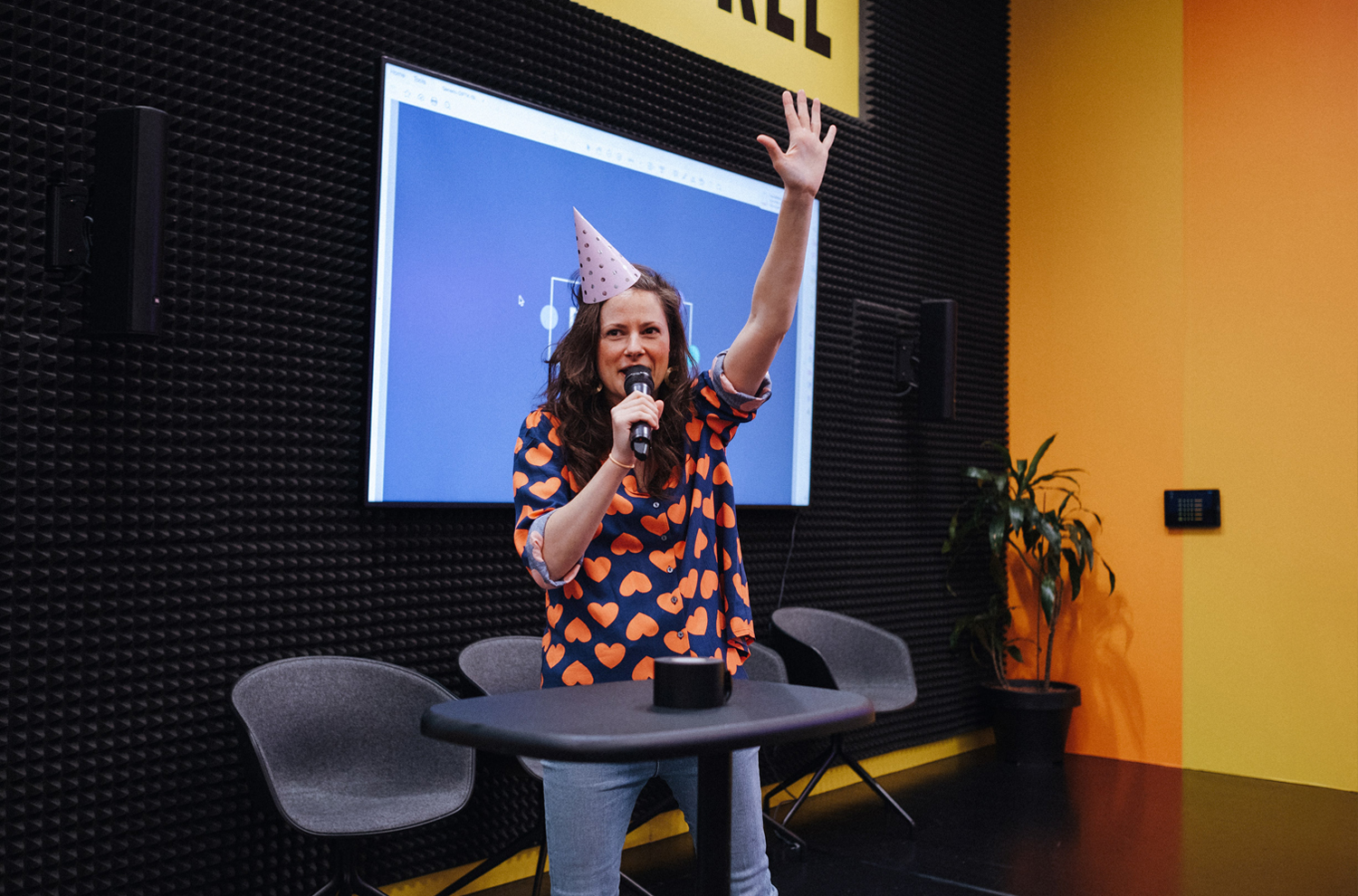
My guest today is Frankie Tortora – freelance graphic designer, Mum of two and the Founder of Doing It For The Kids – a brilliant online community created for parents who freelance. She’s also the co-host of the multi-award-winning podcast of the same name, where she and Steve Folland tackle ALL the questions around juggling freelance life with kids in the mix!
In this conversation, Frankie shares her journey into freelancing, the challenges and rewards of building a community and the realities of navigating work and parenting at the same time. We talk about everything from maternity leave and imposter syndrome to the role of fathers, the school system’s impact on work-life balance and why so many parents reassess their careers after having children.
Frankie is honest, funny and deeply insightful about the pressures mothers face – both at home and in business. She highlights the stigma that still lingers around motherhood, while also celebrating the powerful ways mothers are driving change in how we think about work.
Whether you’re new to freelancing or years into self-employment, this episode is full of wisdom and solidarity that will leave you feeling supported and inspired.
Conversation Highlights:
✨ The realities of freelancing alongside parenting – from maternity leave to sleep deprivation
✨ How Doing It For The Kids was born, and the challenges (and joys!) of running an online community
✨ The evolving role of fathers and how gender stereotypes impact family and freelance life
✨ Why school systems, ambition and identity shifts make parenting and freelancing a unique mix
✨ How mothers in particular are challenging stigma and driving real change in the world of work
Listen if you’re:
✨ A parent curious about how freelancing could fit around family life
✨ Already self-employed and craving solidarity with others in the same boat
✨ Wondering how to balance ambition with the demands of parenting
✨ Interested in the way mothers are reshaping work and business for the better
Favourite Quote For Mums in Business:
“Community building isn’t about numbers, it’s about relationships.” – Frankie Tortora
About the Guest:
Frankie Tortora is the Founder of Doing It For The Kids, an online community for freelance parents trying to make flexible working work. DIFTK won’t teach you how to become a ‘successful’ freelancer or how to find ‘balance’ (what does that even mean?!). There’s no course. No coaching.
It is all about CONNECTION – camaraderie, collaboration, virtual high fives and a lorra, lorra laughs!
You’ll find Frankie on Linkedin and instagram and if you enjoyed the episode and want to get involved you can click here to join the Doing It For The Kids community.
About the Host:
I’m Victoria Phipps – a Mum of two, analogue family photographer, charity co-founder, marketing person and now podcaster! My career has wandered all over the place and is becoming a bit of a complex tapestry as I head into this middle phase of life, but I can honestly say I’ve loved every minute of it so far.
I was raised by a nurturing Mother and an entrepreneurial Father and have inherited traits from both, so the tension between ambition and motherhood is one I grapple with on a daily basis! I’m fascinated to hear the stories of other women on a similar path, who are striving to build thriving businesses whilst being present for their children. It’s a tough juggle, but I hope the conversations shared on this podcast help Mums in business feel less alone and inspired to keep going in pursuit of their dreams!
If You Enjoyed This Episode:
- Please subscribe, rate and review the podcast – it helps other mums find us!
- Share in your Instagram stories, tag @mummeansbusinesspodcast and let us know your biggest takeaway.
- Share this episode with a fellow Mum in business who you feel would resonate with Frankie’s story.
Episode Transcript
Hello and welcome to the Mum Means Business podcast, where we shine a light on inspiring women who have one thing in common. When they’re not managing tantrums, homework, P.E. kits and play dates, they are busting their gut to create something from nothing, to turn their passion into a thriving business and build a better life for themselves and their families. We dig into what motivates devoted mothers to pursue entrepreneurship and how they integrate their work and family life.
I’m Victoria Phipps, your host, and if you’re an ambitious mum in need of some solidarity whilst navigating the messy middle of making your big dream a reality, then stick around. This is for you.
NOTE: This is the transcript from the original recording, rather than the edited episode so timings may vary.
Victoria (00:01)
My guest today is a freelance graphic designer, mom of two and founder of Doing It For The Kids, a community by and for parents who work freelance. She’s also the co-host of multi award-winning podcast by the same name. In the podcast, she and Steve Folland dive into every topic you can think of around freelance life with kids in the mix. Prompted by questions from community members, it is brilliant. I highly recommend you go and subscribe immediately after this episode.
Over the years she’s built her community online, Frankie has picked up all sorts of valuable knowledge about the realities of freelance parenting from maternity pay and parental leave to boundaries or lack thereof and how the inevitable sleep deprivation we all endure as parents can impact on our work. All of which I hadn’t even given a second thought until I became a parent. So she shares all these nuggets of information in her community online and I’m sure we’ll dig into one or two today. So without further delay, let’s dive in, Frankie.
Welcome to the Mum Means Business Podcast.
Frankie (00:59)
That was beautiful, thank you.
Victoria (01:02)
You’re very welcome.
You’re very welcome. I’m excited for this conversation because I feel like you don’t shy away from like the honest realities of what freelance parenting is like. Yes. So let’s go back and start at the beginning because I think your journey with like, let’s call it entrepreneurship and motherhood are completely intertwined. So you began life as a graphic designer. Did you take that into an independent business before you started this community?
Frankie (01:09)
No, that’s what I do. Yes, correct. Yes.
Mm-hmm.
Yeah, so it’s all a bit higgledy-piggledy. I didn’t do design at university, I didn’t go to art school, I did music at university. ⁓ Thought I wanted to work in marketing for a record label, turned out I didn’t. Like fell into sort of arts administration type roles where I was working for arts charities and a youth project that ran like creative workshops for young people. Like making it happen, the stuff behind the scenes.
Victoria (01:39)
Okay, nice.
Frankie (01:59)
And I just felt like I was doing a job where I was facilitating other people’s creativity. Like they were doing the creative stuff and I was doing spreadsheets. Like that’s not, yeah, that’s not me at all. So yeah, I gave up that career. That was an employed career and I gave up that and went freelance at the same time. So I retrained as a designer and gave up an employed job and went totally freelance off the bat. I’d never worked as a designer before.
Victoria (02:07)
Administrating it, yeah.
Frankie (02:30)
⁓ I gave myself six months and was like, if this doesn’t last six months, you know, if I don’t make it through six months, I’ll give up and try and get a job.
Victoria (02:34)
Why?
That’s a massive leap, that’s really courageous. And why graphic design?
Frankie (02:40)
a bit
nuts. Why graphic design? Because it was one of those things where I was in this art admin job, but I was like shoehorning really bad for the record design into my job. You know, if there was like a Christmas party, whatever, was like, let me do the invitation. You know, that kind of stuff. Yeah, totally. All in Photoshop, which I look back on now and just cringe. But yeah, I was shoehorning design into my job and it just became increasingly obvious to me that that’s what I wanted to be doing.
Victoria (02:53)
Okay.
I’ll make a flyer.
Frankie (03:09)
So then there was this timing thing where my employed job at the time was being made redundant. So I was entitled to a very small, cause I hadn’t been there that long, but some money. So I was like, I’ll take that small redundancy package and then I’ll do a night course in graphic design. And then I will leave this job and build myself a website and hope for the best. And that was 13 years ago. and I look back on that now and it is a bit like bonkers really.
Victoria (03:29)
And it worked out.
How
old were you?
Frankie (03:40)
I was mid to late 20s. I don’t actually know. Where we now? 2025. Yeah, it’s probably like 26, 27. So I’ve done about five or six years in a corporate, it wasn’t that corporate, but you know, in an office job going in.
Victoria (03:56)
Yeah, but that’s brilliant though.
You obviously had a sense of like, actually it matters that I enjoy what I do because a lot of people by the time they’re kind of edging into their second half of their 20s, they’re starting to think about, you know, the settling and the stability and am I going to be a person and have some children? Whereas you’re thinking, no, actually I do want to like my life. Yeah. Yeah.
Frankie (04:03)
Totally.
Mm-hmm. Mm-hmm. Mm-hmm.
Yeah, life’s too short. I don’t want to do this forever. Yeah, there were
a lot of things at play and actually becoming a parent, even though I wasn’t at that stage at that time, was part of that conversation. Like I had a boyfriend at the time. I’m now married to him. And, you know, we wanted to have kids if we were going to do this properly. It was on the back burner. We were both thinking about it. And so part of my move to go freelance was sort of for these imaginary children, partly.
that I didn’t have, which is, again, like just feels a little bit, I don’t know, full on. You think that’s normal? I don’t know. No, true.
Victoria (04:53)
Normal, no, no, because yeah, but you’re not 18 and thinking about it. Like, you
you’re kind of, you you said 26, 27. So that’s fair. Like, you’re just sort of planning.
Frankie (05:01)
Yeah. Yeah. But the fact that we don’t
even know if we could have kids, like there’s so many things that are at play, you know, and it just, don’t know, making decisions around that does feel like a bit full on, but then it was totally the right decision and it’s proven to be amazing. But also I find it a bit depressing because, you know, my husband, my now husband wasn’t thinking about going freelance for the kids. Like that was never thought that he would, you know what I mean? Like he wasn’t thinking, oh, I need to work flexibly because we might have children. And I love him and he’s great and he’d…
Victoria (05:13)
Yeah. Yeah.
Yeah.
Frankie (05:30)
does a lot of stuff, but like, it’s interesting to me that as a woman, I was thinking about that way in advance, whereas perhaps a man of my age wouldn’t necessarily be making these decisions.
Victoria (05:34)
Yeah, yeah.
Was when you were,
yeah exactly, well when you were growing up, was your mum around?
Frankie (05:45)
So both my parents are self-employed and I always like found it, I don’t know, it never quite sat right with me or my family that I was employed, if you see what I mean. It almost felt a bit inevitable. No, no, the opposite actually. I watched the BBC and my mum was so proud and like she’s still, she’s dead now, but like when she was alive, she’d always drink out of the BBC mug that I gave her, so cute. Like it meant something to her. ⁓ But I do feel like there was all, we all agree that
Victoria (05:47)
Okay, yeah, okay.
Were they disappointed in you?
⁓ gorgeous. Yeah. so cute.
Frankie (06:15)
It wasn’t a surprise when I ended up kind of going my own route. Yeah.
Victoria (06:18)
Well, our parents know us, yeah.
Our parents know us. They can see where we’re gonna thrive and when we’re really thriving and when we feel a little bit stuck. They can sense that, I think. So maybe it was just that, that they felt like you weren’t in quite.
Frankie (06:27)
Yeah, right.
And I grew up with, know,
dinner chat was like self assessments and I would answer the phone and I’d be like a secretary for my mum’s business, like that kind of stuff. You know, that’s the world I grew up in. So, yeah.
Victoria (06:37)
fun times. Yeah, yeah, Yeah.
Yeah. So how, so you started that, you gave yourself six months.
Frankie (06:47)
That’s about the amount money I had at the time would cover like rent and whatever. Yeah.
Victoria (06:51)
Okay, fine. Yeah.
Okay, and your husband’s in his secure job. What did he do? Yeah. Or both.
Frankie (06:56)
Yes, at that time or now or both. that
time he worked for like a company that make trade magazines. God, it’s so boring. And then he moved into like, he works in marketing for a bank now. So he does that, which he’s trying to get out of as we speak. But anyway, that’s another conversation.
Victoria (07:10)
Okay.
Okay.
Okay. But you’d grown up in a self-employed household. So you were very familiar with the freedom that that brought. Although, because I was the same, like my dad was a builder. So we were very much, okay. Okay. Yeah. Fine. Yeah. My dad’s a joiner as well. Yeah. Okay. So it’s very like up and down in that world. And we probably have lot of parallels. Like we probably both remember in our childhood, like the crash of 1991 and how that impacted the building trade. So.
Frankie (07:18)
Yeah.
Yes.
Yeah, my dad’s a builder carpenter. Yeah. Cool.
Yeah, right.
Yeah, right. Totally. Yeah.
Victoria (07:43)
If your upbringing was like mine, parents worked very, very, very hard, but they worked when suited them. Yeah, same. Same, my dad’s about to be 70. Yeah. Yeah. But it’s flexible and there’s freedom in it. So you knew that that was possible, which I think is an advantage. I think for a lot of people kind of grappling with early stages of motherhood, they don’t know what’s possible. And maybe a…
Frankie (07:48)
Yeah. My dad still works now in his seventies. Like, not the same amount, but, ⁓ yeah.
Mm.
100 % agree. You have
to be, it has to be modeled to you, I think. And that’s one of things I love about what I’m doing now is like my kids, they have the corporate model from my partner and there’s nothing wrong with that. That’s all good. ⁓ But they also have what I’m doing, like almost the opposite of that, which I think is great. Like work chat, you know, we, do you do that thing at dinner where you’re like, what did everybody do today? Kind of thing. Do you do that? Right. Appreciate they’re a lot smaller. Yeah.
Victoria (08:13)
Yeah.
Yeah, yeah, yeah, they’re seeing both.
We’re trying to introduce that, but my children are not so far keen to engage
yet.
Frankie (08:38)
But
we’ve always done that since they were small and it’s fascinating. But anyway, part of that inevitably is work and like it’s they get like such different workday experiences from me and Rob. So yeah, I think that’s good.
Victoria (08:44)
Yeah.
Well, so much
of it that they’re absorbing is more what we’re showing them than what we’re actually telling them. You know, they watch you and how you work more than they’re actually going to listen to anything you say. So to have both of those examples, they’re going in to the working world as and when feeling probably quite armed with a lot of like subliminal knowledge about what those realities are. Yeah, I’m sure they are. But you, okay, so you had your partner’s steady income.
Frankie (08:55)
Yes. Yeah.
Yeah.
I really hope so, yeah. Yeah.
Mm.
Victoria (09:20)
and you’ve got six months worth of living expenses in the bank from your part. Did it come easy, that graphic design business? Did that just sort of take off and, yeah.
Frankie (09:26)
Yeah.
So the other thing I did, which is
also interesting, is so I did this night course to retrain and part of what I did for that is a crowdfunding campaign because I basically couldn’t afford the fees at the time. It was like £12,000 to do this course.
Victoria (09:42)
Okay. ⁓ okay. That’s cool
though, to do the crowdfunding. That’s… Yeah.
Frankie (09:48)
Well, no one had ever done it before. Now they have
it like this college I did it at. They like mention it as an option for people because I did it. But yeah, it was basically like, I can do not particularly well practice graphic design for you for cheap, ⁓ in exchange for some money to help me train and change career. And like, obviously I had a lot of like friends and family who just did it cause they’re nice. But then I had a network of people at my job who like paid me to do various things and their networks and stuff.
Victoria (09:56)
Okay, yeah.
Frankie (10:18)
So that was a win because I got not all of my fees, but part of my fees paid that way. Also got a grant, which was amazing. But then I also built this network before I went freelance. So like all these people knew that I was available to hire basically. mean, perhaps some of those people were like, that crowdfunding work she did was really bad. Yeah, yeah, totally. But I definitely got gigs off the back of
Victoria (10:31)
Yeah.
Yeah, hopefully she’s better now that we’ve paid for her to train.
Frankie (10:47)
doing that and building that network. And then the other thing I did was, timing, amazing in hindsight, but at the moment I was made redundant and finished my course. There was this new program, I’m from London, lived in London. There’s a new program in ⁓ just south of the river in Southlouk where there was a charity that works with young people under 30, which I was at the time, to come and do like a co-working situation where they got office space for free.
in exchange for like their skills. So I did graphic design for the charity that ran it in exchange for my desk. So I got to build up my skills by working for this, not working, but in kind working for this charity. But I also immediately had access to a network of people in that co-working space, all new businesses under 30, all trying to make a name for themselves and they all need a designer. So I got tons of work through being in that co-working.
space and I still have clients that come through people that I met there like you know 10, 15 years ago. ⁓
Victoria (11:49)
That’s very cool. That’s a happy
synchronicity of events.
Frankie (11:54)
Yeah, totally.
Like they were advertising for people to join like as I was being made redundant. And it was a lot of like, and my experience, I don’t know, there was a lot of like, you know, imposter syndrome stuff.
Victoria (12:05)
all the imposter stuff.
Yeah, yeah, of course. And how did you cope with that? mean, presumably you were just busy with work. I think in some ways that’s harder if you’re going into the business with no network and you feel like you’ve got to sell yourself for the first time in your life and you’re starting from scratch and you have a lot of time because you’re not busy to think about how you’re not qualified.
Frankie (12:17)
Hmm
That’s true.
Yes, although it’s the case that I’m at
my computer in this co-working space being like, la la la. But then I feel like the act of showing up in itself pushed me to want to succeed and having that space and feeling professional in a verse of commas and being surrounded by genuinely inspired, like these people have gone on to do like amazing stuff. Being in that environment, like pushed me to want to.
Victoria (12:46)
Yeah.
Frankie (12:51)
also build a really successful, I mean, it’s not really successful, but you know, a long-term sustainable business. That was name of the That was what the whole thing was called because they were all creative businesses. And also they facilitated like they did networking nights and we did workshops where we shared skills with each other and talks and stuff. It was all like just in kind.
Victoria (12:56)
Sustainable, yeah. Yeah, and it was probably a really creative space and you’d actually felt quite deprived of that. right, was it?
Amazing. That’s funny.
Yeah.
Yeah,
sounds really fun.
Frankie (13:21)
sharing. How’s my
printer making a noise? I’m so sorry it’s waking up.
Victoria (13:24)
it’s all
right. Printers are haunted, I think. ⁓ It’s a theory that I have about life. They’re haunted because they’ve got these minds of their own where they only work when you don’t need them to work. And when you do need them to work, they just mess about. ⁓
Frankie (13:26)
Winters are annoying. Yeah.
⁓ 100%. Mine just prints
in lines at the moment. need to look at it. Yeah.
Victoria (13:43)
This
sounds like a really fun creative space and to be surrounded by people all kind of the same age and no one’s got kids yet. So you’re all just able to like go for a drink after work and you’re living the London life. It sounds really, really cool and quite just a really positive way to enter into the world of entrepreneurship, which otherwise can feel quite scary being self-employed all of a sudden.
Frankie (13:46)
It was amazing, genuinely.
Yep. No. Yeah. A lot of that.
Yeah, because I was working at home for like maybe two or three weeks when I was made redundant before I moved into that space. And yeah, I’m really glad that wasn’t my long term environment. I mean, I love working from home now, but that feeling of like, completely, yeah, but also just feeling completely alone now having left this corporate environment. I had some work, but it wasn’t like enough yet to feel like that money was going to survive beyond the six months.
Victoria (14:22)
Yeah.
be a different season of life.
Yeah, yeah, yeah.
Frankie (14:41)
And honestly, moving into that space changed like so much for me, like emotionally, psychologically, but also financially as well. So yeah.
Victoria (14:50)
It sounds like actually that whole experience in itself prepared you for what you were gonna go on and do next. So how did, tell me about how the community started and how that fit in with your journey into motherhood.
Frankie (14:58)
Big time. Yeah. Yes.
So being in that space was like part of the reason that doing it for the kids exists. I was still in that space when I got engaged. had a hen do with all my creative space crew. It was really fun. I sang a Christmas song in July in a karaoke night. Anyway, it’s the Mariah Carey one. What is it called? I sang that like in this really, on like a Friday night in July.
Victoria (15:18)
No.
I need to know what Christmas song it was, please. ⁓ my God! All I want for Christmas is you. ⁓ my God, that’s bold.
Frankie (15:36)
in this really busy London Bridge pub. Anyway, good times. But yeah, I got engaged and then I ended up leaving the space early. I wasn’t 30 yet, but I left about a year early because technically you were supposed to graduate when you turn 30. Yeah, some people stayed a bit longer. But I didn’t want to commute to South London anymore when I was pregnant, basically. So I gave it up. But yeah, I got engaged and then I got pregnant.
Victoria (15:47)
Did they kick you out when you were 30? Is that how it was? graduates, that’s what they call it. Okay. All right.
Frankie (16:06)
and ended up leaving that space. But it was very interesting to be pregnant in that space surrounded by people who were like not anywhere, you know, like it was suddenly quite like a weird juxtaposition. I felt quite like out on my own. Not in a bad way, they’re all lovely people, but they didn’t get it like obviously. ⁓ And then I was also the first in my friendship group to have a baby. So like none of my…
Victoria (16:15)
Yeah.
Yeah.
Then you get it, yeah.
Frankie (16:34)
Other friends, even employed friends were going through a similar thing. And I’d go, I started going to like, you know, meet other parents at similar point as you, local to me, kind of, you know, coffee mornings and stuff. And all of those people were employed. A lot of them worked in the city and were like getting 12 months maternity leave, you know, enhanced pay, blah, blah. I literally remember somebody saying to me like, are you taking, you know, six months or 12, kind of question. And I was like, at the time I didn’t even know.
Victoria (17:04)
Yeah.
Frankie (17:04)
I like,
I haven’t, yeah, I’m not sure. So yeah, like all of those things just led to me feeling completely out of my own and quite isolated and was really struggling to meet people that were in a similar situation and tried to find them in real life, didn’t manage to find them. So it turns to the internet because that’s what my generation do. And at the time there just wasn’t that much out there, definitely not.
in London, Faye Dicker ran something in Bristol at the time, but I wasn’t in Bristol. And yeah, like, I was just like, I need this. I need to speak to people about this. I have so many questions. I have so much to talk about. And so I ended up launching essentially a blog to start, and I invited the internet to contribute their stories to it.
people immediately that way in fact people I still speak to now like the first people that wrote blogs for me still good friends with now. ⁓ So yeah it started as a blog then I made an Instagram page and we talked about the writing on the blog and the stories that people were sharing and then somebody suggested to start a Facebook group because we were trying to have these conversations on Instagram and Instagram is not the platform to have conversations between people. Made a Facebook group and that just went mad like really quickly.
Victoria (18:18)
harder.
Frankie (18:27)
Because it turned out there are lots of people like me who wanted to talk about going on maternity leave when you’re self-employed and the maternity allowance system and working in a time for money way when you suddenly got a small baby, taking up all your time. Like, yeah, turns out there are lots of people. They just were across the country and I couldn’t talk to them without the internet. And yeah, that was nine-ish. Yeah, nine years and now basically. It’ll be 10 years next year.
Victoria (18:57)
Okay, that’s a long time. So you’ve been building this community for a decade, nearly.
Frankie (18:58)
⁓ Yeah.
Yeah, my son just turned 10 and I launched him when he was one, 18 months, so yeah.
Victoria (19:08)
Yeah, and what was the general feedback from people who were joining in those early days? You know, yeah.
Frankie (19:17)
why didn’t this exist before?
This is amazing. I love this. I feel completely understood. ⁓ Just that sense of like, I still, I see that now people join and they’re like, ⁓ this is where I’m meant to be. I feel safe here. Yeah.
Victoria (19:36)
That must have been quite rewarding and such a relief for you. I mean, they say, don’t they, you know, find a pain point and they, you know, you’ve got the makings of a business. It was your pain point. You felt lonely and isolated in that season of your life because you’re not going into it. Well, one, you’re the first, you’re pioneering in your social circle, this journey into motherhood. And also you’re doing it as a self-employed woman with her own business.
Frankie (19:48)
Yes.
Yeah.
Victoria (20:06)
and you don’t know the rules. Presumably there are some, but you don’t know what they are and you’re looking for somebody to help you and there’s nothing, there’s no support. And then to realize that you’re not alone, because it’s quite painful feeling alone in whatever your situation. That is where the suffering comes from, feeling like we’re doing it by ourselves.
Frankie (20:08)
No, I know nothing.
Yeah, totally.
Yeah, mean,
frankly, I would not have done it this long if I didn’t find it personally rewarding and fun and joyous. yeah, right. Amazing. Revelation. Yeah, like when I run into people on the school run and like work whenever something comes up and I try and explain this element of my job, like I get paid to chat to people on the internet. And I love it. And it’s great.
Victoria (20:31)
Yeah, yeah, yeah. Because you know that work can be fun. You know, yeah, yeah. ⁓
and they’re like, what?
Yeah.
Frankie (20:52)
Yeah,
like some people are like, okay, I get that. other, most people are like, I’m sorry, I don’t know what you’re talking about. But yeah, like there’s been a lot of challenges along the way and I honestly wouldn’t still be here if I didn’t personally love it. So yeah.
Victoria (21:10)
So when you started that Facebook group, you had a blog, you had an Instagram account, you had a Facebook group. And the Facebook group is busy, it’s buzzing. But this is a lot of work for you to keep that going. And where’s the money?
Frankie (21:13)
Mm. Yep. Yes, very much so.
Mm-hmm.
Well, indeed.
I mean, like weirdly, I make a joke about how doing it for kids is like my greatest marketing campaign for my graphic design business. And it sort of is in that I get referrals through it and I get work through it. But that was never the intention. It’s just like the way it’s worked out. So that I make indirect money that way and always have done even when it was a Facebook group. But yes, it got to a point, basically COVID.
Victoria (21:36)
Yeah.
Frankie (21:56)
killed my Facebook group because I had over 10,000 people. COVID came along and suddenly, like the group had been becoming quite intense to manage anyway. Then COVID happened and it was like just too much. Like I was trying to protect the wider group from a lot of people’s trauma essentially, but that meant that all the trauma had to go through me. So all the posts had to be approved by me.
Victoria (22:07)
Yeah, that’s a lot of people.
Yeah.
Frankie (22:26)
and I would see them all even if they didn’t make it to the public forum and there was stuff in there that was just, you know, awful about people losing all their work overnight, their partners just being made redundant overnight, having to move in with their parents, like all sorts of stuff and big time people have no idea like the emotional turmoil that comes with running an online community or any kind of community.
Victoria (22:34)
Yeah, I can imagine.
That’s a lot of emotional burden for you. Yeah.
because you presumably, well you
presumably were grappling with some of that stuff yourself as well in your world.
Frankie (22:57)
Big time. My husband
literally, I hope he doesn’t mind me saying, but like he had a serious mental health crisis during the first lockdown and was signed off work. ⁓ I had some clients still because they were all booked in, but I was trying to do the work with, I had an 18 month old and a four year old in a flat with no outside space. My husband was working at home who was not okay. Like it was a lot. ⁓
Victoria (23:05)
Yeah. Yeah.
my god.
Yeah, yeah. That’s
an incredible, I mean, it was hard for everybody, wasn’t it? I mean, we look back and it all feels like a dream and everyone had their own particular situation, but the repercussions were just massive and it was such a sudden shock for everybody in a lot of ways. But personally, that’s an enormous amount for you to deal with and you’ve gone 18 month old, but then to have…
Frankie (23:28)
Yes, big time.
Mm.
Yes.
Yeah.
That age, honestly,
it was the worst possible age. She just cried like constantly for the whole of lockdown. It was just awful. much. I love her, but it was so intense. so intense. So yeah, you know, everyone was dealing with stuff.
Victoria (23:47)
Yeah, I mean, that’s not a kind of put them down in the corner and let them sleep while you do stuff, age. my God. The whole of COVID. ⁓ bless her. ⁓ Yeah.
But then part of your responsibility is to go through and manage this group and you’re just getting bombarded. It’s worse than watching the news, you know, because it’s personal. You know, all these conversations are individual stories that are playing out in front of you. That’s an enormous weight on your shoulders. Yeah.
Frankie (24:10)
Uh-huh.
Yeah.
And feeding this sense of responsibility to people, not
just to like honor their stories and make sure that they’re getting, I mean, a lot of the time they just want it to be heard. You know what mean? They didn’t even necessarily want it to go public. They just wanted somewhere to write it down. ⁓ But also I did a lot of like, people were sending me resources about how to keep the kids entertained and stuff. And like, I was building like, you know, trying to collate all that information and share it to the wider group, things like that. ⁓ That sense of responsibility, particularly at that time was a lot.
Victoria (24:31)
Yeah, yeah.
Frankie (24:53)
Anyway, I’d already been like, am I, what was the point of this? I’m not getting paid to do this. This is really full on and then COVID happened and I was like, yeah, I’m not sure this is sustainable anymore. ⁓ So yeah, I ended up, ⁓ I got to the point where I was like, I have to either take this to a paid platform and get paid for my time to run this or I kill it entirely. So I opted for the, I basically was like, I’ll try the paid version.
And if it fails, then I’ve tried, but I’ll go down that route, see how it goes. And yeah, if it’s success, great, I get paid to do this. If it doesn’t, then I was going to kill it anyway, so it doesn’t really, you it doesn’t make any difference. That was 2022. I finally launched the new version of it and it was a massive success. Like I had a hundred and some, over 150 people join on like day one and it’s still going now and I genuinely love.
Victoria (25:46)
Brilliant.
Frankie (25:51)
running it. So yeah.
Victoria (25:52)
Yeah, it’s
a brilliant community and I’m in it, should just say that out loud. I’m in it, it’s great. And I think actually better for not being 10,000 people because you can connect and you see the same faces popping up and you start to get to know each other. And I imagine, you know, trying to manage a group of 10,000 people for what, you’re just one person and you’ve got all these other responsibilities like that is just that.
Frankie (25:57)
Full transparency.
Yeah, right. So much better.
Yeah.
Yes.
Victoria (26:22)
that was going to break you eventually if you tried to keep that going.
Frankie (26:23)
Yeah. And you’re totally right
in that actually, like for me, community building is not a Malumbra’s game at all. It’s not about how many people are in it. It’s about the relationships between those people and having a much smaller community has been a totally positive move. Yeah. Big time.
Victoria (26:39)
and you started making money.
Frankie (26:41)
Yes, amazing, I get paid. Revelation, woman gets paid for working. Yeah. Well, you know, like we do so much unpaid stuff just by the nature of being raised women. yeah, it’s good to, it was a challenge. Like, a, you know, I had issues about asking people to pay me. I still do now.
Victoria (26:48)
Hahaha
Yeah. Yeah.
Yeah, which is bonkers.
Yeah, it is mad because I’m not sure. And we come back to the same thing and it’s no one’s fault particularly, but you your husband didn’t feel like I need to prepare so that I’m ready to have a working life that fits around our future children. You’re the one thinking that. And I don’t think a guy would necessarily think ⁓ I’m going to feel some guilt around asking people to pay money that they’ve earned for all of this work that I’m doing that makes their lives better. I don’t think their programs have that same
Frankie (27:19)
Yeah. Yeah. Yeah.
Yeah, mean, hashtag not all men.
I definitely know some men who feel real guilt about getting paid, particularly in the community building space. However, yes, you’re totally right. think money, like it’s men, like it’s definitely men in my life who have pushed me to charge more to say, look, you should be getting paid for X, Y and Z and you should be getting paid way more than you are currently doing. Like it is excellent, excellent men that have really helped me to do that. So shout out.
Victoria (27:37)
No, exactly. Yeah, yeah, yeah. Yeah. Yeah.
Yeah.
Yeah. Yeah, but brilliant
that they can recognise that you’re struggling with it and give you, it’s, God, it’s so complex, isn’t it? I was going to say, give you permission to ask that, but that’s ridiculous. They don’t, you don’t need their permission, but it’s like they, their upbringing as individuals and as men has not burdened them with this sense of guilt that we just carry around with us.
Frankie (28:07)
Yes.
Mm-hmm. No.
Mm. Yeah.
Victoria (28:26)
So they’re like, why don’t you try doing it this way and not feeling guilty about it? Cause that’s what I do and it’s really good and you make money and you’re like, okay, someone else does that, men or women, whatever. Like that’s all right, I can do that. And it’s a really, really complex one and it just is all to do with how we brought up and what we saw. But tell me then, because your community whilst we’re on this.
Frankie (28:49)
Yes.
Victoria (28:53)
Your community is not for moms, it’s for parents, okay? So in building that community, how, because again, like you go back 50 years and there wouldn’t necessarily have been that many freelance dads who were really thinking about how they were gonna juggle their parenting responsibilities, whereas now, exactly. Okay, so even in the last 10 years, you think it’s changed? Okay.
Frankie (28:56)
Correct.
No, the world has changed a lot in the 10 years that I’ve been running this big time. Yeah.
Yeah, seriously.
And I think COVID has a lot to do with that. ⁓ But I also think slowly attitudes are changing and a lot of men are stepping forward and saying, I don’t want to work like this. I’m not built for corporate life. I want to be around for my kids more and the more the men that do that, know, like Elliot Ray’s parenting out loud campaign, you’re familiar with that. But like people are pushing for men to be more visible about their choices around.
Victoria (29:22)
Yeah.
Yeah.
I’ve heard about you.
Frankie (29:46)
flexible working, being around for their kids and the more men that talk openly on LinkedIn or whatever, the more other men are like, oh yeah, I feel like that too. I wanna be around more. So I do think it has changed even in 10 years. And I’ve always had men in doing it for the kids, and it’s still only about 10 or 12%, but it has steadily grown over the past 10 years. Again, it’s like the more men that are there, the more men feel safe to be in there, but they’ve always been welcome.
I’ve always been very like, you know, everybody, everybody has the right to talk about wanting to work flexibly around their kids. But also there are specific challenges for women. And I feel like if we’re going to talk about those things as a community of, in my case, freelancers, talking about the challenges of being freelance and parents, mothers, I just feel like those conversations are so much more powerful when men are in the room. otherwise we’re just shouting into a vacuum, I think, in my honest opinion.
Victoria (30:22)
Yeah.
Yeah, yeah.
Frankie (30:44)
⁓ so.
Victoria (30:44)
Yeah, no, I agree.
And obviously the purpose of this podcast is to talk about mums. but no, no, I’m not, I’m not, that’s not a critical thing. But I think by breaking those gender stereotypes, you know, the assumption going back for centuries is that the man wants to go out and work and the woman wants to stay at home and raise these children. And actually there’s no nuance in that at all. That system is, was rock solid and whether women wanted to or not, they were staying home and looking after the children.
Frankie (30:48)
Yes. Yeah.
Victoria (31:14)
and men were going out to work whether they wanted to or not. And you could have a situation where you have really paternal men who want to just be with their kids. And you’ve got a woman who’s like super ambitious. Of course she loves her children, but she also wants to go and do some other stuff. And that old way of working didn’t necessarily allow for it. And so by questioning it, and you can question it as a mother or as a father and say, actually, I, and again, it comes back to like, I want my work to be fun and I want my work to work for me.
Frankie (31:23)
Yeah.
Victoria (31:43)
as an individual and I don’t want to necessarily do what was prescribed to me in my childhood as you know follow all those traditional rules. I want to stay at home and look after my kids and my wife actually loves her job and I can support her and she earns loads of money and she wants to go out and do that and we can make it work for ourselves and it kind of just relinquishes us from those kind of shackles of centuries of conditioning.
Frankie (31:44)
Mm. Mm.
The gender stereotypes are real. ⁓ But the whole, it’s fascinating as well because like working class women have been working for centuries with their kids like attached to them. ⁓ So it is kind of interesting that like we find it so like, know, ⁓ what’s the word? My brain’s gone. It’s, you know, the concept is so alien.
Victoria (32:12)
Mm.
and raising their children. Yeah, that’s true. Yeah. Yeah, yeah, yeah, yeah.
Yeah.
Hahaha! ⁓
Yeah.
Frankie (32:38)
to
so much of society is just like, I don’t know, it’s a bit, I’m not sure how that’s happened or where that’s come from, but you’re totally right in that like, I don’t know, I just wanna build a place where whoever you are, you know, whether you’re a dad, a mum, whatever, yeah, you’re not confined by what society is telling you you should or shouldn’t be doing and…
Victoria (32:42)
Yeah.
Frankie (33:07)
I do think women having conversations about work is more powerful with men in the room, but I also feel like there’s a hell of a lot of men that are being deprived of their chance to talk about how they want to work. Like, I don’t feel like a lot of those spaces exist. And I feel like to a particular group of men, what I’m doing and doing it for the kids has really spoken to them and they’ve stuck around because there just aren’t many spaces for them to talk about that stuff. Weirdly.
Victoria (33:32)
Yeah, yeah,
yeah, and it prompts.
Frankie (33:35)
feel like men are sort
of deprived of actually of the opportunity to have a lot of those conversations historically. Maybe it’s better now.
Victoria (33:40)
Yeah, and it probably prompts,
well, yeah, but it’s getting better slowly, but surely because of communities like yours. And it probably prompts a lot of conversation between, you know, heterosexual partners who are raising a family because these are not questions that we’ve been taught or conversations we’ve been taught how to have because we’re questioning a system that exists and actually to kind of open that up and say, well,
Frankie (33:44)
Yeah.
Mmm. Mmm.
Mm.
Victoria (34:09)
how do we want to do this, this raising our family stuff? And can we be like, just look at it from a first principles point of view, how do you want it to look for you? And how do I want it to look for me? And who’s gonna carry the beads? Who’s gonna do this morning drop off? Who’s gonna, and just actually, just free us up to think more laterally about what that might mean for us as individuals. And I think that must be.
Frankie (34:13)
Yes.
Hmm.
Victoria (34:39)
something that’s prompting your community and some of the questions asked in there, especially when people first find it, must prompt a lot of those conversations at home, which is a really good thing.
Frankie (34:46)
I
know for a fact the podcast in particular has prompted a lot of those conversations. ⁓ Yeah, I’ve had messages from people about, know, I literally played this episode to my husband. I’ve been sent messages like that. ⁓ But I think you’re right in the dynamic inside the community where men are talking to women about these issues empowers everybody to have those conversations if they’re in a heterosexual relationship at home. ⁓ Yeah, I do think there’s some truth in that for sure. And also,
Victoria (34:49)
Yeah. Yeah.
Yeah. Yeah.
Frankie (35:15)
Having a space that’s open to all parents means that other parents as well are also welcome, adoptive parents, same-sex families. Like, I don’t want anybody to feel like they’re excluded from talking about working in a flexible way around their kids. know, we all, every family is different. So I want everybody to feel like they can join whatever this effort, basically.
Victoria (35:38)
Well, that definitely comes across as a very inclusive environment and a very like fun, friendly, helpful, safe space. And I think, you know, there might also be instances where somebody is grappling with this stuff, having just become a parent, they were freelance before, they’re trying to navigate what that looks like for them now and all the things that you give such helpful information about, you know, around maternity and all of that stuff. And that they might not.
Frankie (35:52)
Mm.
Victoria (36:05)
feel that they can quite, they’re not armed with enough information and knowledge to kind of go into those conversations with their partner. And actually they just need someone else to talk to who isn’t their partner. And then they come in, yeah, exactly. Because it’s a lot. And you know, especially for new parents, I mean, your brain is broken to a large degree, especially during those first, you know, that fourth trimester and that whole first year, or let’s say five years, your brain isn’t quite functioning as it had. And so,
Frankie (36:16)
Yes, untangle how they feel about it.
Yeah, really.
Victoria (36:35)
you need to kind of piece together how you feel about it in your own head. And I think going into a community of people who have perhaps been exactly where you are or who are going through it at the same time, it’s again, it’s that solidarity, isn’t it? That makes them feel less alone and because sometimes…
Frankie (36:51)
And I think it’s really
comforting to know that people have gone through this a little bit ahead, like to know that they’ve gone through that conversation, for example, and come out the other side. Yeah.
Victoria (36:55)
Yeah.
So what do you think are the most, or what have you seen in terms of like a trend of questions and major grapples and I don’t know, just, I’m gonna say head fucks that people come into the community with. They’re like, what do I do about this? Somebody help me. What do you think are the kind of the key challenges that parents who are freelancing are facing?
Frankie (37:24)
Great
question, do I know what they are? ⁓
Honestly, one of the biggest questions is like, how can I create more time? Can I have? Yeah, well, no, I genuinely don’t. But that is one of the biggest issues obviously, for freelancers in particular is like, I work in a time for money way. I’m not going to get paid unless I put in the time. So how do I carve out more time to do my client work so that I can get paid?
Victoria (37:32)
Yeah, can you tell me the answer to that? Do you know?
Frankie (37:55)
I don’t have the answers to that. ⁓ Particularly in a country where like we have one of most expensive childcare systems in the world. And often a lot of people live thousands of miles away from their grandparents and stuff like that. ⁓ Yeah, so that I don’t have an answer necessarily to that. But again, it’s a lot of the time people don’t even need the answers. They just need to know that, you know, we’ve all survived it or surviving it.
Victoria (38:18)
Yeah.
Frankie (38:25)
the same time. But yeah, time comes up a lot, boundaries comes up a lot. How can I, you know, everything feels messy, everything’s under one roof, work, life, kids, you know, it’s all there. How do I separate my work from my parenting responsibilities? How do I separate me from work? Because a lot of freelancers in particular, really, I’m an entrepreneur generally, but like struggle with those boundaries between like work and life and when to stop.
Victoria (38:46)
You
Frankie (38:53)
For example, maybe I’m not going to work until 1am tonight. ⁓ So that comes up a lot. Again, do I have the answers? Dunno. And then there’s like really practical stuff, childcare system, maternity allowance, ⁓ paternity pay or lack of for dads and how they navigate like even having a baby financially. Similarly for adoptive parents, there’s no like adoptive adoption pay or adoption allowance equivalent.
for parents adopting a child. So there’s a lot of like practical nitty gritty stuff that I try and help people with and we’ve built, we, I with members have built like a library of articles about that kind of stuff. ⁓ But yeah, a lot of it is like emotional turmoil.
Victoria (39:41)
That’s.
Yeah, so was gonna say,
so there are certain areas where you can find out the facts and deliver those facts. You know, the simple stuff, like I can tell you that this is how you navigate maternity leave, maternity pay as a freelancer. I can give you information about childcare. I can give you information about all these things. However, the emotional stuff is mostly about feeling heard and feeling seen.
Frankie (39:49)
Yes, correct.
Mm-hmm.
100%. Yeah.
Victoria (40:12)
and you don’t try
and answer those questions, which I think is really good. Sometimes I think I try and answer questions that shouldn’t be answered all the time, all the time. I need to like knock that on the head because I think some people are just fixes. You it’s just like you want to fix everything all the time. You want to make it better. And actually sometimes that’s not what’s required. Whoever’s coming in, they just need to vent and they just need to be heard. And they don’t want you to fix the problem. They’ll work it out.
Frankie (40:20)
Mm-hmm. Mm-hmm.
Yes.
Mm-hmm.
Mm.
Mm.
Mm. Yeah. Yeah.
Victoria (40:42)
one way or another, or they won’t, but they’ll get through it.
But do you think, and I’m asking this question because, so my eldest daughter, we touched on before we pressed record, has just started school. And like, I have suddenly, like really suddenly, realized that not only do like, I mean, childcare is getting slightly better. So my youngest in nursery now, she’s just onto her free stuff. So she’s getting the free, so everything’s free. my God.
Frankie (41:07)
Yeah, great. What a difference that makes. Yeah.
Victoria (41:11)
everything’s free. I didn’t get, we didn’t get much of it with the eldest, but the little one now, she’s, so there’s no nursery costs, which is brilliant because she’s only in two days a week. That’s good. And we’re really fortunate. We have grandparents nearby and I thank God for that because it’s been, it’s been brilliant ⁓ on all, all levels. But the school thing, like in terms of hours, in terms of seasons, also known as terms and the like, the very like on off nature of it, it just,
Frankie (41:23)
Mm.
Mm-hmm.
You
Yep.
Victoria (41:40)
does not talk to work, work. Like it doesn’t talk, they don’t talk to each other, do they? Like, so it’s just like all the chat around summer holidays. And I know you did loads of stuff in the podcast building up to it. And this is whole sense, even though I wasn’t in it yet, because we still had the full time, like the childcare we would normally have around this summer. I was like bracing myself because obviously next summer, this is going to be a big thing. And now we’re into school holidays. So half term, Christmas, all that stuff.
Frankie (41:43)
Modern life? Yeah.
Victoria (42:09)
So was listening because I was like, yeah, how does this work? And I hadn’t thought about it before at all. And there was actually just the chat of it, like, is everyone getting prepared? Are you all getting ready? Is everyone getting ahead on their work? Are you scheduling your social media for the whole of July and August? Now, do it now. And I just felt like everyone was all the parents, like rushing around, really stressed through the whole of June. Like June felt very intense. And I was like, actually… ⁓
Frankie (42:20)
Thank
I hate to break it to you, but the summer term at school is one of the
most intense points in the year. Not just as a freelancer in particular, not just because you’re preparing for the six weeks off, but also the summer term is so intensive from the school, sports days, end of term performances, parents. They want all the time, summer fair. Yeah, exactly. It’s like this combination of being asked to be in the school three times a week while also
Victoria (42:55)
Yes, so they want all your time before you have to give all your time.
Frankie (43:04)
anticipating not being able to earn as much, you know, it’s just a total killer combo basically. Yeah. Sorry. I don’t mean to put the fear into.
Victoria (43:07)
trying to get all your extra work done in that time as well. I’m really frightened. And no, no, no, no, no, it’s not you that’s frightened me, but
I just, I mean, I know because of communities like yours and because I was not like you, I was one of the last in my friendship groups have kids. So I know all my friends are like going through it, gone through it. They’ve got kids sort of starting big school. So I know I’ll live, I know I’ll survive, but in anticipation of it,
Frankie (43:19)
Mm.
Hmm. Hmm.
Yeah.
Victoria (43:36)
I’m just, find myself feeling quite cross that the two don’t talk to each other. So there are, mean, if you’ve got a corporate job, you’re dropping your children off for breakfast club in school, which you’re paying for, and then they’re doing their school, and then they’re in after school club, which you’re paying for. And then you pick them up and put them to bed, essentially, you know, you’re not getting any quality time. But then also, these holidays are like so intense. I feel like you must…
feel like the whole responsibility for fun has to be crammed into this time, this half term, what are we going to do? And you also have to work. You don’t get your 13, was it 13, 14 weeks off your job. It’d be nice.
Frankie (44:10)
Mm-hmm
Mm-hmm.
Yeah, it’s like, as
Steve said on the podcast once, I think the kids are off school more than they’re at school. I don’t don’t think it’s totally true. It does feel like that. And the stop and start nature of it is so hard. I really, yeah, I try now and build my work commitments around the school terms. So like, yes, you can work with me in these six weeks. Like as much as possible. Obviously life doesn’t always go that way.
Victoria (44:30)
It must feel like that.
Yeah.
Frankie (44:49)
but I increasingly am like, I work in six weeks, six week blocks, because I cannot cope with like, yeah, having to stop midway through a project and then like, whatever. ⁓
Victoria (44:58)
But the amount, yeah.
But the mental burden that places on you as a business owner to basically design your entire working life and then inform and communicate this with your clients around a system. And I’m not saying, my God, I mean, I’m not saying that there shouldn’t be school. You know, I definitely don’t want to homeschool my children. That would be worse, I think. But I think there’s no giving it.
Frankie (45:06)
Mm.
Yes.
Yeah, sure. Yeah.
Mm.
Victoria (45:26)
for the way that modern parents work. It worked when there was single parent working households. So, know, my mum, for the most part, yes, yeah, which works. Yeah, absolutely. And that kind of, it makes sense. You know, that parent can do all of these things, can be there all the time. And it did make sense. Like that worked very well for me. My mum just had to run around after us and do all the things. And my dad was at work and it was fine. And he came home and his dinner was on the table and it was all good. But that’s not.
Frankie (45:34)
The entire system is built on one parent being a home, no doubt.
Mm-hmm. Mm-hmm.
Victoria (45:56)
my reality now, and I know that that’s not the reality for a lot of parents. Do you think that will change? Do you hope that will change? Do you care? Like, or are you just trying to, no, I know, I know, but this is like a big question, but yeah, ever, never, you don’t.
Frankie (46:08)
Sorry, I don’t mean to laugh. Do I think the school system will change? I mean, no, I don’t.
I mean, maybe not never, but there’s a lot of history to come. don’t… You know what I mean? ⁓
Victoria (46:22)
Hmm, also known as future. Yeah, yeah.
Frankie (46:30)
Yeah, I I’m vaguely plugged into what various political parties think about working parents and stuff, but I’m not fully across it all. But I don’t get the impression from anyone right now that anyone has any interest in changing that. ⁓ I mean, there’s been talks of four day weeks over the years and working, you know, doing the like French system where the kids go to school on a Saturday for a few hours or whatever, stuff like that. know a lot of parents talk about moving
Victoria (46:42)
No.
Yeah.
Frankie (47:00)
This is English parents, because in Scotland it’s different. But like moving the summer holidays of earlier in the summer when the weather’s actually decent and then starting earlier in August like they do in Scotland. I’m not against that idea. I think that’s quite a good idea. But the problem still remains in that you have these, yeah, stopping and starting long periods of time where your kids are at home and a lot of modern workplaces are not built to accommodate you around that.
Victoria (47:07)
Hmm, yeah.
Frankie (47:29)
⁓ Yeah, it’s both the expectations of work versus the school system ⁓ and also the fact that everything costs, we can’t, so many families struggle to have the old system of one parent working and one parent doing like the overheads now are just so huge, like basic stuff. ⁓ The cost of my supermarket shop at the moment is just crazy. You know.
Victoria (47:55)
Yeah, yeah.
Frankie (47:59)
I would love to see it change. I’d love to say yes, absolutely. But I’m quite cynical about that, I’m afraid.
Victoria (48:04)
Yeah, like next year.
Yeah, and I’m intensely cross about it because it’s my daughter’s first week of school and it’s a brand new thing that I’m thinking about.
Frankie (48:09)
No, but rightly so, like it’s good. We need to
be cross about it. We do, because maybe that will make a difference.
Victoria (48:17)
Yeah, I
don’t know. I’m gonna think about it a bit more. I’m not saying I have any power to change anything whatsoever, but I’m gonna think about it a bit more. I don’t know. I don’t know what the answer is really, I don’t know. I foresee, I suppose, and I suppose I’m looking at it broadly speaking. The world of work is changing massively, and you’ve got parents who really want to emulate what they had growing up, which was a present parent. Probably it was mum, but it might have also been dad or…
Frankie (48:32)
Mm.
Yes.
Victoria (48:46)
You know, but just being there for the drop off and pick up and wanting to have, you know, time with our children is so short. I always say, it’s like, what’s the thing? It’s 75 % of the time we’re gonna spend with our children, we spend with them before they’re 12. So after that, in the whole of rest of your life, you’ve only got 25 % left. And so that first decade is crucial. And actually in the scheme of our whole lives, if we’re lucky enough to have a good length of life, it’s 10 years, it’s no…
Frankie (48:53)
Mm-hmm.
Victoria (49:16)
big deal to kind of slow down in our work and spend that time with them. And I just feel like the systems that we’re working within don’t help us to do that. And there are good reasons. Yeah, yeah, but there are good reasons why, you know, why we do want to be there and why we, and our children need that. They need a present parent or else we’re just building up bigger problems for society in the future or in the history that’s to come. Do you feel…
Frankie (49:25)
No, the opposite I would say.
Hmm.
You know what I mean.
Victoria (49:45)
No, I do, I do, I’m just using it. But do you feel like parents coming into the community have an issue with that kind of slowing down in their business if they’ve been freelance before? Yeah.
Frankie (49:56)
Yeah, I have an issue with slowing down.
Like I remember when my first was born and my mom was like, he’s, you know, similar to what you just said, but much more my mom’s generation version. You know, he’s only going to be small once, you know, da da da. But I’ve talked about this a lot actually, particularly on the podcast, but generally as well. Like when my son was born, I was the most ambitious professionally I’ve ever been. And I’m not sure whether that was a hormonal thing or like this drive to want to provide. I don’t know, but like.
Victoria (50:08)
Yeah, I get that all the time too.
Frankie (50:26)
there was this just, yeah, I want to do more, weirdly. ⁓ And I guess part of that is like, I want to do more for me as well. Like I want to use my brain beyond feeding and nappy changing and being up all night. I want to push my brain as well in a different way. So it’s like combination of all those things. But then there’s
It’s just, God, having small children, particularly for the first time, is so hard because the messages around this stuff is just constant and conflicting and guilt-ridden. ⁓ And yeah, I remember feeling guilty because I put, I, no, me and my partner chose to put my son into nursery when he was quite young relatively because I literally couldn’t earn anything otherwise. ⁓ And I got some comment from someone at some point.
Victoria (51:17)
⁓ Yeah.
Frankie (51:22)
And it just cuts you to the bone, doesn’t it? It’s just awful. mean, women that work in corporate jobs that go back early must just feel that daily, just awful. ⁓ But yeah, it’s this like juxtaposition of like having the small person I want to spend all my time with and cuddle and smell and look after, but also having this personal drive and ambition to want to create something for myself and…
Victoria (51:24)
Yeah, absolutely, yeah.
Yeah.
Frankie (51:51)
earn money for myself and my kids and be able to buy them stuff. You know, I don’t know, it’s just like the worst combo. So hard.
Victoria (51:57)
No, I felt exactly the same. Yeah,
I felt exactly the same and I know I was always envious of the mothers that kind of just sank into it. It was not me at all. I think the first time you become a mom is kind of, is when all this stuff happens because it’s that massive identity shift and you can’t function as you did. It’s a shock to the system. And I felt like you, I don’t know, again, I don’t know whether it was hormonal and sometimes I think it was. ⁓
Frankie (52:06)
Yeah, that was definitely not me. Yeah.
Yes, so big.
Victoria (52:28)
Sometimes I think it was riling against this demand that had suddenly been placed upon me to keep this little person alive. And obviously I wanted to do that, you know? And like you say, you want to be with them, you want to soak it up, you want to enjoy the moment, you want to just sit and cuddle, but I couldn’t let my brain die and my brain, I don’t know, it’s all part of the identity shift, isn’t it? But I wanted to build.
Frankie (52:33)
Mm-hmm.
Mm.
I wonder whether
there’s something like the Matricent stuff, whether there’s a fourth trimester link, I don’t know, between, yeah, these feelings and yeah.
Victoria (53:00)
Yeah.
Yeah, but I think it’s individual.
Some women I know have also felt, you’re not the first person I’ve spoken to that felt like that, that they wanted to.
Frankie (53:12)
I would say
that’s quite common in my community is a lot of people that resonates with them. And ⁓ yeah, they want to work for themselves, but also for their families. it’s not really, yeah, they struggle to slow down and to lean into just being or being around more. They want both. And why not? Well.
Victoria (53:33)
Yeah. Yeah. Well, why not? Well, the only why not is because it’s really hard.
⁓ If you pick one or the other, that’s the only why not. But, but actually like, you know, you can have seasons where you can really be firing on all cylinders in every area of your life. And then you have other seasons where you’re like, my God, I’m falling apart the hinges. And that could be actually in the same day ⁓ I find. So it’s, yeah, it’s that constant kind of
Frankie (53:39)
Yes, not not the expense of destroying yourself. Yes, totally.
Yes.
Totally, yeah. Yeah.
Victoria (54:03)
just riding the wave between your ambition and your nurturing side. And it’s hard, it’s so hard. And I think communities like yours, where people can just go in and like say their thing, like this today is driving me crazy or this today is awesome. Or like you said, know, the things that we’re told, the little throwaway comments that we hear, especially in that early stage of motherhood really can be so damaging and we always remember them.
Frankie (54:18)
Yeah. Yeah.
Yes, forever. I will take that stuff to the grave for sure. I’ve had comments, I’ve mentioned this on social media as well, but like when I’ve, people ask me what I do when I say I’m freelance, particularly when my kids were really small, they were like, you’re basically unemployed. That was me saying I was unemployed. That was like code for me saying, you know, I don’t work. It’s just like, mean, that’s the whole, there are specifics to the word being like freelancing.
Victoria (54:34)
Yeah. Yeah. Yeah. Yeah.
Yeah.
Frankie (55:00)
There are a lot of negative connotations around that. People carry all sorts of like weird assumptions and ⁓ yeah, very strange reactions from some people when you tell them that you’re a freelancer.
Victoria (55:13)
Yeah, and I feel like all these words are so loaded. I don’t know which to pick. And also your marketing, you you have to market your podcast and market your business and you you’ll have to throw a hashtag out every now and again, or you have to do, you know, be careful with your keywording. And it’s like, you use the word freelance and that has particular connotations and people assume you’re making no money and you’re stabbing in something as a hobby, you know, or that you’re just saying that, you know.
Frankie (55:16)
Yeah. Yes.
Mm. Mm.
Yeah.
Yes, right. ⁓ yes. If
you are a woman, a mother, and you freelance, you put that together. It’s like, your job’s a hobby. Yeah, yeah. Yeah. We have an entire episode of the podcast on exactly that. Yes.
Victoria (55:41)
freelancing.
Yeah, yeah, yeah, I get it. Yeah, you make 50 quid every now and again. Yeah,
it’s bonkers, but then you say the word, you know, and I think the problem is you have to have words for things, because otherwise we can’t communicate with each other. So you say the word entrepreneur, and that has particular connotations. And then you say the word, you know, and then people come up with mumpreneur. And you’re like, well, that’s a whole thing. Honestly, like, and I’m just like, what, what, why can’t we have a really good word?
Frankie (55:54)
Hmm. So.
Yes, big time.
Mm-hmm. There’s a whole other world of pain, yeah.
Victoria (56:14)
to describe what we do when you’re a mother because it’s actually such a hard job. It deserves to have a really great word that is respected, that everyone can get on board with, that isn’t derogatory in any way. Because you know, you take mompreneur and people are like, you know, again, it’s like a hobby. she’s making some pottery. Or she’s, you know, she’s, she’s, you know, knitting.
Frankie (56:22)
Mm.
Yeah. yeah. Pottery is a
legit business by the way, just plush. Yes, big time. There’s money in cross stitch right now. My God. Yeah.
Victoria (56:41)
Yeah, yeah, completely. So is knitting. So is, you know, if you’re making money from it, yeah. Yeah, exactly. So
all of these things actually, you know, there is so much, they’re so loaded and people bring all their own stuff.
Frankie (56:52)
Honestly, as long as motherhood
is a dirty word, and frankly in society it is, like, people do not respect or value motherhood at all. In fact, it’s the opposite of that. As long as society feels that way about motherhood, unfortunately, if we add that to ourselves in any context, particularly when you’re self-employed, my fear is that doesn’t do you well necessarily. And I think a lot of, I know, and it should, it absolutely should. ⁓
Victoria (56:57)
Hmm.
Makes me really cross. Makes me really cross. Yeah, makes me furious because
people like, no, it’s fine, but like have people forgotten where they came from? Like seriously, did you not have a mother? You know, and it makes me actually furious.
Frankie (57:22)
Again, cynical, I’m so sorry.
Yeah, right, right.
But that extends to children as well.
Like we operate this society where we pretend children don’t exist. Like so many spaces where kids aren’t welcome. Like, all right guys, how are we supposed to keep going? Very strange.
Victoria (57:35)
Yeah, it’s like…
Yeah, yeah,
yeah. it’s slowly, my parents always talk about there was a pub. We used to always go on holiday to Pembrokeshire and we used to get this tiny village that my parents, well, my dad actually went to on his childhood summer holidays. So it was like this sort of extension of this really cute little cove and this tiny village and there’s one pub. And it’s the only place to eat in the entire village. And they had a family room when we were growing up and it was an empty room kind of outside and it.
Frankie (57:49)
Nice.
Nice. ⁓ interesting.
No toys?
Victoria (58:08)
and it like dripped. And we were not allowed inside the pub. So like they had benches outside so the weather was good. We could just, we could play, that was fine. But what messaging, you know, that children are so unwelcome, these disgusting little creatures. And no, it’s fine. No, no, it’s fine. I’m just saying we’re trying to unpick that. You know, that’s, we’re still doing that. You go.
Frankie (58:10)
Mm-hmm.
Yeah, right.
But also with that extent, interrupting you, please continue. Yeah, yeah.
But
it makes me really sad that that extends to adults, like this idea that we’re not allowed to play as adults or like play with each other, you know what I mean? Like play, play in life and like, why aren’t there soft plays for grownups? I want to jump on the trampoline and the, do you know what I mean? Like, yeah, sure. I mean, either is fine. I find it odd that, yeah, like where’s the line between being a child and being a grownup? Who decides where that line is?
Victoria (58:38)
Yeah.
Yeah, yeah,
Yeah, and want a grown-up one. I don’t want to go to the kids one.
Frankie (59:02)
who decides what grownups are and aren’t allowed to do and what children aren’t. I’m interested by all that stuff.
Victoria (59:06)
Yeah, yeah, yeah. It’s quite victor-
No, it’s quite Victorian, really, this sort of separation. Yeah, exactly. Exactly. But then I actually feel like, for me, work and my business is kind of a form of play. Like, I really, I really find it playful. Yeah, yeah.
Frankie (59:13)
Seen and not, seen and not heard, yeah. Well, not seen and not heard.
Big time. my running a community is playful. Yeah, big time. Yeah,
totally. Yeah, literally. Cracking jokes. Yeah.
Victoria (59:32)
and you’re playing with your friends in your community. Yeah,
it’s just, it is adult play. And, well, no, I was going to say it’s a bit of like relief in your day as well if you are a working mom building her own business at home by yourself to go into these communities and just have a bit of back and forth. Like some of the stuff about like, what’s everyone having for lunch today? It’s just, you know, you need that connection. And at the end of the day, that’s what it’s all about.
Frankie (59:40)
And sorry.
Mmm.
Yeah, totally. Yeah.
Hmm.
Victoria (1:00:00)
And the same with the podcast,
Frankie (1:00:01)
Hmm.
Victoria (1:00:01)
you you’re connecting with people through answering their questions either from the community. And these are real life questions that people want the answers to. And they might be hilarious, but they might be actually quite important.
Frankie (1:00:15)
quite varied, yeah, massively. ⁓ Yeah, me too.
Victoria (1:00:16)
Yeah, but I like that.
I think my favorite kind of conversations are the ones that can kind of just meander very gracefully from like toilet humor to, you know, what’s the status of adoptive leave, know, leave for adoptive parents. ⁓ And I think, yeah, that’s my favorite type of conversation. So I think your podcast is exactly that. It’s a beautiful thing. Yeah.
Frankie (1:00:24)
Hmm.
Politics. Yeah, yeah, yeah.
All of life is there for sure. ⁓
I was going to wind back a little bit just to say that, yeah, the whole like kids being seen thing. I find it interesting because a large part of what I do now is these in real life meetups as well. You’re allowed to bring your children along and I talk about them quite a lot on social media. And it’s interesting to me because I get not loads of backlash, but some comments that are like, this is nice, but I don’t think kids should be like, you know, in all, in all.
Victoria (1:00:51)
Yeah.
Frankie (1:01:10)
work context, blah, blah, blah, you know, it’s not appropriate, et cetera. And I’m like, yeah, I know it’s not appropriate. well, yeah, it’s like, this clearly isn’t for you. So scroll along. I think there’s something just about the unique to children. I don’t know this like conversation about whether children should be allowed in spaces or not, hits a nerve with ⁓ some people. And I understand why that might hit a nerve with some people. Anyway, it’s complex, but like.
Victoria (1:01:14)
Why do people care? Honestly, people that take time to comment, yeah. ⁓ Yeah.
Yeah, one of its-
Frankie (1:01:38)
If I’ve posted about this thing, it’s interesting to me that people go out their way too.
Victoria (1:01:38)
But…
Yeah, definitely. And also it doesn’t leave any space for the idea that a child has anything to offer because a lot of the conversations that I’ve been having in this baby podcast, not that it’s about babies, but that it’s young. I’m sort of asking questions about, you know, how has being a mum impacted the way you do business? And I’m really interested in this idea that actually mothers are
Frankie (1:01:51)
Mmm.
Victoria (1:02:09)
potentially brilliant business owners because we’re not just motivated by profit, but we have this kind of intrinsic connection to the future and to making the planet a better place. So there are women doing extraordinary things that have this massive positive impact on society as a whole and on moving things forward. And they’re doing that because they give a shit about what the world’s going to be like for their children and then their grandchildren. We are like completely invested in society.
Frankie (1:02:11)
Yeah, big time.
Mm-hmm. Mm-hmm.
Right. Yeah.
Mm.
Victoria (1:02:38)
And yes, same for dads, but there’s something about the situation we’re still kind of in for the most part where mum is still carrying the mental load of parenting. All the hidden stuff, you know, before she goes out the house, she has a thousand things to check off in her head about what she’s got, what she hasn’t, and where everyone’s up to. Whereas dad just picks up his keys and goes. And that’s not criticism on dad, that’s a wiring thing, or it’s a societal thing, but it’s ingrained. It’s no one’s fault. It’s kind of the way it is. It might change, but we’re still there now.
Frankie (1:02:48)
The hidden stuff, yeah.
You
Mm-hmm. Mm-hmm.
work it on it.
Victoria (1:03:09)
We’re working on it, yeah. So we are just embedded in society in a way that a lot of other people aren’t because we really are invested in the future. We want the world to be a better place. And so we’re designing or building businesses that are driven by so many brilliant positive values other than just making money, which is important. And there’s lots to do about, you know, there’s lots about
women asking for money, which is we saw touched on earlier, but it’s not just about money. And actually in terms of progress, mothers have a lot to offer and they are in that situation in that head space because they have these little people. And if they have to take these little people to a networking event, that might actually be helpful in some ways because they bump into somebody who has another little person and they’ve made friends because kids are really good at making friends. They’re friends like immediately. Yeah.
Frankie (1:03:39)
Mm-hmm.
For the vast majority, just means they can be there, like
at all. The fact that they can bring their child. Like there was that thing that went viral on LinkedIn a few months ago, a mum was turned away at this like tech conference thing, because she tried to bring in her newborn basically, baby, know, babes in arms, not like a toddler running around. And she was told she couldn’t come in. So like, yeah, it just allows them to be there.
Victoria (1:04:17)
Yeah.
But good that that hit, good that that,
yeah, but good that that became a story, which it wouldn’t have done before. No, but you know, had it not become a story, we would have been in the same situation. And 20 years ago, people would be like, of course, why would she think to do that? Was she crazy? What’s her problem?
Frankie (1:04:30)
Yes. Well, depressing, but also, yeah. ⁓
Yeah, yeah, Yeah. But I do think
women, women generally are trying to make the world better, I think. And I think there is an argument for, well, of course there is, know, lots of people are pushing for this more women in positions of power, more women in running businesses with money behind them. Isn’t there a stat? I’m so bad at data, I’m so sorry, but I’m sure there is a stat. ⁓ I’m sure there is a stat about how…
Victoria (1:04:48)
Yeah, yeah.
Yeah.
So am I. We can make one up. Do wanna make one up?
Frankie (1:05:07)
you know, the small amount of women who do hold the power and the money are giving more to charity than the men, you know, that kind of stuff. Yes, right.
Victoria (1:05:13)
Yeah, yeah, definitely. Women with money do extraordinarily good things. Men
with money do not have the same reputation. They’re going for the big alpha achievements. Like, you give a man billions of dollars, he wants to get to Mars. You give a woman billions of dollars, she’s more likely to be like, how can I help people with that?
Frankie (1:05:20)
Yeah.
Mm Yes, right. And there’s a stat from Ipsy about freelancers, which is female freelancers get paid 42 % less than their male counterparts. That is a stat that I actually know. ⁓ But like, it’s interesting to me that that’s such a big difference. Yeah, I know so many female and male, but a lot of female freelancers who give away so much of their income to charitable causes like, what does that say people? ⁓ Yeah.
Victoria (1:05:41)
That’s a real stat. I’m gonna have to memorize that one. Yeah, that’s shocking.
Yeah.
Yeah. Yeah, yeah, exactly.
There’s a lot to do, isn’t there? Let me have my coffee first and then I’ll, yeah, I’ll get right on it. But, but, you know, these conversations are important and I really appreciate you taking the time to dig into some of this stuff with me. Okay, yeah, I’m up for that. Honestly, I can’t get enough of it. I just think these, and there’ll be a lot of women.
Frankie (1:06:02)
There is. Are you ready? Should we go? I’ll make a list.
This was Great Chat. Let’s do it next week.
Victoria (1:06:24)
perhaps in early stages of motherhood, even thinking about could they start a business and doing what you did, anticipating how can I make this life work for me so I can be around for my child or my children and perhaps having never had experience of what it is like to be freelance, to be self-employed, to start your own business, but knowing that that might be one of the only ways that they can have their cake and eat it to a certain extent.
Frankie (1:06:29)
Mm-hmm.
Yeah. A lot of women are made
redundant on maternity leave and their only option is to go self-employed.
Victoria (1:06:57)
Yeah, but it can be quite frightening and actually communities like yours. Yeah, yeah. And they don’t know anybody that does it. And then there’s all the like, you’re doing what? You know, I was talking to one of the interviews that I’ve had is with amazing woman, Ruth, who has just started her own business doing somatic healing. And she worked in a bank for 23 years. And suddenly in her 40s, yeah, she’s decided she’s going to be a somatic healer.
Frankie (1:06:59)
big time, really frightening when you’ve never even considered it before. Yeah. No, yeah.
Mm-hmm, yes.
Mm-hmm, slightly different. Wow.
Victoria (1:07:23)
And I’m
like, that’s amazing. know, she did it, she loved it, changed her life. So she explored it more, she trained in it, and then she just pivoted and decided she was gonna do this. But everyone around her be like, you’re doing what now? Like, and there’s so much of that. yeah, it definitely does. Yeah. Yeah. And you need to be in a space with like-minded people who are instead of, you know, just taking it perhaps.
Frankie (1:07:32)
Mm-hmm.
Mm-hmm. And that stuff grinds you down, like, kills your confidence, yeah.
Victoria (1:07:52)
pessimistic or like humouring you in some way in their attitude. Instead they’re like, you can do it. Go, do it. What do you need help with?
Frankie (1:07:58)
Yeah. Oh,
this is so good because, you know, when I run, when you run a community like I do, and you see people come in and you comment, like I’ve made a lot of, I was looking at 20,000 comments or something in the new version. But you know, I talk to people a lot and I comment on a lot of people in exactly that scenario a lot. And yeah, when you put it like that, you know, it’s easy to feel like, oh, I’m not making that big a difference, but actually to that individual, perhaps I am, because it’s the first time they’ve been told that you might be all right.
Victoria (1:08:10)
my gosh, that’s a lot.
And you completely are. Yeah?
Yeah?
Frankie (1:08:28)
or
it’s going to be okay, or even if it’s not okay, that’s okay. Yeah. ⁓
Victoria (1:08:32)
Yeah, yeah,
yeah, no, it’s that confidence, which I think particularly as well, I mean, I’m stereotyping, but women can struggle with particularly taking that leap from like an institutionalized corporate career to betting on themselves and doing something different when then they don’t live in that world. It’s all brand new to them.
Frankie (1:08:41)
Yeah, definitely.
And all the messages
around you are saying that you’re not good enough or you shouldn’t be doing that or yeah, totally.
Victoria (1:08:52)
Yeah, yeah, yeah,
yeah. So no, absolutely, all those comments. And whenever I’ve commented and you just like click a like or like high five me or something, I’m like, oh, it does. It makes a massive difference. It makes a massive difference, yeah, completely. So I’m gonna ask you the last question that I ask everybody. And it is that, no, sadly, you can go and have some cake after this. It’s not about cake. What would you say to your eight-year-old self now?
Frankie (1:09:03)
that’s good. I’m so glad.
Yes. Is it about cake? Sorry.
Victoria (1:09:22)
Looking back all those years, now you’re a mum and a community builder and a graphic designer, trained. What would you say?
Frankie (1:09:22)
god.
Yeah.
Eight year olds, that’s a great age. What would I say to eight year old me?
Yeah, you’re good. You’re better than you think you are. That’s what I say to myself.
Victoria (1:09:47)
Nice.
Frankie (1:09:49)
⁓ yeah, you can do things. You’ll be all right.
Victoria (1:09:54)
Yeah, you’re better than you think you are, simple and to the point. No, don’t feel you need to say it anymore. That’s pretty good.
Frankie (1:09:57)
Yes. Is that enough? You want more? Because I feel like it again isn’t
there a stat about how by age eight or nine girls have already lost X percent of confidence in comparison to boys.
Victoria (1:10:10)
I
don’t know that stat. I’ll go and look it up. I feel like I need to increase the number of stats. Yeah, I need to increase the number of stats like Carrie in my brain.
Frankie (1:10:13)
I saw it on LinkedIn recently, it’s brewing. Yes, same. But there was a thing about
how girls are, you know, grinded down quicker for their confidence than boys. And when I think about eight year old me, I definitely was already questioning myself on some levels.
Victoria (1:10:24)
Yeah. And I feel like…
Yeah,
yeah, I think it’s sort of the beginning of the end of your childhood. And I haven’t had an eight-year-old yet.
Frankie (1:10:37)
Yes, mm-hmm. You know the difference between
reality and fantasy by the time you’re eight, which is quite a moment.
Victoria (1:10:43)
Yeah, which is so sad.
Yeah. And you’re aware of societal expectations in a way that you’re not when you’re four.
Frankie (1:10:50)
Yeah, that’s true. My six year old is already campaigning for changing the Olympics because the female gymnasts are not allowed to do the same, I don’t know what you call them, activities as the male ones. They can’t do the rings, they can’t do the hobby horse, hobble horse, I don’t know what it’s called. Anyway, no, isn’t that like when you run around with this?
Victoria (1:10:52)
So.
God.
moves. Bye.
Hobby horse? I’m trying to remember. Yeah. Not that.
Frankie (1:11:19)
Anyway, it was just a horse.
Anyway, we watched the Olympics whenever it was a couple of summers ago and she was distraught that she wouldn’t be allowed to do the same things that the boy gymnasts were allowed and she was like, she must have been five going on six then.
Victoria (1:11:30)
Yeah, that’s fair.
Yeah, but that’s so, you know, that’s just one message in millions that she’s going to get. And I think I’m mindful of this now that my oldest is in school, you just suddenly have less control over the messages they’re receiving. And it is, it is kind of, it is kind of sad. I mean, there’s a lot that we can do as parents, obviously, but she sounds powerful. I think you should get her onto this school issue that I have. Yeah.
Frankie (1:11:39)
Yeah. Yeah.
School is a whole, yeah, it’s a thing.
Yes.
She’s dangerous.
Yeah. She is very familiar with the concept of prime minister and anyone can do that job. know, yeah. Yeah. She knows what a protest is. Yeah.
Victoria (1:12:02)
So talk to her about how the school system and the world of work don’t talk to each other and get her to like…
Yeah. Okay, good. All right, I’ll bet on her then. Amazing.
Amazing. Cool. Well, thank you so much for your time. I really appreciate it. And this has been a really great conversation. I’ve loved it. It’s a date.
Frankie (1:12:22)
Thanks for having me, this is great.
Cool. Yeah, next week. See you there.