
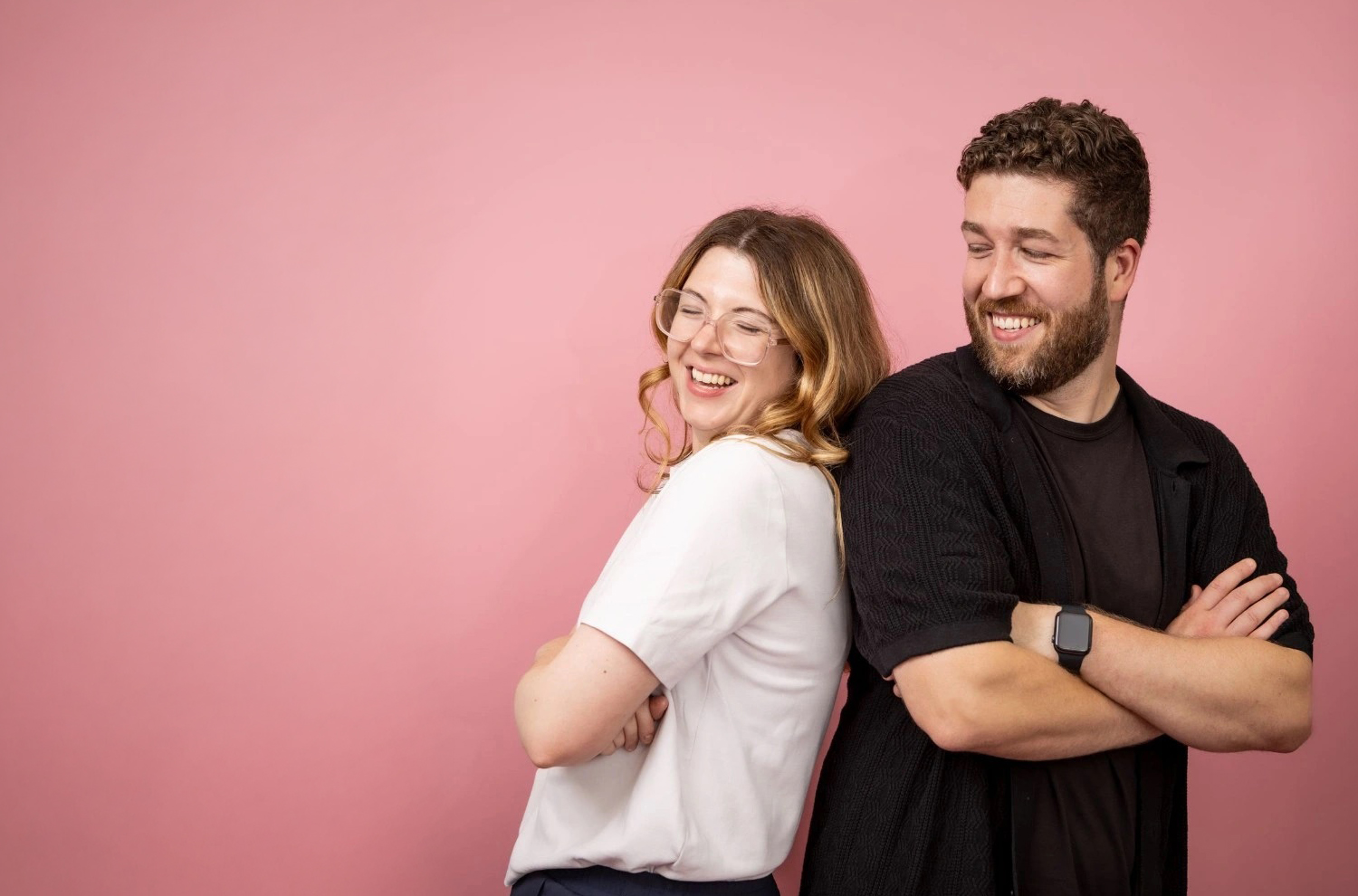
This week on Mum Means Business, I’m joined by Emily Hanson – a former teacher and mum of two little girls who now heads up Emerlilly Digital, a marketing agency specialising in education, family and children’s brands.
Emily began her journey as a freelancer, drawing on her background in education and her experience as a parent to help family-focused businesses tell their story. Over time she began to see a gap in the market for marketers with specific knowledge of the education sector and Emily was able to harness the her teaching skills to build relationships in this niche. Earlier this year, with the support of her husband David and a team of trusted former teachers and practitioners-turned-marketers, she took the leap and officially launched her agency as a limited company.
Her story is one of resilience, organic evolution and creating a career that fits around motherhood. From navigating freelancing challenges and complex pregnancies which led to poor mental health during the pandemic to now balancing client work with family life, Emily shares candid insights into the reality of building a business as a Mum.
We also talk about the lighter side of motherhood (think Disney princesses and obscure Bluey references!) – and the deeper reflections that come from navigating maternity care, becoming a parent for the first time in a pandemic and stepping into a CEO mindset to build the business of your dreams.
This is a heartfelt and inspiring conversation for anyone considering a career shift, especially mothers looking to balance ambition with family life.
Conversation Highlights:
✨ Transitioning from teaching to digital marketing
✨ Launching Emerlilly Digital with a family-focused team
✨ Navigating motherhood and mental health during the pandemic
✨ How freelancing shaped Emily’s career journey
✨ Balancing business growth with family life
✨ Empowering other mothers to find fun and freedom in work
Listen if you’re:
✨ A mum thinking about leaving teaching or a traditional career path
✨ Curious about building a freelance or agency business
✨ Looking for encouragement to pursue work that feels aligned with family life
✨ Interested in marketing for education and family-focused brands
✨ In need of reassurance that motherhood and ambition can coexist
Favourite Quote For Mums in Business:
“If you can raise a child, you can build a business!” – Emily Hanson
About the Guest:
Emily Hanson is the Founder and Director of Emerlilly Digital, a marketing agency specialising in education, family and children’s brands. A former teacher and Mum of two, she’s passionate about helping family-focused businesses and education organisations tell their stories while building a business that reflects her values.
Find out more about Emily’s work on her website or connect with her on Linkedin – Emily Hanson.
About the Host:
I’m Victoria Phipps – a Mum of two, analogue family photographer, charity co-founder, marketing person and now podcaster! My career has wandered all over the place and is becoming a bit of a complex tapestry as I head into this middle phase of life, but I can honestly say I’ve loved every minute of it so far.
I was raised by a nurturing Mother and an entrepreneurial Father and have inherited traits from both, so the tension between ambition and motherhood is one I grapple with on a daily basis! I’m fascinated to hear the stories of other women on a similar path, who are striving to build thriving businesses whilst being present for their children. It’s a tough juggle, but I hope the conversations shared on this podcast help Mums in business feel less alone and inspired to keep going in pursuit of their dreams!
If You Enjoyed This Episode:
- Please subscribe, rate and review the podcast – it helps other mums find us!
- Share in your Instagram stories, tag @mummeansbusinesspodcast and let us know your biggest takeaway.
- Share this episode with a fellow Mum in business who you feel would resonate with Emily’s story.
Episode Transcript
Hello and welcome to the Mum Means Business podcast, where we shine a light on inspiring women who have one thing in common. When they’re not managing tantrums, homework, P.E. kits and play dates, they are busting their gut to create something from nothing, to turn their passion into a thriving business and build a better life for themselves and their families. We dig into what motivates devoted mothers to pursue entrepreneurship and how they integrate their work and family life.
I’m Victoria Phipps, your host, and if you’re an ambitious mum in need of some solidarity whilst navigating the messy middle of making your big dream a reality, then stick around. This is for you.
NOTE: This is the transcript from the original recording, rather than the edited episode so timings may vary.
Victoria (00:00)
My guest today is a former teacher and mom of two who heads up a digital marketing agency specializing in education, family and children’s brands. Emily Hanson began as a freelancer, utilising her knowledge of the education sector and her experience as a parent to help brands tell their story. Earlier this year, she launched Emerlilly Digital with the support of her husband, David and other trusted former teachers and practitioners turned marketers.
Emily says she can usually be found making obscure references to Bluey that even her own children don’t pick up on, drinking lukewarm coffee and buying books that she has no idea when she’ll have time to read. And I’m sure I’m not the only mom thinking ditto. Our girls are also almost exactly the same age. So I suspect the subject of Disney princesses might also come up. Emily, I’m so looking forward to hearing your story. Welcome to the Mummy’s Business Podcast.
Emily Hanson (00:57)
Thank you for having me. It’s lovely to be here. And yes, we just got back from Disneyland Paris. So a hundred percent to the princesses. Yes.
Victoria (01:02)
my God, okay. Yes, we’re planning a
early next, well, spring next year, and it will blow her mind. It will absolutely, the eldest, she’s obsessed. Did you have a wonderful time?
Emily Hanson (01:12)
And it’ll be
just in time for Frozenland to open as well. I got really into Disney YouTube before we went and I haven’t looked at it since. yeah, afterwards we got back I was like, I never want to watch a Disney YouTuber in my life ever again. We just used it to get hyped basically to get our oldest giving her some visuals.
Victoria (01:20)
Okay, that’s really good thing.
think you could,
well exactly, I think you can overdose on Disney a little bit and you have just been to Disneyland, so I think that’s fair. But yeah, after this recording, I’m gonna pick your brains all about Disneyland because yeah, I need all the details and you can send me the links to all those YouTube channels so I can binge out myself. But yeah, what we’re here to talk about.
Emily Hanson (01:52)
Yeah.
Victoria (01:54)
So you’re
not the first former teacher that I’ve interviewed on this podcast, and I doubt that you will be the last, but every story is unique. So I want to ask you, making the leap to starting your own digital marketing agency, what made you do it?
Emily Hanson (01:59)
Mm-hmm.
Mm-hmm.
So it wasn’t a direct jump from classroom to agency. So I taught way before we had our girls and I was doing a masters at the same time, which seemed really like a great idea on paper to be fair. had a lot more time than now. ⁓
Victoria (02:24)
Sensible.
Emily Hanson (02:29)
but Cambridge said, you can do it alongside your teaching. And I’m sure a lot of people did, but I struggled to teach basically full time and do this masters. And it was this lovely funding loophole where I’d had to self fund. my, my Nana had left me some money before she passed. So it hurt. went straight on that and I couldn’t afford to not pass basically. So I left the classroom because I’m like, I get one chance to do this. And expected I’d be going back once I got my MED, but I
worked full-time, but it’s nothing like a classroom full-time, ⁓ at university near us in recruitment and it sort of bordered on marketing, so recruiting students that is, not staff. So it gave me a taste of marketing, I really enjoyed it. I went and did outreach in schools, I was a widening participation officer, so my role was to go out and speak to
children, young people that are at risk of not achieving their goals essentially so I would go out and inspire them, talk about HG, loved it and realised actually I get a lunch break and I was like I remember vividly speaking to my manager Louise and saying do you mind if I just nip to the loo and she looked at me like I was an absolute psychopath she was like what do you mean? I like I just really need the toilet do mind if I just pop off and she was like what why?
Victoria (03:39)
Yeah.
Emily Hanson (03:54)
why are you telling me? And I was like, well, that’s what you do, don’t you? And she was like, no, Emily, no. You don’t need to ask permission to go to the toilet. But that was my experience. I’d gone straight from university into teaching. ⁓ And I remember asking if I could go off site for my lunch break. And again, people were looking at me like I was an alien. They were like, why wouldn’t you be allowed to go off site on your lunch break? And I was like, I don’t know.
Victoria (04:00)
haha
Yeah, yeah, yeah.
Hahaha!
Emily Hanson (04:20)
So I got an experience of that and I loved marketing, I loved working with schools, just it wasn’t in front of the children anymore directly.
And I got a real taste for it and kind of carried on that. did some youth work as well. I worked for a charity for a while. Again, it was all going into schools. And then it was sometime during like COVID, I was pregnant with Grace. It’s all a blur, but I started freelancing doing it. Always with that education background, because I was finding even in those roles, people had been really interested in the fact that I was a previous teacher that kind of added a level of understanding, especially if I was going into schools and talking to a bunch of
Victoria (04:45)
Okay.
Emily Hanson (04:58)
sort of year 10s that weren’t really that interested in what I had to say. If I could say to the teacher I’m like don’t worry like I’ve sat in front of a crowd like this before it doesn’t scare me. People liked that and so I started freelancing ⁓ and just working directly with like small
mostly retail brands in the education space to start with, but it grew and grew and grew. started freelancing for agencies a little bit for much, much bigger brands that are all under NDA. Sorry, can’t say, but I started, I started dabbling in that and then it just grew and grew. And I think although COVID was like exceptionally traumatic, I was also pregnant. had lots of complications. the, my, my mind realized that
Victoria (05:31)
Yeah.
Emily Hanson (05:48)
the world exists far outside of the small little town I live in, so we’re in Lincolnshire. There are some marketing agencies in Lincoln but they’re few and far between and you’d need a lot at the time, you’d have needed lots and lots of experience to get a job there. I wasn’t there yet but I realised that the world was on my client base. I had it in my head that well I can’t work in marketing other than in universities because what agencies are in Lincoln and I can’t commute to London, I’ve got you know I had too many commitments and I
suddenly realized using the internet and no nobody else was going in person at this time either so everybody was online and everybody was doing remote working so I think also all these potential clients were no longer requiring a freelancer to be there and no there was no expectation that you needed to be anywhere near local in fact a lot of my clients never even inquired as to where I live they know I’m in the UK and that’s it because it’s not important because everything I do is remote
Victoria (06:21)
You
Emily Hanson (06:46)
So it grew and grew and grew to the point where this year, so it had just been just me and a little bit of outsourcing here and there, but nothing hugely formalised. My accountant has said you should really go limited now, which was a real pitchy moment, and I still need to frame my company certificate and put it in the downstairs loo alongside my degree certificate. She’s like, you should go limited. She’s like, you should go limited because Dave was working for me as well. And she was like, this is a silly tax setup. You need to you need to have a limited company. You both need to be directed.
Victoria (07:05)
No, it’s serious. Yeah.
Emily Hanson (07:16)
That’s how you should be doing it. He was just doing little bits ⁓ really. But yeah, so when we went limited…
I also was like, this is a good opportunity to convert this because my dream had always been to be a company because I’d found very frequently that I didn’t have capacity for everything. And also I’d have clients asking me for things that went beyond my skill set and I’d just refer to people I knew and that would be that. But it would be a case of they’d say, we’ve really want a previous teacher. Can you do graphic design? And I’d be like, I can do a small amount of it, but nothing to the extent that you want. And they still want my advice, but I’d be referring them somebody who didn’t have the education.
background and I was like I want to make this a company I want it to be I want to expand it and and that’s where Emerlilly Digital came from Emerlilly Digital was my myspace name back in the day because me and my husband we were like we were trying to come up with so many names for this agency and we were like everything was taken and and and then Dave was like why do you just call Emerlilly?
Victoria (08:00)
Yeah.
wow! ⁓
Emily Hanson (08:25)
it’s it’s a bit of a throwback and that was it nobody’s got it there’s no businesses named after that there’s nobody’s got the trademark for it was like boom and yes yes that was it yeah so now we’re an agency there’s myself ⁓ the bulk of it is me ⁓ but then we have
Victoria (08:26)
Done.
Nice, nice, but that’s a nice personal connection for you as well. It’s come full circle.
Emily Hanson (08:45)
group of really trusted freelancers, ex-teachers like you know like you said in that lovely lovely bio ⁓ and and just anybody who can bring that broader skill set so we’ve just done a really great project with two graphic designers who for a client that wanted something way beyond what I could have done ⁓ but some education specialist graphic designers who came on as part of Emerlilly so it’s been great fun and I can’t wait to see what happens next but yeah that’s where how I got to today.
Victoria (09:11)
It’s very exciting.
And we have a big cough, right, and a big drink.
Emily Hanson (09:17)
I
will join you.
Victoria (09:22)
It’s very exciting and I have quite a few questions. it seems like you have, obviously the position that you have and all your experience from the education world is deemed very valuable by your clients. And also you’ve obviously built up really positive working relationships with them.
Emily Hanson (09:28)
Go for it. I love to yap.
Mm-hmm. Mm-hmm.
Victoria (09:50)
to the extent that they really wish that you were a graphic designer because they want a graphic designer, but they also want you. So to what extent do you feel like it’s been you building those relationships? And if your ambition is to grow a team, how do you envisage that working in terms of kind of delegation?
because obviously it’d be great if you had a graphic designer and then they could do that graphic design because you’re not a graphic designer, but your client also has that touch point with you. So how do you see that going as the company grows?
Emily Hanson (10:21)
Mm-hmm.
Mm-hmm.
Great question. Well, I, it’s still very much I’m the face of the company. I’m also a big old yapper and I love to talk to people. So, evidence in being on a podcast. So, I think I’ll always be the face of it because it’s what I love. Maybe one day it will be where I am the CEO or whatever fancy title you watch Chuck, somebody in charge of the agency. But there’s a wider team who do the bulk of the work because I’m…
There’s lots of fantastic copywriters out there, lots of fantastic social media managers out there, and it’s the education layer that I bring. So perhaps it will be that there’ll be a wider team of us with similar skill sets, but I’m still the main client liaison. I’m not sure. As it stands at the minute, I’m still doing the bulk of the work and I’m doing all the client onboarding, all the marketing is me. So it’s still very much…
I’m the main point of contact, but in a couple of recent projects we’ve had it where I’ve on boarded the client, talked to them and then introduced the designers, for example. And I’ve still been doing some of the work. We’re kind of using a client software that we’re all on. And I’m still the main touch point for the client themselves, but they can speak directly with the designers too. So that, and that’s worked really well. It’s not finished yet, but the designs are fantastic from the two designers that we’ve had on.
So it’s, it’s, I don’t know where it will go. I, I want it to still be very much me at the front of it because what I love doing, I love helping people and I love having a kind of bird’s eye view of everything. I’ve really enjoyed seeing it being the person who’s on board of these designers and then brief them and talk to them and introduce them and then sort of stepped back and seen them dealing directly with the client. Like I said, we’ve got this great software we use to, to, so I can sort of be there. And I’ve, and I’ve had like a taste of jumping in where.
if the designers maybe had a question and the clients but not been available but to meet the deadline they need an answer so I’ve been able to step in and speak on behalf of the client because I’ve got a relationship with them. I’ve really enjoyed that, that you never really do when you’re freelancing if you just direct a client it’s you and them so being the person who comes in and helps and like that I wouldn’t say mentoring because these two designers are fantastic like it’s very much on par with me but
being there to support client relationships I really enjoy.
Victoria (12:57)
I imagine that you’re very good at it because you’re very personable and it seems like your business has grown very organically. haven’t, oh cough, you haven’t had to fight and toil by the sounds of it to get work in a way that lots of people do or have you.
Emily Hanson (13:15)
It’s.
it’s…
i’d say i’m a real hustler but i wouldn’t call it like a toil i think
Victoria (13:21)
Okay. Okay.
Emily Hanson (13:24)
I’ve, especially in the early days of freelancing, it was so feast and famine. I’d go from like having too much, I mean, it’s classic story, isn’t it? Having too much work and then two clients finish and then I’m like, oh my gosh. And then I would spend like hardcore. At the time it was called email and I don’t really do that anymore, but like cold emailing companies nonstop to find work. But it’s, it’s become a bit calmer now because I’ve taken my own marketing a bit more seriously. I was doing the ironic thing where I was offering marketing services, but not really marketing myself. I was just.
Victoria (13:31)
Yeah, yeah.
You
It’s
Emily Hanson (13:54)
it’s
I think it’s because I yeah but now I’m being a bit more regular with that it’s kind of coming in more steadily but it’s it’s not all although I’ve got lots of privilege it’s definitely been hard graft to get here too I’m not gonna say oh you know grounds up it’s all me because there’s so many things that come into being able to have a business as a partner who earns like
Victoria (13:56)
so common, yeah, completely.
Emily Hanson (14:23)
financial stability, that sort of stuff. It’s not, it’s not just my hard work and that’s it. There’s so many structures at play that have meant it’s been successful but there’s been, one of the things I really love doing is lots of outreach and stuff so it’s, it’s come quite naturally. I never set out to be like I want to own a company one day. I set out as like I could do a little bit of freelancing as a side hustle and
really enjoying it and then more people coming and then eventually leaving my, you know, day job at the time, like I was working at a uni, to the point where I just, just freelance. but yeah, it’s, it’s kind of, it’s been hard work to get here, but I didn’t set out to be like a big hustler, if that makes sense.
Victoria (15:12)
No, I mean, and hustle is such a loaded term, isn’t it? And so many negative, no, I don’t mean to criticize you for using it. That’s not what I meant. But I mean, it’s so heavy because I personally believe that there is an inevitable amount of hustle that comes at the beginning of a business. And I think to kind of, to tell the story of a business that starts and just sort of,
Emily Hanson (15:15)
yeah, it’s gross, I just couldn’t think of a better word. No, it’s okay, no.
Mm-hmm.
Victoria (15:41)
organically just grows to enormous success without much effort is unhelpful. I think for the vast majority of people, obviously there are people that just luck out, they’re in the right place at the right time and something just flies. But for the vast majority of people, there is a grind involved at the beginning. And do you feel like your experience with that, how was it in that you obviously you had your husband who was working?
Emily Hanson (15:45)
Mm-hmm. Mm-hmm. Mm-hmm.
Mm-hmm.
Victoria (16:10)
Do you think that that lack of sort of emergency pressure to bring in the bacon helped you to kind of just focus on organic growth? How did that play into your mindset at the time as you were starting out freelancing and growing it and wondering where it would go?
Emily Hanson (16:18)
Mm-hmm.
think having the backbone knowing that I wasn’t the sole earner was a huge… I’ve had mental health struggles my whole life, it helped with the anxiety of it. But there were definitely times where I’d have a panic. I remember one Christmas, I can’t remember, a couple of years ago, think. I’d been doing a lot of work via an agency as a freelancer, and I’d been sort of relying on it, to be honest, which is not a great strategy to take, just having one main client.
really bad strategy but at the time it was just really it was I was doing loads for them it was almost like having a part-time job and then they just didn’t confirm whether the contract was going to carry on after Christmas I had like one other client and it was really low paid client they were lovely but I like they were really really lovely people but it was like barely minimum wage what they were paying so I couldn’t just survive off them and I was panicking about it and I remember Dave being like worst comes to worst we can we can probably
Victoria (17:01)
We live and learn.
Emily Hanson (17:30)
survive off my salary, probably. We only have like one kid and we’ve moved since, so I don’t think the same will happen now. But back then it was, so having that meant that I didn’t just panic and apply for a load of jobs. You know, so that’s, it’s a real privilege to not be a sole learner. If you’re a single parent, it’s a completely different thing. As much as I always like want to promote entrepreneurship, especially in
Victoria (17:51)
Yeah. Yeah.
Emily Hanson (17:58)
women, non-binary people, anybody from an underrepresented group, there’s, it’s a real jump and I always had the backbone of Dave being the other owner. So it’s definitely, it definitely meant I had the confidence to give it a crack.
Victoria (18:17)
Yeah, and to stick with it.
Emily Hanson (18:17)
I think if I’d have,
yeah, I think if I hadn’t, if I didn’t, if I would have been the sole earner, probably would have never done it because it was a bit too much of a risk. Um, for me personally, other people might feel safe if they are like really poorly because their job is giving them so much stress. Maybe then it is worth it. Um, but for me, if I’d have, if I’d have been doing it completely alone and the only earner, I probably wouldn’t have done it because I’m quite risk averse. Yeah.
Victoria (18:43)
Yeah, it’s that tipping point, isn’t it? You your existing situation has to be so painful that actually any change is better. But I think for a lot of people that is an enormous leap. And certainly, as you say, for single parents. What did niching down mean to you? I mean, again, it sounds like it all happened quite organically because it was a kind of move from education into marketing, but still with that education niche.
Emily Hanson (18:52)
Mm-hmm. Yeah.
Yes, that was.
Mm-hmm.
Victoria (19:12)
Was that planned or a happy accident?
Emily Hanson (19:12)
The niche, the niche was, I’m far too of a high-functioning anxious person for things to be happy accidents to be honest. I live in such a straight cortisol. it was quite a natural niche. Because I’d come from education, that was kind of everything I’d known since I graduated from university straight to PGCE. Work.
Victoria (19:22)
Hahaha!
Emily Hanson (19:40)
you know, that’s, that is everything I’ve done. My BA was English, but pretty much all work education. So when I think it became because I was on maternity leave with my first and I started a little Instagram page talking about education and stuff with children.
think that’s how I picked up my first client because I’d tagged them and then they’d said they’d asked if I’d ever thought about doing social media work that was it I think I’d cold emailed them and said can I do your blogs and they’re like no but you can run our Instagram if you like and it was it was so like COVID vibes if anything went so it was so funny that I look back I’m like I don’t think they do that now but then it worked so
Victoria (20:13)
Yeah
Emily Hanson (20:19)
One of my very first clients was education. so every time I was, when I started trying to take it bit more seriously, I I could actually run a business from this and have more than one just little client.
Victoria (20:23)
Okay.
Emily Hanson (20:31)
I used them as an example of like I’m doing, I’m doing this work, here’s all the stuff I’ve done for them. So, and I was naturally approaching that kind of area as well because I was newer to marketing. Like I said, I’d done it in a different capacity, but social media marketing for brands directly, they were my first main client. So it was quite natural. I was approaching similar brands or the similar sphere because I felt like I could
if they’d said, you you’ve only got one previous client in this exact retail space, I could say, yes, but I know so much about education and pedagogy, and I know so much about what, you know, how to speak to parents and how to, and what’s going to resonate if they’re looking for an educational toy, for example. So I think at the very start, it filled the, with perhaps a bit of a gap.
in maybe I had I didn’t have direct experience working remotely looking after brands but I could say I had all this other experience and then that’s grown and grown yeah does that make sense
Victoria (21:40)
It seems like there was,
that definitely answers the question. It seems like there was a sort of really happy synchronicity of all of these things because you’ve got, mean, digital marketing as a term, I mean, that’s massive, especially now, you know, that you could, you could, there’s about a million niches that you could go into, or you could just go super broad. You know, it’s a whole big wide world, but with your specific knowledge of education.
Emily Hanson (21:56)
Gosh, yeah.
Yeah.
Victoria (22:08)
kind of slowly detaching from being a teacher in averted commas and kind of finding other areas that interested you. And at the same time going into a pandemic where everyone is going online and the world of teaching has been thrown in the air as well, you know, and also becoming a mum during that time. It sounds like a lot, you know.
Emily Hanson (22:12)
Mm-hmm.
Mm-hmm. Yeah.
Yeah, it was absolute chaos.
It was so traumatic.
And I don’t say that lightly. I struggled intensely during pregnancy. I’ve had anxiety, generalized anxiety disorder, good old diagnosis at 15. It wasn’t until I had my daughter that I was then diagnosed with OCD as well, which made so much sense. So much sense.
I was, and I think I was already quite anxious and then the pandemic hit and it was, it was just another level. I was so frightened at all times that something would happen to her. She’s running around downstairs causing chaos now. But at the time I was so, I was so frightened. I was, I felt this intense fear that something would happen to her and it would be my fault because I think…
Victoria (23:10)
Aww.
Emily Hanson (23:22)
There’s so, I don’t know about if it’s your experience, but there’s so much discussion in maternity about like, mum knowing best. And I don’t discredit that. It’s a very empowering way to describe maternity care. But for somebody that doubt, that was doubting every single decision I made, being told, well, only you can know if it’s right. ⁓ I was so frightened that I was paranoid about.
Victoria (23:41)
Yeah, yeah, yeah.
It feels like more pressure, yeah.
Emily Hanson (23:49)
fetal movements. And I was the same with our second, I just had less time to focus on it. But I was because every bit you get these flipping binders that you got all around Lingitrony with all your maternity notes on the front. It’s like, keep aware of your baby’s movements. And if you feel like something’s wrong, don’t delay call the maternity unit, which
Again, I get why that rhetoric is there, right? Like it’s evidence-based, it’s for a good reason. Just for me personally, it was like kryptonite. You couldn’t have phrased it worse, and I felt so intensely responsible for her well-being, and nobody else could tell me if something was right. They’d always say, I remember speaking to midwives all the time, and I’d be like, well, she’s moved 15 times in the last hour, is that okay? And they’d be like, and they’d be like,
Victoria (24:21)
Yeah.
See you.
Emily Hanson (24:40)
Well, is it normal for you? And I’d be like, I don’t know. So, and that’s when I was diagnosed with OCD.
Victoria (24:44)
Ugh.
Yeah, so I think I mean, when did you have that first pregnancy? Where is that landing in the pandemic?
Emily Hanson (24:55)
Well, I was, I fell pregnant in 2019, like October time, and she was born in July. So I was about five months pregnant when COVID hit.
Victoria (24:57)
Okay.
Okay, so the summer after the first lockdown,
yeah. Yeah, which is a lot, that’s hard. That’s really hard. Mine was towards the end when things had like calmed down a little bit. Like we had the, I had the day before the third lockdown, but you were pregnant when that news was coming out. And it was, and the first was intense and we didn’t know, you know, to what extent it was going to affect or target.
Emily Hanson (25:06)
It was… it was… mm-hmm… yeah.
okay in the first sap
Victoria (25:26)
children or was it gonna I mean in the end it was more the elderly but at that point we didn’t know anything and it was terrifying for everybody so I totally appreciate the anxiety like it’s completely natural and I think on the the kind of subject of maternity messaging I don’t know I don’t know what they do because everything is so unique and personal to you and they have to deliver these messages but what lands on point
Emily Hanson (25:28)
Mm-hmm. Mm-hmm. We didn’t know. No, it was so scary.
Yeah. yeah.
Victoria (25:54)
What lands on point with one person is intensely triggering to another for all legitimate reasons. And it’s so hard to navigate that. And particularly in the pandemic, and I imagine you’re kind of going into appointments and you’re masked up and it’s just, yeah, horrendous, horrendous.
Emily Hanson (25:58)
Mm-hmm. Mm-hmm. Mm-hmm.
alone.
Mm-hmm. It was, I
remember being in a midwife appointment and my husband was parked outside and I could see him crying because he wanted to be in there with me and he couldn’t. I had to do it completely alone and it was so traumatic. In fact, I remember because I ended up towards the end ⁓ in Lincolnshire, if you really struggle with mental health, you can be under the perinatal team. It just means you get a nurse that you can talk to. didn’t really, some people would like mother and baby units. I wasn’t there, but ⁓
Victoria (26:15)
⁓ God. Yeah.
Emily Hanson (26:38)
you get like direct support from a nurse and a midwife that’s like a mental health specialist. Like most of my friends have been under there as well. It’s quite a common thing. It’s not light, but like people are like, I’m under pronecym. I’m like, ⁓ preach it to the choir. But my nurse at the time, she went on to go and lecture in mental health nursing. ⁓ And I remember she asked if I could be an example in like case study. She uses nothing formal, but I think she uses my example to talk about the importance of
Victoria (26:43)
Okay.
Yeah.
Emily Hanson (27:07)
like tone of voice and language in maternity care because it can be incredibly anxiety especially for first time mums I think and parents generally that you don’t know a responsibility like it I think unless you’ve been like a carer or maybe you’ve been an older sibling that’s looking after like I was an only child and had a very delicate childhood and
Victoria (27:14)
Yeah. Yeah.
still.
Emily Hanson (27:31)
Ostensibly not too many life stresses, mental health, but nothing like no major traumatic events until pregnancy. And all of a sudden I was so hugely responsible. And in like a, especially during COVID, the mood was so tense and fear, fearful. You know, when I had my second baby and I went and had the same midwives, I saw them their full face for the first time.
I’d never seen them without a mask on so I remember there being one coming in her name was Lucy she’s like an actual angel and she was like you’ve never seen my mouth before and I was like no nice to see your proper face it was really weird ⁓ but yeah
Victoria (27:58)
Yeah. Yeah.
hahahahah
Yeah, I think
you forget how intense that first lockdown was because, I mean, it all just seems like a crazy dream now. And obviously we adapt quite quickly in the moment to whatever circumstances we’re in to a certain extent. You know, have to accept it, it’s what’s going on. But afterwards, when you look back now, you know, it’s amazing that you did as well as you did probably, because I think I was anxious at
Emily Hanson (28:20)
Mm-hmm.
Mm-hmm.
Mm-hmm.
Thanks.
Victoria (28:43)
The third lockdown, know, when it was quite different. I mean, I was pregnant all through the second, but yeah, but it was a different scene. know, people were much more relaxed about it in comparison. That March announcement, you know, it felt apocalyptic really to a certain degree. And you go to a supermarket, there’s no bread and you’re just like, well, what’s happening? What’s happening to this world that I’ve known for however many years? So, yeah, yeah.
Emily Hanson (28:55)
Mm-hmm.
Hmm. yeah, I was terrified.
Mm-hmm. Yeah. It was scary. Yeah.
I still like
don’t talk about it but more than I wish to talk about it now I wouldn’t I wouldn’t have if I wasn’t but I still we don’t discuss it much we’re very open family but we don’t really talk about it with the girls they’ll be like we’re like we just brush over that I’ll tell you when you’re old enough to understand the concept of trauma you don’t understand it now but yeah it was intensely traumatic I remember I hadn’t seen my mum obviously during all of lockdown and then when you were allowed to bubble I think it was
Victoria (29:24)
Yeah, exactly.
Yeah.
Emily Hanson (29:38)
that’s when was born and I, she’d come over, I was trying to breastfeed, that’s a whole nother level, I don’t need to open that kind of words but it didn’t go well.
and I remember trying to ring like a the lecture league or something and it was like a 48 hour wait for response and I was like great what do do with my baby in the meantime and I remember my mum coming over and I was still very scared and she but I she I hadn’t seen her for so long I remember her opening up the door and she had a mask on and I just sobbed and just ripped it off and held her and she hadn’t hugged me for six months and then like introducing
Victoria (29:54)
Yeah.
Yeah, exactly.
And you’re at,
yeah.
Emily Hanson (30:17)
it was so
emotional introducing grace to her be like here’s your bait here’s your granddaughter and she was just a mess she’s downstairs now being like kicked about by my toddler and grace who just they just they have no concept of where their limbs are she probably doesn’t even remember it but i i do
Victoria (30:27)
You
No, she will do, she will do because
you it’s her, you’re an only child, you’re her baby, you’re at one of the most vulnerable times in your whole life. And there’s this whole situation where she can’t get to you, she will absolutely remember that. I remember announcing to my parents that I was pregnant and it was the summer, it was on my birthday and we’d gone over for a socially distanced barbecue.
And my mum was quite anxious, COVID anxious herself. And so it was very socially distanced, like go and have a sausage. They’re over there, four meters to the left and all of that. So we did this in their garden and I had just printed off a picture of the scan and I put it in a card. My brother was there as well, because he was with them at the time. So I’d put it in a card for each of them and just left it on this table. And we all sort of stood back and they opened it and it had the scan and it was announcing. And because they hadn’t seen me, it was quite fun actually announcing I was pregnant because no one had seen me.
Emily Hanson (31:00)
Mm-hmm.
Mm-hmm.
Yeah.
Victoria (31:28)
and my partner and I hadn’t been together. Yeah, we hadn’t been together for a very long time. so it was quite unexpected. And there was no like, oh, she’s not drinking. She’s not, her boobs look big. There was nothing like that, because no one had seen me. So everyone was actually shocked. And I quite enjoyed that in a kind of naughty way. But yeah, then going through that whole pregnancy, easier for me because it was then, you know, that summer was kind of a bit more open. And then we had the second lockdown when I could bubble with them.
Emily Hanson (31:29)
Surprise!
Mm-hmm. Yeah.
Mm-hmm.
Victoria (31:55)
and we were building this house so they would come and like help out and we could be socially distanced, we’d be together, but not hugging, like not actually getting physically close. And I think, you even after my eldest was born, I was very isolated in this house. My partner was called away for a few months and it was, that was quite a lot. But when it started to open up again, I remember wanting to go to baby groups and everything. And my mom was still quite anxious and it’s because she’s had health problems of her own. It’s entirely justified.
Emily Hanson (32:01)
Mm-hmm.
Victoria (32:25)
but she wanted to bubble with me and she was also so worried that if I go to these groups, I would bring something back to her. And we would have arguments, like socially distanced arguments where I was like, I need to speak to another mom. And she was like, literally, literally, but it was so intense. was so intense. And it was, the argument was like fueled by need to connect because she desperately wanted to connect with me. I desperately needed to.
Emily Hanson (32:33)
Mm-hmm.
like four meters away like I just yeah
Victoria (32:53)
be less alone and speak to another mom and go to a baby club or something, just something with my baby that I’d just been on my own with for months. And it was all just fueled by love and a need to connect, but this societal barrier was just causing so much stress and heartache. And my mom remembers all of that and it was all heartbreaking. Obviously it’s a memory now, but your mom will definitely remember that moment where she got to cuddle you and meet her granddaughter.
Emily Hanson (33:19)
Mm-hmm.
Victoria (33:22)
That’s insane. sounds like, and it’s kind of like you throw caution to the wind because you’ve just had enough. You just need to cuddle your mum, you know.
Emily Hanson (33:28)
Well, that’s it. I’d been, that’s
it. I’d like, she, we’d been, although we were allowed to have her there, I was still terrified. And she’d been staying away. Like we’d, I remember we, we drove past the house with Grace in a baby carrier and we were literally like, and then, no, it’s not. And then that’s it. I rang her and I was like, I’ve got my status. Dave bought some SMA. I just need you. And she just came straight over and we just sobbed and sobbed and.
Victoria (33:34)
Yeah.
my god, that’s not good enough though, is it? It’s not, you know.
No.
Emily Hanson (33:57)
sobbed it was and yeah oh so traumatic i forget about it i think everybody does but it’s i literally just it it goes i mean it’s probably better for my mental health that it does um that i don’t carry it i mean i do the body keeps the score i don’t know if you’ve read that one that’s a that’s a good book about if we do carry these traumas with us but uh i don’t remember it on a surface level yeah
Victoria (33:57)
Oh, but you needed to and yeah, it was such a hard time. I’m sorry that you, yeah, yeah, yeah.
Yeah.
No, but I mean, it’s not, you don’t need to walk around kind of holding your trauma at the back of your throat, do you? It needs to, in order to function, it needs to kind of be buried to a certain extent, but it is definitely something that I reflect on with other mums that I met during that like NCT or whatever, that we all had our own unique journey through it, but just what a hard time to become a mum.
Emily Hanson (34:29)
Mm-hmm.
Yeah, you have to.
Mm-hmm
Mm-hmm. Mm-hmm.
Yeah.
Victoria (34:52)
really, really difficult. And especially if you have suffered with anxiety, it’s amazing that you’re here now and you’ve got two gorgeous girls and it’s all fine, you survived it. And actually, yeah, what doesn’t kill you makes you stronger. So go on.
Emily Hanson (35:04)
Yes. Yes.
and and to
return to the business chat I’m not going off I’m not trying to change the subject but I look back and I think I start I was like that’s I still look back and I’m like
Victoria (35:13)
Yeah, yeah. Well, that was my next question.
Emily Hanson (35:21)
what how did I come up with that because I was you know I was still like think Grace was still tiny and I I think because I’m like somebody who likes being busy and having like mental stimulation I personally was like in love with her but very bored ⁓ on maternity leave like I was just like I need something I need something other than bums wiping babysick I need something ⁓ and that so that’s when I started freelancing but I think
Victoria (35:21)
How?
Yeah, yeah, yeah, yeah.
Emily Hanson (35:51)
Covid was like horrendously traumatic and obviously everybody had a different experience, some even far worse than I did but…
if I, if it hadn’t happened, I don’t think I’d have set up a business because, because it’s, because my mindset, although I, you know, we’d lived in Birmingham, we’d lived in Cambridge, I hadn’t just lived in Lincolnshire, but it’s, it’s a very cosy, it’s like Hobbiton. It’s like, it’s very cosy, not a great deal. There is stuff going on, but if you compare it to like a big major city, it’s very quiet and sleepy. And
Victoria (36:03)
That’s so interesting. Yeah, go on.
you
Emily Hanson (36:28)
So in my head, I lived in Lincoln, which moved back after Cambridge to buy and all that sort of stuff to be around family. And I’d always thought, well, now I decided to come and be good for mental health and be somewhere that I feel really safe and secure, like an exciting career isn’t in reach and that’s okay. I kind of got that in my head. But then when COVID hit and all of a sudden everything was online.
The world was, it sounds so cringe, but like the world was the opportunity. I no longer was restricted to the local area. And in my head, I had like very like Emily and Paris concept, like of what a marketing agency is. was like, well, you’ve got to live in a big major city and you’ve got ⁓ to be able to access that. And I simply can’t. And like, that’s just, that’s just life. And then all of a sudden it wasn’t like freelancing was remote.
Victoria (37:07)
Mmm.
Emily Hanson (37:19)
I just don’t think I’d have done it. think also because COVID just turned everybody’s worlds upside down, ⁓ kind of like reality was a bit suspended for that, especially in lockdown. You know, it’s just such a strange time. It kind of, I went to the set of like, well, anything’s possible because anything has been possible because you would have never have guessed that this would be what our world looks like and it is. So it kind of opened my mind a little bit. Maybe it’s trauma based, like.
Victoria (37:40)
Yeah. Yeah.
Emily Hanson (37:47)
speak to my therapist about that. it probably is but…
Victoria (37:49)
No, I think it plays back
into this synchronicity though, like the fact that, you know, and it sounds like you were fueled during your maternity and galvanized, you know, once you have this baby and I felt similarly, and I know everyone has a different reaction to becoming a mother for the first time. It’s such a shock to the system. And some people kind of lean right into it and just sit there.
and cuddle their baby and stare at them and just feel so happy and grateful. And, or some people just really lean into rest and allow their time, their body time to recover and just settle and be still. Yes, both of these approaches. Yeah, Yeah, no, both of these approaches are what I would do if I accidentally somehow had a third. Like I would try and really do those things because what I did was not that at all. And I just became frantically productive.
Emily Hanson (38:19)
Yeah.
A very healthy approach. Probably healthier.
Yeah.
Victoria (38:46)
almost in a kind of battle against this new life that I had, that I needed something, like you say, something mentally challenging and something for me, yeah, something a bit of control, but something that felt like the kind of old fiery version of me that wasn’t just changing nappies. And especially in those early days where you’re not getting much feedback. And I think it’s a whole identity shift that’s quite difficult to navigate and no one can prepare you for it.
Emily Hanson (38:48)
Mm-hmm.
You can control it.
Mm-mm.
Victoria (39:14)
but you were going through all of that, you’d had this massive trauma of the COVID pregnancy. And yeah, you’ve moved, that’s a big shift as well. You’ve moved your life back to Lincolnshire, which is safe and restful, close to family, pretty, easy, not challenging, but feels perhaps a little bit isolated and a little bit, yeah. But that’s another.
Emily Hanson (39:31)
Mm-hmm. Mm-hmm. Mm-hmm.
yeah, it was very different. Everything I’d experienced like Cambridge Bromwell
way. Yeah.
Victoria (39:41)
Yeah, exactly.
That’s another big change that had happened just before as well. And now you’re just here with this baby that isn’t doing anything and you have to service it and you can’t go anywhere because you’re stuck in your house. You can go for like a half hour walk a day just to get some vitamin D on your skin. And that’s it. You can’t talk to anybody. can’t, and it’s, it’s what do you, how, know, it’s a natural reaction. All of that is trauma in itself. Forget the kind of the pregnancy anxiety. And so,
Emily Hanson (39:50)
And you can’t go anywhere. Yeah.
Mm-hmm.
Mmm.
Victoria (40:12)
Do you feel like the stars aligned in a way there because your reaction to becoming a mum was to kind of get busy in a way?
Emily Hanson (40:22)
yes
and i think also because i suffered so much in pregnancy mentally i also had gestational diabetes which was like chef’s kiss cherry on the cake honestly miserable worst thing ever honestly because you want to just eat haribo’s you can’t just have to live off bloody cucumber and cheddar cheese and i’m vegetarian so i couldn’t even eat meat which was i mean i could but it would have made me sick anyway i’d like been geographically restrained i was mentally ill and
Victoria (40:30)
Yeah, bless you. my god, such a hard time. Eat chocolate, yeah, exactly.
Rye Vita. Yeah.
Emily Hanson (40:52)
I also couldn’t really eat anything fun. So it was just so sad. So then once Grace was born, honestly, it’s so miss like it is, it was just so sad. Once Grace was born, I literally I ate so much chocolate for about five weeks straight. Honestly, midwife was like, you’re not diabetic anymore, but you should still maintain a healthy balance. I was like, no, screw that. I was like, this life is no longer reliant on my body because I wasn’t breastfeeding either because that just went.
Victoria (40:54)
Hmm.
Yeah.
It does sound sad, yeah.
Good, yeah.
hahahahah ⁓
Emily Hanson (41:21)
um not well so I was like obviously she relies on me but the health of my body is not her health is not contingent on my nutrition so I’m just gonna eat whatever I want so I was I had I just it felt like a delic because all of a sudden I wasn’t obsessed about movements anymore I was
Victoria (41:22)
Didn’t work out, yeah.
You can have your body back. Yeah, yeah.
Emily Hanson (41:44)
was actually sleeping better. My husband is and still is like the main night shift guy because I struggle with lack of sleep intensely and he can survive a lot more than I can so in the newborn days he also just was like wanted to give me some relief because I’d been so anxious so he did a lot of the night feeds which was incredible and I’d say lucky he would just say I’m just being a father but ⁓ so I was he’s he’s top notch highly recommend Davies great ⁓
Victoria (41:50)
Amazing.
Amazing though, he sounds great. Yeah.
Emily Hanson (42:13)
highly
recommend straight away to put it but he’s but he’s not available he’s honestly he’s not available me and the girls take up like all of his brain space honestly but yeah
Victoria (42:16)
He’s not available. ⁓
You
Emily Hanson (42:29)
I actually felt incredible because I was no longer anxious because it was like she’s here, she’s not just my responsibility. Like I didn’t want to like not have this lack of motherhood, it wasn’t that, but it just no longer felt like the entire, the entire existence of my child was solely on me.
Victoria (42:40)
Yeah, yeah. It’s the autonomy. Yeah.
Emily Hanson (42:47)
no longer because it was me and Dave. You know if I could be like is she feeding well I could send the checker with him. Nobody would go but what do you… nobody would say well mum knows best. Obviously they did but it wasn’t the same. When the baby’s inside it was just different so I was like I had I was feeling amazing.
Victoria (42:50)
Yeah. Yeah.
Emily Hanson (43:06)
Like I suddenly was like getting a bit more sleep, I wasn’t uncomfortable anymore. I could eat what I wanted. I remember eating a bowl of porridge with strawberries and sugar on and you’d think that’s so sad but I remember crying because I hadn’t been able to eat that for three months, four months and I was just… Yes, I’m a foodie.
Victoria (43:17)
⁓
Yeah, and you need that joy of food, I think. That is one thing that I let into very
heavily during my whole maternity experience is just all the cake. I mean, I was lucky I didn’t have gestational diabetes. So I do feel for you because that is a massive comfort. That was a massive comfort to me. All the hot chocolates, all the marshmallows, the biscuits, the cakes. Yeah, the coffee came later. No, I’m so sorry that that happened to you. I’m sorry to everyone that that’s happened to you because food is like…
Emily Hanson (43:41)
yeah none of that when you’ve got a gd no it was it’s
Victoria (43:49)
It’s
such a comforting thing when you’re feeling vulnerable and you’re pregnant and you’re going through all that for the first time especially. So yeah, so you ate all the chocolate and you cried over strawberries.
Emily Hanson (43:53)
yeah it was it was so grim but yeah once once she was born i was like
i can eat what i like i can i was like so was i can go for walks i was i was so paranoid about movements that i’d be scared to like go and exercise and i’d be worried that like something like i was not okay
Victoria (44:03)
Yeah.
Emily Hanson (44:12)
But then once she was born, it was like a switch flipped. I felt amazing. So I think I sort of felt like I can do anything. I felt like suddenly I’d gone from feeling so disempowered and like I trapped to, my gosh, I can eat what I like. can.
read without worrying about whether I’ve lost focus on my baby, you know, so I think that mental shift gave me that impetus to be like, I can start a business, why not? It seems to have worked.
Victoria (44:45)
Amazing. Amazing. And it
was just like literally overnight. You just needed to get that baby out of you. Baby, your daughter.
Emily Hanson (44:52)
Yeah it was, I mean with
my second it was a lot of a slower recovery for sure. I mean she’s two now and I’d still say I’m not the same but then who is the same person after having children? It’s been a longer, it was a longer recovery after our second but…
with G it was just so instantaneous because I could sudden I just there were so many there were such basic freedoms being able to eat what you want to eat and being able to go for a walk and being able to just kind of have some agency that my mental health had just not allowed me and the health conditions from pregnancy but just going for walks with like a coffee I remember it feeling like I was free and even though like most people be like well you’re not free because you’ve got a tiny beautiful little potato
Victoria (45:33)
Yeah. Yeah.
Emily Hanson (45:39)
there that you controls all your sleep and stuff but that to me that still felt free yeah
Victoria (45:43)
No, it’s the, yeah, it’s the physical responsibility. And you’re right, it is
all on mum. So you can’t really share that. I remember my mum saying, cause I was, I was very active in pregnancy and I, not in terms of exercise, but I was like, we were building this house. So was like filling skips and stuff. And I just carried on as if I wasn’t pregnant. And there’s like, I think there’s a video of me like painting a ceiling on my due date. Like I was a really irritating mum like that because I was nesting and I wanted to get into this house. And my mum said to me, I think,
Emily Hanson (46:01)
Yeah.
I love that. Yeah. Yeah.
Victoria (46:13)
I was about seven months pregnant and she just turned to me, socially distanced at the house and she was like, I cannot wait to get this baby out of you so we can look after it properly. I was like, it didn’t bother me. just, I don’t know. That didn’t, everyone’s different, they? That didn’t worry me so much, but it definitely worried my mum. She was like, you’re doing too much. You need to sit down, put your feet up. And I railed against that, but it’s, this is the thing. It’s such a unique experience. And then.
Emily Hanson (46:20)
yeah yeah
Mm-hmm.
Mm-hmm.
Victoria (46:40)
I’m so glad that you had that kind of instantaneous release because it sounded like that was a massive mental weight to carry that whole time. And amazing that you just then felt like you could just fly. Like it wasn’t just that you’re released. Yeah, it’s not just a release and an unburdening, but it’s literally like you’ve gone to the other end of the spectrum and you’re going to take over the world now. You know? Yeah.
Emily Hanson (46:46)
Mm-hmm. Mm.
That’s what it was like.
Yeah.
what it was like. that’s
literally what it was like. and it’s given me this kind of growth mindset but i mean there’s i’m sure there’s better words for it. it’s very like a-level psychology isn’t it? but growth mindset was something that i never really had. had it in my head that like this is my lot and i’m really lucky that i’ve got a lovely family and that’s it. and now
I kind of, I always say the one thing that doesn’t really cause me anxiety and stress is my work. I kind of get it in my head that like, well, you know, you’ve, you put your mind to it and there’s every chance you could make it. Obviously coming with that privilege, you know, white cisgender woman, I’ve got a lot of privilege here that makes that possible too. But I, I used to be quite…
set-minded as like well I didn’t do teaching and I live in a small place so there’s there’s not much else out there but now I’m just like why not hence why I’m like you know what I’m gonna give writing a novel a go because I’ve got not like I’ve got enough going on but I’ve I’m I’m I’m just like well if it fails it fails well but gotta give it a crack that that came from the business I never used to be like that ⁓ just
Victoria (47:57)
Yeah, yeah.
Yeah.
That’s interesting. So the business informed that change of mindset, not the other way around. Like, that’s so interesting.
Emily Hanson (48:17)
Yeah. Yeah, I kind of just…
Yeah, it’s just sort of grown and I’m not scared of like, I don’t get scared of rejection or something not going well. I kind of, I think I’ve learned to that I always managed to cope with it. And I think because, because that pregnancy and COVID was so hard, I always think, well, it can’t be as bad as that was. It doesn’t, you know, I never, I was like, I’ve experienced an inc…
again there are far worse things people go through. I don’t want to diminish other people’s struggles but that was the hardest thing I’ve gone through. So it’s like well it can’t be as bad as that was so it doesn’t really scare me. And that’s just putting myself out there and cold you know.
Victoria (48:53)
Yeah, exactly,
Yeah. Yeah. So it’s giving you kind of a go up.
Emily Hanson (49:07)
marketing myself doing stuff like this. think if you could have shown Emily like six, seven years ago, I would have never have believed you. And now I’m just like, what’s the worst that can happen? think, yeah. And I think OCD therapy as well also is that you do where you kind of just accept fears of not knowing the answer to things. It’s called exposure, response, intervention. Shout out to my OCD girlies. But
Victoria (49:17)
Why not? Yeah, yeah, yeah. Yeah.
You
Emily Hanson (49:34)
that also has built a resilience as well. Again, because like nothing can be as bad as that, so like what’s what’s the worst that can happen? Yeah.
Victoria (49:41)
Yeah, it sounds
like it’s given you a really good sense of like clarity and perspective, you know, that you that you did get through that. And now you have your beautiful baby girl. And I think when you’re living in that trauma, you’re going through it, you know, obviously, you’re in distress. And all these coping mechanisms are going to be firing away, you know, the anxiety.
OCD, just trying to get hold of something and control it in an environment where you feel very uncertain and nervous about what the future holds. And you’re also carrying this big weight of responsibility. And actually it feels like maybe when you came out of that and you have this big release, the business injected fun where there hadn’t been any fun.
Emily Hanson (50:30)
yeah I love
it yeah I love it yeah it’s like I never would have been the person that’s again I loved teaching but and I loved the children and equally I loved working in HE and stuff but if somebody had said you know do you love your job I probably would been like it’s really fun and there’s stuff I enjoy but now I can genuinely say I do love it and yeah because it’s it’s something I’ve created
Victoria (50:33)
Yeah.
You love it, yeah.
Emily Hanson (50:59)
and it’s something I’m really proud of and yeah I never would have thought I could do it so I do I love it I’m always just a smug loser at the school gates and people are like what do you do and I’m like I have a digital marketing agency and they’re just like ⁓ go away we live in like what a RAF heavy area and there’s quite a lot of bases around Lincolnshire so most people have no idea what I’m talking about because they’re like heavy in the RAF that you know I don’t know anything about RAF roles for example RAF
Victoria (51:17)
Okay.
Emily Hanson (51:28)
so I describe it and I’m like okay because it’s just completely different career sectors but I’m just so I must be insufferable at the school gates when I talk.
Victoria (51:31)
You’re not on the same level. You’re not speaking the same language. Yeah, yeah.
No, I think it’s probably,
I know, but it’s more interesting, isn’t it? It’s something different. And it’s okay. you’ve, so digital marketing, you started out in social media. Tell me about your relationship with social media, because when you’re coming out of teaching, and I’ve had this conversation with other guests on the podcast, like you don’t have to be on social media. You don’t have to market yourself. You’re a teacher. So it’s done. Yeah. So it’s a whole new language. So how has that been getting to grips with all of that?
Emily Hanson (51:50)
Mm-hmm.
No, no, it’s, it’s alien. No, there’s… Uh-huh.
I think because I started the foray into freelance marketing as having a little account, it was, it wasn’t an influencer account, but it was, I got really into education and home ed, although it was hilarious. I was like a six month old baby. Who do we think I was? It so comical, but I laugh at myself. I’m like, have you medicated in what? But I, I got really into, I got really into that. And so I was quite into literally being on Instagram a lot.
Victoria (52:28)
But you did it! Yeah, but you did it! It doesn’t matter, you know.
Emily Hanson (52:39)
and TikTok was still musically at the time but it was Insta was the main one. What was it? It was it was still very early TikTok days it wasn’t what it is now. So I was posting a lot anyway and I because I’d kind of become quite entrenched in that sphere from the…
kind of creator side over the marketing side. So it was quite a straightforward transition going into being working with social media a lot because I’ve been doing it just for fun. But previous to that, I just did personal stuff like Facebook at the time, don’t really use that one anymore, but it was just dabbling in it. But then I got really into.
making more content focus posts that with an audience, a public audience in mind, so it was quite a natural transition for me. But if I’d have gone straight from teaching into a career in social media directly, mine was a lot more gradual, it would have been a shock because… then I say that but there’s also quite a growth in teacher influences at the minute. yeah.
Victoria (53:45)
Is the… Okay.
Emily Hanson (53:47)
Yes,
⁓ I work with them quite a lot. They’re incredible people, they’re fascinating. So I’ve worked on quite a few campaigns where we engage education influencers to talk about something that aligns with their…
their growth but yeah especially on TikTok there’s a whole new growth of teacher influencers so although as a teacher it’s good as a a like obviously you’re supposed to not be posting anything personal and you’ve it’s a really interesting middle ground because they are yeah of course not no they’re not talking about their own
Victoria (54:10)
Good.
Yeah, there must be those boundaries, you know, can’t post about specific kids and anecdotes from school that day, you know, or that.
Emily Hanson (54:26)
they’re talking about teaching and education more generally. It’s usually they’re talking to like other teachers and like how to improve your practice that kind of thing but yeah there’s I know when I was teaching my I mean my I’m not a very wild person there’s never been anything wild and crazy for me to post about anyway so I like my socials are squeaky clean but like that’s just because I’ve got quite a squeaky clean life um but yeah you’ve got to be incredibly careful with with what you’re posting if you are
Victoria (54:47)
You
Emily Hanson (54:55)
if you’re working with children and young people. ⁓ But a lot of teachers are sort of…
doing the other side of it, where they’re sort creating an audience to talk about wider education issues and doing well off of it. I work with quite a few of them and they’re really, really cool. I think they’re still, because most of them are still in the classroom. So they’ve not fully transitioned to being a content creator as their role. So I think they’ve got a really interesting perspective on it because they’re still in their day job and it’s side thing. Yeah, they’re really cool to work with.
Victoria (55:14)
Okay.
Where do they find the time
to do that as teachers?
Emily Hanson (55:29)
I don’t ask that question I don’t I so
I’ve not spoke but there’s one that I’ve I’ve not worked with her but I’ve seen her work she’s got children but a lot of them don’t have children yet not all but a lot of them don’t so that’s that’s one I don’t want to make an assumption because there’s definitely some but I think I’d say like a broad proportion don’t have ⁓
Victoria (55:43)
Okay. That’s probably where the time comes then, yeah.
Emily Hanson (55:55)
care of family or care of responsibilities yet that they talk about so I could be wrong. Some do though I think it’s just a passion isn’t it, a passion project.
Victoria (56:04)
Yeah,
yeah. Yeah, and it’s good if it shines a light on some of the issues in the education system as well that kind of they feel needs to be addressed because they’re on the front line, then that’s only a good thing, isn’t it? So tell me in your line of work now serving family brands and kind of organizations that are in the education space, where do you find they need the most help?
Emily Hanson (56:15)
Mm-hmm. Mm-hmm.
Victoria (56:34)
and how does your expertise kind of come into that to solve their problems with marketing?
Emily Hanson (56:34)
it.
So
it really depends whether they’re marketing to families or to schools, because those are like completely different audiences to me.
So you go down the school where it’s almost more like B2B, business to business marketing, as opposed to families, which is more the business to consumer side. So it’s a huge difference in where they need to market. When I’ve got a client that’s more the B2C side, they usually want social media help. Often they’re quite savvy. They know what they should be doing. They just don’t have the time, in which case we work quite collaboratively and take some of the work off their plate.
sometimes they do have like no idea where to start and we’d come in and do strategy and we often do a full marketing strategy for those B2C clients but shows for media is a big one where because it’s very time consuming and it moves really fast so you might say you know they might say I’ve done a course but it’s out of date now or you know this it’s it’s such a speedy moving part of broader marketing so that’s a common one we get asked a lot can you run my socials for me or can you
coach me or that sort of thing. Sometimes it’s also like web design that often goes down the more schools route because the typical, not always, but pattern and behaviour that teachers and schools would perhaps go down is more that sort of website because that’s how they find a supplier.
So, web is really important, that side of things. Not always, ⁓ but it tends to go those two sides. But we do everything in between, email, we’ve looked after email campaigns a lot.
content. bigger brands often want to create like lesson resources which is brilliant they want to provide value that way so we’ll come in and kind of help design a curriculum not a full curriculum but kind of a lesson scheme and that’s again where previous teaching is vital I think to write a proper lesson plan and ⁓ something that says it’s curriculum aligned I think you are you need to have at some point somebody who’s a qualified educator needs to have an eye on it.
Victoria (58:48)
Yeah.
Emily Hanson (58:56)
not made it from scratch. So we’ll come in and do that kind of thing where we’ll help them align with the education system and show their value to schools in that way. But it tends to go either way, it’s either the B2C or B2B and it’s quite helpful us being able to span both because often people will come in and say I’ve got a product or a service and I think I’d like to get into schools and families and you’re like I get my way, rewind, two different things. We can do both but they take different approaches.
Victoria (59:22)
You
Emily Hanson (59:26)
normally it’s best to go one way or the other I find ⁓ because they require very different strategies and even when it comes to say if you’ve got a service the way a school would buy it is very different to the way a family would so usually wind them back and say like let’s have a look which one is actually the best way for your business to work because they’re just completely different
Victoria (59:50)
Yeah, and it can be confusing, I imagine, for
whoever you’re targeting, that they don’t know quite whether the messaging is for them. Or if it’s a family, a mum, you know, is it for me or is it for ⁓ a school? who are they speaking to? So yeah, I imagine that it’s invaluable. And the fact that you’ve got all of that experience just must put them at ease. That, you know, they’re in safe hands. Yeah.
Emily Hanson (59:57)
Mm-hmm. Mm-hmm.
Yeah. Yeah.
I like to think so,
you know, because I genuinely care. I know everybody can say that, but I’ve been the teacher in front of a class of 30 and I know what that teacher is experiencing to an extent, everybody’s different, but I’ve been in that seat and I’ve been in the seat where you’ve got like case in point, a five and a two year old, they’re both screaming at you, they’re both crying.
trying to work out what is going on and you’ve got like ads blaring and you’re like what do I listen to? Like I’ve been in those positions and I have like empathy for the customer because I’ve been it ⁓ so I can know
how to meet them, but it’s not about like, how do we sell to them? It’s sort of how do we get this thing, this product, service that we feel would benefit them in some way, and how do we get, help them find it? I think it’s less about how do we sell to a busy, stressed teacher and cut through the email junk? It’s not like that. It’s about, right, we’ve got this really great service that could…
Maybe it could streamline how quickly they could do their lesson planning. Maybe it’s a fantastic curricula that’s going to meet a specific area of phonics that typically schools in their borough always fall down on and we think we’ve got the solution. How do we get that to them? ⁓ It’s that as opposed to how do we cut through the noise because it’s helping something that’s going to be of genuine use get to the people who need it.
the same in parents like if it’s like an app or a brilliant new game or a lovely baby product that will really help families. Whoever came up with the newbie rapid cool for example incredible product we had that with our second and I would have I would have lapped up any advertising they would have choked on me I probably did at the time I found out about it and I wouldn’t have seen it as like they’re you know they’re
Victoria (1:02:07)
You
Yeah. Yeah.
Emily Hanson (1:02:19)
trying to prey on me as a vulnerable parent, no they’ve got a fantastic product, we just recommended it to one of day’s friends who’s just had a baby, that like made formula feeding so much straight more possible for really exhausted parents. Like it would be getting that message to the people who need it as opposed to…
Victoria (1:02:39)
Yeah, so you’re coming at
it from a point of service rather than sales, basically, you know.
Emily Hanson (1:02:43)
That’s how
I like to see, that’s how I feel. It echoes with me like values wise. I want to get the things needed into the people that want them. And yeah, that’s who we are. I like to think.
Victoria (1:03:01)
No, it sounds awesome. think you’ve just, seems to have happened very naturally, unorganically, but it’s, you’ve got a clear path ahead of you now. It’s really exciting time in your business because you’ve kind of formalized it now. You’re not just a freelancer. And I say just in inverted commas, there’s nothing wrong with being a freelancer, but you, you’re kind of, and I think it comes as well. Do you feel like you’re kind of coming out of the baby trenches of motherhood?
Emily Hanson (1:03:10)
Yes.
Yeah. Yes.
Yeah.
Victoria (1:03:27)
and you’re starting to
Emily Hanson (1:03:27)
Yeah.
Victoria (1:03:28)
get your brain back just a little bit in incremental measures and that you can look to the future a bit more and feel like you’ve got mind, the space to, let me say that again, you feel like you’ve got the mind space, the head space to kind of look forward into the future and plan where you want your business to go in a way that you couldn’t have two years ago, you know.
Emily Hanson (1:03:30)
yeah yeah
yeah we’re not
yeah we wouldn’t have been able to it was just it was just chipping away
then it was very much just like projects as I could cope with them. Yeah now we’re sort of looking to the next few years like our oldest is in school now, our youngest goes to nursery regularly in a couple more years she’ll be at school as well and I can see that I can see where Emberlily will go as we get more capacity and more brain space to keep doing new things. We’re constantly coming up with new ideas and adding them to a never-ending notion. We’re not in the trenches as much as we were, we’re still like
Victoria (1:04:19)
You
Emily Hanson (1:04:23)
the we’ve still got sleepless nights and constant raising strong women. I want to raise strong women but when they’re five and two honestly I’m like I want you to have opinions but could we just not have them right now it’s dinner time please like could you just could you just do what you’re told like that’s ⁓ so so we’re still we’re still in that but it’s not as
Victoria (1:04:31)
Mmm. ⁓
Be a bit less strong.
Yeah, yeah,
Yes, I grapple with exactly the same thing. Yeah, yeah.
Emily Hanson (1:04:52)
as much as it was and I see like Emerlilly is growing with them it’s so I kind of I’m looking forward to what it’ll be yeah I always I always it’s kind of developed as they’ve grown and as we’ve got more and more capacity it’s expanded so I’m looking forward to where it goes next yeah it is it’s like a it’s something I’ve grown from scratch and
Victoria (1:04:56)
And that’s very cool.
If… Yeah.
Yeah, it’s like a third baby, really.
Emily Hanson (1:05:18)
Yeah, I’d never foreseen it becoming what it was, but I’m very proud of it because, you know, did my, my degree like humanities and education. So I’ve, I came from the kind of.
subject background but I’d never thought having my own business is what I would do. I’d always got into my head I’ll be a teacher and so it’s really exciting to look to see where it’s grown and that’s like what I have it’s like a thing it’s I’ve got my company house certificate like I said needs to go in the loo still it really needs to go. ⁓
Victoria (1:05:47)
Get it on the wall. Yeah, exactly. Yeah, I you should
be very proud. It sounds like you’ve done amazingly well and you’ve built it whilst at the same time going through quite a lot of personal trauma in that maternity experience in a pandemic. you’ve, you know, they’ve kind of, it sounds like it’s been, it’s been a bit of comfort for you as well. And a bit of joy when, when everything else has been hard. And I think that’s something that, you know, we often talk about
Emily Hanson (1:05:54)
Okay.
Yeah.
Victoria (1:06:16)
like work and especially building your own business. You know, it can be, it can feel like a grind sometimes. If you could go through spells where you just feel like you’re not getting traction and it’s hard and all businesses ebb and flow, but actually it can be a hugely rewarding and joyful journey as well. You know, it’s, yeah.
Emily Hanson (1:06:36)
Yeah, because I’ve turned it into something. For
me, it’s felt very different to sort of career progression, like more standard career progression, because I’ve created it. And it’s kind of, especially one of the joys of freelancing is that you can sort of decide where your career goes. You’re not sort of beholden. There’s benefits to traditional employment, do not get me wrong.
but you have to work within a large system with lots of other people involved, that’s just how it is. Whereas when you’re doing it yourself, you can decide where you go next and you know, you might, it might flop, but you can at least, you can be like, I’m going to give that a go, rather than having to get it like signed off by lots of different people and it to fit within a, within a business plan again, which is a perfectly valid thing. But when you’re doing it and it’s your business, you get to decide. So it’s, I’ve been able to, to progress.
Victoria (1:07:20)
Yeah, you can make, yeah.
Yeah, you can make decisions. You can make decisions very,
you can make decisions very, it’s all right. You can make decisions very nimbly in a way that a big corporation or an institution like teaching you can’t. And in that sense, you can sometimes feel quite powerless, I think, in an employed role. Whereas now you’re in charge, you are the CEO of Emerlilly Digital. Let’s just put that out there. You’re the CEO. Yeah.
Emily Hanson (1:07:33)
Sorry.
Mmm.
Mm-hmm.
Yeah.
Yeah, love that.
Victoria (1:07:53)
Yeah, and you can decide.
And again, you get to balance that with your family life. You decide when you work, and that might be at midnight, or it might be at 10 a.m., or it might be whatever suits you on that day and in that season as you’re raising your girls. So what would you say to mums or mums-to-be who are dabbling with this idea that they might be able to start something?
Emily Hanson (1:08:00)
Mm-hmm.
Mm-hmm.
Victoria (1:08:20)
that means they have that freedom and flexibility.
Emily Hanson (1:08:21)
Okay.
love that. So if you are a mum or a mum-to-be, whatever stage you’re at, you are already doing something that’s incredibly hard work. So if you can hack that, like running a business, from my perspective it’s always like you’ve raised a child, you’ve birthed one, grown one, or bring them into your home, however they join your home, it is beautifully rewarding work but it’s really hard work. So running a business…
Victoria (1:08:36)
You
Emily Hanson (1:08:52)
it’s a different kind of difficult but from my experience it is not as hard as raising children. It’s lot easier. So it’s, and it’s, yes it’s financial involvement, yes it’s emotional but it’s not, it doesn’t feel so incredibly intense and as raising children does and the process by which you bring them into the world, however that looks. So if you can do that
Victoria (1:08:59)
You
Emily Hanson (1:09:19)
then you can run a business. You’ll probably be like, this is way less stressful than sleepless nights and deciding how to feed them and managing toddler tantrums. it’s, I think even most people in traditional employment will say when they go to work it’s like their time off compared to their, it’s a lot easier. Because you can go for a lube break when you like. Obviously when you’re freelance if you’re juggling it, it’s different. But I’d say you can do it.
Victoria (1:09:36)
yeah.
Emily Hanson (1:09:48)
it’s if you if you can hack parenthood you can hack hack running a business and
I’d say if you can surround yourself with other people doing it. So can I mention doing it for the kids? Yeah, so doing for ⁓ the is an ⁓ awesome community that I’m in. There’s a couple, there’s Being Freelance as well. That’s another great one. ⁓ But I found that joining a community of other freelance parents was really big for me to see that other people were doing it as well. I think as well you…
Victoria (1:10:00)
Yeah, yeah, yeah, of course,
Yeah, yeah. Because it can be
a very isolating experience actually, to start your own business. If you’ve been used to working in a company setting with a team, it’s different.
Emily Hanson (1:10:22)
yeah it can be
Mm-hmm,
it can be different. And I think as well you’ll find that a lot of parents, although it seems like nobody else is running a business and everybody’s in a traditionally employed job and that’s their only gig as it were, a lot of parents decide to go into run their own business because having a child probably opens up their mind to possibilities. It makes them reassess how they want to look at the world of work and how they want to approach how they make money.
it makes you just step back and look at it, whereas if you’ve gone on a really traditional career route it can be really easy to just get in your head that’s the only way. So stepping out of it is like so alien but you won’t be the only parent who’s thought that way and there’s a lot of people doing it and doing it well. Whether I can, I think I’m doing it well, I think, but there’s, you’re not alone in it.
listen up to lots of podcasts like Victoria’s, it’s a great one. And surround yourself with other people doing it, even whether that’s in a community or just like listening. I listened to doing it for the kids loads, really early freelance days. had it on constant, like whenever I was stomping with the pram, I always had it on and it made just listening to other people who were doing it. I was like, oh wow, it’s company and just it’s actually possible. Yeah.
Victoria (1:11:40)
Yeah, yeah, yeah. Yeah.
Yeah, it’s company. And it’s solidarity. Yeah.
Emily Hanson (1:11:51)
yeah so you can do
Victoria (1:11:51)
Yeah, definitely.
Emily Hanson (1:11:52)
it and try and surround yourself by people who are doing it don’t compare yourself and think they’re amazing and i’m nowhere near that but just listen and i think surround yourself with with stories of normal whatever that means typical again whatever that means other parents doing it other parents who are also doing it and it can be like inspiring and make you feel like it’s possible that’s certainly what worked for me
Victoria (1:12:10)
All done.
Yeah.
Yeah, definitely. think there’s another parallel as well with parenting. If you have been in quite a traditional career, on a traditional career path and you feel like starting a business is just, there’s so many unknowns, you wouldn’t know where to begin and it’s overwhelming, then I would say when you brought your first baby home.
Emily Hanson (1:12:41)
Mm-hmm.
Mm-hmm.
Victoria (1:12:49)
there were so many unknowns. You didn’t know where to begin and it was overwhelming. But your baby is still here. Your baby is likely doing really well because you care so much and because you put everything into it, even though you’re most of the time perhaps floundering, like just trying to keep your own head together, especially in those early years. But you fall in love with your baby and…
Emily Hanson (1:12:51)
Mmm. Mm-hmm. Mmm. Love that.
Mm-hmm. Mm-hmm.
Victoria (1:13:16)
you dedicate so much, there’s so much devotion that goes into raising them. You do your absolute best. And it’s the same with a business because the reward that a business can afford you in terms of the freedom, in terms of the flexibility and being able to be the parent that you want to be and be present for your kids is enormous. And I think it’s not for everybody. I’m actually having Frankie on as a podcast guest in a couple of weeks. So Frankie.
Emily Hanson (1:13:41)
my gosh, incredible. She’ll
have way more useful things to say than me. Just skip here and listen to Frankie.
Victoria (1:13:44)
Yeah, so Frankie
is the co-host of Doing It For The Kids podcast and she runs the community. If you haven’t listened, go and listen because it’s amazing. It’s hilarious as well. So much fun. Yeah, same. I’m very excited to talk to her and she obviously has a lot of opinions on what it’s like to be a freelancer and the reality of that. And it isn’t for everybody. And I would never advocate that.
Emily Hanson (1:13:58)
I love her, I’m such a fan girl.
Victoria (1:14:11)
you know, just do it because it has to kind of suit your temperament. But the rewards are enormous and it is overwhelming at first. It is a lot, but so is parenthood. So exactly as you said, if you can do one, you can probably do the other. In fact, you can definitely do the other. And in fact, like she said, it might actually be easier.
Emily Hanson (1:14:28)
Mm-hmm. Mm-hmm. You might find, you’re like, this is a breeze in comparison.
Everybody’s different, but that’s what I’ve experienced. When it’s like a, when, you know, I, I wouldn’t say I get angry clients a lot, but if a client like wants a change or something, or there’s like a change to a deadline, and I’m just like…
Victoria (1:14:35)
Ugh.
Yeah, yeah.
Emily Hanson (1:14:48)
I’ll sort it and it is nothing compared to the whopper of a tantrum that my toddler threw at me at 5am this morning. I can cope with this, this doesn’t set my course so long.
Victoria (1:14:51)
Yeah. Yeah, yeah.
Yeah, exactly. Well, you’re not triggered
because your experience in conflict management is like extensive. Conflicts resolution.
Emily Hanson (1:15:04)
yes exactly if you can handle comfort yeah i’m like this is nothing like try and have an argument with a child who wants
to wear a really thick jumper in 27 degree heat and you’re trying to explain why you can’t wear it and you’re like you literally don’t have logic how am i going to get out of this that’s nothing
Victoria (1:15:23)
Yeah, yeah, exactly. I’m
now at the point where I just put the jumper on and I’m like, right, you boil, you boil then. See you later. Yeah, yeah, no, it’s fine. So I’ve got one, I’ve got one last question for you. So all the experience that you’ve had building your business, becoming a mother in very difficult circumstances, what would you now say looking back to your eight year old self?
Emily Hanson (1:15:29)
Yeah, off you go. Sweat. You’ll soon find out. Yeah. I need to scoot soon. I’m really sorry.
Okay.
gosh, I love that. Okay. Don’t stop reading. I’d say don’t stop reading. You love books and books open your mind to places that go so far beyond the world around you. So don’t stop and see where it takes you. Also, don’t stop reading. it’s tricky. I’d say…
Victoria (1:15:57)
nice.
Emily Hanson (1:16:21)
Don’t… I’m sorry, you’ll have to cut this bit a lot. I’m trying to think. ⁓
Victoria (1:16:25)
Yeah, it’s fine. You have a little think.
Emily Hanson (1:16:34)
I know. If you want to do something and it’s kind of in your heart that you think you could do it, then even if you think it might be rubbish or you might fail, try it anyway because it could be incredible. I think as an eight year old, I was really shy. You would not guess. It’s so funny. I was really shy. I wouldn’t say boo to a goose. Had like a really tiny circle of friends, if any, and was…
really really like frightened of authority in any way. would never ever misbehave to my teachers or anything like that and it’s so contrast to me now. But give it a go. What’s the worst that can happen? It fails. I think I’d probably say that to eight-year-old self. That’s also rubbish. feel like I need better ones. don’t… what have other guests said? ⁓
Victoria (1:17:24)
That’s fine. no, you’re not copying other people. That’s fine, it’s what
comes to you. It’s what comes to you and I think that’s great. Someone said to me in one response to this is like, instead of thinking what’s the worst that could happen, think what’s the best that could happen.
Emily Hanson (1:17:43)
Okay, I like that but I’m not going to copy it. I won’t copy it completely. I’d say… Okay, I’m going to rephrase it all, you can use this clip, no pressure to me. Don’t stop reading because reading widens your world and will continue to do when you’re…
Victoria (1:17:47)
No, don’t copy it.
Emily Hanson (1:18:02)
a big grown-up and you’ve got your own little people, reading continues to make your world bigger and the more you put in the better the stuff that comes out in my opinion. So keep reading and give it a go even if you’re worried about what people will think of you because it could be incredible.
and try not to worry about what everybody around you thinks, whether you’re too loud or too brash or whether they’re going to be cross. well, it could be wonderful. That’s where I am now. I think ⁓ I don’t really care. I care what my clients think, but I don’t worry about what people think of me generally. Most of time I get nice feedback about who I am.
Victoria (1:18:39)
Hahaha.
Exactly. Now,
well, I think you’re brilliant. I’ve had an amazing time talking to you. It’s been so lovely. And I yeah, I’ve loved it. And I think there’s a lot of listeners will take away from it as well. So tell me where can people find you if they want to connect with you online? Where’s the best place to hunt you down?
Emily Hanson (1:18:54)
Thank you. Ditto.
Okay,
so if you want to talk to me individually, I’m on LinkedIn, Emily Hanson. I have a nice pink picture on their recent photo shoot. Finally not catfishing anybody anymore. So look me up, Emily Hanson on LinkedIn and I love to connect with new people, so I’d love to chat there. If you’re thinking more about our services generally, our website is emmerlily.co.uk, which is E-M-E-R-L-I-L-L-Y.
Victoria (1:19:19)
You
Emily Hanson (1:19:35)
So that will list everything we do, testimonials and ways to reach out to us as well. And you can have a gander at the kind of things we’re up to. But if you want to connect with me, look me up on LinkedIn. I’m on Instagram and stuff too, but I tend to be most active on there. Yeah.
Victoria (1:19:50)
Amazing. Perfect. Thank you so much for your time, Emily. It’s been brilliant. I’ve had the best time. I’ll let you get on with the rest of your day. Thank you so much.
Emily Hanson (1:19:54)
Cheers!
Yeah,
it’s been so lovely to talk to you.
Victoria (1:20:00)
Bye.