
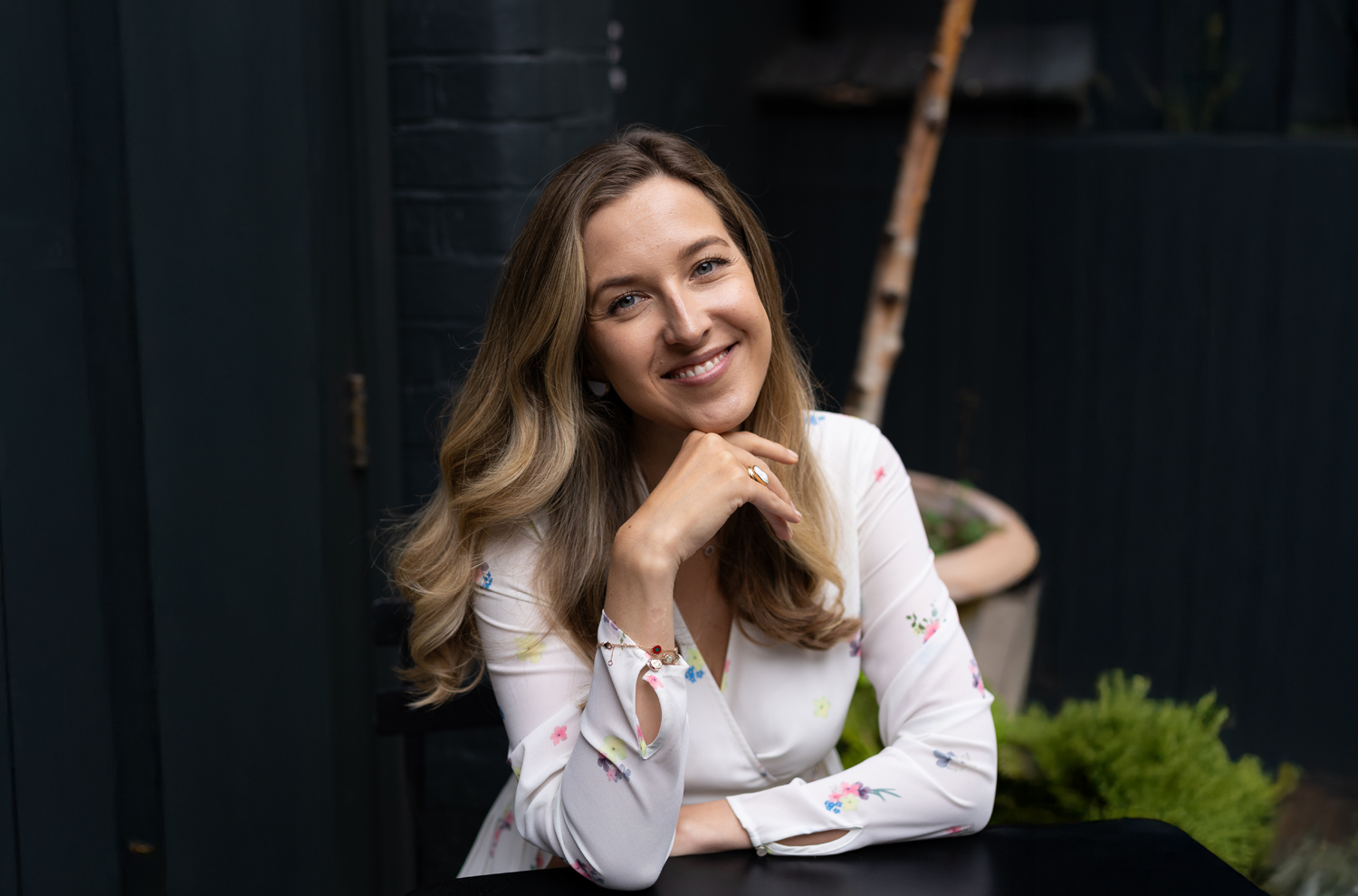
This week on Mum Means Business, I’m joined by Anastasia Shubareva-Epshtein – Co-Founder and CEO of Carea, a femtech startup redefining pregnancy and postpartum care with a mental health first approach.
After graduating from Columbia University, Anastasia built a global career in product management and brand marketing, leading at companies like Bayer Consumer Health and Mastercard. But her journey took a deeply personal turn when she faced fertility struggles, IVF and miscarriage – experiences that shifted her perspective and ultimately her career.
Determined to create the kind of support she longed for, Anastasia launched the Carea app earlier this year: a safe, supportive space for women navigating the emotional complexities of pregnancy and beyond. Unlike traditional apps focused on clinical milestones, Carea puts the mother’s wellbeing at the centre.
Email support@careaapp.com referencing “Mum Means Business” to receive 3 months off Carea’s Premium offering!
In this episode, Anastasia shares her personal journey into motherhood, the cultural taboos surrounding pregnancy loss, and the importance of community in helping women feel seen and supported. She also speaks openly about a tension so many mothers feel – the pull between ambition and creativity on one side and the expectations of traditional maternal roles on the other.
Her story is both innovative and transformative. By addressing the gaps in maternal care, Anastasia is pioneering a more personalised, compassionate approach. And for anyone searching for that “thing” that could become your business, her journey is a reminder that our biggest challenges often reveal the exact path we’re meant to walk.
Conversation Highlights:
06:11 Shifting From Corporate Career to Entrepreneurship
18:20 The Birth of Carea: A New Approach to Pregnancy
23:04 Breaking Taboos Around Pregnancy Loss and Maternal Mental Health
30:29 Empowering Mums-to-be Through Information
33:29 Postpartum Support and Healing
37:41 Cultural Perspectives on Motherhood
45:29 Embracing Change: The New You After Motherhood
52:18 Empowering Women: The Importance of Self-Care
55:38 Building a Supportive Community for Mothers
Listen if you’re:
✨ Searching for inspiration to start a purpose-driven business
✨ Curious about femtech and how it can reshape maternal care
✨ Passionate about emotional wellbeing in pregnancy and postpartum
✨ Tired of “blanket advice” for mothers and ready for more personalised support
Favourite Quote For Mums in Business:
“Care for yourself as you do everyone else, accept help and take time to rest and heal.” – Anastasia Shubareva-Epshtein
About the Guest:
Anastasia Shubareva-Epshtein is the Co-Founder and CEO of the Carea app, a femtech startup designed to provide mindful, trigger-free tools for pregnancy and postpartum tracking. With a background in global brand marketing and digital strategy, Anastasia turned her personal experiences with fertility struggles, IVF and miscarriage into a mission-driven business to support women through one of life’s most vulnerable seasons.
Connect with Anastasia on Instagram at @careaapp.
About the Host:
I’m Victoria Phipps – a Mum of two, analogue family photographer, charity co-founder, marketing person and now podcaster! My career has wandered all over the place and is becoming a bit of a complex tapestry as I head into this middle phase of life, but I can honestly say I’ve loved every minute of it so far.
I was raised by a nurturing Mother and an entrepreneurial Father and have inherited traits from both, so the tension between ambition and motherhood is one I grapple with on a daily basis! I’m fascinated to hear the stories of other women on a similar path, who are striving to build thriving businesses whilst being present for their children. It’s a tough juggle, but I hope the conversations shared on this podcast help Mums in business feel less alone and inspired to keep going in pursuit of their dreams!
If You Enjoyed This Episode:
Share this episode with a fellow Mum in business who you feel would resonate with Anastasia’s story.
Please subscribe, rate and review the podcast – it helps other mums find us!
Share in your Instagram stories, tag @mummeansbusinesspodcast and let us know your biggest takeaway.
Episode transcript
Anastasia (00:07)
when he got our son’s birth certificate.
had to put like occupation and at that time I haven’t even like fully incorporated my business yet. I was just like working on the concept, the design, really the haven’t like officially created a company. But on the birth certificate, instead of putting unemployed or self-employed, he put CEO and it’s like a funny thing, but it meant the world to me because it reminded me like, yes, I’m a mom and he also knows this about myself that I will like fully immerse myself into our son. But it also reminded me like, hey, this is other part of you and it’s okay to nurture it.
Victoria (00:25)
⁓ I love it. Yeah, yeah, yeah.
Anastasia (00:39)
and I got you, like we’re in this as a team
Victoria (00:42)
Hello and welcome to the Mum Means Business podcast, where we shine a light on inspiring women who have one thing in common. When they’re not managing tantrums, homework, P.E. kits and play dates, they are busting their gut to create something from nothing, to turn their passion into a thriving business and build a better life for themselves and their families. We dig into what motivates devoted mothers to pursue entrepreneurship and how they integrate their work and family life.
I’m Victoria Phipps, your host, and if you’re an ambitious mum in need of some solidarity whilst navigating the messy middle of making your big dream a reality, then stick around. This is for you.
Victoria (01:20)
My guest today graduated from Columbia University and built a global career in product management and brand marketing, holding leadership roles at companies like Bayer Consumer Health and Mastercard. Her expertise in digital strategy, innovation and consumer health all supported what became a deeply personal journey into entrepreneurship. Following her own experience with fertility struggles, IVF and miscarriage, Anastasia Shreve Epshteyn
became determined to create a safe, supportive space for women navigating emotionally complex pregnancies. Earlier this year, she launched FemTech startup Carea, designed to redefine pregnancy and postpartum care with a mental health first approach. Now co-founder and CEO, Anastasia is committed to delivering on Carea’s mission to provide mindful, trigger-free tools for pregnancy and postpartum tracking, centered on emotional wellbeing, not just clinical milestones.
Victoria (02:16)
Anastasia, I’m so excited to speak to you at the very beginning of this journey. I want to hear all about your experience of becoming a mum and how it seems to have completely shifted your career. So let’s dig into it. Welcome to the Mummys Business Podcast.
Anastasia (02:29)
Thank you so much, Victoria, and thank you so much for the invite and for having me. It’s so, so lovely to be here.
Victoria (02:35)
I’m really looking forward to this conversation. So tell me about your career path before you even thought about starting a family or going into business yourself.
Anastasia (02:44)
Yeah, Well, I would say I always had that little voice in my head that kind of was telling me you need to do your own thing and start your own business. If you would have asked me, know, at 16 and 18, I would have already told you that. But kind of taking a more conservative and I guess risk averse approach to it, I just kind of had the feeling I need to get the education first. I need to get some experience first. So that’s what I focused on in my 20s to, you know.
get the best education that I can, get in the right rooms with the right people and learn from the right people. Because I just wanted to know everything about how do you run a business. So that’s kind of what led me into first finance, then marketing, then ultimately brand management and product management. Because these roles really gave me kind of that 360 look. I had really great opportunities at, for instance, Bayer Consumer Health, where I was managing quite big children’s vitamins brands.
And I think that’s also why I came across for the first time kind of women’s health. Back then I was living in New York and I was managing Midel, which I don’t think is here in the UK, but it’s essentially a product for ⁓ women to kind of relieve period cramps, kind of make them feel better on their periods. And I think that was the first time I touched upon women’s health and I was like, wow, that’s such an interesting area. I’m like really loving this work.
But I think when you work for someone else and when you have this inner desire and voice always telling you like you need to go out on your own I was always struggling a bit with kind of being I call it in like a bit of a box and yes You get lots of opportunity you get lots of money, right? Which you wouldn’t have otherwise in a big corporation that you can manage but
you are only able to go so far, right? Because the big corporation determines the ingredients that are put in, right? The kind of the strategy behind and you are limited. You can’t fully change the product to be, you know, as clean or sustainable as I would want it to be. So that’s kind of what we’re always struggling with. And especially with the children’s vitamins. And I guess in the US, they had lots of sugar in them. So I was always telling my husband like, oh, it hurts my soul to like, you know, work on these.
children’s vitamins full of sugar. And he was like, know, in the US kids eat sugar anyway. at least, you know, be happy you kind of helping kids be healthier. I, know, exactly, exactly. But as a person, I care so much about kind of the, what is the purpose? What is the value that my work is giving and doing? And it just needs to be aligned with my values. So I think then we moved to London for personal reasons. And I started working in MasterCard and product management.
Victoria (04:58)
It’s sugar with added vitamins.
Anastasia (05:17)
which was again all great, but you know, that voice never kind of went away and was always there. And I think it was just like this one day where I came home, like, you know, having a bit of a meltdown and just kind of like, what am I doing? It’s not aligned with my values. And it was around the time we started IVF and had experienced a miscarriage and everything. And I think many women probably going through the same will agree that it shifts your perspective. helps you to really.
redefine your life, of redefine your priorities ⁓ and be like, you know, what actually matters in life? And I think I just had this like moment to be like, you know, really honest conversation with my husband, like, I know we’re trying to get pregnant, going through IVF, but can I just quit my job and start my own startup? How do you feel about that? And he’s like, you know what, like, do it. mean, luckily he’s so supportive and is now also the co-founder of Caria. He still has his corporate job, so he’s our safety blanket.
Yeah, so luckily he was so supportive and that’s just what I did. And I think the minute I became pregnant, it was the minute I then also started working on Caria.
Victoria (06:19)
That’s so interesting. And I think I wanna go back a little bit because thing about always having an instinct that you wanted, I mean, whether it’s inverted commas more from your working life, that you wanted to do something for yourself. I’m so curious about this a lot of women feel almost forced into entrepreneurship because
when they have a family, it becomes almost impossible be the mum that they saw themselves being. Having grown up with mothers in a different generation who were more able to be present because perhaps they didn’t have the same financial pressure and having such fond memories of that and being so blessed with our own childhoods that we want to emulate that when we have children of our own and
the system that we’re in, in the career that we’ve built in employment does not facilitate the flexibility that they want. And so it’s not necessarily a choice that they’re making because they’ve always had this burning desire to do something. Whereas your story is a bit different in that you have always had that. And where do you think that comes from?
Anastasia (07:22)
Well, think, yeah, I guess for me, I grew up with a dad who also started his own business when I was one. And it’s kind of funny because his business turned 31 this year. And when I started my business, his company turned 30 years and my son, you know, turned one. So it just felt like this really big, like full circle moment meant to be a kind of situation. And I think on that note, I mean, again, as you say, we are different generations and yeah, he started his business when I was one.
Victoria (07:37)
⁓
Yeah.
Yeah, yeah, yeah.
Anastasia (07:51)
He was of course in my early childhood, he was not really present because he was not working from home like I am now, right? It was a completely different time. So I think, ⁓ and my mom, took three years off work.
I yeah, kind of grew up between two very different, Parents who were very present in a very different way, but I think it has instilled in me this first desire. I just saw my dad living his dream of having his own company, and he always told me about how comes with so many challenges, but not…
having to work for someone and being able to create and he’s in the real business. So, you he would show me like, look, we created this building and you know, it’s, it has these and these features and these many families live in there. And I think I just grew up seeing that and kind of seeing the impact that he was making. But at the same time, I also grew up with a mom who was so present with me and so fantastic and who was always telling me like, you can do whatever you want, you know, be whatever you want. Like she never put any pressure in terms of you have to go down XYZ career path.
So yeah, I think that just really instilled in me this desire of doing good and building something. I always hated the question, like, what do you want to be? And now I was just talking with my husband about this yesterday, like, let’s never ask our kids that because I think a better question to ask is what problem do you want to solve when you grow up? Or like what
Victoria (09:10)
I love that.
Anastasia (09:11)
do you have? Because I think otherwise it just restricts you. I mean, today it’s a complete different story with AI and everything. Who knows?
what our kids will be able to do.
Victoria (09:19)
Yes.
Anastasia (09:20)
even for us, right? So I kind of was always thinking from a lens of what impact can I have? And I was always saying like when I’m gone one day, I want to know that I made the world a tiny bit better. Even like it was just a tiny bit. If I helped one person, like that’s what I want to do. So I think I in my 20s, like I was searching for this, like how can I make an impact until, you know, the impact kind of hit me in the face
all the fertility struggles and I just knew like that’s it. I want to help women. Yeah.
Victoria (09:44)
Hahaha.
I love that because sometimes I think, I, similarly to you, my dad was very entrepreneurial and I grew up in a kind of self-employed household, but it was kind of mood of creating your own destiny and taking agency over your own working life and what that means and the balance of work and home and all of that.
And I found that really infectious as well. But I what is interesting is we might have that desire we have this energy in us for building something, creating something from nothing. And we don’t quite know where to put it. And actually we can try and force that and try and find I feel like I’ve always done this. I’m like, what is it? What is the next thing?
does feel like an energy. Do you feel
that it’s this, yeah, I need to put it somewhere.
Anastasia (10:35)
100%. And it’s so frustrating
while you’re searching.
now, and I’m still in the early phase, I’m still building it, but it just like, can feel it in my bones that it’s the right path I’m on. But before that, it was so hard because I had this desire, but I’m like, what am I doing? Where am putting this energy? And like, it’s just, it’s also really, really frustrating because I think I’m also really aware of kind of the finite time we have, you know? And that’s also, I think, why I wanted to, you
Victoria (10:39)
Yeah.
Yes.
Anastasia (11:02)
go down the entrepreneur path because even with my child and hopefully children in the future, I want to be present. Like I want to be there. I miss a single thing, right? And of course you are ultimately going to miss something, even if you’re an entrepreneur, but it at least allows me to, you know, have my own hours and kind of build my schedule around his schedule. And yes, I think it just really goes hand to hand. Like if you have this desire to do something and then you find it and then you just kind of…
make it work together with your family life because similar with the question what do want to be I always hated the question which I oftentimes got from kind of older generations like do you want to focus on being a mom or do you want to focus on your career and I’m like why you have to choose like I kind of want to both and ⁓
Victoria (11:44)
Yeah.
Anastasia (11:47)
And I think that’s kind of why with corporate I always felt like I’m not sure if I can do both in the way that I want to do both. And as I mentioned, I studied in New York and I worked in New York and New York is such a crazy bubble because in my first job I had, I think, paid holiday days per year.
⁓ And yeah, and their kids are put in and I’m from Germany and there it’s very very different You have like 35 days and most moms are home or parents are home for a year or two or three years And there you know kids are put in daycare at four or five months and again like to each their own But I just knew like this is not how I want to live my life I think ultimately is then you have to create your own rules
Victoria (12:05)
my gosh.
Yeah, I think idea of making a choice, actually the construct of working life was built for men primarily in an age where women are at home looking after the children. So there’s no burden upon men. They can in the office at half past eight and leave at half past five. And when they get home, their dinner will be on the table. And the children will rush to the door and embrace them having missed them all day.
Anastasia (12:35)
percent.
Must be nice.
Victoria (12:51)
And yeah,
it’s not the world we’re living in and you try and take women and you put them into that construct. And it’s like, okay, what happens with these children then? And so society says, it’s all right, well, you can put them in daycare. And then you’ve got this whole sort of situation where the parents are essentially estranged from their children in some cases, because the demands of work and the financial pressure are so high. And you’re right.
Anastasia (13:12)
Yeah.
Victoria (13:16)
we do only have this one life and we have this limited time and our children’s childhood is so, it goes so quickly, it’s so fleeting. I think coming back to all these conversations I’m having, the common thread there are a lot of women rejecting and it must be actually very difficult. I just feel like we are completely aligned in this kind energy and this.
the sort of burning desire to do something and it is that search. And I’m so pleased that you feel so confident that you’re on the right path now because I know what that feeling is like. But I think actually for women who never had that and did just want to have the secure career, feel that actually their children’s childhood and being present is more important, is the most important thing.
and to feel forced into starting a business, which actually just the decision in itself and the act of doing it creates massive anxiety. And they’re not in that, know, they’re not excited by it. know, you or I, and everybody is different. You or I might be like, okay, good, this is my moment. I’m gonna do it now. And then we’re gonna have a family and it’s all gonna fit together. And you know, there’s a buzz about it. But I think for a lot of women, it might not feel that way. It might be like, right, okay, I need to do something different.
Anastasia (14:10)
100%.
Victoria (14:29)
what can I do? And it’s quieter it’s filled with, don’t know, just apprehension. And so I think that’s worth acknowledging, but I completely understand and I see you getting excited when you talk about having actually finally found the thing. And I completely get it. And it is so much of it is not necessarily about money. It’s about purpose.
Anastasia (14:31)
Mm-hmm.
Mm-hmm.
Mm-hmm.
Victoria (14:54)
and impact and making your life work. So tell me about your experience into motherhood, what that was like for you how that then fed into this idea for your startup.
Anastasia (14:59)
and present.
Yeah. And before I get into it, just, with the previous note, just want to say that it also, you I never want to make any women also feel bad about her choice. Because as you said, for some women, the corporate path is great. For some women, being a stay-at-home mom is great. And I think these are all wonderful options. And of course, have to acknowledge the privilege, you know, that I have a supportive husband and the financial means to do this. at the same time, I just, you know, always want to empower and kind of…
try to inspire women to also just, you know, go down the path that excites them and, you know, that inspires them because I do really believe that, especially for kids, like they can feel all our energy, right? And I’m so glad that I kind of exited the corporate world where I wasn’t happy because I think a depressed, you know, stressed mom also makes for a really, you know, kind of anxious child. So, yeah, just, you know, wanted to add that note that I never want anyone to like listen to this and be like, oh, but
Victoria (15:54)
Yeah.
Anastasia (16:04)
I’m not feeling this way. Like there’s so many facets to, you know, being a working mom or stay at home mom or whatever it is at the end of the day that is like have to pick the path, I guess, that works best for you and your family. Yeah.
Victoria (16:08)
Yeah.
Yeah, and I think if you are making that decision do something for yourself in order to give you that flexibility at home, ask for help
because you can so easily think that you have to figure it out all by yourself. And I think women are guilty of this
Anastasia (16:24)
Yeah.
100%.
Victoria (16:31)
and open your mind to the support that is out there and that is available because if you try and do it all by yourself and you’re feeling anxious about it.
it’s going to be so much pressure. And again, that kind of bleeds into your family life because you’re feeling stressed. And like you say, if you’d have stayed in corporate and tried to make that work with your child, you would have been fighting with yourself. Yeah. And you would have been tormented and that, you know, it’s just in our aura, isn’t it? I’m not gonna get too energetic about it, but it will just bleed out in your, you know, you’ll be less patient with your child. You’ll be just…
Anastasia (16:41)
Mm-hmm.
Yes.
Mm-hmm. Mm-hmm.
I would have been miserable, yes, 100%, no. Yes.
100%.
Victoria (17:07)
cranky with yourself and at ease. And I think whichever path you choose, you can find a way to do it that leaves you feeling settled. It’s just about really listening to your own body and trusting your instincts and thinking, okay, this is my situation. Am I going to change it? Yes or no? If I’m not gonna change the whole thing, what tweaks can I make so that I feel more comfortable and so that I’m on the right path to designing? Because it’s all about how you live your day.
Anastasia (17:09)
Mm-hmm.
Yes.
Yeah.
Mm-hmm.
Victoria (17:36)
at end of the day, isn’t it? You know, what do my days look like? How can I make that a little bit better for me and for my child or children?
Anastasia (17:36)
Of course, of course.
yes, and I love that saying like, choose your heart or pick your heart because everything is hard. Like being, know, like corporate is hard, being an entrepreneur is hard, being a stay-at-home mom hard. Like, it’s nothing is easy. There’s no easy path and I think when we just, we just need to acknowledge that.
Victoria (17:50)
Yeah.
Anastasia (17:58)
And then you just pick whatever path makes sense for you and your family and you make that work. But yeah, to your point, and then to go to your question like this of accepting help and realizing like, okay, can’t make it all on my own. And for me, think it was even, you asked like, how did this change when I became a mother? I think it changed when I became pregnant because I became pregnant following IVF and.
If anyone has been through it, most likely have to take medication and hormones up until the end of your first semester, so throughout the first 12 weeks. And it’s a lot because you have the pregnancy hormones, you have the added hormones on top, you’re pregnant, you know, so. And I was also pregnant after a loss. So it was just a lot, a lot, a lot to deal with mentally. Physically was okay. I mean, I was struggling with nausea, but that wasn’t even the hardest part.
Victoria (18:34)
Mm-hmm.
Anastasia (18:45)
I’m a very, very positive person. Maybe you can tell, I’m… Some people have, like, resting bitch face, I have resting smiley face. But in this first semester, I was so down and I don’t know if I had antenatal depression, but I just couldn’t recognize myself. Like, some days I struggled to even, you know, get outside with a dog. It was just completely different. I was so, so, so anxious, so, so, so scared every time I went to the bathroom that, you know, I would see blood again, like, for my first pregnancy.
counting the days, the days would not go by. It was just horrible. And in that time, I was kind of trying to make myself feel better and as you said, like trying to find the help.
of noticed there isn’t anything really out there. Like I tried all the pregnancy apps and again not to throw shade on them because I’m so grateful for all the femtech companies that came before us because they you know created the path and but I still found that most pregnancy apps are kind of more of like a rainbow and sunshine portrayal. Yeah you’re happy, it’s the best time of your life, congrats! But I didn’t feel that. I mean I was over the moon to be happy after such a long journey but at the same time I was scared and anxious and guilty about feeling like this and all these
and it just felt like there was no space to acknowledge and hold all these other emotions and also no tools.
that would show me how to deal with them. So I think that’s when, know, kind of the idea to carry I was born that we have to create something different that is more realistic that kind of meets women where they are and also acknowledges that, you know, one in six couples goes through IVF or fertility treatments and one in four pregnancies ends in miscarriage and nobody is talking about how hard a pregnancy after losses. So yeah, that all kind of then really led me to, okay, let’s create this app that is just a bit different.
Victoria (20:27)
So what was in the apps that you were using that you felt specifically was missing? Was it just the mood? mean, I imagine, I haven’t experienced pregnancy loss and I feel very fortunate because I have had pregnancies. But I imagine that pregnancy after loss.
Anastasia (20:39)
Mm-hmm.
Mm-hmm.
Victoria (20:47)
is anything but joyous, mean, particularly in those early stages. And I can completely understand, as you say, that you’re almost waiting for it to go wrong. And it must be hard to function, you know, so much is still, I mean, I know it’s getting a lot better.
Anastasia (20:49)
Mm-hmm.
It is.
Victoria (21:04)
my mother had a miscarriage and she hardly ever spoke about it, but she just, know, everyone has miscarriages and it’s just one of those things. you Whereas now I think people are talking about it more because the repercussion, especially for mum, are having all of those physical symptoms. And then sometimes the miscarriage doesn’t actually
Anastasia (21:12)
Mm-hmm.
Mm-hmm.
Mm-hmm.
Victoria (21:25)
think it was, who’s that Canadian comedian? I can’t remember her name.
I’ll work it out. Anyway, she was saying basically she had to go and perform on stage and do standup and she’d miscarried, but she was basically like, I’m just telling jokes and I have a dead baby in me. And I’m just telling jokes. And it’s just the things and we do, we keep going.
Anastasia (21:31)
Yeah.
my gosh.
That’s crazy.
Victoria (21:43)
Whereas I think, honestly, if men were in some of the situations that women win, it’d be like, world stop, I’m having a hard time, I need to tell you about it. Exactly. Yeah. Yes.
Anastasia (21:46)
No. No way. And the research would be so much further. Yes, there would be so much funding for men’s health. I mean, there is because health is a kind of men’s health. But yeah,
no, it’s outrageous and it really makes me mad. But you know, I know every culture is different in the UK. There’s a lot of this narrative just like, just get on with things.
And like, just want to, you know, that term, just get on with things out of the window because no, you do not need to get on with things. Like it’s okay to talk about it. And I think ⁓ what then sparked also the idea, because the very first thing also when I miscarried that helped me was when I went to my GP and she just looked me in the eye and said, Hey, I have three healthy living children, but I also miscarried too. And just seeing, you know, someone physical in front of me, telling me that she also experienced that helped.
And that was also the moment I was like, okay, we got to break those taboos. Like we have to start talking about it, acknowledging it. I mean, I’m not a doctor, so I couldn’t really set up a clinic or anything. That’s why I kind of had this idea for the app, because at least, you know, I could have this in pocket support and I could get all the experts to help me create the safe space. And yeah, just to, as I said, like acknowledge that there is more than just feeling joyful and that it is okay. Because as we did our research and talked to women, we noticed that, you
⁓ There’s so many feelings that coexist but the one that we keep coming back to is women saying I feel so guilty because I had such a long path to get pregnant and I experienced this loss and I did fertility treatments and now I’m pregnant and I should be happy but I’m not and now I’m guilty that I’m not and it’s just like It’s okay. Yes. No, let’s not the guilt
Victoria (23:24)
Why do we do this to ourselves? Honestly, the get it. I get why you would feel
like that, but you know, innately female, isn’t I think we need to definitely dig in much deeper.
Anastasia (23:32)
I felt it, yeah.
Victoria (23:41)
and appreciate the complexity further than, you’re this many weeks, your baby is the size of a pineapple now. You know, I was just like, people would ask me like, there’s so much more, like, what fruit is your, you know, baby now? I was just like, I don’t yeah.
Anastasia (23:47)
Exactly, exactly. There is more to that than this. Exactly.
yeah, and even that
point, like you’re so in so many weeks and your baby is, and that’s it. And you asked me earlier, like, what was I missing on the apps? This, like why is from the minute you are pregnant, all the focus is on the baby. And don’t even get me started on postpartum because that’s something we’re focusing on now and building out a lot of features and postpartum, nobody’s looking at the mom. At least with pregnancy, there’s a bit of conversation on how are you feeling, but postpartum is like, nobody cares anymore, just the baby. But no, that just made me so angry because that’s what we are doing.
different like we are putting the focus back we say it back on her and back on the mum and in our app you know you get updates first of all about what is happening with your body what is happening with your mind and yes of course also with your baby like nobody’s saying that that’s not important but let’s just for a second pause and just acknowledge like everything that the woman is going through all the crazy changes again as you said like if men were to do pregnancy and childbirth like I think we would have been having a very different conversation to say the least.
Victoria (24:52)
Very different, yeah,
yeah. It’s an understatement. But yeah, I mean, every experience is completely unique, isn’t it, in pregnancy?
Anastasia (24:54)
Yeah.
Victoria (24:59)
and this thing that you’re talking about where you feel alone in that you’re perhaps not informed well enough about what is normal to experience in pregnancy. And so many books, so many things. And some of them are quite prescriptive and some of them are just very upbeat as well.
Anastasia (25:14)
Yeah.
Mm-hmm.
Victoria (25:22)
But it’s all, it’s about when things go wrong and it’s about when your pregnancy is And I think what I found even with two relatively pleasant pregnancies,
Anastasia (25:22)
Yeah.
Mm-hmm.
Victoria (25:36)
is when things weren’t quite right is where I struggle for that solidarity or that information. And I suppose having had a traumatic experience already on that journey, you’re not able to think exclusively positively. And sometimes being told just breathe and just meditate and just have baths.
Anastasia (25:54)
Exactly.
Mm-hmm.
Victoria (25:57)
and just
do this and just do that, you’re kind of not in the right head space to take that agency because you’re in some circumstances panicked.
Anastasia (26:00)
Mm-hmm. Mm-hmm.
Mm-hmm.
Victoria (26:07)
And so tell me about practically what does the Carea app do to support women who are struggling to find the joy, like you said, and then beating themselves up and thinking, I should be grateful, I should be happy, why aren’t I feeling that? How does the Carea app differ in that sense from what’s out there already?
Anastasia (26:11)
Mm-hmm. Mm-hmm. Mm-hmm.
Mm-hmm.
Mm-hmm. Mm-hmm. Yeah.
Yeah.
felt and what I was trying to create with Caria when I was so desperate to get pregnant I was so desperate to be part of the pregnancy club.
And then when I miscarried, and my miscarriage to happen on Mother’s Day, ⁓ and I had to go.
Victoria (26:42)
my gosh, I’m so sorry. I don’t know why that’s so much
worse. It’s not, it’s just a day, but it’s poignant.
Anastasia (26:44)
It’s not but yeah, no,
it was just, it sucked quite a lot because I had to go into this like kind of peekaboo clinic on Mother’s Day with all the pregnant ladies because my local trust wouldn’t, I don’t know, didn’t have an ultrasound tech there that day so I had to go to this private clinic on Mother’s Day with all the pregnant ladies sitting there to have an ultrasound to confirm there’s no heartbeat.
Victoria (26:50)
No.
Anastasia (27:06)
had so many layers to it because for one, it was very traumatizing. And I think that’s one thing that we’re doing. We’re just acknowledging that any woman who’s been through a miscarriage experienced a trauma. And that’s like all the tools that we’re trying to design are very trauma aware. I think that’s the main thing that differentiates us that we kind of already always having that lens on and thinking about how can we do things trigger free? What is even triggering you? Because every woman is different. So we’re giving you the options to choose the pregnancy path you’re on.
Victoria (27:11)
Yeah.
Anastasia (27:35)
to tell us if you had a miscarriage so we could remove any triggers. Kind of really looking at it from a bit of a different lens. so when I was in this peekaboo clinic, I just felt like, I was kicked out of this pregnancy club, like, bye-bye. We really knew you wanted to be part of it, but sorry you can’t. And then nothing. You just like dropped. On the app that maybe you were on, you have to first of all find like, where do I report that I had a miscarriage? One thing that made me so, so, so angry when I was doing my research for Carea was,
finding out that so many pregnancy apps also sell their users’ So after women would report they had a miscarriage. Next day they had received some diapers in the mail because, the pregnancy app had sold that data to huggies or whatever diaper brand and they sent them a little ⁓ marketing package. So that just made me so mad.
Victoria (28:14)
Wow.
Ugh.
Just to rub salt in the wound,
Anastasia (28:22)
Exactly.
Victoria (28:22)
yeah.
Anastasia (28:22)
And think like, okay, we got to do better. We have to protect user data better. So that’s on the forefront of everything we do, like keeping user data safe and we comply with the strictest standards. And also I was trying to think do we remove this feeling of you’re being kicked out of this club and there’s nothing. So when you report a loss in our app, the experience is very different because you land on a screen that first of all, we have a whole loss path. I don’t think other apps really do that.
your home screen changes and acknowledges you had a miscarriage. It gives you some statistics to just make sure that you know you’re not alone. And then we give you resources right away. We have so many expert written articles to kind of, know, to understand like what’s happening in your body. And as you said, and that’s the second piece, like the information. I think that piece is so crucial because we speak to so many women who say, I didn’t know my options. I didn’t know that after a miscarriage, you know, I can choose should I do, you know, like an operation, should I take pills, should I wait for it.
just had a focus group where one woman said it took her like three or four weeks to pass the pregnancy and she almost died because of sepsis and no one had informed her she could have chosen on day one to have a surgical procedure. So that piece of information of we’re just giving you all the information and really look short, summarized, super concise, you can listen to it, you can read it the end of the day
Victoria (29:29)
my gosh.
Anastasia (29:43)
Doctors and midwives are great and I’m sure they’re doing the best they can, the medical system is overworked. Like we all know it. Every country has the same problems. As you said, there’s so many books, so many resources. So we’re trying to kind of get you with the right information at the right time. So you can like take that agency back and that power back and really, you know.
make informed decisions because I think that’s what it comes down to. And yes, we have all the other tools like meditations, affirmations to help, know, these kind of soft tools, I would say, to make you feel better. But the thing that I’m most, you know, passionate about is really providing that information to women so they can, you know, pick the path that they want to go on. And yeah, so they don’t feel like they’re alone on that journey and they don’t have to wait for a doctor’s appointment to, you know, tell them, actually, you could have had a procedure four weeks ago.
Victoria (30:30)
It sounds really empowering and it’s a high touch service app. It’s not a kind of one size fits all. And so often, obviously, I mean, if you’ve, if you’re experiencing or if you just experienced miscarriage, the last thing you feel is empowered. You probably feel, I mean, I’m projecting, but very
Anastasia (30:35)
Yeah.
No, no.
Yes.
Broken. Yeah.
Victoria (30:51)
And just the idea of going to the GP and making that phone call and just having to tell people. And of course then All these thoughts of what did I do wrong? I didn’t eat any soft cheese.
Anastasia (31:00)
and that’s something must be wrong with me.
Victoria (31:03)
And what’s wrong with my body? And women have been doing this.
Anastasia (31:02)
Yeah,
Victoria (31:06)
for all
centuries and why can’t I do it? And was it that glass of wine I had on Thursday? We’re going to do that to ourselves, it’s human nature. And so you could very easily crumble into this hopeless place of desperate sadness, physical trauma really. Your body may not even realize yet that you’ve lost your pregnancy or perhaps it does and then you’ve got this new wave of hormones or your hormones are all trying to escape your body.
Anastasia (31:09)
Mm-hmm.
Mm-hmm. Mm-hmm.
100%.
Mm-hmm.
Victoria (31:33)
So your head’s probably just emotionally, you’re probably a bit of a wreck. And the last thing you’re feeling is confident or empowered. And actually, like you say, reluctant to make that phone call, because again, it makes it real, and you’re not ready to do that yet. But you could quietly sit on your phone and read some articles and feel less alone.
Anastasia (31:35)
Mm-hmm
and present. Yeah.
Yeah.
Victoria (31:52)
and just arm yourself with that knowledge that, okay, when I do go to the doctor, I know what my options are. I don’t have to wait and be at their mercy for them to tell me and recommend my path. I’ve got time to kind of process that and digest and think about what’s right for me. on.
Anastasia (31:56)
Mm-hmm.
Exactly.
Mm-hmm.
And maybe even speak to other women before you even speak to doctor because another thing that we’re super passionate about on our app is the community, which has different threads where you can chat to women going through similar experiences like you are going through yourself. And that’s something we’re building out. Like in the works is also like a one-to-one buddy matching, I call this, so you can be matched to someone going through exactly the same phase. And I think as I had this interaction with that doctor who told me I also had a miscarriage and she could have been like, I don’t think the crucial
Victoria (32:27)
Ugh.
Anastasia (32:37)
point was that she was a doctor. think the crucial point was there was a woman sitting in front of me, know, telling me like, am you and you are me and we share the same experience. And I think that’s what it boils down to. I think this is really what women need other than really good medical care. It’s also that
feeling off, it’s not you, you’re not broken. Unfortunately this happens, unfortunately nature designed it this way, but we’ve got you, like I went through it, you will be able to get through it, this is how I did it, maybe it will inspire, help you, you know, to kind of know your options. And
you can still, as you said, be empowered and make decisions for I always want to help women not to feel like I’m a victim and that stuff is happening to me. And when we go to birth, that’s a whole other question, Because often women also feel like not really empowered while giving birth. ⁓ And yeah, so think it all just boils down to giving that agency back, as I said.
Victoria (33:24)
No, yeah.
And tell me about further along the line, you know, you have a successful pregnancy and you’re going into labor. we, touched on it earlier, this postpartum phase, this fourth trimester matressence. So how does your app deal with that differently? Because it has come up, even though we’re in the very early stages of this podcast already, a handful of times, you know, the postpartum experience.
Anastasia (33:39)
Yeah. Mm-hmm. Yes.
Victoria (33:55)
feels very much like, okay, well done, you have your baby, here you go, here’s some flyers, good luck, bye. Which is not good enough, is it?
Anastasia (34:03)
No, it’s like… No, and the UK
and the US, like, I mean, we gotta do things differently, guys. Like, maybe because I’ve seen it different also in Germany, or like, I speak to so many women also from Asian countries where you have like a month, it’s called Chinese confinement, I don’t know if you’ve heard of it, where for 40 days you like stay at home and someone pamper you. In Germany, we have something called Wochenbett, where again, for four weeks, the mom usually stays at home and is pampered by everybody, like…
Victoria (34:10)
Yeah.
Anastasia (34:29)
I don’t know why UK and US are just like, okay love, get over things. No, I am very against it. I ⁓ mean, again, as you said, so much comes to generations and I’ve seen it also when I gave birth that some family members were kind of like, well, but we did it. Why do you insist on lying in bed for a week? Yeah, yeah, yeah, but.
Victoria (34:47)
there’s a lot of that, yeah.
Anastasia (34:50)
You know, at the end of the day, I think you can really heal only when you rest. for some reason, women are so anti-rest always, right? Because it’s like, you must be lazy if you’re not constantly doing and we’re so productive.
I feel like it’s finally shifting. And I was myself, like my first job, I fully got myself burnt out. yeah, so I think that’s the background that I’m looking at this at. And I just want to at least, in the with again with the digital support tools that we have give women the information and the space to heal.
and put this focus again back on her and Right now we have a postpartum path. So let’s say you report your birth. You can also tell us the type of birth you had because based on that, we kind of will filter the content that you’ll see. ⁓ And then first of all, you’ll receive a bunch of different article recommendations to understand like how do you take care of yourself, your birth injuries, your mental health, signs to watch out for, you know, for postpartum depression. Of course, also how to care for your baby, how, you know, to bathe them, but also
sleeping. We are very much we want to give you all the information also how can you safely co-sleep because you know they put the baby in the crib most babies won’t sleep well so how can you make sure you get the rest and perhaps co-sleeping is the way. So we’re just trying to provide all the information in the works and released in about two months will be
a full on kind of postpartum tracker for mom and baby. So yes, we’ll have the typical baby tracking tools because I know many new moms are looking for that, but also we’ll have tools to track your mental health, like how are you feeling every day and we’ll kind of have the smart algorithm that if you track for a couple of days that you’re not feeling so well, that will kind of alert you like, hey, this could be more than baby blues, you should really speak to someone. But also with physical health, like you can track how you’re recovering all these various tools. So yeah, I mean, I know in the UK,
US again you don’t get that midwife support much after you give birth so at least we’re trying to kind of be that digital midwife that just you know checks in on you daily cares for you looks not just at the baby but also how is mom doing and just tries to provide this ⁓ support system that I think is so desperately needed.
Victoria (36:55)
Yeah, I feel like I don’t know enough about how it is in other countries. I have a sense that it’s much better in Europe. And I have a sense that it’s much more like intuitive, yet better. And same with childcare and all these things. I mean, I think there’s definitely a cultural factor of keep calm and carry on over here. And I think in America, it’s just a…
Anastasia (37:01)
Mm.
I mean, it’s not ideal, but it’s better. Mm-hmm. Mm-hmm.
Victoria (37:17)
tragic lack of resourcing and capitalism gone crazy. it’s a very male dominated construct historically and it’s go go go and crack on. And do you think part of your work with this app, you know, you’re launching it in the UK to kind counter that reset women’s minds?
Anastasia (37:19)
Yeah.
Mm-hmm.
Victoria (37:41)
as to their own value in this situation because like you say, a lot of it is baby-centric and it’s clues, isn’t it? It’s just little things like, you know, I had a horrendous labor with my first and it’s the things that people say to you. like, well, baby’s happy, baby’s healthy. So be grateful, baby’s healthy. All that matters, you’ve got a healthy baby, stop whinging.
Anastasia (37:44)
Mm-hmm.
Mm-hmm. Mm-hmm. That’s all that matters. Mm-hmm. And duh, like, yeah, nobody’s
saying it doesn’t, but yeah.
Victoria (38:07)
Yeah, of course.
But I mean, that is the most important thing. And for a mother, that’s the most important thing. I would much rather I suffer than she suffered. So that is a given. But I think it does diminish your own experience. That it’s not only secondary, it’s, you know, just don’t complain. You know, it’s hard. How do you think?
Anastasia (38:12)
Yeah, yeah of course.
It does.
Exactly.
100%. Yeah, and as you said, we launched in English. So for now, like UK, US, Australia, kind of the Nordics also been our top markets. And we have plans to, you know, also add into the German market. I think it’s different there just because, as I said, like midwifery care in Germany, you’re entitled to a midwife until you stop breastfeeding. And for the majority of women in Germany, that’s not like the UK, that’s a year plus. A majority of women in Germany actually do breastfeed for a year. So it’s
much longer, it’s much more care. So I think to your point, like I didn’t think of it in the way of like maybe I’m doing this here to kind of help you shape but now that you said it I’m kind of like maybe I was subconsciously, maybe I was exactly yes, 100 % and you know when I was ⁓ preparing to give birth myself and being an IVF pregnancy here in the UK, I think in the US it’s the same like they kind of…
Victoria (39:06)
Take it, use it. But you’re targeting the market that needs it most in some ways, you know.
Anastasia (39:23)
start the induction conversation at your first appointment. at eight weeks, you know, they kind of already said FYI, just because you’re IVF pregnancy, you probably will be induced. I’m like, I’m eight weeks pregnant. Why are we talking about this? And there’s so much wrong with this and so much is looking at general statistics. and I remember telling my doctor like, hey, actually, I would really love a natural water birth. And she was like, all that matters is that baby is healthy. We’re not at Disneyland here where you can, you know, put your wishes in. And I, as I said, like,
Victoria (39:49)
Wow.
Anastasia (39:51)
Duh, all that matters, like of course I want my baby to be healthy. Don’t you think after everything I’ve been through, that’s the most important thing in the world to me? But also, no, as a woman, you should be empowered and able to choose how you give birth because that matters. It really,
Victoria (40:06)
Yeah, it’s all about
choices again. Are you going to be a mom or are you gonna have a career? Are you going to have an IVF baby or do you want a water birth? Like, what is this? It’s crazy. one of the things the app sounds like it’s really going to help with, it is arming mothers with more knowledge about what they’re going through because,
Anastasia (40:08)
Yes, exactly. Yeah,
Yeah.
Victoria (40:24)
any mum to be. If it’s your first pregnancy you’ve no idea. Just gonna put that out there. You’ve no idea. You’ve no idea about parenthood. I thought I knew stuff but I didn’t know anything and I think what was really interesting is what you said about the community because say time and time again I didn’t realize the power of female friendship until I became a mother and the pain that we all feel
Anastasia (40:28)
No. No you don’t.
Mm-hmm.
Victoria (40:48)
when we go through a trauma is heightened incredibly we feel like we’re the only ones.
Anastasia (40:55)
100%.
Victoria (40:56)
I do hear of mums who,
are isolated entirely through this whole experience. So tell me about what sparked that obviously you’re moving across an entire ocean around that time. So that kind of hinders friendship building. So what was your experience and why was that so important to put into the app?
Anastasia (41:08)
Yeah, that’s also the idea.
Yeah.
Yeah, I mean, it’s tricky because all of my close friends ⁓ are in a different country. mean, mostly, almost all of them. do have a few very close friends here, but the majority of my childhood friends, like best friends, in different countries. Our families are not here. My husband is from a different country, so like they all spread out. So we had to also build our community here. And luckily, we also were able to basically meet like one of our closest friends now in an NCT class. We did the private one and I’m so glad we did because, now we’re kind of raising the kids together.
seeing them grow up at the same age is just the most beautiful thing. And also I think what I really need to emphasize here, and I hear this so much from women,
Luckily, my husband was able to take six months paid paternity leave and that was the best thing because for one, it allowed me also to continue working on the app when my baby was I think around two months. I was, you know, at least starting to do a little bit of work and it also helped me so much with my mental health because as again, and again, I told you a little bit about myself, like I have these two passions in me. I always knew I wanted to be a mom and that’s the most important thing in the world for me. But I also have this other side that’s like, and I need to nurture this
other side. Otherwise, I can’t be the best mom that I want to be. that’s why I always, always, always also want to bring in the partner because it so matters what they do. And I know most dads in the UK, unfortunately, only get two weeks. you know, we touched on Anna Motherpucker, like many great women like her are trying and campaigning and trying to make a difference and change this and hopefully will change one day. But It made the world of difference that he was there, that he was helping care for me, literally feeding me in the beginning as I was feeding our son.
you know, there’s like this cute thing that he did when he got our son’s birth certificate.
had to put like occupation and at that time I haven’t even like fully incorporated my business yet. I was just like working on the concept, the design, really the haven’t like officially created a company. But on the birth certificate, instead of putting unemployed or self-employed, he put CEO and it’s like a funny thing, but it meant the world to me because it reminded me like, yes, I’m a mom and he also knows this about myself that I will like fully immerse myself into our son. But it also reminded me like, hey, this is other part of you and it’s okay to nurture it.
Victoria (43:13)
⁓ I love it. Yeah, yeah, yeah.
Anastasia (43:26)
and I got you, like we’re in this as a team
and like yes I made great friends and the women friendships are so important but the supportive partner my goodness like that can make a world of a difference so today’s actually a wedding anniversary so quick shout out to my amazing husband because that means the yeah ⁓
Victoria (43:40)
⁓ happy anniversary, yeah. Honestly, I love that, the CEO thing, because
as well, your identity takes such a battering when you become a mum and you’re trying to grapple with this whole new version of yourself that you kind of have to put back together. And for him to attribute this title to you, it’s just wonderful, isn’t it? Because it’s like,
Anastasia (43:50)
Mm-hmm.
Mm-hmm.
Mm-hmm.
It is.
Victoria (44:04)
I know you and I know this is going to be you. and it’s faith, That’s so I love it. Yeah.
Anastasia (44:08)
Mm-hmm. Yeah. And it’s everything. it’s… And
that’s so much also we’re doing with the app, this,
reminding yourself and we’re not about that like getting back to you because I don’t think there’s ever like a getting back there’s no back like you gave birth your body changed and you changed and I think that is okay to acknowledge so it’s the more like who are you now and like meeting this new version of yourself and that’s kind of also the tools that we’re trying to you know give and it could be journaling could be you know the meditations whatever helps a woman it could be the community but this like okay let me try and
Victoria (44:22)
No, it’s forward. Yeah.
Anastasia (44:41)
to know this new person that I am now and yes, I’m giving everything into this baby, but maybe also that made me discover this passion that I have for work and it doesn’t have to be, you as we said, self-employment or entrepreneurship. Maybe for someone it’s, you know, taking on a new role at work. And, you know, I have a very good friend who also became a mom and she was dreading going back to work and she stayed home, I think for almost a year, but she still was like, my God, like I can’t, like leaving my baby. my goodness. then she did and she loves her job. But she was like, I was sitting on, you know, these
way and I was smiling because I was so happy and I think that’s okay to say too that like it doesn’t mean she’s a bad mom she’s the most amazing mom but to also be like there’s so many sides of us and it’s okay to nurture them and it’s okay to feel passionate equally about it you know it doesn’t make you a bad mom or you know a bad embryo whatever it is yeah
Victoria (45:13)
Yeah. ⁓
Yeah, yeah, yeah, yeah.
No, definitely
not. And I think the notion of getting back to normal is total bollocks. Excuse my French. I just think like, it’s, this idea that like back to normal is definitely the direction to go in because actually I think life after baby, I’ve like meandered and I’ve fought against it and then I’ve accepted it and then I’ve found a kind of halfway house. So I’m talking about like emotionally and from an identity and a work point of view.
Anastasia (45:33)
Mm-hmm.
Totally, totally.
Mm-hmm. Mm-hmm.
Victoria (45:58)
and your children change and their needs change and it evolves. But now, God, so much wiser, so much happier, so much more clarity about what’s important, so much more empathetic. I mean, your brain is literally, I think, rewired when you become a mother because you have to have more empathy in order to care for your child the way that your child needs to be cared for. So these are physical and chemical changes and you can fight against them and I think,
Anastasia (46:01)
Mm-hmm.
kind of Mm-hmm, yes, yes.
Victoria (46:25)
apps like yours, just in changing that messaging, that actually it might be better on the other side. You don’t have to go backwards and you don’t have, if that six pack that you had is gone forever, then so be it.
Anastasia (46:31)
Mm-hmm. Mm-hmm.
So cute, who cares? Yes.
Victoria (46:38)
because you might get something else instead that is better. know,
it’s a total reframing and it’s a really complex thing to navigate. And I think had I had an app like yours that was giving a bespoke journey, I think that’s the key. You know, asking questions, and supporting mom because
Anastasia (46:53)
Mm-hmm.
Mm-hmm.
Victoria (46:58)
you’re right, mum has to be at the centre of this. And as you say with the partner, like I love what Anna is doing. It’s so important because I was very lucky as well with my first, my partner was furloughed because it was COVID and we went into the third lockdown the day after she was born.
Anastasia (47:12)
Mm-hmm.
Victoria (47:16)
So had all the families over on New Year’s Eve. I was not looking my but we had them all over to meet baby and then obviously lockdown and that was it. So he for that first, I mean, he had to go away seven weeks in, but just for that initial recovery, he was there every day. And it just sets a…
Anastasia (47:16)
wow. Yeah.
Yeah.
Mm-hmm. Yeah. So important.
Victoria (47:37)
a precedent for teamwork as well. And I think we really struggled because he did go away for a good chunk of time then. When he came back, we’d lost that a little bit. And I think that must be what happens when people go back to work. And I think mum gets used to doing everything. And then we fall back into a quite traditional way of doing things where dad’s going out to work, mum’s at home staring at four walls and then…
Anastasia (47:39)
100 %
Hmm.
Yeah.
Mm-hmm.
Mm-hmm. Mm-hmm.
Victoria (48:01)
Dad’s like, well, I’ve been at work all day. Mom’s like, well, this is a job too. And all of these discussions that we all have, you know.
Anastasia (48:03)
And then
we wonder why do so many marriages fail after one, after two years, right? Because it’s tough, and especially when you have such a dissonance between the different requirements and roles.
Victoria (48:11)
Ugh.
I’m
Completely. I’m surprised so many succeed. Honestly.
And then you get into two, number two, and it’s a whole other thing. But yeah, no, I think it sounds incredible. But tell me how has the experience been of your first year of motherhood coupled with launching a startup? Because that sounds intense.
Anastasia (48:27)
Yeah.
It turns, yes, but again, as you said, like I couldn’t have done it without the help and I think that’s also important to acknowledge, like I am not doing it all and I hate that the question’s like, how are you doing all because nobody’s doing it all because that’s the truth. I tried in the beginning because in the beginning I thought, well, the baby is so small, I’ll have him in the carrier and I’ll just do a call.
Sometimes it works, sometimes he would sleep through grade. I mean, yes, I was also feeding him fraud calls. That worked, but sometimes once he started also being more alert, like I started noticing that he’s like annoyed that mom is not giving him.
full attention and I also really didn’t want that. I realized like I don’t want my son seeing me like on my laptop like a zombie and like when I’m with him I want to be with him. But at the same time when I started also hiring the in-house team I you know quickly understood like hey they also deserve my full attention. Like I will never apologize if there’s baby noise in the background of if he has to be on the call with me because if he is then you know it was truly no other solution.
But…
He, also deserve my full attention. So that’s why, you know, we kind of made the choice when he was about seven, eight months that we brought in a part-time nanny that comes five hours per day in the morning. So right now, so I can get like my five hours of concentration work done. And then I work when he sleeps in the afternoon at late, late nights, right? Like I don’t watch a movie most nights I work until 11, 12 when he sleeps, but I don’t want any pity for it because that’s my choice, you know, and like, I, I want to do it this way. I want to have the afternoons with him. I want to do bedtime.
Victoria (49:54)
Yeah, yeah.
Anastasia (50:05)
And I completely do not mind doing work afterwards because I love what I do. Like you can tell like I’m so passionate for it. So I get to work then, right? Like I don’t see like, I have to work. It’s more like I get to work and it excites me and it makes me better mom. But I think that was the biggest learning and lesson to accept help to, know.
tell myself again, I’m not a bad mom because I’m accepting the help of a nanny. As I said, I don’t have grandparents close by. I don’t have relatives close by. Even our friends don’t live super close by. So it is okay to accept that help. And yeah, at the end of the day, just kind of making it it day by day. Some days it’s harder, some days it’s easier. Now we’re like in a separation anxiety phase. So he does not love, you know, when the nanny comes and mom is going upstairs to work. But…
Victoria (50:49)
my baby.
Anastasia (50:50)
Yeah, taking it day by day, honestly, and just I’m seeing Keri also almost as a baby, it feels like maybe like raising twins. When I grow up together, yes, yes.
Victoria (50:58)
Yeah, they’re gonna grow up together. I
love that. And also everything that you of you believe in this business and this app that you’re putting together and you’re doing it to help people, to help mums, but you’re also doing it to design your life so that you can have that time with him needs are gonna change so much.
Anastasia (51:13)
Exactly.
Yeah.
Victoria (51:24)
in the coming years and you can evolve, know, your daily schedule, what you do when, like at the moment it works, you you go back to work after he’s gone to sleep or whatever it might be, but then that might not work when he is older and he might be staying up later than you and you’re like head-swinging the pillow at half past eight, you know. So it’s having that freedom and that’s kind of what you’re building into. So I can see why you’re so excited about it from all aspects.
Anastasia (51:24)
yeah.
Of course. Exactly.
Yeah.
Victoria (51:51)
it’s just lovely to hear you talk about it because there’s like a whole spark going on and I think it’s infectious. I think it’s brilliant what you’re doing. And tell me what change do you want to see in the world?
Anastasia (52:00)
Thank you Victor, I really appreciate it.
Wow, that’s a loaded question. I think it all comes down to, you support for women, but us as women allowing to receive the support and putting that emphasis back.
on caring for ourselves. I, as a human, like I care so much. think that’s maybe why call my company also Caria. Like that’s so at the forefront because I think we are hardwired or so many of us are hardwired to care for others and that it’s totally okay to not eat or have lunch because at least our kid ate and we didn’t have time. But I think that’s a change I really want to see that we start prioritizing caring for ourselves just as much as we care for our partners, maybe our
parents, our babies, our pets even, you know, to just put that same emphasis on it and to reclaim that agency, that empowerment, that journey that no matter if you want to have kids or not be informed, like get that access to information. I think that’s a big, big change I want to see. And it starts with fertility because so many women, you know,
get to the age of 38 and then they want to have a family and then they can’t. And, you know, I also had an issue with kind of my egg reserve and I’m so fortunate that I was only 30 and I had the time, you know, to freeze embryos. But it is a whole other conversation if you didn’t have that because you just didn’t know. So I would really love to see, like, as I said, like change in access to information that you at the right time know and you can just decide what you want to do for yourself or your family and then to, you know, not feel
that about accepting help, caring for yourself and taking that time to rest and heal. No more get over things like no, let’s let’s kind of bring back how good it is to hit pause and rest and recover. Yeah.
Victoria (53:48)
you
That’s a big mission. And do you know what? I think you’ll achieve it. I think you’ll achieve it. we say, well, I do, we say, you know, oh, if this helps one person, I’ll be happy. But actually, I think you’re gonna help thousands, if not millions of approach it’s just, it’s the don’t all fit in the same shoe box, you know.
Anastasia (53:55)
⁓
Yeah.
It has to be. Yeah.
It has to be. you know, and like I myself said the, you know, if I can help one woman, it will make the real difference. And honestly, it does. And when I received this qualitative feedback, you know, messages from women just said, you know what, like this feature in your app just really helped me or even this Instagram post made my day. Like it makes me so happy. Like you can’t imagine what a firework it ignites in me. But at the same time, I was like, okay, what’s next? we see, you know, user milestones in the app, but I’m always thinking, okay, how can we get more
users and help more women. I’m so aware of the amount of work that needs to be done. And I think at the end of the day,
the medical system, hopefully it will evolve and get better. But I think it can do so much. So I think as a digital solution, that’s kind of the next step for us also to find the right partners with fertility clinics, because we can be that missing puzzle piece, right? That bit of customization, personalization, aftercare, mental health care that they just don’t have the resource to provide, right? We can, you know, pick up on that. So I think that’s, that’s what it comes down to. Yeah, totally.
Victoria (55:16)
Yeah, it takes the pressure them. Yeah, so
the NHS really should be someone in, you know, either for their fertility treatment or for their 12 week scan or whatever and saying, right, you need to get on this app. Because, they can, you know, of course, but why not? You have the opportunity as things go along to build that relationship because I think the NHS does need support projects like this.
Anastasia (55:24)
Mm.
Yeah. Yeah.
Hopefully. Yeah.
Yeah.
Yeah.
Yeah, yeah.
Victoria (55:42)
that
can fill in those gaps that they would love to be able to go and visit each new mother daily after she gives birth, but it’s just not possible with the way the system is. So what’s the next best thing? And it could be the Carea app. So there is so much for you to go at. I’m really excited to see how this journey evolves. It’s really, really exciting. And last question. Tell me what you would now go back and say.
Anastasia (55:44)
Mm-hmm.
Of course.
No.
Yes. Yeah, thank you.
Victoria (56:09)
to your eight year old self, having had all the experiences you’ve had that have led you to this point, what would you say to that little girl?
Anastasia (56:17)
it’s such a tough one. ⁓
Well, maybe even to take a step back, my eight year old self already was such a humongous people pleaser. Like I think that was the biggest thing that I had to put down. Like I, as many, you know, kind of grew up always wanting to be like the quiet girl, the good girl, the one who gets good grades, that pleases her parents. So I think first of all, would say like it’s time to put that down. And I only managed for you to do it. My son taught me that. I think the minute he was born, I was like goodbye people pleasing. I don’t care what you think. I don’t care what you think.
care about this little human and my intuition tells me to do xyz so thank you for your advice but I’m gonna do things my way. I needed him I think he taught me that to finally finally finally stop doing that so I think to that little girl I would try to tell already back then that you don’t have to please everybody and make everybody happy make yourself happy first of all figure out what makes you happy and
Yeah, embrace that path. Don’t be so afraid to make mistakes. I was terrified to make mistakes. And maybe if I wouldn’t have, I would have maybe even started the company earlier. I mean, who knows, because maybe I needed to experience the fertility issues first. But yeah, don’t be afraid to make mistakes. It’s okay to fall. You don’t have to be perfect. What is perfect? There’s no such focus a bit more on pleasing yourself than others.
Victoria (57:34)
It’s crazy, isn’t it, that you feel like you were carrying all of that at eight years old. I was, I don’t know about eight years old, but I wasn’t far behind you. And it takes sometimes our own children come into our lives and they can in so many ways be the makings of us, which is So tell me where everybody can find you if they want to go and get hold of the app.
Anastasia (57:37)
Mmm. Yeah.
Hmm.
100%. Yeah.
Victoria (57:58)
which I highly recommend, it sounds amazing. Where should they go to connect with you?
Anastasia (58:02)
Yes, well, you can just search for Carea pregnancy tracker in the App Store on Google Play, you’ll find it. But I’m more than happy to give you listeners also three months of Carea premium because the app is for free, but then there is a bunch of, you know, premium features, more meditations, more articles, if you have a subscription. So more than happy to give you listeners three months off. So I’ll just send you all the information. Maybe you’ll just put a link in the episode notes and everybody can click on it.
Victoria (58:28)
Fantastic.
That’s an amazing offer. Thank you so much.
Anastasia (58:31)
Of course, and you can also follow
Carea app on Instagram where we post a lot of content and are trying to rebuild a community. And actually also where we accept if anyone out there feels like, you know, I have a journey with fertility pregnancy postpartum that I really want to share to inspire or help others. We’re accepting those stories right now. I can also give you the link and we’ll put them on the app and also on our Instagram. So yeah, if anybody wants to share, I would love to hear the story.
Victoria (58:57)
Brilliant. It’s all about connection So nobody feels like they are going through this on their own. I love what you’re doing, Anastasia. It’s fantastic. And I wish you every success with it. I’ll be watching closely.
Anastasia (58:59)
It is 100%.
Thank you, thank you.
I appreciate it. Thank you so
much, Victoria. Thank you for having me and I love your podcast as well. Thank you. Thank you for starting this exciting project.
Victoria (59:22)
I am buzzing after that conversation with Anastasia. Her mission is so powerful and her energy is infectious. If you share her desire to start something of your own and create a business filled with passion and purpose, but you haven’t yet landed on what that is, then hopefully Anastasia’s story reassures you that it is coming. Carea was born out of her own experience during what is for each of us a deeply personal journey to motherhood.
Anastasia noticed that there were some huge gaps on the maternal pathway, which instead of offering bespoke support, gave mothers blanket advice, which often missed the mark at a time when we are at our most vulnerable and in need of personalized care. She decided to fill those gaps creating an app that has the power to improve maternity experience for mothers across the board with high touch bespoke support tailored to each woman’s journey. It’s easy to feel frustrated and impatient searching for that
thing that could become a business and give us the freedom that we crave. I felt this myself and I’ll say from experience, you can drive yourself mad trying to find it. So have faith and keep your mind open. What’s meant for you will come when the time is right.
Victoria (1:00:32)
Thank you so much for being here. I know your time is precious and I appreciate you tuning in today. If you enjoyed this episode, please subscribe, rate and review the podcast because we want as many mums as possible to find us and join in the conversation. If you have thoughts, questions, love letters or even hate mail, please send them my way. I read every single message. For more resources and episode show notes, please visit our website at mummiesbusinesspodcast.com and find us on Instagram.
at Mum Means Business podcast for behind the scenes content and updates. Until next time, I’m wishing you only good things in life and business, and I will speak to you soon.