
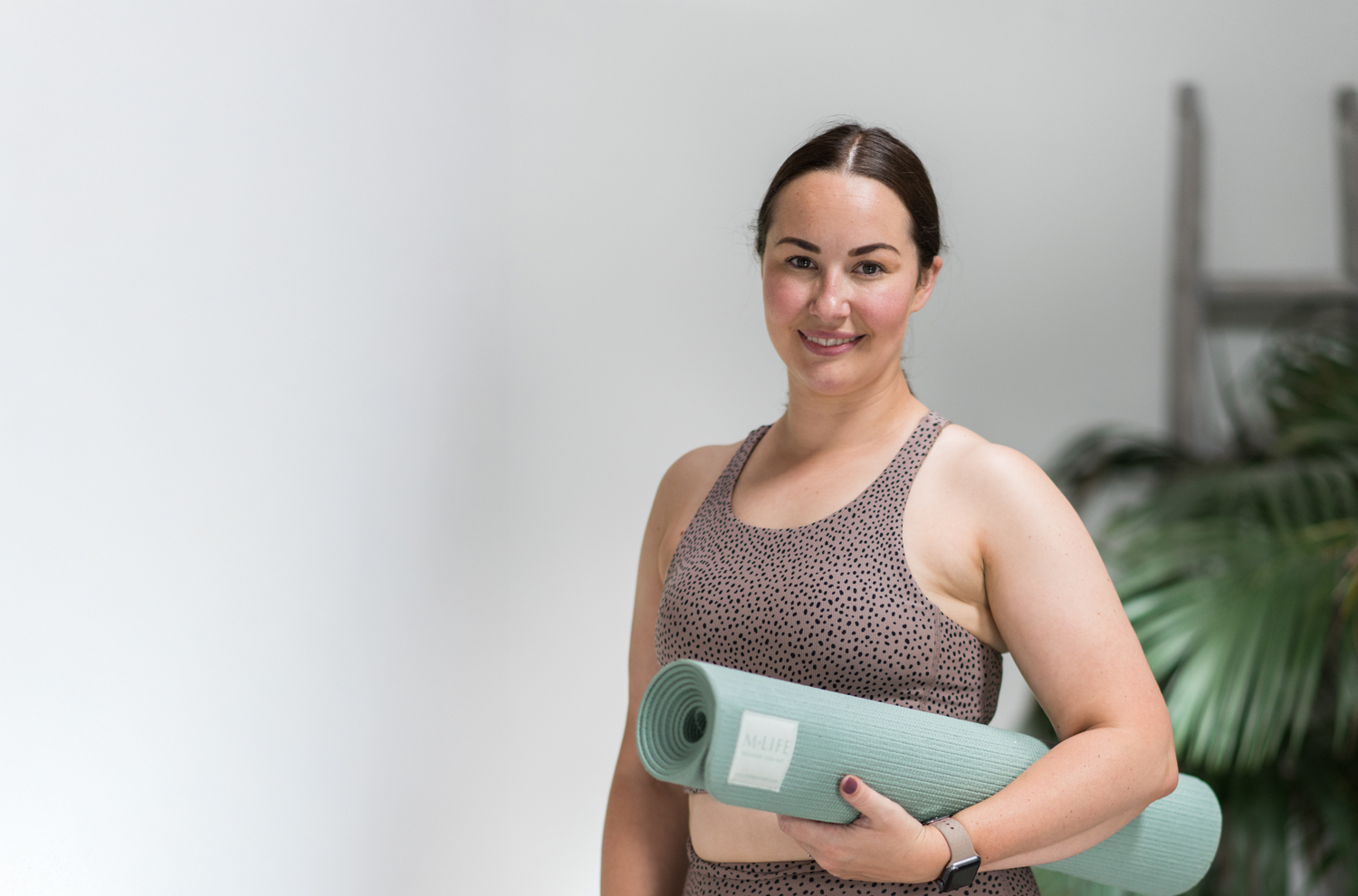
This week I’m joined by Louise Lynch – a qualified teacher, cognitive behavioural hypnotherapist, hypnobirthing practitioner and founder of The Relaxed Mama Club. Louise is passionate about supporting women on their journey into motherhood and beyond, using a unique blend of yoga, hypnobirthing and hypnotherapy.
As a mum of two, she knows first-hand that the transition to motherhood is both a privilege and a challenge. Louise believes today’s generation of women are facing more pressures and expectations than ever before, yet often with less support. From social media ideals to the “super mum” myth, the reality of becoming a mother can be overwhelming.
Through her work, Louise empowers mothers-to-be with knowledge and practical tools to take the mystery (and much of the fear) out of childbirth. She’s passionate about helping women feel confident, prepared and supported as they navigate pregnancy, birth and those early seasons of motherhood.
In this conversation, Louise shares her journey to entrepreneurship, how she built her calm and nurturing brand, and why creating personalised, supportive spaces for mothers is so important.
Conversation Highlights:
05:47 The Evolution of Yoga Practice
15:30 The Impact of Social Media on New Mothers
20:39 Personalised Support in Motherhood
26:50 Countering the “Super Mum” Myth
30:21 Marketing with Calmness and Acceptance
33:52 Transformations in Prenatal Clients
46:44 The Mind-Body Connection
49:43 Balancing Business and Family Life
56:43 Trusting Your Instincts
Listen if you’re:
✨ A new mum navigating the transition into motherhood
✨ Feeling the weight of expectations and the “supermum” myth
✨ Curious about hypnobirthing, yoga or hypnotherapy for maternal wellness
✨ Looking for ways to balance business, family and self-care
Favourite Quote For Mums in Business:
“It’s OK if you haven’t got this! Celebrate the small wins.” – Louise Lynch
About the Guest:
Louise Lynch is the founder of The Relaxed Mama Club, where she supports women with tools for a calmer, more supported transition into motherhood. Combining her background as a teacher with training in yoga, hypnobirthing and cognitive behavioural hypnotherapy, Louise is an expert in pre and post natal wellness and helps women build confidence, connection and calm in their motherhood journey.
Find out more about Louise’s work on her website or connect with her on Instagram at @relaxed.mama.club.
About the Host:
I’m Victoria Phipps – a Mum of two, analogue family photographer, charity co-founder, marketing person and now podcaster! My career has wandered all over the place and is becoming a bit of a complex tapestry as I head into this middle phase of life, but I can honestly say I’ve loved every minute of it so far.
I was raised by a nurturing Mother and an entrepreneurial Father and have inherited traits from both, so the tension between ambition and motherhood is one I grapple with on a daily basis! I’m fascinated to hear the stories of other women on a similar path, who are striving to build thriving businesses whilst being present for their children. It’s a tough juggle, but I hope the conversations shared on this podcast help Mums in business feel less alone and inspired to keep going in pursuit of their dreams!
If You Enjoyed This Episode:
- Please subscribe, rate and review the podcast – it helps other mums find us!
- Share in your Instagram stories, tag @mummeansbusinesspodcast and let us know your biggest takeaway.
- Share this episode with a fellow Mum in business who you feel would resonate with Louise’s story.
Episode Transcript
Louise Lynch (00:07)
Before I had kids, I was working as a teacher. would bring my work home with me every night and it didn’t even
to me because I was living to work and
was my career, it was everything. Whereas now, as much as I absolutely love what I do and I’m so passionate about this, my family will always come first and it’s amazing
be able to do this as a job and know that I can set my own work hours.
Victoria (00:36)
Hello and welcome to the Mum Means Business podcast, where we shine a light on inspiring women who have one thing in common. When they’re not managing tantrums, homework, P.E. kits and play dates, they are busting their gut to create something from nothing, to turn their passion into a thriving business and build a better life for themselves and their families. We dig into what motivates devoted mothers to pursue entrepreneurship and how they integrate their work and family life.
I’m Victoria Phipps, your host, and if you’re an ambitious mum in need of some solidarity whilst navigating the messy middle of making your big dream a reality, then stick around. This is for you.
Victoria (01:15)
My guest today is a qualified teacher, a cognitive behavioral hypnotherapist, hypnobirthing practitioner, and all-around specialist in pre and postnatal wellness. Founder of the Relaxed Momma Club, she is passionate about supporting other women on their journey into motherhood and beyond using a combination of yoga, hypnobirthing, and hypnotherapy. As a mum of two herself, Louise Lynch believes the journey into motherhood is a privilege.
but she acknowledges that it can be a challenging one for women navigating this transition in modern society. She says, the truth is we are a generation of women who have more pressures and expectations, but less support than ever before. Social media inundates us with perfect images of blissful motherhood, bounce back post-baby bodies, wholesome, clean living and gentle parenting. We’re expected to work as if we don’t have a family and parent as if we don’t have a job.
often without the village that we’re told it takes to raise a child. And as a result, so many of us experience anxiety, guilt, burnout, And problems with our physical health. If any of this resonates, then this conversation is for you. I first met Louise when I attended one of her baby yoga classes with my eldest daughter, just as we emerged from the third lockdown in spring 21.
Victoria (02:29)
It was a challenging time to be in your maternity era for all sorts of reasons, but I remember that those sessions were a lifeline. Louise, I can’t wait to hear the full story of how your journey into entrepreneurship unfolded and welcome to the Mom Means Business podcast.
Louise Lynch (02:44)
Thank you, I’m really excited
to be chatting with you.
Victoria (02:47)
Me too. So you started your business before you became a mum. So let’s go back to the beginning of your story. What made you do it?
Louise Lynch (02:57)
So I went into teaching yoga, it started as a hobby, as a lot of our kind of self-employment does, doesn’t it? then went and did my teacher training and then without any kind of real idea of where I was going to go with it, just ended up teaching yoga and loved it.
and it just kind of followed my path through life. Basically, not long after I qualified as a yoga teacher, I found out I was expecting my first daughter and decided I need to do some specialist training now. Again, more for myself than anything else. ⁓
it’s just followed that path. once I’d had my daughter, I did my postnatal yoga training, I did my hypnobirthing training, I did my children’s yoga training, and I’ve just kind of followed that path through life and kind of matched my career to where I am at the moment.
Victoria (03:56)
think that’s kind of the beautiful thing yoga because it is something that shifts with you as you go through all these seasons of life. And it can be a kind of steady companion if you keep investing in it, but it means something completely different at every stage. And do you find that perhaps when you came into yoga,
you came into it with a specific agenda that it was going to be for your fitness and maybe you wanted to look good a crop top or whatever it might be and actually that’s evolved over time.
Louise Lynch (04:31)
Yeah, absolutely. And I think when I discovered yoga, was all, it was hot yoga and it was power yoga and it was sort of very strong physical practice. And it was, you know, that, that yoga studio that I went to, that was like my, my third place, you know, like you have home and you have work and then you have somewhere else, don’t you? And, for me, me and my husband would, we would go there like, you know, three, four evenings a week and we’d do all the different classes and it would be, it would just be,
about feeling good but also about the fitness aspect and there was a competitive element to it almost of just pushing yourself and you know what I absolutely loved it I look back on these times now and I think you know that was brilliant but then
things do change and when I became pregnant I was still doing the hot yoga and the more physical side of it but then you’re kind of forced to ease off a little bit and adapt your practice to something more gentle and then once I trained in my specialist yoga of pre and postnatal I kind of never went back and so my style of yoga now is much more gentle even when I’m teaching non pre and postnatal yoga.
I like to teach restorative classes, very gentle, very soft.
And you know, if I was to go to a fitness yoga class now, I think I would just be terrible. ⁓ Just doing other fitness because that’s not me anymore. And yeah, people still do that and that’s great. But for me, when I think about yoga now, it’s much more about the restorative side and it’s much more about the mental health benefits as well for me now. So it’s just evolved as I have really.
Victoria (05:57)
You
And was that an easy adjustment for you? Because I think
I had been the same in my, and for me it was in my early thirties, my twenties were just a write off, I didn’t exercise, I just ate lots of nice food and had a nice time. And in my thirties, I thought I’d better sort this out. And I went obsessively into strength training yoga. And I went to a few classes, but I would do an awful lot at home. And I think I was single at the time and fitness was like new for me. And I just…
wanted like an outlet. I was probably a little bit socially isolated and my friends all off getting married and having babies and I wasn’t doing that. And I thought, well, I’ve got this time, I want to really like invest in my health in a way that I hadn’t done before. But I think there is definitely a competitive element to it. And in some ways it fits with that kind of really dynamic energetic season of being in your twenties and perhaps into your early thirties where you
You really have that mental space to kind of concentrate on your own health and push your body. But then becoming a mum for me really was a shock to the system in that sense as far as yoga went. And I almost just completely rejected it because I was like, well, I can’t do it the way that I used to do it.
So I just didn’t do it. And I think it was your class that made me think, hang on, there is a way to still engage with this, but differently. so that for me was quite a, and I almost, I almost gave myself a hard time because I’m like, well, this isn’t, this isn’t, you know, what I used to do, or it’s in some way less impressive, or it’s not pushing yourself. It’s not as challenging. I don’t know. For me, I found,
In one sense, it was exactly what I needed. In another sense, I was kind of a bit tormented that I couldn’t do things as I used to. And how was that for you? Did you experience something similar? Yeah.
Louise Lynch (08:10)
absolutely the same and
like it took me a while to come to terms with that fact and in fact like the me now would have some really cross words with the me back then because when I had my first daughter and I was teaching yoga and I’ve been going to all these fitness classes not just yoga classes but you know I do like
and spin classes, dance classes and everything. And then I was just desperate to get back to when I had my first daughter, I had this idea in my mind that she was just gonna fit into my life and I was gonna get straight back to doing all the things that I love doing. And I think maybe it was probably about maybe seven or eight weeks after I’d had her. I went to a…
Victoria (08:46)
Yeah.
Louise Lynch (08:55)
like quite a strong yoga class and it was a core focused class just…
Couldn’t do it like I tried to do something that I could do quite easily before and I’d be like Why is my body not doing this and I think you know, it’s something wrong with me I’m like broken what’s happened and then the next day I felt like I’ve been hit by a bus I couldn’t get out of bed and looking back now and like why did I do that? Like I now understand that your body’s completely changed You can’t just go back into doing those things and and yeah, obviously my I did rebuild my strength back
but I never really went back to doing those kind of classes again. I might do some of them now but back then it was a real shock to the system that I can’t just jump straight back into that stuff anymore. I’ve got to adapt and be gentle with myself as well and it’s only obviously then I did all of my specialist training and when I
second daughter it was completely different. I was just fully prepared for just a really nice gentle postnatal period and I looked forward to going to those mom and baby classes where I’d sort of ease myself in gently and it was a completely different experience but your first time around it took me a while to come to terms with the fact that I just can’t do that stuff right now
that’s okay.
Victoria (10:21)
Yeah,
but
it’s that thing about the, that’s okay. I think it’s so indicative of like the wider identity shift. Like you say, you have your baby and newborns are very portable. You know, if you have a good birth and you recover and you know, you can just sort of take them out for dinner with you and they’ll just be asleep next to you. can kind of carry on as you were. And that also leads into a bit of a false sense of security. Cause by the time they start crawling, it all changes again. But this wider identity shift.
where you have to give yourself grace, which you, and like you say, it’s so different when you have your first baby. You’re just in complete shock and expecting these things of your body. I mean, you are a trained yoga teacher, but you hadn’t been a mom before. you had a client that was saying they really wanna work on their core.
at seven weeks postpartum, you’d be advising them something very different, wouldn’t you? It’s just, yeah, it’s just lessons learned. So was it, at what point did you think I need to dig into this? interested in specializing more in supporting
Louise Lynch (11:18)
Yeah, I’d be like, no, no, no, no.
Victoria (11:32)
mothers through that transition
with their health and with their yoga and also managing.
kind of the emotional shifts as well. Because as we said before, know, pre-kids, you really only got yourself to worry about. You don’t realize how blissful that is really until afterwards. And then suddenly there’s all this additional responsibility, anxiety over your baby’s wellbeing perhaps, and all of that hormonal fluctuation. What was it? Was it your own maternity experience that made you think, well, this is something that I really want to dig into?
Louise Lynch (12:05)
Yeah, it happened organically. Like would never have thought of myself as working within this sort of sector, you know, years ago. I’ve never thought of myself as kind of like a maternal type person. And I went into the whole kind of having kids in a very sort of practical way. And then, you know, we discussed the pros and cons and we’re like, yeah, okay, we’ll do it. But it was only after having children that I, that it was just like this whole.
side to me just kind of emerged that I didn’t know existed and I’m just so passionate about it because I’ve lived it and I’ve gone through that transition of finding kind of like the new version of myself and kind of finding my peace with that and throughout that whole process I had yoga there to help me through it and around that same time I trained in hypnobirthing as well so
I started to learn a lot more about the kind of like the anatomy and the physiology to do with pregnancy, birth and postpartum and also the mind-body connection. So I started learning a lot more about the nervous system and the impact that can have on our recovery and on our birth and all of those things. And so as I learned more and more about it, I just kind of realized like…
a lot about my own experience but also that I need to teach more people about this. It’s such a shame that so many mums out there are going into this completely unsupported and like unaware of what to expect and how it all works and without those tools to navigate through it. So it all kind of happened organically out of my own experience and it’s always coming from a place that I just want to share.
this knowledge with as many mums as I can so that they feel a bit more comfortable going through that transition because it is a tough time for anyone whether you’re having your first child or your fourth, you know, there’s always going to be a difficult transition because you are becoming a new person again even if you’re going from being a mum of two to a mum of three or whatever that might be you are changing and you go through that physical change, that hormonal change
So it’s such a big shift for people and it just felt the right thing for me to work within this area and support people during that period of their life.
Victoria (14:34)
it’s one of those things where find a pain point. The fact that you have all this knowledge of yoga and yet you still try to put yourself in that core strength building class at seven weeks, thinking well actually there will be an awful lot of women. It’s not something that’s kind of covered in your NCT how to exercise and care for your body afterwards. And especially if you have a traumatic birth, are.
to a certain extent just left to your own devices to recover in a lot of circumstances. And you don’t really have a great deal of advice of that’s, and it’s got to be kind of personal to you. you know, okay, at this point, you can start doing this sort of exercise giving you tools so that you know when you feel ready.
to engage in that, know, runners, you know, at what point should you start running again? All of and obviously you go onto social media and there’ll be very prescriptive suggestions. I’m going to say suggestions in inverted commas as to how you might go and do this I know I mentioned it in the intro that actually there are a lot of women because there isn’t the structural support.
coming from kind of wider institutions like the NHS, you you kind of, have your baby, is, good luck, off you go. And there’ll be, you know, a visit from a health visitor and some optional check-ins that you can do, but
women in those circumstances are looking to social media and they’re going on Instagram and how do you think that’s making them feel?
Louise Lynch (15:58)
I mean, I have a bit of a love-hate relationship with social media. I think it’s very much about…
surrounding yourself with the right messages coming from the right people and because of the work I do and there are some absolutely amazing people out there who are doing great work to try and change the narrative and so you know if I look on my social media and I’m following all of those people I just see real kind of like positive stuff and supportive stuff normalizing all of this awful stuff we might go through as new mums.
But that’s me and that’s because I’ve spent years kind of like building up that relationship with social media. But I know that the vast majority of stuff out there is completely different. And I’ve spoken to a lot of my clients who’ve said like, you know, they’re pregnant and they keep seeing this stuff on social media about how horrendous birth is and how painful it’s going to be and you better just give up now and all this kind of stuff. like, I can’t believe that. I know, but I can’t believe that there’s like…
Victoria (16:57)
Not that you have a choice!
Louise Lynch (17:02)
That kind of thing is out there because I choose very carefully select what I see on my social media. But I know that it’s out there and it’s just setting these expectations which are absolutely ridiculous. And you’ve got advice on every like breastfeeding, there’s a lot of stuff out there about that.
gentle parenting and yeah it’s great you know it’s lovely to read all this stuff and I’ve read the books and I’ve listened to the podcasts and everything.
But when it comes down to it, that stuff is not for everyone. And actually, it’s completely unrealistic. And we might be seeing stuff about body image. I’ve just written a blog post yesterday about the whole sort of like bouncing back culture of getting your pre-baby body back. There is so much stuff out there we’re surrounded by that’s just putting pressure on us to be a certain way, to act a certain way, to parent a certain way. And it’s just completely…
unrealistic and added to that as you said before the fact that we’re just not supported.
in the way that we should be. you know, going back into history, people didn’t bring up babies on their own. We talk about how it takes a village and it literally did, you know, the whole village, all of the women, all the generations and all the extended family would parent together. it, you know, thinking about that now, and that still happens in a lot of other cultures around the world. It’s very much like a westernized thing now that…
We have a very fragmented society now. We don’t have that community and when it comes to having babies it’s very much like you might have an awkward chat with your mum about how was it for you and she probably doesn’t want to put you off so she’d be like ⁓ it was fine then we might live far away from our parents or we might not have parents or you know we might have moved somewhere new and we don’t have that kind of support network nearby.
And so we’re trying to do all of this stuff that we can see on social media that we’re like, right, okay, I need to do that, need to do that, need to do that. But it’s physically impossible because we haven’t got the support, the basic support that we need to just raise our baby in the most basic way. So it’s this complete mismatch. And that’s what I absolutely hate, that pressure that is being put on people. But…
We can’t avoid it. It’s the way that society’s gone and it’s the way that the social media’s gone. That that’s kind of just how we live now.
Victoria (19:35)
There’s definitely a pressure. And particularly, I think with your first, you do want to get it right. And I think as women, know, this perhaps we understand this is perhaps the most important job we’ve got.
and we come home, you know, sometimes the day of giving birth And it’s such an individual experience for everybody because everybody’s baby is going to be completely different. You know, if you’ve had more than one child, you know that they’re, is that your doorbell? She needs to get it. Do you want to go and get it? No, it’s fine. Go on, go and get it.
Louise Lynch (20:02)
Sorry, yes. Do you mind? I’ll only be a minute.
Sorry. It’s the postman. My husband’s on a call upstairs as well, so I can hear him trying to. He couldn’t come down.
Victoria (20:11)
It’s alright!
What was I saying? Oh God, it’s fine. What was I saying? Yeah, it’s such an individual experience. So there’s no one size fits all. If you’ve had more than one baby, you know that they could be entirely different. And so in that sense, really what I suppose we used to have, and like you’re saying, what they probably still have in other cultures is a really personal
Louise Lynch (20:20)
Yeah, I’m sorry.
Victoria (20:44)
support, which is I think something you lean into in your business really in order to help a mother, whether it’s her first or her third or her fifth, like you say, we really have to understand what her particular challenges are. So tell me one-to-one or that like small group
approach has kind of been built into your business and how that evolved.
Louise Lynch (21:08)
So I think the two things that I try and include in the work that I do is creating that village, that community. And I’ll do that through group classes like the mom and baby yoga, the pregnancy yoga, but also through my online community, my podcast, my blog, and my social media.
But then I also understand that there is a real need, as you said, for personalised support because we are all different. And so that’s why the majority of the work that I do now is one-to-one. So I work a lot with individual clients and…
A lot of the clients that I work with, maybe their work schedule means that they can’t go to a group class, they can’t join a pregnancy yoga class or go to the baby groups.
I also work with a lot of people who really struggle with their mental health and struggle with anxiety and things like that, who just wouldn’t feel comfortable going into those situations and, you know, making friends with other mums and because it can be quite difficult just walking into that room in that baby group and not knowing anyone. So I work a lot with people individually and
Victoria (22:14)
Yeah.
Louise Lynch (22:21)
what they need will be different. So because I have a number of different modalities that I work with, I’m a specialist yoga teacher, I’m a hypnobirthing teacher, I’m also a cognitive behavioral hypnotherapist. I can offer like a combination of all of those things or some of my clients might just want to do yoga or they might just need to do some hypnotherapy but I can just kind of give them exactly what they need because you’re right we all have a different experience and some
of us might find that we struggle a bit with our physical health during that period and need bit more support in terms of supporting us through pregnancy, making sure that we’re looking after things like if we’re with pelvic girdle pain and things like that. And then during the recovery period, if we’ve had a particularly difficult birth, we can help with sort of restoring core and pelvic floor function and things like that through yoga.
And then other people have been very fortunate. They’ve gone through pregnancy and felt in perfect physical health and not really felt like they needed any support physically, but they might have struggled with the emotional side of it and that transition, the kind of the overwhelm of having a baby, all of these different things can really kind of build up. And so sometimes I work with people purely on that kind of transition into motherhood.
Victoria (23:24)
I’m
Louise Lynch (23:46)
as a hypnotherapist rather than as a yoga teacher. So it’s nice that I’m able to offer that variety of support because we all need different things at that time. We don’t all need exactly the same prescriptive service to help us through. ⁓
Victoria (24:02)
Absolutely,
you’ve got a lot of strings to your bow. And do you find that people come to you and it might be that they don’t quite know how you can help and that you have to take them through a bit of a consultation process in order to establish which of your skills you need to deploy in order to help them overcome the challenge that’s kind of bogging them down the most.
Louise Lynch (24:25)
Yeah, yeah, I used to offer all of my services kind of individually, but now I just offer a like a one to one prenatal and postnatal wellness support service, which is quite broad and it can include any number of things. But it just means that people will come to me and we will sit down and we’ll have that initial conversation and then we’ll do a more in-depth consultation. And from that, we’ll kind of decide between us, you know, what is it that you really need?
to help you to feel better where you are right now.
A lot of people come to me for yoga that end up doing everything. And similarly, people will come to me for hypnobirthing and end up doing yoga and then starting the yoga practice and really enjoying it. So yeah, people don’t always necessarily know what they need when they come to me. And that’s okay. Like, you know, you can feel a little bit out of sorts and just feel like I’m just, I feel like I’m thriving here. I’m just not doing as well as I feel like I could be.
but I don’t really know what it is I need. And that’s that conversation we would have and realize like what support they need.
Victoria (25:34)
think
that every woman who has gone through that motherhood journey will have had those thoughts at some point during any of those trimesters. And it’s the hormonal, you know, roller coaster of the whole thing. You know, I just don’t feel like me, which is pretty normal, think. And that takes a long time to kind of recalibrate to a new version of you, but not knowing what to do.
to get you to where you feel you ought to be. And actually that step of reaching out and asking for help is so important. And it’s one that a lot of women don’t feel that they can. I think there’s this whole, we set such high expectations of ourselves that we ought to be able to do it. And we don’t take into account, like you say, that sort of societal shift. Like yes, for millennia, women have birthed and raised children. That is a given.
but they were living, like you say, perhaps with that whole village to help and join in with everything from daily tasks to emotional support, all of it. Cook your dinner for you, absolutely everything. Whereas now we’re living in such an isolated world comparatively. I remember breastfeeding Alice while stirring a bolognese, and just feeling like I just have to do all these things.
And you know, if I was to have another child, which is very unlikely, I wouldn’t be putting myself in that situation. But I you have these expectations of what sort of mother you’re going to be and that you know you’re capable, so you ought to carry on just try and do everything. And so is that part of the messaging you have to put out on social media? I’m presuming a lot of your clients find you that way. Yeah.
Louise Lynch (27:18)
Yeah, yeah,
social media is where most of them tend to come across me and…
It’s hard to try and get past that kind of like that super mom myth that’s perpetuated all the time on social media and I was guilty of it definitely first time round of feeling like you know we are rewarded for trying to do everything aren’t we and you know if we see someone on social media and like you said you’re breastfeeding you’re staring the dinner like if you know I was the same you know and as I was doing these things I was thinking look at me I’m being a super mom here and you’d have that
Victoria (27:52)
You
Louise Lynch (27:53)
phrase in
your mind and I’m just thinking, don’t need to be all of those things. Actually it’s okay to just focus on doing one thing and that one thing is like keeping that little person alive which is a pretty big job to be fair. like, yeah.
Victoria (28:08)
Yeah. Well, and asking your partner to stir the bolognese. Like,
it’s so bonkers. And I think it is this part of it that’s conditioning, know, particularly for women, you know, that we have support for everybody around us, you know, and I’m two weeks postpartum, had a horrendous birth, chopping carrots while bouncing the baby on
counter, which is probably not ideal, and I’m like why didn’t I just sit down and say make me a Bolognese? I won past a Bolognese because he was just obsessed I don’t even know what he was doing but I was like no I can do it I’ve got it and it’s this whole like you’ve got this thing and you say it to yourself and the thing is you can do it because you are a superwoman.
Louise Lynch (28:37)
you
Victoria (28:50)
but you shouldn’t in a lot of ways because if you keep trying to do that, after a while, the cost will manifest somewhere. And like you say, that comes later in anxiety or in depression or in just a general sense of malaise where you’ve entirely lost yourself. And do you feel like you have to work quite hard to counter that?
superman myth in everything you put out on social media and how do you do that?
Louise Lynch (29:22)
Yeah,
I’m very conscious about the messages that I put out because I don’t want to perpetuate that myth any more than it’s already being spread around. I just try and encourage people to celebrate the little wins and to accept that actually that whole phrase like you got this, it’s okay if you haven’t got this.
Victoria (29:45)
Yeah, yeah, yeah, exactly, yeah.
Yeah, I love that. That should be your next hook.
Louise Lynch (29:48)
That’s okay too, you
Yeah, because I just feel like from the day that we have our babies, we just feel like we’re failing because…
Victoria (29:57)
Yeah,
and also older women would be like, well, yeah, that’s how it is. The older women in your family will say, well, yeah, you’re just welcome to the world of guilt. You’re going to feel that now. You’re gonna feel like you’re not quite cutting the mustard we give ourselves such a hard time if we haven’t got it right. And actually I’ve been thinking about this increasingly as my eldest particularly is getting on, can’t say getting on, she’s four.
Louise Lynch (30:01)
Yeah, yeah.
Yeah.
Victoria (30:23)
But it, you sort of transition into that emotional support rather than the kind of physical labor of, raising babies and just what am I showing her? You know, if I don’t allow myself to drop the ball and then if I do drop the ball and I beat myself up and I just get in a really bad funk and you am I emulating to her we have to be perfect? Like where do we break the cycle? And I love that.
Louise Lynch (30:23)
You
Victoria (30:49)
It’s okay if you haven’t got this. I just think it’s so full of grace And what I love about your Instagram, I have to say, and I’m feeling it even now, like you are sitting in your soon to be new studio
this really beautiful clean wall behind you. I know you’ll be filling it with things,
but your whole presence is like very calm. And I think when you go onto social media so often,
You feel like you’re just being shouted at, you know, and our attention spans are poor and so you do scroll and you flick through things and it’s just person after person who’s shouting at you, telling you to live a certain way or buy this thing or entertaining you even, but it’s quite loud. And actually whenever you pop up, there’s so much stillness.
So have you thought about that consciously or is that just literally how you are?
Hahaha
Louise Lynch (31:38)
Yeah, it wasn’t
a conscious thing, know, all of like my branding, my colours and everything, you know, I tend to just gravitate towards that. I mean, you can see now like…
I’m pretty much wearing and surrounded by my brand colours. That was not an intentional choice, but this is just, you know, I gravitate towards kind of like, yeah, see, sometimes it’s just like, it’s what we like. It’s just a part of us, isn’t it? And that this is the stuff that I like to surround myself with because I know that, you know, I’m very much influenced by my surroundings. get overstimulated really easily. And so I actually been a real kind of benefit to me in the job that I do.
Victoria (31:50)
Yeah, you’re very branded.
Well, I’m wearing mine.
Yeah.
Louise Lynch (32:17)
because I’m very conscious of creating like a calm environment for people and you know it’s a running joke in my house that I can never have the big light on you know I’ve always got to have lamps it’s just too much it’s too bright and so you know that is literally that’s just me and and when people come to my classes I’ll always comment on like you know what a lovely kind of environment it is and we’ve got the music and we’ve got like the smells and the lightings or like the fairy lights and stuff and
Victoria (32:27)
Yeah.
Louise Lynch (32:45)
that’s literally because I just couldn’t have it any other way because to me this is how I find that things have to be and I thought that just always been that way.
I always have to have kind of like control over everything and I always have to have everything sort of like quite calm and quite relaxed and that’s just the way that I’ve learned that I have to live because of the way my brain works. If I get like overstimulated and there’s loads of stuff like you said,
Victoria (33:07)
Yeah.
Louise Lynch (33:11)
you know, being shouted out on social me that just does not work with me
Victoria (33:12)
Noise.
Louise Lynch (33:16)
and so this is just how I’ve chosen to have my business. So it’s really nice to hear that it feels like a little bit of a deep breath for other people.
as well when they come into contact with it.
Victoria (33:25)
Yeah?
I honestly think it’s brilliant. And if you haven’t seen Louise’s Instagram, you need to go over and follow because you also talk really calmly, kind of like you’re talking now. And sometimes you don’t talk for a second and that is outrageous on Instagram. I’m just like, hold on, I’m listening to see what you’re saying next. And it’s such a good lesson that when we’re marketing our businesses, we really don’t have to subscribe to that heavy noise.
that just in those small, moments and details in the way we deliver our message can also really support that overall brand and that calm and that peace because that is really what you’re selling. That’s your transition. So you’re taking a mum or a mum to be who essentially feels overwhelmed, whether that’s manifesting as like an anxiety.
or a physical challenge or depression or whatever that might be. And you’re just taking them to the space where apparently you live, which is this beautiful, calm, peaceful world. And I love that. I think it really just subliminally hammers that message home. And so give me an example of…
what transition you’ve been able to see in your business. So taking somebody is feeling really stuck, just feeling really powerless, I suppose, opposed to empowered. know, becoming a mother can be a really empowering experience for some.
But for others, it can leave you feeling quite shattered in all ways. what do the tools and the services that you offer people give them in terms of where they can expect to find themselves at the end of their journey with you?
Louise Lynch (35:10)
I think the biggest transformations I’ve seen tend to be with my pregnant clients. And I think in a way it’s because those are the people who will actually take the time to come and use a service like mine. Whereas when you’re postnatal, I do think you probably need it more, but you’re less likely to actually engage with something like what I do.
prenatally, you know, I get quite a lot of clients who will come and see me and they’ll be absolutely terrified of the prospect of giving birth, of being a mum. They don’t even know where to start in terms of thinking about the whole thing. And just to see that those transformations, you know, as they approach birth and then they’re, you know, when they’re kind of like approaching their due date and they’re like really pumped about it and it’s, it’s not just about helping them to feel more relaxed as the
might suggest but it’s more about empowering them, making sure that they understand what their rights are and what their options are and that they do have a choice in the whole process obviously you know it’s their body, it’s their baby, it’s their journey and so got so many choices and a lot of people particularly I think with our maternity care system and they really want to get onto this particular soapbox but we don’t feel like we have many choices. ⁓
Victoria (36:25)
You
Louise Lynch (36:29)
A lot of people just get carried along for the ride and then it’s only afterwards that they come away from it with trauma and regret and those what if questions. Whereas the biggest transformations I see are people who go into it they’ll come to me and say, well, I haven’t really got a plan to be honest. I haven’t really thought about, know, because they’re obviously not wanting to go there and not wanting to think about the day when their baby arrives.
by the end of it,
they’ve decided that they’re going to have a home birth or they’re going to have a water birth, all of these things that they didn’t even consider before but they have become empowered to make those decisions and then afterwards they all get back in touch and they’ve had the most incredible birth experience.
Those are the moments that make me think, yeah, this is why I do what I do, because it’s amazing to see the people go from being just completely terrified to being really empowered and…
coming away from the experience, looking back on it thinking, yeah, I did everything right. And it doesn’t always happen the way that they plan. So quite often, those people I’ve worked with who were planning these lovely home births and this, that and the other, actually, they may have ended up having a very different birth. Maybe they ended up having a cesarean or whatever, but they look back on it and they’re like, was the best experience ever because I was in control. I made those decisions and I know it was the right decision.
for me and for the baby. So yeah, great, thank you so much. So it’s not about how it turns out in the end, it’s about that shift in their mindset. And that’s the thing I like most about what I do.
Victoria (38:09)
I imagine that is so rewarding because I think that element of fear and almost like absenting yourself, like you’re told not to be too prescriptive about what you want, which is, mean, you know, that’s quite a message in itself. You know, don’t want anything because it’s probably not going to happen. You know, it’s bit flat, isn’t it? And it is very disempowering. And then that coupled with the fear and I…
just from my personal experience. And again, I won’t overload you with detail, but I do think I’d definitely learn in my second birth that your mood and your sense of confidence going into it makes so much difference to the experience you’re likely to have. And it’s what you said before about that mind-body connection. You know, if you’re sending messages to your body that you’re in control and it’s all good.
and that you’ve got a plan and that you know what to do, then your body’s not going to default into fear, which I think can trigger some really complex labor symptoms, which I think is what happened to me in my first. And even if, you know, even if you’re clued up and you’ve done some research and you’ve been doing some pregnancy yoga, you can still go into it.
become frightened and actually hormonally, it’s such a delicate balance. If you become frightened, even for a short time, it can just the tide of your labor experience. And you do end up absenting yourself and defaulting to the experts who, yes, of course there are emergency situations where they know, they have to take control and it can be, you know, a life-saving situation and absolutely credit to the NHS for all they do when things get to that point.
Louise Lynch (39:39)
Yeah ⁓
Victoria (39:56)
but I think there are like little hormonal triggers and what you do. Just taking the mystery out of it, you know, because it is something you’ve never done before, especially if it’s your first and it’s, you’ve no idea and you can’t not do it. You know, once you’ve committed, you’re in, aren’t you? And I think just going in with confidence and also they probably have you just in their ears, you know, if you’ve had that relationship with them. And I think that
Louise Lynch (40:15)
the end.
Victoria (40:24)
confidence that you’re giving them must stand them in good stead as well for that whole fourth trimester period and that they feel proud of themselves coming out of the labour experience because that in itself, whether it went exactly according to plan or not, feeling proud of yourself and feeling like you did that the way you wanted to to the best of your ability does set you in a good position to start motherhood.
Louise Lynch (40:33)
Yeah.
Victoria (40:52)
because you’re like, you just feel good. You you feel capable and you feel like you say empowered. And I think it’s so easy for that not to be the experience. And I think there needs to be definitely more of that. So what is your ambition for your business in terms of what is the change that you want to see in this field, in this world? Let’s go big.
Louise Lynch (41:02)
Yeah
Wow. I mean, I literally,
I just, it’s my mission to just empower as many people as I can through education.
helping them to realise both during pregnancy, educating them about how birth works and then postnatally educating them about that experience and what to expect and also educating them about that transition into motherhood, that matressence which nobody even seems to know the name but it’s a massive thing like adolescence. If I can just educate people about those things.
then that’s gonna have a huge difference because knowledge is power and people will become more empowered to change the narrative for themselves. So I would just, yeah, I’d like to just educate and empower people about this particular phase of their lives because it can be completely different. It can be so different if people only understood what to expect and…
where stuff’s coming from as well. I work a lot with my my mum’s to be.
kind of reframing their idea of birth because we’re all brought up with a certain idea of what to expect, aren’t we? know, it might be that that you get shown in school of that, like, sex education video of that horrendous-looking birth. Yes, and they basically, you know, I say, what’s the message behind this? And because my training, I used to be a media studies teacher, so I’m always…
Victoria (42:31)
god. That animation.
Louise Lynch (42:45)
questioning you know who’s made this why have they made it what you know what’s their agenda and you know what is the message behind it well it was probably to stop teenagers from having sex wasn’t it so they would want to make it look as awful as possible and the same you know when I ask people well where you know what do you think of when you think of of labor and a lot of people will reference like when Rachel gives birth and friends and there’s like a few things that come up again and again and I’m saying well how did that look well she was lying on
bed, she was in the hospital gown, she was screaming in pain, she was riding around in agony and I was like, yeah how does that make you feel and do you think that’s really what it’s going to be like? So we’ve got this idea in our minds from all of those things that we’ve been fed throughout our lives.
Victoria (43:22)
Yeah.
Louise Lynch (43:32)
We think it’s not a safe thing to go into, it’s something to be feared. so a lot of the work I do is trying to just change all of that and to change the narrative.
Victoria (43:35)
Yeah.
I
that’s really powerful in itself because you’re teaching people how to, I mean, used to, I remember I had a history teacher and she used to call it NOP, so like nature, purpose. so what, where it’s how you like classify the legitimacy of the information that you’re taking in. And, you know, of course Hollywood has a lot to answer for on this and it’s entertaining to see a woman, you know, suffer apparently. But you could go far.
as far back as the Bible. Oh well Eve was naughty, so because she ate the apple, women are gonna suffer in childbirth for millennia. It’s all her fault. It’s just this messaging is so ingrained in our culture and it has been passed down through generations for millennia. And so to unpick that is quite a challenge, but I think in a lot of ways just to encourage
women to think independently when they’re consuming all this barrage of content. You know, is this person on social media trying to sell me something? Is this person not, you know, what’s the point? Why are they telling me this? And is this serving me? And to be able to distill that for themselves that’s really, really powerful. And that in itself gives confidence to filter and to just take
Louise Lynch (44:50)
you
Yeah.
Victoria (45:05)
what is valuable to them and discard the rest.
Louise Lynch (45:06)
Yeah,
yeah, hopefully that’ll put them in good stead for going into motherhood as well and like we were saying before all of the stuff that we see online putting all that pressure on us if it just means that you consume it but…
consciously and you know don’t take everything at face value you just question things and that’s something for me that’s come out of my training as a media teacher you know I still and people always say to me like does that mean you never enjoy watching films anymore or you never
you can never actually just enjoy watching something on the TV. I’m like, no, of course I can, because you can choose to still enjoy stuff and engage with stuff, but there’s always that questioning at the back of your mind. You’re always slightly critical of just being aware of this is a constructed thing that’s being put in front of me. It’s been mediated, it’s been selected for either your entertainment or to get you to buy something or to frighten you in some way.
Victoria (45:37)
Yeah.
Louise Lynch (46:06)
long as you’re aware of that doesn’t mean that that’s spoiled everything for you. You can still enjoy things but it’s a really important awareness that I think everybody needs to have.
Victoria (46:11)
No.
Yeah, definitely. think especially in this day and age when content is just relentless. And I think it’s a really good example as well of a transferable skill of yours Cause this is before your yoga journey. Really. This is, mean, you probably were doing yoga, but this is before you embrace that as a career. And actually you would never have necessarily thought, well, that’s going to come in useful in my yoga business, but it does.
Louise Lynch (46:28)
Yes, yeah.
Absolutely.
I keep finding things that kind of transfer. We talked a lot about the mind-body connection in a way. We talked about if you’re watching a horror film and the way that it can physically affect you and give you goosebumps and make you tense. And I’m like, I teach my hypnobirthing clients this exact thing influence our mind has over our body. it’s like, yeah, I’m just carrying this same stuff through my career. And I’m teaching every day.
Victoria (46:44)
Yeah.
Louise Lynch (47:08)
in different ways. I might not be teaching people film theory anymore, but I’m teaching them their rights as an expectant mum. I’m teaching them how the mind works when they’re struggling with anxiety postnatally. So it’s all transferred through.
Victoria (47:24)
And you’ve presumably in the early stages of your business, you know, you’ve got all qualification, obviously invested in all of those birthing qualifications, hypnobirthing, cognitive therapy. did you feel like that was an easy investment to make?
because it all ties in together, doesn’t it? You’re trying to persuade women to invest in themselves with their time, in this season of matricence. I’m gonna keep using that word now to kind of get it out there. we find that really difficult just to set aside the time to do something that is just for us. And so I suppose in your business, you made a financial commitment in those early days And that’s part of, think, entrepreneurship is you’re kind of betting on yourself.
Did you find that easy or was it driven by curiosity and that you wanted to learn more or did you feel like you were investing in a future business and how did you grapple with that at the time?
Louise Lynch (48:21)
It’s always driven by curiosity for me because I am just like a massive nerd when it comes to like pregnancy, birth, postnatal, you know, give me like a course on biomechanics of the pelvis. Like I’ve never been happier. Do you know, just like I absolutely love geeking out on all that stuff purely because I’m fascinated with it. But I think as well, you know, it just means that I’m able to help people and support people better. And it really
Victoria (48:34)
Hahaha
Louise Lynch (48:49)
It really shocked me when I first started training in pre postnatal yoga that there are people out there who are teaching pregnant women, teaching new mums in yoga classes, like I went to that core class and the teacher didn’t say to me. And she knew I’d recently had baby, she didn’t say.
you probably shouldn’t be doing this. Like it shocked me that people out there are doing what I do but without this training and they’re putting people at risk of injuring themselves and I just thought, no I need to do this training for my own wellbeing but also so that I can support my clients and know that I’ve got the most up-to-date knowledge and that they’re safe with me, I’m not gonna cause anybody any kind of injury.
Victoria (49:36)
Yeah, it’s about being responsible, I suppose, in your business and in the service you provide. so how do you think being a mum changes the way that you do business? I mean, obviously you’re coming to your clients as an experienced mother who’s given and gone through all of those seasons twice, but being a mum in itself and raising
children, do you think that that adds a different dynamic to the way that you are as a business owner?
Louise Lynch (50:07)
Yeah, it does. I’ve got that lived experience to bring to my practice, which I think is fantastic.
For me, the priority is always family and that’s something that’s changed. Before I had kids, I was working as a teacher. would bring my work home with me every night and it didn’t even
to me because I was living to work and
was my career, it was everything. Whereas now, as much as I absolutely love what I do and I’m so passionate about this, my family will always come first and it’s amazing
be able to do this as a job and know that I can set my own work hours.
You know I work between nine and three while the girls are in school and I work some evenings but not all evenings you know I fit it around the family know that I’m really fortunate being able to do that because a lot of people can’t, they’re restricted by their work hours so it’s an amazing thing to be able to do this to have set of my own business which gives me the
flexibility to put my family first and it always will be.
Victoria (51:14)
Was that something that you had in mind? you are busy today. It’s fine, go and get it.
Louise Lynch (51:17)
I’m so sorry, it’s the doorbell again. One minute.
So sorry, it was a different postman. I don’t know, I don’t know. Don’t know why, but
Victoria (51:24)
It’s fine. How many postman do you have? ⁓
What was I saying then?
you said that you engaged in those conversations about starting a family quite practically. When you started your business, did you have that in mind? Or is that a happy accident really? Because a lot of women feel forced into starting their own business because actually once they have a child, they can see.
that their previous working structure was not going to allow them to be the mum they wanted to be or to be as present as they want to be, or just that with the cost of childcare, the money, just doesn’t add up. So they take the to do something else. But did you anticipate that when you started your business?
Louise Lynch (52:12)
No, it’s definitely something that’s kind of taken time for me to realise. think when I had my first daughter, I was back teaching classes when she was three months old I took a lot of stuff on because had that mindset of still sticking with my old life.
always kind of worked really hard and it’s taken me a long time to realise that actually I can’t do that now. And I’ve had to work hard to kind of put boundaries in place and I totally get it now and my priorities are so different now than they were.
was, at the time, was working three days a week as a teacher and teaching six or seven yoga classes the rest of the and I think it’s just too much and I would have been happy to do all of that stuff but now I realise that no, you can’t do that stuff and there’s been occasions where I’ve just burnt myself out. ⁓
On one occasion I ended up in hospital because I was like I had tonsillitis and my husband was away and my parents were away that week and I just thought you know what I’m just going to power through. Didn’t go to the doctors and ended up in A &E with Quincy and they had to stay in overnight and it was ⁓ really unpleasant. that was a lesson for me then to like okay I need to take a step back now and I need to change my priorities and I put these boundaries in
Victoria (53:31)
my god.
Louise Lynch (53:48)
place and actually you need to start practicing what I preach because I do preach this a lot but I was definitely the worst person for trying to just push through but no I’ve had definitely had a mindset shift since then and it’s very much just about family first and look after myself first and then the business as important as it is to me will always come second.
Victoria (54:11)
think that’s really, personally, I find that really reassuring to hear because in my mind you are just the epitome of calm and to think that you’ve actually gone through that attitude change as well and just coming to terms with being less impatient, you know, that you might have to wait a little bit longer before you can take that extra thing on in work because it just doesn’t fit or the cost is too high.
You know, it would be the cost of quality time with your kids or, you know, those evenings when you just crash on the sofa with your person.
think that’s something that happens organically, but it is something that we could make mums to be more aware of. And the fact that you’ve
had to deal with that as well, and you’ve come out of the other side of it and you found a sort of equilibrium and it changes all the time as our children grow up and their seasons change.
But I think that’s a really important message as well. Helpful that you were go, go at one stage
and that you did.
Louise Lynch (55:14)
Yeah, and I think
I never try and sort of cover that up. Although I might come across as being very calm and I’ve got it all together,
I’m also very honest on my social media about the struggles that I go through as a mum. And you always say that you are your first client is yourself.
Victoria (55:33)
Wow,
Louise Lynch (55:33)
as a therapist
Victoria (55:34)
you’re a god.
Louise Lynch (55:35)
and that’s why I do this because I need it more than anyone and I get the mum rage and I get the overwhelm and I get all of those things. I am just a normal mum at the end of the day.
Victoria (55:38)
Yeah.
I don’t believe it. No, I don’t believe it.
Yeah, you are your first client. That’s so interesting. That’s kind of a really nice note to end on because I think we do just give so much of our energy to everyone around us. And as mum, that’s kind of par for the course in one sense, but we have to kind of be mindful of how we’re doing as well and just check in with ourselves. And I think that is obviously exactly what you’re advocating in all of your messaging. And I think
I mean, it was COVID, so it was different, but if I could go back to my first maternity and my first pregnancy, would definitely be advising myself to call you in advance because I just think that it is about dispelling the fears. It is about just gaining knowledge, feeling like you’ve done what you can to prepare as much as you can. It’s obviously all gonna take its own course to a certain extent, but there are things that you can do.
to improve that experience for yourself. And if you come out of it feeling proud, then you are in such a good position to move forward and take on everything that motherhood is gonna throw at you. And I think what you’re doing is brilliant, Louise. Really brilliant. So
Louise Lynch (56:56)
Okay.
Victoria (56:58)
tell me with all this experience that you’ve had in your business and as a mum, what would you go back and say to your eight year old self?
Louise Lynch (57:07)
think I would just say to trust your instincts as you go through growing up and getting through all of those different phases as a woman that you go through.
Yeah, obviously it’s nice to be able to have support and guidance from people around you, but trust your own instincts because you’re usually right. So don’t just try and kind of block those things out, but really tune into like what, you know, what’s your body telling you and what’s your gut telling you that is right or wrong and just listen to that more.
Victoria (57:41)
a really lovely message and it’s about trust isn’t it and in this world of noise we can sometimes lose that faith in ourselves that we actually do know what might be the best path to take.
Tell me where everybody can find you if they want to connect with you online.
Louise Lynch (58:00)
So you can find me on Instagram and Facebook at relaxed.mama.club. I’m also on YouTube as well. There’s a few videos up there. And my website is the relaxedmamaclub.com.
Victoria (58:13)
Brilliant.
Thank you so much for your time today I’ve really enjoyed this conversation it’s been brilliant
Louise Lynch (58:18)
Thank you, me too.
Victoria (58:26)
I love Louise’s mission and importantly, I love the way she’s going about achieving it with a patient appreciation of the season of life that she is in, giving herself grace and putting her family first. It’s also good to know that she wasn’t always that way. The fact that she too subscribed to hustle culture and hot yoga once upon a time and is so open about her own challenges, grappling with the transition into motherhood is what makes her story so relatable and in turn what attracts her clients.
We are all mums trying to figure it all out as we go along.
And that final message of tuning in with your body and trusting your instincts is a powerful one in a world that feels noisier than ever.
Victoria (59:08)
Thank you so much for being here. I know your time is precious and I appreciate you tuning in today. If you enjoyed this episode, please subscribe, rate and review the podcast because we want as many mums as possible to find us and join in the conversation. If you have thoughts, questions, love letters or even hate mail, please send them my way. I read every single message. For more resources and episode show notes, please visit our website at mummiesbusinesspodcast.com and find us on Instagram.
at Mum Means Business podcast for behind the scenes content and updates. Until next time, I’m wishing you only good things in life and business, and I will speak to you soon.