
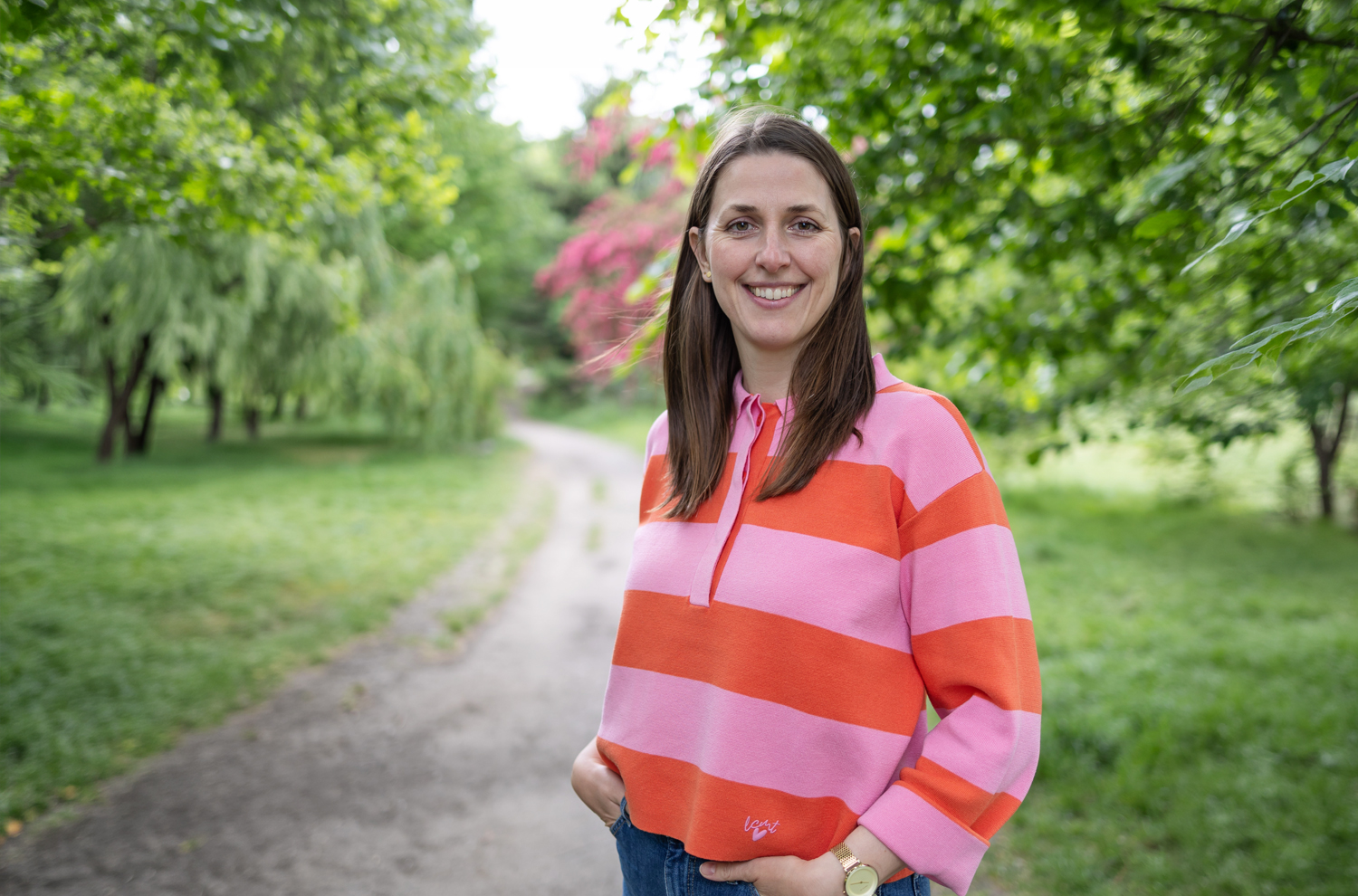
Yvonne Lonn is a certified antenatal and postnatal coach, a Gottman Bringing Baby Home educator, a mum of two boys and the founder of Whirl & Wonder, which supports second-time parents in East London. After her own intense second postpartum experience, she spotted a gap: while partnership, family logistics and dynamics change entirely with baby number two, traditional support systems mostly cater to first-time parents.
Drawing on years of corporate brand strategy experience, Yvonne surveyed second-time parents and used what she learned to create the Second Baby Confidence Course. It helps parents support their eldest child through the change in family dynamics, strengthen their relationship as a couple and build a local support network. She designed a split-session model so that parents can access it around the realities of childcare.
In this conversation Yvonne shares the story behind it: the colic, the guilt and the two-and-a-half-hour bedtimes that nearly broke her and the simple advice that turned everything around. We talk about the signs that an eldest child needs more attention, why the mental load grows exponentially with a second baby and why dads need a room of their own. Victoria also reflects on her own experience of two under two and why keeping an eye on your relationship matters more than almost anything else.
Conversation Highlights:
- Why Yvonne could not find a single antenatal class for second-time parents, and the loneliness of discovering that the second time round can feel more isolating than the first
- The stress of a colicky newborn, a two-year-old craving attention and a mum stretched so thinly she felt she was failing both of them
- The advice that fixed their sleep problems within weeks: undivided time with the eldest while her partner took the baby out
- How toddlers show they are struggling with a new sibling, from sleep refusal and picky eating to hitting, biting and wanting nappies again
- How Yvonne used a survey of about 80 parents to test the idea before building the course, and why a Christmas lunch with her mother-in-law’s friends gave her the push to start
- Why the course runs in split sessions, with both parents together online and then mums and dads meeting separately in person
- The four buckets of mental load (anticipation, planning, decision-making and execution) and why checking in on who owns what every three months can prevent resentment
- Why talking about postnatal depression before the baby arrives, for birthing and non-birthing parents alike, makes it easier to speak up later
- Why Yvonne would tell her eight-year-old self to take more risks
Listen If You’re:
- Expecting a second baby and wondering how the family dynamics will change
- Already in the thick of two under two and in need of reassurance that you are not failing
- Worried that your eldest is acting out since the new baby arrived
- Feeling the strain on your relationship and wanting to find your way back to each other
- Looking for a community of parents on exactly the same journey
- Sitting on a business idea that will not go away and wondering whether to try
Favourite Quote for Mums in Business:
“It’s okay to try and fail because you learn so much from failing, but if you never even try and if you never take the risk, you will always wonder.” – Yvonne Lonn
About the Guest:
Yvonne Lonn is the founder of Whirl & Wonder, which supports second-time parents in East London. She is a certified antenatal and postnatal coach and a Gottman Bringing Baby Home educator, with a background in corporate brand strategy. She created the Second Baby Confidence Course after her own experience of the move from one child to two, and she is now running her fifth course. Yvonne is a mum of two boys.
You can find Yvonne at whirlandwonder.co.uk and on Instagram at @whirlandwonderuk.
About the Host:
I’m Victoria Phipps – a Mum of two, analogue family photographer, charity co-founder, photography business educator, marketer and now podcaster! My career has wandered all over the place and is becoming a bit of a complex tapestry as I head into this middle phase of life, but I can honestly say I’ve loved every minute of it so far.
I was raised by a nurturing Mother and an entrepreneurial Father and have inherited traits from both, so the tension between ambition and motherhood is one I grapple with on a daily basis! I’m fascinated to hear the stories of other women on a similar path, who are striving to build thriving businesses whilst being present for their children. It’s a tough juggle, but I hope the conversations shared on this podcast help Mums in business feel less alone and inspired to keep going in pursuit of their dreams!
If You Enjoyed This Episode:
Please subscribe, rate and review the podcast – it helps other mums find us!
Share in your Instagram stories, tag @mummeansbusinesspodcast and let us know your biggest takeaway.
Share this episode with a fellow Mum in business who you feel would resonate with Yvonne’s story.
Episode Transcript:
Hello and welcome to the Mum Means Business podcast, where we shine a light on inspiring women who have one thing in common. When they’re not managing tantrums, homework, P.E. kits and play dates, they are busting their gut to build a thriving business that supports their family life. I’m your host Victoria Phipps and I’m figuring out how to play this game right alongside you. I’m a motherhood, family and personal brand photographer, I teach portrait photographers how to lead with print in the digital age, I’m marketing lead in the family business my Dad founded over 20 years ago and I’m “Mum” to two little girls.
If you’re a multi-passionate mum too, in need of some solidarity whilst navigating the messy middle of making your big dream a reality, then stick around. This is for you.
NOTE: This is the transcript from the original recording, rather than the edited episode so timings may vary.
Victoria (00:00)
My guest today is a certified antinatal and postnatal coach, Gottman, bringing baby home educator, mum of two and the founder of Whirl and Wonder, which supports second time parents from East London. Following her own intense postpartum, second postpartum experience, she spotted a gap in the market for parents navigating the transition from one to two. Realizing that while so much in life,
partnership, family logistics and dynamics changes entirely with baby number two. The traditional support systems mostly only cater to first time parents. Yvonne Lonn drew on her years of corporate brand strategy experience and used data-backed insights to create the second baby confidence course, which supports parents to help their eldest child with the change in family dynamics, strengthening their relationship as a couple and build a local support network.
With her lived understanding of childcare challenges and the realities of modern family life, Yvonne has intentionally designed a unique split session business model built to allow parents to access the support they need at a time that works for them. She says, being a second time parent isn’t necessarily harder than the first time, but it is fundamentally different. You aren’t just adding a baby, you are altering your entire family ecosystem. And I couldn’t agree more.
Yvonne, whilst you have two boys and I have two girls, our kids are pretty much exactly the same ages and I can say that I will always look back on the shift from one to two as one of the most challenging times in our family for so many reasons. So I completely see the need for this and I can’t wait to hear more about your story. Welcome to the Mum Meets Business podcast.
Yvonne – Whirl & Wonder (01:47)
Wow, thank you so much for having me. And um it’s so interesting hearing you say all these things. Um yeah. But I mean everything
Victoria (01:54)
Hahaha
Yvonne – Whirl & Wonder (01:55)
absolutely right and this is exactly yeah, what I’ve been creating and what I uh went through or experienced over the past years. So yeah. And I think we have a lot to talk about.
Victoria (02:08)
So much, so much. Honestly, I can’t wait to get into it. Let’s go a little bit further back to the beginning of this story. So what made you start Whirlamwonder?
Yvonne – Whirl & Wonder (02:21)
so it actually started when I was pregnant with my second and we had moved to a new neighborhood a year before um he was born and you know I was just looking around probably six months before my due date, looking around for some sort of antenatal class or preparation class for second time parents, but was actually surprised that I couldn’t find something because I just assumed, you know, there was so much for first time, there would be something for the second time.
And while then the I mean I had to dig a bit and then um Google finally led me through companies who were saying, you can obviously as a second time parent, you’re welcome, but reading the fine print it said, but we will not guarantee you will meet other second time parents. And before I had my second, the main objective for me was basically just meeting others because I knew obviously I would go on maternity leave for a year.
And um from my first time in my first was you end of COVID baby. So I really relied heavily on the moms I had met at the time virtually at the the class I attended, you know, doing the the park walks, texting at two AM in the morning and just feeling
Victoria (03:26)
Mm-hmm.
Yvonne – Whirl & Wonder (03:28)
like you weren’t yeah, alone and isolated and that everyone was going through the same sleep regression and all the similar issues. Um and yeah, I was actually just looking for a community and so didn’t sign up
w when it said, but you might not meet second time parents because I already I didn’t know what I was in for, but I had a hunch that it would be different to the first time. And I also didn’t want to sit through birth refresher, you know, hypnobirthing, stages of labor, all these things. Just I felt maybe a bit like naively confident, but I said, okay, I’ve done this, so I don’t want to
Victoria (04:01)
Hmm.
Yvonne – Whirl & Wonder (04:02)
pay for sitting through all the bits through again. And so that that was actually what started
just the the the thought of like why is no one doing it? And then my baby came along.
Victoria (04:16)
Mm-hmm.
Yvonne – Whirl & Wonder (04:16)
And um I was still I thought like, you know, so many other I mean, so many other parents have a second and they all seem happy, more or less on the playground. So I was like, how hard can it be? but so it actually then very quickly and I mean I had like quite a challenging um last few months of pregnancy. So I couldn’t walk properly. I had like severe back pain. So I already felt like
I was really exhausted starting into parenthood second time. So I at the beginning I put a lot down to just challenging and then my second was born with colleagues. That was like he had colleague. So he was just screaming sometimes four or five hours on end. And I felt really drained because my little one, well the oldest was six uh two years at the time, and I just could already feel I was running I was spread so thinly and there was so much guilt because I had the screaming baby and I was breastfeeding, so he was
basically just living on me and I felt guilty for not being able to actually calm this baby, but also then not giving my son the attention, the oldest that he craved. And it was like a constant it was just a constant fight getting it right. And at the point I was still looking for community. So it took me a bit longer to get out to baby classes because with a crying baby I just didn’t feel comfortable. I was just I just
thought like who am I to go to a baby class arriving with a screaming baby that would most likely scream an entire out like hour through this. I wouldn’t have been able to do have a conversation. So it took me probably like one or two months to actually properly leave the house with him. But then I went to those classes and there were a lot of moms who already came as groups. So they came as their group that they have formed during their antenatal class because, you know, they did the class, they met pr pre-baby and then they were all sitting around
And often I also found saying, this is my second, the conversation just shifted because I realized my worries were so different. And when they were saying, do you want to come to the park? I was actually I can’t because I have to go back, I have to prepare this next and I have to pick my other son up from nursery. And I just realized that my time was so much dictated, not just by the baby schedule, to be fair, this baby schedule was just secondary. It was by toddler schedule that was completely dictating my time. And
I was really surprised that there was just nothing for second time moms when I felt so much more actually isolated the second time round. And it then took when I then finally online met like l just like three moms to begin with, who were also just had their second. And they all said the same. They said, actually it’s so nice to meet someone who’s also bound to a nursery schedule. So we would then meet after the drop off and
be absolutely just exhausted and feeling a bit sorry for ourselves. But it
Victoria (07:01)
Yeah. Yeah.
Yvonne – Whirl & Wonder (07:03)
was so nice to see that I was not failing as a parent and that I the guilt was just something that all of us experienced because we were trying to be the best parent to both of those little ones. And that was just incredibly hard. And yeah, so then I thought, okay, so I have my experience. I have these friends now.
Who have share a similar experience. But then I was still kept on wondering, there are so many big providers of antenatal support. Why so why are they not doing this? They have the network, they have all the context. I mean, their database is like my dream. so
Victoria (07:43)
Hahaha
Yvonne – Whirl & Wonder (07:45)
why are they not offering something very speci bespoke for second-time parents? And then I thought maybe, you know, we are still just like in our small bubble and it’s just us.
Um and then it took me an entire so over a year. So my son, the youngest, then turned one and I was still just like thinking. I then had like not there was my career opportunity didn’t progress in the way I thought it would at the previous company. So I didn’t return. I stayed home and then thought, okay, I should do something. But I wasn’t quite brave enough until
Just later in 2024, and then said, you know what, I’m just gonna do a survey because I for my marketing background, I thought, okay, just see what the market actually wants. So I sent out a survey early 2025 and um got about like 80 responses back, um, the majority of second-time parents, and it was basically asking them which step did you find harder from one to from none to one or from one to two, and what do you wish you would have known? So if the if this would have existed at the time.
What do you wish it would have covered? And the majority said actually going from one to two is so much harder. And the reasons were they just didn’t know how to su support their eldest child. Um, not to they didn’t know the signs that their eldest were struggling, and then how to support the eldest and also the family dyna like their couple’s dynamic changed because with a second child, your mental load just grows exponentially, but
usually we just stay in the same system. So what you were responsible when you had one child for all the tasks, the same parent just carries on where they are too. But it just has doubled. And um
Victoria (09:25)
Mm.
Yvonne – Whirl & Wonder (09:26)
I was just getting this feedback, I actually thought, you know what? Yes, I mean 80 is still a relatively small sample size, but I felt I’m I am onto something and then just that okay, you know what? Um I don’t wanna look back
when I’m sixty, thinking, what if and could have had worked and then yeah, went for it. And I have to say on this one I have to thank actually my mother in law and her friends because she took me to a Christmas lunch with her friends. And there were all
Victoria (09:56)
Nice.
Yvonne – Whirl & Wonder (09:57)
these women sitting and talking about the adventures they d they they had and when they dared something in their, you know, life and all the
careers they did, the changes and decisions they made that completely changed the trajectory of their life. And they were sitting there talking about and I just thought, you know what? If I’m not gonna try it now, I will not have an or n not not that I’m not have an amazing story to tell, but just felt I need to try so that when I am seventy, seventy five, I can sit around a table with my friends and just reminisce about the things I tried and they maybe haven’t worked, but I can at least say I tried. So yeah.
Victoria (10:35)
Yeah, absolutely. I love that old lady mindset. I talk to my old lady quite a lot. And yeah, like if you have this idea and obviously you’ve been sitting with it for quite a while and you’re very, very busy. So you don’t really have the head space almost to process it as quickly as you would have say if you were child free and you had an idea. So these things do take time, but if it won’t go away.
and it’s just sitting there just niggling at you, then I think you owe it to yourself to explore it. And I think it’s so interesting that you went and did the survey because that’s so sensible. That’s so sensible.
Yvonne – Whirl & Wonder (11:17)
I know.
Victoria (11:19)
It’s just that kind of just validating your idea and just gaining that insight to just spur you forward, I think, is such a…
a wise thing to do and nothing that I would never do that because I’m just too impulsive, but it makes total sense and it really will fast track you to actually solve the problems that like you say are the ones that people are expressing that they’ve experienced. But going back, it’s interesting. oh When I first heard your story, I immediately was like, yes, this is a thing.
I would have found that so helpful for all sorts of reasons. But as you’re going through your own experience, it’s just bringing up so much for me. And like a lot of it is kind of maybe PTSD, but just all of those kind of scenes of absolute overwhelm, particularly in that first, I would say that the first 18 months, so till my youngest was 18 months old.
Oh, it’s such a lot. Tiny moments where everyone is crying. I remember the first six weeks, maybe eight weeks of my youngest’s life, my eldest had sympathy crying. So whenever
Yvonne – Whirl & Wonder (12:42)
Mm.
Victoria (12:43)
the baby would cry, she would cry. And, you know, partly it was for our attention, I suppose. Partly is because I can see that she’s actually a very kind…
person and she didn’t like that the baby was upset it upset her and it’s probably a blend of the two but it was just all or nothing either we had quiet or we had absolute headache of shrieking from these two babies and then you know just the scenes that you remember like sitting eating your dinner whilst feeding your newborn feeding yourself your newborns on your lap on the boob you’re feeding yourself and you’re also feeding your toddler next to you and
It’s a season, isn’t it? And at the time you feel like, this my life forever? Because it’s so much, it’s so overwhelming. And we talk about the identity shifts when you become a mother. But I think if you have two, particularly in close succession, so your eldest isn’t able to like hand you the TV remote or make you a cup of tea, or just make sure the baby doesn’t fall off the sofa while you go and do something.
They’re not helpful at all, they still need you. My eldest was non-verbal, pretty much. You could say baby and mama. So you’re just dealing with two babies who are, who have very different needs, but are still completely dependent on you. And the piece about your relationship with your partner.
It’s huge, it’s huge. I’ve talked about it on the podcast before, but we’ve separated. I can’t even count now. Is it three times? Two or three times, as in like physically separated, someone has not been in the house, because the challenge and the pressure that that puts on your relationship is enormous. And I think speaking to mothers, it’s all anecdotal, isn’t it?
I don’t know many partners who haven’t struggled, you know, that have had two under two or two under three. It’s all consuming and very, very different than just having your first baby, where you feel like perhaps at least you’re a team. It’s a new adventure you’re going on together. You’re tag teaming stuff and there’s two of you and just one of them. So whatever you’re doing, you’re collaborating.
for this baby that you’ve made together. Whereas actually when you bring in two, you’re tag teaming, so you’re not together as much. Someone’s dealing with this child, someone’s dealing with that one. And then you bring in all the guilt that mum is feeling. It’s so layered and I feel the same as you. I was really lucky to find some friends, really amazing mum friends.
through the NCT in lockdown and we did all the things that you said, the Zoom calls and whatever. And I was so fortunate that actually we all had seconds at quite a similar time. So our maternities overlapped, but if they hadn’t, if they hadn’t, I would have been going to those baby classes like you did and they can be so clicky, can’t they? Like.
these people that already know each other and everyone is friendly, of course they are, but you’re just sitting there and you feel that you’re in a different situation. It can be really hard to break through and you’re still a new mum. You’re just a new mum who also has another child. So I can’t believe that there isn’t more.
specifically catered to second parents. And I suppose third parents, fourth parents, fifth parents, but I have no experience of that because going from one
Yvonne – Whirl & Wonder (16:28)
You know what?
Victoria (16:29)
to two was hard enough.
Yvonne – Whirl & Wonder (16:31)
Actually, but it’s interesting because so I also looked at the dump from two to three. and this is actually where I mean where I list, you know, East London, a lot of families actually once they have a third I mean a few families stay, but a lot for having the third move out. And this is also where I have to say this is not my expertise and I absolutely love my boys, but two is plenty. And um that’s just like two and done.
Victoria (16:53)
Mmm.
Yvonne – Whirl & Wonder (16:55)
but probably also I mean, you know, like sometimes there was a bit of a neglecting when you have like
friends coming over with a new baby, it’s like a bit the baby fever kicking in. But then when I remind myself of how hard it was, because it’s I mean also what you were saying with the relationship, it’s we I mean we were just we were just surviving in parts. Because um
Victoria (17:15)
Yeah.
Yvonne – Whirl & Wonder (17:15)
our our eldest then the first few months of having our baby, he obviously I said he had colleagues, he was just screaming. And I have to say my eldest, he was amazing because it could have gone that he would have lost it.
I mean he did at some point request earmuffs. So it was like sometimes my my I mean, I have quite a lot
Victoria (17:32)
bless him.
Yvonne – Whirl & Wonder (17:34)
of pictures of like him sitting with earmuffs at the dinner table eating his dinner. But um I mean but he but he was still happy and he was still really, really kind to his brother and he like constantly saying, I think mommy he wants milk. I was like, No, he has had milk, so much milk. He does not want milk. But
Victoria (17:50)
Hahaha
Yvonne – Whirl & Wonder (17:51)
very I mean, thank you for trying to solve the problem here. Um
Victoria (17:54)
Blessing.
Yvonne – Whirl & Wonder (17:55)
But and he was so good for the first three months and then all of a sudden his sleep regressed so badly. We so he wo had still had a nap at the time. But he like getting him to nap or to bed in the evening took about like two and a half hours each. And we talk like screaming, kicking, hitting, biting. And I was just and and it had to be just mummy.
Victoria (18:10)
Yeah, yeah. you’re bringing back so many memories. So hard.
Yvonne – Whirl & Wonder (18:18)
It was just he was sh he just wanted mummy.
Victoria (18:19)
Yeah.
Yvonne – Whirl & Wonder (18:20)
But I obviously still had the little one I was breastfeeding. So I was
Then I was doing better so I would feed my baby, put him to bed, because obviously with it yeah, he was easier to be settled with me as well. So I did this, then I spent two and a half hours where he was screaming, I said hitting, kicking, it was absolutely horrendous, finally falling asleep, exhausted, just for my baby then to wake up, wanting the next feed. And that
Victoria (18:43)
Yeah.
Yvonne – Whirl & Wonder (18:45)
was just so intense. And I just kept on wondering
Wha why is this happening? And I was trying to get help from so many different places and everyone was yeah, it’s a phase. I was like, I I genuinely I’m not entirely sure how how long I can live this phase. I am mentally, I am meant and physically, I was just so exhausted, and as was my partner.
Victoria (19:03)
Yeah.
Yvonne – Whirl & Wonder (19:04)
But then someone just turned around and said to us, and so we went like we went like to a um sleep consult not sleep consultant, they were more like it’s like a sleep support, feeding support, basically helping you whenever you have a problem with your child.
And I just said, please help. And she just looked at the we had to write down a schedule of like what we would do, our bedtime routine. And she looked, she said, no, you’re doing everything right. And then she looked at me, having the baby in the carrier when we attended. She said, Oh, you had a baby. I said, Yeah. So he’s three months old. She said, no, actually, so your son is just struggling because he wants to have more time with you. I was like, Pardon? And she was like, No, actually, yeah, he just he’s telling you because obviously he was two, he couldn’t, like verbally, he’s just telling you
Mummy, I need more time. There’s a baby now and I just want to make sure that I am still, you know, an important part of this family. And basically, I mean, as as hard that you still love me. That obviously, obviously like
Victoria (19:58)
Yeah.
Yvonne – Whirl & Wonder (19:59)
I mean the guilt is I I mean that was not what I needed to hear. But
Victoria (20:03)
No.
Yvonne – Whirl & Wonder (20:04)
it fixed it. So what we then did, my partner would take the baby out for, you know, then fifteen, twel thirty minutes, really out of the house. So I had undivided time just with my oldest.
It didn’t like didn’t take a month and sleep all of a sudden just fell back into place. And I was just sitting there thinking, why has no one told me that earlier? Because I
Victoria (20:26)
Mm. Mm.
Yvonne – Whirl & Wonder (20:28)
was I was in parts at really at breaking point. And then I did a lot of research and then how actually little kids show that they are struggling when a new baby comes into the family and they’re like some like it’s like either, yeah, sleep refusal
Or becoming picky eaters because everything they do where they get more attention from you, trying to get them to bed, trying to get them to eat, or eat something different. They are all
Victoria (20:50)
Mm.
Yvonne – Whirl & Wonder (20:50)
things or like kids starting to hit and bite because they do want to have the extra attention. Because in this is a bit like you know, go like bad PR is PR as well, anyways. It’s the same thing, like b bad
Victoria (20:59)
Yeah.
Yvonne – Whirl & Wonder (21:01)
attention, like you maybe like telling them off or whatever, is also attention. And I just thought like
This was then for me also where I thought, you know what, I really want parents to know this and also because if basically if we would have given my son more time throughout the early months, we could have avoided these horrendous six weeks because they were
Victoria (21:24)
Yeah.
Yvonne – Whirl & Wonder (21:25)
awful for him as well. They were awful for all of us. We could have prevented them. If he would have felt safe and secure in the new family setup, he wouldn’t have needed to ask this
Yeah, extremely for more attention. And this is what it’s a bit part then now of what I tell my like the parents coming to the course where I say, just the extra time with your child. Starting during pregnancy, both of you, both parents spend extra time. And if you feel there’s like something like, you know, the regression, what you were saying, maybe the sympathy crying or like imitating baby behavior, wanting back a nappy if they have already been potty trained before, these are all signs. They’re just saying, Mummy, daddy, I need more attention.
Give me more
Victoria (22:04)
Mm.
Yvonne – Whirl & Wonder (22:05)
attention. And often it’s as simple as this, giving more attention and then everything runs more smoothly. And I just feel this is such an easy fix.
Victoria (22:16)
Yeah.
Yvonne – Whirl & Wonder (22:17)
But
if parents don’t know about yeah.
Victoria (22:20)
Nobody told me that. And so I totally get it. And the crying thing was absolutely that. And we could feel it at the time. But it’s so overstimulating. And we didn’t think that rationally.
because we were so tired. We didn’t think, do you know what, let’s make a plan and let’s, we didn’t, we just sort of muddled through it. And actually to carve out, even if it is like you say, just half an hour where you’re just engaging with your oldest child and the newborn is literally like out of the picture, it’s quite nice for you too as mum, because there was a part of me that kind of missed having that time.
with my oldest because it was different and because she was starting to show her cute personality. And
Yvonne – Whirl & Wonder (23:12)
Mm.
Victoria (23:12)
I did feel as well like I had, it’s that thing of like, you know, time passes as a mother and you look back and there’s this big season that happened and you wonder if you were even there. And of course you were,
Yvonne – Whirl & Wonder (23:24)
Mm.
Victoria (23:24)
of course you were. But in the moment I could feel like I was missing something with her because mentally I was so distracted.
with the physical demands of a newborn. And it’s inevitable. But to have somebody just give you such simple advice that you’re able to take control of it, because that’s the other thing. You don’t feel like you’re in control. And what you were saying about the sleep and balancing that, there were lots of times due to like work and other things when I was doing bedtime by myself with the two babies. And I would say like,
And I would call people, just be like, can you just come over for 15 minutes to watch this one while I do this one and et cetera. And sometimes people could come and sometimes they couldn’t. But I don’t care how intelligent you are. I don’t care how good you could be an astronaut, a physicist, just a Nobel prize winning leader of men and women, but nobody can put two under two to bed.
consistently, night after night. If you do, it’s like, it’s such a happy fluke. And that
Yvonne – Whirl & Wonder (24:36)
Yeah.
Victoria (24:36)
thing of like, because my eldest did the same, she would just take forever to go to sleep. And she kind of had done before, because we had tried to separate ourselves from her, she didn’t like it at all. She’s very like physical touch, love language. But it did, it did get much worse, as you described. And I remember that thing of she’s just about to go.
I’ve been lying here like a dead lion for two hours. She’s just about to go and then I hear the little one cry and I’m like,
And the cortisol that pumps through your body in that moment because you’re like, maybe she’ll stop and maybe she won’t hear it. I mean, you’re talking about your boys, but you know, you’re just praying that the oldest goes off and then you can quickly, because you have to extract yourself so carefully and you’re like pulling one finger away from them at the time and just the floorboard, my God, the
Yvonne – Whirl & Wonder (25:25)
the floorboard creaking. Yeah.
Victoria (25:28)
floorboard creaks and you’re like.
and you freeze and you’re like, look at them like, my God, is it okay? And
Yvonne – Whirl & Wonder (25:34)
Yeah.
Victoria (25:34)
then you finally, and then you get to the other one and you pick them up before they make any more noise. And it’s just, it is a form of torture to do that by yourself. Because if it goes wrong, I remember situations where I was just in a bed with two babies screaming and I’m the only person in the house. And that is so difficult.
so difficult because you just feel like the worst mother, like I’ve got my two babies right here and both of them are unhappy and I don’t know what to do. And those moments compound. If that keeps happening and you don’t get advice as to how to navigate it and how to put fixes like that in place that can actually be really fun and enjoyable for everyone, then you just muddle through.
And you just start to feel like you’re not very good at this and what you’re doing wrong. And we’re so ready to blame ourselves, aren’t we?
Yvonne – Whirl & Wonder (26:28)
Yeah. And this is also then where it really helped me having then at the yeah well later stage because even like the two the two months that I didn’t have any other second time mom friends I have to say felt like an absolute eternity. But once I had them it was genuine we were cheering each other on where it was like oh
Victoria (26:45)
Yeah.
Yvonne – Whirl & Wonder (26:46)
doing bedtime solo and I mean I just remember picking my son up from nursery, my my baby in the carrier, picking him up and he lis was covered in mud and I looked at him was like
Victoria (26:56)
Mm-hmm,
Yvonne – Whirl & Wonder (26:57)
This means bath night. This
Victoria (26:57)
good.
Yvonne – Whirl & Wonder (26:58)
means not just solo bedtime, but solo bath time too. And
Victoria (27:03)
Mm-hmm.
Yvonne – Whirl & Wonder (27:03)
I just remember texting my friend saying, he’s covered and I have to do bathtime. I’ve never done bath time before, like by them, like just me. Um and I mean it did work. Um everyone survived. But I think also by the time, as you said, like you have then one down, the other one finally down too.
the sheer exhaustion and also often
Victoria (27:23)
Mm-hmm.
Yvonne – Whirl & Wonder (27:23)
I was like the the emotion because sometimes when they both would cry and you’re like they both are not stopping to crying, I just could feel I’m tearing up. I was like I need
Victoria (27:32)
Yeah.
Yvonne – Whirl & Wonder (27:32)
to hold this together just as long as either some help arrives or um I have them both Yeah, yeah. Exactly.
Victoria (27:38)
they conk out somehow. Yeah.
Yvonne – Whirl & Wonder (27:42)
because it is just it’s just so hard and I think
This is also why I’m so keen on running because I I’ve I was thinking about different formats for the course for such a long time. And I mean my key barrier was always the child care because I knew so we don’t have any family around. So this is I we couldn’t have attended a course in the evening or at any time basically when our child would have been around. So I knew I needed to either provide childcare or find a clever way. And I was looking for child care for a very long time, like getting a nanny in or something to entertain the kid or the kids then in the group.
And then somehow it just clicked. I thought, you know what? I have the first session virtually. Both parents join once the ba the child is hopefully in bed. I mean eight PM is usually a good time. I mean sometimes we have like a little visit here, but this is also fine. They’re at home, you know. It it just works.
Victoria (28:28)
Yeah, yeah, yeah.
Yvonne – Whirl & Wonder (28:30)
And then meeting moms and dads separately, because then they do get the actual connection. Everyone is locally. So they they all live locally. They can meet after. I open a WhatsApp group for them so they can immediately start connecting.
organizing their own meetups and it’s so nice now. I mean I started the first course in January and now seeing the parents that have met in my course in the neighborhood or at the playground, I cannot tell you how much this means every time. And it was actually
Victoria (28:59)
I bet.
Yvonne – Whirl & Wonder (29:01)
last month in the summer, I went in the to the park and I saw for the first time just a group of dads, of these dads that had met for the first time in my course with their kids. And that just
Is because this is exactly what I mean, this is such a big core part of, you know, getting through parenthood. If you have others who are going through the same sleepless nights or experiencing s the same, you know, like having your child your older child crying when the baby cries or the sleep regression or I even had like had a friend where the oldest child developed a sort of like a temporary stammer because their s they just had a very high stress level and that was just a stress symptom. And it didn’t
You know, it did fade away because it was just a child, yeah, adapting to the new dynamic. But all these things, just having others to talk to. And
Victoria (29:50)
Yeah.
Yvonne – Whirl & Wonder (29:50)
not to get necessarily advice from the group you’ve met, but the friendships and just the compassion, cheering each other on for the solo
Victoria (29:59)
Yeah.
Yvonne – Whirl & Wonder (30:00)
outings. I mean, this is also I think like going out and about with two solo is a another topic. And I just remember
Victoria (30:06)
Yeah.
Yvonne – Whirl & Wonder (30:07)
having having a friend with me, even if we had four kids.
But four kids and two moms. Perfect. That was so much easier than me with the same two kids that I brought along to the meetup. So yeah, I think that’s there’s just so much about making sure that parents also don’t feel isolated after and really having people they can just yeah, turn to and that will understand what it means.
Victoria (30:33)
think it’s everything. Obviously the teaching that you can do, the information you can provide and the guidance that you can offer is vital and so important. But going forward, I think especially the fact that you do it separately with moms and dads, that you do it together and then you do it separately, I think it engages dads. I don’t know if you’ve seen this, because obviously, it’s so needed when you have your first, absolutely. But it’s there, isn’t it?
But with your second, I think there is an additional strain, a different sort of strain that dad feels. Because I don’t know, my partner felt quite disengaged. He really found it very overwhelming. It’s overwhelming for everybody, but it just upped the ante so much that he kind of couldn’t.
cope with it. He couldn’t adapt quickly enough to meet all the needs that needed to be met in that moment. And I think he did feel quite alone in it. And we had our NCT group and they had the dads, but I think they weren’t as close as perhaps they’ve become now. And he didn’t feel able to sort of just say, well, reach out and say, you finding this like really hard.
And that’s the vulnerability piece that I think men perhaps find even harder. But I think if you’re actually going to something and you’re actively joining in with a kind of training community, then that’s an in, isn’t it?
and then you’re in it and the idea of the dads making friends because you’re making friends in a time of challenge and stress and you’re forging the ions of friendship that will stand you in such good stead. And that’s when it gets lovely. know, now that our children are kind of…
older, not old by any stretch, but older, you can sort of see the friendships that you’re going to hold on to and the friendships that the children are developing with each other, which could go on for decades. And that’s something just so beautiful about that, about having friends that you’ve known since birth almost. But do you find that that in-person element, I suppose, both with mums and dads, adds a different dynamic? Like it just…
it offers them something that you just wouldn’t be able to get online.
Yvonne – Whirl & Wonder (33:05)
Yeah, absolutely. I this is where I mean the first few the first course I um also then asked for feedback and very kindly almost all of them gave me feedback and one of the key parts was then also just having actually a separate part like a separate room for dads and dads
Victoria (33:23)
Hmm.
Yvonne – Whirl & Wonder (33:23)
actually feel seen. And it’s interesting now because yeah, I mean I’m now on my fifth course.
But probably like after course three, I started actually getting emails from dads inquiring about the course, how it would work, and I now also have dads booking the course. And I remember
Victoria (33:38)
That’s so good.
Yvonne – Whirl & Wonder (33:39)
for the very f the very first course I did, and you so I have the first evening in person is with the moms and then the next evening is with the dads. And I have to admit I was absolutely terrified because I was I I have no idea how this will go. Like will this be like me just like tanting singing at the front, like this is it? Um
Victoria (33:51)
Yeah, I can imagine.
Yvonne – Whirl & Wonder (33:57)
And I have to say this group is completely it just put me at ease and I know I came and I came home. I was just like grinning from left to right because this had been such an amazing experience and these dads and actually all the dads following all the other courses, they are engaged. They they I mean they have seen
Victoria (34:15)
Mm.
Yvonne – Whirl & Wonder (34:16)
how it impacted their partner first time round. A lot is also about, I mean, you know, some have struggled post natal depression.
And they really wanna be there supporting their partner, supporting their eldest. They are so engaged. They are asking so many questions. And I I’m actually now I just came home from a course last night. So I had a course last night. And I just keep on adding things. maybe I can also like have this topic even like in even broader. But obviously, I mean they’re just five sessions and I don’t wanna keep them there for like a three months every night tutori tutorial because I think there’s so much to talk about. But it’s so nice to see how engaged they are and then
Yeah, they you’re having conversations. Some of them there’s a pub right around the corner where uh the venue, some of them afterwards just then say, you know, should we just go uh for a pint? And it’s just so nice how they’re immediately having also actually being confident enough because it’s their room to ask
Victoria (35:09)
Yes.
Yvonne – Whirl & Wonder (35:10)
questions. And I think this was also something I mean, the one thing obviously it does like
meeting moms and dads separately is it solves their child care issues. They don’t have to worry about like getting
Victoria (35:18)
Yes.
Yvonne – Whirl & Wonder (35:19)
a babysitter someone into watch their child while they are both attending. The other bit is it’s their safe space. So they don’t have to feel that their worries are not as relevant or important as the worries of the pregnant woman sitting right next to them. Because their worries are relevant. Their experience previously is relevant. And
you know, all the questions they have. They are like especially when we talk about solo parenting or because their solo t parenting experience often is quite different, often also comes actually later in the parenting journey. so yeah, all is valid. And then also we I mean we know that also one in ten dads do experience postnatal depression. So we cover postnatal depression for both for the birthing and the non-birthing parent. And also then if you’re expecting psurogacy or adoption,
you can also as a parent be impacted by postnatal depression. I think it’s so important to talk about this as well because it yeah, it removes the stigma. And if we’ve talked about this in the group, once you have the baby and you experience something where you’re like this is not quite right, you’re seeing this in your partner, I think it’s way easier to yeah, build up the courage to speak up and say, I’m not feeling right. I think you’re not feeling right if we’ve already talked about that this can happen.
Victoria (36:36)
Yeah.
Yvonne – Whirl & Wonder (36:36)
And if it happens, there’s help.
And there’s absolutely nothing to be ashamed about. So yeah, I
Victoria (36:41)
Yeah.
Yvonne – Whirl & Wonder (36:42)
mean I’ve say I I’m just I’m so obviously I didn’t know it at the time, but I’m so happy now that I set the model up in this way. Because having these separate moms and dads groups, especially for the dads, just creates room that they wouldn’t have had otherwise. And the feedback and like the Google reviews coming in. And I’ve say the fact that actually dad’s emailing me asking about the course and then actually
Victoria (37:03)
Yeah.
Yvonne – Whirl & Wonder (37:04)
going on to book is the I just just chose that.
They also want to be involved and
Victoria (37:11)
Yeah.
Yvonne – Whirl & Wonder (37:11)
it’s just even though we talk about s you know, different stages of um responsibilities when it comes to mental load. I mean, we’re covering a lot about this too, where I know like
Victoria (37:18)
Mm-hmm. Yeah.
Yvonne – Whirl & Wonder (37:20)
every time when I say to the moms, we’re talking about, you know, the four buckets of a task. So it’s the anticipation, it’s then the planning, the decision making and the execution, and where they would be going, yeah, you know, everyone goes and buys the milk or like gets the grocery list and then goes out and buy it but actually making the decision before and then
when I talk to the moms, they’re like, are you are you covering this like tomorrow with the dads as well? It’s like, Yeah, we’re covering this as well. But this is you know what you’re saying, like having and then it’s
Victoria (37:45)
Ugh, honestly, so good.
Yvonne – Whirl & Wonder (37:49)
Yeah, because and I think it’s also where it’s then not it’s not about like putting blame on oh you are doing more or you are doing like and I’m doing more and you are doing less. It’s never about the blame, but just about sitting down, understanding what the actual workload is.
which task everyone has on their list and then making a fair decision on who is owning what. Because yeah, you know, one person needs to do twice the vaccine appointments, taking the kids to the doctor probably twice because you have different school or nursery schedules to obey to Yeah. So
Victoria (38:24)
But you’re planting these seeds when mom is pregnant with her second child. And actually, just the awareness of it is everything. So one, I love that you are holding this space for dads to ask questions without feeling that their partner is watching what they say. Because I think there is…
I mean competition in early parenthood creeps in. It creeps in everywhere. And when you’re in the depths of despair and no one’s slept for 48 hours or whatever
Yvonne – Whirl & Wonder (39:05)
Okay.
Victoria (39:05)
it might be, you do get into…
Well, yeah, but I did this, but I did this, you had, you had, I watched you, you were asleep. You’ve had sleep and you can be
Yvonne – Whirl & Wonder (39:15)
I love
Victoria (39:16)
so petty with each other. And
Yvonne – Whirl & Wonder (39:18)
I know.
Victoria (39:19)
you know, you both start just, we’ve definitely had whole evenings where I feel like we were both just telling each other all the things we’d done that day. And
Yvonne – Whirl & Wonder (39:26)
Mm.
Victoria (39:27)
I’m on maternity leave and he’s at work or whatever. And it’s, it just doesn’t get you anywhere, but you just fall into that because you are.
as well, both of you in your own way filled with some sort of resentment. And there are all these really negative, sometimes pervasive and toxic emotions that creep into your relationship as a couple. And there’s also the sense that, that sometimes crops up that dad can’t say anything. If dad has a suspicion that they’re not quite pulling their weight, perhaps because they’re really struggling, perhaps because they feel
overwhelmed and it’s too much, perhaps because they have some sort of postnatal depression. And they know that they’re not quite pulling the weight. They see that all the feeding is done by mom if she’s breastfeeding, she seems to be doing all the changing, she seems to be managing even. They don’t feel safe to be curious, ask questions, know, even suggest something might be done differently.
because a lot of mums, and I very much include myself, if you’re overstimulated and overwhelmed.
You can get very controlling about stuff. You know, it has to be done this way. No, do it this way. And I was horrendous on some days, like, you know, just very particular about why is the salt there and not there? You know, just because that’s my
Yvonne – Whirl & Wonder (40:51)
Yeah.
Victoria (40:51)
distress symptom. Why are you ruining my life by moving the salt? Where is the salt? And, you know, it’s just, it’s so awful and it can be really challenging to navigate.
And I think often you don’t recognize it until you’re in it. And we had like extensive couples therapy throughout that whole period when we had to pay somebody to point this out to us, how we were communicating with each other, how we were sharing this load, you know, and also, you know,
what our distress symptoms were because we’re different people. know, one of us has rage, one of us has a tendency towards passive aggression. I won’t, I’ll let people speculate on which one’s which. But you have to learn to notice these things in each other and find each other in the chaos. And I think what you’re doing both…
you know, with your session where you’re kind of getting to know the couple together, but also by separating them, is you’re giving each person a chance to tell their story and their experience. And you’re giving dad like an in, because, you know, the vast majority of dads do want to be involved and do want to help and do want to be engaged. But sometimes it’s really hard for them to know how. And sometimes that’s because…
Mum, one, feels like she needs to do everything. Perhaps she saw her mum doing everything and she feels like she ought to be able to carry it and she’s putting all this pressure on herself. And actually she does become quite controlling and it’s hard for dad to find where he fits into it. There are all those dynamics. And also because he’s dealing with his own adjustment. And I think holding that space for both of them separately.
also must spark connection that when they both go home, they’re like, so how did it go? What did you talk about? Did you talk about
Yvonne – Whirl & Wonder (42:40)
Hey. yeah.
Victoria (42:40)
the four buckets of mental load? What do you think about those?
Yvonne – Whirl & Wonder (42:42)
Yeah. Yeah, yeah. Yeah, absolutely.
And this is actually because I mean I really so I mean I really want them to go home and find this useful beyond of just like, you know, the two hours that we sit there uh for each session. So I created uh an action guide which basically everything we talk about then give them conversation prompts, things to think about, and then talking about okay, making a list of what are currently all the tasks that sit with one parent and the other parent.
And then seeing will this actually be feasible when we have two? And then I also asked them to revisit this every three months. Have a check every three months if how you divided the task works. Because we are still and I mean, yeah, you know, kids are three and a half and five and a half now and we are still going through this on very, very good times. We are doing this regularly. Obviously sometimes life just happens and but I can actually tell if
life just happens and we are not checking in regularly on if the load, how it’s divided, feels fair. It’s usually me then who feels first that hang on a second. I am doing all the doctors appointment and all the things and I’ve bought all the birthday gifts and I’ve wrapped them all and I like, you know, made the cards with the kids and but then it’s I just take it on because it just that’s my natural. I just like doing most of these things as well. I like to, you know, know everything and be organized around the family.
But it does get too much. But then it is on us then to sit together and talk about how we can divide this. And this is why I asked then the parents to do this before the baby arrives, because it’s so much easier, as you said, like having those conversations when you’re not sleep deprived. And I mean, obviously no no one make any mistake. Even if you have a two year old, you might still be teep sleep deprived because not all two year olds or three year olds sleep through the night consistently. But it’s still
Victoria (44:28)
No
Yvonne – Whirl & Wonder (44:28)
a different
level of stress when you’re expecting the baby, so in the, you know, exciting preparation phase for baby number two. So you can have these calm conversations and you don’t have to fight when baby is crying, toddler is crying at two AM in the morning, and then everything is just bubbles up because you have been
Victoria (44:47)
Explodes, yeah.
Yvonne – Whirl & Wonder (44:48)
yeah, frustrated for so long. yeah. So I think it’s really crucial to then also give them home like a bit of a
home exercise to say, okay, have a conversation, have the c have the conversation, see how you wanna do this. But then also be sure that you actually revisit it yeah, when your kids change or your, you know, circumstances change, one going back to work, both going back to work. I think these conversations it’s just a constant because otherwise you’re just yeah, one might get frustrated or both getting frustrated. And I think, you know, frustration then can build up and then lead to resentment, which is obviously what yeah, we want to avoid.
Victoria (45:27)
Yeah,
Yvonne – Whirl & Wonder (45:27)
So
Victoria (45:28)
yeah, it’s finding those calm pockets of time to reconnect. And I think planting that seed, if that’s the only thing that they go away with, like to find a moment to talk to each other, because I think…
you can feel like ships passing in the night with one, when you get to two, especially if your eldest is younger, you just finding each other is a challenge in itself. And I think it’s so important.
to carve out that time to have the conversations and check in, even if it is just every three months and actually throughout the rest of your life
Yvonne – Whirl & Wonder (46:11)
Yeah, absolutely.
Victoria (46:13)
as a parent because these things change and they evolve. having that sort of mindset before your second baby even arrives is so, helpful. I want
Yvonne – Whirl & Wonder (46:24)
Yeah.
Victoria (46:24)
to know where you would like to take this.
because I’m up in the Northwest, you’re in London, you didn’t find anything in London, I’m not gonna find anything up here, I didn’t. And the only reason that I enjoyed my second maternity experience as much as I did was because I had the friends that I’d had, that I’d made with my first, kind of with me in that too. And that’s not always the case. So I think it’s very much needed.
What are your grand plans?
Yvonne – Whirl & Wonder (46:57)
Thank you. Yeah. Yeah.
Well I I would love to bring this to more parents. I think currently I just don’t know how this looks. I think I was very confident for, you know, almost a year, like writing up the main strategy and like creating the course and getting all the certifications that I well the first one, the internatal postnatal one, I got because I needed it. And the second one I got to feel less of an imposter.
So I had done all this study. I
Victoria (47:23)
Mm-hmm, we do that, yeah?
Yvonne – Whirl & Wonder (47:24)
like, I was like, okay, no, I just need another batch to just really um yeah, say I I’m qualified. so I’m now actually looking at how I can expand into different neighborhoods. I don’t really know how this will look. So this is basically my nut to crack um next. I mean I’m currently running one course, so I’m quite busy with this. I um, if all goes well, will actually be running a fully virtual course that will still have split sessions.
But for the Red Cross in Germany for one uh region there.
Victoria (47:54)
Okay, amazing.
Yvonne – Whirl & Wonder (47:57)
and yeah, so that that might then if this goes well and if I have the feeling that this is working because I will still meet them first to g together in a group and then um together just the moms and dads separately, but virtually. If this works well, I could see this maybe in interim doing this in the UK as well. Um but there’s a bit like I really feel like having
Going into a physical room together, seeing everyone face to face, having the conversations as you walk in the door, you know, like in the in the break, and if you walk out the door, maybe sharing path of your journey back home. I think this is so important. But this obviously means I would need to multiply myself in a way
Victoria (48:38)
Yes.
Yvonne – Whirl & Wonder (48:39)
because obviously I have to run the class in the evenings because this is when the parents are available, when their little one is a in bed or just yeah, one one does bedtime.
So yeah, my my hope would be to grow this as a current form where it is also in person and then in different neighbourhoods. So I’m just looking at how this can look. But yeah, I’m I feel I’ve now proven the concept enough to uh say it’s a next step.
Victoria (49:06)
Yeah,
no, it sounds like it’s been really successful from the off. And you now have dads inquiring and booking with you, which is such a good sign.
and you’ll get that word of mouth filtering through. And I think when any business like yours gets to the point where you feel you need to clone yourself, that is a good sign. You know, it sort of lends itself to a kind of franchising model. And it’d be really interesting to check in with you in five years time and see what’s going on. Because
Yvonne – Whirl & Wonder (49:39)
Yeah.
Victoria (49:40)
it’s one of those things where you’re just like, why, like you said, why has nobody done this? And why are the…
the institutions that already exist not honing in
Yvonne – Whirl & Wonder (49:50)
Mm.
Victoria (49:51)
on this because particularly I think with the kind of structural challenges of modern family life when you’ve got two parents working and the school system, the work system, they haven’t evolved to accommodate this. It is so hard and
there are broken families all over the place and I don’t mean broken or there are broken families all over the place. mean…
Families who are separated, so you don’t have your village, you don’t have the grandparents on hand to support, like you said, you just don’t have that natural support network. So you really do have to make this extra effort to afford your own, but you need a bit of help with that because there are so many social blocks and it’s a time when you’re really vulnerable, I think, as a couple, as a family, as individuals, and it would be so helpful.
to just have what you’re offering. I think everyone going into their second pregnancy needs it, would benefit. I think it’s amazing. I wish you
Yvonne – Whirl & Wonder (50:59)
Thank you. Yeah. Oh, thank you very much.
Victoria (51:03)
all the best of luck with it. I think it’s brilliant. And I have one last question
Yvonne – Whirl & Wonder (51:07)
Thank you.
Victoria (51:07)
for you before I let you go, Iban. What would you say now if you could have a conversation with your eight-year-old self?
Yvonne – Whirl & Wonder (51:15)
my eight year old self. Oh,
Victoria (51:16)
Mm-hmm.
Yvonne – Whirl & Wonder (51:18)
interesting. Actually, you know what? Take more risks. I think this is because I think the reason why it took me from I mean I was thinking about this it ear early twenty twenty three and I actually started the work in is this true now? What we we we have twenty six now, right? Yeah. And I started the work in twenty twenty five.
So it took me two years and yes, parts were thinking, Oh, you know, why is no one else doing it? Why are not the big ones doing it? But so much was actually I was lacking the courage to just try and just take the risk and then just and it’s okay to f it’s okay to try and fail because you learn so much from failing, but if you never even try and if you never take the risk, you will always wonder and I think this is yeah, I think eight year old me would very much benefit from just
Trying and being a bit braver and just if you have a feeling for something, want to do something, just do it and if it doesn’t work, that’s okay. So yeah, just try and take that risk. That would be it,
Victoria (52:26)
Yeah,
Yvonne – Whirl & Wonder (52:26)
yeah.
Victoria (52:27)
I really resonate with that. And I think there’s actually something about getting older, where you become a little bit more risk averse. so like stretching that muscle. And we learn so much from our kids, they’re not afraid to try anything.
Yvonne – Whirl & Wonder (52:41)
yeah.
Victoria (52:42)
It’s such a good reminder. But stretching that muscle becomes all the more important, especially if you’re going to try and build your own business and
create something from nothing, which is what you’re doing. And I think it’s amazing. Tell me where everyone can find
Yvonne – Whirl & Wonder (52:55)
thank you.
Victoria (52:56)
you if they want to go and track you down online, where should they go?
Yvonne – Whirl & Wonder (53:00)
Um well please go to so my website would be um whirl and wonder dot co dot uk. Um if you’re very brave you can also go to whirl and wonder UK on Instagram. Um but I’m not an Instagram
Victoria (53:12)
Okay.
Yvonne – Whirl & Wonder (53:13)
wizard, uh so this is pretty much just me. uh This is just yeah, so this is yeah,
Victoria (53:15)
I don’t know if there are many Instagram wizards. I’m not an Instagram wizard.
Yvonne – Whirl & Wonder (53:21)
I think so yeah, the the website gives you all the information and if you um
I’m trying to share more of my life with two on Instagram as well, but I just still cringe a bit when I see myself on uh video. So yeah, these are the two ways to reach me. And if there’s anyone interested in working with me, can see this maybe working somewhere else, then obviously reach out because yeah, I feel ready to just bring this to more parents now. Yeah.
Victoria (53:47)
I think you will. I think it’s inevitable. It’s just, it feels like it wants to fly, doesn’t it? You’ve had such good feedback and yeah, I will be checking in with you to see how it goes.
Yvonne – Whirl & Wonder (53:59)
Yeah,
thank you, and hold me accountable.
Victoria (54:02)
Yeah, that too. Thank you so much
Yvonne – Whirl & Wonder (54:04)
Perfect.
Victoria (54:05)
for your time today. It’s been so good. I’ve loved this conversation. It’s felt like therapy in all the best ways. And I think what you’re doing is necessary, needed. Yeah, brilliant.
Yvonne – Whirl & Wonder (54:17)
perfect. Thank you so much for having me. I really enjoyed this too. Thank you so much.