
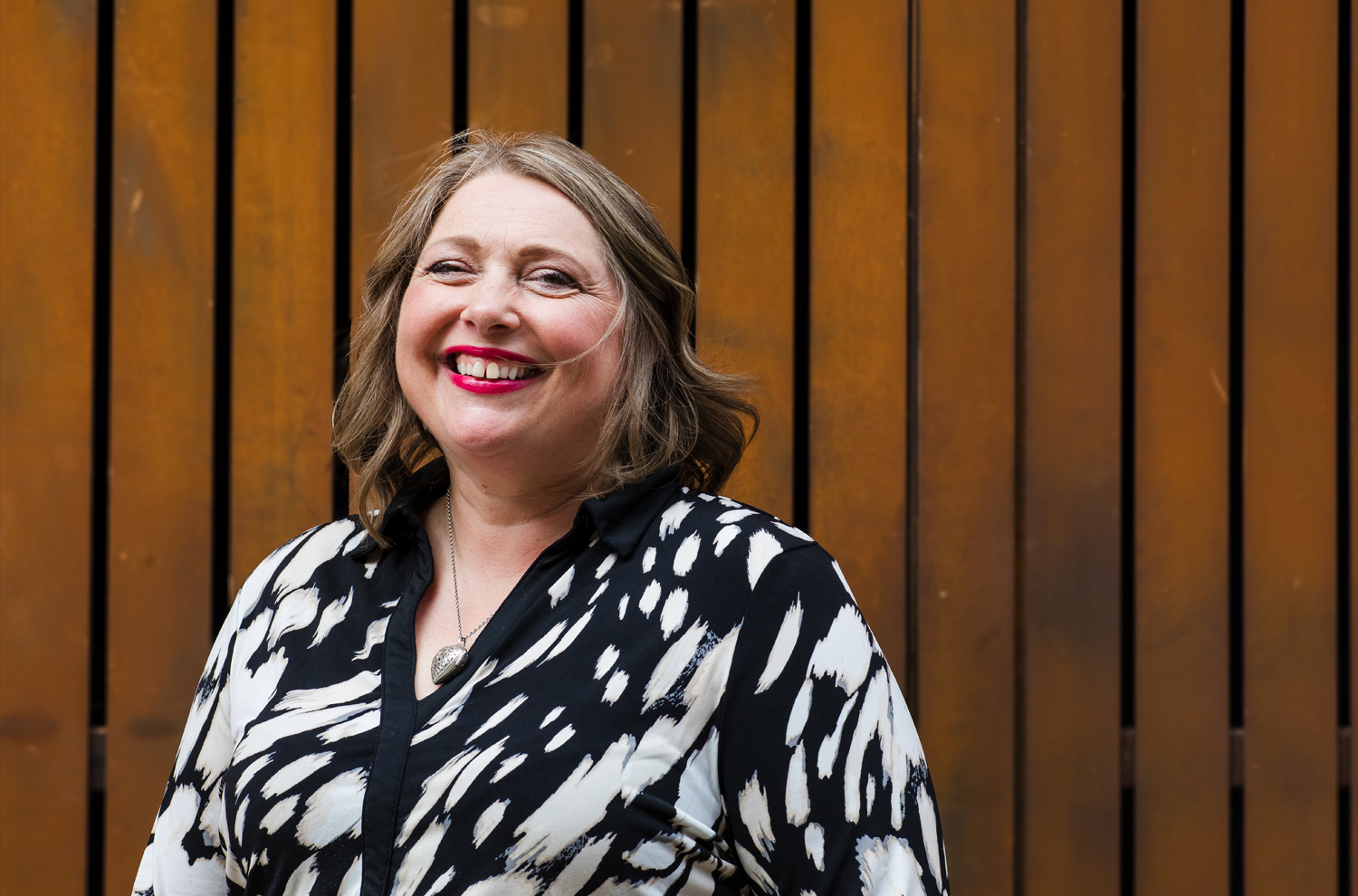
Leila Ainge is a British Psychological Society accredited psychologist, doctoral researcher and podcast host whose work sits at the intersection of identity, trust and working life. Her research explores how online communities shape the experience of freelancers and independent workers, with a particular focus on belonging, psychological safety and the systems that influence confidence and participation.
Alongside her PhD, Leila consults with authors, creatives and small businesses, delivering psychology-led research and insight that helps people make sense of their work and communicate it with clarity. She is particularly known for reframing the imposter phenomenon as something shaped not just by individuals but by context, culture and power, and her ambition is to help people move from reflection into meaningful action without losing nuance along the way.
In this episode, Leila shares the anxiety-fuelled exit from a corporate career that led her into business, why she believes imposter phenomenon is a far more accurate term than imposter syndrome, and what her doctoral research into online communities is revealing about belonging, internalised misogyny and the deeply unglamorous truth about why women hesitate to talk about profit. It is a conversation that will leave you questioning how many of the stories you tell about your own limitations were ever really yours to begin with.
Conversation Highlights:
- The anxiety that built and built in a male-dominated corporate role until it came to a head over something as simple, and as telling, as needing permission to use the toilet
- Why Leila’s entrepreneurial journey began with no grand plan, no product idea and no business model, just a decision that she could not stay where she was
- The moment a single role model on a Women in Leadership course, a mature student with a child who completed her doctorate, changed what Leila believed was possible for herself
- Why the corporate world so often makes midlife women feel invisible, and how stepping outside of it can feel disorientating even when it is exactly the right decision
- The difference between imposter syndrome and imposter phenomenon, and why naming something a phenomenon rather than a syndrome shifts the responsibility from the individual to the system
- The origins of imposter phenomenon research in 1979 and why it was never really about something being wrong with the women in question
- What Leila’s doctoral research into online communities is uncovering about belonging, psychological safety and the surprising ways in which women reproduce the very systems they left corporate life to escape
- The research into internalised misogyny in women business owners, including the discomfort many feel around discussing profit, self-promotion and pricing even in spaces designed to support them
- Why identity does not need to be fixed, niched or consistent, and how the concept of scaffolding liminality offers a much healthier way to think about who we are as we move through different seasons of motherhood and business
- The advice Leila would give her eight year old self about the confidence she would lose and eventually rebuild, and what that reveals about the shrinking so many women experience on the way to adulthood
Listen If You’re:
- Someone who has labelled your own struggles as imposter syndrome and never questioned whether the problem might sit elsewhere
- A member of an online community or membership and curious about what actually makes those spaces work, or not work, for women
- Uncomfortable talking about profit, pricing or your own success, even in spaces designed to support you
- Navigating an identity shift in midlife, whether that is leaving corporate life, becoming a mother or simply feeling like you no longer fit the box you used to
- Curious about the psychology behind belonging, community and why some people thrive in group spaces while others sit on the periphery
- Ready to stop blaming yourself for challenges that were never really about you in the first place
Favourite Quote for Mums in Business:
“It’s not your mindset, it’s a conditioned mindset that has been handed down to you by people who’ve told you to be quiet and not expect too much.” – Leila Ainge
About the Guest:
Leila Ainge is a British Psychological Society accredited psychologist, doctoral researcher and host of the podcast Psychologically Speaking. Her research explores belonging, psychological safety and identity within online freelance and business communities, and she is known for reframing imposter syndrome as imposter phenomenon, a shift shaped by context, culture and power rather than individual failing. Alongside her academic work, Leila consults with authors, creatives and small businesses on psychology-led research and communication. She is a mum navigating her own ongoing journey through identity, entrepreneurship and midlife.
You can connect with Leila Ainge at leilaainge.co.uk, on Instagram and LinkedIn, listen to her podcast Psychologically Speaking wherever you get your podcasts and follow her reflective writing on Substack.
About the Host:
I’m Victoria Phipps – a Mum of two, analogue family photographer, charity co-founder, photography business educator, marketer and now podcaster! My career has wandered all over the place and is becoming a bit of a complex tapestry as I head into this middle phase of life, but I can honestly say I’ve loved every minute of it so far.
I was raised by a nurturing Mother and an entrepreneurial Father and have inherited traits from both, so the tension between ambition and motherhood is one I grapple with on a daily basis! I’m fascinated to hear the stories of other women on a similar path, who are striving to build thriving businesses whilst being present for their children. It’s a tough juggle, but I hope the conversations shared on this podcast help Mums in business feel less alone and inspired to keep going in pursuit of their dreams!
If You Enjoyed This Episode:
Please subscribe, rate and review the podcast – it helps other mums find us!
Share in your Instagram stories, tag @mummeansbusinesspodcast and let us know your biggest takeaway.
Share this episode with a fellow Mum in business who you feel would resonate with Leila’s story.
Episode Transcript:
Hello and welcome to the Mum Means Business podcast, where we shine a light on inspiring women who have one thing in common. When they’re not managing tantrums, homework, P.E. kits and play dates, they are busting their gut to build a thriving business that supports their family life. I’m your host Victoria Phipps and I’m figuring out how to play this game right alongside you. I’m a motherhood, family and personal brand photographer, I teach portrait photographers how to lead with print in the digital age, I’m marketing lead in the family business my Dad founded over 20 years ago and I’m “Mum” to two little girls.
If you’re a multi-passionate mum too, in need of some solidarity whilst navigating the messy middle of making your big dream a reality, then stick around. This is for you.
NOTE: This is the transcript from the original recording, rather than the edited episode so timings may vary.
Victoria (00:01)
My guest today is a British psychological, I’m gonna say that again. My guest today is a British Psychological Society accredited psychologist, doctoral researcher and podcast host whose work sits at the intersection of identity, trust and working life. Her research explores how online communities shape the experience of freelancers and independent workers with a particular focus on belonging.
psychological safety and the systems that influence confidence and participation. Alongside her PhD, Leila Ange consults with authors, creatives and small businesses delivering psychology-led research and insight that helps people make sense of their work and communicate it with clarity. She is particularly known for reframing the imposter phenomenon as something shaped not just by individuals but by context, culture and power.
And this feeds into her ambition to help people move from reflection into meaningful action without losing nuance along the way. Leela’s podcast, Psychologically Speaking, brings together research, lived experience, and thoughtful conversation to explore how we navigate identity, work, and everyday life. Across the board, her work blends academic insight with grounded real-world application, often drawing on social identity theory,
self-compassion research and her own experiences as a mature student, entrepreneur and mum. Leela, I’m so looking forward to digging into all this fascinating stuff with you. So welcome to the Mummy’s Business Podcast.
Leila (01:36)
thank you so much for having me. I’ve been so excited about joining you today and having a good old chat.
Victoria (01:43)
I think it’s gonna be great. I’m really interested to pick your brains on all this deep stuff. So let’s go back to the beginning of your kind of entrepreneurial story. Tell me what made you start a business.
Leila (01:57)
Anxiety. Yeah,
Victoria (01:58)
Okay. Yep. Good start.
Leila (02:01)
so I’d had my child who’s now 10. I think he was still at nursery and I was working for an engineering consultancy at the time. my background is I’ve always kind of done management consulting, contracting work, fixed term work. You I’ve never been a long-term employee anywhere. It’s not really my bag.
But I was working for this engineering consultancy. It was a job I could do. My manager would even say to me, you’re a safe pair of hands, Leela. I can give you anything. You can just get it done. And it was quite a strange time because I working in quite a young team. They were software developers, so very, very young, a lot of male energy in there. And I was also working in the railway area, which is very male-dominated as well.
And at the same time, I was starting to feel really anxious just all of the time. And I’ve never ever had anxiety up to that point. I’d gone through, you know, university, early parenthood, not been an anxious person, never been worried about things. But I was doing all this travel to London from the Midlands. I’d be on trains a lot. And I would get really panicky on the train, just even the thought of missing a train or getting the wrong time.
And the anxiety just got worse and worse and worse. And there was a breaking point for me where I went down to the offices of Network Rail. And when you were a visitor, they gave you a pass, but this pass, it meant that you couldn’t get to the toilet. And at the time I was like kind of almost perimenopausal. I was flooding, doing all of that, you know, I was just uncomfortable in my own body, in my own skin. And I had to go.
and get somebody to let me in and out every time I need the toilet. And that particular day I needed to go literally every hour. And I was in such an anxious mess thinking that I didn’t look professional, that I just felt uncomfortable. And it was just all of those things. Why am I doing this? I’m
Victoria (04:09)
Yeah, yeah.
Leila (04:10)
not enjoying being an employee here. I am not enjoying the environment. It doesn’t work for me. And at the same time, just wasn’t.
challenging me in the way that it needed to. Yes, I was a safe pair of hands, I could do the work, but that was it, I could do the work. It wasn’t lighting me up. So I had this idea that I just couldn’t carry on working there. I’d had a little time off, sick, my GP had signed me off, said, you need a break. So I had a break and then just didn’t want to go back. So I negotiated an exit and registered a consultancy on Companies House.
And that was it. I didn’t really have a grand plan. think at the time, the consultancy world had changed quite a lot and you needed to have a company then. The old fashioned contracting had changed a lot. I think in the back of my mind, I thought, I’ll just pick up some IT contracting work, some project management work. And I did, I ended up doing some work for a council, which was wonderful. It was day rate work and…
At the same time, I was starting to think, what do I want to do with my business? So I’d managed to secure a contract to get me going. But literally within six months of setting up my limited business and starting to explore, you know, setting myself up as a social person on social media, something I’d never had to do before,
Victoria (05:36)
Mm.
Leila (05:37)
we went into lockdown. And so, yeah, yeah.
Victoria (05:40)
Ideal, yeah.
Leila (05:43)
And I was working for a council.
Victoria (05:46)
Yeah,
god, yeah, yeah.
Leila (05:47)
And I had a,
we’d just moved house as well. So I set up my business in September 2019, wouldn’t have been, so
Victoria (05:55)
17.
Leila (05:56)
September 2019, set up my business. My little boy started school that September. We moved house in November and then we went into lockdown in the March. And so I couldn’t
Victoria (06:10)
That’s a lot.
Leila (06:11)
do the day rate consultancy long-term. So think I managed to muddle on through till.
about May or June. And then I gave up the day rate consultancy and said no. And I actually ended up doing work for a pharmaceutical company who was based in the US because it meant I could work in the evenings and converse with them and I was helping them through the pandemic and remote working. But my husband was working on a contract which supported government and NHS, so he wasn’t furloughed. So yeah, the day times were really interesting. I was stuck at home with.
child in one room in a study with my husband trying
Victoria (06:50)
Yeah.
Leila (06:50)
to support a four-year-old homeschooling or he was only four at the time and yeah that was really difficult but that was the start of my entrepreneurial journey which was so anti-entrepreneurial there was no big product idea
Victoria (07:03)
You
Leila (07:04)
no big service idea I had no idea how do I take everything that I am and I know and who I am over the last 20 years and turn this into a business I didn’t have a clue
That’s how I started, was to just kind of go, well, I’ll figure it out.
Victoria (07:21)
Yeah, but I really appreciate that honesty because this is the thing, isn’t it? You can feel really ill at ease in your current job, in your situation. And what you described there about the toilet thing, I’m just like,
come on. Like, it’s just such an easy thing to fix.
Leila (07:39)
Hmm.
Victoria (07:40)
like, of course, and there are so many situations like that, that can just be like the straw that broke the camel’s back. And you’re just looking at your day and thinking, I’m having a horrible time. Like, what’s going on?
And I totally get it. Yeah, exactly. By myself without me to ask permission, like I’m five. Yeah, I totally understand that. And so you can look at that situation and you
Leila (08:01)
and
Victoria (08:01)
can feel so moved to make a change, but actually not know what is on the other side of it. And
Leila (08:07)
Yeah?
Victoria (08:08)
I think there’s something really powerful about just…
doing it anyway and having
Leila (08:13)
Yeah.
Victoria (08:14)
that trust in yourself that you’ll figure something out but you absolutely cannot stay where you are. Because like you say,
Leila (08:19)
Yeah.
Victoria (08:19)
if you’re starting to feel anxious, like a lot of people will begin feeling anxious and can sort of half put that like towards their job, that their job is impacting that feeling
Leila (08:31)
Hmm.
Victoria (08:32)
that they’re starting to have and still live in it. And it can build and build and build and they could live in it for decades. And so to actually acknowledge it and to say, I don’t know,
exactly what’s going on. And like you
Leila (08:43)
Yeah.
Victoria (08:43)
say, there may have been some perimenopause in there too. But the job isn’t helping. And I’m not, it’s not lighting me up. I’m not happy. So to make the change and just be courageous, even though
Leila (08:55)
Yeah.
Victoria (08:55)
you don’t have your fully outlined business plan ready to kind of submit to a greater authority and ask for permission
Leila (09:03)
No.
Victoria (09:04)
and all that stuff, like to actually just say, no, I know what’s right for me in my gut and I’m going to trust myself.
Leila (09:08)
Yeah.
Victoria (09:09)
And we’re just going to make that shift.
I think that’s really important to share because sometimes, you know, the situation that you’re in is intolerable and you don’t have to have all the answers because you did build a business.
Leila (09:23)
You really don’t.
No, you really don’t. And I look back now and the great thing, I suppose, about training to be a psychologist and certainly what I do now is to be really reflective and be reflexive in what’s happened in the past. And I can look back now and go, actually, I had the perfect introduction into business. I had space to experiment. I didn’t have any high expectations about a particular thing going well.
So I did throw jelly at quite a few walls and it was a case
Victoria (09:57)
Yeah.
Leila (09:57)
of seeing what did stick. And one of the most serendipitous things that happened was I thought, well, I need to network and I don’t know anybody else who has their own business in the Midlands. And I went on Eventbrite to go and go, is there anything happening locally? And there was something that was advertised for women business owners.
And I didn’t realize at the time it was actually a course at Nottingham Trent University. So I went along to the open day and they were looking for women who wanted to do a women in leadership course. And it was, you you’d kind of did a whole week on site. It was very kind of fast paced. And then you got a certificate at the end of it. And I thought, actually, it’d be really nice to meet other women in leadership and to get a formal qualification because I worked for 20 years and you know.
that my university experience was like 20 years previous and it was in a different discipline, it was in IT and business. So I went and did the certificate Women in Leadership and the most incredible thing happened there because we had a woman called Suzanne Ross who took us and led us for quite a lot of our kind of like seminars and events.
And she told the story about how she was a mature student with a child who did her doctorate. And I remember just sitting there and going, wow, so you can do it that way. Because I think I thought that I wouldn’t do that. I wouldn’t ever go back to university. I wouldn’t be a PhD. I wouldn’t be able to follow the route I wanted to follow. And I’ve always in business been this kind of hybrid of very techie, very geeky.
but also very interested in the people. So I sit right down the middle and I’ve always enjoyed the projects where it’s been highly technical, but then it’s the people bit that’s had to deliver it. And psychology for me was the thing that I was very interested in. So it was only by sitting in a room with other women and seeing a role model who was older than me, who was midlife and saying, this is where all the invisible women are who are midlife. They’re off doing different things.
And that’s how I felt at the time. felt that I was getting, I was very invisible when I was in employment as a middle-aged woman. I felt like my needs weren’t being seen. You know, I was hitting this midlife where things felt a bit chaotic, where, you know, I was getting brain fog, where I did need different things to happen. I got a young child, my husband was working. We were doing that balance with the childcare, but I just felt really invisible, you know?
It’s so strange because I think you feel so ultra visible when you have a baby, when you become pregnant and you’re working somewhere, there’s
Victoria (12:46)
Yeah. Yeah.
Leila (12:48)
such a big fuss made about it. And then when you come back, it’s almost like an invisibility cloak’s put over you and you don’t feel like yourself anymore. Maybe your body and your identity’s changed a bit. So it took me a long time to navigate that. But one of the things that I started to see was other women. And I suppose it just kind of opened my eyes to…
the fact that middle-aged women were absent as role models in the organisations I’d been working in, mainly because they didn’t, like me, they weren’t finding it was working. So they were going out and doing other things. And so now I’m really, I feel really fortunate. So my supervisor, my director of studies for my doctorate, you know, she’s got a young child, you know, and she’s in academia. There’s people who have done doctorates who were along the way have said to me,
you can do this, you can do this and they’ve done it when they’ve been older as well. So it’s been quite nice to know that, yeah, I would say my journey into business ownership has been a meeting of both trying to do something a bit different and find a place in the world, but it’s also been that meeting of seeing other women doing it. And I think when you are your own business owner, whether for me it was in
you know, academia, or even on social media, you come into contact with so many more women who are so inspirational. And we were talking earlier about Theresa, who’s your coach and you’ve had on this podcast. And it’s women like her, you know, who you meet and you’re like, yeah, they’ve found a different way to do it. And that’s the inspiration, you know, that’s, that’s where I think my entrepreneurial journey took me, which was.
you know, I’m going to go and see what’s out there, see what works, throw a bit of jelly at the wall. And it took a lot of figuring out. So I’m seven years in this year. And this last year has just been, thank you, this last year has
Victoria (14:47)
Congratulations.
Leila (14:50)
just been an absolute delight. And I am now doing something that I’m really proud of. And I know what I’m doing now. Whereas
Victoria (14:59)
Yeah.
Leila (14:59)
maybe three years ago, I was still figuring it out, but now I know exactly who my audience is.
you know, I’m working with some amazing women, helping them get thought leadership together. I’m doing research, which is that’s what I wanted to do. And yeah, it’s just great fun really.
Victoria (15:17)
Well,
you’re becoming one of those women that can show other women what’s possible because you’re,
Leila (15:22)
I hope so.
Victoria (15:24)
yeah, absolutely, because you’re right, unless you see it.
Leila (15:28)
Hmm.
Victoria (15:28)
And I think, especially if you’ve been in, I mean, I’ve had lots of conversations with women on this podcast who’ve had that experience, been in a corporate role, and it’s quite a kind of, it’s like you get institutionalized and that
Leila (15:41)
Yes.
Victoria (15:42)
becomes your world. Like it’s your social world.
Leila (15:45)
Mmm.
Victoria (15:45)
And
if you only know people like that who are clocking in, you know, nine till five in the office, then actually this world of business can feel one, very intimidating, definitely like it’s just not for you. You don’t know anything about it. And it’s distant. And if for whatever reason you make that decision to move into that space, it can feel quite overwhelming.
Leila (16:15)
Mm-hmm.
Victoria (16:16)
And
especially if you’re doing it in your forties or your fifties and you’re in midlife and you’re also navigating all the changes that your body is going through,
Leila (16:25)
Well…
Victoria (16:26)
you can get quite frightened, I think, by that. And also you’re kind of bringing all of your kind good girl conditioning about, you know, the rules of how you are successful and the idea of becoming a beginner in something.
is quite intimidating and you’ve spent a long time over here. You’d had your corporate career and you were proficient.
Leila (16:54)
and
Victoria (16:55)
People could give you anything and you just take care of it. Even if you hated it, you could do it. So at least you have your
Leila (16:59)
Yeah.
Victoria (17:02)
authority there. You’ve built up your reputation. And so to go and start something completely afresh can feel quite scary. And you can start to, as you say, feel invisible. And maybe you’ve missed the boat on stuff like academia.
Leila (17:15)
Yeah?
Yeah.
Victoria (17:16)
and to have just one person. And that’s so interesting about the story. It’s just one woman who
Leila (17:21)
Yeah.
Victoria (17:21)
is in your situation, who has children or a child and is doing this stuff. And to just make that point that it’s not too late for anything. You can do anything still. Yeah, yeah, yeah.
Leila (17:32)
And it’s not impossible. Yeah. And this is really
weird thing that happens with identity as well, because I think when we fear being a beginner, think, you know, psychologically we would say it’s because it really shakes our core of who we think we are. So when you get to, you know, 20 years of corporate experience or professional experience like I had, yeah, of course I can probably sit on most programs and projects and
not feel out of depth and I’ll keep developing myself and pushing myself but my sense of competence, my sense of self-worth, my self-esteem was so tied up in that singular identity. It was probably the best thing I ever did to step away from it and to say let’s start again because it’s allowed me to be less afraid of not being complete.
And quite often I’ve tried something and then thought, no, this isn’t going to work. So just over two years ago when I decided to do the doctorate, so I’d done my masters and I’d retrained as a psychologist and I was loving life and I thought I do want to do my doctorate and I got my business, but part of me thought, do you know what? It’s going to be quite difficult. I might need to just get a contract, something that’s stable alongside the PhD. So I tried to go back into work.
And was any part-time contract, but it just brought me no joy whatsoever. And again, it was, think
Victoria (19:04)
Yeah.
Leila (19:04)
it was because I’d moved out of that identity and I felt even team meetings, I would just find so difficult, know, sitting there and being treated like I have to follow some rules that I didn’t quite understand or feel that I was part of. it’s like, I just want to do my job. Just want to do the job.
Victoria (19:23)
Yeah, yeah.
Leila (19:24)
And I think I’d moved into that freelancing mindset without realizing it. And.
Yeah, it was quite difficult. So the best decision I made last year was to just kind of walk away from any kind of PAYE work. So I’m fully freelance again. And it’s bringing much more joy because I just don’t feel like I’m conflicted. And I think a lot of women go through this. mean, certainly people like my own clients have said, you know, well, I’m not this yet, or I’m not that, or I’m working towards being this. We…
As women, we’re in a lot of liminal states in our middle life, you know? And some of that is biology and having children and societal expectations. But perhaps some of it is just growth. Perhaps some of it is just what we’re supposed to do at this age and this idea that perhaps women really see other women. And we do see that visibility of middle life and the value that we can give. So yeah, I think it’s been quite an interesting kind of 18 months, but I’m feeling very comfortable.
with where things are at now, which is being a complete beginner at the doctoral game. And it is a bit of a game. And then just enjoying my career, which the weird thing there is that I thought I would have to do the doctoral work first and get my PhD and be Dr. Leela Range to be a credible researcher. But I had a wonderful opportunity last year to work with an author and her team.
And I’m doing that research work that I thought I’d be doing in five years time already. You know, I’m doing that part-time and I’m really enjoying it. And yeah, and I’ve got another client as well doing something very similar. So that for me is been the full circle moment, which is to realize sometimes when you think I’ve got to do this before I’m ready, perhaps you can start it a lot earlier. Perhaps starting earlier is the way to feel ready. And again, it
Victoria (21:22)
Yeah.
Leila (21:23)
just ties back into that, having a real plan.
Victoria (21:26)
Yeah, no, no, completely. also like my favorite, think increasingly it’s my favorite quote of the moment, obviously
Leila (21:31)
You
Victoria (21:31)
it’ll change. But it’s like this idea that ready is a decision and not a feeling. And I think
Leila (21:36)
Yeah, totally.
Victoria (21:37)
it sounds like you’ve just made that decision and perhaps the opportunity presented itself, but you look around and you think, well, why, what’s stopping me doing this now? And actually what would stop you is just this belief
Leila (21:48)
you
Victoria (21:49)
that you have to have all your I’s dotted and your T’s crossed,
Leila (21:52)
Bye.
Victoria (21:52)
which is I think the story that we all grew up with.
you know, go, you know, work hard, get your exams, do this, go to university, get this job, blah, blah. You know, and all these tick boxes that we were encouraged to go through and encouraged to, you know, invest our time, invest our energy. And there’s this big, great reward, reward waiting for us on the other side. And actually you’ve done all of those things and you’ve got these 20 years in corporate, you’ve got your family and you’re anxious.
And I, well, that wasn’t the reward
Leila (22:24)
That way.
Victoria (22:25)
that was hoping for. Yeah, that was not what was part of the deal. So, so then you have to kind of throw the system away. And
Leila (22:32)
Mmm.
Victoria (22:32)
it sounds like you went and you sort of dabbled back in it again. But I always think
Leila (22:35)
Yes.
Victoria (22:36)
it’s really hard to go back. Like once you’ve tasted the freedom, like you say, you’re sitting in a meeting and you’re
Leila (22:41)
Yeah.
Victoria (22:42)
kind of thinking, I don’t want to listen to you. I don’t want to do, don’t, I don’t have to do this stuff anymore. You know, just kind of, there’s something about authority in it where you like,
Leila (22:52)
and
Victoria (22:52)
you’ve had that freedom.
of deciding for yourself how you’re going to work, what order you’re going to do things in. You’re making up your own procedures and policies and you’re getting the work done importantly,
Leila (23:02)
now.
Victoria (23:03)
but then to kind of go into a space where it’s needed to be done in a particular way because someone who is senior to you said so and you’re like, well, nah, it’s hard to go back.
Leila (23:13)
Yeah, and maybe,
you know, if I was a psychotherapist, I might say, Leely, you’ve got a problem with authority. And perhaps I have, but I think that comes,
Victoria (23:21)
Alright.
Leila (23:21)
I think that comes from, you know, the authority in the systems that I’ve sat and worked in for 20 years. They just genuinely weren’t built for me when I hit that age where I was sitting on a train, feeling anxious about going to work in an office
Victoria (23:35)
Yeah.
Leila (23:35)
for the day that I knew even before I got there.
I wouldn’t be able to go to the toilet when I wanted to. I sit and listen to it now and I’m like, my God, that’s just bonkers. Why didn’t I complain? Why didn’t I say something? But you know, the shame, the shame of it and the feeling, you know, when you were, I was, we were doing work for Network Rail, so they were the customer. And again, that corporate, the way I was taught,
Victoria (24:00)
hierarchy.
Leila (24:01)
yeah, and the way I was taught as a 20 year old in management consultancy is…
You know, we’re very professional on client sites and, you know, we’re there to steer and facilitate and to show them we’re the people who are professional. We go in, we solve problems, you know, I’ve had to unlearn so much of that. I think over the last couple of years to just kind of go, you know, I don’t have to pretend that things are okay when they’re not. I’m not the person that has to hold the sky up. And now when I look at it with my psychology lens,
and a critical feminist lens, you know, it’s this neoliberal idea that, you know, the world isn’t built for women, the world of work, but then neither is telling women that they can do everything working, you know, the idea of empowerment is so wrong, you know, it’s not an individual thing, it’s very much a systemic thing that needs to change. And I was slap bang in the middle of it all.
Victoria (24:59)
Yeah, which is why it’s so sort of natural that you’ve kind of ended up where you are now.
Leila (25:06)
you
Victoria (25:07)
And you’re sort of always seeking the antidote to that and trying
Leila (25:11)
Yes.
Victoria (25:12)
to help women to navigate it and give themselves permission to think differently because it’s really hard to undo, you know, perhaps decades of a particular story that you’ve internalized. And, know, no one is so professional.
nor should they ever be asked to be that they have to hold their bladder for a whole working day. You know, did the men have to all put their hand up? Like what’s going on? And it’s this thing about, and I think happily COVID did help with a lot of this,
Leila (25:40)
Yeah.
Victoria (25:41)
this thing about, you know, professionalism and what that means.
Leila (25:43)
No.
Victoria (25:45)
you know, seeing all the kind of the dads on Zoom calls who would normally be in the city in their office
Leila (25:51)
Yeah.
Victoria (25:52)
in their suit.
And actually there’s chaos, domestic chaos happening all around them because that is
Leila (25:56)
You
Victoria (25:57)
real life. That is what mum is usually dealing with, you know, and to just break down this sort of mystique, this haze and this idea that we’ve got our professional selves and our personal lives and we shouldn’t admit as a professional that we have a personal life. And it’s, you know, it comes down to everything like who’s doing the school run because now, you know,
most families, two parents are working. And I just think when you break it all down, there’s so much change that actually has happened in a really short space of time
and
Leila (26:30)
Bye.
Victoria (26:31)
the impact on our gender roles, our identity, and I think particularly in kind of like you were saying, male dominated corporate environments, you know, to kind of reestablish that and just be more human with each other and
Leila (26:47)
Yeah.
Victoria (26:47)
have more grace.
and don’t make women put their hand up every time they need to go to the toilet when they’re on your site. It’s just a really basic kind of human right and courtesy. But the fact that you felt uncomfortable and like you would be judged for just dealing with your own body in a day is worth acknowledging.
Leila (27:13)
Yeah, and I think at the time,
yeah, and I think at the time as well, I think the reason I ended up in that situation was you had to have a contractor card or something. And for whatever reason, I couldn’t get a contractor card to work on in that site and I had to borrow somebody else’s. It’s just, know, and again, you think it’s a policy and a process that just didn’t work, but…
most of these corporate processes and policies are not things you can challenge in the moment, you know, and we seem to have lost face. Yeah, yeah. Yeah. Yeah.
Victoria (27:44)
Or you feel able to. Yeah, you feel able to. You feel like you can’t complain about that because that stops the whole day and you’d be a pain in the ass. And
this could be applied to so many situations. Like obviously
Leila (27:55)
You
Victoria (27:56)
it’s quite an amusing one that we’re citing with you to look back on, but
Leila (28:00)
Yeah.
Victoria (28:00)
there’s so many situations like that. You can go as far as like, know, sexual discrimination in the workplace, whatever,
Leila (28:06)
huh.
Victoria (28:07)
where women have felt unable to speak because it would be in inverted commas rocking the boat.
And I think this is the identity shift that we’re making because I’ve got loads of stories that if I actually sat down and thought about it, I could conjure up about, wish I’d say that. Why didn’t I question that? That was ridiculous.
Leila (28:23)
Yeah.
Victoria (28:25)
But we don’t because we’ve basically been told not to make a fuss.
Leila (28:29)
Mm-hmm.
Victoria (28:30)
And all of that kind of plays into our identity as a woman. And I think when you come to own your own business,
There are so many of these stories that lead into kind of limiting beliefs about what we can and can’t do. And that plays into what I had called imposter syndrome, what you call imposter phenomenon,
Leila (28:49)
Yes.
Victoria (28:51)
that we feel like we have to have, you you felt like, I ought to go and get a certificate. Doesn’t really matter what certificate is. I feel like I’d feel better if I had a
certificate
Leila (28:59)
Yes.
Victoria (28:59)
and there’s this week long course, let’s go and get that. It’s got leadership on it. That’s a grownup word. Like, let’s go and do it. And happily, it worked out so well for me.
Leila (29:07)
Mmm.
Victoria (29:07)
for you because
you had that role model which changed your mindset. But we do
Leila (29:10)
Yes.
Victoria (29:11)
have this instinct that we need like permission and we need proof and we need a piece of paper. So talk to me a little about your work with imposter phenomenon and why you’re calling it that and why you’re not calling it imposter syndrome.
Leila (29:27)
Yeah, so I decided to do my master’s thesis on imposter phenomenon. And the reason was during COVID, I joined lots of online memberships for women and I was in quite a few women-only spaces. And I thought it was really curious that women were saying, I am really worried that people are gonna call me out and tell me I’m an imposter, but I’m gonna join these groups.
and say that I’m this and I’m show up as that. And I just thought, well, what an oxymoron. Isn’t it strange that women
Victoria (30:03)
Mmm.
Leila (30:03)
are saying, I don’t think I can put myself out there, but women are putting themselves out there. And I was really interested in that risk taking that was happening. So I interviewed women who were in women only online spaces. And it was really curious. It was really curious how…
you know, they showed up and what they described as smoke and mirrors and, you know, even just the kind of gendered discourses that happened even in women-only spaces like who does she think she is, girl bossing, all of this kind of stuff was so rich. But the reason it’s a phenomenon is a syndrome is something that is wrong with an individual, whereas a phenomenon is something we can’t quite explain. And if we can’t quite explain,
what is happening when a woman feels that she’s going to get called out or a man because imposter is, you know, not indiscriminate.
Victoria (31:01)
Yeah, yeah.
Leila (31:01)
Then it is a phenomenon. And originally the original research was done in 1979, I think, and the two psychologists who coined the term, they were actually seeing black women who were highly educated, who were turning up for therapy sessions and describing this thought that
perhaps they’d get found out that they weren’t as good as everybody thought they were. And they described it as a phenomenon, because they’re like, on paper, these women are smashing it. Well, they wouldn’t have said that
Victoria (31:33)
Yeah.
Leila (31:34)
in 1979. you know, that was still a time when women couldn’t get loans or mortgages without a husband, especially in America, even in the UK. It was a time when perhaps even to make some decisions about your own body, you would need your husband’s consent. And yet,
what happened in the decades after that has really fascinated me because rather than saying, well, isn’t that strange that in a time where there isn’t gender equality in a workplace, women might feel that they don’t fit in. We went, there’s something wrong with the women. And I just, there was part of me just went,
Victoria (32:08)
Yeah. Yeah.
Leila (32:09)
no, that is not right. It can’t be right. And obviously you can’t just say that as a psychologist. You need to think about theory and get some evidence. So I went in search of evidence and the evidence that I gathered said,
yeah, this phenomenon is a thing because it’s probably less about the woman and more about the system and the structure and inequality, systemic oppression that is holding people back when they experience impotence. I’ll say people because even though my research was centered on women, there are other studies that show that this isn’t just a women’s problem. know, men…
are challenged as well by some of the structural issues that we have. And also there’s privilege even within the sample groups that we look at. not everybody is discriminated against equally. Some people
experience
Victoria (33:02)
Yeah.
Leila (33:03)
things more acutely. So yeah, that’s where I went with the research. And then on the back of that, I was very interested really just in this idea of community.
So the other bit that had come out that I didn’t have time to talk about in my thesis and didn’t have enough material was this idea that how do we end up with these spaces that are non-organisational but are probably the best bits of being in a company where you’ve got this community, you’ve got this belonging, what is it about online communities for business owners that works, what are they getting right and why is nobody talking about this? Because of course,
There’s no real body of research that tells us if you invest money in a membership, here’s what you get back for it. Here’s your return on investment. And that was my impetus really to kind of continue into doctoral research. That’s what I’m doing at the moment.
Victoria (34:00)
And are you able to share what people are getting back from it?
Leila (34:04)
Yeah, I am. I’ve nearly concluded my first lot of interviews. So I’m doing a mixed methods doctoral. So I’m a set of interviews with people who were part of two online communities, paid communities. I’m interviewing women. I’m interested in women’s experiences. And then the second part of my study will be a big questionnaire.
But this first study, in this first phase, is all about situating the research and saying, what are women’s experiences? So women will say things like, you know, I found my people. You know, I can be myself. There’s always somebody there. I can share information. But interestingly, people will talk about how they’ve joined a space for networking, but they…
over a period of time almost dissociate the community with networking and they associate it more with friendship and emotional support. So that’s quite interesting. I’d like to measure that as part of my doctoral research. I think that would be something really interesting. But the other thing is just how people describe, so those water cooler moments that we might, you know, all the stuff we said we forgot and we really missed in COVID, like being able to just have a chat over
coffee, people have replicated that in online communities. So depending on the community, depending on the rituals and what happens in the culture, there are spaces where people have like get togethers to do like online quizzes or co-working or, you know, even chats about books and whatever. And this word fun comes up so much, you know, I’m having some fun. I’ve got people to chat with and have a laugh with. It’s like having colleagues.
These are the comments that people are saying. So I think it’s really curious. I left corporate because I was like, I don’t like being an employee. And a lot of the women I’m speaking to were saying a very similar thing. It didn’t work for me. It wasn’t flexible, et cetera. But we all did like elements of being an employee and we seek those. And so I, you know, I’ve not analyzed the data set fully yet, but there’s some of the observations, some of the things that are coming through is that perhaps we
we reproduce stuff. And that’s not far away from what the theory and the literature is saying in this area. So the feminist theory in this area says that, you know, women reproduce systems and they do that in good ways and bad ways. So we reproduce things that are going to work for us. But also we’re reproducing ways of working that aren’t so helpful.
So thing that I’m quite interested in is, you know, in creating all of these online communities and spaces, are we inadvertently going to end up creating spaces that don’t work for women again, or are we doing better? You know, really good questions there.
Victoria (37:09)
time will tell. But I, I
Leila (37:10)
It will.
Victoria (37:12)
am, I completely understand that, that idea that you kind of go into a community because you think it’s going to be helpful for your business in some sort of productive way. And I think
Leila (37:20)
Moon.
Victoria (37:20)
probably a lot of women must enter it justifying the cost. Like this will be good for business.
Leila (37:25)
Mm.
Victoria (37:26)
And actually what they’re getting is something much nicer, which is community and a sense of belonging. And it does all kind of play.
back into identity and that you’ve kind of perhaps left a corporate life and your identity is shifting. Your identity is shifting because you’re a parent. Your identity is shifting because maybe you are entering midlife and you’re dealing with like hormonal changes. There’s so much going on all the time. It’s a nightmare. But you, you, you will be calibrating and you’re, you’re trying to live in that identity of female founder, business
Leila (38:03)
Mm.
Victoria (38:03)
owner.
And like you say, there’s this sort of tension between imposter phenomenon and fake it till you make it. You know,
Leila (38:11)
Yes.
Victoria (38:12)
you’ll probably have days where you just feel great and you go up and you pitch for stuff and you post here and you do that. And then days when you’re like, oh my God, I’m so rubbish. I don’t know why anybody would hire me ever again.
Leila (38:24)
Yeah.
Victoria (38:25)
I should just throw this business in the bin because that is the life of a woman. That is what we navigate all the time. That is us.
Leila (38:31)
So
this comes through in the interviews so brilliantly and it looks like this. So women will say things like, I’ll say to them, do you celebrate your successes in the space? And someone will go, yeah, I’ll celebrate. And I’ll say, well, no, I tend not to. And I’ll say, why not? Well, you know, I see other people celebrating and they’ve got real big things to celebrate and mine aren’t big.
You know, so there’s that language comes through. And again, if we’re thinking about internalized misogyny and what that means, which is we hold gendered beliefs that are negative about women’s place in the world of work, they are being reproduced in these spaces and from a feminist and critical lens, that’s really fascinating to see that play out. The other thing that I’m seeing is how
Women who I’ve spoken to create their own boundaries around what is right and what isn’t. So a lot of communities have guidelines, know, they have rules about what you can and you can’t do. But there’s also a huge amount of ambiguousness around what isn’t allowed and what you can get away with. Women talk about being hugely respectful in these spaces. That is so important to them. And a lot of this is generated through the host and the host behavior and what we…
thinking of as an identity leadership in a way. And then what happens is different people interpret that in many different ways. So there are winners and losers because some people will set themselves quite harsh boundaries around, well, I’m not going to self promote myself. I’m not really going to talk about my business, but I’m here for the friendship. And they tell themselves that that’s what they’re there for. Almost like the business doesn’t.
need to be talked about or they shouldn’t talk about it and I can’t help but then think about the research that I did with Nikki Denson-Elliott which was Good Girl Economics where we tested the idea of is internalised misogyny a thing? Can we use the psychological scales and can we see internalised misogyny in women business owners?
And yeah, we found it. We found it in space. know, there’s so much of it,
Victoria (40:52)
Yeah.
Leila (40:52)
these internalized messages. So I think we have to do this research. We must do it because if we don’t, we might end up with online spaces which don’t solve any of the systemic issues that we found ourselves in in the corporate world. So it’s a bit like jumping out of the frying pan and into the fire. But also what is it about these spaces that allow some people
to do that effortlessly and not to feel like an imposter and not to feel cheeky or to have to ask permission versus other people thinking, God, I never would, I just wouldn’t do that, it doesn’t feel right. So there are clearly different things going on there.
Victoria (41:36)
Yeah, and everyone is bringing their own stuff. You know,
Leila (41:38)
Yes.
Victoria (41:39)
everyone’s bringing their whole wealth of life experience thus
Leila (41:41)
Mm-hmm.
Victoria (41:42)
far, and all of the stories that they believe about themselves, and
Leila (41:47)
Mm-hmm.
Victoria (41:48)
also the stories that they believe about how they will be judged.
Leila (41:51)
Yes.
Victoria (41:52)
And I think that’s the piece, isn’t it? It’s this, because you’re right, it’s crazy. You would love to think that if a woman is creating a female-only community online,
Leila (42:02)
you
Victoria (42:03)
that it would be this place of enlightenment.
And often, often it can be, and I’m like, I’m a member of Nicky’s, I’m a member of doing it for the kids with Frankie and a couple of others. And I love them. And I love for all those reasons, I love the hour long chats, like the focus
Leila (42:22)
Mmm.
Victoria (42:22)
just, it’s like a Zoom call, but it’s normal.
There’s no agenda. It’s just like who wants to talk about what? Let’s chew the fat. And it’s a bit of company in your day and you’re getting
Leila (42:32)
the
Victoria (42:32)
to know people even though you’re not in front of them. And like you say, as a parent, it’s like flexible, it’s accessible. You can be there or not be there. There’s no
Leila (42:40)
Thank you.
Victoria (42:40)
rules. It’s for you if you want it. And there’s so many positives in that just for belonging and community,
Leila (42:47)
Yeah.
Victoria (42:47)
but that actually we are not yet free.
from that internalised misogyny. And I’ve certainly had those conversations with myself. I’m in the process of relaunching the personal branding side of my photography business.
Leila (43:06)
you
Victoria (43:06)
And so I’m portfolio building and I was like, could I just post in here? I mean, this is essentially a community of female business owners. Like it is exactly the people that I would be looking to help. But you have that conversation.
because, you know, do you do it or not? And then how do you do it? And the language that you use has got to be so specific because it can’t be brazen. I’m, and you can’t talk about how good you are, even though you might be good. It’s just a little bit like that. I did do a couple of posts and they must’ve taken me like an hour each almost to do, but it’s because you’re so aware that you are in a community of women.
Leila (43:52)
Mm-hmm.
Victoria (43:53)
And there are going to be women in there who are bringing their own stories and who, you get a few words wrong, or if you are too apologetic as well, don’t worry if it’s not for you, like it’s no pressure and blah, blah, blah, blah. you know, take it or leave it and it’s really cheap or whatever it might be. But it’s almost worse than if it was a mixed community because actually, and I’ve had lots of conversations like this, I do feel like there is a way to go.
with the way that women interact with each other, particularly in this kind of, you know, modern era of kind of female founders that we’re rejecting to a certain extent this corporate life that doesn’t serve mothers very well.
Leila (44:36)
You’re a girl.
Victoria (44:37)
And there’s so much, you know, the motherhood penalty, all of it, and lots of chat about menopause and companies supporting women through that. And a lot of women have had poor experiences and are finding a different way.
And they find these communities which are a place of just solidarity and so much encouragement at their best. But we can’t help but bring a little bit of this anxiety because we know what women can be like.
Leila (45:03)
Hmm.
Victoria (45:03)
And it would be wonderful if we were all exclusively encouraging, never envious, never… I would love it. Go and tell me why I’m wrong.
Leila (45:10)
Would it? Would it though? Would it they? And this is the social
identity piece, right? So social identity tells us that, you know, the groups that we are members of shape us, you know? They really have a
Victoria (45:25)
Yeah.
Leila (45:25)
huge impact in us. And what happens is when you feel very connected to a group or you feel like you belong, the group becomes a place of we and not me. So this idea that
you show up in the group and when you talk, perhaps, you you were talking about brand identity there. So that’s very much me, my brand identity. But then when you go to talk in a group in which you belong, the identity becomes blurred because are you talking me or are you talking we? Because I’ve got my group identity, I’m part of this group. So if we take Nikki, for example, I don’t think she’d mind us talking about Wilder. But you know, you in that space, you are one of the Wilder ones and she has a meetups and…
you know, that is about being a community of people. You feel part of a we, if you feel like you belong in that space. So it’s not just women-only spaces that do this. So my research is looking quite interesting. I decided to look at mixed gendered groups, but speak only to women, because I was quite interested to pick up on any nuances in there. But that’s
Victoria (46:26)
Okay, yeah. Mmm. Yeah.
Leila (46:29)
what happens. You know, it’s a psychological process of we are negotiating these kind of different identities and how we show up.
One of the interesting things for me though is this idea that you can only be empowering to be a feminist and actually it’s probably the worst way to do it because if we’re only being empowering then what we’re doing is we’re focusing feminism on the individual rather than focusing feminism on society and structure and you could argue that to get feminism right we need to dismantle systems that aren’t working for us, not lift up women.
there is a difference there and I think we forget that yeah I think we
Victoria (47:08)
Yeah, no, can see it. Yeah.
Leila (47:10)
forget it but the bit that made me smile as you were talking is even you know what you described there is so I’ve had to think about what I’m going to post and this thinking of crafting that automatic you know how automatic that feels to you I think depends on how closely you feel part of a group
how well you feel aligned with other members of the group. So there were people I’ve spoken to who were like, they don’t think twice about posting, they post anything, they’re really comfortable in that space, they don’t think anything’s too much, perhaps they do post about their wins, et cetera. You’ve got other people who were like, I’m more of a lurker, I like to read whatever they’re saying, but I wouldn’t post. I wouldn’t post because what I’ve got to say isn’t strong enough or I’m worried about offending people.
And then you move into this permission piece, which is, I would rather forfeit profit over selling my work in this space. And that is
Victoria (48:13)
Yeah.
Leila (48:14)
the heart of the work that Nikki did in her research, which was to say, why are we not talking about profit? And again, in these interviews, when I’m asking women, what do you get from this space? It isn’t business or…
profit or profitable business. They talk about friendship and being nice and collaborating and they talk about being supported and being held and those things are all brilliant. But if you look at the traditional sense of networking, it was about opening up opportunities in order to network to get ahead. So I think there’s still work to be done. I’m not saying that the model that we’ve got is wrong. I think it’s wonderful that
people hold and support each other and they feel like psychologically safe places and people will say that, but is it really psychologically safe if you don’t know how to put a post out to say what you do?
Victoria (49:09)
Yeah, it’s more of a psychological comfort. And I
Leila (49:11)
Yeah.
Victoria (49:12)
think it’s about your comfort zone, isn’t it? Like you’re
Leila (49:14)
you
Victoria (49:15)
able to stay within it and be held within it. And I do think a lot of that probably, I imagine comes top down. So like Nikki is very good, for example, if someone expresses an anxiety about pitching for something, whatever, she’s straight on it, like do it, do it, do it,
Leila (49:30)
Yeah.
Victoria (49:31)
do it, do it. And that’s the thing, go for it.
what are these limiting beliefs? Get out of your own way, you no nonsense. And there are other communities that are much more about just the solidarity
Leila (49:43)
Yeah, yeah.
Victoria (49:44)
and the banter about it and just like laughing when you want to cry. And
Leila (49:47)
Yeah? Yeah.
Victoria (49:49)
it’s all, it’s lovely in that sense. And so it is really interesting now that I reflect on it, that actually the leadership element is really going to dictate
Leila (49:59)
Yeah?
Victoria (49:59)
the culture within to a higher level than I thought perhaps it did.
Leila (50:04)
Yeah.
Victoria (50:04)
and you’re really making me think about it. And go on.
Leila (50:07)
So that’s why this time
around I’m interviewing the hosts as well, rather than just the women.
Victoria (50:12)
Yeah.
Leila (50:12)
I’ve been asking questions about the hosts, know, what do the hosts do in this space? How do they engage? I’m very interested in what the hosts do and in social identity and being a member of a group, there’s also this theoretical lens which is around what we call identity leadership. And identity leadership looks like a leader who is, creates a sense of we, not me.
And so I’m very interested in people like Nikki and Frankie and Steve who emulate that and do it. And of course the transcripts are showing that people recognise that. There are also people who are members of communities who will say, yeah, no, I feel like I sit on the periphery actually. And that’s fascinating because again, with every community, you’re always going to get people who feel very connected and people who feel less connected. And that’s normal, know, science is everything.
Victoria (51:04)
Yeah,
but just to pay to sit on the periphery. And I’ve said to Nikki, you pay good money to sit on the periphery of something.
Leila (51:12)
Yeah.
Victoria (51:13)
I’ve said to Nikki, and I’ve had conversations with other people about it who are in online memberships. And sometimes, you know, everyone’s busy and you hop
Leila (51:20)
you
Victoria (51:20)
in and out when you can, but you do feel like you could contribute more and
Leila (51:23)
Yeah.
Victoria (51:23)
you could be in that more. And that’s just something else we beat ourselves up about. You know, you’re paying for this thing and you’re not in it as much as you would like to be. But I said to her,
I’m happy to maintain it because I want her to win. I want her to be paid. I want her to keep going with it because I believe in what she’s doing. And that’s the sort of principle element of it. If I’m not engaging, that’s on me, but
Leila (51:49)
Yeah.
Victoria (51:49)
I believe in the mission of it. And same with all of the memberships that I’m in.
Leila (51:55)
Yeah.
Victoria (51:56)
And that’s interesting because I totally stand by that.
And
Leila (52:01)
Hmm
Victoria (52:01)
I do see that as like women supporting women, which is no bad thing, even on an individual level, although I’m not addressing any systemic issue by doing that, but I’m okay with it. I’m comfortable with
Leila (52:09)
Wow. Yeah.
Victoria (52:13)
it. But I do think it’s interesting this thing about money with it, like you say, that women would rather suffer financially than put themselves out there and say that they’re good at something and ask for business. And that’s so fascinating.
to dig into. And I just think your research must be just never ending interest because people are coming to you with that honest experience in a safe space that you’re creating for them. And it’s candid and authentic. And
Leila (52:48)
Yeah. Yeah.
Victoria (52:50)
all the information that you’re getting must be so telling. And I do think it’s important.
Leila (52:55)
It’s interesting. I I remember we set out, I’m interested in what, you know, the idea that when you’ve got belonging and when, so the theory really is when you’ve got belonging and psychological safety is in place, I was then like, but what, what does that give you? And does it increase our resilience, for example? So that’s one kind of area of inquiry of the PhD.
But what does, how do we know the resilience is there? How do we measure that? And in order to be able to get to a place where I can put an instrumental questionnaire out there and ask people and measure it, I’ve got to have these conversations to kind of dig into, but what’s happening? What’s happening? Because I can’t just go and do a literature review. Nobody has written about online freelance communities. Nobody has written about how women engage. It’s interesting that what you said there about
You said, I could engage more. And people do say that. So cyber psychology, the cyber literature on online and social media is really interesting. we’ve got a wealth of information about how we lurk. And my master’s research showed that you get vicarious benefits when you lurk. So paying to be a member, but not actually engaging in an active way.
can still bring you benefits. So we’ve got measures, I think there’s some work by some psychologists that have looked at a measure of passive and active engagement and it shows that you do get benefits. And why do people do it? Because you get psychological benefits. But interestingly, being able to then kind of then apply that to freelance situations is harder because there’s just no real studies. So doing the research is valuable because we’ve not done it before.
And as you said, just hearing individual stories makes you realize just how much nuance and complexity there is in deciding to, like you say, be a part of a membership, be part of a community. Are you there because you support something? And I know you said, I’m not changing anything systemically, but perhaps you are. You’re investing in a systemic change, which is to have a space for women or for entrepreneurs or business owners if you’re in a mixed group.
Yeah, I think we’ve got so many more questions than we’ve got answers, which is a typical psychologist thing to say, I must admit.
Victoria (55:27)
Yeah, but there’s, that’s the point, isn’t it? You know, your, your work is finding and extracting those answers. And until you’ve got the data, and you
Leila (55:36)
Yeah.
Victoria (55:37)
know, this applies in business, doesn’t it? So many, excuse me, so many business women in the early days, and you’re finding your feet, you’re not looking at the data, and you’re making decisions based on instinct or what everybody else is doing. And actually,
It can lead you astray and looking at the data regularly in your business is what gives you the information about how to move forward. And it’s
Leila (55:57)
totally.
Victoria (55:58)
the same with what you’re talking about. You can give so much vital information to community owners about how they can navigate moving forward with that space and create a healthier culture within it. And this is the way the world’s going. Online spaces are just going to become more more prevalent and they’re to have a greater and greater impact.
on all of us as we sit here in our houses, just trying to connect with each other through our screens. You know, it is important work.
Leila (56:29)
Yeah,
I mean the interesting thing for me is, you know, being able to tell people how to create better spaces. I don’t necessarily see that the research will do that. I think what the research is doing is showing everyone else how good community hosting happens and also where community hosting can be challenging or where being a member can be challenging. So I think
those voices will come through and be heard and it’s very much voice led this research, it’s about the individuals but I’m also obviously a member of these communities. So I’ve chosen quite deliberately to research two communities where I’m also a paying member and have been for a long time and that makes me an insider researcher and that it’s been so eye opening for me because I’ve got my own experience of being members of these communities and
I know you talked about with Nikki, know, paying to be a member, continuing to do that, being part of the cause. I was introduced to doing it for the kids by a friend of mine who was freelance way before I was. And I contributed to Frankie’s Ko-fi, Ko-fi account over COVID. You know, I really wanted to support somebody who I saw was doing a lot of things. So that’s really interesting. I can really resonate with that. And yet my…
reason for joining the Being Freelance community was very different. You know, that was more FOMO because they just seemed to be having loads of fun and I was like, I want to have lots of fun.
Victoria (58:02)
You
Leila (58:04)
So it’s really interesting how when you start to listen to other people’s journeys and stories, it’s a bit like probably having a podcast like this, you realize there’s just no simple route or journey in. this is the bit that really makes me smile because I think in her…
podcast episode with you, Theresa was talking about, she was going along to a lot of these marketing events, like with big hot shop people, men, and they were saying how to do marketing and she didn’t agree with it. And yeah, there is something there, which is we’re told this is how you should do it. This is works. This is a customer journey. You’ve got to let somebody know 10 times before they’ll be interested, or is it 50 now? I can’t remember what the latest advice is. 102, but you know, there’s this
Victoria (58:47)
102. Yeah.
Leila (58:51)
kind of like warm up.
kind of talk and you know you’ve got to offer people certain price points and do certain things and the more I talk to people who are members of communities those decisions to join communities are not rational in the slightest you know there’s many different
Victoria (59:05)
No. No.
Leila (59:06)
reasons why people join community but there are even more reasons why they stay and you can’t neatly map it onto a list of five things you know it’s so nuanced that’s the bit that’s so fascinating.
Victoria (59:23)
I think that’s an era we’re moving into. I really hope this era of nuance, the one size fits all career path and just all of those, like I saying, the check boxes of everything you should do in life, all of that
Leila (59:39)
Yeah.
Victoria (59:41)
doesn’t work. And we’ve been all trying to live within it like we’re machines that just
Leila (59:46)
Mm-mm.
Victoria (59:47)
kind of tumble through these processes and these systems.
and are supposed to come out all right at the end. And actually, like you say, it’s gray. There’s no, mean, and you’re a psychologist researcher,
Leila (59:59)
you
Victoria (1:00:00)
like, you know, that’s inconvenient for you. You quite like some data to be nice and clean and tidy, but it is so gray and everyone is bringing, like I said earlier, all their own stuff to every decision they make. And on social media, you know, as business owners, there’s so many people, you know, I’ll sell you this course and I’ll
Leila (1:00:18)
Mm.
Victoria (1:00:18)
teach you how to.
how to implement my framework into your business. And everyone is wising up that that
Leila (1:00:24)
Yeah.
Victoria (1:00:25)
framework that was designed by a 25 year old, know, Fort Lewis and Fancy Free male is not necessarily going to work. No,
Leila (1:00:31)
Not going to work for you.
Victoria (1:00:33)
it’s not gonna fit around the school hours and all that stuff. it’s,
Leila (1:00:38)
And it comes back to you, doesn’t
it? It comes back to these ideas. And this is exactly the reason I got into psychology was, you know, to myth bust these ideas that you’ve
Victoria (1:00:46)
Yeah.
Leila (1:00:46)
got an imposter syndrome. You haven’t, there’s an imposter phenomenon that is possibly some of your beliefs, some of society’s expectations. And then you’ve used the phrase today, limiting beliefs a few times. And I’m like kind of sitting on my hands a little bit and biting my tongue because
I would say, we don’t have limiting beliefs. We have beliefs that are produced by behaviors and actions and the world around us. And they’re not necessarily limiting. They’re giving us data and that all you can do there is feed it new data, right? So, and again, who decided that we had to give our beliefs a name that they’re limiting? I mean, that’s not helpful, but you know, there’s all sorts of stuff there.
Victoria (1:01:29)
Yeah, and again, yeah,
and again, it makes you feel like you’re doing something wrong, like there’s something wrong with you. Yeah, you
Leila (1:01:34)
Mm-hmm. It’s you’re the problem. Yeah.
Victoria (1:01:38)
have limiting beliefs, you have a syndrome, it’s called imposter
Leila (1:01:39)
Yeah? Yeah.
Victoria (1:01:42)
syndrome, and you have, and you have mom guilt, and you have, there’s so many things, and I mean, specifically for women, you could probably
Leila (1:01:45)
Mm-hmm.
Victoria (1:01:50)
reel off a list of several hundred identities.
Leila (1:01:53)
There’s a pattern now, yeah.
Victoria (1:01:55)
Yeah.
Yeah, that are placed on you that make you feel like you’re doing it wrong or there is something
Leila (1:01:59)
you
Victoria (1:02:00)
wrong with you. And actually the work that you’re doing is to produce data that explains this, the common threads of experience. You know, what we all are navigating together. And actually if we had more conversations about it and if we had the data to back up this instinct that something isn’t right.
we would feel validated and perhaps be able to extract ourselves. And it’s this individual versus system thing that you’re talking about, that it is not our fault. I think that’s the crux of it. And
Leila (1:02:36)
Yeah. Yeah.
Victoria (1:02:38)
that actually we can reframe these mindsets. And I love it. I think it’s great. I feel like everything is less my fault now and I’m just gonna move forward with my day.
Leila (1:02:51)
You should do that. You
should do that and you should also, you know, talk about profit and sell stuff.
Victoria (1:02:56)
Yeah, yeah. But honestly, I mean, we could have a whole other conversation about that. And I have said to people recently, like, and again, it’s like my money mindset is wrong. Like, just as if it’s black and white, like there’s a right money mindset, there’s a wrong money mindset because I
Leila (1:03:08)
Yeah, but is it your mindset?
No, it’s a conditioned mindset that has been
Victoria (1:03:13)
Yeah.
Leila (1:03:14)
handed down to you by people who’ve told you to be quiet and not expect too much.
Victoria (1:03:20)
Yeah, basically, yeah, not be too big for my boots, not be too much, all of those things that I hear so often from other
Leila (1:03:26)
Yeah.
Victoria (1:03:27)
women who are kind of trying to become this business person that they kind of know that they can be,
Leila (1:03:32)
Yeah.
Victoria (1:03:32)
but there’s just so many like emotional stories that we have to leap over or put to one side to get there. And it’s hard work at times.
Leila (1:03:43)
There’s a really good paper and I’ve forgotten the name of it, is, scaffolding liminality, here it is. So it’s called scaffolding liminality, the lived experience of women entrepreneurs in digital spaces. And it’s by a couple of academics, Kelly and McAdam. And they really talk about how women have to navigate identity.
and everything. And reading that paper, which was brought out in 2022, it just really changed a lot of my perspective. It prompted a lot of thinking about, you know, how we are having to build the spaces that we need to be in to be able to go. But even as we’re building them, you know, it is just scaffolding. It’s not fixed. It’s almost like we’re
Victoria (1:04:35)
Yeah, yeah.
Leila (1:04:35)
quite liminal. quite, you know, we’re constantly changing.
and kind of rearranging the furniture around ourselves. So I think there’s kind of some metaphors in there that can help women think a little bit differently. Like if you don’t quite feel that you belong, that’s okay. There are spaces that you’re gonna feel totally that you belong and places that you don’t, but it won’t always feel like that either. There are communities that you can be very heavily engaged in one year and the next year, maybe that has moved for you or it’s shifted. And this idea that we need to be very…
clear on who we are, we need to have one particular brand voice, we need to be niched, we need to just have one version of ourselves, I think is deeply unhelpful for the weight of motherhood and the transitions that we
Victoria (1:05:20)
Yeah.
Leila (1:05:21)
go through. know, my kids about to go up to secondary school and this last couple of months is a period of time, right? And it’s just different. It’s very different. feel a bit like…
in those early years where it’s like, I don’t know what’s going to happen next. I don’t know what is going to happen at secondary school. And we’re constantly going through these parenting shifts and these mothering shifts. So why would we need to be so fixed? I really want to challenge a lot of that. I think it’s deeply unhelpful sometimes.
Victoria (1:05:52)
Yeah, well, know, life is not consistent. And coming back to this idea of like the professional identity and the personal identity being, you know, separate, it’s not like that. It’s just not. And as we evolve individually, as people, that’s going to have an impact on our business and we shouldn’t give ourselves a hard time for that. You know, what fits one year might, like you say, just not.
be of any interest to us whatsoever five years later.
Leila (1:06:22)
You
Victoria (1:06:23)
And that’s kind of okay. And that is the permission piece that we’re
Leila (1:06:26)
Mmm.
Victoria (1:06:27)
moving into that we can give ourselves permission to change and give ourselves permission to be interested in
Leila (1:06:30)
go to hell.
Victoria (1:06:31)
more than one thing and talk about it on Instagram. This whole sort of rejection of the niche, I’m getting quite into it because we’re not like that. Yeah, exactly.
Leila (1:06:39)
Yeah, no, let’s go for it.
Victoria (1:06:44)
I have one last question for you, Leela.
Leila (1:06:45)
Okay.
Victoria (1:06:47)
What would you say now with all of this experience that you’ve
Leila (1:06:48)
Yeah.
Victoria (1:06:50)
had, if you could have a conversation with yourself at eight years old?
Leila (1:06:54)
At eight years old, oh wow. So at eight years old, oh gosh, I was really creative and into lots of things. I’ve always been quite confident. This is the really funny thing. I’ve always been a really confident person. So I think I’d have to tell myself, you are going to go through a period where you don’t feel confident and it will shake everything you thought you knew about yourself.
But don’t worry because you’ve got to kind of knock it all back down to build it back up again. I definitely feel eight year old me would need to know that. Yeah, definitely.
Yeah, yeah.
Victoria (1:07:37)
Yeah, I think there’s something about that age, which is why I pick it for this question, where it kind of feels like you are your most you right before society gets to you. So it’s going that, yeah.
Leila (1:07:48)
Yes, yeah. And before adolescence. Yeah. It’s really interesting.
I’ve been doing some work around rumination recently. so there’s a gender difference between overthinking, rumination. So women ruminate more than men. And that gender difference starts to show up at about the age of 14 or 15. But it doesn’t necessarily mean just because the data says women ruminate more. That’s…
hard baked in or it’s biological, you know, it’s the society bit. yeah, when you start to think about those things that happen post at eight years old, that makes a lot of sense. What a great question. I love that one.
Victoria (1:08:33)
It gets people thinking. No one’s asked me yet. I still, because I’ve heard so many incredible answers and obviously it’s so personal to everybody. I sometimes think about, oh, you’re going to ask me now?
Leila (1:08:40)
Yeah, but what would you, what, yeah I am, so
what advice would you give your eight-year-old self?
Victoria (1:08:50)
I mean, so much, we’d have to set aside some serious time, I think, to like get through everything that I would want to tell her. But I think, like you, I’ve always been quite confident. And there are of course seasons where you’re not, but I consider myself lucky in that sense. But I think I was about to start shrinking pretty rapidly. And…
I definitely was starting to get a sense of my too muchness and that it wasn’t appreciated and that I should be quieter or not necessarily quieter, but just less full on. That’s, think, the main story and I did shrink and I think I shrunk for a few decades and it’s been really hard to kind of, I think motherhood for me.
was quite a challenging psychological
Leila (1:09:47)
Yes.
Victoria (1:09:48)
time. It is for a lot of women. I mean, I know a few who sort of glided
Leila (1:09:52)
Yeah.
Victoria (1:09:52)
through it quite nicely, but I think it culminated for me with a sort of, I’m gonna say clusterfuck of career change. And so everything shifted and
Leila (1:10:03)
Morning.
Victoria (1:10:03)
it was in the pandemic as well. So it was just a lot. And I think I’m just trying now to get back in touch with her because
Someone said to me in one of their bits of advice, you know, actually, I think the things that you were criticized for as a child may be the things that become your superpower because that is what sets you apart.
Leila (1:10:25)
Yes.
Victoria (1:10:28)
That is your USP. the fact that society didn’t appreciate it was because you were living within that system that wanted you to fit into a nice little neat box of lovely little girl or whatever it might be, amiable and polite.
sort of to a certain extent still seen and not heard and all of that stuff. So yeah, I think there’s a kind of audacity piece that I’m seriously missing now. I find that a bit of a struggle that word. I don’t know, that’s probably what I would say, but everyone has their own thing and they find it pretty quickly when asked that question,
Leila (1:11:03)
Yeah. Yeah.
Victoria (1:11:06)
which is telling in itself, I think. But we’re having these conversations.
Leila (1:11:08)
It’s a shame. Yeah,
and it’s a shame that women feel that they shrink themselves. But I like the idea of seasons. like a lot of, I think this whole thing for me about the gift, I think, now is feeling that I’m surrounded by quite a lot of wise women. And
Victoria (1:11:30)
Mmm.
Leila (1:11:31)
I just feel like I miss them for a decade or two. It’s like how…
Victoria (1:11:36)
Yeah.
Leila (1:11:37)
I look now and I think in my 20s and my 30s, I’m like, my God, where were those wise women when I was in my 20s and Did I ignore them? Did I not speak to them at work? Where were they? And part of me wants to say to my son, make friends with older women when you go into the world of work, because they are gonna give you so much that you don’t know. But we
Victoria (1:11:58)
Yeah. Yeah.
Leila (1:12:00)
are, so cool. I think we’re really cool, but.
Victoria (1:12:04)
I
completely agree. I completely agree. And I think, to be honest, in my 20s and 30s, I wasn’t interested in listening. Maybe my 20s, definitely,
Leila (1:12:10)
Yeah.
Victoria (1:12:11)
I wasn’t interested in listening to anything that they had to say. no. Yeah, but just, know, I’m 40 was very old then, and now I’m 40. I’m like, 40 is not old, it? But yeah, I think it’s…
Leila (1:12:13)
Oh, and he talks about babies I used to avoid, all sorts of stuff, I’m near 50 now and I’m
like, wow, I still don’t feel old, but clearly I probably am.
Victoria (1:12:29)
Yeah, but I think you get cooler with age, honestly, and
Leila (1:12:32)
Yeah.
Victoria (1:12:33)
there might be, I’m sure there are lots of 20 something year old women who strongly disagree. However, I’ve been a 20 something year old woman, so I will hold on to that. And I
Leila (1:12:43)
You
Victoria (1:12:43)
think this idea of like the invisibility that you were kind of moving into in your corporate experience, the invisibility of midlife and this further shrinking, you know, if I felt like I was about to start really shrinking at eight, I could spend my whole life shrinking.
Leila (1:12:58)
Yeah.
Victoria (1:12:59)
according
to the old system and become a sort of nothing diminished version of that eight year old child by the time I get to the end of my life. And how sad, yeah, how desperately
Leila (1:13:04)
And what a shame. Yeah.
Victoria (1:13:08)
sad. And that’s not just my experience, that’s the experience of lots of women. And you know, just investing and working and toiling your whole life and shrinking every year. And actually I think this idea of midlife as a kind of becoming or coming home to yourself
Leila (1:13:24)
Yeah.
Victoria (1:13:25)
and the wisdom.
I’m totally here for it. I’m like going gray, don’t care, all about becoming this like wise version of myself. I just think, yeah, I agree with you as well. I just think I’m that finding your people thing. I feel like I am now that yeah, there too.
Leila (1:13:40)
Yeah, the community bit. Pottery
thinks perhaps the pandemic was a real gift for us all. Perhaps the pandemic was the permission we needed to be able to go and say, right, we can use digital in a very different way as women and let’s do things online because yeah, I’m not going to trek into town for a breakfast meeting. Why would I?
Victoria (1:14:01)
Yeah, yeah,
yeah, and also we can create the space. I mean, of course it’s flawed and of course we’re still bringing some of the old shit with us into those communities, but they’re not managed by,
Leila (1:14:11)
Get to pick a pup up, hang on a second.
Victoria (1:14:14)
it’s all right, go on.
Leila (1:14:15)
It’s alright, a pup is starting to eat the furniture.
Victoria (1:14:19)
no.
Leila (1:14:20)
Sorry for interrupting you there. He’s so tiny.
Victoria (1:14:23)
No, it’s, my God, so gorgeous.
no, but we can build these communities in our own way and they’re not policed by the patriarchy. And I think there’s something really liberating around that. And that’s why your work is so fascinating because it is this kind of new world that we’re building. And when you look at how our kids will reflect back, like we are the guinea pigs of this stuff.
Leila (1:14:53)
totally. Yeah. Yeah.
Victoria (1:14:53)
We are the analog, we are the last generation with that analog childhood.
And so we’re kind of fascinating to research, I think, because we’ve had to adjust pretty
Leila (1:15:03)
Thank
Victoria (1:15:03)
quickly to a very fast changing scene. And so.
Leila (1:15:06)
But also,
but also we’ve kind of, because like you think about our role models and this came up in Nikki’s research. So she did all the interviews and then I went and analysed them. But in the interviews, when we were talking to her about the fact that their mother’s experiences were very different to the ones they were going through. So I think the next generation, they will have mums who have started their own businesses during pandemics. know,
Victoria (1:15:28)
Yes, exactly.
Leila (1:15:29)
that’s, mean, I think they are the generation to watch, right? Because they’ve seen it happen. My kids.
will talk to me if I’m out and he’s like, you’re to get some B-roll, mummy. You know, and I’m like, the fact that you even
Victoria (1:15:40)
Yeah, yeah.
Leila (1:15:41)
know what B-roll is and you know that’s important to me and, you know, and we, it’s just a part of life. mean, yeah, it’s fab, isn’t it? I
Victoria (1:15:49)
Yeah,
Leila (1:15:49)
think it’s cool.
Victoria (1:15:51)
I do. I think it’s a great adventure. Definitely. Leela, it’s been so wonderful talking to you. I’ve had the best time. feel really,
Leila (1:15:58)
I’ve really enjoyed it.
Victoria (1:16:00)
yeah, I feel really energized by the whole conversation. Tell me where everybody can find you if they want to track you down online.
Leila (1:16:07)
my podcast, so Psychologically Speaking with Leela Ainge is available on every single platform. And you know what, do interviews there, but I’m also keeping a reflective blog about my podcast, about my research, sorry. So you can find out a bit there, but I’m heavy on LinkedIn and heavy on Instagram and I’m just Leela Ainge. So yeah, I kind of, post a full time, I’m on sub stack as well. So yeah, I’m all over the place.
Victoria (1:16:32)
You’re
everywhere. Good for you.
Leila (1:16:33)
Yeah, I don’t
fit in one box. There you go. You’re welcome.
Victoria (1:16:36)
No, no one does. No one does. That’s the takeaway. thank you so much for your time today. It’s been brilliant.
Leila (1:16:43)
Thank you.