
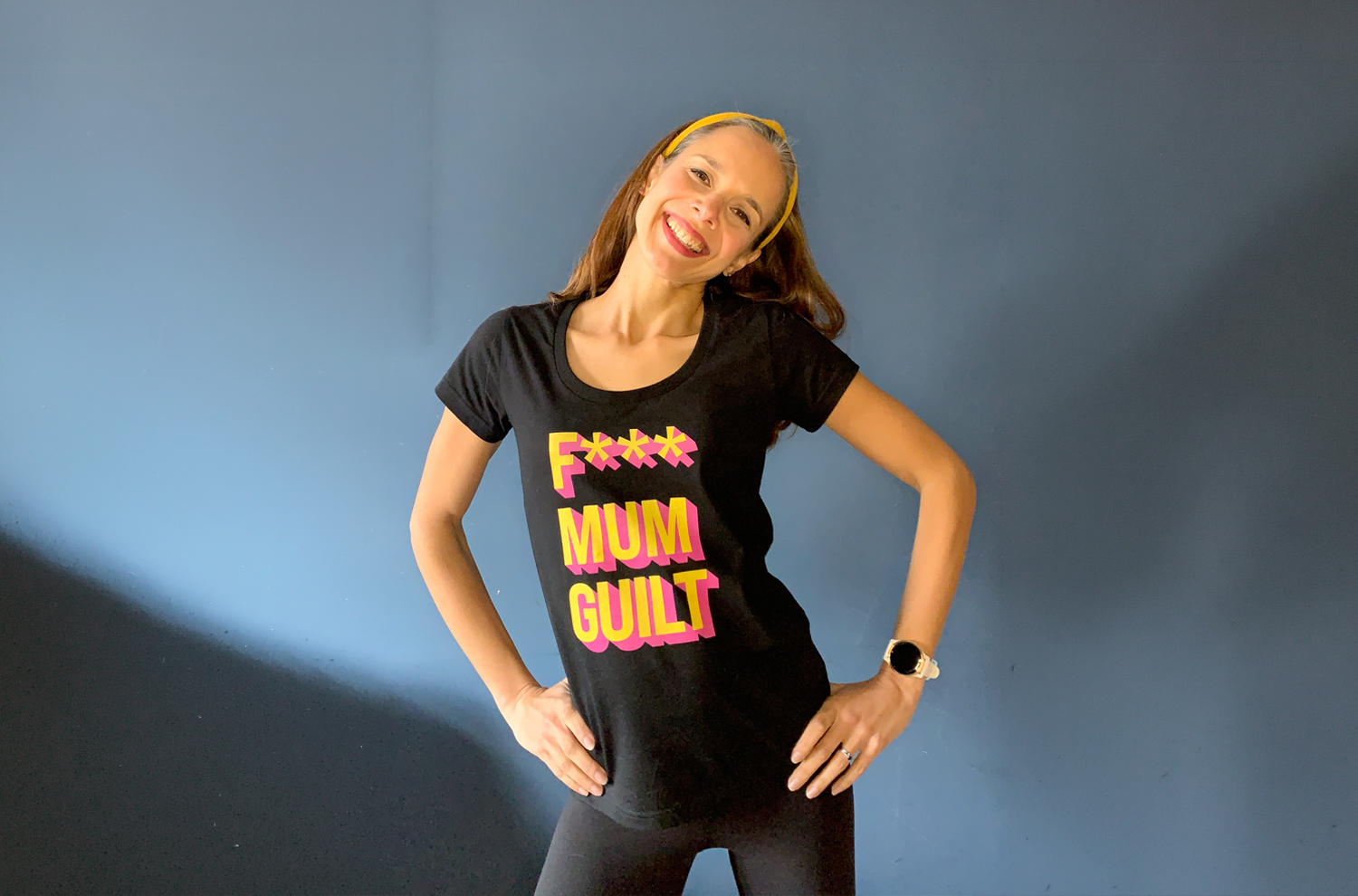
Leila Green was raised in a family of entrepreneurs, started her first business at 26 and grew it to six figures without any outside investment. She sacrificed a great deal to keep it going through the pandemic. Then came the curveball that changed everything. After two heartbreaking unexplained miscarriages, she became pregnant with triplets.
Fast forward and Leila is now a mum to three threenagers, the founder of the F*** Mum Guilt movement, one of the UK’s Top 100 Female Entrepreneurs and a co-author of Stacey Dooley’s book on motherhood, Dear Minnie. In her TedX talk, Leila identifies the epidemic of mum guilt simmering beneath the surface of modern motherhood, reporting that 95% of mothers feel it and one in four admit they actually avoid leaving the house with their children for fear of being judged.
Her mission is clear and unapologetic: to help mothers break up with guilt for good. Her work has been featured on Sky News, BBC Radio, Stylist, Metro and OK! magazine, among others.
In this episode, we explore Leila’s journey from ambitious solo founder to mother of three, the moment the F**k Mum Guilt movement was born and why mum guilt is far more than something to joke about over coffee. It is a conversation about compassion over comparison, drowning out the noise and learning to trust yourself as a mother and as a woman in business.
Conversation Highlights:
- Leila’s journey from starting her first business at 26 to growing it to six figures, navigating the pandemic and then facing the life-changing experience of two miscarriages followed by a triplet pregnancy
- What it felt like to go from being a footloose and fancy-free entrepreneur to building a business with three babies at her feet and how her whole relationship with ambition and time was forced to evolve
- How the F**k Mum Guilt movement was born and why Leila felt so strongly that the casual way we talk about mum guilt was masking a genuinely serious problem for maternal mental health
- The statistic that stopped her in her tracks and should stop all of us: 95% of mothers feel mum guilt and one in four avoid leaving the house with their children for fear of being judged
- Why societal pressures, throwaway comments from strangers and the rise of the parenting guru have created an environment in which mothers are set up to feel like they are never enough
- The myth of the perfect baby and why so much of the advice mothers receive ignores the reality that every baby and every family is completely different
- How social media amplifies the pressure on mothers and what Leila believes we can do to protect our mental health and reclaim our own instincts
- Why compassion over comparison is the antidote and what it actually looks like to put that into practice in the messiness of real motherhood
- How Leila balances her own significant ambitions with the reality of raising three children at the same pace and what self-belief has to do with making it work
- Her future aspirations for the F**k Mum Guilt movement and why she believes the conversation is only just getting started
Listen If You’re:
- In the 95% of mothers who feel mum guilt and want to understand why and what to do about it
- Doubting your natural instincts as a mother because of the weight of external opinions and expectations
- Comparing yourself to other mothers online and finding yourself falling short of an impossible standard
- A mother in business who feels guilty about her ambition and wonders whether wanting more makes her a bad mum
- Someone who has experienced pregnancy loss and is navigating the complex emotions that come with the motherhood journey
- Ready to break up with your inner critic for good and start trusting yourself again
Favourite Quote for Mums in Business:
“I call it the should show. You should baby-wean, you should breastfeed, you should co-sleep, you shouldn’t co-sleep. It’s a people pleaser’s nightmare.” – Leila Green
About the Guest:
Leila Green is the founder of the F**k Mum Guilt movement, one of the UK’s Top 100 Female Entrepreneurs and a co-author of Stacey Dooley’s book on motherhood Dear Minnie. A serial entrepreneur who built her first business to six figures without investment, she is now a mother of triplet threenagers and one of the most important voices in the conversation about maternal mental health and mum guilt. Her TedX talk How to Break Up with Mum Guilt for Good has reached thousands of mothers and her work has been featured across Sky News, BBC Radio, Stylist, Metro and OK! magazine.
You can find Leila on substack and on Instagram @tripped_up_mama.
About the Host:
I’m Victoria Phipps – a Mum of two, analogue family photographer, charity co-founder, photography business educator, marketer and now podcaster! My career has wandered all over the place and is becoming a bit of a complex tapestry as I head into this middle phase of life, but I can honestly say I’ve loved every minute of it so far.
I was raised by a nurturing Mother and an entrepreneurial Father and have inherited traits from both, so the tension between ambition and motherhood is one I grapple with on a daily basis! I’m fascinated to hear the stories of other women on a similar path, who are striving to build thriving businesses whilst being present for their children. It’s a tough juggle, but I hope the conversations shared on this podcast help Mums in business feel less alone and inspired to keep going in pursuit of their dreams!
If You Enjoyed This Episode:
Please subscribe, rate and review the podcast – it helps other mums find us!
Share in your Instagram stories, tag @mummeansbusinesspodcast and let us know your biggest takeaway.
Share this episode with a fellow Mum in business who you feel would resonate with Leila’s story.
Episode Transcript:
Hello and welcome to the Mum Means Business podcast, where we shine a light on inspiring women who have one thing in common. When they’re not managing tantrums, homework, P.E. kits and play dates, they are busting their gut to build a thriving business that supports their family life. I’m your host Victoria Phipps and I’m figuring out how to play this game right alongside you. I’m a motherhood, family and personal brand photographer, I teach portrait photographers how to lead with print in the digital age, I’m marketing lead in the family business my Dad founded over 20 years ago and I’m “Mum” to two little girls.
If you’re a multi-passionate mum too, in need of some solidarity whilst navigating the messy middle of making your big dream a reality, then stick around. This is for you.
NOTE: This is the transcript from the original recording, rather than the edited episode so timings may vary.
Victoria (00:03)
My guest today was raised in a family of entrepreneurs, started her first business at 26, grew it to six figures without any investment and sacrificed a great deal to keep it going through the pandemic. Then came the curve ball that changed everything. After two heartbreaking unexplained miscarriages, she became pregnant with triplets. Fast forward and Leila Greene is mum to three beautiful three-nagers.
She is also the founder of the Fuck Mom Guilt movement, has been voted one of the UK’s top 100 female entrepreneurs, and is a co-author of Stacey Dooley’s book on motherhood, Dear Minnie. In her TEDx talk, Leila identifies the epidemic of mom guilt that is simmering under the surface of society. She reports 95 % of mothers feel it, and a quarter of them admit they actually avoid leaving the house with their children for fear of being judged.
Layla is dedicated to helping mums break up with guilt for good. And her unapologetic stance on the subject has been featured on Sky News, BBC Radio, Stylist, Metro, OK and more. But building a business with three little people at your feet is a whole different ball game to building one as a footloose and fancy free 26 year old. So Layla, I’m so interested to hear your take on motherhood, ambition.
and even more curious to find out how you quieten that inner critic that seems to take up residence in our minds the moment we bring our babies into this world. So a very warm welcome to the Mummy’s Business Podcast.
Leila Green (01:36)
thank you. Thank you for that wonderful intro too.
Victoria (01:39)
It’s a pleasure. I watched your TEDx talk last night because I’m so organized last minute, but I was like, wow, some of these stats. And I’m not surprised at
Leila Green (01:48)
Yeah.
Victoria (01:48)
all. I don’t know a mum that doesn’t feel mum guilt at times. And I think it’s such a powerful thing that you’re doing. So I’m really excited to talk with you about it. But I want to start further back in your story. So you started this business at 26. What made you do it?
Leila Green (02:05)
Yeah,
frustration and impatience. I am a very
Victoria (02:10)
Okay.
Leila Green (02:10)
impatient person.
And I could see opportunities in my industry. I was working in the book publishing industry and it was at a time when Amazon was just coming to the UK. So I’m showing my age perhaps, but it’s hard for some of the younger viewers out there perhaps to remember a point when Amazon wasn’t so dominant, but honestly, it didn’t used to exist in the UK. We used to go to Waterstones. There used to be another book chain called Books Etc that died. Independent bookshops were thriving.
It was just a completely different landscape. And then this US giant that had big ideas started kind of knocking at the door over here. And the publishing industry is quite white male middle-class. It’s a bit of an old boys network. It’s a bit archaic. And I was trying to say, hey guys, look, something’s coming. A wave is coming. And if we get our surfboard ready now, we can ride this wave. And it was like, no.
no, no, no, don’t talk about that. And I’m like, no, no, seriously, I actually think that there’s an opportunity here. Like this is massive because what they were offering with Kindle and they still do this is the complete democratization of publishing. Like prior to that, you needed an agent, you needed a book deal, all of these things that were just very hard to get if you weren’t already well connected and if you weren’t, you know, people like us.
So this was for the first chance. It could be anyone, anyone who wrote anything could upload it on Kindle and publish a book. So I saw that as like a huge opportunity, but the trouble was that because anyone and everyone could do it, there was no quality control. So what my first business idea was, and all of them were evolutions of this really, was to offer the same publishing services that an author would get in a traditional publishing house like Penguin.
in terms of like design, editing, proofreading, typesetting, all that kind of thing, so that actually what they do upload on Amazon could genuinely hold its own against a traditionally published book. And there wasn’t anyone that was seeing that opportunity at that point in time. So I got a bit annoyed, as I tend to do. When my ideas aren’t listened to, I’m a bit like, well, right, I’m just gonna do it myself then.
And it was easier back then because I didn’t have a mortgage, I didn’t have children. I could move back with my mum. Yeah, start
Victoria (04:40)
Don’t have anything to lose. Yeah.
Leila Green (04:42)
it on her kitchen table. I did it with my brother. He’d worked in magazine publishing, which had just transitioned from print to digital. So books were kind of doing the same things that magazines had done. So we were kind of a good team there. And it was just, it was a different era of my life, an era where I didn’t really have
you know, financial or living breathing responsibilities. So I could literally work seven days a week to get a product launched. could, yeah, I didn’t have any sort of demands on my time other than what I wanted, which is unimaginable now. Like even saying that out loud,
Victoria (05:22)
Hmm.
Leila Green (05:22)
it’s like crazy. Like how did I ever have that much freedom?
Victoria (05:26)
Yeah, you don’t appreciate it at the time. Definitely not.
Leila Green (05:28)
No, no, but I think
I learned actually that I was going at it a bit too hard. Like it’s not sustainable to work seven days a week. When you’re really trying to get something off the ground in the beginning and you’re really passionate about it, it’s quite hard to have those boundaries and saying, actually I’m not going to work past this point in time. And especially when you’re, well, we didn’t have an office at that point in time. So.
you know, the office sort of was my kitchen. So it’s like, well, you’re always in your kitchen anyway, aren’t you? Like, while you’re making a cup of tea. So you might as well just get something done while you’re there. it’s, even at the weekend, you’re in the kitchen. It was just like, it was all a bit
Victoria (06:05)
Mm-hmm.
Leila Green (06:06)
blurry. So I learned kind of early on, I needed to be stricter with myself. So I didn’t just kind of expend all my energy on it.
Victoria (06:16)
Yeah, I mean, there’s always a season of hustle, I think, at the beginning, you know, when you’ve got a startup, but it’s about that
Leila Green (06:21)
Yeah. Yeah.
Victoria (06:23)
sustainability piece, isn’t it? And I think I definitely resonate with what you’re saying. Before I had kids, I just was excited by it. And I was actually, and the thing is you’re
Leila Green (06:31)
Yeah!
Victoria (06:32)
loving it. You love it. You want to do it. But then you just get to a point, I think, and it’s something that everyone has to learn in their own way that actually,
Leila Green (06:42)
Yeah.
Victoria (06:43)
you know,
it’s okay, you you work to a deadline and you get the thing done, but then there has to be a period of rest and recovery or else you just keep, keep, keep, keep, keep going. And what was the moment you think where you realized that boundaries were important? Do you think you learned it during that phase of your entrepreneurial journey or do you think that that came and hit you like a frying pan in the face when you had children?
Leila Green (07:11)
No, I learned it early on. So when I was in that hustle phase, and as you say, like we’re buzzing, you know, like everyone’s really excited and you’re all, and
Victoria (07:18)
Hmm.
Leila Green (07:19)
it’s, know, you’re seeing things that you’ve imagined come to life, like your first website or your first pitch deck or whatever it is. It’s all really cool. But one of my very good friends from university, Laura, was like, how many days has it been since you’ve left the house? And I was like, a week. And she’s like,
can’t carry on like this. That’s actually a really simple way of
Victoria (07:43)
you
Leila Green (07:43)
looking at it. It
Victoria (07:46)
Yeah.
Leila Green (07:46)
sounds so obvious, but it’s actually quite easy to slip into this trap when you’re just giving your all to getting something off the ground.
Victoria (07:53)
Yeah, you become obsessed by it. And there’s so much messaging now about this. You everybody online has their own kind of method, those who have, you know, made it in averted commas. And we did go through a big phase, I think, in the, I mean, this is the noughties, is it the teenies? I don’t know what you call them, but where hustle culture was everywhere. And…
Leila Green (08:18)
Yeah.
Victoria (08:18)
It was the story was that you just had to give everything to this if you wanted to make your business succeed. And I think
Leila Green (08:25)
Yeah.
Victoria (08:26)
it’s easy to fall into that trap. And that’s something that I’m really passionate about questioning for mothers because we’re just not playing by the same rule book.
Leila Green (08:38)
No.
Victoria (08:39)
So talk me through what happened during the pandemic with your business. How was that for you?
Leila Green (08:48)
I mean, we managed to keep going, but I think anyone who’s run a business over a long period of time, like 10 years or so, you are gonna have peaks and troughs. I mean, that’s one of the biggest differences for being in employment. You’re not getting that paycheck every month. You’re going to have tough times. You’re gonna have things that are nothing actually to do with you and totally out of your control. Every now and then are gonna kind of like just come like a shockwave into your business.
and you will have to try and ride those out. And I think the way that entrepreneurship is marketed as being this very glossy, glamorous, liberating, luxury kind of lifestyle is not really indicative of what it is. Like, yes, there are high moments, but honestly, anyone who’s done it for a long time.
will tell you that there’s peaks and there’s troughs. There’s always people who don’t pay their invoices on time. There’s always a customer that you go above and beyond for who’s never happy with your work. There’s always those customers that you regret ever taking on in the first place. Sometimes it’s not the highest ticket sale that ends up being the one that’s the real pain in the backside. We all go through these things. And I think…
like linking back to what you were just saying, like hustle culture, it’s not just working harder and harder and harder. That’s not how you’re going to role model to your team, like good, sustainable productivity. It’s about kind of adapting, being able to ride those waves, like I said in the beginning, like being able to flex, being able to adapt, being able to think what could we do differently at this stage and also having the reserves in your business.
for a rainy day, like don’t think that there’s not gonna be a rainy day because there’s always gonna be
Victoria (10:42)
is.
Leila Green (10:42)
some kind of rainy day. So you do need to have a little bit of buffer zone because some things that happen that aren’t fair, that aren’t your fault, that aren’t in your control and you’ve just got to deal with them. And that’s the difference with entrepreneurship because in an organization, some other senior leaders always taking that weight. But in this scenario, it’s all on us.
And I think mentally that can be quite tiring. And particularly when you’re feeling responsibility for paying other people, know, other people’s mortgages, you know, putting food on the table for other kids in other families is on me. And you really want to protect your team, your staff, yet perhaps there’s COVID or something like that and it’s hitting you all and you’re just trying to kind of work out the best way to sort of swim through it.
So there will always be ups and downs.
Victoria (11:37)
No, absolutely. it’s not just, you know, it’s, it’s kind of micro and macro, isn’t it? You know, you’ve got the tricky clients that we all have
Leila Green (11:44)
Mm.
Victoria (11:45)
and the projects that don’t quite go according to plan. But then you also have these massive global macro events that you have absolutely no control over. You can’t beat yourself up for, you know, for the pandemic as you, as you might do when you beat yourself up for perhaps, you know, were the red.
were the alarm bells about that client, should I’ve done it differently.
Leila Green (12:06)
Mm. Mm.
Victoria (12:07)
But COVID was a great leveler in that nobody, no business came out unscathed. And
Leila Green (12:16)
No.
Victoria (12:17)
it is then that you need to stretch those muscles, be flexible, think outside the box as well. And that can feel quite hard when your business is very personal. You you’ve grown it from a baby, just as you would a child.
and you’re 10 years in and you’ve got ways of doing things, but you have to kind of throw the rule book out when something like that happens. And it’s a testament to you that you managed to keep it going. So.
Leila Green (12:39)
Yeah and actually
I think having a partnership helped in that scenario because I quite like stability and I can get a bit stead in my ways and if I’ve got a way of doing things that’s working I’m not going to be shopping around for another way of doing things. I like to just kind of keep it going. Whereas my brother who I was running the business with he loves innovation, he loves change, he’s always trying to rip things up and rebuild them which I found a bit annoying. I think we balanced each other out.
Because I think if I didn’t have him to push me on to be like, yeah, but we could do this, I would probably got a bit sort of stuck in a rut because once I’ve built something I like, I just like it running like I like it.
Victoria (13:19)
Yeah, yeah, yeah, and that’s the yin and
yang. In certain circumstances, you are the ideal person. If it’s not broken, don’t fix it. But when the world breaks, then your brother can
Leila Green (13:27)
Mmm. Yeah.
Victoria (13:29)
step in and be like, I can kind of stretch my imagination and come up with some kind of
Leila Green (13:36)
Yeah.
Victoria (13:36)
innovative ideas about how to respond to it. It sounds like a really
Leila Green (13:39)
Mmm.
Victoria (13:40)
good partnership. Okay, so how did all of this coincide with your journey to becoming a mum?
Leila Green (13:49)
So I was really worried as an entrepreneur about having a family and how I would be able to have a baby and keep my business going. And if I’m completely honest, I think I delayed having children partly because I couldn’t really see how that would work. And in the end, it didn’t really work for me, but it’s all been for the best. But I think it’s not the same as…
you you just go on Mat-Leave for nine or 12 months. That’s what I thought was gonna happen. I’d just go on Mat-Leave nine or 12 months, come back and everything would be the same, almost like a typewriter that, you know, it just goes to the end of the line and then you slot it back in and everything’s the same. And actually nothing was the same. And I found that it was just too much for me, even whilst I was on Mat-Leave, like coming into kind of strategic board meetings when I’d had absolutely no sleep and people were looking to me to come up with the strategy.
I was like, my babies are crying downstairs now, so I’ve got to go. And I remember being on one of those type calls and the only reason I scheduled it in nap time, maybe some people out there will relate to like trying to schedule calls in nap time so you can just get something done. And then of course, one of them wakes up early.
and I was wearing my Garmin watch and it was like giving me all these like high stress alarms because I was desperately wanting to go downstairs to my crying baby. But at the same time, trying to like be professional and wrap up this meeting and I was just being pulled in too many directions. And I think with triplets, it was just too much for me to carry on in that way. And in some ways, like you can try and like baby proof your life. I worked with a coach ages ago and that that was her whole thing. But then when the babies are actually there, they just…
They just take over, don’t they? There was no
Victoria (15:38)
Yeah, yeah, completely.
Leila Green (15:40)
amount of baby-proofing that I can do with triplets. They kind of took center stage. And then I wasn’t really thinking about growing another business or starting another business. I was still doing a bit of freelance book writer coaching. So I help authors write books and I still do that freelance now.
but accidentally I ended up starting the F-Mum-Guilt movement, which was really just, partly because I was again irritated that this version of motherhood I saw on Instagram and in marketing for products just didn’t relate to my reality at all. I felt very sort of othered and alienated, partly because I had triplets and partly because
What I was seeing as everyone else’s like motherhood movie was like just absolutely nothing like mine. And then there was one weekend when I just had enough and I saw something on Instagram that said, only psychopaths don’t feel guilt. Mom guilt shows me how much you love and care. I was like, no, no, no. This is toxic messaging. I’m not having it.
Victoria (16:52)
Yeah.
Leila Green (16:53)
And I erupted and did a ranty to camera video.
calling other mums together that had also had enough. And that’s really how we started.
Victoria (17:03)
Wow, okay. Now that’s a really strange twist. That’s really unnerving that somebody would suggest that mom guilt. I mean, I understand where it comes from. It’s like grief is the price you pay for love. I get that, but like mom guilt is the price you pay for love. But I’m just, no. It’s so tormenting. And I
Leila Green (17:24)
No, I know.
Victoria (17:26)
had no idea before I became a mom that this thing was going to live with me. And I think…
As millennial women, we kind of have guilt anyway. I think it’s just part of the conditioning that we were fed. We feel guilty if we let someone down and we have to break an arrangement.
Leila Green (17:44)
Yeah.
Victoria (17:44)
We feel guilty if we can’t go and do X, Y, Z or if something’s late at work or whatever. We have to sort of postpone a client meeting. We just, I don’t know about you, I just feel guilt a lot. And I think mum guilt was just, just showed up like that, but on steroids.
and so much messaging, particularly I suppose online, but it all starts with like the baby books before you even had your child,
Leila Green (18:09)
Yeah.
Victoria (18:09)
about the right and wrong ways to do stuff. And so then
Leila Green (18:13)
Mmm.
Victoria (18:14)
you feel like there is a right and a wrong way and you want to get it right again, because you’re a millennial woman. And so you kind of, before you’ve even had your child, you’re setting yourself up to…
be disappointed in yourself because you’re holding yourself to some external standard and then feel guilty
Leila Green (18:35)
Yeah.
Victoria (18:35)
about that. And actually what shocked me most is like society supports this and other mothers
Leila Green (18:44)
Yeah.
Victoria (18:44)
sometimes who are of a previous generation will make seemingly harmless throwaway comments that just cut you to your soul and that you kind of carry with you. Yeah, yeah. And it’s,
Leila Green (18:54)
Yeah, even the same generation. Yeah, yeah.
Victoria (19:00)
It’s so terrifying. Go on.
Leila Green (19:03)
What was I thinking just when you were saying that a moment ago? I think yeah, I wasn’t prepared for it. Like it’s not something that anyone ever warns you about. It’s not something that’s covered in any of the antenatal classes I went to. It’s not something like a health visitor or a midwife will ever speak to you about. Yet 95 % of moms are going through it. So it’s like, can something affect 95 % of a populace and no one’s doing anything about it? Like it’s not being supported. It’s not being researched. It’s just crazy. And I think in a way, if we were,
given the heads up, it might not have so much power over us when it hits. Especially
Victoria (19:37)
Definitely, yeah.
Leila Green (19:39)
in that early stage, like you say, before the babies come, I had thought there was like one golden right way of doing it. And I just needed to learn that way by the right whatever, and then I’d be able to do it. And like throughout business and throughout my academic career, it’s like you wanna learn how to do something.
You like, you get qualified, you do the exam or you do the training, you find the mentor, whatever, you find the path, you just go up the path and then you’re there. Great. So that’s kind of what my,
Victoria (20:07)
Yeah, that’s the formula. Yeah.
Leila Green (20:10)
yeah, that was my expectation. I was like, okay, I just need to find out the right way. And it’s so easy because literally everyone on socials, even LinkedIn, which you might not necessarily think of.
were pitching me, I’ve got the right way, I’ve got, they say parenting doesn’t have a rule book, but it does, it’s mine, buy it from me now. So everyone’s
Victoria (20:27)
I’m
Leila Green (20:28)
coming at me with like the golden right way, and these are not people that have any experience of triplets, by the way. And then you get there and you’re like, this doesn’t make any sense, like this isn’t written for me, this doesn’t relate to me. So I had this book that my friend gave me that was like what your baby should be doing week by week, like a milestone guide. And again, she was trying to
be helpful, this was supposed to be a useful gift. But because mine were premature and they were triplets and they were in hospital for so long, they were like so far away from these milestones. And reading these like, your baby should be sitting up by now, your baby, should be doing tummy time, you should be doing this, you should be doing that, was just not helpful. So I got to the point where I just ditched all those kinds of books because I call it now the should show. There are so many.
people out there expectations, you should do it this way, you should do it this way, you should baby-wing, you should breastfeed, you should bottle-feed, you should co-sleep, you shouldn’t co-sleep. And it’s like a people pleaser’s nightmare because before
Victoria (21:28)
Mm-hmm.
Leila Green (21:29)
I got to motherhood, like no other part of my life, were you in these constant sort of crossfires of conflicting opinions where people are evangelical on both sides of the fence, whether you’re talking about sleeping, whether you’re talking about feeding.
whether you’re talking about what type of play a child should do, anything, like people are so effing opinionated. And I just found it very noisy, a bit kind of bewildering as a new mom, because they can’t all be right. And they’re so, everyone’s so adamant and judgmental against the other side. That’s another thing that, know, when I was just an entrepreneur, I could walk into a coffee shop, no drama, no one would pipe up.
and judge me, they wouldn’t tell me what I was doing wrong, what I should be doing different in my day. As soon as you’ve got a pram, and especially a triple pram, you are a target. know, people, any man and his dog at the bus stop will come up to me and tell me what I’m doing wrong. And yet when my husband pushes exactly the same pram down exactly the same road to exactly the same coffee shop, they roll out the red carpet. You know, it’s like all of this kind of societal judgment is completely
Victoria (22:39)
so frustrating. Yeah.
Leila Green (22:41)
invisible until I was a mum.
I didn’t know that this is what other mums were experiencing. It’s not spoken about or I wasn’t aware of it. And it’s like, you know, I’m,
Victoria (22:48)
No, it’s really not. Yeah. Now I was…
Leila Green (22:53)
I’m, yeah, the same person.
Victoria (22:56)
Yeah, exactly.
Exactly, you are. And I was so naive to this. I honestly, until I had children and probably until my baby was five, six months old, because I had my eldest right before the third lockdown. So I actually didn’t go outside for like, I couldn’t see anyone for like five months. But then I suddenly went into the world with this five month old. And I had thought right up until that point that mothers were universally, globally revered.
that they were the foundations of society and civilization. And
Leila Green (23:30)
you
Victoria (23:30)
that of course I would receive like a new level of respect from everybody because I was a I’m like, wow, of course,
Leila Green (23:36)
you deserve it. Amen, you deserve it.
Victoria (23:39)
but that is exactly how it should be. And fine, was kind of, I had inklings because I had friends who were older who’d had mothers. They weren’t older actually, they just, I had friends who had children who were older, but they’d let me know that, it’s not.
quite like that. But until you’re in it, until you experience it for yourself, just the comments everywhere and so interesting about your husband, because my
Leila Green (24:07)
I know.
Victoria (24:07)
partner is the same even now. So he now does, he works from home five days a week and he does a lot of school drop-offs and pickups and there aren’t that many other dads and it is like, isn’t he good? Isn’t he good? Aren’t you lucky?
Leila Green (24:23)
you
Victoria (24:24)
Aren’t I lucky?
to have a partner who’s so engaged with his own children. And I just think,
Leila Green (24:29)
Mmm.
Victoria (24:30)
and actually I know that there’ll be also comments like, we don’t see her very much, do we at the school gate? And I’m like, wow, because these are women who are
Leila Green (24:41)
Yeah.
Victoria (24:42)
in my generation, they have had the same cultural upbringing, societal upbringing as me. They work or don’t work, whatever, but why do we do this to each other?
Why do you think we do this to each other?
Leila Green (24:55)
Yeah.
I think mum judgment is like pouring petrol on the mum guilt fire. Like mum judgment is where it starts. And I think sometimes it comes from insecurity. Like perhaps people aren’t sure that whatever choice they made in their parenting path was the right one. So in that place of self doubt, somehow that gets sort of transmuted into heavy judgment. Like perhaps I wasn’t sure that…
I did the right thing about co-sleeping. Now I’m coming out with really loud opinions about co-sleeping to just make up for the fact that really I don’t know if I did it right or wrong. And I think also there’s the issue that I had with my mother-in-law of the data point of one. Like just because something worked for you once, like back in the 80s when you had one child, doesn’t mean it’s necessarily gonna work for me now in like 2022 with triplets.
It’s a data point of one, it’s not an absolute truth and everyone’s got their like data point of one or two. But the fact is I’ve seen for myself, I’ve got triplets, two identical, one non-identical, so two genetically identical and they’ve all got the same nature nurture factors. Yet still their needs are different. Their sleep needs were different from when they were tiny, their feeding needs are different like.
the type of kind of discipline or leadership they respond to is different. So I think anyone who’s saying there’s a golden way or I did it so it must work for everybody just doesn’t really understand the kind of the nuance of individual situations, individual souls in different families, in different scenarios that perhaps have different resources available, perhaps not living
Victoria (26:46)
Yeah.
Leila Green (26:46)
the same distance from family like it’s.
It can be a bit upsetting when someone’s just like, well, I did it that way. I don’t understand why you’re not. It’s like, well,
Victoria (26:55)
Yeah.
Leila Green (26:56)
because that way doesn’t work for me.
Victoria (26:58)
Yeah, exactly. and I think there is definitely a rose tinted spectacles syndrome that like our mothers or our parents perhaps had. I was an absolutely perfect baby. I heard when I had my babies, cause I just did as I was told. And she laid me down at 7 PM and said, good night. When I was six months old and I said, good night mother. And I just rolled over and went straight to sleep every night without fail.
Leila Green (27:25)
That sounds lovely.
Victoria (27:27)
And maybe I was, maybe I was a perfect baby, but it’s interesting because there was a long period of time, like you say, and the cultural references are so different, but even mothers in our own generation, particularly if you had more than one child, because, and I would say now, mine are getting older, I can totally see as their personalities are kind of really gathering steam now, the way they were as babies makes total sense.
Leila Green (27:55)
Yeah.
Victoria (27:55)
You know, I
could not have separated. We tried. I could not have separated my eldest from us at night. And even now she comes into us and she is just her love language is physical contact. Like, you know, I don’t expect
Leila Green (28:10)
Mmm.
Victoria (28:10)
she’s going to come in when she’s 16, but she has to be cuddled. And we were sort of taking this baby and putting it down the other end of the hall by herself. And she couldn’t understand why we would do something so barbaric to her.
Leila Green (28:25)
Yeah.
Victoria (28:25)
And
she would like either scream or if she could get out, she would just crawl her way all the way back. And she was like a homing pigeon. And now I completely understand. But for months at the time, I tormented myself like, I’m not, I’m not sure she’s supposed to be in with us now. I think she’s supposed to be here or there or whatever because of this external pressure. And there’s something nice about reaching a point where you literally do say like F the rule book, F everybody else’s
Leila Green (28:52)
Yeah, you’ve got to.
Victoria (28:54)
opinion.
and you kind of learn to trust yourself again. And at what
Leila Green (28:58)
Yeah.
Victoria (28:58)
point do you feel like that happened for you?
Leila Green (29:01)
I think really early on, in the very early days, so just for like a little bit of context, my boys were born prematurely. You have to have triplets prematurely because they want you to have a planned C-section. They don’t want you to go full term and then be in an emergency scenario because it’s just too hard for the clinicians to handle. So they were born at 33 plus five. So they didn’t know how to like breathe or eat or basically live on their own. So we had to kind of teach them that.
in an incubator period. So it was a very traumatic introduction to motherhood.
Victoria (29:35)
Yeah.
Leila Green (29:36)
And whilst I was in that kind of chaotic world of either the hospital or the early days of surviving at home, which were just insane. Like I was doing 24 feeds every 24 hours. I was very vulnerable to people coming along and saying, you should be doing it this way. You should be doing it that way. And because I think…
They were people whose opinion I trusted, say my mother-in-law or even a health visitor who said, you know, sleep when they’re sleeping. It’s like, well, who’s going to look after the other two when I’m sleeping? That’s a really stupid thing to say
Victoria (30:06)
Yeah, exactly. Yeah.
Leila Green (30:08)
to a triplet mum. Like, have you had any training on this? You know, like, or like even GPs who I don’t think have particularly got training in how to deal with twins and triplets. I mean, from my experience, it didn’t seem like they did, but because they had like the qualifications.
In some, for some way in my mind, I thought, they must know better than me. Like they must know, right?
Victoria (30:30)
It’s the authority piece, yeah.
Leila Green (30:32)
Yeah, like I’m the newbie here. I’m the idiot. I’m getting everything wrong. I’m failing. And they’re telling me, you need to do, you need to do this. Like for instance, they were, the amount of milk we were giving them, it was really to the mill, it was measured and they were all on different drugs and different things. And it was quite low.
And then we got an amazing maternity nurse who was like, they’re hungry. It’s really obvious to her they’re hungry. They’re just not having enough milk. It’s like, but I had a meeting with a consultant who gave me this chart and gave me this very special calculation tool so that I could always make sure I was giving exactly the right meals and I was making it up properly. And it was all BS basically, you know, they, sometimes you just have to kind of like listen to the baby.
Like you’re saying,
Victoria (31:20)
Yes.
Leila Green (31:20)
listen to your child. This is her love language. She’s trying to tell you something. And there might be other experts producing other content on Instagram or in books or whatever about, who is it? Is it Gina Ford? He’s like, he gets the babies to sleep through from the beginning. And that kind of benches your expectation to what you think your reality will be. And then we’ve got our huge expectations up here, our reality down here. And we just get stuck in this guilt gap because we’re like,
well, how come that’s not working for me? Everyone else’s baby’s sleeping through, or how come my baby’s not walking yet? Everyone else’s baby is, or how come my baby’s not doing whatever yet? We’re not able to achieve that yet. And it’s just so nuanced and individual. And I think that, I say compassion, not comparison. Like as soon as we’re comparing ourselves to what everyone else is, like even to your mom’s story version of like,
Victoria (32:16)
Hehehehehe
Leila Green (32:16)
you as the amazing baby. You know if we’re benching, sometimes we’re benching
things to fiction you know. A lot of what we’re benching,
Victoria (32:23)
Yeah, yeah, yeah, yeah, yeah, yeah.
Leila Green (32:25)
benching stuff too on Instagram for instance is fiction or benching. Like I’m sure as a three year old, yeah yeah.
Victoria (32:28)
Or it’s curated. Yeah, exactly,
exactly. And I think you’re so right about sort of the way we default to internalize the fault itself. You know, we don’t look
Leila Green (32:41)
Yeah.
Victoria (32:41)
around and our first instinct when we hear these stories is not that story must be wrong. Our first instinct is I must be doing that wrong because
that seems
Leila Green (32:52)
Yeah.
Victoria (32:53)
to be working for everybody who’s doing it.
because Instagram said
Leila Green (32:56)
Yeah.
Victoria (32:56)
so. So I’m failing, I’m at fault, I’m not good enough then, isn’t it? And
Leila Green (33:03)
Yeah.
Victoria (33:03)
this voice just gets louder and louder. And I think the more we expose ourselves then to social media, the worse that can get. And
Leila Green (33:14)
Yeah.
Victoria (33:15)
from a maternal mental point, a maternal mental health point of view, that can spiral.
And this is where you get to the point where people
Leila Green (33:23)
Yeah, definitely.
Victoria (33:24)
aren’t leaving the house because they
Leila Green (33:27)
Yeah.
Victoria (33:28)
are afraid of that judgment and they just can’t face it.
Leila Green (33:33)
Yeah, so that stat about, was it a quarter of mums not leaving the house was done by mam who produce dummies, pacifiers. And they were finding that although mums did want to use the dummies, they got such backlash for using them in public, they’d rather stay home with the kid with a dummy than take a kid to a park with a dummy. And I think like that’s, that’s just kind of indicative of how unfair this
this judgment has become. Like don’t get high and mighty just because your kids didn’t have a dummy and someone else’s kids did. You don’t know what’s going on for that family. You don’t know how badly that mum needs that moment. Like just, you don’t have to say anything. Just walk on, you know.
Victoria (34:16)
Yeah, exactly. Yeah. Yeah.
Leila Green (34:18)
But we’ve reached a point where people actually think it’s okay to just come up to you and criticize you in motherhood, which I’m not okay with.
Victoria (34:28)
No, definitely not, definitely not.
So talk to me about how this became a movement that you decided you were gonna devote your spare, of which there’s
Leila Green (34:41)
I know.
Victoria (34:42)
probably little, spare time and energy to, and how you’ve reconciled this idea of your own ambition in motherhood whilst you’re still in that early season and your kids are still very physically demanding.
Leila Green (34:57)
Yeah, honestly, it’s been hard and it’s been a major lesson of motherhood because I’ve always been an overachiever. Like I went to Oxford, I started my first business when I was 26, top hundred female entrepreneur. I’m definitely someone, and I’m impatient. Like all of this is fueled by my impatience. So if I have a vision, I want to do something, I just want to do it now. Like, you know, I wanted to do a TEDx. It’s like, right, I’m just going to start applying. You know, I don’t sit around. So there’s part of me that is still
operating with that momentum at that speed and I have to keep reining myself in and being realistic about my capacity because like my brain is still like acting like it’s got 40 hours a week to pull everything off and my body is very much exhausted and trying to fit in.
growing a brand from scratch, pivoting in a whole new area where I have no contact, nothing, in like 10 hours a week of childcare. And so I’ve had to be patient with myself, I’ve had to give myself grace. I’ve had to turn down opportunities that I would love to do, particularly speaking opportunities at festivals and things like that. Because logistically, I just can’t get the childcare to make it happen. Like, you know, I’d love to go
touring around the country with my message. And one day the F-MOM guilt tour will happen. But it’s like at
Victoria (36:25)
Yeah.
Leila Green (36:25)
the moment when they’re at this stage preschool, I am actually quite limited into what I can do. And even if I get opportunities that don’t fall on the days that they have childcare, like we had a struggle getting this booked in, you know, it is a bit limiting. And then sometimes I feel a bit unprofessional because it’s like, I don’t want to let people down back to what you were saying about that millennial guilt. But I…
The reality of my calendar is that I’ve only got these strict windows and my kids also don’t have any childcare in the term. It’s only term time. So they don’t have the holidays. So there was a new book client who wanted to work with me just before the Easter holidays. And I was like, well, you know, there’s nothing in my diary for three weeks. Like if you want to work with me, you’re to have to wait a month before we can even have a discovery call. And actually she was fine about that. But I think an older version of me would have felt just wretched.
about that, that that was such an unprofessional move and I shouldn’t be doing that and people must think X, Y, Z of me. But I’ve had to be a bit firmer about kind of what I can and can’t do. And I think like cut myself some slack, you know, I’m not going after the massive B-hags at the moment. I think my kids will start school in September and then that will be like another chapter where I’ll have more time and I’ll be able to pull more things off. But I found
If I’m completely honest, like a little bit frustrating this initial phase where I’ve got all of these ideas and things that I want to do. And then also you hop on LinkedIn and you see everyone else doing all this cool stuff that you want to do or going to these events you wish you had the childcare to go to. And then that can really sting. So be careful of the comparison that can come on social media where you’re, you know, you’re trying to build something at home and it’s tough and you haven’t got.
Victoria (38:14)
Yeah.
Leila Green (38:16)
You you’re going up, in my case, I’m going up for speaking opportunities against people who aren’t the default parent, who have got 40 hours a week to craft the perfect pitch and the perfect deck. And sometimes I feel a bit sloppy and scrappy, like, you know, I’m just trying to get together what I can, like when I can. But then I’ve had to kind of have a word with myself and say, actually, that’s what makes you a really authentic voice to speak on this, because you’re in it.
Victoria (38:39)
100%. Yeah.
Yeah. Yeah. And I think you, you do start to realize quite quickly how fast this time goes. And once you have, I mean, my eldest started school in September and it feels like a new chapter. It does feel like
Leila Green (38:58)
Yeah.
Victoria (38:59)
you’ve got this solid block. I my youngest isn’t there yet and she won’t start until 27, but.
you do start to foresee that bit of light at the end of the tunnel where you have five hours that are yours every day to play with.
Leila Green (39:12)
Mmm.
Victoria (39:14)
And actually, I think there’s something about holding these boundaries that is in line, that is aligned with your whole message. And
Leila Green (39:25)
Yeah.
Victoria (39:26)
actually, I think…
I imagine, and I don’t know whether you’ve experienced it, but actually laying that out and saying, well, no, actually my priority during this next three weeks is my children. And so here’s when I can next meet with you. That makes people respect you more because at least you are communicating the boundary and it is what you’re all about. Do you feel any of that? Yeah.
Leila Green (39:52)
Yeah,
and I think it’s just having the confidence to do it. Because
Victoria (39:55)
Exactly.
Leila Green (39:56)
sometimes I think in female entrepreneurship in general, I’ve been in female entrepreneur communities for a long, time. The challenges can be internal. Like we are imagining this is how I’m going to be seen if I do this. Or if I do this, I’m going to mess up publicly and people are going to judge me for that. But it’s not necessarily what other people.
are expecting of you or thinking. Like for instance, before I went on MatLeave, I put myself under enormous pressure to like carry on as if having a baby wouldn’t change me. Like, and I was actually trying to launch a new product, like from my hospital bed. And my brother and business partner was like, why are you doing this? Like, we don’t need to do this. But it was all coming for me. Like I was trying to prove like, I’m this sort of like robotic entrepreneur that can just do everything.
You know, I was raised in that very masculine entrepreneurial hustle culture. Being in a labor ward isn’t going to stop me. I can still launch this product and make a success of it. And then looking back now, I’m like, I was out of my mind. Like literally what
Victoria (40:58)
Yeah.
Leila Green (40:59)
was going on there? So sometimes I think, you know, these judgments, these fears, these stories, and I’m a great storyteller because I work in editorial, stories are my life. So I can tell myself very convincing stories about.
what everyone else thinks of me or how everything’s going to go that aren’t actually rooted in reality.
Victoria (41:21)
Yeah, but that’s all part of your life experience. You know, I was brought
Leila Green (41:25)
Yes.
Victoria (41:25)
up in an entrepreneurial family as well. So my dad was a builder and then he’d gone on to do various other things. But when we were kids, you know, we were always on building sites and it was grafting and it was, you he was, he was also
Leila Green (41:36)
Yeah.
Victoria (41:36)
trying to sell the houses, but it was like, we had that education very early on. And it was also deemed that that work ethic was what was valued by my parents. That was important to them. And I think there’s
Leila Green (41:47)
Mmm. Mmm.
Victoria (41:49)
something very primal about
wanting to have your parents be proud of you. So you start to speak that language without even really knowing that you’re doing it. And there’s nothing wrong with having a solid work ethic. But I think when you find yourself in a hospital bed about to have three babies, one after the other,
Leila Green (42:09)
I know.
Victoria (42:10)
and you’re on your laptop trying to talk about this product launch, that’s a moment, isn’t it? And even then though, I think I would have done something similarly crazy.
In that moment, no one can stop you really. It’s only with hindsight when you look back with all the knowledge and experience that you have now at this point that you think, wow, I had literally lost the plot. And everyone must have been like, what are you doing? What are you doing?
Leila Green (42:37)
I think I just really wanted to prove to my clients and my team that me having a baby wouldn’t change anything and that I could still
Victoria (42:42)
Yeah. Yeah.
Leila Green (42:44)
be reliable. Yeah, it was, and I think maybe part of me was really desperately trying to cling onto that identity because my business was, and was such an integral part of my
Victoria (42:56)
Exactly.
Leila Green (42:57)
identity. Like I had, I had sacrificed basically, you know, my thirties, my half my twenties and my thirties.
to build something that really mattered to me, like blood, sweat and tears. And to the kind of let go of that, I think I was perhaps, you know, like when you try and grab the toy off the toddler and they just wanna hold it a bit tighter, I think there was perhaps
Victoria (43:15)
Yeah, yeah.
Leila Green (43:17)
a little bit of that going on for me at that point in time. And then without that, I have had to look at kind of like, my God, who am I? Like everyone’s just calling me the triplet mom now, not like Leila the entrepreneur. Now I’m Leila the triplet mom.
It’s like, yes, I do have triplets, but like, I’ve also achieved like some great things before I had kids. Like, does anyone want to talk about like what I’ve achieved as an entrepreneur or the fact that I’ve done like ultra marathons in the Alps and stuff like that. It’s like, no, no, no, we just want to talk about nappies and stuff like that with you now. It’s like, okay, but I was someone, I was someone before I was this person, I was someone else, you know? And now sometimes people…
Victoria (43:51)
I I know, I know. no, I relate to that.
Leila Green (43:57)
They apologize for when they introduced me to other people as the triplet mum, but now I’m just like, yeah, it’s always, that is one plane of my life. Yeah.
Victoria (44:04)
Well, own it. Yeah, but it’s owning
it because having triplets is rare. So you own it and you add the and. So yes, I’m
Leila Green (44:15)
Yeah.
Victoria (44:16)
a triplet mum and all of these other things. And I think it can
Leila Green (44:19)
Yeah.
Victoria (44:21)
be hard. That identity shift can cause a lot of grief, I think. You kind of grieve for…
Leila Green (44:28)
Yeah.
Victoria (44:29)
that version of yourself, all the freedom you had to please yourself. Like you said at the beginning, you really have no time to please yourself. You have to grab it in the tiny cracks of the day, just to keep your cup filled enough to carry on doing what you’re doing and look after these amazing three
Leila Green (44:46)
Mmm.
Victoria (44:47)
children that you brought into the world. And I think we could talk for days about that, Leila, but I’m mindful of time. So I wanna ask you two last questions. So the first one, what is your most audacious
Goal for F-MOM guilt. Where do you want it to be in 10 years time?
Leila Green (45:04)
Oh, wow, that’s amazing one. I you know what? I haven’t actually thought ahead to 10 years time, but I would like to have like a road show where I’m going and giving the workshop, maybe even around the world and definitely on festival stages. I’d love to be on festivals like Happy Place and Best of Alls, because I
Victoria (45:20)
Yeah.
Leila Green (45:20)
think this isn’t like, at the moment I’m doing workshops and I’m doing them in a reasonably corporate environment, but I would really just love to let loose, I think,
Victoria (45:29)
Yeah.
Leila Green (45:29)
and you know, have a bit more fun with it.
And in the shorter term, the goal I’m working on at the moment is their Break Up With Mum guilt book.
Victoria (45:38)
Amazing. that sounds so exciting. And you’re the perfect person to write it with all of your editorial experience. No pressure.
Leila Green (45:42)
I know, but then I’ve, that means I’ve put so much pressure on myself, exactly. It’s like
almost this weird form of imposter syndrome. like, well, you’ve made everyone else award winners and best sellers. You’ll have to be able to do it for yourself. You know, but I’m getting there. I’m getting there.
Victoria (45:57)
No,
it sounds amazing, I’m sure it’d be brilliant. And try and enjoy it, I guess, because that is a lot of pressure. But it’s all about the process, isn’t it? And it’s a book that I imagine is desperately needed. So last question. If you could go back now and have a conversation with your eight-year-old self, what
would you say to her?
Leila Green (46:24)
I would say believe in yourself. I think as an eight year old girl, I was scared of the world. I was anxious. I wasn’t that confident. And I didn’t know much of the world outside of my family home, which wasn’t particularly great. So just the ability that, you will leave this home. You will find your friends. You will find your flow. You will create your magic. I think…
I was probably a very quiet eight year old girl who wouldn’t speak up, who, yeah, would just be quite nervous and quite anxious. Not like my own children who are very cocky loud and will like, you know, run roughshod over any group or environment you take them to. How about you? What were you like as an eight year old?
Victoria (47:14)
No, I think I was quite self-assured at eight. I think eight was kind of the end of that. And then you kind of go into your sort of pre-teen angst. I think eight, I was very project driven. I was always a busy bee, which you might relate to. But I think I’d started to listen to those external voices.
Leila Green (47:40)
Mmm.
Victoria (47:40)
And I
kind of pick eight for this question because I think it’s such an innocent age, but it’s that cusp, isn’t it, where you start to become aware of other people’s perception of you, which ties into everything that we’ve talked about. And you start
Leila Green (47:53)
you
Victoria (47:54)
trying to fit in and mold yourself a little bit. I think it was probably around then that I first heard the idea that maybe I was a bit bossy or maybe I was a bit much. And yeah, it’s interesting.
it’s kind of getting back to that core, that eight-year-old little girl and like what she loved to do and what she was about really.
Leila Green (48:18)
Yeah.
Victoria (48:19)
So yeah, I love this question and I love your answer.
Leila Green (48:23)
And even at eight, or even younger than that, I was making books. Like I was writing books and drawing
Victoria (48:28)
Mmm.
Leila Green (48:29)
pictures for the front covers and stapling them together and writing blurbs.
Victoria (48:31)
I love that.
Leila Green (48:33)
So when you look back, it’s like, it’s no surprise that I went on to have book publishing companies, because that’s actually what I was doing as a kid.
Victoria (48:41)
I love that. That’s gorgeous. that’s so and now you’re writing a book of your own. Finally, it’s happening. does she? my gosh, that’s gorgeous. That’s so cute. I love it.
Leila Green (48:47)
Yeah, I know my mum still has some of my early work in her loft.
Victoria (48:58)
Leila, it’s been such a pleasure talking with you. Tell me where everybody can find you find out more about the movement and your workshops and everything that you do.
Leila Green (49:08)
Yeah, so come and join me at Fmumguil.com and you can sign up for the weekly newsletter. That’s mainly where I’m hanging out. I’m also on LinkedIn as Layla Green and on Instagram as TrippedUpMama.
Victoria (49:23)
Amazing. Leila, thank you so much for your time. It’s been gorgeous. I’m sure we could carry on for hours, but I will let you go. And maybe
Leila Green (49:31)
Thank you.
Victoria (49:32)
one day we’ll meet in real life.
Leila Green (49:34)
That would be lovely. When I get the childcare.
Victoria (49:37)
Thank you. yeah, ditto, ditto. See you in 2038.