
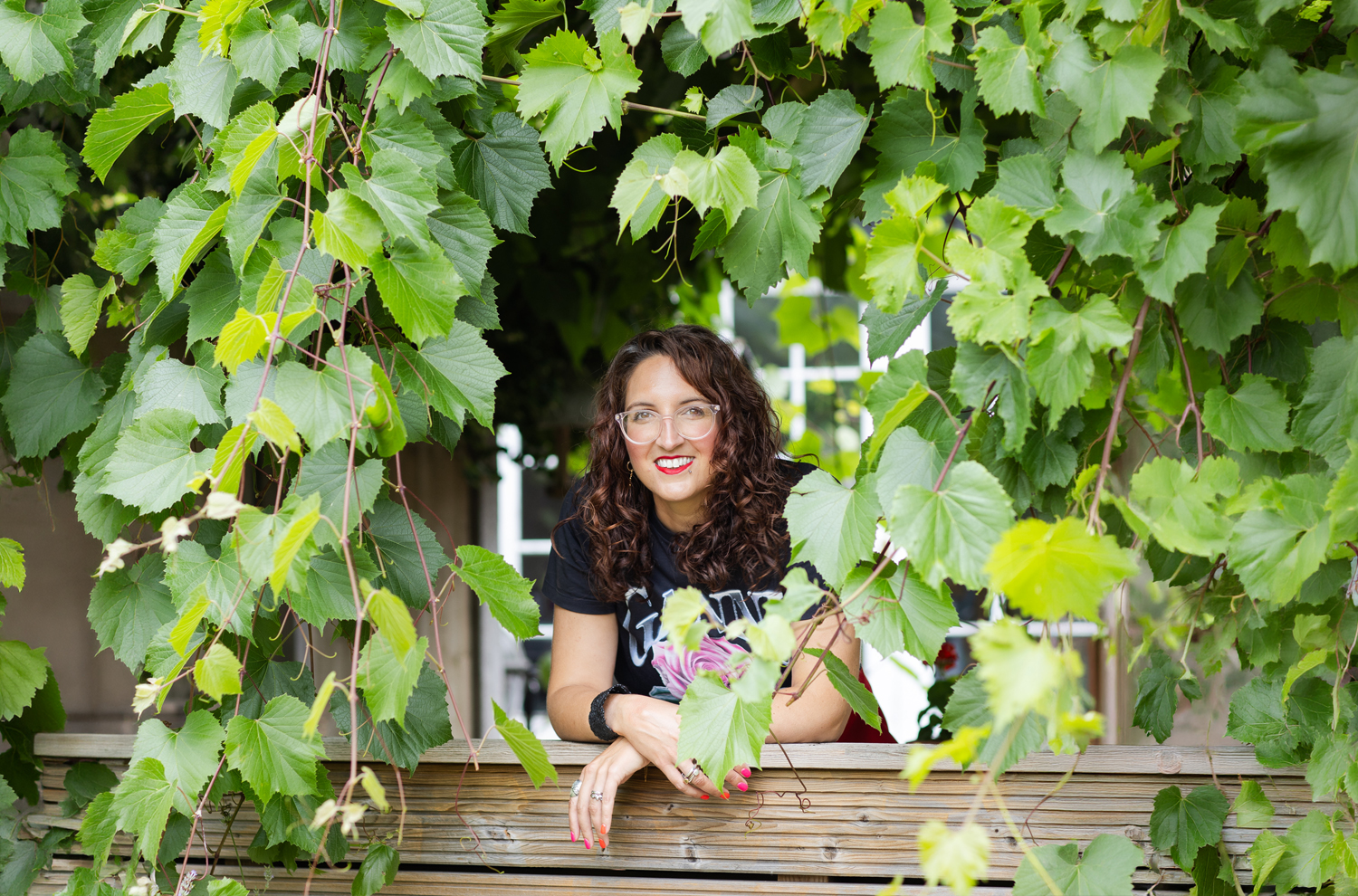
Kendall Marie Platt is a horticultural therapist, writer, speaker and founder of Adventures with Flowers. She brings together horticultural therapy and sensory-led garden design to create spaces that don’t just look beautiful but actively quieten the mind, restore the nervous system and support the body and brain in a way that no amount of productivity hacking ever could.
Through her one to one horticultural therapy support programme, her garden-along sessions and her membership the Seed, Kendall supports women to create their own garden sanctuary, lower their stress levels and step off the hamster wheel before burnout takes over entirely. As a mother of two who has navigated that journey herself, she brings both professional expertise and deeply personal understanding to her work.
In this episode, we explore Kendall’s own path from burnout to a business built around restoration and joy. We talk about the therapeutic power of nature, why productivity culture is making so many women ill and what it really means to trust yourself, tend to your own needs and find daily rhythm in the garden. It is a conversation about boundaries, self-worth, generational patterns and the quietly radical act of getting your hands in the soil.
Conversation Highlights:
- Kendall’s personal journey from burnout to building a business rooted in horticultural therapy and why that experience is at the heart of everything she now offers
- How she combines horticultural therapy and sensory-led garden design to create spaces that restore rather than just impress and what that looks and feels like in practice
- The link between mindfulness, nature and mental health and why the garden offers something that traditional wellness practices often cannot
- Why so many women tie their self-worth to their productivity and how breaking that cycle is one of the most powerful things the garden can teach us
- The role of self-trust and intuition in both gardening and in life and why we so often wait for permission that was never ours to give away in the first place
- Finding flow in nature and what the rhythms of the garden can teach us about pacing ourselves in business and in motherhood
- Why accessible gardening is not about having a large space, a green thumb or a formal qualification but simply about showing up and starting
- The importance of daily joy as a genuine act of self-preservation rather than a luxury to be earned once everything else is done
- How reconnecting with nature can shift our relationship with our own nervous system and begin to interrupt the patterns that lead to burnout
- The generational patterns that Kendall has worked to break and what she hopes to model for her children through her relationship with the garden and with herself
Listen If You’re:
- Running on empty and recognising the early signs of burnout but struggling to justify slowing down
- Curious about horticultural therapy and what a more nature-led approach to wellbeing might look like in your own life
- Waiting for permission, a qualification or the right moment before you allow yourself to start something new
- A mother who wants to model a healthier relationship with rest, boundaries and self-care to her children
- Someone who loves the idea of gardening but has talked yourself out of it because you don’t know enough or don’t have the right space
- Ready to find a rhythm in your days that restores rather than depletes you
Favourite Quote for Mums in Business:
“I want my kids to see me taking care of myself, because I want them to take care of themselves. I have to show them because it’s not enough to tell them.” – Kendall Marie Platt
About the Guest:
Kendall Marie Platt is a horticultural therapist, writer, speaker and founder of Adventures with Flowers. She works with women to create garden sanctuaries that support their mental health, lower their stress levels and provide a daily rhythm of restoration. Through her one to one programme, garden-along sessions and membership the Seed, she offers a practical, accessible and deeply therapeutic alternative to the burnout culture that so many mothers are navigating. A mother of two, Kendall is a passionate disrupter of the story that we need permission or accreditation before we can begin to tend to ourselves.
You can connect with Kendall Marie Platt via Instagram and through the Adventures with Flowers website.
About the Host:
I’m Victoria Phipps – a Mum of two, analogue family photographer, charity co-founder, photography business educator, marketer and now podcaster! My career has wandered all over the place and is becoming a bit of a complex tapestry as I head into this middle phase of life, but I can honestly say I’ve loved every minute of it so far.
I was raised by a nurturing Mother and an entrepreneurial Father and have inherited traits from both, so the tension between ambition and motherhood is one I grapple with on a daily basis! I’m fascinated to hear the stories of other women on a similar path, who are striving to build thriving businesses whilst being present for their children. It’s a tough juggle, but I hope the conversations shared on this podcast help Mums in business feel less alone and inspired to keep going in pursuit of their dreams!
If You Enjoyed This Episode:
Please subscribe, rate and review the podcast – it helps other mums find us!
Share in your Instagram stories, tag @mummeansbusinesspodcast and let us know your biggest takeaway.
Share this episode with a fellow Mum in business who you feel would resonate with Kendall’s story.
Episode Transcript:
Hello and welcome to the Mum Means Business podcast, where we shine a light on inspiring women who have one thing in common. When they’re not managing tantrums, homework, P.E. kits and play dates, they are busting their gut to build a thriving business that supports their family life. I’m your host Victoria Phipps and I’m figuring out how to play this game right alongside you. I’m a motherhood, family and personal brand photographer, I teach portrait photographers how to lead with print in the digital age, I’m marketing lead in the family business my Dad founded over 20 years ago and I’m “Mum” to two little girls.
If you’re a multi-passionate mum too, in need of some solidarity whilst navigating the messy middle of making your big dream a reality, then stick around. This is for you.
NOTE: This is the transcript from the original recording, rather than the edited episode so timings may vary.
Victoria (00:03)
set this up.
My guest today is a horticultural therapist, writer, speaker, and general spaceholder for garden curious women. She’s the founder of Adventures with Flowers and supports women to create their own garden sanctuary and use gardening to lower their stress levels and avoid burnout. Kendall Marie Platt brings together horticultural therapy and sensory-led garden design to create spaces that don’t just look beautiful, they help quieten the mind and restore you daily.
Kendall Marie Platt (00:24)
Thank you.
Victoria (00:36)
It’s beauty that heals, rhythm that restores and design that supports your mind and body. She does this through her one-to-one horticultural therapy support program, her regular gardener long sessions and her membership, The Seed. Kendall understands the struggle for mothers to prioritize their own wellbeing. As a mum of two, she knows what it’s like to be on the hamster wheel of life, constantly going at a hundred miles an hour and not feeling able to step off despite desperately wanting to.
Gardening helped Kendall to start to slowly press the brakes and the garden is my happy place too, so I can completely relate and I know this is going to be such a fruitful conversation. You see what I did there. Kendall, welcome to the Mum Meets Business podcast.
Kendall Marie Platt (01:18)
you
Thanks so much for having me. I’m very excited to chat to you. Good.
Victoria (01:24)
it’s such a pleasure. It’s
such a pleasure and you are in your garden and we struggled a little bit to get the video working before we recorded this and all I could hear was this gorgeous bird song behind you, which is so on brand. everyone will get to enjoy that throughout this conversation, including me. So tell me what made you start a business in gardening?
Kendall Marie Platt (01:30)
Yeah.
with.
Yeah.
So I kind of got into gardening by accident, like for my own personal, you know, it wasn’t like something I wanted to do. I didn’t think, I really want to grow a garden. just, had a house that had a garden and the thing, and the plants started to grow. And I was like, crap, I better like take care of these things that are growing and like taking over. So I really got into gardening myself by accident, but I very quickly realized when I was out in my garden that
Victoria (02:13)
Hahahaha
Kendall Marie Platt (02:23)
That was the only time that my brain was quiet when I was gardening. And I carried on happily gardening for a few years and then I became a mum. And I had this like real, I call it my like lioness moment when my first daughter was born. I literally, gave birth to her at home actually, intentionally before anyone’s like, oh my God, accident. No, intentionally so. And literally I was laid in my sort of,
like front room, and I could see, I can see through the windows out over my garden and I, you know, had this tiny baby in my arms and I just had this, this like epiphany and I was like, I need to change the way that women prioritise themselves and the way that currently society dictates to us that we’re only worthy if we’re over giving to everybody else, over producing at work.
giving all of us to the people around us. I need to change this for her because by that point I’d already burnt out twice. And I didn’t even have kids at that point because you know, I’d very much got in that mindset of like, I’m only worthy when I’m producing. And of course, you know, I was in a corporate role at the time, I was working as a forensic scientist and I had…
given all of myself to my career. Like my career was my life basically, because we kind of sold this story, aren’t we? That, you know, work hard, put the effort in and you’ll be rewarded. But that wasn’t my experience. My experience was all I got really was more work put on my plate. And then I ended up with burnout. So I wasn’t really getting the rewards that I’d been promised. But it was having my daughter that I was like, I need to do something about this. I need to speak about this. I need to…
normalize this, I need to have the conversations. And obviously, by that point, I’d already been using gardening as a therapeutic tool for myself. I hadn’t like called it that per se. But yeah, it started literally laid there on the floor, having just given birth with her in my arms thinking, I don’t want you to make the same mistakes that I did. And believing the bullshit that, you know,
that just keep trying and you’ll get somewhere because that just wasn’t my experience and the number of women I speak to, that’s not their experience either. So obviously I had a tiny baby at that point and you know what it’s like, life changes, doesn’t it? And all of a sudden like the time you could potentially spend in the garden, you know, I’d be out there all weekend every evening the minute I got in from work, that time that I could do that kind of shrunk dramatically.
Victoria (05:10)
Yeah. Yeah.
Kendall Marie Platt (05:10)
And so it was at
that point then that I kind of started gardening in my 20 minute blocks. So, you know, my husband would get home from work, I’d hand the baby to him, I’d get straight out in the garden and I would, you know, have my quiet head space for 20 minutes or so. And initially when I started my business, I started with what I knew because I, you know, I don’t have any official horticultural therapy, sorry, any horticultural training.
at but I had when I was at university worked as a florist making like loads of bouquets but also Christmas wreaths. And it was, she was born in the July, my little, sorry, the June, my little girl. And it was kind of getting to the Christmas time where I was like, right, I know I don’t want to go back into that toxic work environment. I know what other skills do I have? Like I knew I wanted to do something gardening but I guess I didn’t have the confidence in myself to just.
Victoria (05:44)
Okay.
Mm-hmm.
Kendall Marie Platt (06:06)
jump straight in with the gardening, like the garden teaching. So I thought, well, I’ll run some mindful Christmas wreath workshops because, you know, my whole ethos was like, you know, I find nature and gardening really mindful and quiet, you know, helps me quiet my mind. So how can I put a bit of that twist onto something that I already know, which was the wreath making. So I ran workshops that year and for the next few years, well, I still do those to this day actually, and they’re still super, super popular.
But then after I did that, I was kind of like, right, okay, how can I kind of bring the gardening side into it? Because yes, playing with flowers is lovely, but you need to grow the flowers in order to have the flowers. Otherwise, you’re just spending a fortune like in the supermarket buying flowers or a florist, you know, like a florist shop. So, and it really was about that connection with nature and actually physically doing of the garden that helped me. So I started a mindful gardening subscription bot.
and then COVID happened and that was very, very popular and people really loved, you every month getting something through their door to grow. But I realized that actually the bit that I loved about it was the putting together of the activities and the teaching of how to garden mindfully and, you know, use the garden to kind of process a lot of the big emotions that, you know, many of us feel on a day-to-day basis, but that…
Generally, I’m 40, I was born in 1986. The many women I speak to that were of the same kind of generation for me, they weren’t really allowed to show any big feelings. was all sort of, keep, oh, you’re fine, get on with it. And we kind of learned to just keep those feelings trapped inside. that was really what I was like, this is the bit I enjoy. I enjoy people connecting with that.
getting people connected with their gardens, teaching them, yes, how to do the practical side of the gardening, but also how to help to start to unlock some of those big emotions that perhaps people had kept inside for a really, really long time. What I didn’t enjoy was the packing of the boxes. I never signed up to work in Amazon. That was not something that I aspired to, and there’s absolutely nothing wrong with those jobs, but.
Victoria (08:24)
Yeah.
Kendall Marie Platt (08:30)
I now know because then a few years later I got an ADHD diagnosis that, you know, there’s certain things that really light me up and I could do them for an hour, hours and hours at a time. And then there’s things that actually I’ll put off until literally the last minute because I really don’t want to do them. And I, and the packing of the boxes was becoming a cause of stress for me, like the ordering of the stuff and the, and the packing of the boxes. It was just adding more stress to my plate than I needed. So it was at that point that I pivoted though that, that,
that service to effectively a membership. So I was still doing the teaching and the sharing of the activities and the supporting of the women and the space holding. I just wasn’t doing the like putting the seeds in the boxes, you know, which, you know, because I figured people could go to their local garden centre and buy the bits that they needed for the activities.
And so, yeah, and then I slowly introduced one to one work as well, because, you know, I noticed that certain clients were wanting some more bespoke advice. They were like, this is my situation. Maybe they didn’t feel comfortable to bring some of the big things that came up for them to the community. And, you know, absolutely, that’s fine. Or maybe they were just like, do you know what? I just, I’m really, really busy and I don’t have time.
to even look through the community materials to find what I want to do in my garden. I want you to tell me bespoke to my garden exactly what I can do for my 20 minutes every day that’s gonna A, help me to feel good, but also to move my garden towards where I want it to be and really create that sanctuary. So I talk a lot about helping, my whole thing is yes, getting women gardening to avoid burnout.
But also the end goal is that, you know, once we finish working together, they have a garden sanctuary that they know how to care for, but that they know what to do out there. So they also feel cared for and held by their garden as well. So, yeah, so that’s where we’re at now.
Victoria (10:24)
Yeah.
It sounds like a really organic evolution that’s kind of led you to a place where you feel like you’re working in your zone of genius and you get into the garden every day as part of your job. So by design, you’re in your happy place and the whole purpose is to help other women to feel those things that you feel.
Kendall Marie Platt (10:42)
Hmm.
Hmm.
Victoria (10:52)
And it’s that identification, know, the comparison, you’re so right. I’m exactly your age. So I was born in 1985, so maybe a bit older, but I’m 40. And I relate to everything you said about this relationship with productivity and that feeding into our identity and our sense of worth and the being a human doing rather than a human being and finding it really difficult to break that cycle. And we were sold.
Kendall Marie Platt (10:59)
Hmm.
Hmm.
Hmm.
Victoria (11:21)
this story of work hard, right, the way through school, you know, you get your exams, you do this, you go to university, whatever it might be. And then, you know, you will reap the benefit. And you kind of get to a point, I think, a lot of women will relate where you’re in your 30s. You’ve done all those things, you’re climbing that ladder if you’re in a corporate position. And you’re wondering when that reward is going to happen, because there is a cycle.
Kendall Marie Platt (11:33)
Hmm.
Hmm.
Victoria (11:51)
that you can easily fall into, where if you are the one that’s willing to do the extra work, that’s willing to put in the extra effort, and this applies in your personal life as well, all that happens is people recognize that and they give you the extra work and they ask you to do the extra effort. And really the onus then is on us to recognize that and to do something about it, which…
Kendall Marie Platt (12:02)
Mm.
Yeah.
Victoria (12:19)
is a kind of process that I think all millennial women are going through right now. It’s everywhere, these conversations that we need to break these cycles. And there was no burnout when our mothers were raising us. The whole system was different. Yes, exactly. But the word, I mean, the word wasn’t in circulation, it wasn’t in common parlance. There was no conversation about it.
Kendall Marie Platt (12:25)
Yeah.
Well, there was, they just didn’t talk about it. But you know, that it existed.
yeah.
Victoria (12:49)
and all this eternalization of our emotions and carrying this load, which you’re totally right, you know, is something that women have done for generations. And I was exactly the same as you. was, I had had a house, a little house in my twenties, thirties with a tiny little yard and I kind of got into gardening, but we bought a different house and knocked it down and rebuilt it in COVID. And I moved in.
Kendall Marie Platt (12:58)
Yeah.
Victoria (13:18)
seven weeks after I had my first baby and there was this massive like building site of a garden and that became my thing. Like I was lucky I had time off with both my girls in maternity and I was just desperate to get out there to the point where you know as soon as they would fall asleep if it was a good day I’d like just drop everything and run outside literally because it
Kendall Marie Platt (13:24)
Yeah.
Hmm.
Victoria (13:44)
And it wasn’t necessarily like you say, at first you don’t recognize that it’s therapeutic. You just know that you want to do it. And then you start to really think about it. And there are periods of time, like you say, you know, if the baby’s not napping, if they’re, you know, having an off day and you can’t go outside, you realize that you miss it. And yeah, I totally relate to that. I actually did an RHS level two qualification because
Kendall Marie Platt (14:03)
Mm, yeah, absolutely.
did you? fair play.
Victoria (14:13)
Well, we’re really lucky. So we live up in Cheshire really close to a botanical gardens. It’s called Nest Gardens and they did it. And so it was really handy like down the road from me. And so I could just walk and do it. But that feeds into this idea of like wanting to know all the things, which actually in a weird way is part of what you’ve been talking about and what I’ve just been kind of cycling back to is this idea of like,
feeling like you have to have every qualification in order to justify doing anything. And, you know, I felt responsibility to do this garden. I thought I’d best go and get the academic certification or whatever that might be. And this is what I found. And did you grapple with that, particularly, I suppose, when you’re launching a business? How did that sit with you? You didn’t. I’m so pleased.
Kendall Marie Platt (14:48)
Mm.
Hmm.
No, I didn’t. Because do you know what? I like to be,
don’t get me wrong, definitely in some areas. yes, you know, I like have a master’s degree. Do you know what I mean? Like very much my earlier career was like, tick all these things off and then, you know, it will be great. The reason I say no to the whole RHS thing is because my, the people that I’m talking to look to me for inspiration.
And I don’t believe that you need to have an RHS qualification to be considered a gardener. You know, most of my clients come to me, like, well, I’m not a gardener. And I’m like, well, do you grow plants? You know, are you interested in growing plants? That’s why I use that phrase garden curious, because so many women, when they first come to me, they’re like, I don’t identify as a gardener. And then by the time we finished working together, they’re like, yeah, I can see that I’m a gardener. I can see that I don’t have to have a qualification or a bloody certificate to my name.
to be able to grow some blooming plants, you know? So that’s why I have never done it, will never do it, because actually, you know, the internet has got so much wonderful information out there that you can learn from, you know? So I don’t feel I need to go and sit in another classroom to learn that stuff. I also believe that there are like many rules in the gardening world that people like expect you to follow. And actually our climate is changing beyond belief.
to the point where, you know, people are always saying to me in like, you know, always, or I see on on socials, people going, it’s time to plant your tulips in like, as soon as November hits. And I’m like, well, I’m not planting mine because it’s, there’s not even been a hard frost here yet. So none of the diseases, the soil-borne diseases have been killed off. That’s why you wait, right, till late. So it’s like, my whole thing is, don’t, don’t just
blindly follow the rule books and the gardening books, get out in your garden, feel what it’s like out there, notice what’s happening. I sometimes I say to my clients if they say to me, is it a bit early to, know, can I plant these plants out now? And I’m like, go and stand out in your garden without a jacket on, tell me how do you think it’s warm enough for those tiny baby plants to be out there? You know, because we’ve become so disconnected from the world around us because we’re on social media, we’re on the computers largely for our work. You know, we’re not
Victoria (17:19)
You
Kendall Marie Platt (17:28)
getting out there because we tell ourselves we don’t have the time. We’re not getting out there and noticing what’s going on around us and the things that are growing. So my work is about connecting women back with their gardens. And I wanted to pick up on something you said a minute ago about, you know, when you were in that new motherhood stage and you were like desperate to get out in the garden. For me, my garden is like a salve for any loneliness that I experience.
So in my new motherhood phase, I really struggled with breastfeeding. Yeah, of course I had like, you know, some like new mum friends that were lovely, but they had their own stuff going on with their baby. So, you know, a lot of my, my maternity leave was actually quite lonely. You know, I was completely thinking to myself, who the hell am I now? Like I was a forensic scientist for, for 10 years and now I’m a mum to this tiny baby. And what does that mean for me? And I found that place desperately lonely. So.
Victoria (17:55)
Yeah.
Kendall Marie Platt (18:23)
for me, being amongst my plants was comforting. felt like, and I know it sounds quite strange because, you they didn’t talk back to me, obviously, but they are living and they are growing and, you know, changing before your very eyes. And there’s a real comfort to be found in being around those plants. The one qualification I did go and get, and only because I kind of felt, I guess I…
I guess I was curious and I guess I wanted to check that what I was teaching people to do was not going to damage them in any way. You know, like I’ve had a lot of therapy myself over the years, but I was like, you know, I’m talking about big stuff with people here, big emotions. People are uncovering things that happened to them in childhood and I need to make sure that I can deal with that in appropriate manner. So I went and did, there’s a gardening charity called Thrive and they run social and therapeutic horticulture courses.
so you can go and you can do their course. And I was like, right, well, I’m go and do the one for mental health needs, because that’s fundamentally what I’m dealing with, anxiety, stress, low mood, burnout, that kind of fits into that bracket. And interestingly, actually, what I found was that I was already doing many of the things that they taught us on the course. So that was kind of, I guess, validation for me that I was like, not gonna harm anybody.
And but actually, I felt like I actually brought some interesting things to the to the lectures, the teachers who maybe and maybe I was teaching it in a way that was, you know, new and novel and and a bit different and largely still now, which I find very frustrating. But horticultural therapy, if you want to access horticultural therapy in the UK, if you don’t work with me, obviously, the way the only way you can access it is to go to a therapeutic garden.
The sessions are always in the middle of the working day. They tend to be about two hours long. Obviously you have to travel to them. So let’s just say you’re lucky enough to have one locally. That’s three hours out of your working, in the middle of your working day that you are, that you need to find. And most busy women and mothers do not have that. So I was like, well, how can I make this accessible to those people?
And so that’s why I set up my horticultural therapy membership and the whole thing about gardening in 20 minute pockets of the day, because, you know, that’s what women need. Women can just about manage to find 20 minutes, you know, but any more than that. they’re like, well, who’s going to have three hours in the middle of the day? Nobody that I know. So that’s kind of where it all came from, really.
Victoria (21:06)
Yeah. Yeah.
Yeah, and also your garden is so easily accessible. know, obviously there are allotments, there are all sorts of things, but realistically as a mum, your time, if you’ve got tiny babies, your time to go to an allotment and travel there and then come back again, it’s not going to happen as often as it might have done before you had children. Whereas actually with your garden, you can just step outside.
Kendall Marie Platt (21:16)
Yeah, it’s right there.
you
Yeah, you’re literally right there. Yeah.
Victoria (21:40)
and you can really fit that in. Yeah,
you can really fit that in and be flexible with that. And it can change, the time of day you go out can change every day. And especially in the summer, like going out in the evening, even after bedtime. my gosh, one of my favorite things, because that as a mom, it’s the sweet spot of the day when you’ve just put them down. And it kind of feels like your first breath sometimes, you know, if you’ve got tiny children.
Kendall Marie Platt (21:48)
Yeah.
once I’m in bed, yeah.
Yeah, it is. It’s literally like, yes.
Victoria (22:07)
and to just be able to go outside and it’s still warm. And you know, you’ve got that soft golden light and my God, I’m just thinking, I’m just getting excited that that’s gonna be available to me soon. Yeah, exactly. Yeah.
Kendall Marie Platt (22:16)
Yeah, just.
Soon. Yeah. Or to be fair,
like I, yeah, so I kind of try and encourage my clients to like choose a regular time of day, which, because it’s about that kind of habit forming and the way I, yeah, it is, it’s that ritual, it’s that nourishing thing of like, you know, I get back from the school run, I go in the garden, I spoke at an event yesterday and I was talking about this, I was like, you know, if you’ve had like a stressful school run trying to hurry everybody out the door, let’s face it, that’s most days, right?
Victoria (22:33)
Ritual. Yeah.
Kendall Marie Platt (22:49)
you know, maybe one of your kids has had like an utter meltdown in the morning and everyone’s feeling really activated and then you come back and you sit at your desk and you’re then going to try and create some good work. That’s not happening. So, you know, I sort of say, right, come back from the school run, make yourself a cup of tea, just go in the garden for 20 minutes, reset your nervous system and then you’re going to be able to create and produce better work from a place of calm and
Victoria (22:59)
Yeah. Yeah.
Kendall Marie Platt (23:15)
you know, quiet mind rather than being like, know, mind activated all over the place, you know.
Victoria (23:22)
Yeah, and that’s sort of symbolic of the whole shift away from kind of the toxic productivity where we cram every single minute with valuable innovative commerce production. And actually we’ve lost all transitions. If you’re a mum and you’re also a founder or a business owner, you do that. You go on the school run, you’re frantic.
it’s chaos, showing shoes on and in the car, drop the mouth back and straight to your laptop. And you lose any transition. And I really feel like it’s those micro opportunities that we’re missing to just regulate, like you say, just calm your mind a little bit and that compounding effect, cause I do it. And I consider myself quite good at like,
Kendall Marie Platt (23:50)
and
Hmm.
Mm.
Yeah.
Victoria (24:16)
I’ve got a good brain for kind of jumping from one thing to another. But just because I’m good at it doesn’t mean that it’s good for me. And actually just putting in that break. Yeah, yeah.
Kendall Marie Platt (24:19)
and
No, and it isn’t research shows it’s not. Yeah, they did research
on like multitasking, because you know how they’ve always been like, women are better at multitasking than men. It’s actually not true. It’s not true. And for me, like I’ve got ADHD. So I really struggle with switching actually between tasks. And so I kind of punctuate my day with little pockets in the garden, because I’m like, right, I need to switch on to something else. Now, I’ve got to completely change my energy level, my mindset.
Victoria (24:33)
Yeah.
Kendall Marie Platt (24:52)
how can I, especially if I need to up my energy level for something, then 20 minutes to even 10, five minutes in the garden, just to kind of help that transition, I think is really, really helpful. And actually, I would argue that I’m more productive once I’ve done that. And my clients say to me like, I did my 20 minutes in the garden and wow, I say that classic, it’s a bit different if you’re doing like school runs at 3pm.
Victoria (25:10)
Mm. Yeah.
Kendall Marie Platt (25:20)
A lot of people, if they don’t maybe have small kids, they’re like, oh, I get that 3 p.m. slump. You’ve had your lunch and then your blood sugar drops. And the natural temptation is to reach for another coffee or perhaps something sugary. Yeah, but actually if you go out in the garden, can re-energize yourself and you don’t then have the sugar crash or the caffeine crash later on because you’ve actually re-energized yourself in a natural way.
Victoria (25:33)
it.
Kendall Marie Platt (25:49)
There’s loads of different times of day that you can do it. you know, a lot of the work that I do with my clients is helping them to discover what works best for them, for their routine, for, you know, their lives, and just holding the space for them to do that, not rushing them in it, not making it into something they’ve got to tick off a list, just something to notice and explore and…
check in on and go, did that feel good? Yes or no. And I think we don’t get a lot of time to do that in our day to days because it’s very busy. So it’s actually really vital to have somebody who can hold that space for you. And yes, provide that little bit of accountability because you know, we all need a bit of that, don’t we? Because it’s easy. Like the minute I get busy, the temptation is to dump myself and my gardening sessions to the bottom of the list. Of course it is because you know, I’ve got a client deadline to meet or…
somebody needs a quote from me or I’ve got to write a speaking gig or design a new workshop or that kind of external accountability is what we need often to get things done when we’re time poor, that and good planning. And actually a large part of my work is helping people to plan their days. Often clients come to me and they’re frantic and they’re like, oh God, and then I’ve lunch and then I…
rush from this thing to that thing. And it’s like, okay, well, let’s try and simplify. What can we bring in to save you a bit of time in your day so you can then get in the garden and actually resource yourself? So, yeah.
Victoria (27:26)
Yeah. And it’s, it’s, comes back to sort of self trust and intuition and getting to know yourself again, because when you’re in that mode and you’re, you’re relentlessly productive and you’re hopping from one thing to another, and you’ve got meetings and you’ve got calls and all of that, you know, you can do that for day after day after day and not go outside at all. And I’ve definitely had areas like that. And what happens is.
Kendall Marie Platt (27:53)
Yeah.
Victoria (27:57)
It just all escalates, doesn’t it, in your mind? And it all feels very urgent. And it all feels desperately important. And you start to find that you’re disconnected. Like you’re disconnected not only from yourself and your garden, but you start to become like disconnected from your kids, from your family. Like they’re just, everyone’s irritating you because you’re feeling all this pressure. Yeah, exactly.
Kendall Marie Platt (28:03)
Mm.
Yeah, yeah, yeah. So what do you do? You pick up your phone and you scroll.
Victoria (28:25)
You just want to like escape from it, but your phone is probably like you say, that’s a default thing that we do now when we’re stressed, just like, and it’s ridiculous.
Kendall Marie Platt (28:27)
Hmm.
Yeah, yeah. Or just collapse,
collapse on the sofa and watch Netflix or, you know, which, which I get and don’t get me wrong, of course I have days where I do that as well. But if you can manage your energy better throughout the day, you don’t feel like you need to reach for the phone as much. You don’t feel like you need to flop on the sofa at the end of the day because you’ve taken those little pockets through the day of time to resource yourself. And, know, it doesn’t always have to be in the garden. If you have a school run that you do, even if you drive to the school.
Victoria (28:36)
Watch something, yeah.
Kendall Marie Platt (29:00)
I’m sure there’s some trees and a bit of nature around the outside of the school. Often schools now have like, just get out the car five minutes early and just take a little wander in the vicinity and notice what’s growing around you. And just that little five minutes can give you that little pep up. It doesn’t always have to be like doing something in the garden, but it’s about, I know a lot of friends who drive on the school run, they have to get to the school early to get a parking space.
So, so like, that’s a perfect opportunity, isn’t it? To be like, I mean, realistically, what work can you get done in the car? I bet most people are picking up their phone and scrolling at that point. It’s like, okay, well, how about you get out the car and just like notice what’s going on around you instead, I can guarantee you it will make you feel better than a 10 minute doom scroll. Yeah.
Victoria (29:46)
Yeah, and
this is where we kind of can learn so much from our kids because your kids in the garden really take their time and they will bring things to you that you’ve never, you haven’t looked at since you were perhaps their age. You know, my daughter will like collect dandelions from the lawn because it’s full of them and she’ll make potions and she’ll do all sorts of things. She’ll come and describe the petals to me and why she likes it.
Kendall Marie Platt (29:51)
and
yeah.
Yeah.
Yeah.
Yeah.
Yeah.
Victoria (30:16)
and it’s so mindful for them. And when you’re in that kind of, when you’re in work mode and you know, there’s so much pressure. And if you’re going on social media on your phone at the beginning or the end of school run, you know, you’ve probably just taken in lots of information about all the things you should be doing in order to grow your business, in order to parent better, whatever it might be. So that you’re just taking on more and more pressure. And actually your kids can teach you so much. They do, don’t they? Like they…
Kendall Marie Platt (30:31)
Mmm, yeah. Yeah.
Victoria (30:44)
are so inquisitive, so curious. And you see when they get out in the garden, like, if it’s a decent day, they will happily be out there all day. And it’s same about like, you know, the sugar crashes and all sorts, like, I have to force my kids to eat when they’re in the garden because they’re just playing and they’re enjoying the good weather. mean, if it’s anything like today. Yeah, exactly. Exactly. It’s that flow state, isn’t it?
Kendall Marie Platt (30:46)
Mm.
Yeah.
Yeah, they’re in that flow. You know? Yeah,
and that’s where you know, that is where when you’re in that flow state, it’s you know, that’s where the stresses and the doubts and the self doubt and the worries, they kind of take a backseat, rather than being at the forefront, they’re in the background there. And that’s when you can get a bit of respite from the noise, you know, like, I think we all wonder why we feel so overwhelmed, and yet we’re consuming
more and more information from strangers on the internet that literally probably haven’t even got the first frigging clue about how to run a business. They’ve just like jumped on some mad bandwagon and chat GPT the hell out of it. Sorry, that’s a harsh, isn’t it? you know, but you know, we outsource what I’m trying to get at, guess, is we outsource so much of our self trust to other people, or our trust to other people, and we don’t have any trust in ourselves. So
Victoria (31:50)
Yeah, exactly.
Kendall Marie Platt (31:55)
you know, again, my work helps people with that, like a big thing that people say, you know, at the end of our time working together is, you know, when I started, I couldn’t even make bring myself to make a decision, a what to plant in my garden, but he like, but be like sometimes even what to have for dinner, I just felt so overwhelmed, I couldn’t make that decision. But now, I’ve tapped back into my own inner knowing.
You know, I’ve quieted the noise of all of the other people and that time in the garden has given me that headspace to be able to be like, yeah, but what do I want? What do I want? And I’m there asking them, right, come on, get a journal out, have a think about it, write it down. Because I know when I was at my most burnt out and not in a good place, I could not make a single decision for myself because it felt like another decision to have to make. And I was already making so many at work.
and and you know, in life. So actually, like, if you can kind of strip out some of the noise, it allows you to be able to make the decisions that matter. And and largely those decisions are, are, you know, first and foremost, what what is going to be good and healthy for me. You know, because if you fall to pieces, everything else falls around you, you know, there’s there’s a
Mental Health UK do a burnout report every year. And we’re still on the 2025 one at the minute. The other one will come out later this year. But in that, they found that 94 % of women had felt under extreme pressure or stress in the last year. 94 % of women. mean, what happens when we all fall apart? Burnout takes between one and three years to recover from.
Victoria (33:39)
That’s shocking, isn’t it? Most women, like pretty much all women, yeah.
Kendall Marie Platt (33:49)
one and three years. Like, can your family and your business survive for one to three years without you in it? Probably not. So, you know, what we need to start doing is giving ourselves that time. And it might not be in the garden, there might be something, somebody listening to this and thinking, do know, my thing is, you know, I used to love drawing at school. I, you know, it doesn’t have to be the garden, but what I’m desperately trying to get women to see is that
don’t make the mistake that I did that thought, you know, I’ll just keep pushing, keep pushing. And then when I get there, then I can take a break. Like I look at my lovely dad and you know, he, and I know this is a dad, not a mum, but you know, he worked his entire life really hard, ran his own business. He retired at 70, no, he was, I think he was 68 when he retired and he died when he was 70.
you and even when he retired, he actually already had like a terminal illness. So he didn’t even really get to enjoy his retirement. And the way that, you know, pensions are going now, sorry to get political but and about money, but you know, most of us probably won’t qualify for a state pension by the time we get there, because I would imagine they’ll means test it as they rightly should. So, A, get your pension sorted ladies, your private pensions, but B, you know,
Victoria (35:07)
Thank
Kendall Marie Platt (35:09)
What happens if you never get there? Because you’ve worked yourself into the bone so much that by the time you retire, you’re already ill or dead, you know? So like, think, you years ago, it was like you chose a career, you stayed in it for however many years, you retired at 55, 60, and you had a lovely long retirement. That isn’t the reality for us. It’s just not the reality. So why don’t we actually start
having those little micro moments of joy in our every day because we’re going to be working likely till we’re 70. And I don’t want to get to 70 and think, oh crap, I missed out on all the fun stuff. I want to be having little snippets of it every blooming day, like just six. That’s what we were talking before. I sit outside and I work in my garden. If I’m putting together a client quote or I’m working on materials for a client, whatever I’m doing, if the weather is…
not not raining and not freezing cold. I’m sat in my garden because just feeling that sun on the skin on my skin is like hugely joyful for me. And so it doesn’t even have to be like a massive big thing. But I just really encourage people to to just look for those little moments because you know, we’re living our lives now, you know. And yeah, yeah.
Victoria (36:28)
Yeah, that’s it. The present is all that we have really.
And what we do each day defines our life. And I’ve definitely been guilty of, like you say, just putting stuff off and rest and exercise. Like, I’ll rest when, literally I’ll rest and have a nice time when this business works. And just like, when is that? What an awful deal to make with yourself because who defines when it works?
Kendall Marie Platt (36:35)
Yeah.
Yeah.
Yeah.
Yeah.
Yeah.
Victoria (36:57)
who knows if it will ever work. And
Kendall Marie Platt (36:58)
Yeah.
Victoria (36:58)
in the meantime, you’re denying yourself just a little bit of daily joy that is gonna lift your spirits, make you a better mother, probably make it more likely that that business will ever work because you’re not just killing yourself. Yeah, yeah.
Kendall Marie Platt (37:10)
Yeah, absolutely. It does. Yeah, who wants to work with
an absolute burnout husk of a woman? No one. I know what I don’t want to pay my money. Well, yeah, exactly. I mean, I I don’t want to live with one. And but you know, who who wants to pay money to somebody who clearly isn’t looking after themselves like nobody. So actually, for me, like if I think about my mentors, and, you know, because I have a business mentor, you know, she really prioritizes herself and
Victoria (37:18)
Who wants to live with one?
You
Yeah.
Kendall Marie Platt (37:37)
getting out for daily walks and that is really appealing to me because I’m like, yeah, I don’t want, I never started my own business to recreate my corporate nine to five, let’s face it, probably like eight to six. And sometimes then working on a weekend as well. I didn’t leave that world to make it even worse for myself. And actually I would argue that.
When you run your own business, yes, you may be only a working school hours because you’ve got to do childcare around it, but your brain is constantly thinking about what you need to do for the business. know, 10 p.m. at night, 3 a.m. you’re awake thinking, I must do that thing, you know. it really is about, and I get why that happens, but if you can quiet your mind for 20 minutes a day, at least it’s getting a little bit of respite. So yeah.
Victoria (38:32)
Yeah.
And variety and also perspective. That’s the thing about for me being in the garden. I feel like all of those things that I had believed literally 20 minutes earlier were life or death, sending that email or pitching for that thing or whatever it might be, actually 20 minutes in the garden. And I honestly feel like I’ve reconnected.
Kendall Marie Platt (38:46)
Hmm. Hmm.
Yeah.
Victoria (38:59)
with the earth. Like obviously physically I have, my hands are in the dirt, but just recognise that it’s not that deep. And actually the birds are still going to sing, the sun will still rise tomorrow, these tulips are doing their thing and I might have missed it. I literally, you you go through phases where you might do a lot in the garden and you feel like, you know, you’re just in that season.
Kendall Marie Platt (39:16)
Mm.
Victoria (39:25)
and you’re investing time in it, you feel quite pleased with yourself and you’re in a good place. But then if you go through a really busy spell at work and you don’t get out there, you can miss all the things that you’d prepared for in that first instance. If you went out in November and planted those shoe-lips, but then you’re really busy in April, May, why would you do that to yourself? When it literally is, it could just be 10 minutes and just go and stare at them. It might not be for everyone, but just look at them.
Kendall Marie Platt (39:43)
Yeah.
Yeah, yeah, just literally take your take your morning, you know, take your
morning cloth or outside and just sit there and maybe the kids will find you and come and join, come and join you, which is what happened to me this morning. But, you know, you know, I kind of feel like you’re right. And I think, you know, ultimately, as women, we are cyclical beings, you know, we are designed to be in nature to connect with nature. wasn’t that many generations ago that the only way we had food was by growing it.
Victoria (39:54)
Yeah. Yeah.
They do, yep.
Kendall Marie Platt (40:15)
And now everything is like so sanitized and plastic packaged for us on the supermarket shelves that we that we’ve it’s just it’s just another way of removing us from nature. And actually, like, you know, I would argue that that that is potentially like a patriarchal design, because I think like, women are really powerful when they connect with nature, you know, and I feel like keeping us disconnected is
is a design of the patriarchy, like keeping us in our little sanitized white box corporate office space and not connecting with nature is keeping us where they want us. And another part of my work, mean, is, you know, I really believe that there’s a space here for like a gardening revolution, know, like a rebellion against that and you know, sod capitalism and sod the patriarchy I’m getting outside for 20 minutes a day.
this crazy curly haired woman with purple like Dame Edna glasses as my husband calls them, is going to show me how to do it because I am quite busy and my brain’s quite busy and I haven’t got the time to scour the internet to find how to do it. But she’s going to guide me through it and she’s going to be really warm and caring and loving and you know comfort me when I get upset because that happens on my gardener long sessions you know big stuff comes up for people and and we’re gonna we’re gonna
Victoria (41:21)
Ha ha!
Kendall Marie Platt (41:43)
It’s our turn to look after ourselves and rebel against this, this like societal construct that’s keeping us small because actually, God, we, yes, we’ve got a responsibility for our children, absolutely, to change things, but we’ve got a responsibility for ourselves. We deserve to live like joyful, wonderful lives and not just be like stuck in a
in a soulless office space for the rest of our existence, you know, like even if you work for yourself, like, you know, I think chances are if you work for yourself, you probably quite like what you do, but it’s still work, you know, it’s still like, and I think it’s harder, isn’t it? If you, if you turn something that you love into your work, like for me, I have to be very clear about when I’m, you know, say I’m gardening and I’m filming for like B-roll or I’m
running a garden along session. Yes, I’m gardening and yes, I’m enjoying it, but I am still working. But I also make sure that I garden just for me. Because I think it can be easy even if you do if you love what you do, it know, ultimately it is still work and you do need some space and distance from that. So yeah.
Victoria (42:58)
Yeah, you don’t want to modify your passion entirely. And I guess maybe just like leaving your phone in the house would help with that. I think, yeah.
Kendall Marie Platt (43:01)
Yeah.
Yeah, yeah, which is what I do. Yeah. I mean, I do most of the time anyway, because my phone is quite a distraction for me. You know, if I’m journaling,
I leave my phone inside because I’m like, otherwise I’ll just pick it up and look at it, which is too distracting.
Victoria (43:18)
Yeah, yeah, no completely. It sounds like you are on quite a powerful mission, which I completely love and I totally understand. And actually it’s not really about gardening in inverted commas in a traditional sense. This is about sparking something inside of your clients, whether they’re in your membership or one-to-one or on one of your workshops, that just allows them.
Kendall Marie Platt (43:37)
and
Victoria (43:46)
an opportunity to reconnect with the world around them, with the natural world around them. Even if they’ve got, yeah, exactly, but one thing kind of leads to another because we are animals, like we are part of this big picture. And it’s so easy, like you say, in this kind of capitalist system, we’re all navigating to forget that and to feel separate and to feel like that’s…
Kendall Marie Platt (43:50)
Yeah. Yeah. I’m with themselves, you know, I’m themselves. Yeah.
Yeah.
Victoria (44:13)
something distant, even though it’s literally one brick wall away from you. And you’re focusing over here staring at this screen. And it’s not to say that you can’t have both of these things because, you know, if you’re running a business, you have this ambition, this purpose, like you say, you likely love it and you feel passionate about it. But actually, it’s that one can energize the other, that if you just make a little bit of space to just
Kendall Marie Platt (44:30)
and
Victoria (44:41)
get some dirt under your fingernails and reconnect that perspective, that calming. And like you say, working, know, being a mum can be quite isolating in those early years, but also working for yourself and working from home can be really isolating. And when you were talking about before, feeling lonely, which I totally understand, and not everyone finds their tribe in motherhood and not everyone…
Kendall Marie Platt (44:52)
and
Yeah.
No.
Victoria (45:08)
readily finds their tribe in business and we do need to make effort to do that, but it can feel quite intimidating in the first instance to put yourself out there. I remembered back to Alan Titchmosh does these like, I’m going to turn your garden around in two days sort of situations. I remember, well, I’m going to just glide through it very quickly, but there was one episode that I always really, really remember. And he did this garden for a 90 year old lady.
Kendall Marie Platt (45:15)
Yeah.
god don’t get me started on those. You’ve lit the touch paper now babe. Okay.
Victoria (45:36)
and she had loved gardening her whole life and she had children, but they’d moved away. She was in great health, like ridiculous. And the garden had just got too much for her over time because of various other things. She used to have someone help her, didn’t help her anymore. And he created this garden, which was obviously like inspired by her and her personality and the things she cared about. And the first thing that she said was, how can I be lonely now, now that I’ve got this garden?
Kendall Marie Platt (46:04)
Mm. Yeah.
Victoria (46:06)
And it’s universal thing and perhaps it’s not named, but there is huge comfort in it that you are kind of part of something. And also you’re caring and you’re nurturing. These things to a certain extent rely on you sometimes to take care of them, especially if you’re growing and you’re doing your seeds and whatever. And it’s something I think you’re right. It’s something innate that kind of really leans into the power of womanhood that we are nurturers.
Kendall Marie Platt (46:19)
Yeah.
Yeah.
Victoria (46:36)
that we do have this kind of cyclical existence, which is totally in tune with nature. And it kind of ticks so many boxes. And I think it’s really inspiring what you’re doing, because it’s not like you say, let me tell you about the rules and regulations of horticulture. It’s not that. Well, yeah, I mean, I did.
Kendall Marie Platt (46:43)
Yeah.
dry. There’s enough gardening books
out there to tell you about that if you really want to look at them. yeah, yeah, of course.
Victoria (47:06)
So many, I bought them all and I’ve read none of them, obviously.
But I mean, I did the course, it was interesting. I learned some stuff and it kind of, it sparked some things in me. But you’re right, I have learned so much more by actually just getting out there and doing it. I’ve learned so much more by like sewing. I mean, even this year I sewed loads of seeds that were like well past their sell by date and not a single one has come up. like, okay, well that is actually a thing. Then I thought I’d give it a whirl. But, and it’s trial and error and testing and just.
Kendall Marie Platt (47:28)
Yeah, yeah, yeah, yeah, fresh feed.
Yeah.
Victoria (47:35)
Like giving it a go and not putting that pressure on. And I think that’s what’s really beautiful about your approach to this is it’s not about getting it right because that is just feeding into all the stories that we were told about being a good girl, being conscientious, listening to the teacher, you know, all of that stuff. This is a playful thing where you get to be creative. Yeah.
Kendall Marie Platt (47:43)
Yeah.
Yeah. Yeah. Yeah. And like you say, the experiment. Yeah, and you do. And I think
like, you know, many clients when they come to me, they’re just too scared to even start. Because actually, I think as a woman, it’s actually not safe to make mistakes in our society. You know, if you make a mistake at school, you get in trouble. If you make a mistake in the workplace, if you
know, speak up in the workplace, you get castigated for it generally. You know, and so we stop, we stop pushing our own boundaries, we stop trying new things. And that’s, that’s a really isolating small life, you know, what often clients say to me is, is, you know, by encouraged by, through my encouragement of them, you know, getting them to experiment in the garden, maybe trying seeds for the first time, or, you know, maybe trying some propagation.
Victoria (48:28)
We play it safe, yeah.
Kendall Marie Platt (48:46)
you know, there will always be things that don’t work out because I think ultimately, you can follow all the rules, but Mother Nature will still send you a bit of a curveball every now and again. But what it’s helped them to do in their businesses, for example, is to maybe put themselves in a in a position where they maybe would feel slightly uncomfortable. So maybe to start pitching for press or maybe, you know, emailing some corporate clients that they really want to work with.
And before they were, they felt too scared to do that, because you know, what if, what if someone told them off, but by practicing those skills in their garden first, it’s allowed them to build up their tolerance. And because ultimately, like, you know, it’s, it feels less intimidating, doesn’t it? Like, you know, go try and grow from seed if they all die. So what they all die, like, you know, it’s not the end of the world. But for women,
Victoria (49:29)
Mm.
Kendall Marie Platt (49:43)
who, let’s face it, live in a society where image is everything, as much as I hate that, it is. It feels too vulnerable to put yourself on a pedestal and say, I wanna be in your magazine, I wanna come and run a workshop for you, or, you know, that feels scary. So if you can build your tolerance to those new adventures, I mean, goodness me, my business is called Adventures with Flowers, there’s a reason for that. If you can build your tolerance doing that.
Victoria (50:08)
Yeah.
Kendall Marie Platt (50:13)
it filters into so many aspects of your life. If you can learn to hold the boundary with yourself that you’re gonna get in the garden for 20 minutes every day as soon as you get back from the school run, guess what? You get better at holding boundaries with the people around you and you feel less resentful because you’re not like over giving to everybody else. So there’s so many things that…
by getting in the garden, you are so many life lessons actually that God, it drives me wild that we’re all really trying to teach to our kids. But actually we’re not doing many of them ourselves because we weren’t taught them by our mothers, you know? And it’s so true that children learn by what they see their own mothers do. And I saw my own mother, lover to death, you know, work like an absolute dog, like just worked all the time.
looked after us all the time, cleaned the house, did all the ironing. know, she didn’t really have, I’ll tell you what she did do for herself. She played badminton on a Monday night. That was the only thing she did for herself all week. And guess what? Is it any wonder then that I just copied those behaviors and just overgave and overgave and overgave. And because, you know, I worked in an industry where we, you know, they pay you very little money for
you know, it’s quite hard, intense work. And I worked for a small company who effectively took advantage of my good nature. And I had zero boundaries. And I didn’t say no, I’m already doing two people’s jobs. Thanks. I don’t need another one. And like a mug took on the third person’s job because they went off on maternity leave. And then I burnt out. So it’s like, you know,
I don’t want that. is where the whole it comes back to that whole first story is like, I don’t want that for my girls. I want them to see me going in the garden every day and prioritizing myself. And I say that I say, no, mommy, because like I said, they always want to come and join you. But I, and I say, no, look, mommy’s, it’s mommy’s time in the garden. Now, I’m just going to be 20 minutes, you guys play inside. And then when I’m done my 20 minutes, you can come out and we’ll all play out here together. Because I think it’s really important that they see me.
taking care of myself because I want them to take care of themselves. I don’t want them to abandon themselves for the expense of other people’s happiness because ultimately they’ll be bloody miserable if they do that and that’s where I was and I’m like, I’m not doing it again and I’m damn sure not gonna let them do it. So I have to show them because it’s not enough to tell them, I have to show them and they have to see me doing it.
Victoria (52:55)
Yeah, no, I completely relate to that. My mum is amazing in every way, but I didn’t see her pursuing hobbies or pursuing just rest, really. I didn’t see that as an active pursuit. And so I haven’t literally haven’t got any idea how to do it. It’s not like it’s all on my mum. It’s not, of course there are.
Kendall Marie Platt (53:06)
Mm.
Yeah.
Yeah? Yeah.
It’s
Victoria (53:23)
other kind of influences, but it’s everywhere.
Kendall Marie Platt (53:23)
societal, it’s huge. Yeah.
Victoria (53:27)
And that just isn’t, and this is what I was sort of alluding to earlier. this is a kind of mass unpacking and re-parenting, you know, as we all become parents ourselves and are trying to show our kids a different way, we have to also start from scratch and go back to basics ourselves and do the thing rather than just say the thing.
Kendall Marie Platt (53:43)
Hmm.
Victoria (53:52)
And I can already see it, my oldest is five. And sometimes you can just feel them watching you and the cogs are turning and I’m like, what’s she internalizing here? I’m so desperately afraid, like what am I doing right now that she’s processing? And obviously we can’t think like that all the time, but there are just moments I’m like, this is, and the responsibility is massive. But like you say, if you can reframe it and be like, actually it’s about looking after myself.
Kendall Marie Platt (53:58)
Mm-hmm. Yeah.
Mm.
Victoria (54:21)
then that responsibility lessens because you’re doing it naturally because you need taking care of too. And there’s that lovely quote of like, imagine that you’re handed a baby and your only job your whole life is to look after that baby, which is what we obviously go through as parents, but imagine if that baby is you. Like looking after yourself is, it should be your number one priority.
Kendall Marie Platt (54:40)
Mm.
Yeah.
Yeah,
and you’re going to give that baby permission, aren’t you, to have 20 minutes in the garden for herself, 20 minutes for a bit of a quiet mind. Like, of course you are. So.
Victoria (54:50)
but actually…
Well, of course. Yeah, yeah.
Yeah, you talked about therapy earlier. I’ve had some therapy as well. And there’s one session that I always joke about because it was like, it just hit me so hard. And I used to do a lot of yoga, but it was quite punishing yoga. And it makes me scared to do it again in case I go like that, but it was, I was very bendy. was, I was amazing, really physically. It was probably like the peak of my fitness buzz.
Kendall Marie Platt (55:10)
to
Yeah.
Victoria (55:23)
I was sort of describing all of these things that I would do and the productivity, and this was kind of in my early thirties to this therapist. And she was like, well, if your daughter was distressed, would you tell her to wake up at dawn, meditate, journal, do an hour and a half of yoga followed by some like light stretching?
Kendall Marie Platt (55:45)
Mm. Mm-hmm.
Victoria (55:53)
intermittent fast, don’t eat anything until like the afternoon, even though you’ve done all of this stuff. Like just restrict yourself, like put pressure on yourself, work really hard until late at night, don’t sleep well. Like would you do that to her? And I was like, oh shit. Just like seeing your behavior reflected back to you, it’s really confronting.
Kendall Marie Platt (55:58)
Yeah.
Hmm.
Hmm.
Yeah, I mean.
confronting.
Yeah, I think as well, like a lot of people say, I’d love to garden, but I don’t have the time. And very often, I feel like and literally somebody said this to me in the audience yesterday, this talk I gave, and they were like, you know, I, I see the garden as like a negative space, because my, my partner’s like, you need to go out and do the garden or you know, someone needs to do something with the garden, because it’s a mess or whatever. And there’s very much this view of like, the garden doing the garden is a chore. And I want to reframe that.
Victoria (56:23)
Mm.
Kendall Marie Platt (56:48)
because I’m like the garden gets to be something joyful. It doesn’t have to be like getting it all shape in a weekend. And actually, I completely reject that idea of like putting aside a weekend to do the garden, because in reality, who has that time? And also, I feel that it’s just not that impactful. I feel like little and often is going to have, yes, a good impact on the garden, but also a really much better impact on you. And having that mindset shift of like,
oh, this is something nourishing that I get to do for myself is just far more healthier. Like you say, rather than using it as a punishment or a chore, it’s something that I’m choosing to do for me. I don’t ever want it to become like, or for the people that work with me, it isn’t another thing on their to-do list. That’s absolutely the complete opposite of what I want it to be.
I want it to be a joyful experience. And, you know, one that they look forward to, like for me now, I walk out of my front door and my entire body relaxes the minute I step outside, because my I’ve trained my brain and my body to know outdoor time means relaxation time. So like, even if I’m heading out on the school run, I’m not actually going to do anything in the garden, but because I’ve stepped outside of my front door, I’m like, right. Okay. You know, so
your brain and your body are wonderfully powerful things, but you get to support them and you get to choose, you know. And ultimately, you know, I think that if you want to come and do that in a safe space with somebody who isn’t going to give you a ton of information and overload you and they’re going to give you just like one little thing to do each day.
and you know that at the end of that, you’re going to feel better. Why wouldn’t you? Why wouldn’t you do that? You know, what just it’s just it’s so it’s just so easy. It’s an easy option of like, I like nature, I’m interested in my garden. Let me just go and do one thing a day out there and see and see how I feel, you know, and just give yourself a month, just try it for a month and see.
see what happens, but I can guarantee you’ll be feeling like so much lighter and your mind will be quieter and you won’t be anywhere near as stressed and overwhelmed as you’re feeling right now. So yeah.
Victoria (59:20)
Yeah, I definitely understand why people sometimes look at their garden and feel overwhelmed. And I think there is that kind of, again, you know, it’s that traditional like, I don’t know what to do. I, that’s just like, leaves you paralyzed then, like, I’m not a gardener, I don’t identify as a gardener. So I wouldn’t even know where to start. And then it just kind of gets worse and worse and worse. And you do that sometimes, you you’re talking about clearance, you’d have to spend the whole weekend just kind of clearing it to be able to start.
Kendall Marie Platt (59:25)
Yeah.
Mm.
Victoria (59:50)
Whereas actually what you’re saying is it’s micro doses and just little and often. again, just the whole approach is just taking the pressure off. This doesn’t need to be as big. Yeah.
Kendall Marie Platt (1:00:01)
Yeah, the pressure off and the decisions away, you know, because actually, like I literally
in my membership, people get like, right, this is week three of April. These are the things you can do in your garden this week to feel better. Some of them are just five minutes long, you know, and then you’re going to feel better and the garden’s gonna, you know, it’s a good time to do this in the garden, wherever it is, you know, like prune a certain thing or whatever. So it’s
Victoria (1:00:19)
Yeah.
Kendall Marie Platt (1:00:29)
I think as women, we’ve got so many decisions to make, haven’t we? Like, the school emails and all of the things that actually this gets to be one that you don’t have to make. You can just go, right, pick, like a little buffet of activities to just be like, right, I’m going to do that. And I know I’m going to feel better in five minutes or 20 minutes.
Victoria (1:00:46)
Yeah,
and you’re doing a lot of that hard work for them. You’re giving them the options. You’re the one doing the research. So it’s really just, it couldn’t be easier. I love it. I love it.
Kendall Marie Platt (1:00:48)
It’s dumb, yeah. Yeah.
Yeah. Yeah. And you know, let’s
let’s not worry about this. I’m not a gardener thing like that. That doesn’t have to be a thing at all. Like nobody has to be a gardener here. You just have to be interested in nature and want to feel healed by it in your garden.
Victoria (1:01:13)
Yeah, and understanding that’s possible, which is your whole message. And I concur, I think it’s been a huge source of therapy for me, so I completely get it. I have one last question for you, Kendall. What would you say now if you could go back and have a conversation with eight-year-old Kendall?
Kendall Marie Platt (1:01:15)
Yeah. Yeah.
Yeah. Sure.
Oh gosh, that’s a big one. I would say you are not too much. You are not too sensitive. All your sensitivity is just the thing that makes you so wonderful at holding space and, you know, enveloping the women that need your help. I would say that you…
are not too opinionated, your opinions matter, that actually your opinions are going to change the world for women. I would say that, you know, yes, there’ll be a lot of people that tell you you’re too much. And you know, that will try and kind of steer you in their way of thinking. But actually, you know, inside what it is that you want and what it is that you’re here on this earth to do.
So you just need to quiet the noise on those opinions and just go for it. That’s what I tell her.
Victoria (1:02:36)
I love it. Tell me where everybody can find you, Candle, and track you down and learn more about what you do and how they can get involved.
Kendall Marie Platt (1:02:41)
Yeah,
so my main, I’ve got two places. I’ve got Instagram is like my main, I guess, like social media place. And my handle is Kendall Marie Platt. And then I do also hang out on LinkedIn as well, but I’ll be honest, it’s a bit dry on there, but I am trying to change that by bringing some of my spicy gardening messaging. And I also, my whole membership and my newsletter is hosted on Substack. So that’s where I kind of, that’s where like,
Victoria (1:03:02)
You
Kendall Marie Platt (1:03:10)
Instagram is kind of like, hi, I’m here doing this thing. But Substack is like the warm, embracing community vibes. Yeah, the home really. So it’s just, it’s just more me. It’s just, Instagram is just so overstimulating for the nervous system. And I feel like Substack is, you know, more of a warm hug and a place to feel safe. So that’s why I enjoy spending my time more. So yeah.
Victoria (1:03:17)
home.
Yeah, I totally get that. I’m all about the long form, connective content. I get totally exhausted by Instagram sometimes. I have absolutely a Guam.
Kendall Marie Platt (1:03:42)
Yeah, cool. And I
was just the one thing I was going to say is I do I have recently started my own gardening TV show, because the ones on the internet, the ones on the TV are just dry. We didn’t get into that. But they’re just they’re very stale, male and pale. And they don’t they don’t reflect life as a modern woman. So I am I have created that.
Victoria (1:03:51)
wow!
You
Kendall Marie Platt (1:04:06)
because I’m like, I’m done waiting for permission to somebody for somebody to come and like give me a segment on those shows. So I’m like, so do it, I’m to do it myself. So I record it live on Substack every Tuesday at midday. People are very welcome to come and join live and ask questions and get involved. And then it is also available on YouTube, like once it’s been recorded. So people like watching things on YouTube, they can come and follow and subscribe to me on there as well. So yeah.
Victoria (1:04:36)
I love that. That sounds like such a good idea. I’m going to go and check that out on YouTube. I love it. I’ve loved this whole conversation. It’s been awesome. And I am literally staring out my window like, right, I’m going to run out into the garden as soon as we end the chat. So thank you. It’s been super inspiring and I wish you every success because I think it is a really needed mission. So keep going. Love it.
Kendall Marie Platt (1:04:36)
Yeah.
Yeah, I do. Do, do, do. Yeah.
Me too. Thank you.
Yeah.
Thank you
so much.